Ruminations

Blog dedicated primarily to randomly selected news items; comments reflecting personal perceptions

Wednesday, February 25, 2026

Cultural Human Trafficking in Child-Sex Predation

SIU Director Joseph Martino said there are "no reasonable grounds" to believe the Peel police officers committed any wrongdoing in connection with the man's arrest and injury, saying that he was "satisfied" with the amount of force used, given the circumstances.
(Peel Regional Police)
"It's very surprising when you have an adolescent performing this. Whether it is an adult or a child, it's appalling."
"Human trafficking is such a psychologically and physically violent offence. I think it's one of the most harmful offences that's being perpetrated because of the trauma that survivors endure, sometimes for months or years."
"There is a demand. There is an interest in the community for people wanting to have  sex with children. We are doing proactive initiatives to prevent that."
"It takes a lot of guts for victims to come forward. We want them to come forward. They don't necessarily have to come forward to police, but talking to social services and getting themselves out of the place they've found themselves."
"Traffickers are using social media, like Snapchat, Instagram, TikTok, to communicate with young people to engage them and then offer opportunities to meet. And once they meet, they groom them."
"They provide them with gifts, they shower them with compliments, make them feel good about themselves and show them the good life."
"Then things change. The trafficker might say 'you owe me, and you have to do this to pay it back', or they might say, 'hey, can you do me this favour because I've been so good to you? And the favour might be to have sex with an older person for money."
"It is very much a psychological offence. They don't understand what they are getting themselves into. they think they're getting into a relationship with someone who loves them, but unfortunately, it is not true."
Det.-Sgt. Bob Hackenbrook, Peel Police Service Vice and Human Trafficking Unit 
 
This is happening. And what is  happening is not a reflection of what could be identified as 'Canadian values' in the sense that this type of social offence is not a common ingredient of the conventional Canadian psyche. It is also not a common occurrence within Canadian society. While predators exist everywhere that psychopaths can be found, the practise of stalking, grooming and trafficking young girls is a fairly recent phenomenon. And it is one that has a definite cultural background with racial dimensions. 

 
https://images.euronews.com/articles/stories/09/49/19/00/1366x768_cmsv2_4ab77c5e-c53e-5c23-857e-2b714c4d8ec6-9491900.jpg
The men in northern England were sentenced to jail terms from 12 to 35 years after sexually abusing and raping two girls from the age of 13.  AP Photo
 
Grooming gangs are a common phenomenon in Britain, for example. Their prevalence and their tactics, their countless victims forced into the sex trade by unscrupulous monsters are acknowledged. Yet very little police action has taken place and the reason that this occurs is simple enough; an  unwillingness to confront the traffickers for fear of risk of being called out for racism. And that would be because this is a favoured tactic of 'racialized' people, for some of whom the practise has become business as usual.
 
https://ichef.bbci.co.uk/news/1024/cpsprodpb/cd15/live/c189b560-484b-11f0-ad73-b517cf483813.jpg.webp
Mohammed Shahzad, Mushtaq Ahmed and Kasir Bashir denied the offence charges brought against them in Britain   GMP/BBC
 
In the Toronto-area Peel Region, a 15-year-old boy has been accused of operating a child sex trafficking operation in and about the Toronto Metropolitan area, with girls as young as 11 years of age. Also arrested were three customers who Peel Regional Police have taken into custody to face sex charges. The police investigation revealed that girls aged 11 to 14 had been trafficked and sexually exploited. 
 
The suspects made use of coercion, manipulation and physical violence threats to influence and control the victims where violations of their human rights resulted in financial benefits to their exploiters. Peel Police found 32 victims under the age of 15, victimized through sex trafficking since 2022. Interest in child sexual abuse is a real and dangerous problem in Canadian communities, pointed out Det.-Sgt. Bob Hackenbrook, in charge of the Human Trafficking Unit. 
 
In an undercover operation last year dubbed project Juno,Peel police posted an advertisement offering sex with an underage teen that resulted in investigators facing a flood of eager calls amounting to an average of 100 such calls daily for several weeks. Police made 35 arrests on that occasion, on charges of communications for the purpose of having sex with a person under 18, by the time the operation was shut down. 

Peel has the highest percentage of racialized people in the Greater Toronto Area (GTA). 

  • 69% of people in Peel identify with a racialized group.
    • By comparison, just 34% of Ontarians and 27% of Canadians overall identify with a racialized group.
  • Since 2006, the racialized population in Peel increased 72%. 
"The demographics were astounding" said Officer Hackenbrook. From several Ontario cities and towns, businessmen, students, construction workers, retirees and a college teacher were among those responding. "It was very alarming. And a lot them were married, so their families got a rude awakening when they went to bail court the next day."  
The 15-year-old male offender in the current arrest, cannot be identified by law due to his age, despite that he is charged with two counts of trafficking in persons under age 18, three counts of procuring a person under age 18, two counts of receiving a benefit from human trafficking, two counts of material benefit from sexual services by a person under age 18, and three counts of exercise control, direction, or influence.
 
Three of his clients, Mohamad Omar Al-Saleh, 21, from Toronto, Mustafa Abdo 22, from Toronto, and Yousif Al-Gburi, 20 from Mississauga, each stand charged with sexual assault of a female under age 16, sexual interference, and obtaining sexual services of a person under the age of 18 for consideration. It is the minor who recruited/induced young girls into the sex trade, profiting from them, while the adult males were clients whose indecent contact violated the young girls' human rights. 
 
Mohamad Omar Al-Saleh, 21, from Toronto; Mustafa Abdo, 22, from Toronto; and Yousif Al-Gburi, 20, from Mississauga have all been arrested and charged in connection with a human trafficking investigation. (Peel Regional Police handouts)
 
Photographs of the three adults were released by police, but the Youth Criminal Justice Act forbids identifying a minor charged with a crime, leaving name and likeness out of the public eye. One of the young victims two years earlier had reached out for help, leading police to open an investigation. That there are additional victims seems likely to investigators who have reached out to anyone with information to contact police. 
 
Part of the modus operandi of these human smuggling operatives is to move their victims frequently to other locales, and to keep them from having any contact with friends and family. The situation of the growing prevalence of sexual predators and their abused victims has impelled Peel Police to host a provincial human trafficking symposium with the expectation that survivors, victim services providers, police, justice and social services officials, and politicians across Ontario will attend to discuss experiences and help to coordinate greater efforts to disrupt human trafficking.
 
There is in fact, a toll-free, around-the-clock Canadian Human Trafficking Hotline: 1-833-900-1010 


Labels: , , , ,

Sunday, September 22, 2019

The Health-Corrosive Effects of Sexual Coercion

"With millions of girls and women experiencing rape at their first sexual encounter, we urgently need a cultural change in gender relations."
"It has to begin with every public and private sphere, including medicine, valuing females and males as equals."
Dr.Steffie Woolhandler, primary care physician, professor, Hunter College, City University, New York

"Our findings would not have been influenced by the major cultural shift of the past two years. [The project] was spawned by our curiosity in keeping with the increased dialogue [around the prevalence of sexual violence."
Dr.Laura Hawks, research fellow, Cambridge Health Alliance, Harvard Medical School

"Our findings are compatible with the hypothesis that experiencing sexual violence at a time of heightened psychological and physical vulnerability [could have long-term negative effects]."
Study, published in JAMA Internal Medicine

"This study quantifies what we see ... every day, including the ways that sexual harassment, abuse, and assault are inextricably linked with health problems."
"Rape and sexual assault are much more common than generally recognized, and the effects on long-term health can be significant."
"This new study should underscore the need for all clinicians to be trained in providing care that is trauma-informed, meaning that the provider has the skills to responsibly and compassionately provide care and treatment so survivors feel supported rather than re-traumatized."
Gina Scaramella, executive director, Boston Area Rape Crisis Center
One in 16 U.S. women’s first sexual experience was forced, new study finds
Getty Images

Forced sexual encounters have a disturbingly haunted and sinister effect on girls and women, preying on their mental health with a loss of emotional equilibrium that is long-lasting. A new study out of Harvard Medical School saw researchers estimate that approximately one in 16 women in data they studied had been coerced or physically forced into an experience they neither initiated nor wanted to occur, representing their first encounter with sex. In itself perhaps not as surprising as the deleterious health connection with those encounters and an increased likelihood of an unwanted first pregnancy or abortion, as follow-up.

According to the study published a week ago in JAMA Internal Medicine, 6.5 percent of women in the United States aged 18 to 44 years had experienced a forced initiation into sex. Those forced or coerced were in a younger age group and tellingly had a wide age difference with their rapist. The study arrived at an average age a woman would have been forced into a sexual encounter as her introduction to sex at 15.6, while the man assaulting her on average would be 27 years of age.

The National Survey of Family Growth, a survey conducted bi-yearly by the Centers for Disease Control and Prevention, represented the basis of the study analysis of the data collected between 2011 and 2017. The main purpose of the study was to determine the consequences of forced sex as an initial experience on long-term health, building on previous research that had associated forced sex encounters with an increase of sexually transmitted infections.

Additional findings were that women, coerced into sex as their initiating experience were subsequently likelier to have an unwanted first pregnancy, abortion, avoidance of birth control, diagnoses of pelvic inflammatory disease, endometriosis, ovulation or menstruation problems. In addition, these women were likely to report having difficulty in completing tasks as a result of a physical or mental condition, and just generally being in poor to fair health.

The National Survey of Family Growth, whose collected data formed the basis of the study results was based on 13,310 participants sorted into two groups based on responses to a specific question: Was your first vaginal intercourse "voluntary or not voluntary, that is, did you choose to have sex of your own free will or not?" Anyone reporting that first sexual encounter as not voluntary rated further questions respecting the method of coercion:
  • Did you do what he said because he was bigger than you or a grown-up and you were young?
  • Were you told that the relationship would end if you didn't have sex?
  • Were you pressured into it by his words or actions, but without threat of harm?
  • Were you threatened with physical harm or injury?
  • Were you physically hurt or injured?
  • Were you physically held down?
Verbal pressure was reported by 56.4 percent while 46.3 percent reported they were physically restrained. Half of those reporting non-voluntary sexual initiation stated they were coerced by someone bigger or older than they were, and 22 percent stated they were given a drug. Physical threats were reported by 26.5 percent, and 25 percent reported experiencing physical harm at the time they were coerced into a sexual encounter.

"These findings demonstrate that involuntary sexual experiences are often related to verbal or emotional coercion rather than physical force, while still having potentially powerful and negative consequences", responded two public health researchers at the University of California, San Francisco Department of Medicine, Drs. Alison Huang and Carolyn Gibson.

As for the most disturbing aspect of the study, according to researcher Dr. Hawks, was the revelation that women raped at sexual initiation were younger on average, while their assailants were older in comparison to couples who voluntarily became sexually active, women choosing their initial sexual encounters at 17.4 years of age, their male partners averaging 21 years of age. As compared to those who had been coerced, on average 15.6 years old, their aggressors 27. "That's just a very disturbing age and power discrepancy that we have to get our heads around", Dr. Hawks commented.

Perhaps predictably, women and girls of colour and those who live in poverty were somewhat likelier to experience forced sexual initiation. On the other hand, women of all races, ethnicities and income levels and social strata are at risk, pointed out Dr. Steffie Woolhandler, the study co-author. A previous analysis of data from the 1995 National Survey of Family Growth found that 9.1 percent of women ages 15 to 24 spoke of their first intercourse as non-voluntary.

The study authors concluded that health problems persisted not only with women who had been raped as children, but negative effects occurred subsequently irrespective of age at forced sexual initiation.
In this Jan. 20, 2018 photo, a marcher carries a sign with the popular Twitter hashtag #MeToo used by people speaking out against sexual harassment as she takes part in a Women's March in Seattle. According to a study published Monday, the first sexual experience for many U.S. women was forced or coerced intercourse in their early teens. (Ted S. Warren/Associated Press)


Labels: , , , ,

Thursday, October 04, 2018

Sexual Abuse and Harassment : Deep-Seated Trauma for Men and Women

"[Once having experienced the psychological effects of sexual or other types of abuse, long after the fact the trauma lingers] leading to a generalized state of hyper arousal, which is what we think might influence our risk for these other outcomes, like hypertension and disrupted sleep."
Karestan Koenen, professor of psychiatric epidemiology, Harvard University

"It is widely understood that sexual harassment and assault can impact women's lives and how they function, but this study also evaluates the implications of these experiences for women's health."
"We [recently published study's authors] kept looking at other explanations. Is what we're seeing due to education, race, ethnicity..."
"There was a very clear link to trauma."
Dr. Rebecca Thurston, professor of psychiatry, University of Pittsburgh 

"[When sperm melds with an egg] there is a massive amount of genetic re-shuffling, and most of the methylation  [chemical 'tags' adhering to parts of a sperm cell's DNA] is at least temporarily erased."
"But finding a molecular signature in sperm brings us at least a step closer to determining whether child abuse might affect the health of the victim's offspring."
Andrea Roberts, research scientist, Harvard Chan School
People with complex trauma appear like they are always anticipating or responding to a threat.  The Conversation

Two different studies, researching the after-effect trauma suffered by female victims of sexual assault and/or harassment impacting on health, and the second, the physiological effects of child abuse on male victims, impacting on their development, the psychological harm expressed with alterations to sperm cells' DNA leading to an epigenetic effect. The conclusion of both research studies parallel one another; that such assaults create an imprint on both mind and body, along with the possibility that this negative imprint could conceivably transcend generations.

Women with a history of sexual harassment or assault, according to the results of the first study published in JAMA Internal Medicine, emerge from their trauma with a heightened risk of depression and anxiety. The second of the two (unrelated) studies (published in Translational Psychiatry, reaches the conclusion that a "molecular scar" becomes established in sperm cells of boys whose early environmental exposure included habitual abuse.

Women, the first study concludes, who report having experienced sexual harassment at their workplace appear significantly likelier to suffer high blood pressure and higher triglycerides (blood fats) than those not exposed to such harassment, thus increasing their future risk of contracting heart disease. Sexual harassment and sexual assault were linked as well, with a two-fold greater likelihood of chronic insomnia setting in.

The report's co-author, Dr. Koenen, highlights a theory that sexual assault and harassment result in an autonomous response of fight-flight, a condition that fails to dissipate when the threat has passed, but lingers indefinitely, haunting that person's perceptions as a continual reminder of what had occurred, manifesting as an inimical lifestyle emotional trauma. The finding remained firm even when researchers took into account socio-economic standing, medication use and medical history, along with a range of additional factors.

Some 22 percent of women taking part in the study had experienced pressure with some element of unwanted sexual contact, while 19 percent had experienced sexual harassment at work either of a verbal or physical nature. The second study was where scientists studied the matter of child abuse's potential to affect sperm cells' DNA through attaching minuscule chemical 'tags' called methylation.

Methylation has the effect of activating or suppressing genes beyond what is considered normal. A process that scientists are coming around to believing is influenced by environment or life experiences; furthermore that these changes have the possibility of passing through generations as genetic endowments of a negative nature. Harvard University and the University of British Columbia researchers tested 48 sperm samples from 34 test subjects, adult men, 17 of whom reported a high level of physical or emotional abuse as children.

Striking variations were discovered in methylation between victims and non-victims of child abuse in a dozen regions of the men's genomes, linking some of the genes with neurodegenerative disorders, others yet in the body's immune-response. It remains unknown, however, whether the DNA tagging is able to survive fertilization to be passed down to children.

Developmental trauma disorder, not yet officially recognized, results from child maltreatment and has many neurobiologic consequences.
Developmental trauma disorder, not yet officially recognized, results from child maltreatment and has many neurobiologic consequences.  Clinical Adviser

Labels: , , , ,

Saturday, September 29, 2018

Inmate NN7687's Presence Certain to Offend Prisoner Honour Code

"Flanked by armed sheriff's deputies, he disappeared through an arched doorway, bound for a holding cell -- Cosby's first stop in a journey that will take him to a state prison where he'll be confined to a tiny cell that could have fit into the corner of a room in any of his mansions."
Manuel Roig-Franzia, The Washington Post

"It's basically his own space. He's a high-profile inmate ... and obviously, safety is the paramount issue inside a prison."
"He still has to do it. [Stand outside his cell for a regulated head count.] It's part of the prison ritual."
"He didn't have Jell-O [for his dessert]. The word 'Jell-O' may appear on the menu, but it is not a Jell-O brand [which brand Cosby touted on TV] product."
Amy Worden, press secretary, Pennsylvania Department of Corrections

"They're going to have to put him in protective custody."
"The problem is the nature of the crime. Rapists are frowned upon in prison."
O.J. Simpson
Image

How utterly deranged, that a man who for many decades reached the pinnacle of public acclaim and respect for his immaculate personification as a trusted mentor to young black males, exhibiting good humour, impeccable social manners, empathy for those in trouble, and a masterful control of acting's accolades as a sterling example of the most respectable traits in human kindness, restraint, and strict adherence to society's contract with law and justice, would turn out to be among one of society's most reviled sexual predators.

His persona as the exemplary father-figure, the guide of the young and impressionable toward a life of service to others, tolerance for those who err, and a willingness to point them gently in the right direction was a carefully guarded facade, one which crumbled when the rising clamour of those whom he molested finally gained traction beyond their initial dismissal by authorities who simply couldn't conceive that this master thespian could possibly be the monster who stalked women, drugged them and raped them.

The long-awaited trial and the testimony aired therein was sufficiently convincing that one woman's tribulation and memory brought justice to the estimated sixty women who had suffered in silence. The celebrated master of comedy is no more. What is left is an elderly man whom his wife continues to support and who insists he is too ill to be incarcerated. A man who slept in a cot bolted to the floor of a cell, a man who is temporarily being kept incommunicado, who must undergo an evaluation before he is released from his current state of solitary sensory deprivation.

At the State Correctional Institution Phoenix, Bill Cosby is the lone occupant in a unit where he is in partial isolation, taking his meals without company, walking its yard on his own, standing to be counted by a guard to ensure that no prisoners are missing, though he is the lone prisoner in that unit; protocol and routine that he will become familiar with, barring some changes in the near future. Simply put, prison administrators are wrestling how they can accommodate the presence of an infamous sex offender for three to ten years.

To rise eventually from the ashes of his disgrace to embrace his legendary persona once again as the emblematic Phoenix of antiquity?
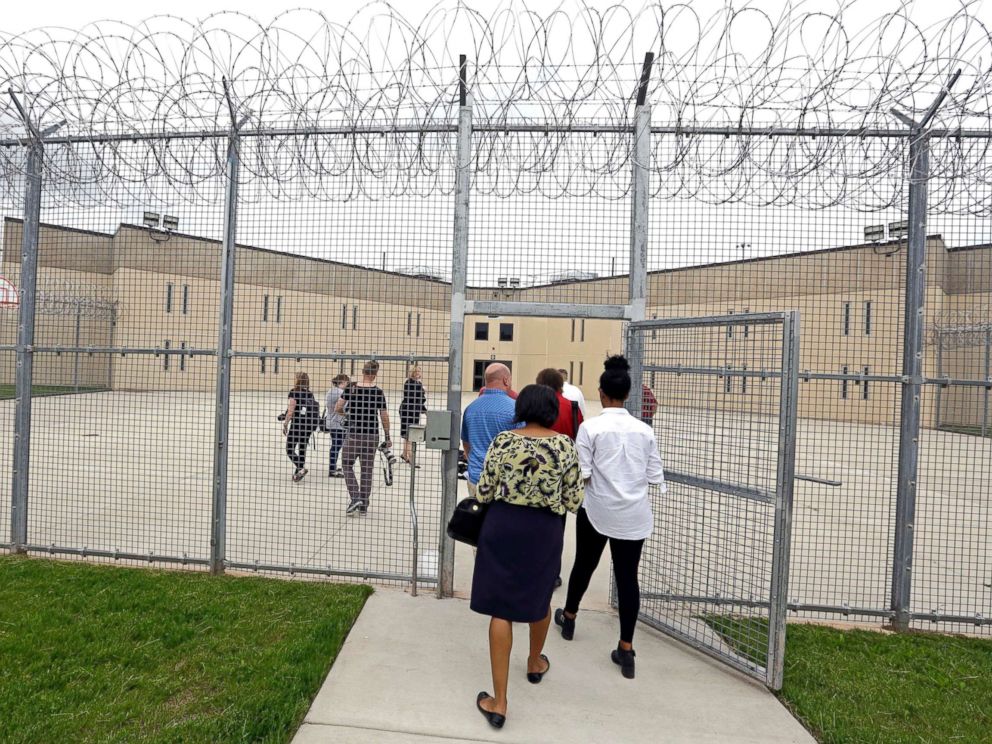
PHOTO: A tour group enters block D in the west section of the State Correctional Institution at Phoenix in Collegeville, Pa., June 1, 2018.
A tour group enters block D in the west section of the State Correctional Institution at Phoenix in Collegeville, Pa., June 1, 2018. Jacqueline Larma/AP, FILE

While there are roughly 3,600 inmates in this new prison -- or will be once it is at capacity -- how one singular inmate's needs will be catered to remains an as-yet unanswerable question. While the potential for "violence" to be wrought against this man by other prisoners contemptful of the acts he committed are for now held at bay, the man himself must contend with the debilitating psychological impact of loneliness and boredom.

Following this normally jovial man's sentencing he was driven to SCI Phoenix, through a rainstorm; even nature recognizing the solemn, dark occasion of a man fallen from grace; the institution a 164-acre compound of cellblocks surrounded by a mile and a half of razor wire and electronic fencing. Could anything be more foreign to this man's experience, more alienating, more deserving than his transition from admired social celebrity figure to scorned incarcerate?

Prison guards guided him into the prison's central building where the obligatory pose for his mug shot took place and he was outfitted in a prison uniform and boots and given his distinguishing number as Inmate NN7687. From someone to nothing in one fell swoop. In his empty corner of the prison, he eats, sleeps and takes his recreation.

PHOTO: A housing unit is pictured in the west section of the State Correctional Institution at Phoenix in Collegeville, Pa., June 1, 2018.
A housing unit is pictured in the west section of the State Correctional Institution at Phoenix in Collegeville, Pa., June 1, 2018.   Jacqueline Larma/AP, FIL

Once he has undergone the formality of completing a standard battery of psychological and medical tests designed for new inmates and sex offenders -- a ten-day process -- he will be permitted family visits, he will be able to procure a TV and tablet for his cell. And he will be enabled to take advantage of available classes or work positions for inmates.

Word from the prison is that Cosby is adapting to his new life and appears to be in "good spirits". "We are taking all of the necessary precautions to ensure Mr. Cosby’s safety and general welfare in our institution. The long-term goal is for him to be placed in the general population to receive the programming required during his incarceration", explained corrections secretary John Wetzel.

Labels: , , ,

Friday, February 09, 2018

Society's Endemic Sexist Malfunction

"Some of the deepest divisions in Canadian society on this issue of workplace sexual harassment are between men and women of the millennial generation."
"Be it male columnists decrying an apparent lack of due process when it comes to allegations of sexual harassment, or female commentators dismissing the feeble excuses of admitted abusers, the current public narrative may lead Canadians to think that gender alone is a massive, dividing driver of opinion."
"That's not necessarily the case."
Angus Reid Institute

"[The #MeToo conversation] has held up one segment of society as the blanket bogeyman in this, [specifically], baby boomer males."
"I think our [polling] data in terms of what people are thinking and what their own mindsets are does run counter to that."
"When it came to my generation, I can't say that anyone really pulled us aside in school and said, 'Actually, some men are still going to behave quite badly, so be prepared'. Instead, they told us 'You go, girl'. And so we went, empowered, but arguably not quite ready for the slap in the face [or literally, the hand on the butt] that is this persistent sexual harassment on the job."
Shachi Kurl, executive director, Angus Reid Institute

"I think the desire to be seen as strong, to be seen as a rainmaker may actually be confused with behaving in a sexually inappropriate way."
"The question for young men is, how do they prove they are a reliable team play [sic] without offending women peers, and male peers for that matter, and without violating workplace policy."
Judith Taylor, associate professor of sociology, University of Toronto
Still from video

A poll taken by the Angus Reid Institute recently surveying 2,004 Canadians appears to have elicited responses that point in the aggregate more to a generational divide in the social civil contract than one of gender alone respecting common attitudes surrounding sexual harassment in the workplace. Where older males appear to be more sensitive to acceptable behaviour permissible without offending their female co-workers than are their younger male colleagues.

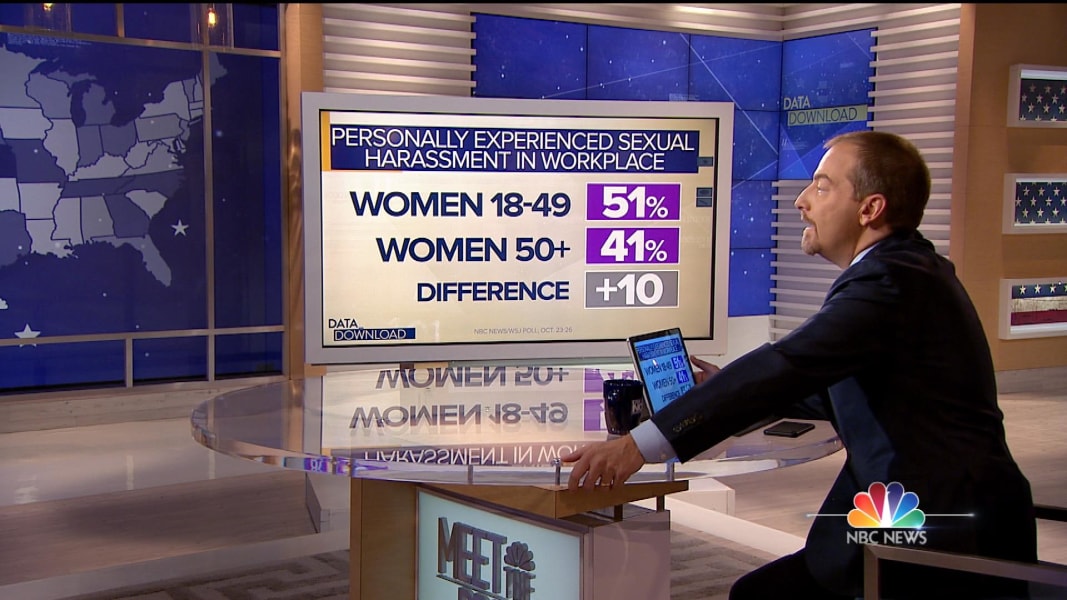
Although a staggering 89 percent of all women of all ages interviewed admitted to having been forced to develop self-protective strategies in the workplace to avoid having to experience sexual harassment of one type or another, half of all the surveyed women stated they had experience of harassing behaviour throughout their working lives. Of those women willing to respond to the question, 52 percent stated they were familiar with personal sexual harassment in their workplace.

For older women responding to the question there was less hesitation in stating they were the victims of harassment, defined as "unwelcome sexual advance, requests for sexual favours and other verbal (non-touching) conduct of a sexual nature". It is assumed that since they have been in the public sphere as a working woman for a longer period of time, they were exposed to more numerous instances of sexual harassment than younger women.

Which more or less contradicts the impression that older men were more circumspect than their younger cohorts in their relations with female co-workers. Over one in four women (28 percent) responding to questions relating to sexual harassment said they experienced non-consensual sexual touching; in other words sexual assault. One in five women between the ages of 18 to 24 reported experiencing assault, while older women were likelier to admit to having been assaulted (37 percent).


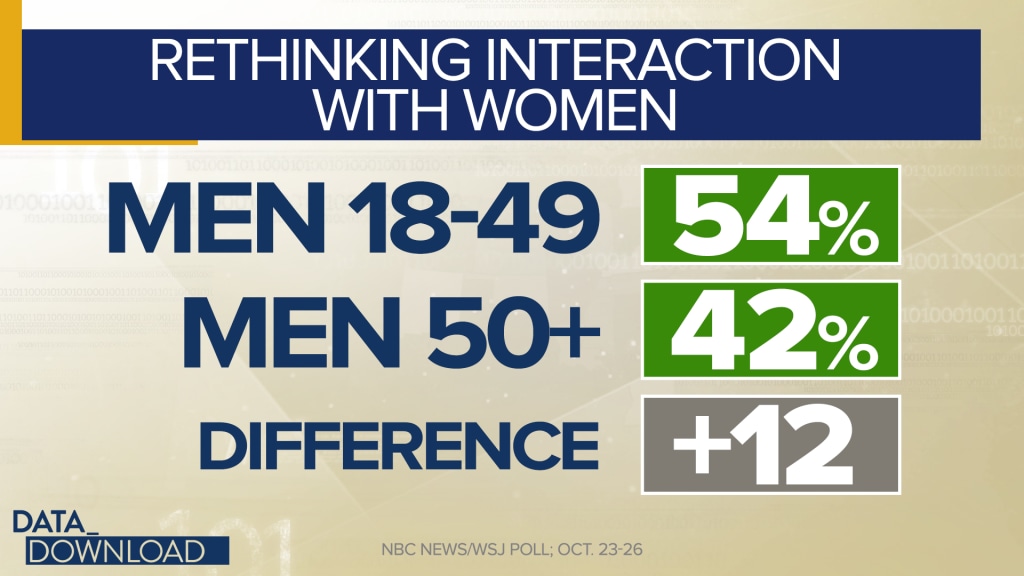
Younger men responding to the poll were likelier than their older male co-workers to see nothing particularly wrong in boorish behaviour. They were likelier to agree with the statement: "some people have definitely behaved like jerks but they shouldn't lose their jobs or reputations for it", in contrast to older men who were less likely to support that sentiment. Altogether, younger men in many instances appeared twice as likely as their older cohorts to believe it is perfectly acceptable to behave poorly toward women.

That would include giving a female workplace acquaintance a shoulder rub, completely uninvited; to make a comment relating to a woman's body, or to display, swap or openly read materials that women might view as "sexually suggestive". Among younger men, thirteen percent felt it was perfectly acceptable to read a pornographic magazine during lunch breaks taken at their desks.

Males aged 18 to 34 were close to evenly divided on the perception that "all these new rules about conduct are killing the human element at work". This point of view as justification for the behaviour they admit to, contradicts what females of their own generation believe, when close to two-thirds of women in that age group disagree with their male counterparts. And they are, after all, on the receiving end of the abuse.
Still from video

Within the oldest group of working men, age 55 and over who were surveyed, their views on the disgrace heaped on men in power who have been caught in an ongoing web of revelations of sexual harassment scandals more closely aligned with those of women with respect to the kind of behaviours acceptable in the workplace.

Twelve percent of older men stated their opinion that it was acceptable to express sexual interest in a female co-worker, in contrast to a third of millennial men's opinion on that point of view. One in four of the younger male group felt making a comment about a female colleague's physiognomy was reasonable, and one in four felt there was nothing awry in the use of "sexualized language" in conversation at work. In stark contrast, two percent of older men agreed.'

Sociologists appear to link with the prevailing culture of pornography which millennial men have grown up to consider normal, along with a desire to be viewed as "properly masculine". Whereas men of an older generation tended to audit their behaviour that second-wave feminists pointed out was offensive and demeaning to women. Those same women initiated a trend where feminists felt entitled to behave in a like manner to men and in the process became "sexually liberated".

Perhaps it was that liberation, with young women experimenting with sex, liberating themselves from the straitened morality that prevailed previously where women were meant to be modest and retiring, waiting for men to make the first move, and that encouraged women not to shy away from sexual promiscuity, and revelling in pornography geared to the enjoyment of women that prevailed in 'teaching' their young male counterparts that sex was a grab-it free-for-all.

The Insights West study used the definition of sexual harassment laid out on Canada's labour code. kieferpix / Getty Images/iStockphoto

Labels: , ,

 
()() Follow @rheytah Tweet