Ruminations

Blog dedicated primarily to randomly selected news items; comments reflecting personal perceptions

Sunday, August 03, 2025

Absolute Madness, Pet Lion and Tiger Ownership in Thailand
https://smartcdn.gprod.postmedia.digital/torontosun/wp-content/uploads/2025/07/74cac3fb0e5f17412cee84d07215faf4d2e44eff-e1753790987557.jpg?quality=90&strip=all&w=564&type=webp&sig=Tbz6cGI0WkofZA782QS2_Q
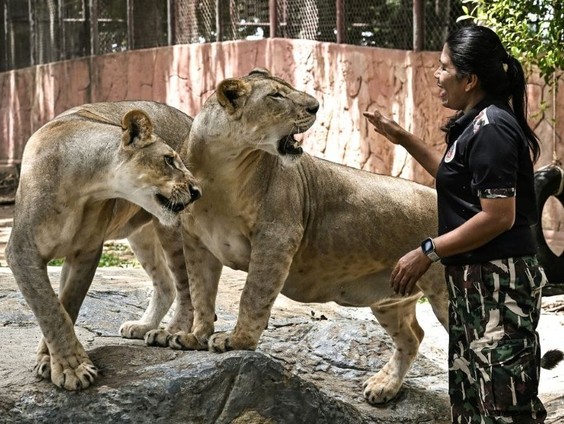
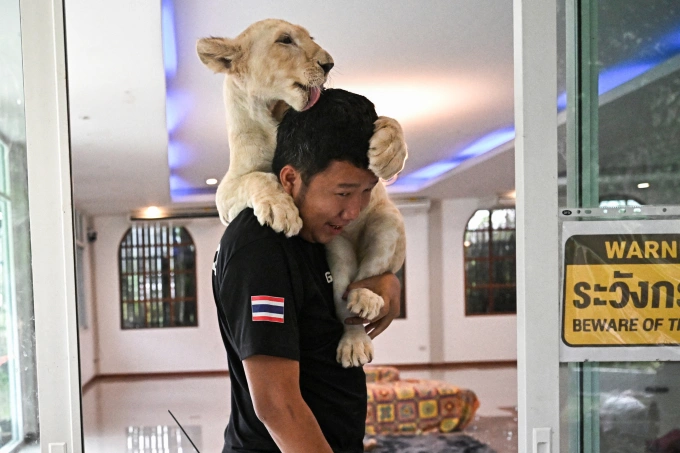
Big cat ownership has been banned in the United States and United Arab Emirates in recent years, and Thailand’s wildlife rules are soon up for review. (Lillian SUWANRUMPHA/AFP)
"It's absolute madness."
"It's terrifying to imagine, if the laws aren't changed, what the situation is going to be in ten years."
"That [no breeding caps, few enclosure of welfare requirements, no controls on hybrids; births of protected native species like tigers must be reported within 24 hours, 60 days for lions] is a huge window. What could be done with a litter of cubs in those 60 days? Anything." 
"We have interviewed traders [in the region] who have given us prices for live and dead lions and have told us they can take them over the border." 
Tom Taylor, chief operating officer, Wildlife Friends Foundation Thailand
 
"It gradually became a full-fledged business that I couldn't step away from."
"In the past, people could just put down money and walk away with a lion ..."
"Everything has become more complicated."
Thai trader Pathamawadee Janpithak 
https://vcdn1-vnexpress.vnecdn.net/2025/07/31/Thiet-ke-chua-co-ten-1-1753936-1960-7457-1753937747.png?w=680&h=0&q=100&dpr=1&fit=crop&s=B8koamSAsZGGmK1mjTnmcw
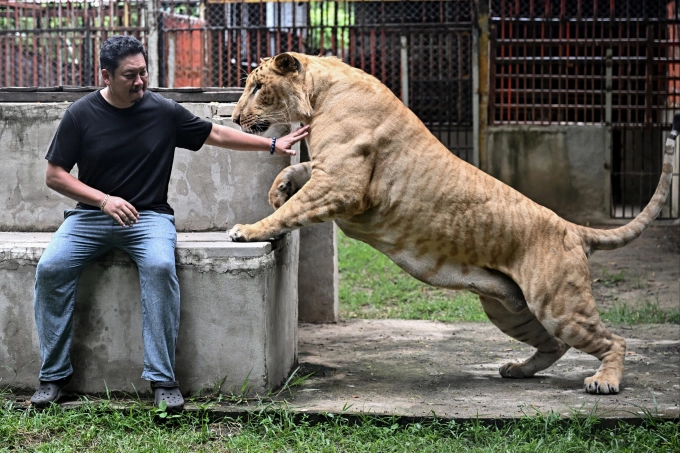
Mechanic shop owner and avid Tiktoker Tharnuwarht Plengkemratch interacting with his pet lion-tiger hybrid "Big George" in Chiang Mai, Thailand on July 11, 2025. Photo by AFP
 
There are close to 500 captive lions registered in zoos, breeding farms, petting cafes and homes in Thailand. Lion ownership is legal there. "They're playful and affectionate, just like dogs or cats", stated TikTok animal influencer Tharnuwarht Plengkemratch, who has his own pets, two lions and a 200-kilogram lion-tiger hybrid. "I wanted to show people ... that lions can actually bond well with humans", he said.
 
Thai law has required big-cat owners to register and microchip lions since 2022. Authorities must be informed before they are moved. But breeding caps are non-existent, there are no welfare requirements and no controls in liger or tigon hybrids. The rise in lion ownership has been tracked by the Wildlife Friends Foundation of Thailand with on-site visits and tracking social media accounts. In 2018 around 130 lions were recorded; by 2024 that number had risen to close to 450. Some 350 lions were "lost to followup" when their whereabouts could not be confirmed.
 
Lions and their body parts are sold internationally only with CITES permits despite circumstantial evidence of illicit trade. Lions, including cubs, have been documented through media reports and social media multiple times in Cambodia, despite CITES having no records of registered imports since 2003, leading to growing evidence that captive lion numbers in Laos exceed CITES import licenses. 
 
https://vcdn1-vnexpress.vnecdn.net/2025/07/31/Thiet-ke-chua-co-ten-2-1753937-9923-1979-1753937747.png?w=680&h=0&q=100&dpr=1&fit=crop&s=eWIJXIIVop3Vl7f7LQqbMA
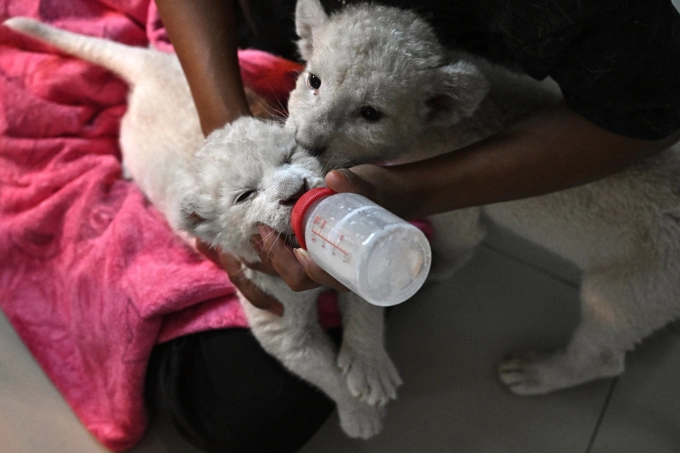
Eight day-old lions being fedat a breeding facility in Chachoengsao province, Thailand on July 7, 2025. Photo by AFP
 
Thai trader Pathamawadee Janpithak sells one-month-old lions for around 500,000 baht ($15,500) reduced from a peak of 800,000 baht, with increased supply from breeding operations. Lions in captivity are fed around two kilograms (4.4 pounds) of poultry carcasses daily. As breeding stock, they can produce litters of two to six cubs once or twice yearly. Around 80 lions are housed in Pathamawadee's three facilities. The difficulty she cites of finding buyers willing to comply with ownership rules is lamentable to her. 
 
Half of the 90 cubs she breeds yearly are sold, most often to other breeders, who open 'lion cafes' where customers pose with, and pet young lions. A handler roused a cub from a nap to play with a group of squealing Chinese tourists. Pathamawadee said several cubs were returned to her traumatized, and no longer breeding-suitable, leading to her decision to no longer sell to cafes which off-load cubs within a short period as they mature. 
 
Authorities whose capabilities are stretched, grapple with difficult decisions enforcing regulations, since animals that are confiscated become their responsibility, noted illegal wildlife trade specialist Penthai Siriwat, at WWF Thailand. "There is a great deal of deliberation before intervening ... considering the substantial costs", she explained.   
"...Private ownership has existed for a long time ... so we're taking a gradual approach."
"With inbreeding on the rise, the quality of the lions is also declining and we believe that demand will decrease as a result."
"Wild animals belong in the wild. There are plenty of other animals we can keep as pets."
Wildlife protection director Sadudee Punpugdee, Thailand Department of National Parks, Wildlife and Plant Conservation  
https://vcdn1-vnexpress.vnecdn.net/2025/07/31/Thiet-ke-chua-co-ten-175393667-5187-6885-1753937747.png?w=680&h=0&q=100&dpr=1&fit=crop&s=LIJq0dhySKG1-QLhLGY8VQ
A lion handler playing with a lion cub at a cafe in Chiang Mai, Thailand. Photo by AFP


Labels: , , , ,

Friday, October 07, 2022

Madness, An Unspeakable Tragedy

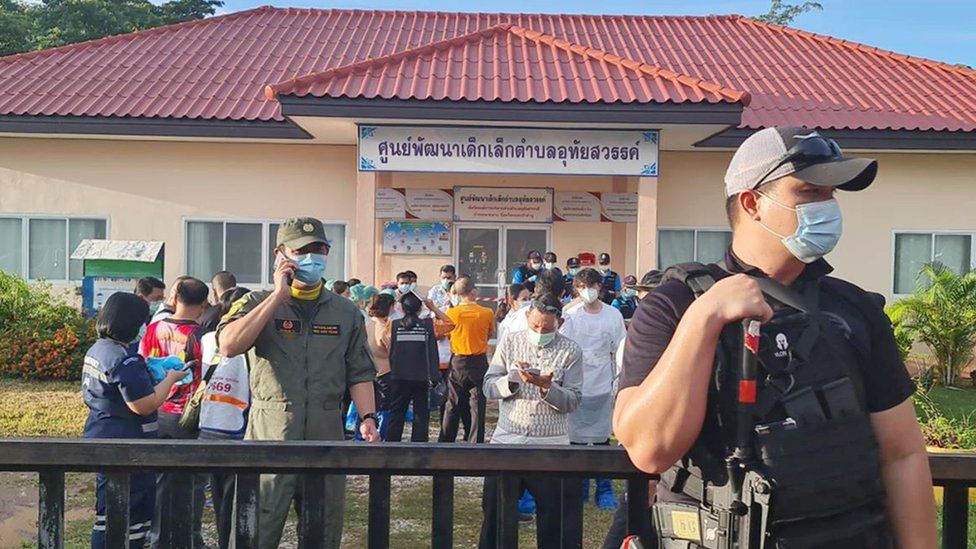
Police guard the centre
Police guard the centre as relatives of those killed gather  EPA
"We are still investigating all of this and have to learn from it. Today is the first day and we don't have all the details."  
"After inspecting the crime scene, we found that the perpetrator tried to break in and he mainly used a knife to commit the crime by killing a number of small children."   
"Then he got out and started killing anyone he met along the way with a gun or the knife until he got home. We surrounded the house and then found that he committed suicide in his home."
Local police chief Damrongsak Kittiprapha
 
"The teacher who died, she had a child in her arms."
"I didn't think he would kill children, but he shot at the door and shot right through it."
Witness
 
"The shooter came in around lunchtime and shot four or five officials [one, an eight-month-pregnant teacher] at the childcare centre first."
"At first people thought it was fireworks."
Jidapa Boonsom, local official
Residents line up to donate blood at the hospital in Uthai Sawan after the attack that police said also saw at least 10 people wounded, six critically. (Warnwarn Ch/The Associated Press)

The witness to the mass shooting at a Thai daycare in the northeast of the country described staff locking the door when they saw a man approaching the facility holding a gun. That precaution failed to keep him out; he simply shot his way in to the daycare. The result was 37 people killed in a less advantaged part of the country.

Dozens of the dead were preschool children and some of their teachers. When the assailant had somehow satisfied his psychopathic rampage, he  fled the scene. But he was not yet finished, it appeared. He murdered his wife and their children as well, before killing himself. 

Video footage in the wake of the attack showed frantic parents and other family members crying inconsolably outside the building. Also shown was the floor of one of the rooms inside the daycare blood-splattered, sleeping mats scattered about. These were  young children, after all, under age five, whose need for daytime naps emphasized their infancy.

The killer was later identified as a 34-year-old former police officer who was due in court several days later to attend a hearing in a case involving methamphetamine possession. The police chief informed reporters that the weapon used in the murder spree was a 9mm pistol. He had with him as well a shotgun and a knife.

Two adults and 22 children were killed at the daycare facility alone, with two additional children killed in another setting. A dozen people were wounded. Thailand has one of the highest civilian gun ownership rates in Asia; 15.1 weapons per 100 population.

In this image taken from video, a woman is comforted outside the site of a shooting at a Thailand daycare centre Thursday, in the town of Uthai Sawan, in the northeastern province of Nongbua Lamphu. At least 37 people were killed in the attack, police said. (Mungkorn Sriboonreung Rescue Group/AP)


Labels: , , ,

Friday, December 01, 2017

Never The Twain....

"There's no way we could survive if there were more fires than snakes."
"When people build houses in their [snake] habitat, of course they will seek a dry spot in people's houses because they can't go anywhere else."
"Stories of snakes invading homes always sound scary, but as long as you don’t provoke them, they won’t hurt you. There are only a few cases where snakes come into people’s houses and hurt them."
Prayul Krongyos, deputy director, Bangkok Fire and Rescue Department, Thailand
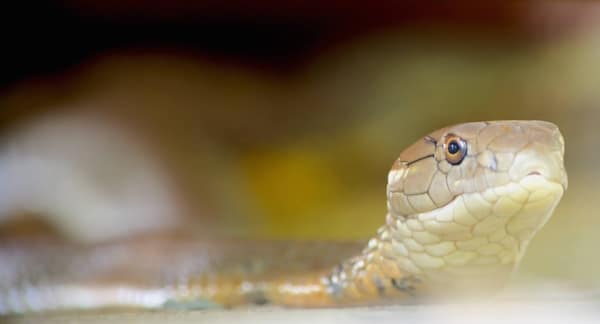
King cobra on the ground. These snakes can often be found in and near Bangkok due to the proliferation of their favorite food - rat snakes.
King cobras can be found in and near Bangkok because there is an abundance of rat snakes, a favorite prey.  Thailand Snakes

As the world's population grows it continues to displace other animals from their traditional natural habitat. And then humans begin to regard these creatures as nuisances. The thought is that the animals are intruding on human settlements through their unwanted presence. Rarely do we stop to consider that what is considered to belong to us is also theirs. The territorial imperative that motivates humans to go to war against one another, based on instincts of survival, is seen in other animals that cannot wage war with humans, but attempt to live among us nonetheless.

They must make themselves inconspicuous to do so; to rarely show themselves, to live surreptitiously out of sight and thus out of mind. In the Western world squirrels, raccoons, skunks, porcupines, opossums and other similar creatures like foxes, muskrats, beaver and deer delight us when we see them, as long as they aren't competitive with us for space and geography. We tolerate them in areas of marshland and forest that are unsuitable to build human habitat or when laws are installed to protect their habitat when feasible.

These warm-blooded mammals are rarely seen as a threat to our own existence. They can be considered pests when we are annoyed at their presence in the 'wrong' places, and wolves and coyotes have an unfortunate reputation among humans who fear them, but when it comes to alligators and snakes most people shrink back in fear and loathing. In more exotic locales on earth, like Thailand there is a proliferation of animals that people have no wish to share their homes with; snakes.

In Thailand's capital, Bangkok, the main airport Suvarnabhumi was built over a swamp, which was named Cobra Swamp. The geographic area where Bangkok was built was once a marshy paradise for reptiles on the Chao Phraya River delta. Snakes are gregarious creatures that often coil together in dry pits to spend months in hibernation, hundreds linked together.

And when it rains and their homes are flooded they go looking for haven elsewhere. That haven could be peoples' homes. And for some strange reason the snakes may turn up in peoples' toilets....
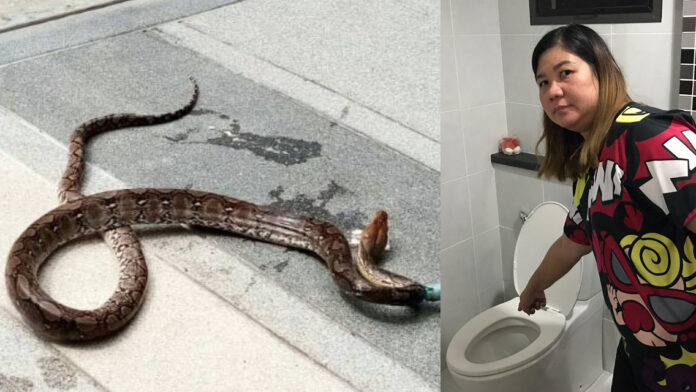
(Image: K-kae Kae/Facebook)


Which -- imagine it -- isn't much fun when you're unaware, seated on the toilet and suddenly feel a sharp pain because you've been bitten by a snake. One woman had this experience when a 2.5-metre python emerged from her toilet when she happened to be using it and rushed for treatment to her local hospital for the punctures over a centimetre deep in her thigh. The snake was captured, and a week later yet another showed up in the same toilet.

Fortunately for the snakes, the man tasked in the city with removing the snakes from homes has an enlightened attitude toward the snakes' presence. As far as he is concerned, they are harmless, and in fact useful, in eliminating rats and other pests. His fire department, called upon by residents, responds to all calls to remove snakes and of late has been even busier than usual. Some 31,801 calls for the removal of snakes has kept them busy this year, an increase from last year's calls.

One recent day saw 173 snake invasion calls, vastly more than the five fire alarms received on the very same day. And though the fire department keeps track of the number of calls for help with snake removal they receive, no one tracks the numbers of incidents where homeowners look after their own snake removals, thousands of which are killed or removed by residents, or by volunteer snake handlers.
https://storage.googleapis.com/afs-prod/media/media:34c616d98e6b418eac816f6318bbf11a/800.jpeg
Bangkok's fire department called on to remove snakes from peoples' homes.  AP
When the firefighters remove snakes they take them to a wildlife centre from where they are released to the wild. A humane response to an age-old aversion of people to the presence of snakes born of fear of what they imagine an encounter might result in. The reason, it seems, for the proliferation of snakes entering peoples' homes is that even by the usual standards of weather patterns, Bangkok has seen an increase in heavy rains, where snakes are forced to seek refuge indoors.

When flooding occurs, the streets seem to turn into snake highways when the snakes are forced from their hideouts and desperately swim in search of higher ground. The city has a population of over 8.2 million people. And the population continues to grow, so as it does more of the surrounding geography is required to build homes, taking up formerly wild lands, resulting as well in a greater number of encounters with snakes.

Sunday, Panarat Chaiyaboon points to the downstairs toilet in her house where reticulated pythons slithered up to bite her in the bottom. Left, the python that bit her July 3.

Labels: , ,

Friday, May 13, 2016

Eating Dangerously

"As you can see, mostly men come here. All types of men love raw meat!"
"I also rely on a liquid called 'pia', which is light yellow, like the colour of rice stalks. It's basically just rice stalks that a cow ate and halfway digested before slaughter."
Wiwat Kanka, owner of Jin Sod restaurant, Phrae, Thailand
Westerners are squeamish about what they place in their mouths. Those from the East are far less so. And in Africa and elsewhere people accommodate themselves to eating sources of protein that we would never dream of placing on our dinner tables, and eating with huge enthusiasm. Not just offal from animal interiors, but various types of insects and worms, creepy-crawlies that we have problems getting our minds around.

At fresh-air fish markets in Tokyo, there are live sea worms and all manner of other aquatic creatures appealing to the traditional taste buds of a nation surrounded by the sea, that would turn the stomach of a Westerner. It is not unusual to see a Japanese customer 'try out' the taste and freshness of live shrimp at the invitation of an enterprising fishmonger at Ueno market, just selecting one and popping it into his mouth. It's a different type of sensibility born of practicality.

dek
Jerry Driendl / The Image Bank / Getty
Famously, the hugely popular Sushi, basically rice wrapped in seaweed and containing thinly sliced raw fish taste quite tempting, but in eating raw fish one also tempts fate to gift the bold and unaware raw-fish-lover with internal parasites; how does a great big tapeworm appeal to you? And the single most deadly fish -- blowfish -- is considered a delicacy, an expensive one, expertly prepared for an extraordinary meal. The Japanese call it fugu.
Served in paper-thin slices by expert chefs, fugu combines luxury with a high-stakes gamble. The intestines, ovaries and liver of fugu (or blowfish) contain a poison called tetrodotoxin, which is 1,200 times deadlier than cyanide. The toxin is so potent that a lethal dose is smaller than the head of a pin, and a single fish has enough poison to kill 30 people. Because of the high risk, chefs must undergo two to three years of training to obtain a fugu-preparing license, and such expertise raises the price of a fugu dish to up to $200. But this hasn't stopped the Japanese — about 40 kinds of fugu are caught in Japan, and people consume 10,000 tons of the fish every year. Time online
And then there is Thailand, where a favourite dish is laab dib, a delicacy appreciated by Thai men in particular. It has been described as eating something whose immediate taste sensation leaves a sharp tang of bitterness. Raw cow bile tastes like that. When that first bitter taste recedes what takes its place is a taste of grass, and you know what fresh-cut grass smells like, quite wonderful. That grassy taste reflects grass that has been partially digested, drained from the stomach of a cow and then sprinkled over the dish.
Laab dib, the northern Thai specialty of raw meat, blood, bile and herbs.
Credit:  Patrick Winn/GlobalPost

The dish itself? well, it's minced meat, generally beef or pork, lightly mixed with chili and herbs. Served slightly chilled and finished with a dash of both raw blood and raw bile. "If it isn't splashed with fresh blood, it just isn't delicious" cautions Wiwat Kanka. The name of the restaurant means "Fresh Meat". It's a simple, basic structure, its kitchen off to a side under a tin roof with log walls. And it's an extremely popular place to eat, locally, rumoured to be the best of the best.

That kind of audacious preparation of a delectable meal does come with some caveats. The dish is potentially dangerous, risking contracting trichinosis caused by an infectious worm from eating raw meat. Or how does fatal bacteria or even rabies sound as an alternative risk? While the number of deaths resulting from the consumption of raw meat in Thailand is unknown, research indicates that the incidence of Streptococcus suis, a fatal infection associated with eating raw pork, is quite high.

The incidence of bile duct cancer in Thailand happens to be 80 times that of, for example, North America, and that's fairly telling. According to the medical community in Thailand, it is the consumption of uncooked meat that has lead to that unenviable record of bile duct cancer. The last word is given to the World Health Organization which states that a "major cause" of potentially deadly illnesses in Thailand is undeniably raw meat.

Fond habits die hard. Food culture is an important part of a nation's identity, one hard to shake, even in the face of incontrovertible evidence that it can be extremely harmful.

Labels: , , ,

Thursday, October 22, 2015

Primate Slave Labour

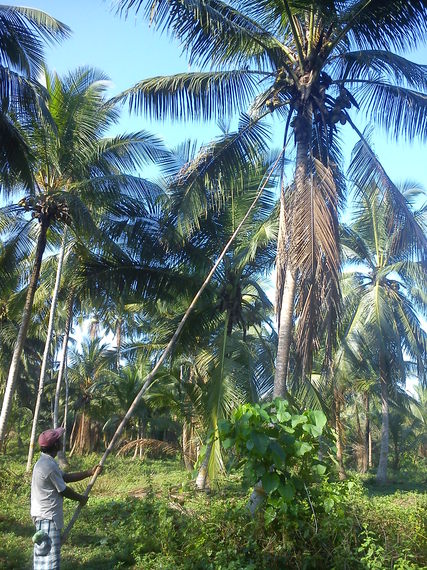
"As his parents were coconut farmers, Somporn experienced the traditional use of monkeys for the harvest of coconuts. These monkeys were often beaten by their owners when they didn't perform as expected."
"This gave him the idea to teach monkeys in a better way. His Buddhist teacher encouraged him to teach monkeys positively, without the use of force or violence."
Monkey Training School, Surat, Thani, Thailand
2015-10-20-1445379210-9471078-IMG_20130328_082234.jpg
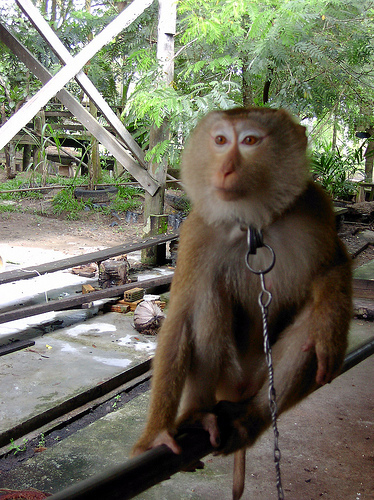
"What I find most distressing is that they take them from [the] wild, keep them tethered and keep them that way their whole life."
"Monkeys should stay in the wild."
Marji Beach, education director, Animal Place farm sanctuary, California

"[Monkeys are] strong, enjoy climbing, are not afraid of heights, do not complain, do not call for higher wages ... and are not corrupt. They do not require social security and accident insurance."
"Monkeys are therefore considered a 'living machine' that is very valuable for coconut farmers."
Monkey training school, Bangkok
"Instead of living fulfilling, autonomous lives in deference to their natural instincts and will -- lives that would include social interaction with others of their kind, mating, raising young, moving about freely and resting whenever they choose -- these monkeys spend their lives in endless toil and forced obedience to the will of humans."
All American Vegan website
2015-10-20-1445379044-632508-1.jpg

Monkeys are undeniably agile and intelligent, so intelligent that they can communicate in a meaningful way with humans when patiently taught symbolic languages and the manner in which their preferences can be understood by humans. In the monkey training schools in Thailand, however, monkeys are taught to harvest coconuts, they are not asked if they are satisfied to be of service to human taskmasters.

Monkeys have proven to be outstandingly competent as pickers. Their skills -- taught to them from a young age in the interests of coconut farms and their historical trade utilizing maximum capacities of these hugely adaptable creatures comfortable living in trees and negotiating their way around them to pluck the fruits that humans value -- represent a bonus for their owners.

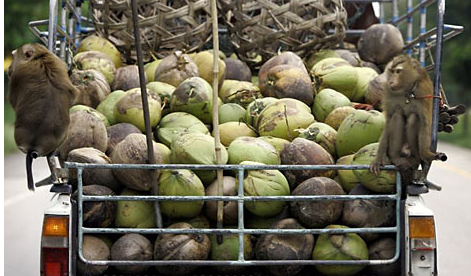
Male macaque monkeys are capable of harvesting approximately1,600 coconuts daily. Females are able to harvest a still-considerable 600 coconuts each day. The female monkeys are not as outstandingly oriented to gathering huge numbers of coconut on a daily basis, but compared to the ability of humans to harvest 80 at most each day, even their haul is far advanced of human labour.

2015-10-20-1445379104-2565024-2.png

"It would be difficult to find a coconut produce made in Thailand that wasn't picked by a monkey", remarked Arjen Schroevers of the Monkey Training school in Surat Thani,. The school was founded in 1957; its founder, Somporn Saekhow, developed a relationship with his worker monkeys unlike most others, treating them gently: "Do it quickly son, and when we finish this, you can go home", he would say of the need to be kind.

"The monkeys are innocent. If we beat them, it's a sin", he explained. How gently? Well, not without a leash that remains a permanent fixture, ensuring that the clever macaques never take it into their heads to simply leave the slave labour to which they have been introduced and remain captive to. The pig-tailed macaques are viewed as indispensable to Thailand coconut producers.

The industry of the monkeys are the fulcrum upon which the industry of coconut farming is predicated. Their labour is dependable and produced on demand to the satisfaction of their owners. The once-wild animals, once caught at a young age and exposed to the rigours of slavery with its unending expectations have no purpose in life of their own volition, but to obey the demand that they fulfill the human will to gather coconuts to earn their keep.

It isn't just people in the West who find it distasteful that monkeys are kept as slave labour with little quality to their lives other than for their capacity to cleverly gather consumer items, but Thais themselves who have no idea how the coconut availability they take for granted comes at a cost to the dignity and freedom of other animal species.

"We were shocked as we’d always imagined the coconuts were picked by men. These monkeys were made to work such long hours, tethered cruelly by a rope." 
"We used to love coconuts – but seeing this has made us realize that the demand has sparked a cruel trade. The monkeys looked sad and tired", remarked one Thai tourist coming across a coconut farm for the first time.

2015-10-21-1445443735-5443648-monkey.jpg

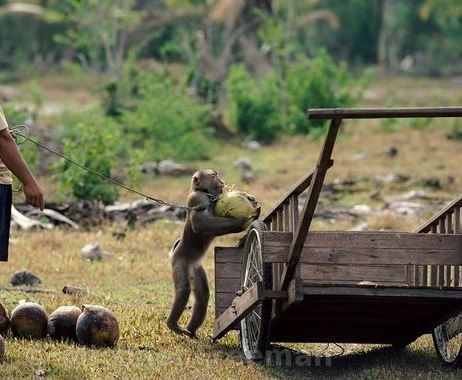
Even if the Monkey Training schools claim they practise showing the macaques kindness and never punishing them for mistakes, the animals are not free, ever. The monkeys are taught how to disentangle themselves from ropes and how to select ripe fruit. Some are taught to collect grounded coconuts and to place them into sacks; saving their owner from back-breaking labour, their only reward the food required to sustain them.

Labels: , ,

Friday, July 03, 2015

The Slave Trade in Seafood

"You Burmese are never going home. You were sold, and no one is ever coming to rescue you."
Thai fishing boat captain

"I don’t want to speak that language anymore because I suffered so much there. I hate that language now."
"I feel like a tourist [on his return to his home in Burma]. I feel Indonesian."
"I didn’t want an Indonesian wife, I just wanted to go back home to Myanmar. I felt like I lost my young man’s life. I just thought that all of this time, I should have been in Burma having a wife and a proper family."
"My life was just so bad that it hurts me a lot to think about it. I miss my mom."
Myint Naing, 40, former fisherman slave
Myint Naing
In this May 16, 2015, photo, former slave fisherman Myint Naing, 40, center, and his sister Mawli Than, left, embrace as they are reunited after 22 years at their village in Mon State, Myanmar. He is the oldest of four boys and two girls. In 1990, his father drowned while fishing, leaving him as the man in charge at just 15.   AP Photo/Gemunu Amarasinghe

Thailand has a busy and vast seafood export industry. And it is an industry built on slavery. Where innocent Burmese anxious to find employment are assured by recruiters that in Thailand they will find full employment, earn good salaries and be able to send money back home to their impoverished families living in their Burmese villages. The reality is that they are transported to Thailand and from there handed over for payment to fish in an industry that works its slaves around the clock, sometimes giving them a pittance in recompense, sometimes nothing.

Myint Naing, at the age of 18 became one of those slaves when a broker came to southern Myanmar in 1993 promising excellent, well-paid jobs for young men willing to work. Mying's father had died three years earlier and he, as the oldest male child in the family took on the mantle head of family and wage-earner. Desperate for a living wage for the family, Myint's mother agreed he could go with the agent. He was shipped by sea to the remote Indonesian island of Tual in the midst of rich fishing grounds.

And that was when the captain of the Thai vessel informed all the young men on board that they were no longer independent, but rather that he owned them; that they had been sold to him and there was no way they could return home. The ocean became his life as he became a slave to fishing to profit the captain and the larger, wider Thai fishing enterprise in their growing export market. It is a seafood business operating on the labour of an estimated 200,000 migrant workers.
Dita Alangkara/ Associated Press
Dita Alangkara/ Associated Press   Workers in Benjina, Indonesia, load fish onto a cargo ship bound for Thailand. Seafood caught by slaves mixes in with other fish at a number of sites in Thailand, including processing plants.

Many of them are not simply 'migrant workers', but slaves who were forced onto the boats; tricked, kidnapped or sold as Myint Naing had been. Their plight similar to that of press gangs roaming the streets of 18th Century Britain for sailors when such abductions were a common occurrence. The fishing companies that make up the Thai market have a wide consumer base, from the United States to Europe and Japan. The fish these workers and slaves help catch supplies food for faroff countries unware that slave labour places fish on their dining tables or in the tins of catfood they rely upon.

The young man repeatedly begged to be allowed to return home, and for his efforts was beaten mercilessly, forced to continue working on a boat in Indonesia. Eight years after he had first been taken to the boat as a slave he begged for his freedom only to hear the captain threaten to kill him. He was chained for three days as punishment, food and water denied him. He and 800 other slaves were rescued following a yearlong Associated Press investigation into Southeast Asia's fishing industry.

AP Photo/APTN
AP Photo/APTN In this Thursday, Nov. 27, 2014 image from video, workers from Myanmar load fish onto a Thai-flagged cargo ship in Benjina, Indonesia. An intricate web of connections separates the fish we eat from the men who catch it, and obscures a brutal truth: Our seafood may come from slave workers.

With the expansion of the seafood export industry, overfishing has meant that trawlers were required to sail further and further into foreign waters for fish. The result is that the workers are virtually trapped for months, extending to years aboard their seabound prisons. There is no medical care, boiled sea water is given them, and the rescued fishermen explained that on some boats workers were killed if they slowed the frenzied pace of drawing fish from the ocean. Some, in desperation, fling themselves into the sea.

In 1996, he ran away after having been beaten yet again in response to his pleading to be released. He managed to abandon his captivity, his skull wounded from the beating. An Indonesian family sheltered him until he regained some semblance of health, offering him food and shelter in return for his work on their farm. He stayed with them for five years, yearning to return to Myanmar, and missing the friends he had made and left behind on the boat he had run away from.

Then in 2001, a captain offering to take fishermen back home if they agreed to work caught his attention. In the hope that this would solve his dilemma he returned to the sea, discovering the conditions similar to what he had fled from. The elusive payment for their labour was withheld. After another nine months the captain abandoned them, leaving them free to return to Thailand on their own. When, once again, he asked to be returned to Burma, he was chained to the boat.

He managed to pick the lock on his shackles, dove into the night-time water and swam to shore. He hid in the jungle, fearful of approaching police lest they deliver him back to the fishing captains. By 2011 his life of solitude and privation caused him to move to the island of Dobo and there he heard of a small group of former Burmese slaves, living on vegetables they raised themselves. A friend informed him eventually that the Indonesian government had begun a rescue operation, embarrassed by revelations of slavery.

Myint Naing
In this May 16, 2015 photo, former slave fisherman Myint Naing and his mother, Khin Than, cry as they are reunited after 22 years at their village in Mon State, Myanmar. Myint, 40, is among hundreds of former slave fishermen who returned to Myanmar following an Associated Press investigation into the use of forced labor in Southeast Asia’s seafood industry.  AP Photo/Gemunu Amarasinghe
 
Myint Naing's 22 years in Indonesia had come to an end. He finally received the help he had longed for to return to his small village and be reunited with his family, one of the hundreds rescued and aided to return to their families in the wake of a year-long AP expose of the labour abuses abetting Southeast Asia's seafood industry. Reports documenting the slave-caught fish shipped from Indonesia to Thailand where it was exported to the U.S. spoke volumes of the plight of these poor people.

It was revealed that the supply chains of supermarkets and distributors included Wal-Mart, Sysco and Kroger, and companies such as Fancy Feast, Meow Mix and Iams emphasize their condemnation of such labour abuse, and having had no idea that their pet food was a product of slave fishing conditions; vowing they are committed to taking steps to prevent recurrences for the future.

Labels: , , , ,

Tuesday, March 03, 2015

Entering Paradise? Be Forewarned...!

"I am proud of my girls. If there had been the slightest hint of an overdose that Thailand could have pointed to, they would have. But they were not able to prove it."
"We knew our daughters were not drug users."
Carl Belanger, Pohenegamook, Quebec
Two sisters from Quebec, Audrey 20, and Noemi 25, went on a month-long Southeast Asian vacation together in 2012. Their time away from home nearly complete, they visited Thailand's Phi Phi Islands. This was their first day in Thailand. And then, they were found dead in their room at the Phi Phi Palms Hotel by a chambermaid, two days after they were last seen alive and well.

Autopsies conducted by Thai medical authorities theorized that they had been out drinking and partying on the beach and had ingested a euphoria-inducing cocktail commonly served in Thai bars. A cocktail containing cough syrup, Coke, DEET (that's right, the chemical used as a mosquito repellent) and the mild narcotic kratom.

Now, three years after their mysterious and untimely deaths, a Quebec coroner has reached a different conclusion altogether. While the Thai theory was that DEET led to their deaths, Renee Roussel felt on the basis of her knowledge and the circumstances surrounding the girls' deaths along with her own pathological investigation that the sisters were poisoned by a deadly chemical, phosphine.

Hotels in Thailand are forbidden from using phosphine but it seems that hotels use it regardless in their battle against bed bugs. The Bangkok autopsies were set aside by Dr. Roussel; she found that the levels of DEET present in the bloodstream of the two sisters were not toxic, but no more elevated than what might be found with a light application of the insect repellent on the skin.

The exhaustive toxicological analysis performed in Montreal revealed no evidence that kratom had been consumed. Although the Montreal coroner was not able to conclusively establish what it was that killed the sisters, laboratory testing for over 800 drugs, metal and chemicals turned up nothing other than low levels of DEET along with an anti-malarial drug the sisters were taking.

The logical explanation for the absence of a detectable poison pointed in the direction of phosphine. "Few substances have the capacity to kill quickly while leaving practically no trace in the environment or in the organism allowing us to detect it. Phosphine is part of this limited group", explained Dr. Roussel.

Additional evidence were the lesions discovered on the brain by the autopsies, lesions caused by a severe lack of oxygen, consistent with phosphine poisoning. As well, pointed out Dr. Roussel, twenty Western tourists, women for the most part, have died in Southeast Asia in similar circumstances to the Belanger sisters since 2009 and the culprit appears to be phosphine.

Dr. Roussel's report recommends that Quebec's institute of public health advise travellers of the lethal danger posed by some pesticides, that advice be offered on how to detect poisoning symptoms, and the manner in which they should be treated before a fatality occurs.

In 2009, Norwegian Julie Bergheim and American Jill St.Onge, in adjacent rooms at the Laleena Guest House on Phi Phi had similar symptoms of vomiting, dizziness, blue finger- and toe- nails, and both died within 24 hours.

Ina Thoresen, Ms. Bergheim's mother, received a report from the Norwegian Institute of Public Health four years later, after leading experts from around the world advised the Norwegian authorities that the most likely cause of the young woman's death was phosphine gas poisoning, released by the pesticide.

Ryan Kells, Jill St. Onge's fiance fell ill at the same time but recovered. In his recovery state officials on Phi Phi insisted he take her body away from Phi Phi lying in the bottom of a speedboat.

John Kells, Ryan's father, wrote in 2010:   ''What killed Jill St Onge and Julie Bergheim? What lethal gas almost also killed their companions Karina Refseth and Ryan Kells? 'The two absolutely linked deaths, hours apart, separated by a common wall less than six inches thick, in two back facing air conditioned rooms of the Laleena Guest House, rooms No. 4 and No. 5, one Norwegian, one American, unknown to each other, were apparently caused by the lethal inhalation of a toxic gas that has not been identified. Young adventurous explorers like Jill, Julie, Ryan and Karina, from countries all over the world, travel to the island of Kho Phi Phi, described as one of the most beautiful spots on earth as featured in the film 'The Beach', staring Leonardo DiCaprio, believe that they are safe and expect to travel home with exotic memories and not the ashes of the love of their lives or the one that they intended to marry. One thing we do believe is that both Julie and Jill had elevated blood levels of cholinesterase inhibitor, a likely sign of pesticide gas poisoning, as suggested by a couple of research experts asked to comment on the blood results. We also know that the implied causes investigated by the Thailand authorities such as alcohol and drugs have been eliminated as potential causes of death. All of the investigative effort thus far has focused on life style causes and to our knowledge no effort has been expended to determine if a pesticide might have been the lethal agent.''

Labels: , , ,

Wednesday, August 27, 2014

Making Babies

"There was a lot of excitement, and many people were jealous."
"If I weren't this old, maybe I would have done it myself [offered herself as a surrogate birth mother]."
"This is a poor village. We make money by day and it's gone by evening."
Thongchan Inchan, 50, Pak Ok shopkeeper, Thailand

"This is a symbol of moral erosion. It's a symbol that people are concerned above all with money."
Kaysorn Vongmanee, Pak Ok public health department head

"There's nothing wrong with surrogacy -- you are helping people who can't have a baby."
"I understand the feeling of a mother who really, really wants a child."
Pakson Thongda, 42, Pak Ok resident
This house of a 26-year-old woman in Phetchabun's Ban Huai Chan Moo 14 that accommodates 10 members unveils part of her motive to become a surrogate mother for money. (Photo by Pattarapong Chatpattarasill)

Pakson Thongda understands, in fact, the marketplace commodity of a young, healthy Thai woman wanting to make a windfall for herself by offering her strong body to carry a child to term for those wealthy enough and certainly willing to hire her so that they may have a child of their own, when their own bodies fail the test of fertility brought to closure. Her daughter sold eggs twice to a fertility clinic, and through this process earned $1,000 for each occasion.

This represents a lot of money for people living in this remote Thai village of about 12,000 people located a six-hour drive from the capital, Bangkok. According to local officials, around two dozen women out of the entire community have taken to contracting out as paid surrogate mothers. For at least a decade this kind of commercial enterprise has been available to people with the means to engage.

Thailand is one of a few countries where commercial surrogacy is legal and represents only one of two in Asia. It has become a prime destination for couples in the near geography coming from countries where this kind of commercial enterprise is banned. When the opportunity to contract as a surrogate mother first came to this village, neighbours took note of conspicuous home renovations and a new car.

As most residents of Pak Ok live in wooden houses, alongside tamarind groves and rice paddies, this incident gained great notice, and of course, envy. The womb rental business has great appeal for young women in this country where free enterprise of a sometimes sordid nature takes place, related to sex-tourism with those whose age would land the pedophiles and child-abusers in jail in their own countries.

The two issues are hardly to be compared, needless to say. One is a disgustingly horrendous practise, the other a practical means by which childless couples are able to attain parenthood with the assistance of someone glad to be paid to offer the service. The estimation is of several hundred surrogate births taking place in Thailand annually, not all that huge in terms of numbers, but huge in terms of opportunity and happiness for those engaged in the trade.


Thai surrogate mother Pattaramon Chanbua with her baby Gammy, born with Down Syndrome, at the Samitivej hospital in Sriracha district, in Thailand's Chonburi province on August 4, 2014 (AFP Photo/Nicolas Asfouri

Unless, like the couple from Australia who contracted through an agency with a young Thai mother to carry their egg-and-sperm to term, but chose to take with them the tiny girl, and leave behind her male twin who had Down Syndrome. Leaving the child with its surrogate mother who loves the baby and cares for it. After all, said the father David Farnell, as he disowned his own biological child, "I don't think any parent wants a son with a disability".

Surrogacy clinics in Bangkok recently were raided by police who revealed that a 24-year-old Japanese man had fathered a dozen babies through surrogates whose births were weeks or months apart. This is rather embarrassing to Thailand which winces as it is at its reputation for casual prostitution with males and females of all ages. The man insisted he was not interested in selling the babies on the Asian black market, but in an entirely legal way wanted to 'have a large family'.

Thai police display pictures of the surrogate babies
Thai police display pictures of the surrogate babies during a press conference at the police headquarters in Chonburi, Thailand. Photograph: Sakchai Lalit/AP

Surrogates, according to Thai officials, earn about $10,000 at the conclusion of a successful pregnancy, and greater amounts for twins. They also receive a monthly allowance of around $450 and live rent-ree in Bangkok, where women are given instructions to carry out their pregnancies. Commissioning parents are usually from Japan and other wealthy Asian nations, according to Mr. Vongmanee.

The village of Pak Ok has lately been the subject of the news media in Thailand, which saw throngs of reporters descend to write their stories with personal interviews relating to another national scandal. Villagers in Pak Ok are furious at the witch hunt by authorities, interfering with a legal practise undertaken by impoverished young women, eager to earn a living, however they can.

Labels: , ,

Saturday, June 21, 2014

The Slavery Issue of Thai Shrimp

"Ethical businesses ... will be undercut by unethical businesses. It's the curse of all volunteeristic approaches to this [unless governments regulate and enforce stricter regulations]."
Aidan McQuade, director, Anti-Slavery International

Thai 'trash fish' workers unload the catch at Songkhla port.
Thai 'trash fish' workers unload the catch at Songkhla port. Chris Kelly/Guardian 
"One day I was stopped by the police and asked if I had a work permit. They wanted a 10,000 baht ($250) bribe to release me. I didn't have it, and I didn't know anyone else who would, so they took me to a secluded area, handed me over to a broker, and sent me to work on a trawler."
Ei Ei Lwin, 29, a Burmese migrant detained on the docks at Songkhla port

The British newspaper the Guardian has published the results of a months-long investigation. Their conclusion: about 500,000 people are working in Thailand as slaves, many of them on shipping boats employed catching the fish that produces fish meal that feeds mostly shrimp. That half-million enslaved workers is part of the estimated 30 million other poor and vulnerable people who have been caught up in corporate interests that blink at slave labour.

The world can now boast more slaves forced to work against their will presently than at any other time in history. This, at a time when we complacently prefer to believe that slavery of any kind is a scourge that has long passed into history. Slavery, needless to say, is internationally outlawed. It was, in any event, only backward countries of antiquity and more modern countries of racist inclination who practised what we now feel is the immoral shackling of human beings to someone's will.

Not only are slaves employed in hard, back-breaking, never-ending labour on fishing boats and agricultural lands, mines, factories, but regarded as less than human they have few human rights, and are often savagely beaten. There are other slaves as well, women from Asia, Africa and eastern Europe who are trafficked throughout the world, including North America, as prostitutes who rarely see the profitable results of their labour.

Despite the dread that the world itself conjures up of inhumane conditions and misery incarnate, we are all somehow complicit, it would appear. While Western democracies would have nothing to do with such inhuman practises as owning another human being and working that individual to death, we are all involved. Our governments, though aware that slavery is rampant, do little to battle it through the enactment of laws with teeth to outlaw the practise.

So we eat food, wear clothing, and walk on rugs that have been produced by slave labour; indentured children, families living on the edge of existence, reliant on labour that barely earns them food and shelter. CP Foods is a multinational which the Guardian centred its attention on, where slave boats are involved in the products that they market and sell.

This issue is one that merits governments tackling -- from poor rule of law, human development, economic development and access to credit. And to criminalize slavery in a manner that the unscrupulous cannot undermine. So that supply chains are closely examined, existing laws are enforced, investigations take place, and companies that support slavery in their supply chains are boycotted.

CP Foods, when probed for information refused to confirm whether its shrimp are sold in Canada. Walmart refused to confirm whether it sells Thai shrimp, and Costco was fairly shy about responding to queries about its shrimp, but evidently it comes from Thailand.

Labels: , ,

 
()() Follow @rheytah Tweet