Ruminations

Blog dedicated primarily to randomly selected news items; comments reflecting personal perceptions

Tuesday, September 25, 2018

Daily Prayers

"I was on the raft for one month and 18 days. My food ran out after the first week. I had to soak my clothes in the sea, then I squeezed and drank the water."
"I thought I will never meet my parents again, so I just prayed every day."
"It was early morning on August 31 when I saw the ship and I lighted up the lamp and shouted 'help!' using the HT [handy-talky portable radio]."
"The ship had passed about one mile but then it turned to me. Might be because I used the English word [help]. Then they talked on the HT [hand-held radio]."
Aldi Novel Adilang, 18, Jakarta, Indonesia

"Aldi said he had been scared and often cried when adrift."
"Every time he saw a large ship, he said he was hopeful, but more than ten ships passed him, and none of them stopped."
Fajar Firdaus, Indonesian diplomat, Osaka, Japan
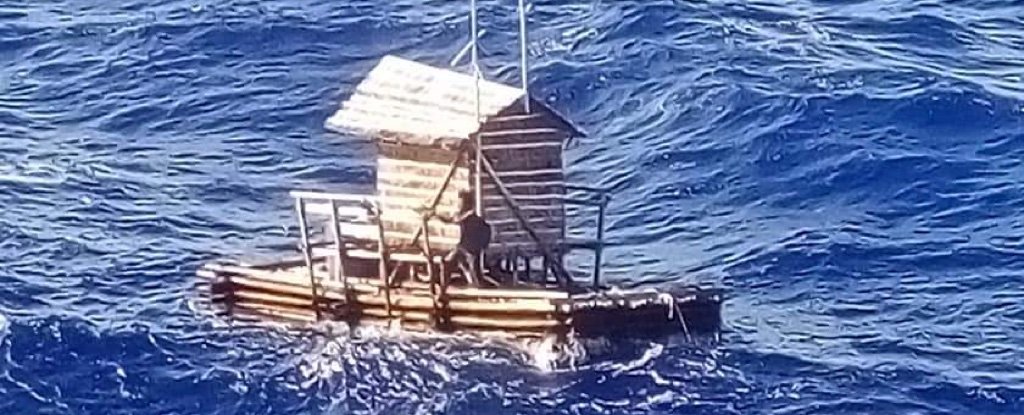
main article image
(Indonesian Consulate General Osaka/Facebook)

Adilang worked as a lamp lighter on a rompong since the time he was sixteen years of age. The rompong, a raft of wood topped by a hut is lit at night to attract ocean fish to the shoreline of Indonesia's coastal area of North Sulawesi, an aid to local fishermen whose living is crucial to the general diet of the population. Lamp lighters lead a solitary existence; the fishing rafts are moored at least 100 kilometres offshore, with no paddle, no engine, set dozens of kilometres apart.

The rafts are anchored with ropes but occasionally they break, from relentless friction. Once weekly supplies, fuel for a generator, food and any other necessities are dropped off for the minders who communicate with fishing boats via a hand-held radio they are supplied with. Work contracts are for six-month periods. For their efforts, the fish minders earn $130 monthly, a considerable assist to a large family whose children are expected to help support the family income.

Adilang's fish trap went adrift on the Pacific Ocean when its moorings slipped. To survive, he caught fish, cooking them by using the wooden fences along the top of the rompong to make cooking fires. Aspirants to the job must prove they are capable of fending for themselves and this young man certainly did. Ten ships passed the stranded youth and despite his efforts to bring his plight to their attention, none responded, "unaware of my ordeal", he explained. There were days with no rain, and that's when Adilang drank seawater.

After fifty days at sea the Panamanian-flagged MV Arpeggio off the island of Guam -- some 1,920 kilometre from where Adilang's wooden fish trap came loose -- stopped to rescue the boy. Although this was the third time his raft had come loose and drifted, on the other two occasions the raft had been rescued by the ship of the owner of the 50 rafts. When Adilang saw the ship passing he once again attempted to draw the attention of its crew as he had done with the previous ships that had failed to notice his efforts.
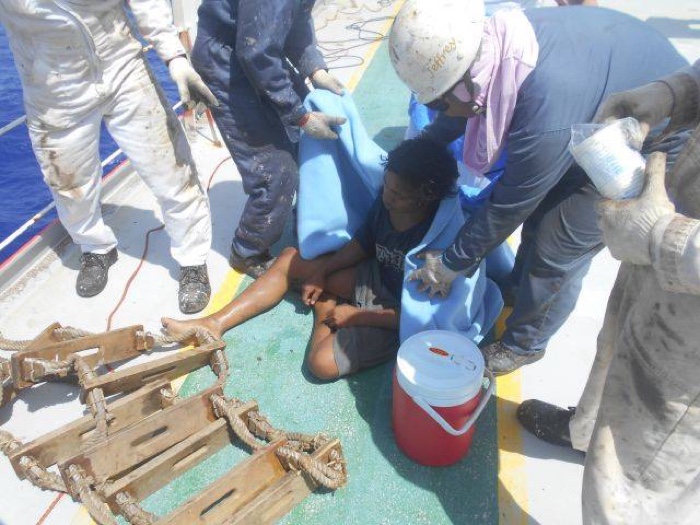
576 indonesian teenager adrift 2
(ICGO/Facebook)

Once he had succeeded in alerting the crew of the ship to his presence, rescue was complicated by the condition of the ocean, assailed by high waves -- a completely agitated surface. The Arpeggio's crew threw a rope as the tanker circled around the raft. The rope was beyond Adilang's grasp, leading him in desperation to leap into the water. In his weakened condition he barely managed to grasp the rope. Eventually a member of the Arpeggio's crew was able to grasp his hand, pulling him to safety.

Once aboard and safe, the Arpeggio contacted the Indonesian mission in Japan when the ship docked and officials from the Osaka consulate arrived to take the boy into their custody on September 6, returning him to Indonesia two days later. The youngest son of four siblings, Adilang has decided that rompong work as a lamp lighter attracting fish is not a career he plans to carry on with. "My parents agree", he said.
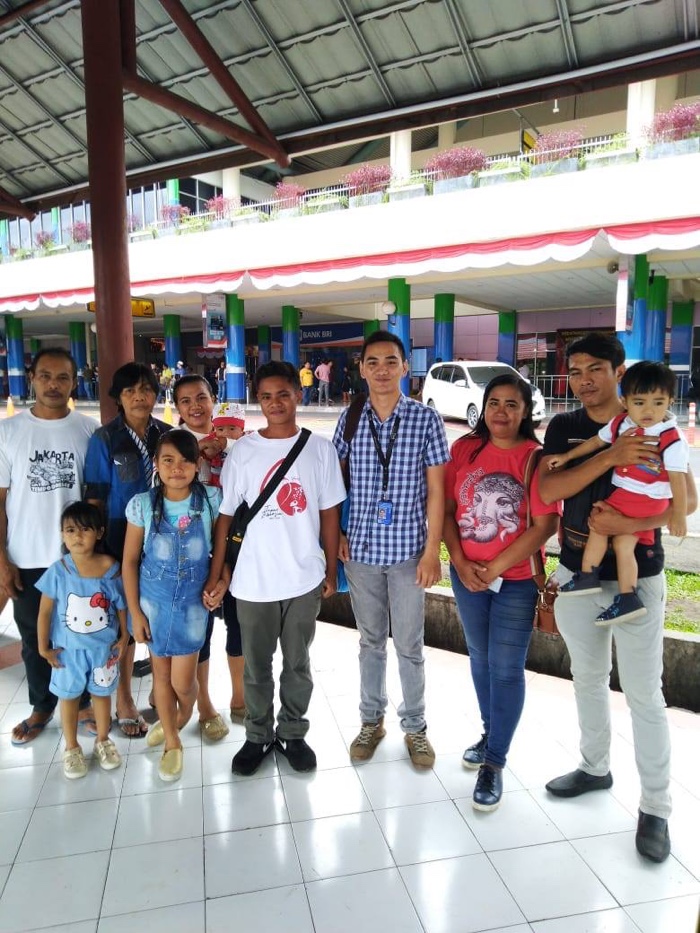
576 indonesian teenager adrift 3
Adilang (in white T-shirt) reunited with his family (ICGO/Facebook)

Labels: , ,

Thursday, August 23, 2018

Nature's Baffling Changes

"It's totally out of everyone's wheelhouse."
"I had calls -- 'Really? The reds aren't running? Are you sure the sonar is even working'?"
"It was very unexpected for the general public."
"They [smolt; young salmon] would have hit some very warm ocean water right in a critical life stage. They out-migrated into a marine environment [that[ wasn't really conducive to sockeye development and survival."
Stormy Haught, biologist, Prince William Sound, Copper River areas

"It's just like everybody is in total shock."
"Nobody can afford to buy gas on their four-wheelers. It's going to be a hard winter for a lot of people."
Elliot Lind, 70, commercial fisherman, Aleut fishing village, Chignik

"Some researchers are pointing toward warmer water, but it kind of depends on which populations we're talking about and where they are."
Bill Templin, Alaska chief scientist, commercial salmon fisheries

"That's what we're seeing, massive changes in all kinds of things."
"It's not going to be one thing only, it's going to be a combination of insults that cause these problems."
Kathi Lefebvre, research biologist, Northwest Fisheries Science Center, Seattle
alaska-salmon-shortage-FT-BLOG0818.jpg
Nick Hall/Getty Images

A mass of warm ocean water known as "the Blob" came out of Mexico and began to raise temperatures in the Gulf of Alaska in 2014. Since then, algae blooms have spread north, the result of which toxins they emitted have poisoned the areas where birds and mammals have been exposed to the deadly toxins. From 2014 through to 2017, a large seabird die-off occurred across Alaska. There were reports of paralytic shellfish poisoning and mysterious whale perishings.

A great number of problems not only toxic algae growth can accompany ocean temperatures that are unaccustomedly warmer, leading to starvation, increased susceptibility to disease, as well as reproductive problems. Higher oceanic temperatures have the potential to harm plankton, the main meal of salmon. But the absence of red salmon in this fishing season remains a puzzle to scientists who are left to hypothesize the reason for their diminished return in Alaskan waters.

Climate change and pollution are always the quickest, easiest answers, but they may not accurately describe the whole reason for the startling absence of red salmon from Alaska rivers where once they were so abundant they fell in wholesale numbers into fishermen's nets. Expected to return as usual to the rivers where they spawn after feeding in the open sea, they have failed to materialize. The absence follows a pattern that king salmon initiated.

These are large, muscular fish held in great esteem for their mild flavour and flesh that is oil-rich and nutrient-dense. In the last decade their numbers have diminished hugely, leading the large community of natives, Alaskan residents in general, commercial fisheries and the restaurant trade to depend more heavily on the usually abundant red salmon and other locally caught fish.

The red salmon with its raspberry-bright colour and slightly salty flavour exemplify high summer in Alaska. Everyone catches them, smokes them, freezes them, barbecues them, brines them in sugar and salt, and alder-smokes them. Restaurants depend on them for a bustling summer business. They are vital to the state's economy. Freezers in cities and rural villages are crammed with them; plentiful, inexpensive and readily caught even by rank amateurs.

They were, that is.

This summer when late July rolled around, marking the end of the red-salmon season, an estimated half of last year's total had arrived. The glacier-fed fishing ground of the Copper River experienced its leanest red-salmon run in 38 years, along with other rivers across the state. River after river was closed to fishing in July by state wildlife managers to ensure that enough salmon would be left to reach their spawning grounds.

Scientists remain cautious about the causes, suspecting that warmer ocean temperatures resulted in this phenomenon. One area only, Bristol Bay, noted as the world's largest wild red-salmon fishery in south-west Alaska, saw no difference in the number of their catch this year. Unfortunately for most Alaskans, most of its catch leaves  he state, shipped around the world.

Off Kodiak Island in July, commercial fishermen saw their nets full of jellyfish, just jellyfish. In the rural Aleut fishing village of Chignik there is a sombre atmosphere in view of its fishing fleet, the economic lifeblood of the village sitting idle during the red-salmon fishing season. Townspeople who ordinarily smoke and freeze fish vital to their winter diet, now face the necessity of buying costly groceries. Food aid may have to be shipped in to help the town get over the winter months.

Over the last century, scientists well know the opposition that all varieties of salmon in the Pacific Northwest face, through the proliferation on the rivers of dams, deforestation, warming water and pollution. Chief scientist Bill Templin feels that it is not the rivers that are somehow at fault, that whatever has impeded the red-salmon return happened in the ocean itself.

Warmth appears to have persisted in the Bering Sea, home to some of the world's largest fisheries, even while water off much of the Alaskan coast has cooled this year.

Melody Miller (left) disentangles a salmon she just netted on Kenai’s north beach with the help of her daughter Manuia Tufi on Thursday, July 26, 2018 in Kenai, Alaska. The two had recently after arrived from Anchorage and had caught the day’s first fish. Miller said this is her seventh year of dipnetting in Kenai. On Thursday afternoon, the Alaska Department of Fish and Game announced the fishery will close two days early, at 12:01 a.m on Monday. (Ben Boettger/Peninsula Clarion)

Labels: , , ,

Saturday, June 30, 2018

Destroying an Invaluable Philippines Ecosystem

“It is vital not to let damaging fishing practices become the norm."
"Once people started using destructive fishing methods they stuck with what is familiar – even after those methods later became illegal. So, it’s essential to ensure young fishers engage with sustainable fishing methods such as hook and line fishing, or traps. It’s also critical to motivate older fishers to set aside destructive methods."
"If the Philippines were to fully implement its new fishing laws on sustainability, then ocean protection would improve and use of damaging gears would decline.:
"Fisher organizations can also take the lead, as sometimes happens in the Philippines, and cooperate on limiting destruction, ideally with support from local government."
Jennifer Selgrath, PhD student, Institute for the Oceans and Fisheries, Fulbright Scholar 
Squid fishers on Danajon Bank    ubc.ca/files Selgrath-Squidfishing
It seems hard to imagine but in the islands off the central Philippines, blast techniques are commonly used for fishing. A fisherman in a narrow boat will toss a bottle bomb into the water which explodes and the boat rocks while fish bob to the surface, dead mostly, others gasping briefly then dying. No fuss, big mess as coral shatters in response to the shock. The internal organs of reef fish are ruptured by the blast, their spines fractured, their flesh torn by coral shrapnel. And this is not a new kind of fishing technique, it is traditional.

Nothing survives the blast. Microscopic plankton, sea horses, anemones, sharks; in a 10- to 30-meter radius of such an explosion very little escapes death. The Philippines has been bestowed by nature to be the custodian of 27,000 square kilometers of coral reef, making for marine biodiversity on a grand scale. Now that climate change is racking up changes affecting oceans, the recognition that something must be done to stop illegal fishing, and most certainly 'blast fishing' from wreaking any more irreversible damage is beyond urgent.
Bacuit Bay and the town of El Nido seen from above. El Nido once suffered from rampant blast fishing. Credit: Lano Lin / Shutterstock
A new study out of University of British Columbia conducted in the Philippines by the Institute for the Oceans and Fisheres' Project Seahorse and the Landscape Ecology Group at the University of British Columbia, headed by Jennifer Selgrath, produced a paper: Shifting gears: Diversification, intensification, and effort increases in small-scale fisheries (1950 - 2010, published in PLOS One, concluding that such fishing methods cause greater damage to climate-endangered coral reefs than ever.


The researchers tracked various types of fishing methods — such as hand line, traps and nets — used on coral reefs between 1950 and 2010, to discover that from the 1960s the use of sustainable fishing methods such as traditional hook-and-line fishing remained stable, but that a marked increase in the use of fishing practices less selective, illegal and more destructive had moved forward, particularly in the regional use of destructive fishing methods such as the use of explosives and poisons, both outlawed by government in 1932.

Despite legislation in the Philippines dating after 1998 banning these destructive fishing techniques their use persists with a growing number of fishers making use of crowbars to smash up corals to enable them to catch elusive marine animals such as abalone which bring greater profits. For many traditional fishermen the profit they obtain ensures they will continue to defy the law; if their ancestors did it, it can't be wrong. Basically, these fisherfolk live a poverty tradition, barely managing to sustain themselves.

Legal net fishermen gain three kilos of fish daily. Dynamite fishing can net nine kilos, occasionally up to 20 kilos. Slice off a few centimeters of fuse wrapped in aluminum foil, strap on a match for a detonator; funnel sand to the bottom of a glass bottle and pack it with explosives. That fuse, in aluminum wrap, allows four seconds to toss the bomb and wait for it to explode. It helps to preserve human life to know the proper bomb-making technique; some fishers have been killed or maimed through carelessness or distraction.

In 1970, according to a report by the Philippine national statistics board, an average daily catch was 20 kilos, reduced to two kilos by 2000. Declining fish stocks convinced more fisherfolk that they would do better through illegal fishing. In blast fishing the entire food chain -- plankton, small and large fish -- juveniles that will never attain to spawn size, perish. Absent healthy corals the entire ecosystem along with the fish within fail to flourish and gradually die off.

Rubber hose wedged between teeth, fishermen sink ten meters into the water after a blast to lurch awkwardly along the ocean floor, collecting stunned and dead fish scattered among broken coral. In twenty minutes surfacing with a  handful of high-value reef fish and about five kilos of scad and sardines, a small catch completes the process. Two men can split the earnings from that catch, about $10 profit each.

Coastal resources management in various island regions have limited resources at their disposal; a handful of slow-moving boats to patrol hundreds of square kilometers of sea. Dynamite fishermen reason their parents used this method and there are still fish; if the scientists warning of disappearing fish were right the fishermen would themselves die if the oceans ran out of fish. However that would never happen, the fish will never disappear, they believe.

In a matter of seconds, dynamite fishing can destroy a reef that took hundreds or thousands of years to grow.
Photo Credit: Richard Whitcombe / Shutterstock

Labels: , , , ,

Friday, May 04, 2018

Evolutionary Survival Advantages: Man as Marine Animal

"The Bajau have this subsistence that depends on marine foods, and they've been known to have this lifestyle for more than a thousand years. They're pretty incredible: They can dive for very long periods of time for more than 70 metres, with nothing but a set of rustic wooden goggles and a set of weights, nothing like the equipment we would use today."
"The Saluan diverged from them about 15,000 years ago, and they are not known to have this marine lifestyle. So the idea was to contrast these two populations with similar ancestries, but different lifestyles. We wanted to see if there was some difference in their genomes that could explain this."
"This gene existed before the Bajau, because the Saluan have it too. But once they diverged from each other, at some point in history, it became advantageous for Bajau individuals to have this after the Bajau adapted to this particular lifestyle."
"Individuals who had it tended to survive more than others, or maybe they had more children. The fact that both Bajau divers and non-divers have the large spleen points to the fact that this is something they have from birth rather than something they acquired through experience over time."
"We're [humankind] still evolving. Evolution hasn't stopped at any point in time."
Fernando Racimo, assistant professor, University of Copenhagen, Denmark
Why Bajau divers can hold their breath for minutes
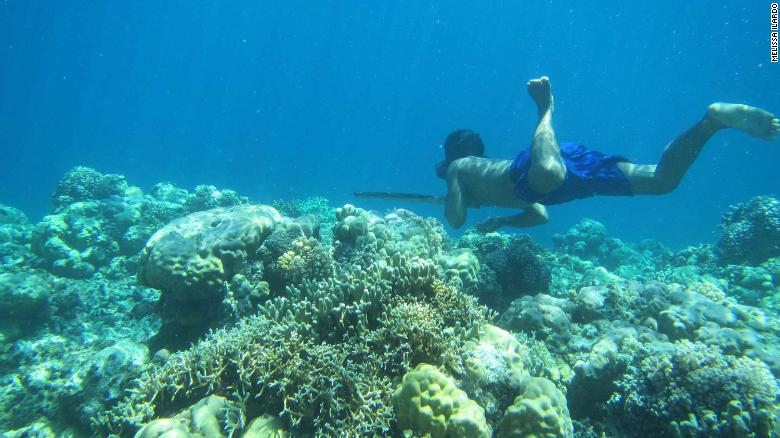
A Bajau diver uses a spear to hunt fish.  CNN
"The lung chest wall could become more compliant [the environmental adaptation displayed by the Bajau. There] could be some looseness that develops over your training [throughout a lifetime]. The diaphragm could become stretched." 
"The abs could become more compliant. We don't really know if those things occur."
"The spleen is able to contract to some extent but we don't know of any direct connection between thyroid and spleen. It may well be."
Richard Moon, Duke University School of Medicine
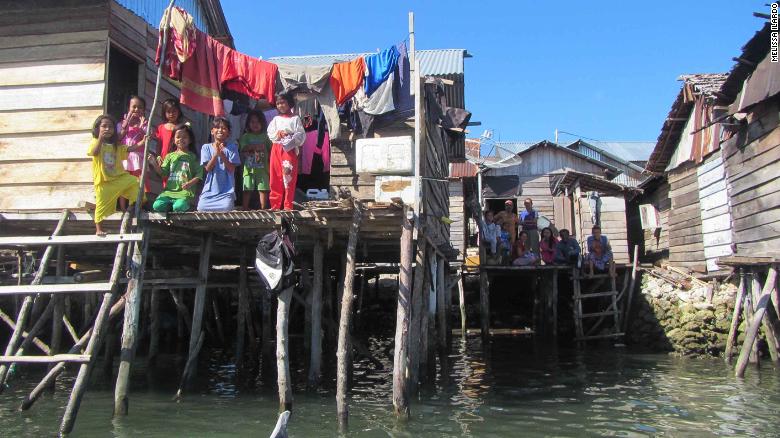
The seaside village of Jaya Bakti in Sulawesi, Indonesia, is inhabited largely by Bajau people.
The seaside village of Jaya Bakti in Sulawesi, Indonesia, is inhabited largely by Bajau people   CNN

One scientist's exciting finding, can be another's perceived misinterpretation of observable facts. Skepticism on the part of one researcher in response to the ebullient !Eureka! of another, is the stuff of which science and research is made; there is always that 'prove it!' element. And Dr. Racimo of the University of Copenhagan believes his hypothesis is well and truly proven by what he and his fellow researchers at University of California, Berkeley -- teamed up to study in the mystery of how it is that some humans are capable of holding their breath beyond a five-minute period -- have concluded.

The Indigenous Bajau people, resident for millennia off the coast of Southeast Asia, more commonly called Sea Nomads -- inhabiting an ancestral area close to Malaysia and the Indonesian archipelago, are capable of diving up to 70 metres undersea. They wear primitive wooden goggles, and hold a set of weights; with one deep breath they dive and the astonishing length of time they can sustain that dive, with a breath they can hold for up to five minutes sets them apart from others, quite distinctly and dramatically.

As Sea Nomads, they live in traditional houseboats and each day hours are spent hunting fish and assorted creatures of the sea. Where most fisherfolk spend their time above water casting rods or nets for fish, the Bajau people do their fishing deep under water. The amazing free diving capacity is not seen anywhere else in the world, skills they possess that have been a mystery for centuries. Which led a group of geneticists and biologists from the University of Copenhagen and University of California, Berkley to the informed belief that the answer to the mystery lies in their spleens.
Jatmin carries a freshly-speared octopus back to his boat.  Photo: James Morgan

According to conclusions published recently in the journal Cell, the Bajau people may be possessed of a genetic advantage acquired through environmental adaptation over thousands of years; when natural selection gradually gave preference to those among them capable of performing such underwater feats not given to most humans and in the process a people emerged with enlarged spleens enabling them to remain underwater for vastly prolonged periods of time on a single, expansive breath.

The spleen has a key role in the process that evolves as humans dive into water where an autonomous "diving response" ensues, as breath is held while underwater. The spleen stores red blood cells, and during the dive response it contracts, injecting oxygenated blood cells into the circulatory system, becoming the fuel partially responsible for the process that allows us to hold our breaths. The amount of time we can spend underwater is directly related to the size of the spleen, according to the researchers' hypothesis.

This neat conjecture fits very well into the fact that Sea Nomads are found to have spleens about fifty percent larger than those measured by researchers in other Indigenous people living nearby, the Saluan. Ancestrally related to the Bajau, the Saluan don't share the gift of an enlarged spleen enabling them to dive for a prolonged period as the Bajau do. Melissa Ilardo from the University of Copenhagen's Center for Geogenetics was the lead author of the paper. She had travelled to Indonesia, hauling along a portable ultrasound to measure the spleens in the two communities.
Ibu Diana Botutihe has lived her entire life at sea, visiting land only intermittently to trade fish for rice, water and other staples. Here she is pictured on her boat in Sulawesi, Indonesia.    Photo: James Morgan

The researchers discovered the Bajau also was possessed of a  higher frequency of a variant of a specific gene, called the PDE10A, once they sequenced the genomes of a few dozen Bajau and Saluan test subjects. The conclusion was drawn that increased thyroid hormone levels in the Bajau are also thought to play a significant role in the process. Their decision, however, is not necessarily shared by other scientists who believe it possible that other adaptations could be involved in the diving capability of the Bajau; further study is required for a fuller understanding of the process, they stress.

Yet the anomalous environmental process that stimulated such an evolutionary advantage for survival is seen in other study groups where genetic mutations come into play among other discreet populations living in extreme geological and atmospheric conditions globally. Studies, for example, documenting that people living in Tibet appear to have benefited through natural selection to adapt to hypoxia, an oxygen deficiency resulting from living in high altitudes that can be fatal to others, but which the Tibetans have adapted to.

The Bajau are adept free divers. Some of them spend up to five hours a day under water, searching for food and other creatures for trade.   Photo: James Morgan

Labels: , , , , ,

Friday, June 23, 2017

The Globe's Foremost Apex Marine Predator

"We've been chased out of the Bering Sea. [Electronic noisemakers to frighten them off?] It became a dinner bell."
"It's possible at some point they [Orcas] might start hitting the pot [conversion to giant fishing traps called pots]."
"When I started fishing in the early '80s, when we saw a whale it was an event. Now, they circle the boat."
Paul Clampitt, co-owner F/V Augustine, Washington State

"[Orca pods close to the Aleutian Islands are like a] motorcycle gang."
"You'd see two of them show up, and that's the end of the [fishing] trip. Pretty soon all forty of them would be around you."
"[Pulling up lines to see some fish merely gnawed] That was them teaching the little ones. It's unfortunate the orcas are putting us out of business, because they're really a phenomenal mammal."
John McHenry, owner, F/V Seymour, Alaska, Aleutian Islands

The animals have learned to target individual boats, and are leading fishers on high-speed chases to get away : AP Photo/Elaine Thompson)

Are animals intelligent? Can they assess situations and react to them to further their own interests? Ask the fishermen who have been experiencing some unusual episodes of new behaviour expressed by aggressive orcas, forming pods skilled in harassing boats and harvesting their fish. "Since 1997, reports of depredation have increased dramatically", a report by the Southeast Alaska Sperm Whale Avoidance Project has noted.

It has by now been well enough witnessed and documents that orcas can patiently wait for fishermen to acquire a halibut cache, even if it takes all day, to then move in to strip the fishing lines. Cod and halibut fishers off the coast of Alaska have traditionally experienced peaceful coexistence with the orcas in the region. That was then; now the orcas have turned on the fishers to strip them of their catches.

Sperm whales, large and square-headed, have been pillaging fishing lines as well. A video taken in 2006 by the Avoidance Project succeeded in filming one of the 50,000-kg whales as it delicately shook loose fish from a fishing line. "I've had the same sperm whale follow me 70 miles", complained Michael Offerman of the F/V Kristiana.

The Bering Strait separating western Alaska from Russia appears to be the locus where the worst incidents of whale hijacking of fishers has been taking place, though fishing boats across Alaska have been reporting orca harassment. The cost of fish loss from orcas appropriating the fish from lines was estimated at $500 daily, according to a 2014 study.

While a 2015 study of fishing boats in Uruguay where similar fishing techniques are used discovered "the presence of killer whales in the fishing ground seems not to affect the catch per unit effort."  A rebound of North Pacific whale populations resulting from the 1980s moratorium on commercial whaling appears to be linked to the increasing predation of whales on fishing boat catches.

Up to the rebound, cod and halibut fishers' experience had been that of moving among populations of whales surviving the hunt by whaling fleets, where survivors had learned that the approach of a boat engine spelled danger to them. Earlier, in the 1990s, researchers had discovered that a sudden collapse in Pacific sea otter populations was caused by orca predation.

The orca social structure is a complex one; just like humans they have regionally distinct languages and strategies for hunting. Orcas have often been observed to be strategizing new hunting tactics, and teaching those advantageous new techniques to other whales. Alaska fishers claim to be seeing an increasing number of juveniles taught by their elders to snatch fish from fishing vessels.

Inuit have also observed that orcas swimming deeper into the Arctic as a result of polar ice cover melting, have been preying on slower-moving local fauna. Orcas, stated an Inuit interviewed for a 2012 study, would sometimes kill "hundreds" of belugas at one time. "When the killer whales had left the kill site, Inuit would collect the maqtaq (blubber) from the numerous dead belugas."

Making their home in all seven of the world's oceans, orca pods have been witnessed killing other top marine predators, including great white sharks, walruses and leopard seals.

File -- National Post

Labels: , ,

Monday, December 05, 2016

A Seriously Depleting Vital Coastal Resource

"These big industrial fisheries are chasing the fish. In west Africa, larger vessels are moving closer and closer to shore. A lot of these indigenous communities, all they have are dugout canoes."
"What you've seen is as people have less access to their traditional fishing ground people have turned to eating more food in the stores."
"People are wondering about the effects on their health. There's an elevation in cases of diabetes."
"A lot of communities are very similar, their food and cultural practices. What do they do if the fish are gone?
"We are at risk of losing human cultures that have been around for thousands of years, which makes this issue much more than environmental."
Andres Cisneros-Montemayor, research associate, University of British Columbia
University of British Columbia
A new study has been released by UBC, published in PLOS One. And, in a sense, it reflects what we already know about how the hunger for seafood and intrusion into national waters in Africa has affected Somalia. Former Somalian fishers have found their formerly abundant catch being scooped up by foreign fleets who have no compunction over fishing in waters traditionally the territory of Somalians, and in fact within the legal offshore territorial claims recognized internationally, by the country.

But Somalia is a poor African country, torn by countless wars, and with a weak government unable to defend or fend for itself. So the former fishing folk turned to piracy, and found that calling far more advantageous to them financially than fishing which formed part of their cultural heritage, ever was. It was a kind of revenge, in a sense, against large global commercial shipping fleets, to capture the ships and crews and hold them for ransom. This action wasn't meant to be beneficial to the country, but to the crews who signed on to this illegal, corrupt activity.

Perhaps, in a sense, no more illegal and corrupt than the giant fishing fleets that placed their indigenous fishers out of commission. What happened was that enough influential, wealthy nations saw their corporate interests at risk and their insurance rates climb, so they jointly challenged the pirates whose gains enabled them to buy larger, more technical craft, and advanced arms and to become something akin to local warlords who were supported by investors from offshore, like Qatar.


Pirates had long plagued fishermen off the Somali coast, but now they were taking the huge freighters which are the lifeblood of international trade. Getty

That, of course, is an entirely different story than the one that the UBC study targets. Its conclusion was to demonstrate that indigenous people living on the world's coastal regions eat far more fish than those living in nations' interior regions. And linking their foodsource to their culture and their native religion. It is estimated that, overall, people consume roughly 102 million tons of seafood annually; a vital source of nutrition for people living in proximity to the world's oceans.

Coastal residents eat fifteen times per capita more fish than those living elsewhere in the world, equalling 2.3 million tons; two percent of the global catch. Fish, however, because it is so important to these indigenous communities, has served as a central theme of their culture and religion; seafood long considered to represent a gift from the gods. Coastal peoples living in the Americas, Asia, Africa and the Arctic for starters, view seafood as critical to their very existence. And it is.
Mothers and children handlining for fish in the evening in Kavieng, Papua New Guinea. Image by Colette Wabnitz

But overfishing and the movement of fish from their traditional ocean-sourcing areas, resulting from climate change, could soon enough have the effect of removing those resources entirely. Huge commercial ships are encroaching increasingly on native fishing areas on the African coast, even as ocean stocks are diminishing. This study points out what anthropologist hadn't previously realized; how much indigenous people living on coasts rely on fish for their traditional diet and their health.

United Nations data was useful in identifying and defining indigenous populations. Some 370 million people worldwide are considered to represent indigenous populations, about five percent; mostly ethnic minorities native to the regions they inhabit. There are about 27 million people in almost two thousand communities, in 87 countries that encompass the coastal indigenous culture of seafood consumption. Native coastal people occupy their positions universally world-wide.

From the Pacific Northwest in the U.S. and Canada; in the Arctic regions, in Australia, New Zealand, Latin America, the Caribbean and Europe, all represent a portion of the geographic areas where indigenous populations have existed for centuries, while the world progressed in its advancement toward 'developed' status around them, as though the two occupying the same geography were in isolation to one another, and in many instances, that is precisely so.

Local fish on sale at the Saturday market in Kavieng, Papua New Guinea. Image by Colette Wabnitz.
Local fish on sale at the Saturday market in Kavieng, Papua New Guinea. Image by Colette Wabnitz

A database was created by the researchers to aid in determining how much of the global catch is used where coastal indigenous people live. In so doing, it was discovered that coastal indigenous people took 75 kilograms per person, while the rest of the world consumed 20 kg per person. The study was unable to determine whether coastal natives were consuming more or less fish than what occurred in the past.

"That's why these baseline studies are so important", cautioned Dr. Cisneros-Montemayor. "Since this [study] is the first one, we have no number to compare it with. But people on the ground have noticed a big decline in consumption of these foods. People have noticed a decline in their culture and social cohesion."

indigenousseafood-infographic
The study “A global estimate of seafood consumption by coastal Indigenous peoples” was published in PLOS ONE.

Labels: , , ,

Monday, August 01, 2016

Close Encounters of a Peculiar Kind

"He was coming in my boat whether I liked it or not, and he was telling me to get out."
"I just glanced to the front of my boat, and that's when I seen this critter swimming in the water. It kind of disappeared from sight. I couldn't see it as it went around the side of the boat."
"I went to the side to look over, and then I heard him come snarling over the transom, between the motors. Right away, as soon as I saw his face, I knew what it was ... I know badgers, and I didn't want him in the boat with me."
"I reached and grabbed my net, which has a long handle, and I turned around and tried shoving him with the handle into the water."
"I didn't want to just really bat him one. I was pushing on him with a paddle, and I just about got him in the water, and he came back again. He was gaining on me. I just gave him a little harder rap on the nose and I broke my paddle. But I was able to push him in the water."
"It seemed like it lasted forever, but it was probably only a minute or two. I've dealt with nuisance wildlife all my life. It wasn't new to me. But this kind of incident was kind of new. Never heard of it happening before."
Ron Lancour, outdoorsman, Sheridan Lake, British Columbia
Badgers are an endangered species and extremely rare in B.C.
Badgers are an endangered species and extremely rare in B.C. (Karl Larsen)

He was about a kilometre from shore, fishing on a quiet Friday afternoon four days ago, when he noticed something swimming in his direction. The animal he later identified was snarling as it came abreast of the front of his boat and appeared to be attempting to clamber aboard, definitely without invitation, definitely with a purpose in mind that Ron Lancour felt instinctively would not be to his own advantage.

A wholly unorthodox meeting on a lake between two land-based mammals, one of them plentiful on the land, the other seen in far fewer numbers, so the responsibility of the human was to ensure that his actions in defending himself from an obviously irate animal would not remove a fairly rare specimen from the landscape, despite the puzzling circumstances. It must have entered the man's mind that the creature could be rabid?

Mr. Lancour wasn't just anyone out for a day's fishing with little clue as to the confluence of man and beast for he is a nature-lover and at one time was contracted to trap bears for the city of Kelowna, British Columbia, his home base. He had been out on the lake, his favourite fishing venue in the area, for roughly an hour that day, half-asleep with the motion of the boat on the water and the pleasant ambiance.

He came speedily awake as he realized the intention of the creature he hadn't yet identified. His years as a trapper had equipped him with the ability to react swiftly and appropriately in relation to most man-and-beast encounters. On this occasion he reached for the first tool that came to hand, a net, to respond to the 10-kilogram animal's intention. The badger began chewing the handle of the net that Mr. Lancour was using to try to push him back into the water.

He was, throughout the encounter, aware that there are but 200 badgers remaining in British Columbia, which places them into an endangered classification. Killing one, however inadvertently, he felt, would not reflect well on a man adept with handling rogue wildlife who felt a personal responsibility to the protection of the diversity of animal life in a natural setting.

Gavin Young/Postmedia/File
Gavin Young/Postmedia/File   A B.C. badger expert told Ron Lancour that badgers are “very docile and not aggressive.” Not always, it seems.

The badger eventually made its way in the water to the back of the boat where once again it clambered aboard, so Mr. Lancour, now holding an oar that had splintered from its last task to persuade the badger to return to the water at the front of the boat just moments earlier, finally succeeded to knock the badger off the boat with it. At which point the badger admitted -- to itself, at least -- that the encounter had not been a successful one for itself and speedily swam off to shore.

Mr. Lancour breathed a sigh of genuine relief, marvelled at the episode that had just occurred, and settled down for another hour-and-a-half of fishing on a beautiful Friday.

Ron Lancour, the B.C. man who fended off the badger attack, with a 3.5-kg rainbow trout he caught in Sheridan Lake this week.
Supplied by Ron Lancour     Ron Lancour, the B.C. man who fended off the badger attack, with a 3.5-kg rainbow trout he caught in Sheridan Lake this week.

Labels: , ,

Friday, July 03, 2015

The Slave Trade in Seafood

"You Burmese are never going home. You were sold, and no one is ever coming to rescue you."
Thai fishing boat captain

"I don’t want to speak that language anymore because I suffered so much there. I hate that language now."
"I feel like a tourist [on his return to his home in Burma]. I feel Indonesian."
"I didn’t want an Indonesian wife, I just wanted to go back home to Myanmar. I felt like I lost my young man’s life. I just thought that all of this time, I should have been in Burma having a wife and a proper family."
"My life was just so bad that it hurts me a lot to think about it. I miss my mom."
Myint Naing, 40, former fisherman slave
Myint Naing
In this May 16, 2015, photo, former slave fisherman Myint Naing, 40, center, and his sister Mawli Than, left, embrace as they are reunited after 22 years at their village in Mon State, Myanmar. He is the oldest of four boys and two girls. In 1990, his father drowned while fishing, leaving him as the man in charge at just 15.   AP Photo/Gemunu Amarasinghe

Thailand has a busy and vast seafood export industry. And it is an industry built on slavery. Where innocent Burmese anxious to find employment are assured by recruiters that in Thailand they will find full employment, earn good salaries and be able to send money back home to their impoverished families living in their Burmese villages. The reality is that they are transported to Thailand and from there handed over for payment to fish in an industry that works its slaves around the clock, sometimes giving them a pittance in recompense, sometimes nothing.

Myint Naing, at the age of 18 became one of those slaves when a broker came to southern Myanmar in 1993 promising excellent, well-paid jobs for young men willing to work. Mying's father had died three years earlier and he, as the oldest male child in the family took on the mantle head of family and wage-earner. Desperate for a living wage for the family, Myint's mother agreed he could go with the agent. He was shipped by sea to the remote Indonesian island of Tual in the midst of rich fishing grounds.

And that was when the captain of the Thai vessel informed all the young men on board that they were no longer independent, but rather that he owned them; that they had been sold to him and there was no way they could return home. The ocean became his life as he became a slave to fishing to profit the captain and the larger, wider Thai fishing enterprise in their growing export market. It is a seafood business operating on the labour of an estimated 200,000 migrant workers.
Dita Alangkara/ Associated Press
Dita Alangkara/ Associated Press   Workers in Benjina, Indonesia, load fish onto a cargo ship bound for Thailand. Seafood caught by slaves mixes in with other fish at a number of sites in Thailand, including processing plants.

Many of them are not simply 'migrant workers', but slaves who were forced onto the boats; tricked, kidnapped or sold as Myint Naing had been. Their plight similar to that of press gangs roaming the streets of 18th Century Britain for sailors when such abductions were a common occurrence. The fishing companies that make up the Thai market have a wide consumer base, from the United States to Europe and Japan. The fish these workers and slaves help catch supplies food for faroff countries unware that slave labour places fish on their dining tables or in the tins of catfood they rely upon.

The young man repeatedly begged to be allowed to return home, and for his efforts was beaten mercilessly, forced to continue working on a boat in Indonesia. Eight years after he had first been taken to the boat as a slave he begged for his freedom only to hear the captain threaten to kill him. He was chained for three days as punishment, food and water denied him. He and 800 other slaves were rescued following a yearlong Associated Press investigation into Southeast Asia's fishing industry.

AP Photo/APTN
AP Photo/APTN In this Thursday, Nov. 27, 2014 image from video, workers from Myanmar load fish onto a Thai-flagged cargo ship in Benjina, Indonesia. An intricate web of connections separates the fish we eat from the men who catch it, and obscures a brutal truth: Our seafood may come from slave workers.

With the expansion of the seafood export industry, overfishing has meant that trawlers were required to sail further and further into foreign waters for fish. The result is that the workers are virtually trapped for months, extending to years aboard their seabound prisons. There is no medical care, boiled sea water is given them, and the rescued fishermen explained that on some boats workers were killed if they slowed the frenzied pace of drawing fish from the ocean. Some, in desperation, fling themselves into the sea.

In 1996, he ran away after having been beaten yet again in response to his pleading to be released. He managed to abandon his captivity, his skull wounded from the beating. An Indonesian family sheltered him until he regained some semblance of health, offering him food and shelter in return for his work on their farm. He stayed with them for five years, yearning to return to Myanmar, and missing the friends he had made and left behind on the boat he had run away from.

Then in 2001, a captain offering to take fishermen back home if they agreed to work caught his attention. In the hope that this would solve his dilemma he returned to the sea, discovering the conditions similar to what he had fled from. The elusive payment for their labour was withheld. After another nine months the captain abandoned them, leaving them free to return to Thailand on their own. When, once again, he asked to be returned to Burma, he was chained to the boat.

He managed to pick the lock on his shackles, dove into the night-time water and swam to shore. He hid in the jungle, fearful of approaching police lest they deliver him back to the fishing captains. By 2011 his life of solitude and privation caused him to move to the island of Dobo and there he heard of a small group of former Burmese slaves, living on vegetables they raised themselves. A friend informed him eventually that the Indonesian government had begun a rescue operation, embarrassed by revelations of slavery.

Myint Naing
In this May 16, 2015 photo, former slave fisherman Myint Naing and his mother, Khin Than, cry as they are reunited after 22 years at their village in Mon State, Myanmar. Myint, 40, is among hundreds of former slave fishermen who returned to Myanmar following an Associated Press investigation into the use of forced labor in Southeast Asia’s seafood industry.  AP Photo/Gemunu Amarasinghe
 
Myint Naing's 22 years in Indonesia had come to an end. He finally received the help he had longed for to return to his small village and be reunited with his family, one of the hundreds rescued and aided to return to their families in the wake of a year-long AP expose of the labour abuses abetting Southeast Asia's seafood industry. Reports documenting the slave-caught fish shipped from Indonesia to Thailand where it was exported to the U.S. spoke volumes of the plight of these poor people.

It was revealed that the supply chains of supermarkets and distributors included Wal-Mart, Sysco and Kroger, and companies such as Fancy Feast, Meow Mix and Iams emphasize their condemnation of such labour abuse, and having had no idea that their pet food was a product of slave fishing conditions; vowing they are committed to taking steps to prevent recurrences for the future.

Labels: , , , ,

 
()() Follow @rheytah Tweet