Ruminations

Blog dedicated primarily to randomly selected news items; comments reflecting personal perceptions

Tuesday, October 11, 2022

The Healing Arts

"[The hospital was] like so many others in the U.K. But unlike many other hospitals in the U.LK. and unlike many other neonatal units int he U.K., within the neonatal unit at the Countess of Chester Hospital a poisoner was at work."
"Sometimes a baby who had been sick but then [had] been on the mend suddenly deteriorated for no apparent reason."
"We say that the collapses and deaths of the 17 children named in the indictment were not naturally occurring tragedies."
"They were all the work of the woman in the dock who, we say, was the constant, malevolent presence when things took a turn for the worse for these children."
"[Hospital consultants found] one common denominator [examining the pattern underlying the unexplained collapses and deaths]: the presence of one neonatal nurse. That nurse was lucy Letby."
"We allege that it is a hallmark of some of the cases in which Lucy Letby injected air into the circulations of some of these small babies."
Crown prosecutor Nick Johnson, KC, Birmingham, England
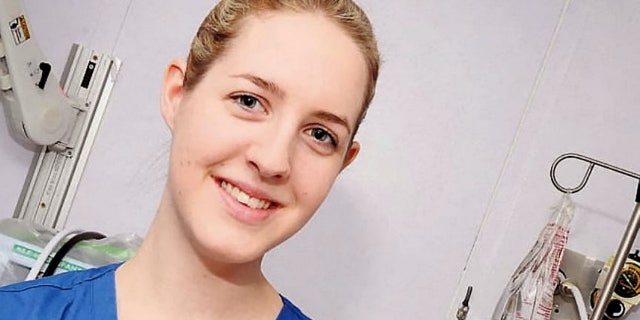
Neonatal nurse Lucy Letby, 32, is alleged to have murdered seven babies and attempted to kill 10 more.
Neonatal nurse Lucy Letby, 32, is alleged to have murdered seven babies and attempted to kill 10 more. (Credit: SWNS)
 
A trial opened a day ago in Birmingham, United Kingdom, in the case of a 32-year-old neonatal nurse accused of murdering seven babies and of attempting to murder an additional ten infants at the Countess of Chester Hospital, in Chester, England. Accused of being a 'poisoner at work' in the neonatal unit, the nurse denies the charges against her. Between June 2015 and June 2016, babies began dying of mysterious causes.The first victim was a baby boy Nurse Letby is accused of injecting lethally with air.

Just shortly into her shift when the baby boy died, the nurse is accused of attempting to murder the baby boy's twin sister after a lapse of 28 hours. The twins were born prematurely, but both were in good health. The girl twin suddenly stopped breathing and Nurse Letby, standing beside the incubator, called for assistance. Resuscitated, the child recovered. An expert pediatrician who reviewed the case came to the conclusion that the tiny girl had been subjected to "some form of sabotage".

"Here  you can see we have a pair of twins who were born prematurely, but in pretty good condition", the pediatrician informed trial jurors. The jurors heard that some newborn infants were repeatedly targeted by the nurse. One baby suffered three failed attempts, until the forth killed him. She had, it was pointed out, an "unusual interest" in families whose children died or had fallen seriously ill, "tracked" them on social media, Manchester Crown Court heard.

"Babies who had not been unstable at all suddenly deteriorated", stated the prosecutor. Consultants were puzzled that babies who collapsed failed to respond when given the appropriate form of treatment or resuscitation. Babies who survived the immediate attempts to kill them "collapsed dramatically but then, equally dramatically, recovered", in contradiction of medical expectations.

And tellingly, many of the attacks took place during night shifts, but when the nurse moved on to day shifts, "the collapses and deaths moved to the day shifts". The methods used were various: insulin poisoned two babies; others had air injected into their bloodstream or fluid through a tube into their stomachs. "That can have a catastrophic effect on babies", stated Mr. Johnson. 
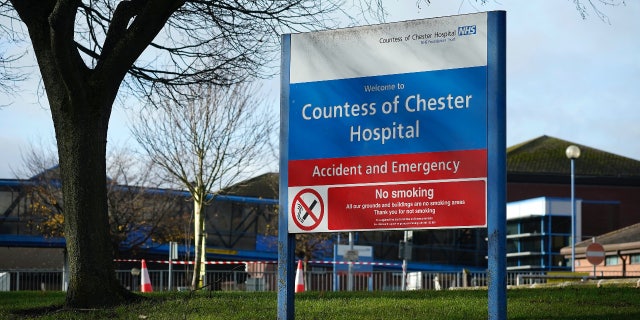
The Countess of Chester Hospital, where nurse Lucy Letby used to work in Chester, England.
The Countess of Chester Hospital, where nurse Lucy Letby used to work in Chester, England. (Christopher Furlong/Getty Images)

Labels: , , ,

Monday, January 06, 2020

Hope For Alzheimer's


"Photobiomodulation introduces the therapeutic effect of light into our brain. It triggers the body to restore its natural balance or homeostasis. When we do that, we call upon the body's innate ability to heal."
"We have a much bigger ambition than the drug trials. Drug developers are mainly either seeking to slow the mental decline in diagnosed cases, or to prevent the onset of Alzheimer's disease by intervening at the pre-symptomatic stage."
"Based on early data, we are confident of seeing some measure of recovery in the symptoms, not just a slowdown in the rate of decline, even in moderate to severe cases."
Dr.Lew Lim, CEO, Vielight Inc.
The Vielight Neuro RX Gamma device in use.


In Canada, an estimated half-million Canadians are living currently with Alzheimer's disease. In the United States that number is around 5.8 million. New cases diagnosed every year number around 25,000 in Canada, a total number expected to rise in Canada by 66 percent for a total of 937,000 people by the year 2031. Since the U.S. has about ten times the population of Canada, the diagnosed incidence of Alzheimer's onset is quite similar in each population base. Worldwide the number of those living with Alzheimer's is around 50 million, although it would appear that only one in four sufferers has been diagnosed, according to Alzheimer's Disease International.
"In spite of substantial efforts to establish effective treatments for Alzheimer’s disease, progress has been, unfortunately, limited and a cure does not yet exist."
"Although not conventional as an Alzheimer’s disease solution, we look forward to investigating the potential of Vielight’s technology in the treatment of this difficult disease based on promising early evidence."
Dr. Corinne Fischer, principal investigator, St.Michael's Hospital, Toronto
The light is directed at specific areas of the brain known to be damaged in Alzherimer's
The light is directed at specific areas of the brain known to be damaged in Alzherimer's Credit: Vielight
Currently, there is no treatment for Alzheimer's to cure the condition or to prevent its onset, although drug treatment has succeeded in slowing its progress in a minor way. The drug that appeared to give the most hope for the future, Biogen's aducanumah has been seen to slow dementia onset, but that appears the extent of its efficacy. No new drugs have been developed in almost two decades. Scientists have by and large surrendered their hope of reversing brain damage, once it has occurred.

On the near horizon, however, another treatment has recently emerged and has undergone initial clinical trials.

Resulting in the first major trial to determine whether light therapy might turn out to be beneficial for dementia. Early findings have astounded the scientific world, when people have been seen to regain memory, their reading and writing capability and have realized restored orientation, all negatively impacted and increasingly diminished by Alzheimer's. Should the trial ultimately be deemed successful it would represent the first treatment enabling the reversal of the disease's steady brain and body decline.
Multiple mechanisms for PBM in brain

The focus of the trial is a device named the Neuro RX Gamma headset, developed by Vielight, a biotech company based in Toronto. A process called "photobiomodulation" has been devised where parts of the brain known to be damaged in dementia are exposed to pulses of near-infrared light. Using LEDs on a headset, the device fires 4 Hz gamma waves directly into the skull. The hippocampus, part of the brain connected to memory, sees additional light channeled up the patient's nose by use of a separate nasal clip.
dementia symptoms

A pilot trial to test the effects of home photobiomodulation (PBM) on cognitive and behavioral function, cerebral perfusion and functional connectivity in eight patients with dementia was administered in a home setting three times weekly with the use of the Vielight Neuro Gamma device pulsing at 40 Hz. Participants were assessed at 6 and 12 weeks. Following 12 weeks of use improvements were seen in all indices. Should the trial prove to be the success that early results appear to indicate, people suffering with Alzheimer's would be able to self-administer their treatments at home with use of the light-emitting device.
healthy brain versus alzheimers brain

Alzheimer’s is the most common cause of dementia among older adults. Dementia is the loss of cognitive functioning—thinking, remembering, and reasoning—and behavioral abilities to such an extent that it interferes with a person’s daily life and activities. Dementia ranges in severity from the mildest stage, when it is just beginning to affect a person’s functioning, to the most severe stage, when the person must depend completely on others for basic activities of daily living.
The causes of dementia can vary, depending on the types of brain changes that may be taking place. Other dementias include Lewy body dementia, frontotemporal disorders, and vascular dementia. It is common for people to have mixed dementia—a combination of two or more types of dementia. For example, some people have both Alzheimer’s disease and vascular dementia.
National Institute on Aging, U.S.

Labels: , , , , , , ,

Wednesday, August 08, 2018

Desperately Seeking Justice....

"We wanted to see how many people we were losing along the way. It is pretty significant."
"We see a significant volume of patients within our program and there's great attrition in the rates of people who are going to pursue the whole justice side of things."
"It can be very overwhelming for someone who's been victimized [to commit to going through the process of using the rape kit, returning it for examination, and preparing to be involved in criminal prosecution resulting from rape]."
"People are afraid of what the process will be. They've seen this kind of case play out very publicly sometimes and they really don't want to be part of something that's going to potentially affect their life that much."  
Dr. Kari Sampsel, The Ottawa Hospital, medical director, Sexual Assault and Partner Abuse Care program
The research was done at the Sexual Assault and Partner Abuse Care program at the Ottawa Hospital. (Danny Globerman/CBC)
"Improving the continuum of care from the hospital to justice system is a complex process where many survivors are lost along the way."
"However, achieving just outcomes is of critical importance and the evidence from this study will go to support advocacy and inform best practices for survivors of sexual and gender-based violence."
Dr. Kari Sampsel, The Ottawa Hospital department of emergency medicine; Dr. Katherine Muldoon, The Ottawa Hospital Research Institute
The Ottawa Hospital study found only a small number of survivors turn over rape kits to police. (CBC)

"Being able to prove that as a survivor, where the evidence is just based on your body or your narrative, is a really challenging thing to do, not because it didn't happen necessarily but because there isn't physical evidence in terms of consent."
"The problems are not in the fact that they don't wish to come forward. I would say the larger problem lies in the fact our criminal justice system doesn't have the teeth often to be able to progress survivors' stories in the way they can other crimes."
Nicole Pietsch, co-ordinator, Ontario Coalition of Rape Crisis Centre

"They have their fears and self-blame ... where somebody says 'This happened because I was out drinking' or 'I shouldn't have invited him home'. So those myths are already out there and they're internalized in people, so there's a huge reluctance to come forward and report."
"What is it in the structure and the system that's creating these barriers that somebody who can be so violated can say 'I can't come forward?' That's where our focus needs to be."
Sheila Macdonald, director, Ontario Network of Sexual Assault/Domestic Violence Treatment Centres


According to research from University of Ottawa criminologist Holly Johnson, a mere 33 of every thousand sexual assaults in Canada end up being reported to police and of that number that are reported, only six are taken to prosecution -- and finally, three (out of every one thousand) conclude with a conviction. Now, new research findings out of The Ottawa Hospital's sexual assault and partner abuse care program has been published in the Emergency Medical Journal.

The research results offer for the first time hard data relating to the number of people treated for sexual assault in a hospital emergency setting, where rape kits are available and who agree to release the resulting evidence to police with a view to setting the justice system in motion. This study was undertaken during a period of focus on the national level on the high rate of sex assault cases that police deem to be "unfounded" once they have scrutinized the evidence presented.

What this new research does is to emphasize challenges faced in simply getting evidence out to police to begin with. The sexual assault evidence kits are offered in the hospital setting, yet fewer than one-third of victims of assault release the completed kits to police as evidence. Many people contemplating the level of scrutiny that will follow, including gratuitous attacks on social media once they reveal their victim status by calling on the justice system, are convinced to just let it go. 

Among 406 victims of rape from the Ottawa area for example, 64.5 percent (262 of the total) who had been the subjects of sexual assault, appeared at the hospital through their special program in 2015. Of the total of 262, 202 were deemed eligible for collection of evidence through the use of a rape kit to collect the required forensic evidence from bodily fluids and DNA fibre samples as well as other criteria of evidence of assault.

Yet of that number, of 202 patients eligible to submit forensic data only 129 chose to do so, representing 64 percent of those eligible -- and a further reduction took place, with only 60, representing fewer than one third of the final total managed to hand over the evidence to police. Those in a younger age bracket were likelier to submit the evidence to police, as well as those victims who didn't know their assailants, and those who had been out-of-doors when the assaults occurred.

Numbers for 2016 are undergoing similar analytical treatment in an effort to determine whether any change in the number of people agreeing to release forensic information to police has taken place in the wake of the universal calling out of sexual aggression related to the #MeToo movement that has roiled business, politics, and the field of entertainment as women have been revealing their experiences of body politics.

The wide coverage through social media given to the cascading number of accusations against men in powerful positions demeaning, humiliating, physically manipulating and attacking women in inferior, dependent positions has given impetus and confidence to greater numbers of women to come forward and pursue their human right to a life without sexual aggression. In Canada in particular an increased focus has been shed on the low number of sex assault cases that end up at trial.

A recent investigation by a leading national Canadian newspaper discovered one in five sex assault cases was coded unfounded, in that police deemed no crime had occurred, a situation that has led to questioning the criteria used to reach that conclusion and leading to a review of the handling by police of those cases. In Ottawa, the Philadelphia Model has been adopted, where a panel of outside experts are given access to a sample of unfounded sexual assault cases to judge whether missteps in the investigation were committed.

New research by Ottawa doctors shows that an alarmingly small number of sex assault survivors consent to have rape kit evidence shared with police. Tony Caldwell / Postmedia Network

Labels: , , , , , ,

 
()() Follow @rheytah Tweet