Ruminations

Blog dedicated primarily to randomly selected news items; comments reflecting personal perceptions

Tuesday, January 28, 2020

The Disease of Old Age : Defying Death

"One hundred will be the new 60."
"The average human health span will increase by ten-plus years this decade."
"The age of one hundred is easily in sight now. And kids born today can expect to live to 105."
Peter Diamandis, space, technology, aeronautics and medicine pioneer

"Aging is a disease, and that disease is treatable."
"You should feel hungry regularly [to slow down the aging process or avert damage]."
David Sinclair, professor of genetics, Harvard Medical School
istock

The Abundane360 conference held in Los Angeles last week revealed quite a few very interesting aspirational research programs along with plans to proceed at a fast pace to introduce a new kind of medicine in the treatment of humans suffering from the malady of aging. Mr. Diamandis outlined some fascinating facets about the new direction of medical treatments, in line with his belief, shared by others in Silicon Valley that aging is a "disease"; the result of "planned obsolescence".

If so, that planning can be attributed to our maker. God, science, nature, whatever you choose to believe in. And the novel sciences of human intervention are set to second-guess biology. The damage to certain critical bodily mechanisms, sensors and functions within the human body as they wear down and bring us ever closer to death, can all be ameliorated, and will, according to his prognosis of future health treatments.

This describes longevity research whose purpose is to identify core issues, then reverse or mitigate them. With the inestimable assistance of artificial intelligence, machine learning and computational heft breakthroughs and clinical trials are literally just 'around the corner' in terms of several years before they can be lunched on human subjects.

The research issues include stem cell supply restoration, regenerative medicine to regrow damaged cartilage, ligaments, tendons, bone, spinal cords and neural nerves, along with vaccine research against chronic diseases like Alzheimer's; and lastly United therapeutics, developing technology to solve organ shortage for humans through genetically engineering organs to be grown in pigs.

Courtesy of Thomas Leuthard

Ambitious? Yes! Feasible? Time will tell. The development of new, tailor-made medicines is being accelerated with the aid of new tools at a fraction of costs seen today. The conference was informed by Alex Zhavoronkov of Insilico Medicine that drugs that today take ten years at a cost of $3 billion to research, see a failure rate of 90 percent. His company, however, is able to test in 46 days with the use of human tissue, then model, design and produce with the aid of advanced computing, in mere weeks.

Diamandis asked his audience whether there was anyone awaiting a knee replacement operation among them. They could be wise to hold off on that operation until perhaps 2021, he suggested, when regenerative medicine innovator Samumed LLC of San Diego is prepared to complete phase three clinical trials of cartilage regeneration.

The company, according to its founder Osman Kibar, has been successful in injecting a protein to activate nearby stem cells to produce new cartilage in a knee or a new disc in a spine. Preliminary success to regenerating muscle and neural cells, retinal cells, skin and hair has also been completed. These near-miraculous manipulations of nature's creaking elderliness (senescence) in human bodies has seen the private company raise $15.5 billion for continued research and product development.

There is another emerging discipline called "epigenetic reprogramming"; identifying how reversal of deficiencies in proteins, stem cells, chromosomes, genes to repair DNA and damaged cells. David Sinclair, professor genetics at Harvard Medical School is a leader in this field. His book, Lifespan: Why We Age -- and Why We Don't Have To, offers advice, while it explains the science.

According to Dr. Sinclair, lifestyle habits can slow the aging process. Humans need to exercise and to sleep -- and to eat judiciously and less frequently.

Stressing our bodies with temperature changes by going from a hot sauna to rolling in snow invigorates the body's processes and cells, he explains. Eating plants that have been environmentally stressed, called "xenohormesis"; gaining benefits from consuming stressed plants that contain more beneficial nutrients such as wild strawberries enhanced with added antioxidant capacity and phenol content....

“Aging is a disease, and that disease is treatable,” says David Sinclair, professor of genetics at the Harvard Medical School.Getty Images/iStockphoto

Labels: , , , , ,

Sunday, November 25, 2018

Manipulating Cannabis Genetics

"You can only manipulate a gene when you know where it is located. And you also need to know something about the rest of the sequencing in the genome so that you can uniquely target the gene of interest and not be side-tracked by --- other things that look similar."
Harm van Bakel, genomic expert, Icahn School of Medicine, Mount Sinai Hospital, New York

"Humans, plants, virtually all organisms have something like this [embedded retroviruse DNA].
"[The machinery] that's normally responsible for keeping things tidy and organized gets confused when it sees multiple copies of the same thing, and it makes mistakes."
"That is almost certainly what has happened [with the THC and CBD genes in cannabis]."
"Until the last couple of years, it's been extremely difficult to work with it [cannabis] legally. The repercussions of being caught with a huge number of marijuana strains in order to do genetic experiments -- nobody would risk that."
Tim Hughes, molecular geneticist, Donnelly Centre for Cellular and Biomolecular Research, University of Toronto
cannabis
Cannabis sativa plant (photo by michael fischer)

Now, however, since the October 17 recreational cannabis legalization legislation has taken effect in Canada, research can commence on a grand scale. Dr. van Bakel foresees Canada becoming the go-to place for marijuana research into the plant and its hallucinogenic as well as medicinal effects. The latest-generation scanners for example are capable of capturing tens of thousands of the base pairs that produce the twisting DNA molecul which older technology could sequence only excruciatingly slowly, making advances in research far more possible.

As was done when the research team comprised of Canadian and U.S. scientists were enabled to locate the genes responsible for the kick that cannabis produces when they located the THC and CBD genes on the plant's sixth chromosome, owing to the aid given them by improved genetic scanning technology. One of the intriguing points of interest for research is to understand what the genes producing THC and CBD effect for the plant itself, even while it is well enough understood how THC and CBD affect humans.

The study in question was released this month b the online journal Genome Research, which concluded:
  • Definitively that THC and CBC are produced by separate genes;
  • The existence of another active gene that produces a product known as cannabichromone (CBC) which can have both medicinal and slightly intoxicating effects in humans;
  • The location of a gene that helps to determine the potency of different cannabis strains.
Although it was well enough known for decades what the chemical makeup of the genes producing THC and CBD were  -- the two main cannabinoids found in marijuana -- what was not known was where they could be found. Cannabis's 10-chromosome genome had been sequenced in 2011, but the location of these genes remained a mystery; unknown was where they were in a maze of viral DNA. It may seem strange to speak of viral DNA but all species, including humans can be infested with DNA from viruses.

Marijuana and hemp plants, sharing a common ancestor, see 70 to 75 percent of their DNA derived from retrovirus sources, explains Dr. Hughes. The research's success in discovering just where the genes responsible for the cannabinoids were to be found, hidden among "junk" DNA left in the plant's genome by viruses during its evolutionary phase will make it infinitely more efficient to manipulate levels of intoxicating THC and medicinal CBD.

That will be done with a view to producing a product amenable to variations reflecting preferences in the legalized Canadian market. The scientists have concluded that the viral DNA in cannabis played a key role in creating random genetic rearrangements to produce the active forms of THC and CBD in an inert plant. Had the viral DNA not been present, that transformation and presence of those genes would in all likelihood never have occurred. Cellular mechanisms that normally maintain genetic order can be circumvented by lengthy and repeated sequences of the surrounding viral DNA.

The faulty mechanisms that result would rearrange their sequencing to produce the genetic configurations seen today rather than presenting the genes in their original form. Now research can continue apace in the new political climate of legalization along with the use of more technically advanced instruments, scanners capable of capturing tens of thousands of base pairs as opposed to the technology they have replaced which could sequence a mere several hundred at a time.

Although the plant’s genome had been sequenced in 2011, the location of some genes remained hidden in a sea of viral DNA.
Although the plant’s genome had been sequenced in 2011, the location of some genes remained hidden in a sea of viral DNA.  (Steven Senne / The Associated Press)

Labels: , ,

Tuesday, September 04, 2018

Stopping the Bleed

"[It is nothing less than] a revolutionary therapy. The results so far are wonderful, in fact even better than what we had dared to hope."
"[Scientists have] a long way to go [in developing a therapy that can help more hemophilia patients.] We need to show that in large numbers, the results do hold up. We need to show that the results last for a long period of time, not necessarily last a lifetime."
Dr. Jerry Teitel, medical director, Hemophilia Treatment Centre, St. Michael's Hospital,Toronto

"It has probably affected every single part of my life, from being a kid to now. If you ever saw me as a kid, I was never in a group. I was always on the sides."
"I'm extremely happy in the sense of massive relief. I feel like I don't have to be as vigilant or worrisome about everything and anything that's going on around me."
"If the doctors wanted me to go down every weekend for more tests to accelerate anything I would say 'sure' because the improvement it gives anyone who has hemophilia is huge."
Bill Konduros, 59, machine shop owner, Mississauga, Ontario
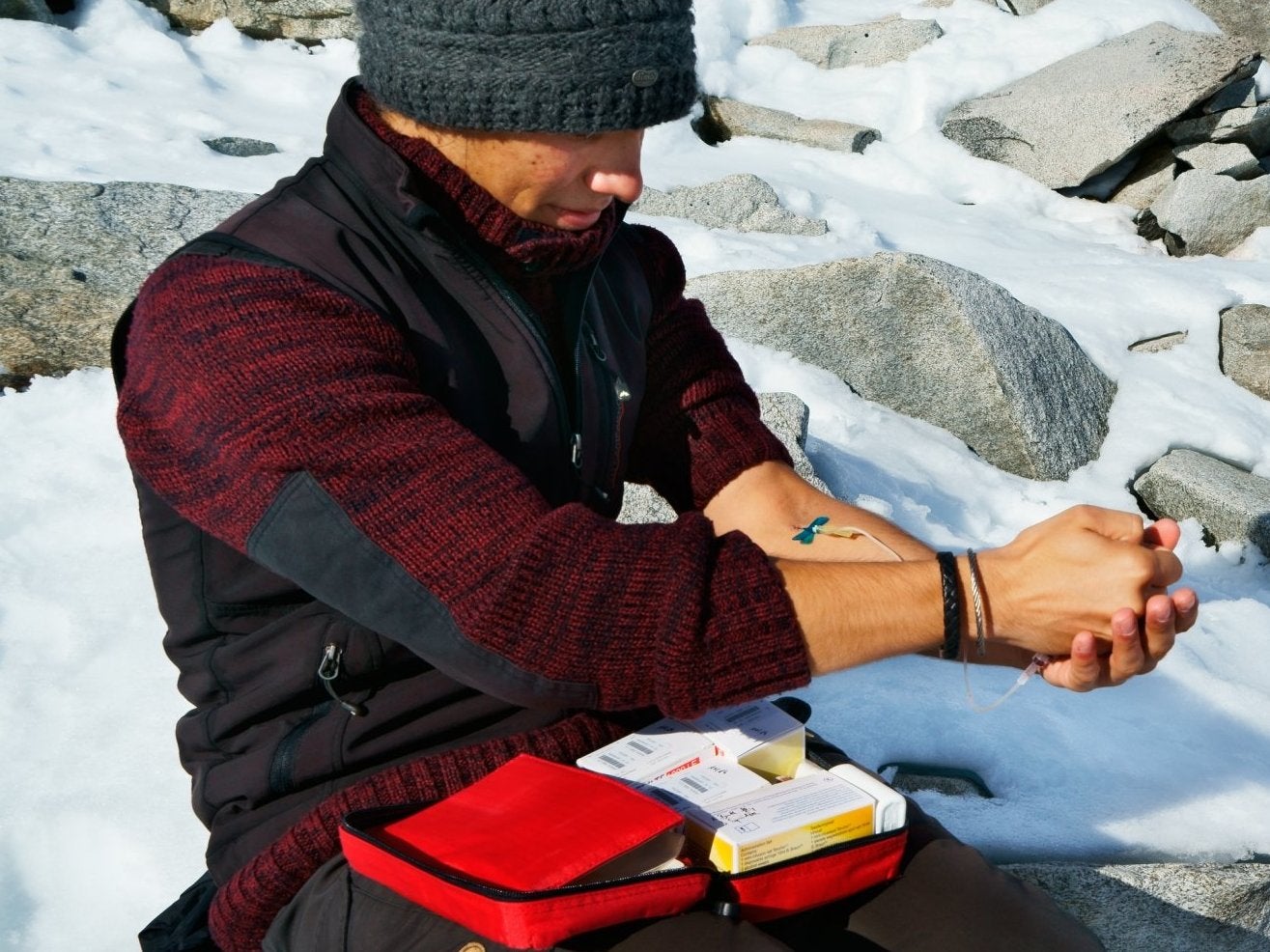
Hemophilic-injection.jpg
At one time the diagnosis of hemophilia was a death sentence, when the condition spelled the inability to form blood clots and sufferers would bleed uncontrollably as a result of even small incidents that people with normal systems would never even notice; a sharp blow, an incidental fall, a bruising encounter with an immovable object. Hemophilia is one of those 'orphan' diseases in the sense that it doesn't afflict all that many people. For example, the population of the U.S. is about 330-million, and of that total 20,000 are hemophilia patients.

Worldwide an estimated 185,000 people are absent the requisite proteins required to enable blood to clot.

The gene for blood clotting is on the X chromosome so that almost everyone with hemophilia is male, a genetic disease. The most severely affected among this aggregate group injects with the missing proteins, clotting factor VIII or factor IX every few days to make up for their critical deficit, but even with those injections, a risk of uncontrolled bleeding into a muscle or joint, or even the brain, may occur. As children, hemophiliacs are taught to avoid sports or any kind of physically jarring contact.

They become urban residents where access to treatment is assured. Insurance required for medical bills for hospitalization and surgeries, let alone the average cost of a year's clotting proteins averaging $250,000 to $300,000 translates to changing jobs as required for the needed insurance. The shots alone can rise to as much as $1-million annually. Even with the most acute, focused attention, people with severe hemophilia will develop permanent joint damage resulting from bleeds and most hemophiliacs live with constant pain.

In the 1980s the clotting proteins that were injected turned out to be contaminated with H.I.V. and hepatitis C, affecting everyone who received those shots.

Enter gene therapy. Where researchers hoping to discover a therapeutic miracle of sorts feel they're on track to rid patients of a dread condition forever hovering in the forefront of people's lives.  The recent discovery of a gene therapy using a virus delivering a new gene to cells has a one-use time stamp -- it cannot be repeated -- should it work at first then for some unknown reason stop working as it did in two of a dozen patients in one trial.

Researchers are assiduously at work to build on the gene therapy to discover successful new treatments.

For gene therapy to be considered successful, it must result in reducing or eliminating the need for patients to receive injections, and above all, to reduce the incidence of bleeds. Depending on whether the patient has hemophilia A, caused by a mutation in the gene for factor VIII, or hemophilia B, caused by a mutation in the gene for clotting factor IX, indicates the type of gene to be inserted. Of the two types, hemophilia A is the most common and biotech companies are on track to get their therapies to market stage after final-phase clinical trials.

Scientists at University College London and St.Jude Children's Research Hospital in Memphis, Tennessee first reported positive results a few years ago, treating ten patients with hemophilia B, the process increasing blood levels of factor IX to two to six percent of normal. Scientists discovered that a man in Padua, Italy had a genetic mutation making cells turn out up to a dozen times the usual amounts of factor IX, realizing they could place the mutated gene into a virus, then insert it into the cells of hemophilia B patients.

Two Ontario brothers, Bill and Jay Konduros, (in their fifties) had hemophilia they were resigned to regarding as "a lifelong thing". They were part of Spark Therapeutics' clinical trial for hemophilia B. Half an hour of an intravenous drip resulted in factor IX levels in Bill's blood of around 50 percent and for Jay levels came closer to 75 percent. The full extent of the success of the therapy was revealed when Jay fell one day, with both wrists slamming hard on concrete, his left thigh badly hit, leading him to anticipate a disaster. Hours later when he examined himself, no bruises.

Three days later he thought it safe enough to call his brother to let him know what had happened, and that he now considered himself a normal individual who had experienced a minor fall with no ill results. "You hear a lot of things described as miracles or miraculous. I guess I would say this truly is", commented Bill.
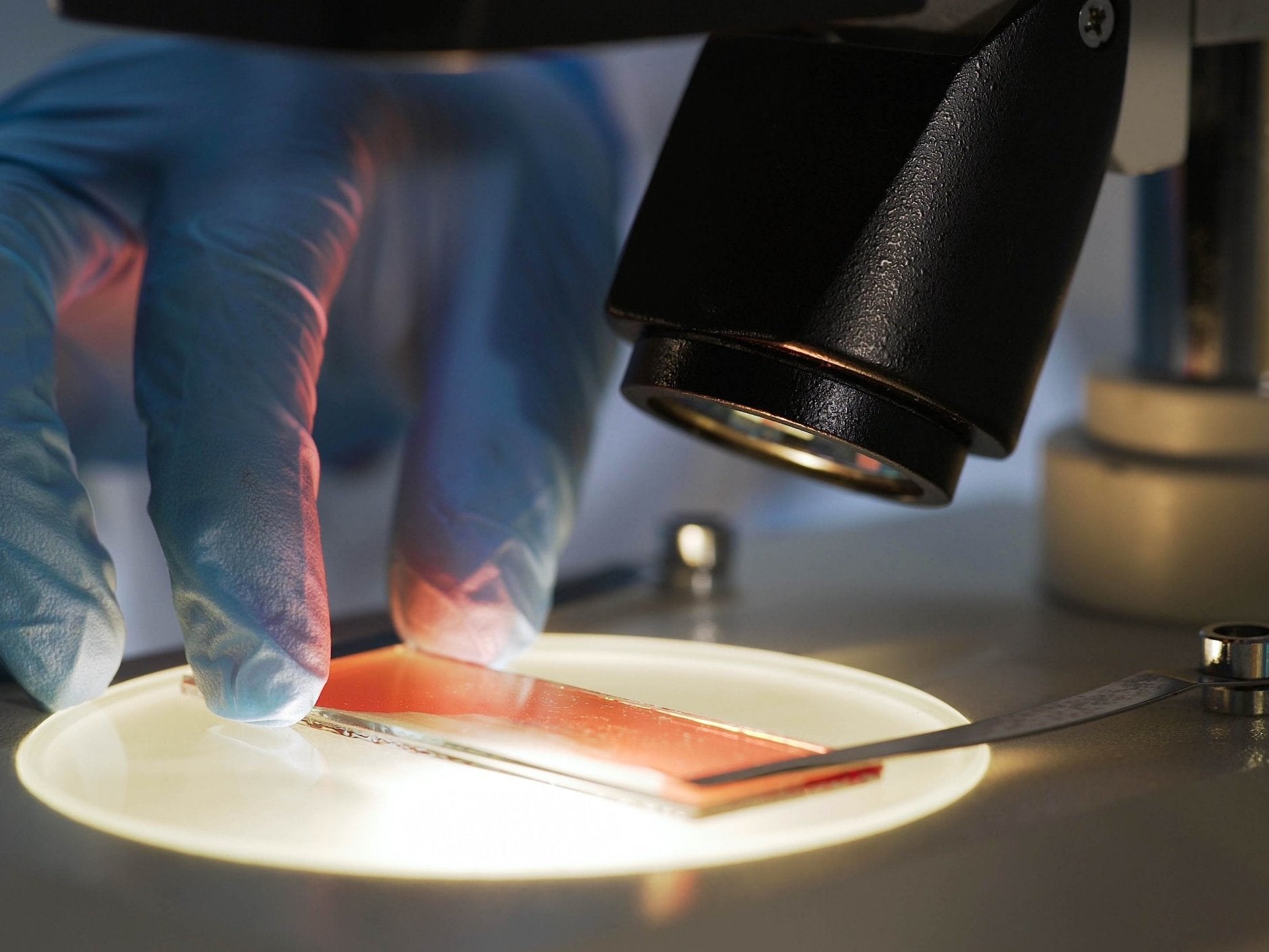
blood-sample-microscope.jpg
 

Labels: , , , ,

Tuesday, October 10, 2017

"Three-Parent Babies"

"[The DNA blending technique represents a] novel, promising intervention [allowing women to avoid the potential of children inheriting fatal diseases, and as such should not be forbidden by law resulting from] misplaced apprehension [of interfering with the human genome."
"[Canadians] have the right to benefit from scientific advances [under the Universal Declaration of Human Rights]."
"[The procedure, mitochondrial replacement therapy: MRT], is often the only possible intervention to enable the birth of a healthy, genetically related child for women who carry [mitochondrial mutations]."
"The desire -- and social pressure -- to conceive biological children have been subjects of rich theoretical and health policy inquiry. [The media's reporting of assisted-baby-making techniques] has played no small part in contemporary social constructions of assisted reproduction as being antithetical to 'natural' processes of conception and parenting."
Journal of Obstetrics and Gynaecology Canada commentary

"Were not advocating that anybody can do anything. We're advocating that this should be allowed to go forward."
"Because right now it's impossible because of criminal law -- if you do this, there are jail times and fines, period."
"We can set up an ethical framework and protect Canadians from the sorts of cowboys like Zhang."
"People might say we don't know what the impact of the change is on the children born. What we're saying is, this is one of many discoveries and techniques that are coming, and we don't have a framework whereby we can say whether we should or shouldn't do it."
Dr. Arthur Leader, Ottawa fertility specialist
It's a (controversial 3-parent baby technique) boy!
Controversial 3-parent baby technique: image media

The "Zhang" referenced was to Manhattan-based Dr. John Zhang who has set up his own commercial enterprise providing a form of MRT, promising to guide women in their 40s toward carrying their very own biological babies. Their DNA undergoes a technique whereby it is inserted into younger, fresher eggs provided by younger women at his New Hope Fertility Center. The facility Dr. Zhang opened operates with a stable of fertility doctors able, at a substantial cost, to 'give hope' to women past their normal child-bearing years.

In fact, Dr. Zhang and his clinic have been issued a warning by the U.S. Food and Drug Administration that the technique has not been formally approved for use, and he must cease and desist from promoting and providing his controversial "spindle nuclear transfer" technique. The vast majority of a cell's genetic material (DNA) resides within its nucleus, with an amount less than 1% found in the mitochondria, which in its intact state is passed from mother to child through her egg.

With this technique, less than 0.1% of DNA comes from the donor egg, with the balance of 99.9% contributed by the mother whose DNA the child inherits, while the potential for inheriting a mutation is removed through the process. The ethics involved in this technique is the concern that the process will be used for cosmetic reasons, not reasons linked to avoiding dangerous mutations. And that eventually with the loosening of standards, the technique will ultimately be used to 'design' babies with special attributes of a purely aesthetic nature.

So it is little wonder that this technique, essentially involving two women and a male to conceive a baby, is viewed with concern, the result of which has been that the technique has failed to impress regulators and this is reflected in the law, where it is a criminal offence to knowingly create embryos with DNA from more than two people. The medical specialists who wrote the commentary in the Journal of Obstetrics and Gynaecology Canada have embarked on a mission to overturn the 13-year-old law.
It is a crime in Canada to knowingly create embryos that have DNA from more than two people.  Getty Images
Mutations in mitochondria have the potential to cause fatal metabolic disorders in babies. Babies who inherit mitochondria that may carry mutations can inherit genetic diseases that will affect the neurons and nervous system. It makes sense that women would like to have some guarantee that their babies are not afflicted with any of these potentials. The technique of mitochondrial replacement therapy extracts the nucleus from the egg of a woman whose mitochondria are diseased, injecting it into an "enucleated" donor egg with normal mitochondria.

This is where the dual 'mother' DNA comes in. Used to enable older women to become pregnant and in the process avoiding passing on mutant genes is one thing, using the technique to endow a child with preferred height, colour of hair, of eyes and other features not inheritable from its mother, the primary provider of the DNA, enters a realm of science fiction where replicants and cloning fascinate the human mind and the experimentation of rogue scientists.

The authors of the commentary stress that the techniques around MRT remain in "still-experimental benefits" stages. Their argument is that regulatory and criminal restrictions have the capacity to enhance and promote the phenomenon of reproductive medical tourism, and do great favours to medical outliers like Dr. Zhang who charges $50,000 at his "Darwin Life" clinic to "reverse the effects of age" on human eggs. Both UNESCO and the Council of Europe prohibit the technique.

According to Canada's Assisted Human Reproduction Act, no person shall knowingly "alter the genome of a cell of a human being or in vitro embryo such that the alteration is capable of being transmitted to descendants", for no one knows what such inheritance in later generations can result in.

As for the country's fertility specialists, they strongly urge that the ban on paying donors and surrogates should be overturned; their argument being such that the law drives an underground market, forcing people to import eggs and sperm from the U.S.
"At the present time, there is no such consensus [on how to proceed]."
"We're not really talking about saving lives that exist already. We're talking about creating new lives that are free of disease, and there are other ways we can achieve that objective where we're not prioritizing strong genetic relationships [like using a surrogate or egg donor]."
Bioethicists Francoise Baylis and Alana Cappatan
Scientists use a pipette to remove the nucleus from an egg. OHSU Center for Embryonic Cell and Gene Therapy via AP

What are mitochondria?
Mitochondria are small structures found in our cells that generate the cellular energy used to power every part of our bodies.
Mitochondria have their own DNA, which controls only mitochondrial function and energy production.
This is separate from our "nuclear DNA," which makes us who we are and determines appearance and personality.
Source: Wellcome Trust Centre for Mitochondrial Research

Labels: , , ,

 
()() Follow @rheytah Tweet