Ruminations

Blog dedicated primarily to randomly selected news items; comments reflecting personal perceptions

Thursday, March 07, 2019

Serendipitous HIV Treatment

"[That was] an improbable event [finding a stem cell transplant donor with a gene mutation conferring natural resistance to HIV]."
"That's why this has not been observed more frequently [the type of measure taken to address patients with HIV in a search for a cure]."
"There is no virus there that we can measure [with Dr. Gupta's London patient]. We can't detect anything."
"[My London patient is] functionally cured [and] in remission, [but] it's too early to say he's cured."
"This was really his last chance of survival. It’s been a long journey. He’s been very sick for a long time. Obviously the idea of cure and remission has created a certain level of anxiety and hope mixed in with each other."
"We’ve been talking about this for a few years now. It’s been a difficult journey to offer someone this hope and then say we don’t know it’s going to work. So even stopping his HIV treatment – he had to really think about it and it took him a while to finally do it. It’s difficult because you’ve got to put your faith in what doctors are saying to you."  
Dr. Ravindra Gupta, professor and HIV biologist, University College London

"Although this is not a viable large-scale strategy for a cure, it does represent a critical moment."  "The hope is that this will eventually lead to a safe, cost-effective and easy strategy ... using gene technology or antibody techniques."
Anton Pozniak, president, International AIDS Society 
Timothy Ray Brown, pictured Monday in Seattle, was the first person thought to have been cured of HIV infection, more than a decade ago. Now researchers are reporting a second patient has lived 18 months without any sign of the virus following a stem-cell transplant. (Manuel Valdes/Associated Press)

In a first, two men have now been freed from any detectable signs of HIV, after ground-breaking medical treatment. One, a man in Germany, known as the 'German patient', and identified as Timothy Ray Brown, and another man not yet identified, known as the 'London patient'. Timothy Ray Brown, an American, had been treated in Germany, and now is 12 years post-transplant, remaining free of HIV. Up to the present time, he was the only individual thought to have been successfully cured of the HIV virus, the precursor to AIDS.

Now a second man's transplant "shows the cure of Timothy Brown was not a fluke and can be recreated", observed Dr. Keith Jerome of Fred Hutchinson Cancer Research Center in Seattle, Washington. There is hope that on the basis of what has been observed and learned with this latest transplant, scientists may come up with a less complex approach to be more widely useful. Quite simply, not everyone with HIV could be treated with a complicated and dangerous transplant.

This second case, where the intensive procedure of a stem cell transplant succeeded in freeing the 'London patient' from HIV, was published by the journal Nature online. The case is set to be presented in Seattle, at an HIV conference. Diagnosed with HIV in 2003, the man in question started on drugs to control the infection in 2012. Coincidentally he developed Hodgkin lymphoma the same year and this led him to agree to undergoing a stem cell transplant to treat the cancer.

The doctors treating this man felt their London patient might benefit from a 'bonus' beyond the treatment geared toward the cancer eradication, and were hoping that possibly the transplant might also result in a cure of his HIV condition. The search began for the 'right kind' of donor. And this is where fortune stepped in, when a donor was discovered with a gene mutation conferring natural resistance to HIV. 
"The limitations of bone marrow transplants for [a] cure are that there is significant toxicity from the procedure, which include adverse effects from the chemotherapy that must obliterate the person’s existing immune system."
Dr. Joseph P. McGowan, medical director, Northwell Health HIV Service Line Program, Manhasset, NY
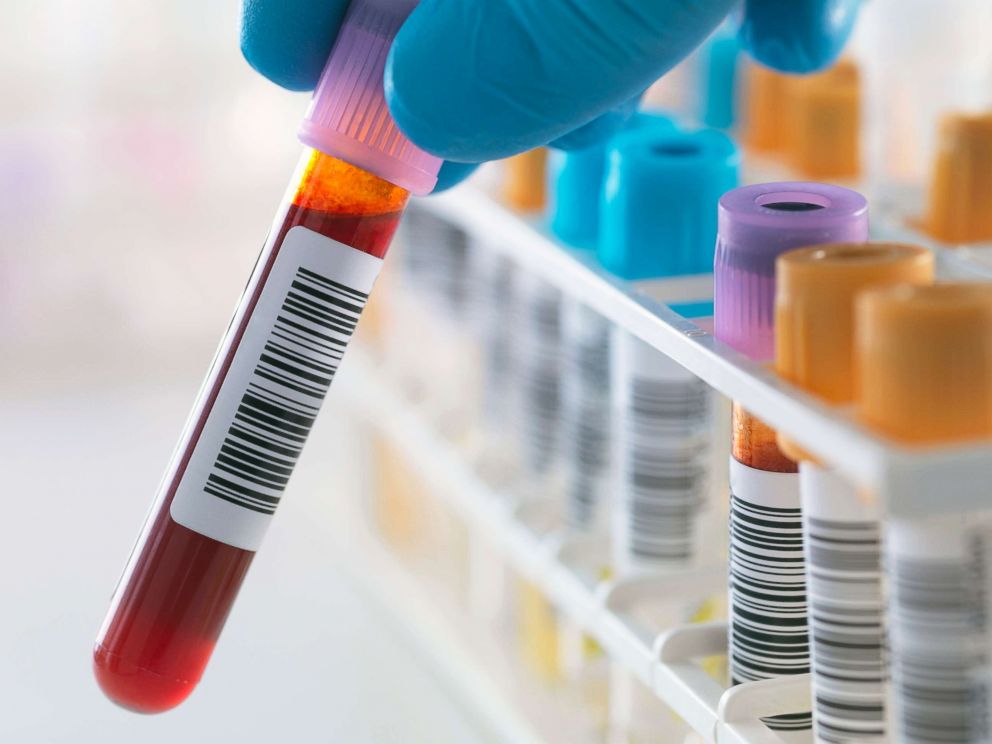
It is known that about one percent of people descended from northern European backgrounds inherit the mutation from both parents, making them immune to most HIV infections. And this double copy of the mutation was precisely what this donor possessed. The London patient's transplant has altered his immune system, now possessing the donor's mutation, making him essentially HIV-resistant.

Stock photograph, Getty Images

After undergoing the procedure, the man with his double dose of HIV and cancer had to decide to stop taking the HIV drugs. When that happens, invariably the virus speedily returns, generally within two to three weeks' time. But not this time. And now, after a year and a half without his daily dose of drugs to stave off HIV, no trace of the virus returning has appeared.

The process of a stem cell transplant begins with radiation or chemotherapy for the very direct purpose of damaging the body's immune system, to welcome the replacement immune system that the stem cell transplant effects. AIDS also disrupts the natural immune system leaving the sufferer vulnerable to all manner of deadly infection and cancer; in effect the stem cell transplant's need to extinguish the old immune system to make place for the new one creates a similar, albeit transitory effect.

In the case of the earlier German patient, Mr. Brown, his leukemia which had triggered his transplant and eventual cure of his HIV, returned, necessitating that a second stem cell transplant be undertaken, eventually leading to success. The German doctor who had treated Mr. Brown, Dr. Gero Hutter, spoke of the new case as "one piece in the HIV cure puzzle".

Labels: , , , , ,

Saturday, March 18, 2017

Bucking the Trend

"That's the perfect formula for S.T.I.s [sexually transmitted infections], including H.I.V."
"The  youth explore [sex], but do it without the proper education."
Chris Lagman, official, Love Yourself, Manila, Philippines

"The Philippines has the fastest growing H.I.V. infection rate in Asia, along with Afghanistan."
"Right now, the Philippines runs the risk of letting the infection get out of control."
"All good and successful national AIDs programs use condoms."
Steven Kraus, director, Unaids, United Nations H.I.V/AIDS Agency

"Reducing HIV transmission isn't rocket science. But it does require the ... government to implement an HIV prevention program and remove obstacles to condom and HIV testing access so that young Filipinos - particularly men who have sex with men - can protect themselves from an otherwise preventable illness."
Carlos Conde, Philippines researcher, Human Rights Watch.

"Nationwide, there are testing centers and hygiene clinics that offer free HIV testing services and ensure the confidentiality of the results. Knowing one’s status will help an individual get early treatment and care."
"Information dissemination is the key to conveying the correct message to everyone that HIV is preventable and that anybody can acquire the virus."
"HIV is a virus that destroys the human body’s natural defense against diseases or infection, causing the immune system to weaken and not function properly. No human being, by age or by sex, is immune to HIV infection."
Juan Antonio Perez III, executive director, Commission on Population, Philippines
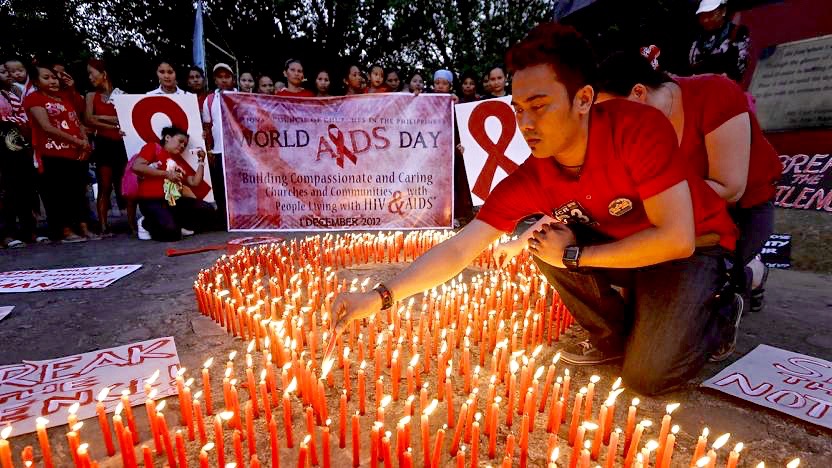
World AIDS Day Commemorated in Manila – AP / Bullit Marquez
In the early 1980s the world became aware of a strange new illness that was being passed along, mostly among gay communities in the United States. It was cutting a savage swath through the community, killing people through an agonizing process of mechanical bodily failures compromised by infections and ending in death rescuing those affected from their suffering. Medical science worked overtime to try to understand what Acquired Immunity Deficiency Syndrome was, how it was passed along, and how it could be managed and eventually cured.

In much of today's world, the soaring incidence of H.I.V. and AIDS has been more or less tamed. Education on sexual hygiene and self-protection has gone far in diminishing the incidence and impact of that dread disease. The need for a life-saving protocol accelerated once it became clear that AIDS was afflicting not only the vulnerable victims practising unprotected sex in the gay community, but heterosexuals as well. The realization that women were giving birth to babies infected with H.I.V. struck the conscience of the world.

And at a time when aggressive awareness and prevention campaigns have succeeded in leading to a global decline in infection rates where in Asia rates of infection decreased by five percent, in Southeast Asia by 30 percent, in the Philippines the trend has gone the other way. Among gay men in the Philippines the infection rate has literally exploded, as it did in the early days of AIDS surging through the gay community of the United States.

For those most at risk, gay men, injecting drug users, transgender women and female prostitutes, the rise has been alarming, with the rate of new infections having increased by 230 percent between 2011 and 2015. Yet among Filipinos between the ages of 15 and 24, a mere 17 percent fully comprehend exactly what H.I.V. is, and how it spreads. The Health Department had developed a plan to distribute condoms in public high schools as a preventive, linked to education.

But the Department of Education refused, even though teachers would have been trained how best to counsel students on the prevention of pregnancies and the transmission of sexual infections. With that refusal went the voluntary H.I.V. testing, and a further plan to educate parents on how to discuss sex with their children. A coalition of parents, the Roman Catholic Church (of which 80 percent of Filipinos are devout members) and conservative politicians all resisted the effort at education and prevention.

"The Department of Health and the Department of Education should concentrate on uplifting the values of the Filipino youth", urged Senator Vicente Sotto II, arguing that distributing condoms on school premises would result in promiscuity, pointing out that public health centers and stores are where condoms were already available. However, Filipinos under the age of 18 require parental consent to buy condoms or to be tested for H.I.V.

The country relies on the use of antiretroviral therapy to diminish opportunities of passing H.I.V. on to others, along with testing drives, as the national strategy to halt the spread of the virus. In the meanwhile, awareness of prevention and actual testing are both random and infrequent.


Labels: , , ,

Sunday, June 12, 2016

Risk-Aversion Practices At One's Peril

"Even though the patient was taking the drug every day, the HIV virus overpowered the medication and infected him."
"It could be someone in Toronto [transmission origin], it could have been someone who was travelling through. We don't know for sure but, yes, this resistant [HIV] strain could be in Toronto."
Dr. David Knox, HIV specialist, primary care physician, Maple Leaf Medical Clinic, Toronto

"[This case is a reminder that] nothing in this world is one hundred percent. Taking medication as a preventive measure may not give you the protection that you think."
Dr. Gary Garber, chief of infection prevention and control Public Health Ontario

"Yes, this was an unfortunate exemption [sic] that occurred in our community. But science has also suggested this is a highly effective method of preventing HIV."
Chris Thomas, spokesperson, AIDS Committee of Toronto
A spokesperson for the biopharmaceutical company who manufactures the drug said the Toronto case is the first failure they are aware of.
A spokesperson for the biopharmaceutical company who manufactures the drug said the Toronto case is the first failure they are aware of.  (Gilead Sciences Inc.) 

Researchers in Toronto have identified a 43-year-old man who contracted a rare, drug-resistant strain of the HIV virus in the wake of unprotected anal sex with multiple sexual partners, despite having taken preventive precautions with daily use of the "miracle" drug Truvada, known to block HIV transmission. This represents the first documented instance of a patient taking the antiretroviral drug daily as instructed, but who became infected nonetheless.

This instance of failure was reported by Dr. Knox at the Conference in Retroviruses and Opportunistic Infection that took place in February, in Boston, Mass. Dr. Knox emphasized the message in the case: that gay or bisexual men cannot afford to let down their guard, and must continue wearing condoms rather than solely rely on the drug to protect them from HIV. Truvada's manufacturer admits that this is the first case of its kind to come to its attention.

They cite "several large-scale clinical trials" that have demonstrated that the medication is safe and effective. "It is important to note, however, that no single intervention is one hundred percent effective in preventing HIV", wrote Ryan McKeel of Gilead Sciences Inc. The individual in this case "contracted the virus after  he was exposed to a rare strain of HIV that is resistant to both of the drugs included in Truvada."

Health Canada emphasizes that health care providers must prescribe the drug as "part of a comprehensive prevention strategy, including safer sex practices, as Truvada is not always effective in preventing the acquisition of HIV-1 infection."  Health Canada approved the drug for preventive use in late February of this year. It was a first-line treatment for HIV-positive people even before it was approved for daily preventive use in the U.S., in 2012. Its profitability came to $2-billion in sales last year in the United States.

Truvada is not listed in Ontario under the drug benefit program as a HIV prevention prescription; but rather for HIV treatment. Dr. Knox's patient had been taking the drug through off-label prescription for two years when he became infected The daily cost was a whopping $28.57 per tablet. Regarded as a reliable 'fail-safe' method of prevention, many gay men set aside other precautions urged upon them such as condom use. This will certainly serve as a wake-up call.

The use of the pill is regarded as effective when taken consistently, and not simply before sex. This is known in scientific circles as preexposure prophylaxis, referring to the use of the drug by healthy, non-infected people as a pseudo-biochemical condom in the prevention of HIV onset. The HIV Prevention Clinic at St.Michael's Hospital in Toronto is undertaking a study to measure the prevention pill's effect on safe-sex practices. This case in and of itself should speak volumes.

Aside from the impact of the case, early results from the St. Michael's study indicates that condom-less sex between HIV-positive and HIV-negative men using the drug is on the increase. It is not as though public health experts have been unaware of the problem. Warnings that the medication's use may come with a false sense of security resulting in riskier sex eroding the use of condoms have been previously issued by public health experts.

The Public Health Agency of Canada recognizes, as it must, that HIV transmission remains "an issue of concern", with data indicating that over 2,500 total new infections surfaced in 2014 alone, more than half of them accounted for by male-to-male sexual encounters.

Labels: , ,

 
()() Follow @rheytah Tweet