Ruminations

Blog dedicated primarily to randomly selected news items; comments reflecting personal perceptions

Friday, April 17, 2026

Impact of Race and Cultural Assessment Justice Scams

"To be clear, the effects of anti-Black racism do not excuse Mr. Abdelgadir or lessen the seriousness of the offence. However, I am satisfied that there is some connection between Mr. Abdelgadir's life experience, anti-Black racism, and his commission of the offence such that it mitigates somewhat his degree of responsibility for the offence."
"Mr. Abdelgadir has been heavily impacted by his father's employment with the UN, multiple relocations, exposure to armed conflict, and unsafe environments. [Abdelgadir] witnessed bodies piled in the streets during the civil war in Yemen in the 1980s."
"Mr. Abdelgadir was subject to racism during his childhood in Bahrain. The IRCA [Impact of Race and Cultural Assessment] describes that he faced significant discrimination as a Black Muslim, and that his family's home was attacked." 
"As the IRCA highlights, Mr. Abdelgadir emphasizes that his stagnation was not the result of a lack of ambition or ability, but rather the consequence of systemic racism, repeated police targeting and unjust criminalization that disrupted his educational and employment trajectory."
Justice Sandra Nishikawa, Ontario Superior Court of Justice 
https://i.cbc.ca/ais/1.7489927,1742575598000/full/max/0/default.jpg?im=Crop%2Crect%3D%280%2C67%2C3606%2C2028%29%3BResize%3D860
Samir Abdelgadir, pictured here appearing in court on Zoom in a sketch artist's rendering of his hearing last year, in which he was found guilty of kidnapping, has been sentenced to serve nine-and-a-half years in prison. (Pam Davies/CBC)
 
Any neutral observer not enmeshed with Critical Race Theory, viewing IRCA documents produced by the Viola Desmond Justice Institute might feel otherwise about the 'victimhood' of the man in question, son of a diplomat who had many life advantages but turned to drugs and petty trafficking and managed to rack up a neat little background of criminal activity, crowned by helping to kidnap a child and hold the terrified 14-year-old for 36 hours as leverage against the boy's half-brother who had lifted 90 kilograms of cocaine from its criminal purveyors, his employers.  
"It is an agreed fact that the teen heard the driver tell the person in the backseat that if the teen moved, he should shoot him. I find that the teen believed that the men who kidnapped him had a firearm."
"However, based on the evidence before me, I cannot find beyond a reasonable doubt that a firearm was used."
Justice Nishikawa  
The now-45-year-old Black Muslim, born in North Sudan and estranged from his father at the age of 19 following the divorce of his parents, was not entirely bereft of family support. His father provided him with the wherewithal to buy a condominium in Mississauga, Ontario where he had moved at age 19, later transferring to Hamilton, Ontario for studies at McMaster University where he completed a Bachelor of Commerce and Economics.
 
Abdelgadir's IRCA outlined his acceptance in an MBA program at Toronto Metropolitan University, "but his involvement with the criminal justice system prevented him from pursuing further education". Evidently his efforts to find an apartment after his McMaster graduation were unsuccessful, which he attributed to 'discrimination'. This is when his father gave him a down payment on a condo in 2002, and four years afterward, his brother gave him financial support to buy a house in Hamilton.
 
His dallying with criminal elements in society appears to have led to his being shot on three occasions in May 2023, according to the IRCA. "He has lasting impairments, including difficulty walking for extended periods and chronic exhaustion when outside for more than an hour". He "uses marijuana daily to manage pain". He decided to move to 'informal economies', including sales of marijuana when he failed to find employment in Canada as a Black Muslim, he averred. Arrested age 21 for drug possession he "was taken into custody 'multiple times' for various charges" including cocaine possession.
 
CDN media
Samir Abdelgadir
He began a landscaping business, then invested in real estate, flipping houses and condominiums for profit, finally investing in two fast-food franchise location in Hamilton, his brother providing financial support for many of his business ventures. As for his interactions with police, Abdelgadir speaks of them as being 'racially motivated'. Police seized money on entering his home, intimidating him, reflecting systemic racial profiling that resulted in 4-1/2 years spent in prison on firearm charges. Abdelgadir described having been arrested some twenty times, charges ranging from substance possession to serious violent offences.
 
On the morning of March 4, 2020 "three men emerged from a Jeep, grabbed S.J." and forced the boy, on his way to school into the vehicle driven by Abdelgadir as the 14-year-old child from a deprived background screamed and struggled in resistance. "S.J. was then taken to a vacant house on Edgeforest Road in Brampton. He was bound and blindfolded." At trial, S.J.'s half-brother Olalekan Osikoya, admitted he had stolen 90 kilograms of cocaine. The boy was released 36 hours later "without proper clothing in the cold in a secluded, wooded area".
 
The boy's brother said the kidnapping had so traumatized the child he could not sleep on his own "because when he tried to sleep, he relived every detail of the abduction." Following that kidnapping, "he damned near went mute", the boy's brother said. The Crown recommended 16 years in prison, while Abdelgadir's lawyer felt five to be appropriate.
 
After crediting Abdelgadir for time spent on stringent bail conditions in pre-trial custody in harsh jail conditions, Justice Nishikawa sentenced the offender to 9.5 years in prison.
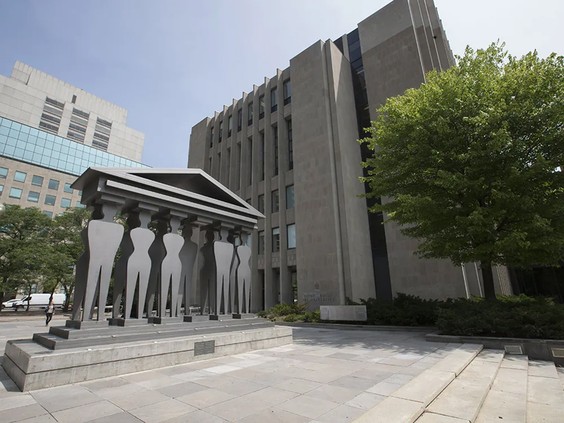
 
https://smartcdn.gprod.postmedia.digital/nationalpost/wp-content/uploads/2026/04/TO-courthouse-1.jpg?quality=90&strip=all&w=564&h=423&type=webp&sig=6wAoesFP7Q55BmorvpdMkA
An Ontario Superior Court of Justice courthouse in Toronto. Photo by Stan Behal/Postmedia


Labels: , , , , , , ,

Monday, February 21, 2022

Shattering Social Assumptions

"Descriptive studies like this are like paintings -- different people will see different things in the numbers."
"But the reality is that what lies behind the earnings differences reported is nuanced, complex, and largely unknown."
"It's almost a fundamentally unidentified problem. [Rather then automatically believing gaps in earnings and education to be rooted in] injustice or unfairness [it is important to remember] people make different choices."
Mikal Skuterud, economist, University of Waterloo
 
"[The report set out to measure weekly incomes of Canadian-born people between the ages of 25 to 44 in 2016, a census year, based on a dozen visible minority categories. as a setting for the country's Anti-Racism Strategy, committed to] removing barriers and promoting a country where every person is able to fully participate and have an equal opportunity to proceed."
"Only about one in twenty [visible minority members] live in smaller cities, towns and rural areas, compared with about one in three white people." 
StatsCan Report, Theresa Qiu and Grant Schellenberg
People of colour born in Canada are more likely than white people to have university degrees. That contributes to higher earnings.
Statistics Canada has issued its latest report emanating from research on ethnic groups, focusing on earnings and educational achievements. Their results challenge the fairly universal social belief in discrimination in the workplace against visible minorities and people from ethnic minorities holding back advancement. What the report points out is that earnings vary widely for each ethnic cohort studied; some groups clearly flourishing, and others struggling to attain earnings parity.

Those of South Korean, Chinese and South Asian heritage appear to represent the top echelon of earners in Canada by and large, while Latin-American and Black groups tend to be among the lowest earners. Whites, on the other hand, are stuck for the most part in the middle of the pack with respect to wages and surprisingly enough are in the lower echelons regarding university education.

Such details, according to economist Frances Woolley of Carleton University, are critical to understanding the situation pertaining to achievement in both these areas regarding visible minorities. The federal Employment Equity Act places visible minorities as one of four groups covered; women, people with disabilities and Indigenous Canadians, make up the other three.

White Canadians were used as a majority baseline, enabling the report to pinpoint that some ethnic groups are performing significantly better than others in earnings and education. Striking differences between men and women is examined as is how people of colour tend to overwhelmingly choose to live in major cities in Canada.

The report also gently turns the table on preconceptions over outcomes being directly responsible by the presence in workplaces and educational opportunities by racist workplace supervisors or discriminatory educators. Outcomes in both areas are far more likely to be the result of complex life decisions people tend to make, for those people who fail to move up the ladder of opportunity.

According to the report, most visible-minority Canadian women earn more than do white females, whose average was $1,120 weekly. Korean-Canadian women earned $1,450 a week while Chinese women earned $1,440; South Asian women $1,360;and Arab and Iranian women, $1,120. Black women on the other had, earned less, at $1,080, and Latin-American women made $1,000 a week.

Slightly more was earned by Korean, Japanese and South Asian men than white males, who took in $1,530, while Chinese-Canadian men earned about the same and Filipino and South-East Asian men earned roughly 15 percent less than white males, and Latin-Americans and Black males earned about 20 percent less.

When variables such as age, place of residence and educational levels are taken into account, other issues remain significant. The Statistics Canada report makes no suggestion where discrimination might be occurring in Canada, but both Schellenberg and Skuterud feel the data appears to raise at minimum one red flag: Black males fell further behind others in earnings in the period between 2006 and 2016.

Another surprise: People of colour born in Canada are likelier than are white people to gain university degrees. Over 60 percent of Chinese and Korean men earned a bachelor's degree at the very least, or  higher, in comparison to 24 percent of white males, a gulf in educational attainment considered "astonishing", by Dr.Skuterud. Over 40 percent of South Asian, Arab, West Asian and Japanese men sought and gained university degrees.

The only ethnic groups less likely to have degrees as compared to white males were Black males, at 20 percent, and Latin-American males at 17 percent. And then there is the different lifestyle choices made by people of colour and whites, where 60 percent of all people of colour in Canada choose to live in just three cities; Montreal, Toronto and Vancouver, in comparison to a mere 27 percent of white people.

One reason many people of colour earn more than do white people, is the very fact that they live in metropolises where wages tend to be higher. White people, found the authors, were also likelier to be married, have children and not be living with their parents. U.S. research in particular has explored whether employers discriminate based on race or ethnicity, despite which, Dr.Skuterud points out "It's almost a fundamentally unidentifiable problem."

Sixty per cent of all people of colour in Canada live in just three cities — Montreal, Toronto and Vancouver — where wages are generally higher. That compares to only 27 per cent of white people.
Sixty per cent of all people of colour in Canada live in just three cities — Montreal, Toronto and Vancouver — where wages are generally higher. That compares to only 27 per cent of white people. Photo by KENA BETANCUR /AFP via Getty Images

Labels: , , , , , ,

Monday, May 17, 2021

Canadian First Nations' Discrimination

"We see once again disparities across the board that put Indigenous peoples on the wrong side of the coin -- and we have to start to answer why."
"I think if we're to study this in further detail, I would predict that we would find racism as one of the crux points in terms of where the journey of an Indigenous person in Canada is different than a non-Indigenous person."
"But those are challenges in a high-income country that pretty much stamps the words, 'universal health care' onto our currency."
Dr.Nadine Caron, first female First Nations general surgeon in Canada

"If we have better data, that will show us what is working and what isn't working."
"It shouldn't matter if you live in Ottawa or Shamattawa, your access to quality of care should be the same."
Dr.Jason McVicar, Metis anesthesiologist, The Ottawa Hospital
qualicum bay first nation's canoe adventure - first nations stock pictures, royalty-free photos & images
Getty Images
 
Indigenous communities in Canada are well known  to suffer greater health issues than do other Canadians. A situation reflective of social-economic factors more than anything, accounted for largely by income, education,  housing, employment and food security. A recently published paper attributes these factors to 'vestiges' of colonialism and disastrous government policy, and this may be largely correct, though there are undoubtedly other factors at play. Not the least of which is Indigenous peoples' continued embrace of the past and their cultural preference for living in isolated communities on traditional tribal land.

In those communities employment is scarce, private property is not part of the reservations system, wholly funded by the federal government through the Department of Indian Affairs, now titled Indigenous and North Affairs Canada. Housing on reserve land is substandard and crowded. People who have no personal investment in the homes they occupy will not care for them and everything uncared for has a tendency to fall apart. Potable water is always an issue in Northern and isolated communities. The most basic ingredients for good health outcomes missing.

Indigenous peoples in Canada have not been well served by their leaders; many reservation band councils are corrupt and fail to share equally among all who live on reserves the benefits that should accrue to all through annual reserve funding through universal general tax-funded allocations, while other reservations are led by responsible, innovative councils who conduct band affairs fairly and equitably with a view to being self-sufficient and productive.

When health issues arise, both physical and mental, it would be of immense value to have expert health professionals available near at hand, but in remote communities this is obviously not possible. Clinics can have a role, but they can only be as efficient and useful as the medical staff that would agree to be posted in those communities. Isolation does not make for happy hunting grounds. Many who live on reserves live in extreme poverty, violence is common, alcohol and drug addiction and a high rate of suicide is as well.

A study was published in the Canadian Medical Association Journal out of research conducted in Ottawa, which found that Indigenous patients had a 30 percent higher death rate following surgery than non-Indigenous patients. That Indigenous patients are likelier to die following an operation than are other Canadians, and less likely to be able to schedule the surgery that they require for heart conditions, failing organ transplants, or joint replacement.
 
this new game is so much fun - first nations stock pictures, royalty-free photos & images
Getty Images
 
Post-operative complications such as pneumonia are more common with Indigenous patients, according to the CMAJ study which was based on a systemic review of 28 previously-published studies which also found that Indigenous people had lower rates of life-saving surgeries like kidney transplants, heart operations and C-sections, along with significantly lower rates of knee and  hip replacement surgeries. "There's real data here showing real differences in outcomes for Indigenous populations", Dr.Donna May Kimmaliardjuk, the first Inuk heart surgeon in Canada, pointed out.

The study authors feel that statistical evidence of systemic racism First Nations, Metis and Inuit medical patients have complained of in Canada, proves their complaints correct. According to the study it is past time for a comprehensive national plan to be developed with the goal of improving surgical care for Indigenous people. As well, such a plan would include a commitment to collect better health-care data on the Indigenous experience. 
 
There are complications that non-Indigenous patients don't face: For surgery, those living on reserves must be flown out to large city centers for hospital care. Being a long way absent from home and the emotional support of family members, having to be temporarily housed in a city for post-surgical follow-up care until complete recovery has been established is disorienting and emotionally upsetting for people, not liable to hasten recovery.

The goal of the study was to synthesize all available data on surgical access and outcomes for Indigenous people, which saw researchers identify 28 studies involving 2.9 million patients, roughly ten percent of whom were Indigenous, allowing them to compare surgical experiences of Indigenous people with those of other Canadians. Some 20 of the studies were used to compare rates of surgery and wait times between Indigenous and non-Indigenous patients.
 
beautiful kayaker - first nations stock pictures, royalty-free photos & images
Getty Images

Two of those studies found kidney transplant recipients for Indigenous patients seeing them experience wait times over three to seven months lengthier than their non-Indigenous counterparts. Four other studies found Caesarian delivery rates to be three to five percent lower among Indigenous women. (Since Caesarian deliveries have latterly transitioned from a medical necessity procedure to a convenience procedure in many cases despite certain dangers associated with the procedure, that can only be seen as a plus.)

Higher rates of amputation was seen among Indigenous patients in three studies on diabetic patients. Which could conceivably be traced to less self-monitoring and adjustment of daily insulin doses against blood-glucose level tests, linked perhaps to poorly diabetes-educated exposures, or simply personal neglect on the part of the person with diabetes, resulting in severe nerve damage ultimately requiring amputation.

Hip and knee replacement surgeries saw Indigenous patients about half the rate of non-Indigenous patients in other studies. Both urban and geographically isolated Indigenous populations experienced less effective surgical care than other Canadians, the researchers found, despite Indigenous people suffering a greater disease burden; living in poverty, lack of adequate education and employment opportunities, crowded living conditions, which should logically trigger an alert.

Quality surgical care requires screening and diagnosis, along with access to hospitals and followup appointments, representing a challenge when Canada's Indigenous population is culturally diverse and widely distributed, with great numbers living in remote Northern communities, the study noted. Needless to say, poverty, lack of education and remunerative employment, along with good housing conditions, afflicts many low-income and unemployed Canadians who are non-Indigenous. Their condition leaves them as well vulnerable to neglect and privation.

inuit mother and daughter traditional dress baffin island nunavut - first nations stock pictures, royalty-free photos & images
Getty Images


Labels: , , , , , ,

Wednesday, June 26, 2019

Stem Cell Infusion : Youthful Miracles

"[YouTube's one billion audience reaches more people than any television network] and presents a formidable platform to market unproven SCTs [stem cell therapies]."
"Providers often use misleading claims, hard sell promotional techniques, an base efficacy claims on patient testimonials."
New Study, published journal Stem Cell Reports
Terry Storm, shown in 2012, works in a Stanford University lab funded by the California stem cell program, which will soon come to the end of its $3 billion in state funding. (Paul Sakuma / Associated Press)

"[The power of the personal-story narrative] often overwhelms the data. It becomes very clear that patient testimonials, patient narratives, are a huge part of the marketing strategy."
"But despite all of the pop culture representations, despite all the excitement around these therapies, there are very few ready for the clinic. If  you see a stem cell therapy being marketed in your newspaper, on YouTube, it's almost for sure an unproven therapy and, at best, experimental."
"Of course testimonials are powerful, because there's a story being told."
"I think we need health-care professional organizations like the College of Physicians and Surgeons to stop their members from operation unproven stem cell therapies."
"Sometimes patients may see studies that have been done. These are generally observational studies, they're not well-controlled studies. So, they’re just asking patients, ‘how do you feel?’ You know placebo effect can play a big role. Especially when there’s a ‘placebo theater’ when there’s fancy technology and someone in a lab coat and people are paying a lot of money and we know that studies tell us, expensive placebos work better."
Timothy Caulfield, Canada Research Chair, professor of health law and policy, University of Alberta
A doctor at a stem cell clinic in Beverly Hills, Calif., collects fat from a patient's back as part of a stem cell procedure in 2014. The U.S. has experienced a boom in for-profit clinics marketing stem cells to patients for a wide range of ailments. Critics say they have flourished because of a lack of oversight. The U.S. FDA recently sent warning letters to two clinics and said it will take a firmer approach to stem cell clinics. (Raquel Dillion/The Associated Press)

Dr. Caulfield, who collaborated on this new study with American and Canadian colleagues, searched through YouTube to find videos relating to five medical conditions, focusing on ALS, cerebral palsy, multiple sclerosis and spinal cord injury, whose sufferers had sought out stem cell therapy, none of which would have been approved for therapeutic purposes. The study team focused on 159 videos for analytical purposes which (with the exception of three) were published by clinics whose therapies were unproven.

Most of the clinics, unsurprisingly were located in India. Next up, the United States and Mexico. Most of the people who sought out this type of stem-cell therapy were Americans -- the next largest groups were East Indians followed by Canadians. The videos featured people describing the process of injections with adult, bone marrow-derived umbilical, fat, placental or fetal stem cells. While effusively praising the therapy, mention of risks appeared an afterthought with merely ten percent of the videos speaking of downplayed risks.

One video alone has seen two-and-a-half million viewers watch an interview by comedian Joe Rogan of actor Mel Gibson, speaking about his 92-year-old father's miraculous regeneration following a double dose of stem cells extracted from umbilical cord blood injected into Gibson's father's hip. He began walking again, his eyesight improved, "cognition power" improved, his prolapsed heart valve healed -- according to Gibson -- in response to Rogan's skepticism. This one interview alone attracted more viewers than any other single YouTube topic.

The stem-cell clinics convincingly inform prospective clients that their therapies -- priced from several thousand at Canadian clinics to six thousand and steeper at those in the United States -- that an infusion of stem cells at their clinics can succeed in dramatically decreasing inflammation, and regenerate diseased or damaged organs and tissues. It's a sales pitch that people are eager to embrace, and to try out for themselves, envisioning an entirely changed self, a renewal of life's prospects in extending quality of life and a more enduring life.

At a Florida clinic, on the other hand, after stem cells were injected into the eyes of three women, the therapy left them blind. And while legitimate research scientists do believe in the potential of stem cells to grow new tissue -- replacing diseased or worn-out ones -- not all therapies are created equal, nor do they have the required experimental research to back up their quality and effectiveness claims. Some that do have papers to bolster their claims for success reporting improvements to some of those treated by them.

In Canada, although Health Canada has failed to involve itself in regulating the industry, it has issued warnings of unlicensed clinics offering unauthorized cell therapies, stating unproven claims that may in the final analysis pose serious risks to people anxious to give them a try. In videoed testimonials people are seen to describe their therapies and how their stem cell treatments have led them to increased appetite, strength, movement and flexibility. Some, on the other hand, also mention such changes to be of short duration.

Some claim to owe the new quality of their lives to the clinics treating them. Others speak of how swiftly the therapy's improvements in their function kicked in: "I started walking straighter. My energy came back and I'm amazed at how quick it happened." Dr. Caulfield is of the opinion that science must work harder at communicating both its promise and its limitations to people. That the same kind of communication strategies used by stem cell clinics who operate for profit, not science, would be useful in educating people.

"We need to use narratives, we need to use interesting videos in order to get across the good science. It's starting to happen. But we need more of it to fight this", he explained. Popularizing science in the field of health sciences so that people can have a more realistic understanding of just what it is they are so quick to submit their bodies to, in the hope that the therapy will work, because those selling it to them assure them it would.
"They are experimental [stem cell therapies]. We don't know if they work, and we don't know how safe they are."

"If a patient called me up to say they are thinking of getting the therapy from a practitioner offering it like this for a fee, I would say that I don't think that's wise."
"I don't think they know they are going to get any benefit. I think they are taking a potential risk, and all of these therapies should be offered within the context of a properly designed clinical trial."

"It is kind of scary because there is theoretical risk that there could be tumours that form. There is a theoretical risk of blood vessels forming where you don't want them to form — for instance, the back of the eye or other places, so all of these things could happen."

Dr. Duncan Stewart, scientific director, Ontario Institute for Regenerative Medicine
Researchers examined the training background of clinicians at 166 companies advertising unproven stem cell therapies in California, Florida, and Texas. (Spencer Platt/Getty Images)

Labels: , , , ,

Monday, May 14, 2018

Living an Exemplary Life, Planning a Philanthropic Legacy

"She was a secretary in an era when they ran their boss's lives, including their personal investments. So when the boss would buy a stock, she would make the purchase for him, and then buy the same stock for herself, but in a smaller amount because she was on a secretary's salary."
"I realized she had millions [as executor of the estate] and she had never mentioned a word. I don't think she thought it was anybody's business but her own."
Jane Lockshin, niece of Sylvia Bloom, deceased resident of New York City

"We were all agape, just blown away."
"[Sylvia Bloom's gift is] the epitome of selflessness."
"She had that dual perspective [background of poverty, but investment savvy allowing her to gain from exposure to knowledgeable investment practices], and it's probably why it resonated so deeply in her heart and her gut."
David Garza, executive director, Henry Street Settlement, Lower East Side

"She never talked money and she didn't live the high life. She wasn't showy and didn't want to call attention to herself."
"She was a child of the Depression and she knew what it was like not to have money. She had great empathy for other people who were needy and wanted everybody to have a fair shake."
Paul Hyams, human resources executive, Cleary Gottlieb Steen & Hamiltion 
Sylvia Bloom quietly amassed a fortune of $9 million working as a legal secretary in New York City (Jane Lockshin)
Sylvia Bloom, the child of Eastern European immigrants to America was steeped in a background of necessity, hard work and empathy for the plight of others. Few would have suspected that this quiet, reliable secretary aspired to build a bank account whose total would have amazed anyone. She worked for the same firm of lawyers for 67 years, starting when the company was just established and she was their sole employee, to the point where they had a reputation to reckon with on Wall Street, with over 1,200 lawyers and hundreds of staff.

None was senior to her, and she retired only when she reached the age of 96. After retirement she appeared to have less to live for; her husband predeceased her by 14 years. The couple, he as a city firefighter then a schoolteacher and a practising pharmacist as well, lived on fairly modest salaries; his and hers as a secretary. It was obviously enough to keep them satisfied with their lives. Her relatives had no idea that she possessed a bank account whose total value was $9-million.

It was only when her niece Jane Lockshin, as executor of her aunt's estate, discovered the wealth that her aunt held did it become clear that the couple who lived modestly but well, had the wherewithal if they so wished to live in luxury. That wealth enabled Sylvia Bloom, however, to will $6.24-million to a social service group that her niece just incidentally acted as treasurer of the board for. While directing the bulk of her savings from shrewd investments to the charity, she also took care to leave funds for relatives and friends.
Sylvia Bloom worked at Cleary Gottlieb Steen & Hamilton in New York City for 67 years, and during that time she invested in the same stocks as the lawyers she worked for. (Submitted by Jane Lockshin)

Growing up during the Great Depression, Bloom attended public schools and then Hunter College where she earned a degree at night while working days. Hunter College, as it happens, turned out to be another beneficiary of Bloom's wealth, with $2-million split between it  and another scholarship fund. Her gift to the Henry Street Settlement has been earmarked for scholarships for needy students under the Settlement's Expanded Horizons College Success Program for disadvantaged students.

It must have given her great pleasure to know that she had amassed such a fortune. Not for herself, but with the knowledge that on her death, the funds representing her choice to make shrewd investments over the years, and putting away the profits would benefit many young people, giving them opportunities they would otherwise never have, through the funding that a hard-working visionary remembering her own difficult early years decided to invest in the lives of others.
$6.24 million of Sylvia Bloom's fortune is going to the Henry Street Settlement's Expanded Horizons College Success Program (Jane Lockshin)

Labels: , , ,

Monday, April 23, 2018

Teach Who, What?!

"Most of the time, they [high school drug education] would give us these fact sheets on cannabis. Then we'd all take it out to the corner and get high and laugh at it because we thought it was stupid."
"They said if you use at all it's problematic. I knew that wasn't true, because I saw a lot of people using that didn't have a problem with it."
"They [adult authorities] really try to scare you, using fear tactics. So it kind of blurs the line for you: What information can I trust? What kind of things are they lying about?"
"If they would have said, 'If you have mental-health issues you are more likely to use [cannabis] as a coping mechanism', I might have reflected on that."
"I moved out, went to college, left the town where there wasn't much to do. I was just too busy to be getting high and not doing anything."
Heather D'Alessio, 22, Canadian aspiring to university

"The evidence shows that an abstinence, fear-based message does not resonate with the majority of kids. It tends to work best with the kids who are the least likely to use drugs in the first place."
"It's almost saying to kids, 'Look, the way we've communicated with you in the past hasn't always been effective'. Part of that is acknowledging they used to lump it [cannabis] together with every other illicit drug and just say, 'This is your brain on drugs'."
"They need to somehow distinguish their new messaging from that, and say, 'You have to believe it when we say there are additional risks when you use cannabis when you are a teenager and when you are younger."
David Hammond, professor of public health, University of Waterloo, Waterloo, Ontario
Pot enthusiasts of all ages gathered below the Peace Tower on Parliament Hill for the annual cannabis celebration known as 4-20. Julie Oliver /Postmedia

When authorities issue warnings of any nature on any topic the usual reaction of teenagers is an automatic suspension of belief, simply because this is the normal way that the teen-age brain assimilates information it rejects out of hand. Any cautions emitted from the mouths of adults are immediately suspect. The reaction that kicks in is one of rejection linked to an instant determination to take on whatever is being warned against.

Canada has the dubious distinction of being recognized as the country with the highest rates of marijuana use in the world. According to Statistics Canada, 20 percent of Canadian youth between the ages of 14 to 19 report having used marijuana at least on one occasion in 2015; it is not the teens who represent the highest users however, but people between the ages of 20 to 25, whose use is close to 30 percent. Since the Canadian government is on the cusp of legalizing recreational marijuana it has launched a new education campaign.
Who uses cannabis?

Pubic health advocates are very well aware of the threat that marijuana use in teenage to the low-20s can represent to the still-maturing brain. They and government are invested in educating young people of the potential dangers inherent in starting and using cannabis at too young an age. Impulsive teens tend to comport themselves as they see fit, however, even with the best-intentioned advice when it runs counter to their values that "everyone does it".

The cannabis-awareness campaigns launched by the federal government and considered a critical portion of the concerned effort to ensure that young people don't accustom themselves to frequent marijuana use once the drug becomes legal, in a sense ignore the fact that even in the current atmosphere of illegality the drug is easily acquired and widely used, by teens and anyone else interested in its narcotic, mind-altering effects.

"We don't know exactly what works in drug education, but we know what doesn't work", stated a cannabis policy researcher, adviser to the group Canadian Students for Sensible Drug Policy which is geared toward involving youth in the creation and delivery of useful educational programs. As it happens, Heather D'Alessio is also a board member for the student group which produced a tool kit for educators and parents on cannabis education.

Among other issues addressed in the tool kit is avoidance of high-potency products such as "shatter", and a caution on mixing pot with tobacco, along with reducing frequency of use. The purpose of the kit is geared to minimize the potential for any harm in cannabis use, stressing the importance of education based on evidence. Many young users fail to understand that driving while under the influence of pot is as dangerous as driving while inebriated.

Dr. Sinthuja Suntharalingam, staff psychiatrist at Children's Hospital of Eastern Ontario, spoke of teenagers she has treated suffering psychotic episodes that too much marijuana use triggers. "They are quite taken aback that cannabis can do this. Some of the parents are using it themselves, so it's really hard for them to accept it (pot) can be causing this (psychotic episodes)." And no one wants to accept that cognitive deficits can result from using pot at an early age.

Ms. D'Alessio revealed her struggle with anxiety and depression in her teen years without being aware of any connection to her use of cannabis. "There was no discussion around lifestyle, or what makes some individuals more likely to have an (addiction) issue." She became so comfortable using pot that she was soon smoking daily and by Grade 11 was completely addicted. She faults the lack of useful education given to her and her peers in high school. Avoidance of responsibility in poor decision-making?

Eventually she underwent a psychotic episode, was hospitalized for several weeks, and recovered with the help of a course of anti-psychotic medication that enabled her to return to school. She has cut down on her cannabis use, though she still uses occasionally. Aware that her lungs could be impaired smoking pot, she no longer smokes, involved in sports and unwilling to compromise the things she values in life. Working full time, "I'm saving up for school. I have other priorities", she now says.

Cannabis consumption through the decades

Labels: , , , ,

Saturday, October 14, 2017

Politically Correct : Chiefly in Magnitudes of Utter Stupidity

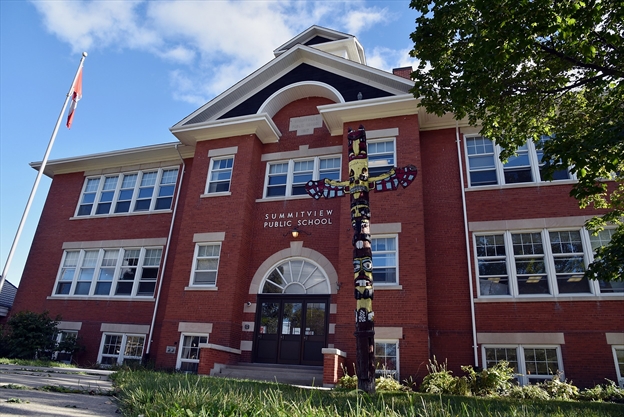
A plan has been put forward to have the York Region District School Board remove this totem pole from in front of Summitview Public School in Whitchurch-Stouffville. The totem has stood there since 1974. - Mike Barrett/Metroland
"While initially constructed with positive intentions, our understanding of how cultural appropriation affects our leaning environments has developed significantly."
"The totem pole was created without consultation or involvement of members of Indigenous Nations, including members of the Indigenous Nations of the West Coast for which the totem pole is unique."
York Region District School Board

"At that time, there was less awareness to what appropriation was."
"The First Nation felt it was probably not done with any ill-intent. That's why we're not jumping up and down with our arms in the air."
"Everybody's just trying to do the right thing here."
Lauri Hoeg, Chippewas of Georgina Island, Band councillor

"Listen, I think we've engaged in some significant learning since the totem pole went up."
"The one big thing for me is around the spaces that we're creating in our schools."
"We're looking to engage in some learning, as a starting point."
Drew McNaughton, Summitview Public School Superintendent, Stouffville, Ontario
TDSB

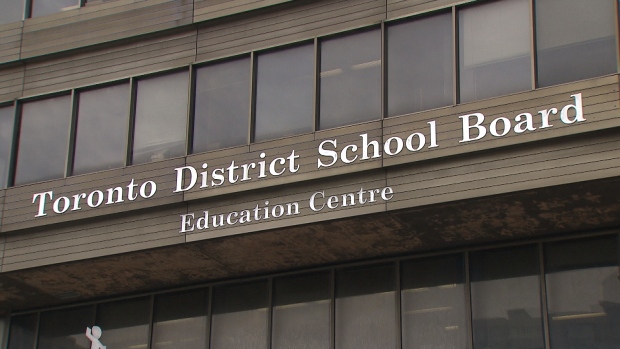
"It may not have originated as an Indigenous word, but the fact is that it [the word "chief"] is used as a slur in some cases, or in a negative way to describe Indigenous people."
"With that in mind, as it has become a slur in some cases, that's the decision the administration has made to be proactive on that [to henceforth disallow the use of the word chief in any context]."
Ryan Bird, spokesman, Toronto District School Board

"If that usage is going to genuinely hurt a group of people, then I would say yes, by all means, let's see if we can find an alternative."
"On the other hand, the word originated outside of the context of First Nations cultures ... and the First Nations associations that it has, I don't think are negative."
Mark Morton, University of Waterloo's Centre for Teaching Excellence
We are canting at a galloping pace toward the very last gap in touchy-feelly empathy and rejection of anything that might possibly be construed as cultural appropriation -- heaven forfend -- or (gasp!) perceptions of bigoted expressions aimed at Indigenous people or their culture. An elementary school in Ontario has decided in a righteous fit of sanctimony that a totem pole erected decades ago as an exercise in children understanding and respecting historical culture, was to be summarily removed from its place adjacent the school's front entrance.

In 1973 former teacher Bernadine Mumford began a project as part of a focus on Canadian history, in the process enthusing her grade 6 students and the project was begun, everyone happily contributing to the carving and erection of a distinct and complimentary facsimile of a traditional West Coast totem pole, in sympathetic recognition of the "great harm" done in the past to Indigenous peoples. "It bothered me that there was an implication it was racist", she latterly said, to a local newspaper.

However, the spectral reality of victimhood, real or perceived, raised its accusing head. She was informed that a complaint had been broached to the school board about the structure, that the York Region District School Board identified as "community-based concerns"; one individual lodging an impassioned complaint to demonstrate her/his commitment to upholding the human rights and dignity of First Nations by taking the initiative to demand the removal of a disrespectful object mocking tradition is all it would take.

People in positions of authority have raised their antennae over such complaints of purported racism and no one wants to defend themselves by pleading not guilty and in so doing proving to the skeptical ultra-sensitive that no harm was intended, rather a project was meant to convey empathy and recognition of past wrongs. The merest whiff of controversy serves to light a firecracker under the seat of anyone held to be publicly accountable, and they move with righteous indignation blazing firmly in their culpable breasts.

When the board consulted with representatives from the Chippewas of Georgina Island, a local First Nation, though the totem pole does not reflect their own traditions, the Chippewas gravely agreed: the totem pole must be removed as an affront to First Nation dignity. In the matter of removing the offensive word "chief" from usage in any context whatever to assuage the perception that it is a word recognized as an epithet-arrow aimed at aboriginal hearts, there is nothing to discuss; the deed is done.

What is most harrowing about all of this is the simple fact that these intellectual simpletons have the last word on the kind of education Canadian children are exposed to, manipulating and avoiding any measure of discomfort through controversy that might be experienced when totally absurd notions arise implicating normal interactions of language and intention for fear that something, somewhere will be certain to offend someone at some time.

Summit View Public School letter
This letter was sent home to parents of students at Summit View Public School in Whitchurch-Stouffville Sept. 29. - YRDSB letter

Labels: , , , , ,

Thursday, April 20, 2017

Civilizing Rural Pakistan

"Back home, you have to go anywhere with your father, mother or brother, because you are a girl."
"We are really proud. We follow her [Nobel Laureate Malala Yousafzai] and we will follow her in the future."
"In some areas, [of Swat, Pakistan] girls and boys are now even being taught in the same classroom."
"However we can help [by returning to Pakistan], we will."
Shazia Ramzan, 19, Pakistani woman studying in the United Kingdom

"If I'm wearing jeans and my friends [in Pakistan] see pictures online, they say: 'You forgot your culture'."
"Before [prior to being educated in the United Kingdom], my mind was closed. I thought education just related to my family. But now I think about all girls. I want to stand up for them."
"I believe I should go back to my country and try to make change there."
Kainat Riaz, 19, Pakistani woman studying in the United Kingdom
Malala Yousafzai (centre) with Kainat Riaz (left) and Shazia Ramzan, pictured in 2013. Picture: Jane Barlow
    Malala Yousafzai with Kainat Riaz (left) and Shazia Ramzan (right) in 2012. Photo by Jane Barlow

The two young women now studying abroad were 14 (Shazia) and 15 (Kainat) when they became victims of an infamous attack by Pakistani Taliban against young girls living in the Swat Valley who claimed an education for themselves. They were seated alongside their friend, 15-year-old Malala Yousafzai, when the encounter took place: "The Taliban stopped us, two boys -- or men. One was in the front and the other one came to the back (of the bus).

"He said: Who is Malala? [We had our faces covered (with niqabs) but Malala didn't. We were looking at him and then he shot Malala in the forehead. He shot me on my hand and shoulder, and Kainat's shoulder as well. Then he started shooting randomly", explained Shazia. The girls had been in fact, returning from a chemistry exam and the bus they were in was actually a converted truck, the girls sitting among others, on benches, when their attackers stopped the truck and entered it, searching for Malala.

Malala had gained a reputation for herself as a campaigner for girls' right to an education. She had deliberately made a target of herself by speaking up in an interview on Pakistani television, and by expressing her determination to become educated in an online blog posting, where she also emphasized that girls had a right to an education. Kainat went to a local hospital, and Shazia was treated in Peshawar, in a military hospital which hadn't the wherewithal to treat Malala.

Her injuries were too seriously life-threatening and too complicated and she was flown to the United Kingdom where surgeons there saved her life. The infamy of the attack spread like wildfire around the world, and focused on the plight particularly of Malala. Though other girls were in a similar position to Malala's own, it was she who had brought attention to herself through her public proclamations of dissent and defiance, supported by her father.

When Kainat and Shazia returned home to the Swat Valley after their recovery, the locals viewed them as unwelcome. Neighbours informed Kainat's family they should leave; her presence endangered the rest of the villagers because she had become a target for the Taliban. Neither bus nor taxi drivers would take her to school.The shooting of the girls took place in October of 2012, but by July of 2013 when Malala turned 16, she was invited to address the United Nations to deliver her message.

Offers came flooding in to her from prestigious schools eager to grant her the education she sought, at no charge to her family. Malala settled with her family in Birmingham, England and was enrolled at the private Edgbaston High School for Girls. Mindful of her two injured friends, she asked the international boarding school UWC Atlantic College in the Vale of Glamorgan which had extended an invitation to her which she declined for herself, if her friends could be offered the same opportunity.

And this is how Shazia and Kainat were recognized with full scholarships (paid attendance for a two-year period amounts to $100,000). Former British Prime Minister Gordon Brown, at that time a UN special envoy on global education, helped the girls procure visas. The girls settled in to study at Atlantic College, accustoming themselves to their newfound freedom to go wherever they wished, along with the pleasure of learning to swim.

Malala is now expected to go on to study at Oxford University. Both Shazia and Kainat have been given offers to study nursing at Edinburgh University, with mentor Gordon Brown assisting in finding the required funding. They both plan, on graduation, to return to their country of birth, to do what they can to ensure that all girls and young women have the opportunity to receive an education, and to never have to face the dread situation that they had encountered.
Malala's friends Kainat Riaz and Shazia Ramzan were also shot by the Taliban
Malala's friends Shazia Ramzan (left) and Kainat Riaz (right) were also shot by the Taliban Credit:  JAY WILLIAMS

Labels: , , , , ,

Saturday, March 18, 2017

Bucking the Trend

"That's the perfect formula for S.T.I.s [sexually transmitted infections], including H.I.V."
"The  youth explore [sex], but do it without the proper education."
Chris Lagman, official, Love Yourself, Manila, Philippines

"The Philippines has the fastest growing H.I.V. infection rate in Asia, along with Afghanistan."
"Right now, the Philippines runs the risk of letting the infection get out of control."
"All good and successful national AIDs programs use condoms."
Steven Kraus, director, Unaids, United Nations H.I.V/AIDS Agency

"Reducing HIV transmission isn't rocket science. But it does require the ... government to implement an HIV prevention program and remove obstacles to condom and HIV testing access so that young Filipinos - particularly men who have sex with men - can protect themselves from an otherwise preventable illness."
Carlos Conde, Philippines researcher, Human Rights Watch.

"Nationwide, there are testing centers and hygiene clinics that offer free HIV testing services and ensure the confidentiality of the results. Knowing one’s status will help an individual get early treatment and care."
"Information dissemination is the key to conveying the correct message to everyone that HIV is preventable and that anybody can acquire the virus."
"HIV is a virus that destroys the human body’s natural defense against diseases or infection, causing the immune system to weaken and not function properly. No human being, by age or by sex, is immune to HIV infection."
Juan Antonio Perez III, executive director, Commission on Population, Philippines
World AIDS Day Commemorated in Manila – AP / Bullit Marquez
In the early 1980s the world became aware of a strange new illness that was being passed along, mostly among gay communities in the United States. It was cutting a savage swath through the community, killing people through an agonizing process of mechanical bodily failures compromised by infections and ending in death rescuing those affected from their suffering. Medical science worked overtime to try to understand what Acquired Immunity Deficiency Syndrome was, how it was passed along, and how it could be managed and eventually cured.

In much of today's world, the soaring incidence of H.I.V. and AIDS has been more or less tamed. Education on sexual hygiene and self-protection has gone far in diminishing the incidence and impact of that dread disease. The need for a life-saving protocol accelerated once it became clear that AIDS was afflicting not only the vulnerable victims practising unprotected sex in the gay community, but heterosexuals as well. The realization that women were giving birth to babies infected with H.I.V. struck the conscience of the world.

And at a time when aggressive awareness and prevention campaigns have succeeded in leading to a global decline in infection rates where in Asia rates of infection decreased by five percent, in Southeast Asia by 30 percent, in the Philippines the trend has gone the other way. Among gay men in the Philippines the infection rate has literally exploded, as it did in the early days of AIDS surging through the gay community of the United States.

For those most at risk, gay men, injecting drug users, transgender women and female prostitutes, the rise has been alarming, with the rate of new infections having increased by 230 percent between 2011 and 2015. Yet among Filipinos between the ages of 15 and 24, a mere 17 percent fully comprehend exactly what H.I.V. is, and how it spreads. The Health Department had developed a plan to distribute condoms in public high schools as a preventive, linked to education.

But the Department of Education refused, even though teachers would have been trained how best to counsel students on the prevention of pregnancies and the transmission of sexual infections. With that refusal went the voluntary H.I.V. testing, and a further plan to educate parents on how to discuss sex with their children. A coalition of parents, the Roman Catholic Church (of which 80 percent of Filipinos are devout members) and conservative politicians all resisted the effort at education and prevention.

"The Department of Health and the Department of Education should concentrate on uplifting the values of the Filipino youth", urged Senator Vicente Sotto II, arguing that distributing condoms on school premises would result in promiscuity, pointing out that public health centers and stores are where condoms were already available. However, Filipinos under the age of 18 require parental consent to buy condoms or to be tested for H.I.V.

The country relies on the use of antiretroviral therapy to diminish opportunities of passing H.I.V. on to others, along with testing drives, as the national strategy to halt the spread of the virus. In the meanwhile, awareness of prevention and actual testing are both random and infrequent.


Labels: , , ,

Monday, January 23, 2017

Educating Afghanistan's Children : Or So We Think

"Canada is currently undertaking the necessary due diligence to ensure that in the event that Canada's funds have been misappropriated, that such funds are recovered and that the guilty parties are held to account."
"Canadian funds provided to EQUIP are administered by the World Bank through the Afghanistan Reconstruction Trust Fund." 
"Canada's longstanding support to education in Afghanistan has contributed, along with other donors, to more than 8.4 million Afghan children being enrolled in formal and community-based schools, 39 percent of whom are girls."
Jessica Seguin, spokeswoman, Global Affairs Canada

"Earlier this month, the Minister of Education Assadullah Hanif Balkhi said that a recent study found that only six million Afghan children are in fact at school -- contrary to the 11 million as previously stated by the former government [of previous Prime Minister Hamid Karzai]."
Report, TOLOnews, Afghanistan

"[Allegations of nonexistent] ghost students, teachers and schools [in Afghanistan are not new, in a country swept by corruption]. [A report issued in January by the U.S. Special Inspector General for Afghanistan Reconstruction (SIGAR), points to a] high risk list [vulnerable to] significant waste, fraud and abuse."
"Corruption continues to be one of the most serious  threats to the U.S.-funded Afghanistan reconstruction effort."
"SIGAR has launched a new ARTF performance audit to assess the extent to which the World Bank and the Afghan government monitor and account for U.S. contributions to the ARTF, evaluate whether ARTF-funded projects have achieved their stated goals and objectives, and utilize and enforce any conditionality on ARTF funding."
"There may be problems with student and teacher absenteeism that warrant further investigation by the Afghan government."
U.S. Special Inspector General for Afghanistan Reconstruction


Yasamina, 14  "I fetch water every day - it takes about an hour. But, I also go to my school. I walk with my 
friends for four kilometres every day but I like walking to my school with my friends. I want to be a nurse when 
I finish my school here." BBC News

At one time the ruling Taliban issued an edict that Afghan girls had no need of education, and only boys were permitted to attend schools. Neither were women permitted to be seen outside their homes without wearing an all-enveloping burqa that also covered their faces, allowing eyes to peer out from behind a netting on the top half of the niqab, or veil. Women were not permitted to work, even if there was no one else to support them financially, even if they had dependent children. Men were expected not to shave their facial hair. Music was not permitted, nor was celebratory gatherings.

After the ouster of the Taliban, when the U.S.-led NATO mission to find Osama bin Laden and disperse both al-Qaeda and their supporters the Taliban from Afghanistan, the international mission undertook a transformation of Afghan society. Schools were built and medical clinics were established; where previously girls were not permitted to study, schools were built solely for girls to attend, and no longer would male physicians be restricted from treating female patients, nor female physicians forced to wear burqas themselves, while undertaking surgical procedures.


Humanitarian aid organizations flooded into Afghanistan with the intention of serving its people. Afghan women, now permitted to work, did just that, priding themselves on their new freedom and determined to move forward. And the international community, preparing to leave Afghanistan, invested in training Afghan police and the military to Western standards to enable them to meet conflict situations in self-defense. In the process, discovering how deeply-engrained corruption in Afghanistan was, permeating the entire society.

Current President Ashraf Ghani had campaigned for the presidency several years back, with one of his primary promises being to sweep endemic corruption out of Afghanistan. Had the U.S. agency not delved deeply into the problem of unaccountability and corruption in the education ministry, in preparation for a presentation of an updated report for the new American administration, the depth to which the ministry was corrupted might never have been fully revealed, even though the Afghan government had arrested workers in the ministry for embezzlement at an earlier date.


Mohammad Zaman, 13, studies in Sherzad high school. He says most
of his schoolmates study in the open 
air because there are not many 
rooms in his school which is over-crowded. "I want to study wherever I can, I wish we had rooms but I learn a lot of things every day. I want to be an engineer in the future." BBC News

Half the number of children that the previous government of Afghanistan under former president Hamid Karzai, reported to be attending school, actually did. International aid for that specific purpose has been set aside, purloined and found its way into the pockets and bank accounts of various Afghan officials, to the detriment of Afghanistan's children. What the Taliban did in depriving the children of Afghanistan, particularly the girls, of an education, as an institutional edict, the trusted and legally, democratically elected government has carried forward through inattention to the funding dispersal and the actual implementation of what the funding was meant to accomplish.


Billions of dollars representing international aid are unaccounted for. The issue of "widespread corruption", now front and centre again will have consequences in the international community which had expectations that its dedicated efforts and its treasury meant to fund an impoverished and embattled nation would have positive results for the future, not enrich corrupt officials. The result of which will be felt on future investments in the country.

These boys walk to Kodi Khel village from a nearby mountain. They say they walk in a group and rest on the way every day. They cross rivers and mountainous valleys before they arrive at Sherzad high school. BBC News

Labels: , ,

Friday, December 16, 2016

Yet Another Islamophobe, (sigh)

"[The Muslim School of Montreal was grooming] fundamental activists. [Offering a model of a society] where men are probably going to commit honour crimes against their sisters."
"[The school was institutionalizing] sexual apartheid [and as such was] very far from the values of our [Quebec] society."
Djemila Benhabib, author, feminist, critic of Islamist fundamentalism

Djemila Benhabib says she doesn't regret likening the Muslim Schools of Montreal to militant Islamic training camps in Afghanistan and Pakistan. Djemila Benhabib says she doesn't regret likening the Muslim Schools of Montreal to militant Islamic training camps in Afghanistan and Pakistan. (Radio-Canada)
"Certainly these remarks are severe and could have been hurtful. However, they have a place in a democratic society like ours."
"Everyone must be allowed to express themselves as freely as possible on these questions."
"[Djemila Benhabib's remarks] are at the heart of freedom of expression's raison d'etre, that is, to favour active participation in debate on subjects of public interest."
Superior court Justice Carole Hallee, Montreal

"I was devastated, appalled, horrified, insulted and worried. How was it possible that someone who had never set foot inside our school could make such damaging and insulting statements?"
Ahmed Khebir, president, Muslim School of Montreal board of directors

The  Ecoles Musulmanes de Montreal is suing the secularist author for $95,000 in a defamation lawsuit.
The Ecoles Musulmanes de Montreal is suing the secularist author for $95,000 in a defamation lawsuit. © EMMS website
Mr. Khebir chooses to overlook the reality that anyone may now access websites on the Internet to form their own conclusions from the very statements pertaining to the site and purpose such websites advertise of their own initiative. And when Ms. Benhabib found herself provoked with interest after perusing a brochure that the school produces which featured female students wearing hijabs, further investigation on their website informed her that the curriculum was heavy on memorization of Qur'anic passages.

One of which, evidently waxed poetic over the beautiful virgins in Paradise, at the service of male faithful choosing to believe in an afterlife where non-believers are consigned to the fires of hell while the faithful are wooed by nobile beauties. Subsequently, in an interview on a radio program, she made her statements that caused such personal and religious anguish to the school board that it felt justified in bringing a lawsuit against the woman, suing her for $95,000.

Her statements linking the school's curriculum to military camps, he insisted elicited fear within the board that an anti-Muslim backlash from the public was certain to erupt by fanatics who hate Islam. However, the justice hearing the case found logic and truth absent in the credibility of Mr. Khebir's statement of injured protest. The school, she pointed out, presented no evidence of reputational suffering resulting from that interview.

She did find acceptability to Ms. Benhabib's reasonable explanation that when she uttered the statement relating to military camps it was her intention to describe a rigid military mindset, and not reference to camps involved in terrorist training. Furthermore, Justice Hallee stated that there was no support in reality of the contention that enrolment dropped s a result of what the school board considered pernicious slander waged against it.

Her considered judgement was that Ms. Benhabib had not slandered the school or the school's students. She was merely discussing issues of contention in the wearing of the hijab and rote memorization of Qur'anic religious passages. "In this case, the court acknowledges the very important role of freedom of speech and freedom of expression", noted her lawyer, Marc-Andre Nadon.

Labels: , , , , , ,

 
()() Follow @rheytah Tweet