Ruminations

Blog dedicated primarily to randomly selected news items; comments reflecting personal perceptions

Sunday, June 18, 2023

Toronto's Crime and Defunded Police Dilemma

We asked three xperts to review the top mayoral candidates’ platforms on public safety.
"Olivia Chow will defund the police, raise your taxes, and ram bike lanes on our busiest streets. As Mayor, I will hire more cops, freeze taxes, and get traffic moving."
"The choice is clear — it’s time to stop Olivia Chow."
"As former police chief, I had to deal with situations like this in the past [death threats]. But in that capacity, you have access to the tools and skilled investigators and the skill teams and resources necessary to really create the best plan."
"Under this circumstance [as a mayoral candidate] I don't have those privileges or accesses anymore. But my bigger concern really is for my staff."
Mark Saunders, former Toronto Police Chief, Toronto mayoralty candidate
 
"The suspect made threatening remarks about shooting mayoral candidates and showed what appeared to be a firearm."
"[The threats were made against] unnamed [mayoral candidates and represented a] blanket threat."
Const. Alex Li, spokesperson for the Toronto Police Service
Toronto mayoral candidate Olivia Chow takes part in a televised debate hosted Marivel Taruc, in the CBC Broadcast Centre, in Toronto, on June 6, 2023.
Toronto mayoral candidate Olivia Chow takes part in a televised debate hosted Marivel Taruc, at the CBC Broadcast Centre, in Toronto, on June 6, 2023. (Evan Mitsui/CBC)

"Chow, the widow of former New Democratic Party leader Jack Layton, has been a prominent voice in progressive politics for decades. But her path to victory is no sure thing. A record 102 candidates — including one representing a dog named Molly —  are competing in this year’s election."
"Central Toronto’s left-leaning electorate rallied around Chow when she first ran for mayor in 2014, but despite a flood of positive polling at the race’s outset, she lost momentum in the final weeks of the campaign and placed a distant third."
Jacob Lorinc, Bloomberg News
 
"To some observers, it looks like they’ve seen this movie before: Olivia Chow gets an early lead but can’t sustain it, and gets overtaken by someone else in the field."    
"I think that’s going to be harder this time around. The issues are just more complicated and wide ranging."
"As we approach the finish line of this election, and depending on what the polls look like, there will be pressure within those different ideological camps to drop out and support another candidate whose orientation is fairly similar. And that could happen both on the right and the left."
Myer Siemiatycki, professor emeritus of politics, Toronto Metropolitan University
Toronto is in the throes of a mayoralty race. The election takes place in six days' time. The number of candidates for the position was astronomical, but has now, after weeks of campaigning, come down to a handful of potential winners. Crime, law and order is one of the biggest items to be addressed, and most, but certainly not all, candidates have made it a priority issue. It is an issue of great importance to Torontonians, and recognized as such by those candidates identified as 'right-wing'.
 
The leading contender for the position, long-time city councillor with the most-recognizable name is NDPer Olivia Chow, and polling has given her the lead, at 30% of the vote. Crime and punishment is not on her agenda. Many years ago when Olivia Chow and Jack Layton were both city councillors they lived in and had possession of another apartment meant for assisted living for low-income residents. This is the mayoralty candidate who now bemoans that city residents cannot afford to buy homes at astronomical real estate prices in the city.
 
Once known as Toronto the Good, the city can no longer boast of a low crime rate. Over the past few years car thefts including armed ones have been skyrocketing, their numbers in lock step with the reduction of funding for the metropolitan police force. A number of successive city budgets have seen a dramatic drop in funding for the police department and although the last budget saw an increase, it was targeted toward salaries, not the hiring of new recruits and improved services.
 
Six candidates stand at podiums on a stage.
From left to right: Toronto mayoral candidates Ana Bailão, Brad Bradford, Olivia Chow, Mitzie Hunter, Josh Matlow and Mark Saunders at a debate at George Brown College on May 24, 2023. (Nav Rahi/CBC)
 
Toronto has been plagued with violence across the city, many taking place on the Toronto Transit service, in its subways primarily, committed by deranged street people stabbing innocent people to death, shoving unsuspecting people from subway platforms onto tracks below. These events happen elsewhere as well, but Toronto is Ontario's and Canada's most populous city at 2.6 million and rapidly growing, and the number of crimes has escalated dramatically, linked to drugs, gangs, homeless, the mentally challenged. 

Between 2017 and 2021, car thefts rose 90 percent and increased another 42 percent in the last year; just coincidentally a specialized stolen vehicle group was eliminated, leading to the situation where dozens of vehicles are stolen nightly in carjackings; car thefts with weapon up 288 percent in the last year alone. Organized crime has flourished in lock step with the defunding of the police budget. Apprehended thieves frequently are granted bail, leaving them the leisure to re-offend. It's called 'catch-and-release'.

Toronto is no longer a safe, placid, comfortable city in which to live. There was a 21.3 rise in homicides last year, with robberies increasing by a third. Priority 1 calls represented by shootings and murders now takes 21 minutes for a response. Over three times longer than the reasonable target time. Priority 2 calls, for serious crimes outside manslaughter is 50 minutes. Toronto Police Service failed to meet its target response time 72 percent of the time for Priority 1 calls and 92 percent for Priority 2 calls in 2021.

 
canadian
 
Current police Chief Myron Demkiw asserts that officers should arrive at a reasonable time to such emergencies, representative of the most fundamental commitment of the police force to ensure public trust, yet that goal has become unrealizable given the reality of the force's shrunken share of the municipal budget. There are now 600 fewer uniformed officers than in 2010, while every police officer struggles to serve 30 percent more residents as the population increases.

When auditor general Beverly Romeo-Beehler was commissioned last year to analyze where further cuts could be realized, it was her finding that Toronto is hugely underserved with officers for a city of its size. Without an investment of greater funding for policing, the situation would deteriorate even further, she advised. Leading mayoralty candidate Olivia Chow, on her past record, is expected to continue defunding the police. Two other candidates, also left-wing will commit to further defunding as well.

According to recently retired police chief James Ramer, more Torontonians have died as a result of votes to defund the police by councillors, among them those now running for city mayor. 

Toronto's top six mayoral candidates are pictured here. From top left to right, Olivia Chow, Ana Bailao and Josh Matlow; and from bottom left to right, Mitzie Hunter, Mark Saunders and Brad Bradford.
Three Toronto mayoral hopefuls, Matlow, Saunders and Bradford, indicated their campaign activities were disrupted on Thursday as police searched for a man who threatened to shoot several candidates. (Michael Wilson/CBC)

Labels: , , , , , , , ,

Tuesday, April 18, 2023

Human Brain : Command and Control Centre

 
als, treatment and research from als.ca

``Medical science does not have a complete understanding of the disease mechanisms to define the optimal therapeutic targets. Also promising therapeutics have limited access to the brain and spinal cord because of a protective layer called the blood-brain barrier, which works as a filter to prevent viruses, bacteria and toxins from getting to the brain. However, it also limits drug access to the regions of the central nervous system affected by ALS"
"ALS is a heterogeneous disease and patients often have a variable progression. For some it starts in the legs or arms, for others the throat muscles, so they can present with speech and swallowing changes. Stephen Hawking had a very slow variant of the disease, whereas others have a fast progression. He also chose to be put on a ventilator once he became completely paralyzed, which prolonged his life [by 50 years]."
"The disease heterogeneity, along with the incomplete understanding of the mechanisms and the cause, have contributed to many negative clinical trials. There are probably different forms of variants of this disease that may have different biological mechanisms in the background."
Dr. Agessandro Abrahan, neurologist, ALS Clinic, Sunnybrook Health Sciences Centre; assistant professor of medicine, University of Toronto
Amyotrophic Lateral Sclerosis (ALS-Lou Gehrig`s disease) is a neurodegenerative motor neurone disease that paralyzes the human body over time. ALS causes muscles to break down to the extent that those afflicted with ALS lose the ability to walk, talk, eat, swallow -- and given enough time -- breathe.  About 80 percent of sufferers will die within two to three years of diagnosis of this dread disease for which there is no cure. Its cause is a mystery.
 
Research
There are therapies of moderate success able to slow the decline and improve quality of life, but modestly. Over 50 drugs are being researched as potential treatments. Three of those drugs have been approved in Canada: Riluzole, an oral medication, helps to protect the motor system from neurotoxicity, slowing the disease progression by five to ten percent over time. Its survival benefit is around two to three months. Edaravone was found in a small clinical trial to slow ALS`s progression by roughly 30 percent in its early stages.
 
The third drug, approved in 2022, is sodium phenylbutyrate-taurursodiol (PB-TURSO) which a small study showed progression was slowed by about 35 percent in early stage disease. None of these drugs are able to halt the progression of the disease, much less return any functional loss; patients continue to decline, albeit at a slower rate.  One drawback is the expense involved with these drugs whose use is effective in early onset stage of the disease. 

Each medication targets a different area; Riluzole, the chemical unbalance causing neurotoxicity; Edaravone, free radicals, and PB-TURSO helps metabolism of the motor neurones. How ALS is caused remains a mystery other than in about 90 percent of cases sporadic AlS typically begins in adulthood and is marginally more common in males than females. The genetic forms of ALS are slightly better understood, and they account for about ten percent of cases.

Dr. Abrahan of Sunnybrook Health Sciences Centre describes a number of clinical trials and research linked to a network formed in 2008 called the Canadian AlS Network, founded by Dr. Lorne Zinman from Univ4rsity of Toronto, which has conducted collaborative research with a goal to better understanding why people contract ALS, how it progresses, and to identify disease markers that can potentially be used to develop therapeutics.

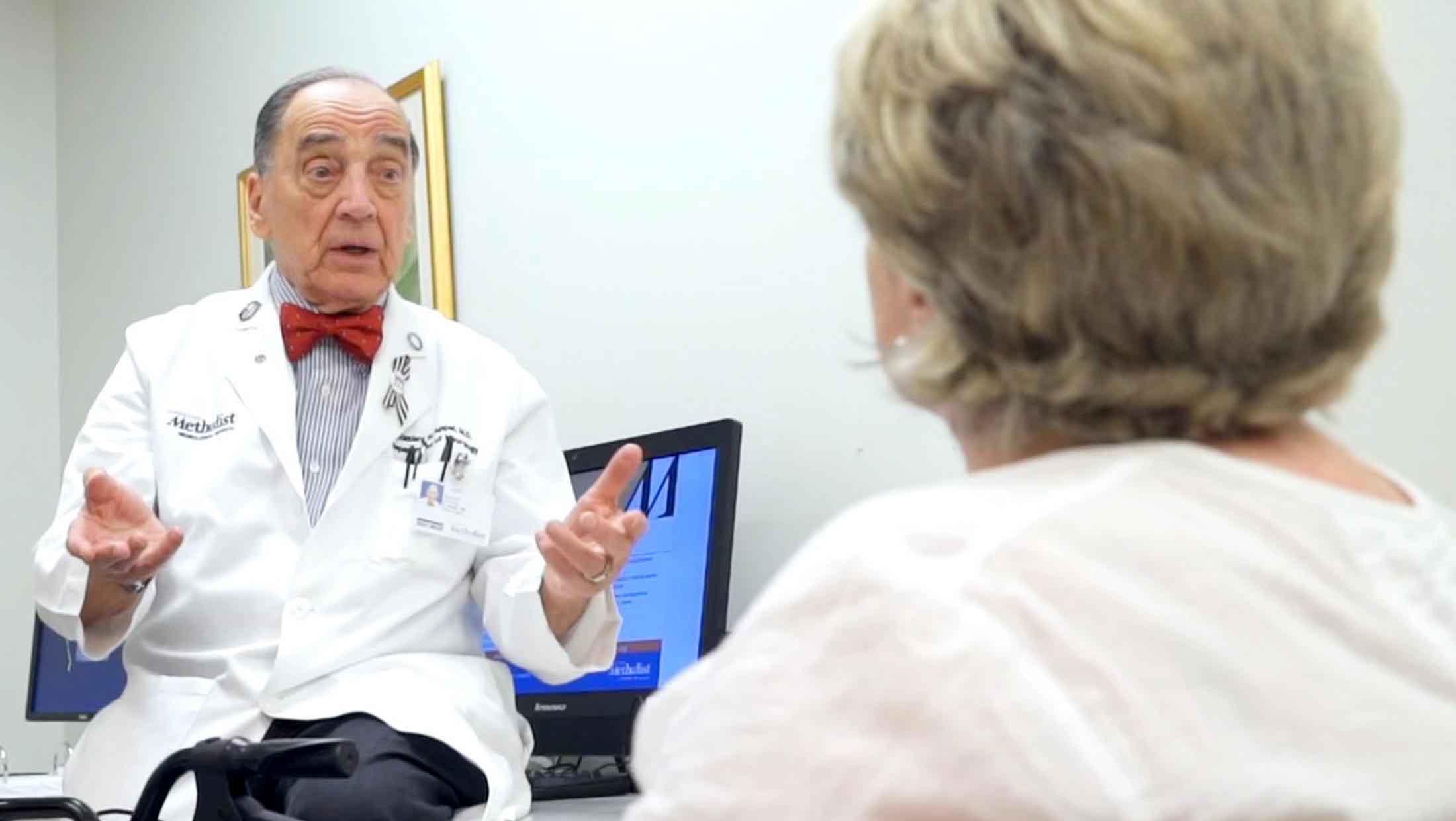
researcher conversing with patient

Labels: , , , , ,

Monday, February 15, 2021

The Grim Diagnosis of Alzheimer's Disease

"Neurodegeneration is a general term that we use when cells and their connections don't work properly, which means there isn't proper communication between brain cells."
"This affects basic physiological functions such as memory and the ability to store and receive information which is what happens when someone has Alzheimer's."
Dr.Jack Jhamandas, professor, University of Alberta
 
"Memories are stored in our synaptic connections and to retrieve them our brain has to release the correct chemical to allow communication to happen."
"When someone has Alzheimer's, sometimes this works and sometimes it doesn't."
"The initiating event happens early on, maybe even decades before someone shows up to the doctor's office with symptoms."
"That's where the problem is; we don't know what the real underlying initiating events are or when they start, which makes it difficult to devise treatments. In a sense, you're trying to work backwards; you don't know who the affected individuals will be because it could be ten to 20 years before they start to show symptoms."
Dr.Jane Rylett, professor, scientist, Western University. Scientific director, CIHR Institute of Aging
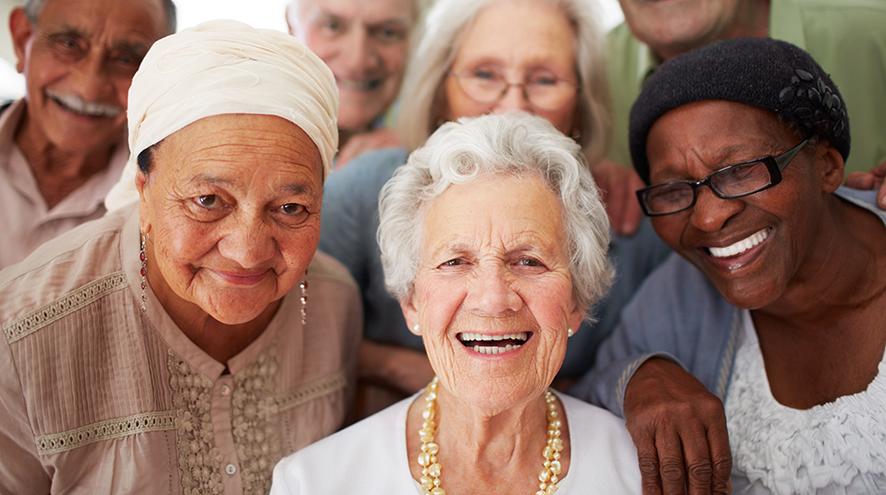
smiling-group-of-seniors
Alzheimer's Society of Canada

First described in 1906, Alzheimer's disease after a century of research and billions spent on that research, the complex brain disease is still little understood, and a long way off from a cure. As a neurodegenerative disease impacting memory, thinking and behaviour, a cruelly merciless undermining of personality and personhood, and the body's slow descent into full malfunction in lockstep with that of the brain and all associated functions, the disease continues its fearful inroads in the elderly population worldwide.

Science is of the opinion that three main events lead to Alzheiner's; that the first of which is the amyloid protein which builds up to form toxic plaques in the brain; added to that is neurofibrillary tangles (abnormal accumulations of the tau proteins in the brain), and finally, inflammation in brain cells and the role this plays in accommodating toxins entering the brain. When these three main malfunctions occur complementarily, cells no longer function, they die off, leading the brain to shrink.

What causes these proteins to build and the brain to become inflamed however, remains a mystery to science. Approximately five percent of Alzheimer's cases can be traced to genetic predisposition, but science puzzles over what might catalyze the events leading to Alzheimer's in the aggregate 95 percent of Alzheimer's cases.

Older woman with Alzheimer's looking out of a window
A range of brain disorders are known generally as dementia, the impact of which is memory loss, diminished thinking and affected behaviour. The most common form of dementia is recognized as Alzheimer's disease which accounts for roughly 80 percent of all dementia cases, while many other form -- including vascular dementia, the result of small strokes in the brain, and Lewy body dementia which frequently has an effect on mobility -- are also part of the dementia family of diseases.
 
When Alzheimer's is at work destroying brain and body function, amyloid protein plaques become deposited in the cortex and hippocampus areas of the brain, both important for learning, and memory. With the progression of the disease, amyloid plaques and tau proteins start their destructive increase in other parts of the brain, impacting areas responsible for language and behaviour, among others. In early stages of Alzheimer's, many people remain capable of retrieving memories, but that capacity shrinks as the disease carries on and connections break down, resulting in memories fading from recall.
 
Countless attempts have taken place focusing on two major areas of drug research; first drugs that bind to and destroy amyloid plaques or prevent plaques from forming. The second route targets the tau protein responsible for forming tangles. According to Doctors Rylett and Jhamandas, nothing thus far has borne positive results and they speculate that this may possibly result from the fact that over time as the disease progresses the brain undergoes years of change before it is even clear that Alzheimer's is in the picture.

Animation showing an older man's brain
Leading to the hypothesis that the brain could possibly be, at that juncture, too critically damaged for a drug to reverse or prevent impairments. With Alzheimer's, frustratingly, there is no cure, but there are drugs that help to reduce symptoms in the short term. The drugs represent two broad categories; acetylcholinesterase inhibitors and memantine; the former to boost levels of the chemical messenger acetylcholine which has a vital role in memory retention and exists in abnormally low levels in those with Alzheimer's.
 
Glutamate is regulated by memantine, a treatment used in later stages of the disease; the glutamate an important chemical messenger that becomes impaired with Alzheimer's. Research indicates that exercise, a healthy diet and social interactions are associated with better brain health and thus those whose lifestyle includes those elements stand at lower risk of developing Alzheimer's. 
 
Research has been focusing on the development of a biomarker which, according to Dr.Rylett, could potentially take the form of a blood test or imagining test.
"The idea is these biomarkers would be predictive of who is at highest risk of developing Alzheimer's or other dementias at some point in their lives."
"If we knew that first, then we could start looking at other drug and lifestyle choices that could impact the course of trajectory of the disease."
Watch: How Alzheimer's Changes the Brain
National Institute on Aging

Labels: , , , ,

Thursday, April 30, 2020

The Research Rush to Control SARS-CoV-2

"There's now enough data to support consideration of access under an emergency use authorization by FDA."
"The data from NIAID [National Institute of Allergy and Infectious Diseases] study should push this firmly over the line."
Scott Gottlieb, former commissioner, U.S.Food and Drug Administration

"The study demonstrates the potential for some patients to be treated with a five-day regimen, which could significantly expand the number of patients who could be treated."
Chief Medical Officer Merdad Parsey, Gilead Sciences Inc.
Remdesivir trial posted online prematurely was 'inconclusive,' Gilead says

"As part of the FDA's commitment to expediting the development and availability of potential COVID-19 treatments, the agency has been engaged in ... discussions with Gilead Sciences regarding making remdesivir available to patients as quickly as possible, as appropriate." 
Michael Felberbaum, spokesman, U.S. Food and Drug Administration

"The data shows that remdesivir has a clear-cut, significant, positive effect in diminishing the time to recovery."
"Although a 31% improvement doesn't seem like a knockout 100%, it is very important proof of concept."
"What it has proven is that a drug can block this virus."
"[But] whenever you have clear-cut evidence that a drug works, you have an ethical obligation to immediately let the people in the placebo group know so that they can have access."
Dr. Anthony Fauci, immunologist, director, National Institute of Allergy and Infectious Diseases
Trump administration launching operation to accelerate development of coronavirus vaccine

"[The drug is] not the end of the story [when it comes to treatments for Covid-19]."
"We have work to do. We are looking for other therapies. This trial is going to continue."
"Four days [fewer] in a hospital is, for me as a clinician -- as a clinical practitioner -- it is not only significant but very meaningful. [This would matter] to all my patients and even to myself, if I would be in the same situation."
Dr.Andre Kalil, principal investigator behind the clinical trial
Bottles of Remdesivir
The experimental antiviral drug remdesivir, according to results out of Gilead Sciences' Inc.Bottles of remdesivir in a hospital for Covid-19 patients in Wuhan, China. FeatureChina via AP
The experimental antiviral drug remdesivir, according to conclusions reached through a clinical trial launched by Gilead Sciences Inc., helped to improve outcomes for patients diagnosed with COVID-19, the data indicating that the drug  worked more efficiently when used earlier in the course of the illness that has caused a global pandemic, infecting over a million people world-wide and leading to countless deaths.

Several studies had previously been released whose outcomes presented a contradictory picture of the drug's effectiveness. There were two clinical trials linked to Gilead; a study conducted by the NIAID met its major goal helping patients suffering a severity range of symptoms from the disease caused by the novel coronavirus. That trial compared how patients receiving remdesivir fared in comparison to others given a placebo, expected to definitively demonstrate any benefits provided by the drug.

Gilead announced that 62 percent of patients given early treatment with remdesivir were able to be discharged early from hospital, as opposed to 40 percent of patients who were given the drug treatment later in the course of the infection. The trial, with 397 patients taking part, evaluated safety and efficacy related to the five-day regimen. Still, there have been doubts expressed that it may not present a significant benefit.

The Lancet medical journal published results of a trial conducted in China which reached the conclusion that remdesivir had failed to improve the condition of patients. Gilead expressed its opinion that the Chinese trial was inconclusive merely as a result of the study being terminated too early. The result of the Chinese trial had been inadvertently released by the WHO's emergencies program. Dr.Mike Ryan who heads the WHO program declined comment.

WHO Remdesivir Screen
A screenshot from the WHO website. Screen capture

Labels: , , , ,

Sunday, February 02, 2020

Aging Healthily by Deterring Aging

"This is a much more effective approach toward  health than the traditional medical approach of waiting until people are sick and trying to cure their disease."
"Modern medicine has gotten pretty good at keeping sick people alive, but we are not very good at curing age-related disease. By treating one disease at a time, we haven't done anything to prevent all of the other age-related functional declines from happening in that person."
"I think you can make an argument that the extended period of time many older people live with multiple comorbidities currently is likely a direct result of the traditional medical approach of treating individual diseases, rather than treating biological aging."
"Obviously, there are several policy and social implications associated with an increase in healthy lifespans of 20 to 30 years. Retirement age and social security would need to be redefined for example."
"There are also questions about access and who will benefit first from such discoveries and how long it will take for them to become widely available, which can't be answered right now."
Matt Kaeberlein, biologist, professor, University of Washington
In this Oct. 28, 2014 photo, neurosurgeon Dr. John Sampson places a catheter into a glioblastoma patient at Duke in Durham, N.C. The risk of cancer increases with age. Shawn Rocco / The Associated Press

Dr. Kaeberlein envisions a time, perhaps two decades from the present, when a drug would be available to be taken over a period of six weeks or thereabouts to aid a person in their 60s to boost their immune system and protect against age-related diseases, such as heart disease, cancer and dementia. It is not foreseen that this therapeutic approach to treating old age would reverse age, much less bring eternal life; its promise lies in the expectation that it might produce a "healthspan", giving extra years to the individual, free of chronic age-related disease and disability.

This, according to gerobiologist Dr. Kaeberlein, who studies the biological mechanisms of aging, is what the health future for seniors may look like. Early research into such possibilities have already been conducted with worms, fruit flies and mice, even promising early results seen with the use of a drug called rapamycin in a study that involved pet dogs. The journal Public Policy & Aging Report, asked the question: Is aging a disease? when it devoted a full issue to the intriguing possibilities and the potential future of health care and the aging process.

At the present time, what transpires in medicine and human health is the treatment of individual diseases as they present themselves. It is well accepted through long experience that risks increase with age for cancers, heart disease, diabetes, Alzheimer's and neurological disorders such as Parkinson's. It isn't smoking, a heavy reliance on red meat in one's diet or environmental causes that threaten heart disease, but encroaching elder years.

Once a cancer is eliminated or heart disease made manageable, life expectancy sees an increase only on the order of three or four years, owing to the ongoing risk of additional types of diseases that continue to increase exponentially, with age. Slow down aging, goes this theory, then an increase of two or three decades in life expectancy could be anticipated.

 Rapamycin was identified in a soil sample from Easter Island in the 1970s, approved by the FDA to suppress the immune system to avoid rejection in transplant patients. It appears as well to boost immune function in healthy animals, perhaps by reducing inflammation which increases with age. In one study, it was discovered that rapamycin rejuvenated old mice hearts, resulting in significant improvements to cardiac function. Dr. Kaeberlein considers this drug the most promising of any to target aging.

It is not merely one disease but an entire litany of them associated with aging when chronic diseases take an increasing toll. By forestalling the aging process the potential is there to forestall not just one disease but many. "I know of no current intervention I would be willing to place a bet on", senior scientist at the Ottawa Hospital Research Institute and professor of biochemistry, microbiology and immunology at the University of Ottawa, Douglas Gray, stated. "The motivations are genuine and admirable. I just don't buy it. The thing that excludes aging from being a disease is its universality."

"Never say never. But I don't see anything on the horizon that would signal something imminent that would allow us to prolong life for, say, 20 years", commented Researcher Jane Rylett of Western University, who investigates mechanisms regulating chemical communication in the nervous system, at her lab. She is also the scientific director for the Institute of Aging at the Canadian Institutes of Health Research. "Even if there was a drug targeted at aging, it would affect different people in different ways."

Research funding to recognize biological aging as a risk factor in a disease is hard to come by. A mere fraction of one percent of the Alzheimer's research dollars -- as an example -- is spent on research on the role of aging in the development of Alzheimer's, even though biological aging accounts for over 90 percent of the risk of developing Alzheimer's. Another hurdle is regulatory where drugs approved by the FDA are approved on the basis of an "indication"; the drug must treat a named disease.

A woman exercises with wooden dumbbells during an event marking Respect for the Aged Day at a temple in the Sugamo district of Tokyo, Japan, on Monday, Sept. 19, 2016. The proportion of Japan’s aged has been rising steadily for decades, with U.S. Census Bureau data showing that last year more than one in four Japanese were over 65. Tomohiro Ohsumi / Bloomberg

Labels: , , , , ,

Thursday, December 19, 2019

Saving Lives, a Costly Enterprise

"We can now save children we couldn't save before. In 2019, in a first-world country like Canada, about 90 percent of those children will be cured. But ten percent won't, and since ALL [acute lymphoblastic leukemia] is the most common of children's cancers, even ten percent of children who relapse represents a substantial population of patients."
"We want to believe, although I think it's probably too early to say for sure, that those children [treated with CAR-T cell therapy] are cured."
Dr. Jim Whitlock, division head, hematology and oncology, Hospital for Sick Children, Toronto

"[While its] scientific ingenuity is marvellous [at potentially hundreds of thousands of dollars per dose, the therapy is also raising] the age-old question; what is the price of a human life?"
"[While it's a one-time infusion], it's not something you give at home and overnight the person has full remission from cancer."
"How much are we willing to pay to survive disease, and how much are governments willing to pay?"
"The ones [cancer drugs and therapies] that were easy to find, we found them. It's going to be harder to discover new therapies."
"[Though CAR-T therapy should be recognized as a] fantastic achievement [it fails some cancers, and both side effects and cost involved are complicating factors]. But when  your disease is a death sentence, less than perfect solutions are not to be dismissed."
Jonathan Jarry, biological scientist McGill University, Hamilton
Kymriah
Kymriah is a personalised cancer immunotherapy Novartis

"[Novartis] worked collaboratively with Cancer Care Ontario on behalf of all provinces to reach a mutually agreed-upon confidential negotiated price where the clinical value [of the drug] Kymriah and health-system sustainability were taken into consideration."
Novartis Canada

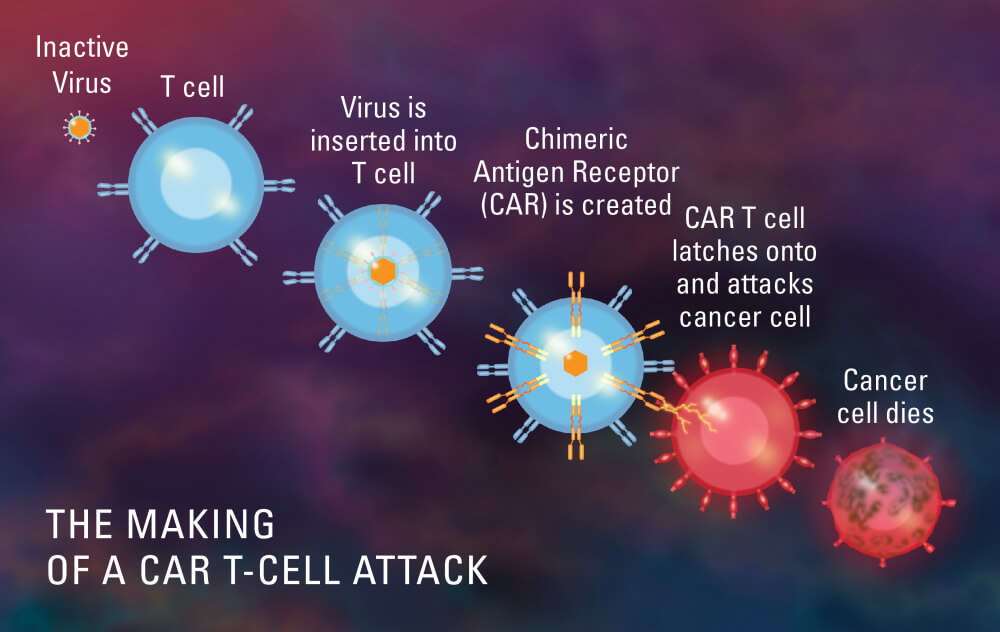
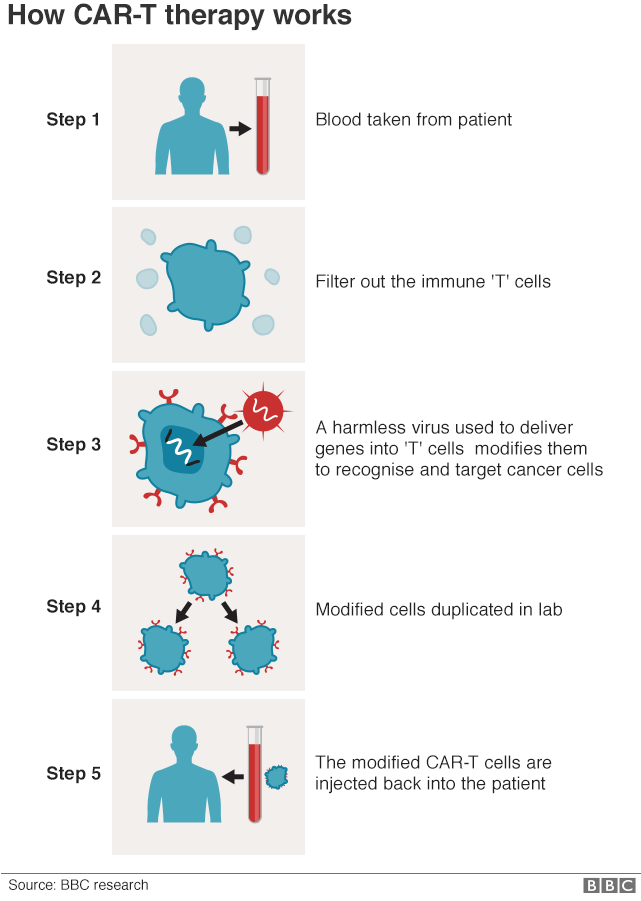
A ground-breaking new therapy has been introduced that seems to be successful in destroying the most common childhood cancer. The new therapy extracts T-cells (white blood cells in the bloodstream) to genetically modify the cells which are forwarded to a specific laboratory for DNA to be added to the cells, programming them to target and kill cancer cells expressing a particular protein. The T cells after having undergone genetic engineering then are infused back into the person from whom the cells have been taken. They multiply rapidly, able to survive for years in the donor/recipient body.

Toronto's Hospital for Sick Children and Sainte-Justine hospital in Montreal took part in a global trial whose outcome was published in the New England Journal of Medicine last year. The trial reported an overall rate of 80 percent remission; on a three-month followup in children and adults given a single infusion of tisagenlecleucel (Kymriah's generic name), representing test subjects who would have no hope for a cure other than for the life-saving effects of the CAR-T cell therapy.

There are, as with the potential of complications in any kind of drug infused into a body in hopes of combating the ravages of deadly diseases, a number of issues. A phenomenon identified as cytokine release syndrome "which is basically your immune system freaking out", explains Dr. Jarry, can be launched with the application of the therapy. High fever, nausea, rapid heartbeat, low blood pressure and problems breathing can occur, requiring an ICU admission. To respond to any such reactions, hospitals must stock an anti-body to reverse the effects.

A ependymoma cell attacked and killed by CAR T cells (red)

While this vital CAR-T cell therapy is in use in Ontario at both Hospital for Sick Children in Toronto and at Hamilton Health Sciences, both Princess Margaret Cancer Centre and the Ottawa Hospital are planning to be able to provide the therapy in 2020. Ontario became the second province following Quebec to cover the cost of Kymriah for eligible patients, for the chimeric antigen receptor-
T-cell (CAR-T), approved by Health Canada in the treatment of acute lymphoblastic leukemia (ALL) in children, and a form of non-Hodgkins' lymphoma in adults.

The discounted price to be paid by the provinces after negotiations with Novartis "improves the cost effectiveness of Kymriah and helps support cancer0system sustainability", the province of Ontario announced. For some children with ALL, conventional chemotherapy works the first time around. It is for the estimated ten percent of children with ALL that standard intensive chemotherapy fails, that the CAR-T therapy is aimed toward. Chemotherapy's effectiveness comes with side-effects; short- and long-term toxicities; low blood counts requiring transfusions, nausea, vomiting, hair loss, mouth sores: "The list goes on", said Dr. Whitlock.

The drug is expensive, reflecting that newer drugs are more complex than were older ones. And the pharmaceutical companies are not in business to rescue humankind from the end effects of dread diseases shortening human life. They are enterprising business relying on profit to motivate their continued industry in research and development. Dr. Jarry explained that industry must recoup research and development costs of failed drugs "which is most drugs" in light of the fact that with drugs to fight cancer the low-hanging fruit has been picked.

Infographic explaining how CAR-t works

Labels: , , , ,

Sunday, October 27, 2019

Emerging Weight-Loss Strategies, Pharmaceuticals

"This time around we know much more about the biology and patho-physiology of obesity."
"Everyone [clinicians, before 2010, convinced that people could be spurred to burn more calories] felt that if we could just get a medication that increased metabolic rate, that would work."
"Everything starts moving faster and causes lots of problems [when metabolism is chemically driven]."
"[For full safety effects with the use of some drugs] you need years on a drug. But at the very least, we're showing people are staying on the medication for a longer period of time, because it's tolerable, and it's working [new generation of drugs]."
Dr.Sean Wharton, internal medicine specialist, McMaster University
cover-illus2


"Every medication industry goes through its 20 or 30 years of nonsense, where nothing works and things aren't safe."
"We're coming out the other side now. We have effective and safe medications that are already making significant changes in someone's ability to lose weight and keep it off."
Dr.David Macklin, medical director, weight management program, Mount Sinai Hospital, high risk/special pregnancy BMI unit, Toronto
"However you look at it, obesity is deleterious for health - functionality, mental health and metabolic health. [The history of medical treatments, early anti-obesity pills] has been a bit of a train wreck."
"[But] drugs will be important for the management of obesity and, I think, especially for weight loss maintenance."
"With the new acceptance of injectable [peptides] we will have more success and probably less side effects."
Dr.Eric Ravussin, editor-in-chief, Journal Obesity, associate executive director, clinical science, Louisiana State University Pennington Biomedical Research Center, Baton Rouge
cover-illus3


A 2018 study in the Lancet Diabetes and Endocrinology points out that people mostly regain at least some of the weight they shed, a year after beginning a new, successful protocol that allows them to shed at least 5 percent of their weight. And though 5 percent doesn't seem like much, given peoples' propensity to be overweight in this modern world, it is frequently considered just enough to see improvement in weight-related health problems such as pre-diabetes and high blood pressure.

An estimated ten million Canadians actively engage on a diet on any given day of the week. Irrespective of what comprises the dieting, according to Dr.Daniel Bessesen of the University of Colorado, and Dr.Luc Van Gaal, University of Antwerp, once weight is dropped, the body tends to dial down energy expended at rest, undergoing alterations in insulin sensitivity favouring fat storage. "Long-term studies suggest that these changes are probably permanent", they caution.

Add to that the fact that not everyone is able to use anti-obesity drugs, and those who can benefit from their use must continue taking them if the intention is to keep weight down. "Weight increases gradually to the level seen with lifestyle changes alone", according to all studies of anti-obesity medications which conclude this outcome when the individual decides to stop taking the medication.

When leptin, the hormone known as an appetite-suppressant was discovered, scientists felt they had discovered the cure for obesity, until the revelatory understanding that many obese people are not deficient in the hormone, but rather are resistant to it.

After years of dismal failure with emerging drugs viewed as weight loss winners, but which later studies indicated were instead beginning to cause an epidemic of serious heart-valve problems in people with no known history of cardiac disease, the drugs were removed from the market, after millions of people had begun their use. Decades on, the pharmaceutical industry is returning anti-obesity drugs to the marketplace. Between the years 1975 and 2016, obesity has tripled among the general population.

cover-illus1


It remains unknown why this has been occurring, although educated guesswork brings up less physical-oriented lifestyles and the normalization of the consumption of convenience, ultra-processed foods, along with the vast array of foods now available. While the common origins of the increasing rise in obesity is not yet understood, what medical science does acknowledge as fact is that once weight is gained, it becomes inordinately difficult to lose, and once lost, it then becomes even more difficult to maintain that loss.

To date, bariatric surgery is acknowledged as the most successful treatment for obesity, but many people cannot qualify for the surgery, or would prefer not opting for invasive surgery which has its own potential risks. And then there is the surgical wait list, of up to eight years. So the prospect of next-generation drug treatments for obesity has its obvious allure. Drugs of various types are beginning to emerge and tests carried out to determine their feasibility. Some of which have side effects that include nausea, constipation and diarrhea.

And then there is the recognition that the problem of obesity cannot be addressed by drugs alone even as two thirds of Canadians are recognized to be living with an overweight condition, or obesity. And for these people attempting to lose weight, the situation is that all anti-obesity drugs approved for use in Canada must be used in conjunction with a reduced-caloric diet and exercise plan. Some of the medications cost up to $4,000 annually, none paid for by provincial public drug benefit plans, whereas in the U.S. guidelines recommend such treatments only for those carrying a BMI of 30 or greater.
GS: Overweight Campers Obesity 020719
A group of girls wait for the start of a water aerobics class in Reeders, Pennsylvania. 
William Thomas Cain | Getty Images


Labels: , , , ,

Thursday, January 17, 2019

Suicidal Ideation

"Ketamine works differently from other antidepressants. The prevailing theory is that it affects the brain's glutamate system, which scientists now realize may be involved in depression, rather than the better-known serotonin pathway used by drugs like Prozac. Animal research suggests that partly blocking certain glutamate receptors increases brain plasticity -- the ability of the brain to make new neuronal connections -- and corrects some of the abnormalities that result from chronic stress. These effects on the brain, coupled with how quickly ketamine works, have inspired a flurry of research. A number of drugs either derived from ketamine, or based on how scientists think it works, are in development."
"But ketamine has what many view as a major flaw. It can produce dissociative and hallucinatory side effects while it is being administered. Patients can feel as if they have left their bodies or that they are dying."
"Questions also remain about the safety of long-term use. Depressed patients often have to return for 'booster' treatments. The drug is considered safe when given once, but no one is sure how repeated doses may affect the brain. And it can be addictive, too."
Moises Velasquez-Manoff, science writer, California
"It makes sense that it [ketamine as a treatment for depression] move up in the treatment algorithm in E.R.s [emergency rooms] and inpatient units [with some caveats relating to addicts falsely claiming suicidal intentions, to be given ketamine to get high; similar to opioids]."
Dr. Michael Grunebaum, psychiatrist, Columbia University, New York
Party drug ketamine closer to approval for depression

Ketamine's potential as an antidepressant was discovered by researchers at Yale University in the late 1990s. Later, in the mid-2000s, scientists at the United States National Institute of Mental Health confirmed that finding of the efficacy of ketamine in the treatment of depression or suicidal tendencies. Follow-up studies served to confirm the drug can be of immeasurable help in the treatment of people vulnerable to deep depression leading to suicide.

The drug turned out to be an almost perfect candidate to fill a needed treatment gap where conventional drugs and therapies used traditionally failed to help patients; although it may not work for everyone for whom nothing seems to work, its effectiveness is swift, when it does succeed with most who try it. It is a drug already approved by the U.S. Food and Drug Administration, one that treatment physicians are able to prescribe 'off label' which is to say for a use other than the most commonly recognized application for which it originally gained approval.

According to the Centers for Disease Control and Prevention, suicide is now recognized as the tenth leading cause of death in the United States. The prevalence of suicide as an increasingly common cause of death is certainly not confined to the United States; it is a phenomenon that appears to be cropping up elsewhere; in Canada, Europe and other parts of the world, for some inexplicable reason. A growing sense of universal social alienation, a sense of overwhelming isolation, loneliness, social desolation, loss of hope...?

At a time when more people worldwide are being raised out of poverty, where food is more widely available, where opportunities for education are on the rise, and where communication is more accessible and the means of improving one's life growing, it seems peculiar beyond reason that people are becoming more estranged from community life which has always tended to buoy people's spirits; on the other hand, religious conviction which has always been a traditional mainstay in the lives of people and their communities, is waning.

The growing incidence of dark depressing and suicidalthoughts has for some reason not been matched with new discoveries in drug treatments nor workable protocols to help improve peoples' conditions leading to such dissatisfaction with their lives. Selective serotonin reuptake inhibitors of which Prozac is the most famous have been around for three decades in the treatment of depression and suicidal tendencies.
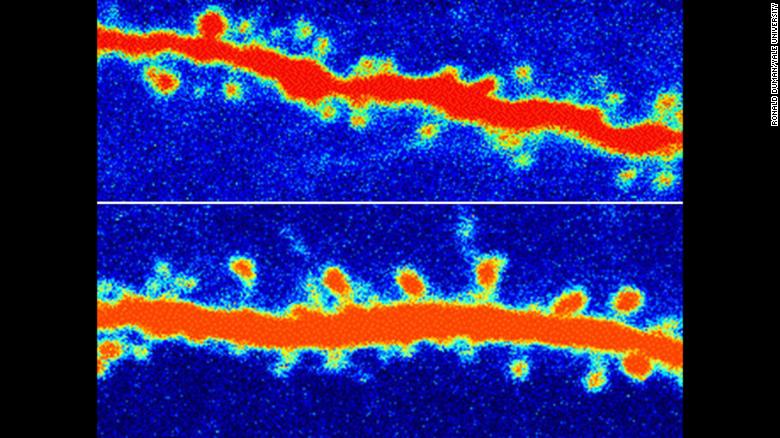
A rat neuron before, top, and after ketamine treatment. The increased number of orange nodes are restored connections in the rat's brain.

Ketamine, used successfully as a safe and reliable anaesthetic seems to fit the bill with trials demonstrating that at low doses it is effective in cutting off suicidal thoughts in the psychically affected. Reaction to its use as a deterrent to suicide and lifting of depression is surprisingly swift, a matter of hours from administration of the drug to perceptible relief. But it is a controversial drug in that a number of small studies show that while holding promise there is the unknown of long-term use.

Placebo-controlled trials are being conducted with hundreds of patients. At the same time, ketamine has gained popularity not in the field of practising medicine, but as a club drug. Ketamine abusers have been known to develop symptoms so severe they include brain damage. The hope is that if proven safe and effective in the administration of small, calibrated doses this drug capable of inducing feelings of euphoria may, in strictly controlled protocols entirely transform how the medical community treats depressed patients with suicidal ideation.

Antidepressents used currently work tediously slowly, from weeks to months to begin demonstrating any positive working symptoms; and sometimes after experimenting with them it is discovered they deliver no benefit to specific patients whatever. Such antidepressents may on occasion even increase some patients' suicidal thoughts. As well, therapeutic protocols take agonizingly long to deliver recognizably useful affects.

The safety of long-term use of ketamine, which acts swiftly and positively for most people, is an unknown, particularly since some patients find they require 'booster' treatments, some as frequently as once-monthly, with a drug though considered safe with its initial application may have a cumulative effect if applied frequently -- quite apart from its addictive qualities. Its success as a treatment has inspired the opening of clinics offering ketamine infusions for depression as an off-label treatment.
a sad woman looking out of a window
Ketamine appears to be a safe and effective drug for use in treating depression -- with some caveats

Some therapists are concerned that ketamine's unknowns should mitigate against its use before all other options have been explored, including electroconvulsive therapy which has advanced in application and efficacy from its initial uses decades ago. Dr. Samuel Wilkinson, a psychiatrist at Yale who studies ketamine is aware of patients' suicidal impulses returning after successful ketamine treatments in a rebound effect.

Like much in life there is at present a trade-off; use of a drug that may at some future date exhibit seriously deleterious side effects opposite a psychological condition leading to the urge to destroy one's life. Other specialists like psychiatrist Dr. Michael Grunebaum at Columbia University whose study of ketamine convinces him that the drug should be moved up to a first-line treatment urges for its immediate use.

A certain amount of confidence rests in the use of ketamine as an anaesthetic safe and reliable enough to be used on children. "We could help so many people", states Dr. Lowan Stewart, an emergency room doctor in New Mexico who feels ketamine should be the drug of choice in emergency rooms where doctors could offer it to suicidal patients.

Labels: , , , , ,

Sunday, December 02, 2018

Longevity Alert

"These sobering statistics are a wake-up call that we are losing too many Americans, too early and too often, to conditions that are preventable."
Dr. Robert Redfield, director, Centers for Disease Control and Prevention

"I really do believe that people are increasingly [feeling] hopeless, and that that leads to drug use, it leads potentially to suicide."
Dr. William Dietz, disease prevention expert, George Washington University

"Maybe it's starting to slow down [drug overdose epidemic], but it hasn't turned around yet."
"I think it will take several years [yet, before a difference is seen]."
Dr. John Rowe, professor of health policy and aging, Columbia University
Erika Marble visits the gravesite of Edward Martin III, her fiance and the father of her two children, in Littleton, N.H., in 2016. The 28-year old died in 2014 of an overdose of the opioid fentanyl. (Jim Cole/AP)

The Associated Press through VoteCast, took a wide-ranging survey of the electorate discovering pessimistic views about the future among voters. Roughly half of nationwide voters stated their belief that life in America for the following generation would be worse than what is seen today, and close to a quarter felt life would be better, while the same number said it would remain the same. Over 115,000 voters were surveyed nationally when American citizens cast their ballots in this year's midterm elections.

There were over 2.8 million U.S. deaths in 2017 which means there were 70,000 more deaths occurring last year than did in the year before, according to the Centers for Disease Control and Prevention's latest report on U.S. life expectancy. 2017 ranked as the year with the most deaths to have occurred in a single year since government began taking account of such statistics over a century ago. The increase is partially attributed to the nation's growing aging population.

However, younger age groups, in particular middle-aged people, have seen the largest impact on life expectancy calculations, according to experts. The crux of this reality is that last year's suicide death rate represented the highest that has been recorded in the last half-century. Over 47,000 suicides were tracked, an increase from slightly under 45,000 of the year before. U.S. life expectancy has been on the increase for decades, rising several months almost every year, and now the trend has been reversed.

In 2015 the suicide rate was seen to have fallen, the following year levelled off, and then in 2017 there was yet another decline. This represents the longest period of a declining life expectancy rate since the late 1920s, when the First World War and the most serious flu pandemic in modern history coincided, killing close to one million Americans between them. In 1918 life expectancy was 39 years of age. "We've never really seen anything like this" commented Robert Anderson, who oversees CDC death statistics.

Only the cancer death rate alone fell in 2017, while increases were seen in seven other indices; suicide, stroke, diabetes, Alzheimer's, flu/pneumonia, chronic lower respiratory diseases and unintentional injuries. The death rate for heart disease -- recognized as the nation's number one killer -- has stopped falling, whereas in years past, declines in heart disease deaths were significant enough to offset increases in other kinds of death, but that no longer applies.

Dr. William Dietz recognizes from his expertise in disease prevention, an overall sense of hopelessness overtaking people's consciousness as a likely cause of some part of the increase in suicide. He cites financial struggles, a widening income gap, and divisive politics casting a pall over many people. Drug overdose deaths continued to climb as well, surpassing 70,000 in 2017, reflective of the deadliest drug overdose epidemic in U.S. history.

In that category the death rate rose ten percent from the previous year; less than the 21 percent leap between 2016 and 2017. Accidental drug overdoses account for over a third of the unintentional injury deaths while intentional drug overdoses take account for about a tenth of the suicides, according to Dr. Holly Hedegaard, injury researcher at the Centers for Disease Control. As well, gun deaths rose for a third year to nearly 40,000, 1,000 more than 2015, from their 33,500 height until a few years ago.

Suicide Rates by Race/Ethnicity

In 2016, the highest U.S. suicide rate (15.17) was among Whites and the second highest rate (13.37) was among American Indians and Alaska Natives (Figure 5). Much lower and roughly similar rates were found among Asians and Pacific Islanders (6.62), and Black or African Americans (6.03).
Note that the CDC records Hispanic origin separately from the primary racial or ethnic groups of White, Black, American Indian or Alaskan Native, and Asian or Pacific Islander, since individuals in all of these groups may also be Hispanic.

Labels: , , , , ,

Wednesday, November 14, 2018

Not the Most Ideal of Renters

"These are people [renters of her property] I'd be friends with. They dressed well, they presented themselves well, they have an online company -- what's where they told me they make their income. The website looks legit."
"[They -- Alberta Health Services -- said] my property had been condemned, and did I know about this incident that occurred on the weekend."
"I kind of thought someone was pulling a prank on me. And then he went into the details and I was absolutely shocked."
Jennifer Schwitzer, rental property owner, Edmonton, Alberta
Health authorities deemed this house in southwest Edmonton uninhabitable last month after an ambulance call led authorities to a suspected fentanyl lab in the basement. Owner Jennifer Schwitzer paid more than $10,000 to have the interior cleaned. POSTMEDIA NETWORK

"I think the myth is that people in the downtown core are the ones who are 'causing' the problem."
"[But] the people downtown don't have the money to put together a lab, for example. That's a very suburban thing ... the inner city tends to be much more the victims, if you will."
Marliss Taylor, director, harm reduction program Streetworks

Two well-dressed 25-year-olds, prospective renters of a new house in a new housing development in the suburbs of Edmonton, claiming to have just returned from a prolonged holiday in Puerto Vallarta, Mexico, looking for a house to rent. The house owner, with 16 years of experience in renting property took an instant like to the couple. They made application in late August for the house rental, to move in on the first of September. The house owner, Ms. Schwitzer, ran the usual background checks.

Their references checked out well, and she made the decision that they would be ideal renters. What could go wrong? It took a month after that decision to find out exactly what could go wrong. Mind, what happened to Jennifer Schwitzer is also happening to other property owners across Edmonton where police have conducted raids on fentanyl labs. Investigators publicized the issue, to make it public knowledge that in one neighbourhood $1-million worth of drugs, including heroin look-alike fentanyl was seized.

At yet another private house that was rented out and contained yet another lab, Edmonton police on a raid at the large house outside St.Albert, discovered the largest fentanyl pill cache in Canadian history so consequently the larges seizure took place accordingly. And according to Mike Wiebe, of haz-mat cleanup company Rapid Response Industrial Group, it is in newer neighbourhoods with unfinished basements that his company mostly cleans up fentanyl contamination.

 But Ms. Schwitzer was aware of none of this when she decided to rent to the two normal-in-appearance and evidently well-adjusted couple who expressed interest in her rental  house. And now she is aware that though statistics indicate deadly overdoses to be concentrated in the city's core, it is in the suburbs where those who produce the drugs construct laboratories for their thriving businesses. In those rental houses production and processing takes place, in the city's suburbs.

It seems that an ambulance was called by someone at the rented house on October 6 when the male renter overdosed. Obviously taking too much of his own medicine. He failed to recover from that fatal overdose. His fiance was in the house at the time, along with another person unknown to Ms. Schwitzer. Which was when she discovered that the house she had rented out to the nice couple was the shell where they existed to produce illegal drugs.

It cannot have been very comfortable, the only furniture was a bed, a couch and some chairs, a game system, computers and a few dishes in a kitchen cupboard. The paramedics of course reported what they had found and the police entered the scene. And they called on the health authorities who declared the house uninhabitable. And all it took was a month for the house to become contaminated with drug residue to produce that unsafe environment.
Cleanup crews work at a house in southwest Edmonton that health authorities deemed uninhabitable due to a fentanyl lab in the basement. The owner said she rented the house to a pair of new tenants in September. By early October, one of them had overdosed and died. Edmonton Journal
Inspection of the house revealed that there was drug residue in the basement, the air circulation system, kitchen cabinets and upstairs bathrooms. Alberta Health Services advised Ms. Schwitzer she would be required to hire a remediation company to clean up her property before it could be declared habitable again. That cleanup cost her $10,200. Crews clad in special haz-mat suits sprayed a solution to break down fentanyl on house surfaces.

The carpeting and basement wall panels required replacing. The furnace had to be cleaned. And she was required to attend court in an effort to evict the remaining tenant. Opioids have been linked to 477 accidental deaths in the city of Edmonton since January of 2016. And yes, the highest concentration of overdoses take place in the city core.


Labels: , , , ,

Tuesday, October 02, 2018

The Most Dreaded of Cancers

"It is like being in a room with the lights dimmed and having the lights turned on. That is literally what it [fluorescent-guided surgery] looks like."
"We probably do more awake surgery than any other centre in Canada ."
"This has been an awful year for those patients and their families, but what it has done is brought attention to something that is a devastating disease [helping to raise research funds to further advance extended survival patient rates]."
"The courage that [Tragically Hip frontman Gord] Downie [and former Ottawa MP Paul] Dewar have shown by trying to help other people by making their stories known is immense with what they are facing."
Dr. John Sinclair, oncologist, neurosurgeon, The Ottawa Hospital
Dr. John Sinclair has been trained on a new brain surgery technique, used for first time in Canada, that makes malignant brain tumours glow in fluorescent pink and orange. Wayne Cuddington / Postmedia

A dread diagnosis of Glioblastoma is quite rare but it is set to rise alongside an aging population, the aged being more at risk of acquiring malignant glioma cells in their brains. The condition is what took the life of, among others, American Senator John McCain, last month. Some people over 50 are are diagnosed with glioblastoma multiforme, the most common primary brain tumour, a devastating cancer whose average survival rate is twelve to fourteen months, with treatment.

A new technique has been introduced at The Ottawa Hospital, pioneered there by Dr. Sinclair, in an effort to make a complicated type of surgery more precise and therefore more successful in its outcome. The technique is common in Europe and some other parts of the developed world, but is just now making its debut in Canada. Several hours pre-surgery the patient consumes a beverage containing the drug aminolevulinic acid (5-ALA) which illuminates malignant glioma cells to appear fluorescent under blue light.

Fluorescence-guided surgery represents a huge assist to surgeons, enabling them to clearly identify cells in the brains of their patients so they can proceed in removing tumours far more exactly, distinguishing the cancer cells from ordinary brain matter. New treatments are expected to increase survival rates of glioblastoma patients, adding months, perhaps even years to their lives. Patients with the cancer have mere weeks to live without treatment consisting of surgery, chemotherapy and radiation.

The tumours have no discretely distinct edges, they grow by tentacles, so distinguishing their presence -- critical to be accurate so they can be successfully removed -- is beyond difficult; invariably some of the cancer cells get left behind because their presence is so amorphous and difficult to determine. Surgeons work with the aid of white light traditionally, a MRI scan taken preoperatively to identify the tumour, along with a intraoperative navigation system.

As surgery proceeds and tissue is removed the MRI scan no longer accurately identifies the diminishing shape of the tumour being laboriously removed. Realtime shape has been altered, leaving surgeons to rely on their eyes alone, given assistance by a large operating microscope and eyepieces. Distinguishing between brain and tumour tissue becomes frustratingly fraught. With fluorescent-guided surgery things change; malignant cells are brought to view in sharp relief, to be distinguished from normal brain tissue.

The process gives surgeons the opportunity to become more aggressive in removing malignant cells since they have gained confidence in being able to distinguish the crazed cells from the normal ones, the tumour glowing pink and orange whereas normal tissue has no glow. Despite the care taken and the hopes involved after surgery the cancer returns but the more of the cancer cells that surgeons manage to remove, the more optimistic the patient's prognosis; cancer return is delayed, the patient has longer to live.

Anesthesiologists at The Ottawa Hospital developed a technique allowing for longer surgeries where the patient is kept in a waking state. Surgery can take up to seven hours, the physicians and surgeons interacting with the patient throughout the lengthy process where the neurosurgeon stimulates areas around a tumour asking the patient to perform tasks to help identify and understand functional areas of the brain, and to avoid disrupting them.

It is this combination of awake surgery for primary brain tumours and the fluorescence-guided surgery in tandem that advances survival rates for patients, many of whom must undergo additional surgeries as their cancer recurs. The drug 5-ALA has a cost between $2,000 and $4,000 for each patient pre-surgery, a cost not yet funded through OHIP and just recently approved by Health Canada. The Ottawa Regional Cancer Foundation raises the funds to pay for the drugs.
"We have been looking forward to this surgical approach being available in Ottawa for a long time."
"We know it will be a complete game-changer for local patients facing brain cancer."
John Ouellete, vice-president of philanthropy, Ottawa Regional Cancer Foundation

Labels: , , , ,

 
()() Follow @rheytah Tweet