Ruminations

Blog dedicated primarily to randomly selected news items; comments reflecting personal perceptions

Friday, October 23, 2020

Fair Play and May the Best WoMAN Win!

"[Players] should be able to participate as the gender with which they identify and not be subject to requirements for disclosure of personal information beyond those required of cisgender athletes. Nor should there be any requirement for hormonal therapy or surgery."
Rugby Canada Guidelines for player inclusion: "I identify as female"
 
"She's [trans rugby player Kelly Morgan, 6' tall] going to be a good, good player for the next few years, as long as we can stop her injuring players in training."
founder, U.K. rugby team
 
"I do feel guilty, but what can you do? I don't go out to hurt anybody. I just want to play rugby." 
"I'm always optimistic and I think being open breaks the ice with people. I'm like, 'this is me, this is what I'm going through'." 
"Times are changing. Hopefully I'll inspire more people to come and play rugby, or any sort of sport."
Kelly Morgan/Nicholas Gareth Morgan, transgender rugby player
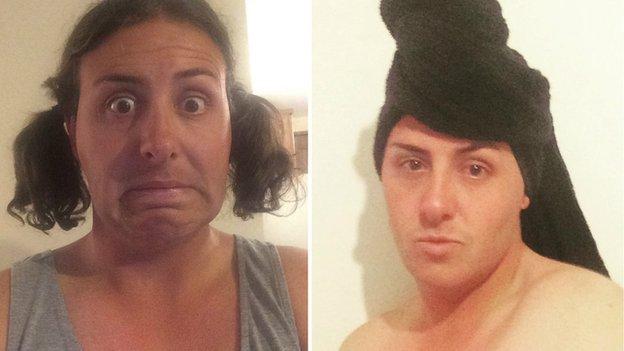
Kelly Morgan
'If you can't take the mick out of yourself, then what's the point?'

 The World Rugby association investigated the harms women are vulnerable to in contact sports under inclusion rules, bringing together professional experts in the study of biology, sociology and kinesiology for the purpose of updating eligibility standards for player inclusion. The consultation committee based its study and conclusions on data the Karolinska Institute of medical academic research, in Sweden had published.
 
And that data led them to conclude that even following IOC hormone reduction guidelines, genetically male athletes are on average 40 percent heavier, 15 percent faster, 30 percent more physically powerful and 25 to 50 percent stronger than are female athletes; enormous spreads that make a world of difference in the time, and distance measurements distinguishing gold from silver.  

Injury to female athletes tends to increase by 30 percent when paired against genetically male competitors. The World Rugby Council issued a resolution on October 9 with respect to transgender participation: "Transgender women may not play women's rugby", representing a first for a sport federation to go its separate way from the IOC on the issue.

Ice Hockey, rugby and ringette are recognized as the riskiest of sports among youth between the ages of five to 19, for brain injuries. Brain injuries account for 27 to 44 percent of all physical harms sustained during games. Yet it is the 'hurt feelings' that may result when "gender identity and gender expression" fail to be given the respect due them that appears to rate.

The safety issue, however, is paramount, or should be, in playing hard-contact sport. Female athletes who compete against genetically male athletes don't necessarily feel safe even in non-contact sports. Three female Connecticut high school runners launched a federal Title 1X lawsuit in reflection of the fact that over three competitive seasons from 2017 to 2019, two genetically male athletes won gold and silver in 15 women's state championship titles.

The U.S. Department of Education Office for Civil Rights agreed that Franklin Pierce University in New Hampshire's transgender sports and inclusion policy violated Title 1X prohibiting discrimination in educational programs and activities on the basis of sex. This was a resolution of a civil rights claim brought by Concerned Women for America. The upshot was that FPU agreed to "rescind its Transgender Participation and Inclusion Policy and will cease any and all practices related thereto".

The complaint originated when transathlete CeCe Telfer competed in the 400m hurdles on the men's team in 2015 and 2017, ranking 390th in NCAA Division 2, then in 2018 he self-identified as a woman and became eligible to compete against women according to NCAA rules. He won the women's national championship in June 2020. His win was ascribed by his coach to attitude: "I've never met anyone as strong as her mentally in my life".
 
CeCe Telfer
Screengrab via Twitter/ NCAA Division II
"But there are all these disadvantages of competing in the 100 hurdles, you know?"
"First of all, my height, how tall I am, is a disadvantage, because the wind is hitting us so hard and the taller you are, the harder you fall, basically. There’s wind resistance."  
"[Another disadvantage:] The fact that the hurdles are so close. [smaller in women’s competition; six inches shorter than in men’s races, but more than half a meter closer together]."
“And there are people who say I have the benefit of testosterone. But no: I have no benefit. I’m on hormone suppression, it doesn’t help. It’s another disadvantage. Cis women are producing more testosterone than the average trans female."
"So it’s crazy! I’m the crazy one, to be the weakest female, the weakest link in the chain, to be competing against the top ones. I should be fingered as the stupid one, for wanting to do that in the first place."
CeCe Telfer, transgender athlete
The IOC has allowed biological males since 2015, self-identifying as female for a year to compete in women's sport as long as they reduce their testosterone levels to 10 nmol/1, higher as it happens, than the female testosterone range of .54 to 2.4 nmol/1. So much for testosterone comparability. 

CeCe Telfer, center, as seen moments prior to the start of the 60M hurdles.
Screengrab/NCAA


Labels: , , , ,

Monday, August 31, 2020

“Coke on fish gills is as dumb as it sounds", Dr. Solomon David, aquatic ecologist, Nicholls State University

A northern pike sits motionless inside one of the large marine tanks at the Aquatarium during a tour of the facility at a tourism summit on Wednesday, October 15, 2015 in Brockville, Ont. The tanks currently contain pike, walleye and bowfin and will have sturgeon in the future. Darcy Cheek/Brockville Recorder and Times/Postmedia Network

"We provide the first evidence that counters the growing popularity of using carbonated beverages to stop bleeding in angling-caught fish."                     "We found no benefit or disbenefit with pouring carbonated beverages over the gills of northern pike but it is possible there are longer term impacts."  "These findings provide direct scientific evidence that the use of carbonated beverages does not curtail bleeding from gills, which is counter to anecdotal observations made by recreational anglers that use this technique. Overall, our study debunks the assertion."                                                                                                          Carleton University researchers

Research funded by Muskies Canada and by fishing guide John Anderson and undertaken by the fish ecology conservation and physiology laboratory of Carleton University, led by graduate student Alexandria Trahan, appears to have concluded that a technique to ease bleeding in injured fish that has become popular with anglers has more resemblance to an urban myth than it does a folk remedy to curtail bleeding and discomfort in fish that have sustained injury either as a result of the angler's actions or other misadventure.

And though veteran fishing guide and owner of Ottawa River Musky Factory John Anderson was partially responsible for putting the research into motion, spurred on no doubt by his belief in the healing power of carbonated liquid on fish, his commitment to the use of Diet Coke to help stop muskellunge bleeding from the mouth, throat or muscles around the gills is secure. On the basis of his own experience with the use of the technique on 18 different occasions.

While on a fishing trip four years earlier accompanied by writer and outdoorsman Gord Pyzer, the method was first brought to his attention when it was demonstrated to him. He gave due credit to the senior manager in the Ministry of Natural Resources and Forestry when he was informed by this man who makes use of spring water, supersaturated with carbon dioxide in cauterizing hook wounds in a fish's mouth, throat or gills, who swore by its efficacy.

https://wp.themeateater.com/wp-content/uploads/2019/03/stop-pouring-soda-on-fish-gills.jpg

In the event, researchers from the lab of biology professor Steven Cooke undertook a scientific study of the controversial and popular belief in the usefulness of Diet Coke as a first aid for injured fish, where advocates insist that carbon dioxide in soda drinks constricts a fish's blood vessels to halt bleeding. Critics of the method on the other hand, label it as pop science for the gullible. Those who want to catch these fish for sport, but are committed to releasing them back to the water. Salving their consciences in the belief that the remedy works. In their analysis the Carleton scientists discovered that in the first 20 minutes following the application of pop to injured gills of northern pike, nothing occurred.

Last year, led by graduate student Alexandria Traham from the lab, 145 northern pike were caught in the
Rideau River system to use as subjects where gill injuries were simulated with the use of pliers removing a one-centimetre section of gill. A carbonated beverage was then applied; Coca-Cola, Mountain Dew or carbonated lake water. Nothing was applied to a control group of fish. The experiments were conducted in May and August in assessing whether changes in water temperature might affect the outcome.

Scientists observed and recorded what happened to the bleeding of the injured fish held in a water-filled tank for 20 minutes -- finding that Mountain Dew as well as the other carbonated drinks produced no discernible effect whatever. No difference was noted, according to the researchers, between the fish in the control group and those that had been treated with a soft drink. Bleeding failed to stop sooner, and nor did the fish bleed less.

A possible explanation was put forward, researchers suggesting that when anglers lift a fish from the water to apply a soft drink to the fish wounds, air exposure induces hypoxia which in turn slows the heart rate of the fish. "The pop does work at the right place and the right time", insisted Mr. Anderson who didn't dispute the Carleton study, but felt that the researchers would have done better to avoid using sensitive gill injuries in their assessment of the value of the technique.

John Anderson poses for a photo at the Ottawa River Musky Factory near Plantagenet Thursday June 20, 2019. John  is a leading Ottawa River muskie guide, who has launched a website called Save One Million Fish, based on his belief that pouring a can of pop on a bleeding fish can save its life.  Tony Caldwell
John Anderson of the Ottawa River Musky Factory says the Carleton research has not changed his mind about the value of Diet Coke as a way to assist muskellunge bleeding from the mouth, throat or muscles around the gills. He said he had successfully used the technique 18 times. Photo by Tony Caldwell /Postmedia


Labels: , , , ,

Thursday, February 20, 2020

The Global Imperative of Improving Road Safety Conditions

"These are real people, not statistics. I am not a statistic."
"I was involved in a road crash that totally changed my life and I continue to bear the consequences."
Bright Oyways, Association for Safe International Road Travel, Kenya

This is a health issue that we know the cure for. We could avoid the kind of senseless deaths that are taking place but we don't have the political will."
"We are doing something wrong. Maybe we aren't making enough noise."
Rochele Sobel, founder, Association for Safe International Road Travel (ASIRT), U.S.

"Somehow society has accepted [traffic deaths and injuries] as the cost of living in our society these days."
"We call it an accident. It is not an accident."
Chana Widawski, Families for Safe Streets, New York

"We have invented the leading cause of death for our children and young people."
"Why have we accepted for so long a transport system that is killing so many people? It doesn't have to be like that."
"Road traffic deaths and injuries can be prevented. The key is political will. The key is the head of state decides to make this an important priority on his or her agenda."
Etienne Krug, director, social determinants of health, World Health Organization

"Why should we have a completely different acceptable-risk level in road safety?:
"From an ethical standpoint we are saying that no one should be killed or suffer a lifelong injury in road traffic."
"We can't build a road system based on the belief that everyone is perfect. No other system is built like that."
Maria Krafft, head, traffic safety, Swedish Transport Administration
Mikael Ullen    Representatives and participants from more than 80 countries at the 3rd Global Ministerial Conference on Road Safety taking place in Stockholm, Sweden.

Traffic safety, and road accidents take lives and create injuries that will change peoples' lives forever. An instant is all it takes for a driver to lose control of a vehicle, for attention to waver, for a driver to fail to notice oncoming traffic, or warning signs. Then there is the issue of driver impairment, whether alcohol or drugs are involved. The fact that so many people drive with their minds elsewhere than on the road, impulsively responding to a cellphone, irrespective of whether it's hand-held or secured, represents yet another potential danger.

Careless driving, speeding, can end up in an accident where a driver, passengers or those in another vehicle are killed or injured. Then there are traffic deaths involving people on bicycles, motorcycles, or pedestrians. Whatever the cause the damage to human health and life is irreparable. When the organization Mothers Against Drunk Driving began their campaign against carnage on the roads from impaired drivers the issue was simply ignored as though this was a societal ill that had to be accepted, despite road-safety driving laws.

That group's tireless campaigning made society take a second look at what they were accepting as inevitable, tarnishing the lens of impaired driving perception, and making it a focus of an unacceptable cause of too many road deaths. MADD's campaign had great dividends; society no longer accepts that this is an offshoot of the love affair with driving, that a responsibility comes with driving, and drinking while under the influence is not to be tolerated. But then, nor is speeding, or inattention.

Except that people are prone to both, and everyone not only makes errors of judgement, such as running an orange/red light, or failing to stop at an intersection, or allowing attention on the road to wander, because we are, after all, only human, and may live to regret what we may cause. On the other hand, traffic-law enforcement and municipal and state/provincial road and highway infractions would be lessened if more careful attention were to be given to urging caution on the road by mandating adequate speed limits in people-vulnerable areas.

Seven-thousand four-hundred shoes, each pair representing one of the road crash victims who die every day.

Statistics tell us that every day around the world a toll of 3,700 deaths take place in traffic accidents. Sweden, Norway and a handful of other countries have taken practical steps to reduce those numbers substantially; if they can reduce road deaths on their highways, it can be done anywhere with enough political resolve. Figures tell us that in 2016, there were 1.36-million traffic-related deaths worldwide. These deadly crashes now represent the leading cause of death for children and young people between the ages of five and 29, globally.

This week, the third annual Global Ministerial Conference on Road Safety took place in Stockholm, its purpose to gather national representatives with a view to agreeing pursue a new commitment in reducing traffic deaths and serious injuries by fifty percent within the decade. It is a startling fact that the issue of mounting traffic-related deaths receives relatively little public attention -- until and unless such an accident occurs to you or someone you know and care for.

The representative of the organization Families for Safe Streets explained their pursuit of personal stories of traffic tragedies that have persuaded them to make use of civil disobedience as an attention gathering tool in their agenda to strive for changes to make streets safer. While global issues such as climate change capture peoples' attention, one much closer to home and infinitely more imminent and destructive for the moment, is little-noticed.

"Where is the sense of  urgency for road crashes?" was the rhetorical question lobbed by Egyptian youth activist Omnia el Omrahi, comparing how fixated and how swiftly the world has focused its attention on the novel coronavirus out of Wuhan, China. Sweden's pilot project of Vision Zero has amply demonstrated what can be done with the determination of the public and local civic administrations. Reducing speed limits to 30 kilometres/h is feasible in areas where vulnerable populations interact with traffic to prevent traffic deaths.

Many urban neighbourhoods have introduced 30 km/h speed limits in school districts and urban neighbourhoods, but many more need to focus on doing just that in the interests of child safety. Sweden continues to aim for its goal of zero traffic deaths, while in Norway, Oslo recorded one traffic death in 2019, and no pedestrian deaths whatever. Canada's traffic death count has recently been diminished, yet remains double at least that of many countries in Europe where road design and traffic safety remain high priorities.

Sweden operates a safe system approach to traffic based on the concept of human error, recognizing it as a vulnerability that no one should suffer throughout their life as a result of sustaining a serious injury. Road systems were designed traditionally on the theory that no one should make errors in a complex system where the risks are well understood. But driving a vehicle and adhering to such a standard makes little sense when no other enterprise engages with public safety in such an offhand manner.

Highways are best divided where speed limits exceed 80 km/h. Technology such as geo-fencing, to control speed limits for vehicles such as delivery trucks, re[resemts yet another safety-related initiative. Along with speed limits not to exceed 30 km/h anywhere pedestrians and traffic share public space.

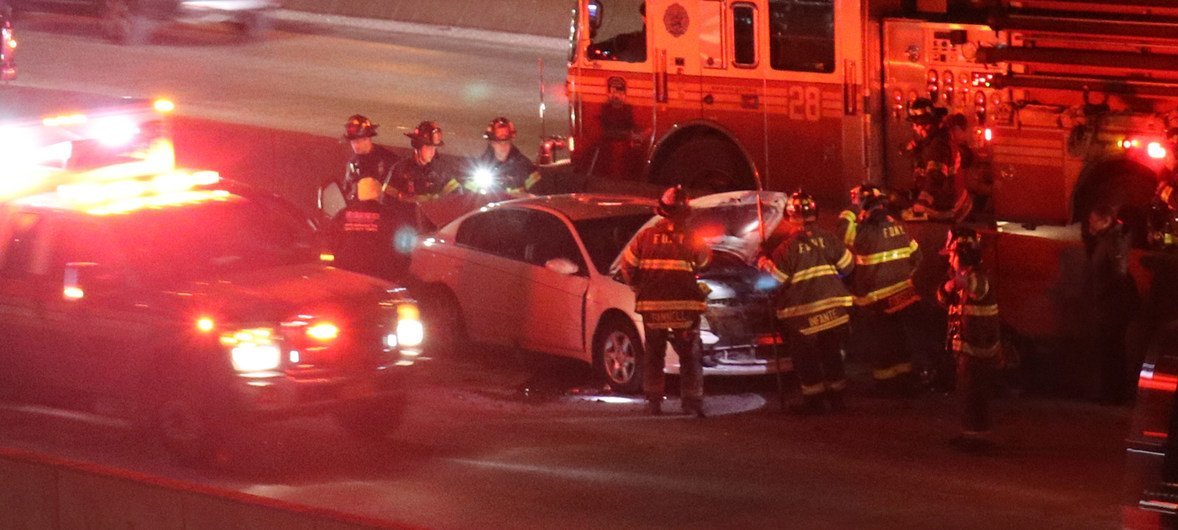
Photo: Vibhu Mishra:  Emergency services respond to a car accident in New York City, United States. Prompt response and medical assistance can help save lives in road crashes.

Labels: , , , , ,

Wednesday, January 08, 2020

Australian Bushfire Toll on Koalas

"They're in shock, they're stressed, they've never seen humans or been in a car before."
"We anaesthetize them, then cut away the dead skin, bathe them, treat them with cream, gauze and bandages."
"We had to euthanize him [one koala]. He was brought in from a drought area last week, his organs were so badly damaged. It was very sad ... you try so hard to save them."
"We can't always relocate them ... a change in diet may kill them."
"We don't find bodies [in a search through scorched bush]. The fire was so intense that all that was left was ash."
If they have burned off their claws and they don't grow back properly, they can't climb and they can't live in the wild."
Sue Ashton, spokesperson, Port Macquarie Koala Hospital, Australia

"All the animals that have survived not only have no place to go back to, they don't have food sources left."
"In a fire, the insects get wiped out too, the smaller animals who eat ants and other insects won't have food. Possums and gliders, if there are any left -- most of them have been killed -- they eat leaves and fruit, which have all been destroyed."
Dr.Valentina Mella, Port Macquarie Koala Hospital
Australia’s wildfire crisis is taking a heavy toll on the animals and their habitat
Australia’s wildfire crisis is taking a heavy toll on the animals and their habitat Credit: EPA

Several days ago ecologists from the University of Sydney released an estimated total for the number of animals that have died as a result of the wildfires ravishing Australia; an unbelievable 480-million altogether. According to veterinarian Dr. Melia, the extent of the wildfires in Australia will lave long-term consequences not only for koalas, whose very specific diet has been disastrously impacted, but many other animals, as well.

As for the koalas, the animal hospital specializing in koala rescue and rehabilitation, believe fully two thirds of the local koala population around Port Macquarie perished in the fires that swept the area six weeks earlier. Desperate for food and water, the koalas facing an uncertain reality totally new to them in its virulent, wide-sweeping impact, venture out of the burned bush that was their home, to cross roads and go into back gardens, placing themselves in danger, risking death by traffic or being attacked by peoples' dogs.

There are now 75 koalas in care at the Port Macquarie hospital. The blazes that destroyed 8.4-million hectares of bushland in Australia left an estimated 40 percent of the country's 80,000 endangered koalas dead. Around 390 kilometres' distant, north of Sydney, the hospital has taken in an unaccustomed number of koala patients, resulting from the heavy toll the wildfire crisis has taken on the habitat of the marsupials.

Australia has suffered severe drought for several years of late. That, leading to extremely tinder-dry conditions, along with record high temperatures have seen wildfires ravaging the country since summer's start. Koalas have been brought into the hospital by exhausted firefighters, by homeowners fleeing the fires, and by passing evacuees spotting the little animals collapsed at the side of the road.

Four veterinarians are assigned to treat each of the rescued koalas, at the hospital. One person for each paw, and a fifth to monitor heartbeat and breathing as the teams work around the clock in an effort to treat each new arrival as expeditiously as possible. Following surgery, staff change bandages, re-dress wounds regularly, and treat burns to sensitive noses and ears. There are fourteen intensive care units, and they're always full.

One koala discovered at the side of a major highway had burnt arms, nose and ears. A man stopped his car, held up traffic, then rescued the koala, now on its way back to health. The animal's paws were "like charcoal" when it was brought to the hospital. Routinely, hospital staff keep a record of the GPS co-ordinates to identify where the koalas are found. When the six to nine months of recovery is over, under normal circumstances they are released back to the wild, in the area from which they came.

All that is changed now; there is nothing 'normal' about the situation faced in Australia with the deaths of almost a half-billion animals as a result of an unstoppable wildfire situation. Responders now are advised to kill orphaned joeys immediately, reflecting the lack of availability of long-term care. In the hospital, one koala sits with its joey, in her arms, evacuated from Hawkesbury before the fires struck.

They're fed a diet of pureed pumpkin and corn during their five weeks of intensive one-on-one care, leading to recovery. Koalas eat only particular types of eucalyptus leaves, meaning that koalas from different areas require a diet of leaves typical of the area from which they come, and many of those areas have been burned beyond redemption.

Australia, one of the driest places on the globe, is no stranger to bushfires. This summer's wildfires, however, are seen as unprecedented in their ferocity and their spread. They began earlier in the season and have spread far more widely than ever before. There are 25 Australians dead as a result of the wildfires, and thousands of homes have been destroyed. Fires in New South Wales are predicted over the next few days to join those burning in Victoria, forming a 'mega blaze'.

Hospital personnel at the Port Macquarrie hospital are contemplating something fairly new to their experience; that with habitat so critically destroyed, there is an uncertain future before the injured koalas, who may have to become permanent wards remaining residents of the hospital.

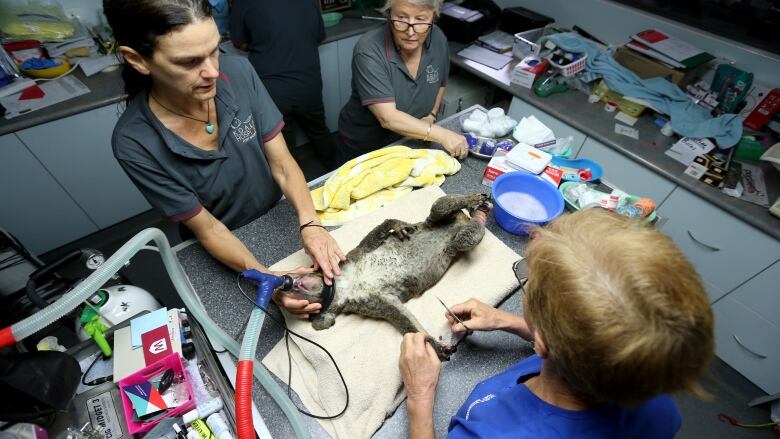
Rebecca Turner, left, Sheila Bailey and Cheyne Flanagan treat a koala named Sharni from Crowdy Bay National Park for burns at the Port Macquarie Koala Hospital in Australia on Nov. 29, 2019. Flanagan says koala bears are coming to the hospital traumatized and dehydrated as a result of the worst wildfire season in Australia's history. (Nathan Edwards/Getty Images)

Labels: , , , , , ,

Sunday, June 09, 2019

Professional eGaming is an eSport : Seriously

"In a game where you have to make split second decisions in any moment, these minor hesitations can affect  your performance."
"If you have pain and weakness in your body, you won't be able to contribute as much."
"This is their job and these guys take their training just as seriously as a Kobe Bryant or a Michael Jordan."
"Their eye-hand coordination starts to deteriorate by the time they're 25. The 18-year-olds have already been playing for ten years and they're quicker than the older players."
"It's hard to continue to complete past their mid-20s and there's just not that many spots open."
Dr. Todd Sontag, physician, Orlando Health

"The average esport athlete conducts more than 400 movements per minute using a mouse or keyboard [according to the New York Institute of Technology's Center for eSports Medicine, providing esport athletes with services such as] body composition testing, nutritional guidance [and] customized chair-sizing."
"The use of drugs like Ritalin and the excessive intake of caffeine or other stimulants provides additional sources of concern."
Center for eSports Medicine, New York Institute of Technology 


Dr. Levi Harrison, an orthopedic surgeon based in Los Angeles, is one of the first medical professionals to focus practise on esports-related injuries. His YouTube channel with its 67,000 subscribers includes tutorials in detail for how gamers can maintain their fingers, wrists and forearms in good health condition. Dr. Harrison has been introduced to a condition where a player's thumb gets locked into place; the result of extended periods holding a controller: "gamers thumb".

Perhaps it is not as well known as it will in future be, that electronic sports are now big business. Elite tournaments now promise payouts of close to $25 million, according to Gamespot. Salaries are on offer rivalling and even surpassing those of many professional athletes. The video game and software company Epic Games last year announced it planned to extend $100 million in funding for prize pools to highlight Fortnite competitions for the new season. Its audience, spanning the globe is in the tens of millions.

Over 67 million people around the world play League of Legends every month, according to Riot Games. Esport teams, in recognition of all these realities has a vested interest in the health of players and the urgency of the moment. Financial payoffs are attractive, but the window for success in esport is short. A professional basketball or baseball player may extend a career into their mid-to-late-30s, while esport athletes' retirement age puts the breaks on players a full decade earlier.

These are players and teams who will never appear on a basketball court. Despite which their bodies undergo repetitive-motion stress. Though team players are in their teens and early 20s, professional gamers are continually at risk for injuries most people normally associate with middle age; such as office workers spending working days in front of a computer screen. They suffer from carpal tunnel syndrome, elbow, shoulder and neck pain, eye strain and musculoskeletal injuries such as tendinitis and back pain.
Embedded video

Each season's millions of dollars in prize money associated with thousands of players anxious to achieve a roster spot means that even minor injuries cause concern for the players, who keep their team doctor's contact number close at hand. The League of Legends World Championship has an audience reputed to be larger and more enthusiastic than that of the Major League World Series and the NCAA Basketball Final Four in combination.

All of which has seen the definition of 'athlete' undergo a profound change. Now, over 120 colleges in North America offer varsity esport teams. The hyper-competitive world of electronic sports ("esports") now resembles mainstream professional sports. There has been an increase in prize money even as the games become more competitive in lock step with an increase in the number of traditional physicians devoting time to esports injuries, of which there is no shortage.

The New York Institute of Technology, Center for eSports Medicine's website speaks of the sedentary nature of esports and the altered sleep routines and social interactions, impacting the well-being of players. Long exposure to bright LED lighting, social anxiety, limited physical activity and hygiene represent additional issues all of which affect the gaming community.
LCS Summer 2019 Week 1
Photo via Riot Games

Labels: , , ,

 
()() Follow @rheytah Tweet