Ruminations

Blog dedicated primarily to randomly selected news items; comments reflecting personal perceptions

Thursday, February 20, 2020

The Global Imperative of Improving Road Safety Conditions

"These are real people, not statistics. I am not a statistic."
"I was involved in a road crash that totally changed my life and I continue to bear the consequences."
Bright Oyways, Association for Safe International Road Travel, Kenya

This is a health issue that we know the cure for. We could avoid the kind of senseless deaths that are taking place but we don't have the political will."
"We are doing something wrong. Maybe we aren't making enough noise."
Rochele Sobel, founder, Association for Safe International Road Travel (ASIRT), U.S.

"Somehow society has accepted [traffic deaths and injuries] as the cost of living in our society these days."
"We call it an accident. It is not an accident."
Chana Widawski, Families for Safe Streets, New York

"We have invented the leading cause of death for our children and young people."
"Why have we accepted for so long a transport system that is killing so many people? It doesn't have to be like that."
"Road traffic deaths and injuries can be prevented. The key is political will. The key is the head of state decides to make this an important priority on his or her agenda."
Etienne Krug, director, social determinants of health, World Health Organization

"Why should we have a completely different acceptable-risk level in road safety?:
"From an ethical standpoint we are saying that no one should be killed or suffer a lifelong injury in road traffic."
"We can't build a road system based on the belief that everyone is perfect. No other system is built like that."
Maria Krafft, head, traffic safety, Swedish Transport Administration

Mikael Ullen    Representatives and participants from more than 80 countries at the 3rd Global Ministerial Conference on Road Safety taking place in Stockholm, Sweden.

Traffic safety, and road accidents take lives and create injuries that will change peoples' lives forever. An instant is all it takes for a driver to lose control of a vehicle, for attention to waver, for a driver to fail to notice oncoming traffic, or warning signs. Then there is the issue of driver impairment, whether alcohol or drugs are involved. The fact that so many people drive with their minds elsewhere than on the road, impulsively responding to a cellphone, irrespective of whether it's hand-held or secured, represents yet another potential danger.

Careless driving, speeding, can end up in an accident where a driver, passengers or those in another vehicle are killed or injured. Then there are traffic deaths involving people on bicycles, motorcycles, or pedestrians. Whatever the cause the damage to human health and life is irreparable. When the organization Mothers Against Drunk Driving began their campaign against carnage on the roads from impaired drivers the issue was simply ignored as though this was a societal ill that had to be accepted, despite road-safety driving laws.

That group's tireless campaigning made society take a second look at what they were accepting as inevitable, tarnishing the lens of impaired driving perception, and making it a focus of an unacceptable cause of too many road deaths. MADD's campaign had great dividends; society no longer accepts that this is an offshoot of the love affair with driving, that a responsibility comes with driving, and drinking while under the influence is not to be tolerated. But then, nor is speeding, or inattention.

Except that people are prone to both, and everyone not only makes errors of judgement, such as running an orange/red light, or failing to stop at an intersection, or allowing attention on the road to wander, because we are, after all, only human, and may live to regret what we may cause. On the other hand, traffic-law enforcement and municipal and state/provincial road and highway infractions would be lessened if more careful attention were to be given to urging caution on the road by mandating adequate speed limits in people-vulnerable areas.
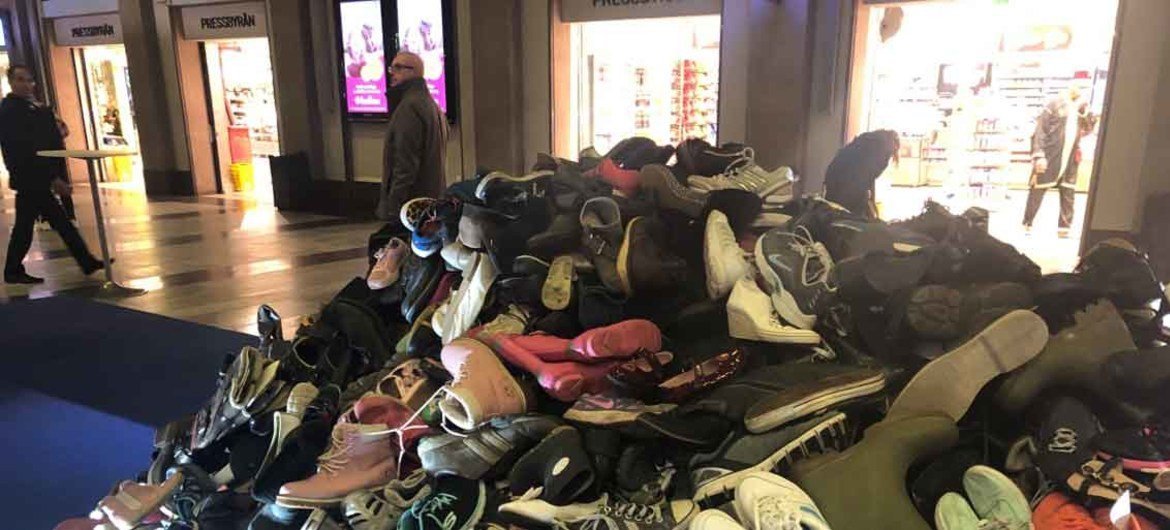
Seven-thousand four-hundred shoes, each pair representing one of the road crash victims who die every day.

Statistics tell us that every day around the world a toll of 3,700 deaths take place in traffic accidents. Sweden, Norway and a handful of other countries have taken practical steps to reduce those numbers substantially; if they can reduce road deaths on their highways, it can be done anywhere with enough political resolve. Figures tell us that in 2016, there were 1.36-million traffic-related deaths worldwide. These deadly crashes now represent the leading cause of death for children and young people between the ages of five and 29, globally.

This week, the third annual Global Ministerial Conference on Road Safety took place in Stockholm, its purpose to gather national representatives with a view to agreeing pursue a new commitment in reducing traffic deaths and serious injuries by fifty percent within the decade. It is a startling fact that the issue of mounting traffic-related deaths receives relatively little public attention -- until and unless such an accident occurs to you or someone you know and care for.

The representative of the organization Families for Safe Streets explained their pursuit of personal stories of traffic tragedies that have persuaded them to make use of civil disobedience as an attention gathering tool in their agenda to strive for changes to make streets safer. While global issues such as climate change capture peoples' attention, one much closer to home and infinitely more imminent and destructive for the moment, is little-noticed.

"Where is the sense of  urgency for road crashes?" was the rhetorical question lobbed by Egyptian youth activist Omnia el Omrahi, comparing how fixated and how swiftly the world has focused its attention on the novel coronavirus out of Wuhan, China. Sweden's pilot project of Vision Zero has amply demonstrated what can be done with the determination of the public and local civic administrations. Reducing speed limits to 30 kilometres/h is feasible in areas where vulnerable populations interact with traffic to prevent traffic deaths.

Many urban neighbourhoods have introduced 30 km/h speed limits in school districts and urban neighbourhoods, but many more need to focus on doing just that in the interests of child safety. Sweden continues to aim for its goal of zero traffic deaths, while in Norway, Oslo recorded one traffic death in 2019, and no pedestrian deaths whatever. Canada's traffic death count has recently been diminished, yet remains double at least that of many countries in Europe where road design and traffic safety remain high priorities.

Sweden operates a safe system approach to traffic based on the concept of human error, recognizing it as a vulnerability that no one should suffer throughout their life as a result of sustaining a serious injury. Road systems were designed traditionally on the theory that no one should make errors in a complex system where the risks are well understood. But driving a vehicle and adhering to such a standard makes little sense when no other enterprise engages with public safety in such an offhand manner.

Highways are best divided where speed limits exceed 80 km/h. Technology such as geo-fencing, to control speed limits for vehicles such as delivery trucks, re[resemts yet another safety-related initiative. Along with speed limits not to exceed 30 km/h anywhere pedestrians and traffic share public space.
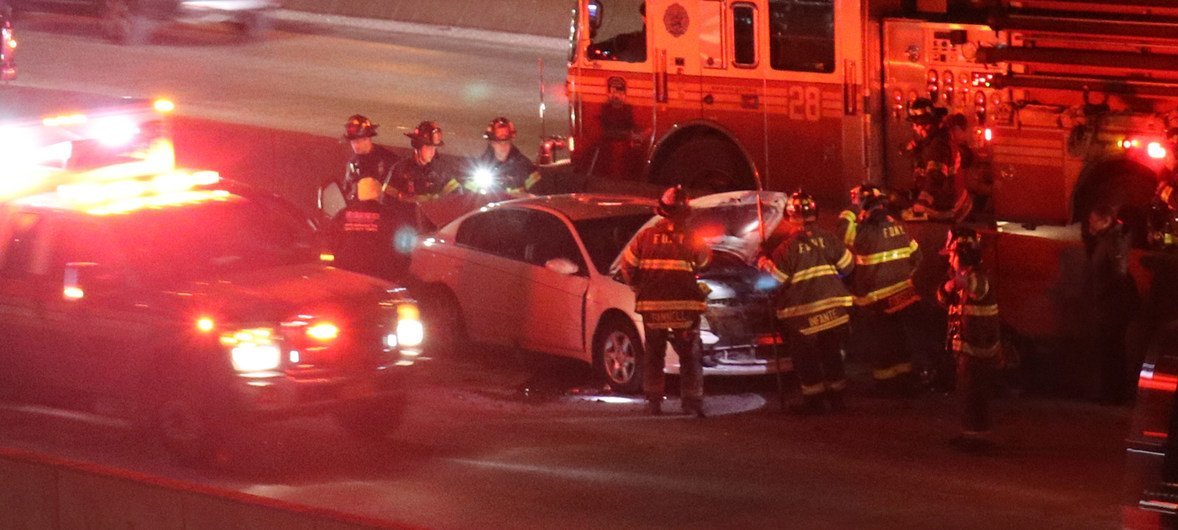
Photo: Vibhu Mishra:  Emergency services respond to a car accident in New York City, United States. Prompt response and medical assistance can help save lives in road crashes.

Labels: , , , , ,

Tuesday, August 06, 2019

Forgotten Baby Syndrome

"Never leave a child unattended in a motor vehicle, even for a minute. That should be a rule that you make for yourself; even if I forgot something in the house, I need to run back in the house with the child."
"You have to get your cellphone at some point, usually, so that's a good way to remember [the child's presence in the back seat by placing your cellphone beside the child's seat]."
If the child is in distress, we've talked to the police about this and they recommend that you do whatever you can to get the child out of that car."
"Regardless of the exact mechanisms and circumstances that lead to these tragic incidents, experts believe that under the right circumstances, forgetting an infant or child in the back seat could happen to anyone. It’s important to be aware of potential pitfalls and set strategies and habits in place as reminders that can help prevent attention shifts and lapses in memory."
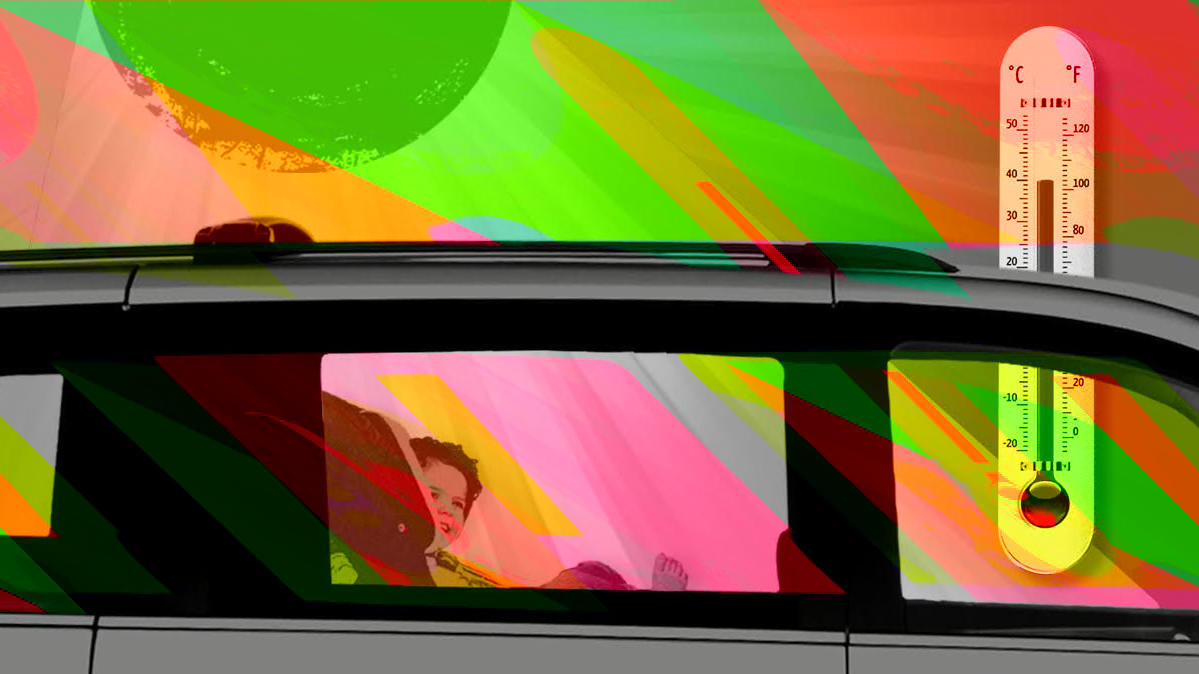
"On a sunny day, the interior temperature of a vehicle can rise to dangerous levels within a short period of time. For example, an outside temperature of 22.2°C can result in an interior temperature above 40°C in just an hour. These temperatures are extremely dangerous and can lead to hyperthermia – a condition where the body temperature is elevated beyond normal. Young children are particularly susceptible to this and in developing a heatstroke as their bodies heat up quicker."
Dr. Joelene Huber, Hospital for Sick Children, Toronto, Assistant Professor, Pediatrics, University of Toronto
About Sickkids
"You know, I think we all know that, especially working parents, when you're under stress, when you're sleep deprived, your memory might not be functioning the way you wish it were. And that is exacerbated when you're doing something habitual, like driving to work every day in the same route. When there's a change in routine, sometimes the parent will forget to do the change and go back to the original autopilot routine that they're used to. In a lot of these cases - and this is what's shocking about it - in more than 200 cases in the last two decades or so, parents have literally forgotten about their younger child and gone and brought their older child to a day care setting and forgotten the younger one is in the car. They sort of reverted to the old pattern that they remember from years ago."
"Sometimes you have prosecutors who look at this situation and realize it was just this horrible, tragic mistake. Sometimes you have prosecutors who look at the situation and say, wait a minute, is there something wrong here? Could the parent have been on drugs? Was there some extenuating circumstances that led to this parent's forgetting? And, you know, the people who study this do recommend that prosecutors look into the circumstances of the death. There is always that small chance that the parent somehow was negligent or the parent had even intended to kill the child. But it is a small subset of the number of children that have died in this way, according to the people who study this."
Sharon Otterman, The New York Times  
Forgotten Baby Syndrome, How Anyone Could Forget Kids in Hot Cars
Illustration: John Ritter

In the United States, thirty babies, infants or very young children, die yearly from being left in a closed vehicle on a hot, sunny day. In Canada, with one-tenth the population of the United States, one child a year is lost to what many refer to as "Forgotten Baby Syndrome". Accidents, where children are stranded alone in hot cars, leading to a child's agonizing death. A new study out of the Hospital for Sick Children in Toronto points to habits that parents could absorb into their routine that would help them to always bear in mind that their child is with them.

To never lock the car, for example, without first performing a routine, thorough scrutiny of the back seat. The back seat is where the baby seat is located. And in that baby seat may be a child who has fallen asleep. A quiet child can be overlooked, its presence automatically discounted because a parent's brain happens to be elsewhere at the time; to get to work on time, an important meeting you're late for, concerns over just about anything, family- or work-related. We're pressed for time, with none to be wasted.

On the other hand, the issue of forgetting a child's presence, while it can certainly happen to anyone who is distracted, should make all of us metaphorically sit up and take notice. Take notice in particular about something we rarely forget; our indispensable cellphones. Now, that's automatic, to take possession of it, always have it with us in easy grasp. So, placing that item so indispensable to our day beside the child in the back seat will help to recall the presence of the child. Something there doesn't quite compute necessarily, but it could work.

In the study, the authors pointed out that simple forgetfulness was integrally involved in four of six deaths recorded between the years 2013 and 2018 in Canada, according to their research recently published in Pediatrics and Child Health. Most of the deaths that came under study related to adults forgetting their most immediate mission -- on the way to another destination for the day; to drop a child off at daycare; speeding directly on to that second, important destination and failing to recall that the child wasn't placed securely at daycare for the day.

In 2013 a child just shy of two years of age was picked up by his grandmother at her daughter's home after working a nightshift. With the child in her car, she simply forgot to drive him to the daycare and he was left in the car, and he perished in that car. The grandmother pleaded guilty to failing to provide the necessities of life, receiving a suspended sentence and two years of probation. Hers, however, is really a life sentence; she will never outlive the fact that she was responsible quite directly for the death of her grandson.

Dr. Huber recommends that parents arrange for their child-care providers to call, sound an alarm should one of their charges be absent without prior notice. Another recommendation is to place a stuffed toy in the infant car seat, and that the stuffed toy be placed on the front seat of the car when a child is put in the car seat, as a reminder to the parent or the driver that the plush toy will be placed back in the car seat when the child is taken out of it. Above all, emphasizes Dr. Huber, remember the mantra "Look before you lock".

As for anyone who happens to notice a child alone in a car in hot weather, they should immediately dial 911 for assistance. A "greenhouse effect" occurs inside cars, sending the interior temperature to deadly heights, even when the outside temperature is a moderate 21 or 22C.


Labels: , , , , ,

Thursday, May 09, 2019

Losing Face, Gaining Hope

"I said, 'What? What? Is he dead?' He said, 'He's not dead, but he's not doing good. He's had an accident with his gun'."
"I just fell down on the floor."
"I saw his eyes [bandaged in hospital] and I said, 'Yes, it's him."
"I'm always afraid of making a mistake. There are so many different types of medication. I have to pay close attention to what I'm doing. It's really a 24/7 job."
Gaetane Desjardins, Notre-Dame-de-la-Salette, Quebec

"I think if  you want to talk medically, things have been a success. We might have to put in different plates [holding the jaws in place]. It's not a big thing, but it's frustrating."
"His life before is not like his life now, with all the medical visits. It takes some time to adjust to it. He's impatient; I'm impatient. We want it to be perfect right away and unfortunately that's not how it works. It's going to take time to establish a normal life. It's not just in this case -- it's in all [face] transplants."
"I am close to my patients, but with him, it's another level. Maybe it's a bit too close? But that's on me."
"I know he'll get it back [jaw control]. It's like when you have a cast on your wrist: If you don't move your wrist for a month, it's going to be stiff."
"I think that we have a great public [health care] system and I think it works really well, but the problem with some of these transplant patients is most of them don't live near a transplant centre,"
"They have to leave their homes, get in their car, pay for parking, pay for gas, pay for medications, which aren't always covered. And so it ends up being a quite expensive year for these patients." 
Dr. Daniel Borsuk, plastic surgeon, Montreal

"We had to basically dismantle all the work we had done over the years."
"This was, for  us, kind of a grief. We had to dismantle all that we had done to be able to offer him a new face."
Dr. Akram Bahai, ear-and-nose surgeon, face-transplant team member
Desjardins, pictured here before his surgery in 2018, was severely injured in a 2011 hunting accident. (Jérôme Voyer-Poirier/Radio-Canada)

Maurice Desjardins had decided back in January 2011 to clean his hunting rifle, last used hunting caribou in James Bay the month before. He had stored it still loaded. Then on January 10, he removed the bullets before cleaning the rifle. "I cleaned it, I oiled it, and it was too oily", he said recalling how the gun had slid out of his hands and onto the garage floor, the butt shocked into jarring the firing pin. One bullet had remained in the rifle, when he thought he had emptied it of all ammunition.

What ensued was what is termed an "avulsion" injury; the bullet carving a pathway through his face hitting his jaw, mouth, nose -- with the entire anterior portion of his face pulled away. He considers it a miracle that he survived. The second miracle was enacted seven years later when surgery provided him with the face of a man who had been declared brain dead. A man whose pancreas, heart and liver went to others awaiting organs to preserve their own lives, including that of a dying baby.

His wife Gaetane happened to be off with friends for a holiday in Cuba, and she flew home directly she was informed by a police call that her husband was in intensive care in hospital. Nine months later her husband was discharged. It took a year-and-a-half before he could speak and then only by pressing the tracheostomy opening with his fingers. While he recuperated as much as was conceivable, his roofing business dissolved. People stared at the man with 'no face' when he left his house in the small village.

His destroyed face was left with two apertures where his nose should be and a mangled, puckered mouth he was unable to close. And without the tracheostomy -- a surgical hole in his throat he would be unable to breathe. Attempts at reconstruction were futile. And for seven years this is how he lived. Last May, then-64-year-old Maurice underwent a 30-hour surgical procedure which had nine surgeons -- who had practised on cadaver heads for two years -- perform the process that united the faceless man with a new face.
Dr. Daniel Borsuk and Desjardins share a hug. After a year of ups and downs since the surgery, the two men have grown close. (Charles Dagenais/Radio-Canada)

The team, led by Dr. Daniel Borsuk, was comprised of over 100 medical, nursing and support staff. Montreal's Maisonneuve-Rosemont Hospital saw the team of surgeons essentially surgically remove  a brain-dead man's face to place it over Maurice's faceless skull. A one-piece neck, chin, mouth, cheeks and nose including the upper face bones, the maxilla, midface and jaw. Maurice was able to retain his own eyes and ears and forehead.

Now, a year following that surgery, his new face is beginning to move. Sensory nerves are in recovery mode. Maurie can move his lips. He can feel if his cheeks are pinched. He can identify the sensation of heat or cold if it touches his face. His mouth remains in a wide-open position. He was taught facial exercises in rehab. People no longer stop to stare at him in the rural Quebec village by the Lievre River where he and his wife live. "I'm still the same guy", he says.

Maurice and his wife travel regularly to Montreal for follow-up medical care. Maurice feels his new face has given him a second chance. Because of the non-rejection drugs, however, problems have arisen. And the many drugs he must take with his new condition are not all medications covered by insurance. The couple recently posted a GoFundMe page. Which elicited merely $100 in response up to the present.

Gaétane Desjardins said she had to give up her job, because taking care of her husband is too demanding. (Charles Dagenais/Radio-Canada)

A feeding tube still supports him because he cannot yet consume a full meal through his mouth; it will take further adaptation. The anti-rejection drugs leave him vulnerable to infections, to cancer, to diabetes and potentially a shortened lifespan. He underwent emergency surgery for diverticulitis, in response to infected pouches forming on his colon wall one of which which ruptured, spilling the contents of his intestines into his gut. Gaetane rushed  him to hospital in Montreal.

"He wasn't answering me anymore; he wasn't talking anymore. I was driving fast"; fast enough that she was stopped by police just outside Montreal. "I said 'Please, come with me, take me the way, bring my husband to the hospital, he's going to die". A $325 ticket for speeding resulted. "I called intensive care, I called the general surgeon and they operated on him that night", Dr. Borsuk recalled. And for the time being Maurice wears a temporary colostomy until his bowels can be repaired in three to six months' time.

Now, however, the man with a new face is slowly regaining strength. He no longer consumes alcohol. "He didn't want to live anymore, that's why he was drinking, and Dr. Borsuk said, 'You have to stop everything. Everything'," pre-surgery, Gaetane explained. Maurice had lost 32 kilograms after the transplant. When asked if he still considers the transplant a godsend, he responds: "Ah, oui."

Maurice Desjardins and his wife, Gaétane, have dealt with major infections, hospitalizations and financial stress in the past year. But they say it's been worth it. (Charles Dagenais/Radio-Canada)

Labels: , , ,

Friday, January 18, 2019

Intrusions Into Nature's Habitats

"Farmers will walk along fences and find six to eight dead tortoises in the space of one hundred meters."
"These [electrical] fences have got the capacity to decimate whole [animal species] populations, and they're doing that."
Luke Arnot, veterinary surgeon, South Africa
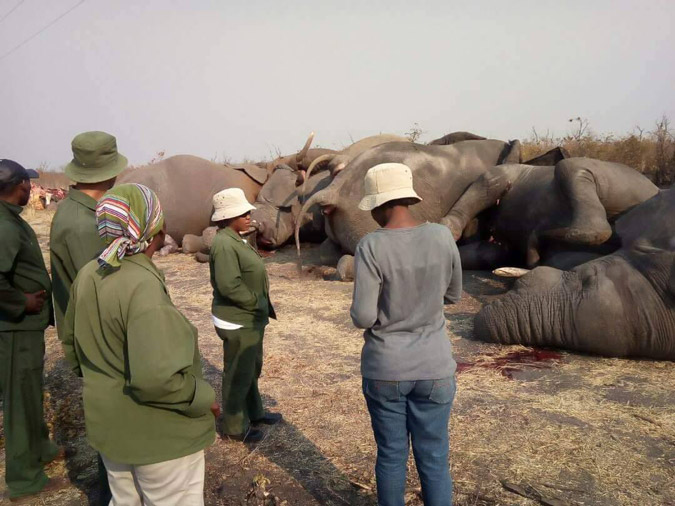
Elephants electrocuted Botswana
Elephants killed after being electrocuted when they pushed power lines into a pool of water they were drinking from. The blood is from burst blood vessels, a common symptom of electrocution.  Africa Geographic, 2017

"The terrible thing about power lines is that every single one will kill. But people here say they don't care because we need to develop our country." 
"In wildlife areas in Kenya, hyenas and other animals make paths to power lines to get at dead birds."
"This makes it impossible to go underneath power lines to enumerate the number of deaths. But I think this is a growing threat and that it’s enormously underestimated by most wildlife conservationists, wardens and conservancy managers."
Simon Thomsett, ornithologist, trustee, Kenya Bird of Prey Trust
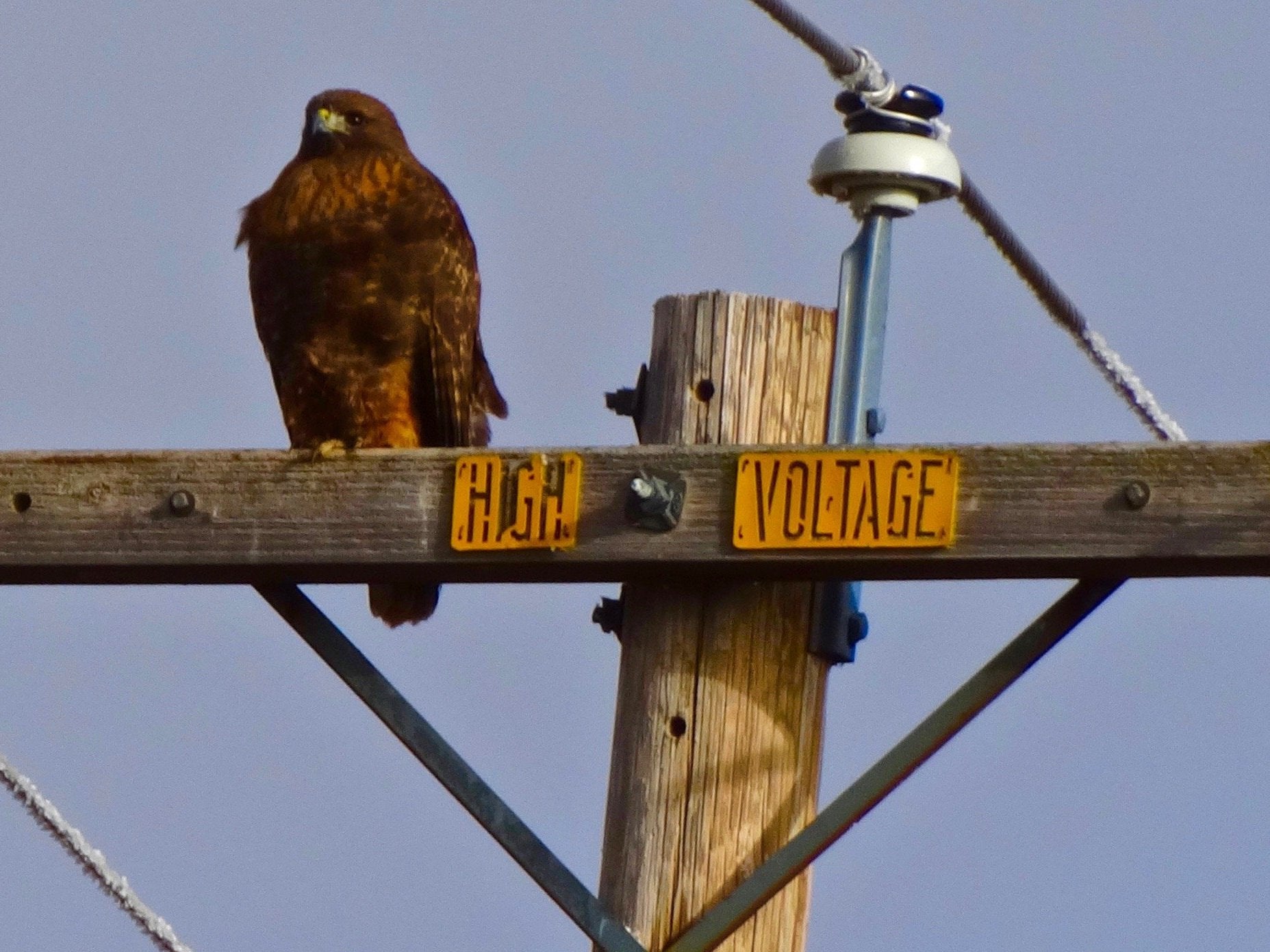
bird-us-power-line.jpg
Electrocution is becoming so common that it jeopardises the survival of some species

"Animals have caused outages, disruptions and damage to infrastructure amounting to billions of dollars."
"We estimate that 60 per cent of line faults and interruptions in South Africa are wildlife-related. It’s really important to engineer this problem out."

Constant Hoogstad, senior manager, industry partnerships, Endangered Wildlife Trust, South Africa

Africa is in its development stages, South Africa a country where ranches, farms and national parks are partitioned off, and surrounded by kilometers of electrical fencing to ensure that unwanted animals are kept out, along with human intruders' that livestock is adequately protected from predators, and so it is with wildlife in national parks as well. The fencing that has such a defined purpose also represents a solution to one problem of unwanted intrusion while at the same time  becomes a deadly hazard to any animals which come afoul of its protective presence.
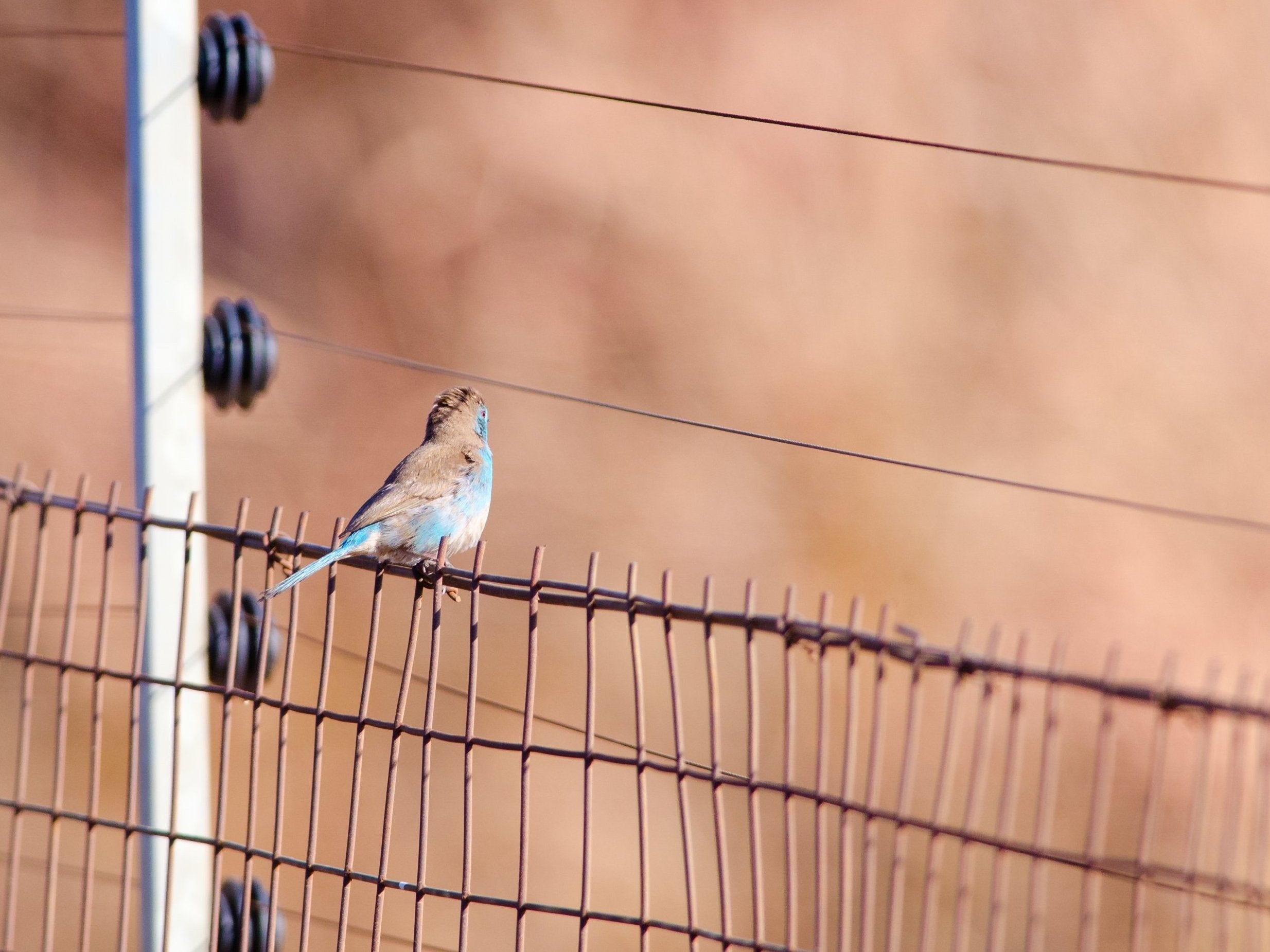
bird-power-line-south-africa.jpg
Interventions to reduce collisions with power lines have so far met with little success

To these unwary animals these fences have an incontestable deadly impact. Smaller animals such as birds and reptiles which are meant to be environmentally protected become casualties in huge numbers. Trip wires positioned some 15 centimeters off the ground meant to zap a deterrence to hunting carnivores like lions and bush pigs accustomed to raiding crops are to a large measure to blame for the carnage. The presumption of a deterrent effect does not always result; some creatures after being stunned simply remain where they are.

Tortoises hitting a tripwire withdraw into their shells, failing to leave and taking haven in their instinctive withdrawal where it feels itself immune to danger while pangolins tend to curl over the wire into a defensive posture, and when both of these animals react as they would under any threatening circumstances, they remain shocked and finally their hearts cease beating. A 2008 study undertaken in South Africa revealed 21,000 reptiles are killed annually on contact with electrical fences.

Dr. Arnot, alarmed by these statistics, has attempted to alert authorities as well as farmers who install those fences. Publishing articles in farming and ranching journals detailing commonsense and modest changes that will bypass some of the dangers inherent in the electric fences to devise wildlife-friendly guidelines in installing electrical fences. Principally, to lift the trip wires to a greater height from the ground as well as operating the current at night exclusively since this is when predators tend to stalk their prey. Simple. Effective. Ignored.

Alongside the threats to wildlife of electric fences are power lines strung without a thought to outcome in countries in a hurry to advance their infrastructure and which end up electrocuting animals where collisions with power lines are so fatal for the avian population. Along with the deadly costs in conservation, a notable economic toll is guaranteed. As an example, a vervet monkey caused a nationwide blackout after tripping a transformer in Kenya in 2016. Power was cut to 4.7 million homes and businesses.

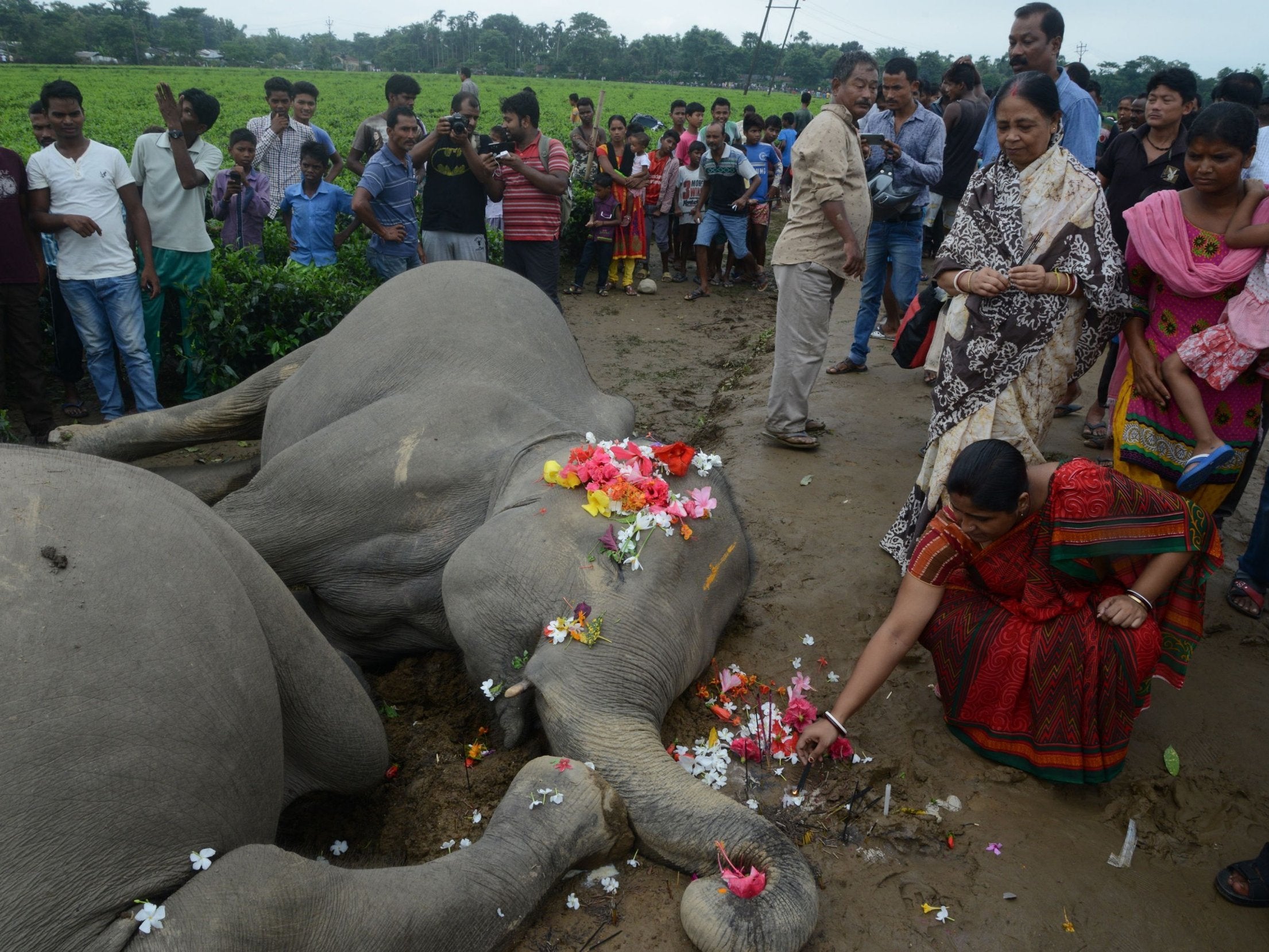
Surivival of some species is jeopardized through electrocution and considered a leading threat to Cape vultures in southern Africa, already endangered, along with critically endangered white-backed vultures. An estimated four thousand endangered Saker falcons are electrocuted in Central Asia each year. Over one hundred endangered Asian elephants were killed by electrocution in the state of Odisha, India over a dozen years through contact with power lines.
electrocuted-elephants-india.jpg
Even large animals such as elephants are at risk of electrocution (in India)

In various countries leopards, Cape buffalo, white rhinos, Giraffes and African elephants have been electrocuted in numbers. Thirty species and subspecies of primates are affected in Asia, Africa and Latin America by electrocution. According to Lydia Katsis, a recent graduate of Bristol Veterinary School in Britain, "This is a widespread problem, but it’s also under-reported and under-studied, so there could be more species affected."

Labels: , , , , , , ,

 
()() Follow @rheytah Tweet