Blog dedicated primarily to randomly selected news items; comments reflecting personal perceptions
Wednesday, November 02, 2022
Twit-In-Chief is now in Residence
"Should Mr. Musk choose to remain a participant and provocateur on
Twitter, it’s likely the platform is headed deeper into the world of
toxicity and partisanship. If that happens, Twitter is doomed, from the
perspective of advertising revenue."
"There’s little motivation for any advertiser to support a platform or
proprietor who is likely to produce more pain than gain. In Mr. Trump’s
case, his public statements have cost him business, beyond Truth Social,
at his hotels and golf courses, including the indefinite removal of the Turnberry
golf resort from the Open Championship schedule in Britain. It’s too
early to say if the potential toxification of Twitter might affect Tesla
and Mr. Musk’s other business interests, but it is fair to say that few
have more to lose than the world’s richest person."
Rob Norman, The New York Times
Elon Musk's photo is seen through a Twitter logo in this illustration taken October 28, 2022. REUTERS/Dado Ruvic/Illustration
Now that Elon Musk's $44B Twitter acquisition is reality, history will record whether the world's wealthiest tycoon with a myriad of far-reaching business interests that truly can be thought of as 'out-of-this-world', history will also tell whether as an investment Mr. Musk was bold and wise or over-reached in a sphere he had no business-related experience with, apart from his dislike of the way the social media platform operated and his stated penchant for returning 'free speech' to the much-criticized yet popular platform..
Most experts in the business world are skeptical whether he and his backers will recoup their faith in their decision to overpay for Twitter. Vanity project or commitment to the public good in releasing the fetters that placed limits to 'free speech? Business venture with great potential or a stumbling effort to prove that whatever this whiz-kid turned his considerable talents and vision to could not fail to succeed in his version of a bold new world...?
There are no end of doubters, from those in the world of finance down to the ordinary twit who regards Twitter as their home away from home and virtual social contact of necessity. Including those who vent their spleen and vomit hate at every opportunity. Will this man make a corporate decision on his new social media platform to accommodate the targets of hate by maintaining those efforts to keep racists and misanthropes and misogynists in check? Would he consider going even further and disinvite accounts of terrorist entities?
Jim Watson/Agence France-Presse — Getty Images
The chief Twit of Twitter is considering charging a monthly fee for users; all users or some? Will everyone be glad to pay $8 monthly for the privilege of maintaining an account where if 'free speech' is unshackled to the moral public weal they will be subjected to ever more venomous messages of malice intended to harm? Twitter's current feeble efforts at removing the vile presence of abusers already has some subscribers in an uproar.
Will the platform operate itself, now that the decision has been made to reduce its workforce by half, dismissing 3,700 employees to start with? Mr. Musk has declared for the time being he is prepared to remain his new toy's CEO. The Twitter hierarchy knew full well their time had come with the completion of the handover, and speedily took to the platform to bid adieu.
The appointment of new product leadership in Twitter's operation seems next on the agenda. The head of engineering, the general manager for consumer and revenue product are now unemployed. Employees are bemused and bewildered; who's on the firing list, who isn't -- yet? Managers have been asked to compile lists of those jobs meant to be cut. Ostensibly in an operational cost-cutting move.
Mr. Musk is closing in on charging users for blue verification badges at $20 monthly, and already celebrities are preparing to refuse and sign off. Advertisers are wary; they won't want their brand associated with socially and culturally averse trash littering the Twitter landscape. They don't view Twitter as one of the world's most influential platforms, so it will be bye-bye, we're moving on.
The new owner is also contemplating a greater focus on subscriptions, fewer content restrictions, the possibility of multiple algorithms for different timelines. Speculation abounds. Outrage is simmering preparatory of an explosive denunciation of a well-used platform springing leaks here, there and everywhere.
An image of Elon Musk is seen on a smartphone placed on printed Twitter
logos in this picture illustration taken April 28, 2022. REUTERS/Dado
Ruvic/Illustration
"I don't want to tell anyone they're wrong. Some people really love beauty. If someone has the money and time, and really enjoys those cleansing rituals, that's their right. But it's nothing to do with health or preventing anything." "We tend to be very susceptible to marketing and advertising that associates products and brands with health, when in fact many of us are spending time and money doing things that we could try doing without." "I take short, quick showers that aren't hot. It gives me a rinse, makes my hair lay down, and makes me feel like there's some divide between night and day in this pandemic time, especially." "I wash my hands because I don't want to have disease. I'm deliberate about why I'm doing what I'm doing." "Teeth whitening is a great example. It's very much social, and about beauty. But it doesn't actually have to do with hygiene, and it doesn't mean your teeth aren't free of bacteria and you don't have an oral infection." "There was great social value in knowing you weren't part of the people living next to the open sewage piles that were in [pre industrial era] London and elsewhere. You were part of the washed class because you could afford soap and water." Dr.James Hamblin, preventive medicine physician, lecturer in public health policy, Yale University
Research shows that
Amish people – who live a rural lifestyle and embrace traditional
agricultural methods – have optimally diverse microbiomes. Photograph:
Bruce Burkhardt/Getty Images
Dr.Hamblin's argument is that the public has chosen to believe all the marketing and advertising geared to persuade them that cleanliness and optimum hygiene can only be obtained by purchasing and using the products crowding the market promising better health, improved appearance and an upgraded outlook on life come complete with the use of redundant products such as moisterizers, artificial ointments and lotions that smell good and promise the world. When, in fact, all that is required to attain both health and hygiene goals is a bar of soap and running water.
In point of fact, points out Dr.Hamblin in a newly published book, Clean: the New Science of Skin, the overuse of a tangle of products that are unneeded, fail to produce a positive outcome as promised, and in the long run often disturbs the natural cleansing process our bodies themselves have acquired as a result of evolution. Applying artificial ointments, lab-produced with an encyclopedia of chemicals makes it more difficult for the natural processes that have developed to nurture our skin, the largest organ of our body.
The Demodex mite as an example, a microscopic creature which teem in huge numbers over our skin feed off discarded and dead cells, in so doing act as a natural exfoliant, superior to the microbe-ads we are persuaded to scrub on our faces. Additional mites and microbes living on our skin consume sebum which works to apprehend oily skin from developing. "They're not hygiene practices. They're recreational and social practices", Dr.Hamblin notes of the products we use to shower, to scrub and salve skin with.
Stigmatism of body odour began as an advertising strategy that helped
quadruple the sales of Lifebuoy soap in the 20s. Photograph: Angela
Hampton Picture Library/Alamy
The hygiene, beauty and cosmetics industry has a value of $500billion. Dead cells disappear as our skin regenerates roughly every 27 days. Dust and particulate matter from the atmosphere can be washed away with the use of water. Dr.Hamblin insists that once your body reaches a steady state after returning to normal with the removal of all chemical products commonly seen on the market, problems with body odour tend to disappear. Soap, he contends, dries out the skin, which then requires the use of moisturizers.
Dr.Hamblin uses nothing but water when he takes his regular showers, using hand soap primarily for his hands alone. And he brushes his teeth for the singular purpose of sustaining their condition: "I don't want them to rot", he says. With the original production of soap in the pre-industrial area, soap was expensive, serving as a symbol that you were elevated over those who were unable to afford a bar of soap. With the Industrial Revolution soap, like most other products was produced more inexpensively, placing it in the realm of affordable for many more members of the general public.
Dr.Hamblin is also quick to point out that showering goes beyond its daily cleansing purpose; it is a normalcy measure, a reassuring routine that gives structure to the day. You awaken, you shower, you break your fast, you leave the house and arrive at your workplace. "This is an odd time, and at times like this, it becomes important to do things that ground you. These [ritualistic] markers are important to us to maintain the rhythms of how our minds and bodies are meant to function."
"The World Health Organization names childhood obesity as one of the most serious public health issues of the 21st Century. And it's a key reason why Unilever is committing to new principles on marketing and advertising foods and beverages to children." "It's a move designed to help parents, caregivers and kids make informed choices about the food and drinks they buy, and to address the rise of social media, and the vast increase in products on sale." Unilever Company statement
"Their bottom line is profit, not public health." "Without policies that put some rules around marketing to children across all companies, it's hard to believe one company is going to sacrifice its profits to effectively reduce consumption of unhealthy foods." "Policies would be good in that sense because they level the playing field." Fran Fleming-Millei, director, marketing initiatives, Rudd Center for Food Policy and Obesity "They can say, 'We've already done all these things and we're being proactive', as a delay tactic." "They can pledge things that sound great but have a lot of loopholes." Shu Wen Ng, associate professor, nutrition department, University of North Carolina, Chapel Hill
A scoop on Ben and Jerry’s Cherry Garcia ice cream on Free Cone Day in 2016. Source: Ben and Jerry's
Dr.Ng takes a pragmatic view of one of the oldest multinational companies of consumer goods suddenly posing as a good corporate citizen with an empathetic outlook on the growing epidemic of obesity among children whose cause is fairly well recognized as processed and junk food availability as advertised by their makers as wholesome, delicious and just waiting for children to use all the wiles at their disposal to convince their mothers they'll eat their vegetables if they can anticipate 'treats' afterward.
Companies may make pledges of the kind that Unilever has just released in the interests of gaining credit for minuscule changes or ingredient reformulations, then touting them as improvements when those changes were already in the pipeline because head office is aware that the U.S. Food and Drug Administration's Nutrition Facts labelling would of necessity lead them in that direction. The new panels outlining nutritional data list total calories in a larger font and serving size requirements have been altered to reflect volumes actually eaten.
Getty Images
Any added sugar content not merely those that product ingredients naturally consist of are to be listed along with updating the list of nutrients required or permitted for label declaration. Unilever has pledged that it will no longer market and advertise foods and beverages to children under age twelve on television, in print, and for children under thirteen through social media channels, by year's end. Products running the range from frozen dairy confections to cookies and breakfast cereals. No longer will it run ads on television and other media where children under 12 represent over 25 percent of the audience.
Ice cream products will no longer be promoted in schools or in children's films, and nor will Unilever continue to use celebrities or social media influencers, much less licensed cartoon characters in marketing to draw children's attention under age twelve. According to a National Survey of Children's Health report released in October, among youths aged ten to 17, obesity rates averaged 15.3 percent nationwide. In Mississippi that rate soared to 25.4 percent. Since the 1970s obesity rates for children and adolescents have tripled and more.
In 2010, Unilever and 18 of the world's largest food corporations signed the Children's Food and Beverage Advertising Initiative, where they pledged they would no longer advertise Skippy and Popsicle brands to children under six years of age. It would advertise those food and beverage products that met certain nutritional criteria for children between ages six and 11. The company debuts, alongside its announcement, a "Responsibly Made for Kids" label.
Unilever to stop
marketing products directly to kids.Calla Kessler/The
Washington Post
Every ice cream in the kids' range will, by the end of 2020, contain no greater total calories than 220, with a maximum of 12 grams of sugar per portion. To meet that sugar limit, points out Fran Fleming-Millici of the Rudd Center for Food Policy and Obesity, many of the Unilever products will have seen artificial sugars added; additives not meant nor recommended for children's consumption. And, as associate professor Dr.Ng adds, many food and beverage companies choose voluntarily to restrict marketing to children with the thought of delaying stronger government-imposed regulations.
Chile, among other countries in Latin America, also confronted with rising obesity levels in children, has led the way to reduce advertisement exposure directed at children for foods high in added sugar, saturated fats, calories and added sodium. All these additives in food products require them to display black stop signs on front-of-package labels. Such black stop signs ensure these products cannot be sold or promoted in schools, or included in television advertisements targeting children -- or marketing strategies aimed at children.
These cookies are a triple-label threat: They're high in sugar, saturated fats and calories.
Eileen Smith for NPR
As a result of Chile's proactive vision, when these rules were adopted in 2016, consumption of sugar-sweetened drinks saw an almost 25 percent drop. Food, beverage and restaurant companies in the United States spent $13.5 billion in advertising costs across all media in 2016, according to the Rudd Center, representing a 7 percent increase since 2007, irrespective of the commitments from major food companies who had signed the Children's Food and Beverage Advertising Initiative.
Unilever
@Unilever
We’re changing the way we go about marketing and advertising our ice cream, food and drinks to children. Find out more here: http://bit.ly/31L3WdB
"Unlike drugs or alcohol, from which we can be totally abstinent if we want to be, shopping and eating have to be done." Dr. April Benson, psychologist
"Here's how it works: The initial pleasurable experience -- ooh la la, that bag! -- releases the neurotransmitter dopamine in the nucleus accumbens, a part of the brain that plays a major role in our neural reward circuitry. Each time we do this pleasurable thing, dopamine is released faster, more intensely. The bits of the brain charged with memory encoding record the purchase as a nice experience, thus generating a conditioned emotional response to the cue." Linda Rodrigues McRobbie, freelance writer, London
"Over time, the pleasure associated with an addictive behaviour subsides, but because the memory of the desired effect and the need to recreate it persists, desire becomes compulsion." Dr. Carolyn Mair, psychology consultant
"[Corporate interests and marketers exploit our acquisitiveness desires to convince us that specific foods, porn, alcohol are desirable, their language steeped in self-reward.] That's part of the strategy to normalize and make innocuous these things that really aren't." "Their revenue streams are really dependent on the heavy consumers. Corporations, especially those that market temptation goods, depend on excessive consumption for their bottom line." Dr. David Courtwright, emeritus professor of history, University of North Florida
"With more materialistic attitudes and more marketing, it's making it harder in general for people to deal with this stuff." "We have all this media, and yet we're supposed to be able to control our shopping and we're looked down upon if we don't." Dr. Ricardo Rieppi, psychotherapist
The shopping compulsion: it teases and attracts and compels us to respond to all the advertising we're exposed to on so many levels that have become commonplace and an adjunct to our lives. Everywhere we go, everything we tune into from radio to television, videos and social media make it all so accessible and so interesting, piquing our already-heightened sense of acquisitiveness in a consumer-oriented society. So many items become 'must-haves'. All the more so when they're being flogged by celebrity figures.
Shopping once entailed a physical presence; you deliberately embarked on a mission to go downtown to a shopping area to look about at what was on offer. Now you know what's on offer, advertisements pop up each time you're on line, every time you use your smartphone, everywhere you look while out driving and billboards beckon. And really, it's no longer an effort to shop. In days gone by shopping was carried out in rural areas by the use of mail order items. Now people don't have to haul themselves to shopping centres, the Internet makes it all so simple.
We are indoctrinated and geared through social media influence to want to shop, to acquire the most up-to-date fashions, the latest technological gear, the current home fashions, so readily accessible, all we do is click and it's in the virtual shopping basket and payment is remote, no handing over of cash. In excess of 197 million people buy goods through Amazon monthly. According to Walmart, the largest retailer in the world, $500-billion in sales last year alone beefed up their bottom line. Their top-selling items? laptops, crayons, Instant Pots....really!
In the United States last year, American credit card debt represented a record $870-billion; that's a lot of 'stuff' and it's linked to "compulsive buying disorder"; at least the 19 million Americans who represent the obsessive purchasing segment of the population falling into the category of buying-stuff-they-don't-really-need grouping. German psychiatrist Emil Kraepelin originated the term "oniomania"(buying mania) in 1915 to identify a compulsion he thought of as close to kleptomania.
One survey identified 64 percent of Americans who bought items on impulse later regretted that indiscretion, a condition we call buyer's remorse. So many things that aren't needed, aren't even wanted or particularly liked, but purchased in response to a compulsion to buy items that will later end up being donated to thrift shops, original tags and all. It all began in earnest in the 1980s with the proliferation of malls alongside an increase in disposable incomes. According to experts in the field, compulsive shopping affects a minimum of six percent of the population.
What may be even more surprising is that it isn't only women but men too who tend to compulsion-shop. Researchers point out that shopping helps many people over rough spots in their lives; coasting over depression as a distraction, however temporary. We are tempted by dissatisfaction with life, by feelings of anxiety to elevate our emotions to a more tractable and pleasant position by pleasing ourselves with new acquisitions; a band-aid solution to whatever ails us. It is an addiction that is difficult to regulate and discipline.
"New ages demand new gods." "It was the first time somebody made entertainment in space ... and advertising is part of entertainment." "People hate me because they think in two years the whole sky will be covered in advertising." Vlad Sitnikov, CEO, StartRocket, Russian start-up
"It might be a good starting point to re-examine the whole nature of regulation of space activity." "We know that the use of outer space for positioning nuclear weapons is prohibited, but there is no such prohibition on the placing of giant billboards [in space]." Christopher Newman, professor of space law, Northumbria University, Britain
"Advertising in space seems to be simply a wasteful and expensive way of ruining the view of the night sky." "Light pollution on the ground makes it difficult enough already to see the sky -- the stars and the Milky Way -- from many locations, and advertising in space is a way of destroying that beautiful vista from the remaining unsullied sites." Robert Massey, deputy executive director, Britain's Royal Astronomical Society
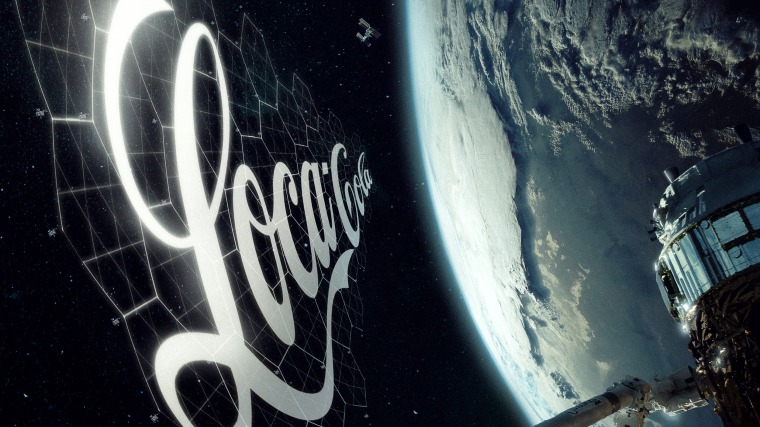
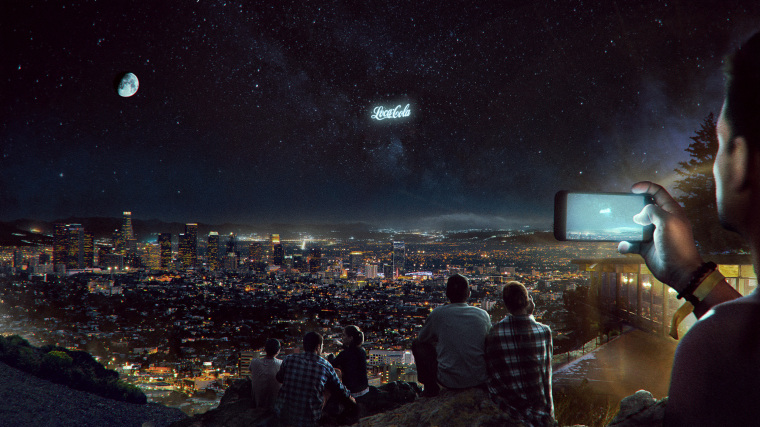
StartRocket's space-based ads would be visible only at night but could be seen from just about anywhere on Earth. StartRocket
Yet another intrusion into the night sky. Who in their right mind would look forward to gazing upward at night to search the sky for identifiable stars and constellations, revelling in the majesty of the view and then shockingly coming across the logo of a soft drink manufacturer or a fast-food conglomeration, moving sedately along the Milky Way. Transforming the magical to the pedestrian in one fell swoop. That is, should StartRocket have its way in plans to place billboards in space.
The plan is to develop a system whereby hundreds of tiny satellites can be manipulated to form a massive commercial display visible from Earth. This represents the latest of ventures following musing about asteroid mining and space hotels, all visualized as what the future holds in mining space for its commercial potential. Astronomers have reacted to the proposal unleashed in mid-January with predictable alarm.
And the question is now raised whether it is high time that some universal standards be put in place by global agreement to shelter space from such intrusions. Regulations to be agreed upon and observed that would constrain any such future exploitation of space beyond the mess humankind has already made to transform it into a giant garbage dump of dead satellites and other human-responsible space debris.
The brilliant hypothesis that space could be used to advantage advertising, assembling clients who wouldn't mind paying a hefty invoice for the privilege of their messages reaching around the world came to advertising expert Vlad Sitnikov in the wake of the rocket propulsion company Rocket Lab launching a disco ball named Humanity Star into orbit, which remained visible to the human eye for a period of months.
A Russian startup, StartRocket, plans massive billboards to beam advertisements to Earth. StartRocket
StartRocket, confident of its ability to blueprint a suitable technical plan, has teamed with experts from a Moscow private university, Skoltech where the team plans to place 200 tiny satellites -- CubeSats -- at an altitude of some 500 kilometres in the lower orbit of Earth by 2021. Each satellite equipped with a sun-reflecting sail would be designed to fly in close companionship with one another to create pixels of a gigantic screen to be switched on and off in displaying words or logos.
The estimated investment for production is expected to exceed $150-million. On the other hand it would cost about $200,000 for clients to contract for eight hours of advertising. A promotional video was released in early January and since then thousands of calls have come in from abroad to StartRocket, including a rough dozen from potential clients; while many other messages reflect the opinions of people opposed to the idea.
Each display would appear the size of a half moon, visible for six minutes at a time, from anywhere in the world. On the other hand, to derive the most potential from the advertising, the plan is to target large population bases where light pollution from cities is high to begin with. Dusk or dawn being the preferred times for display, when people tend to be about in the streets, according to Mr. Sitnikov, in the interests of the bottom line.
The 1967 Outer Space Treaty drafted during the Cold War, focuses on peace and exploration, mentioning nothing about advertising. So, from a legal standpoint, there doesn't appear to be much that can be done about the plan to invade the inner ring of Earth's atmosphere as things stand, save an immediate and concentrated campaign on the part of astronomers and lawmakers to ensure that this is an idea quickly nipped in the satellite bud.
A screen capture from a promotional video on StartRocket’s website. Image Credit: StartRocket.
"Launching art projects like this with no commercial, scientific, or
national security value seems unwise…Space is getting increasingly
crowded. There are over 20,000 objects with orbits in the official
public catalog maintained by the U.S. Air Force." "Less than 10 percent of
those objects are active satellites—the rest are dead satellites, old
rocket bodies and parts of spacecraft." University of Michigan astronomy professor Patrick Seitzer
"The numbers are shocking. These are not your grandmother's commercials. Food and beverage manufacturers have neuro-psychologists working with them. They use MRIs. It's hard to defend yourself against ads." "We have seen a huge proliferation of ads online. Entertainment is blended with marketing. It's hard for children to understand that they're being marketed to." "Children 11, 12 and 13 years old are doing the work of a marketing firm when they're forwarding [ads for their favourite products] things to their friends. To identify with a brand helps to define who you are. Kids love these brands." "Children's exposure to food and beverage advertising has actually increased. People who work in marketing are extremely creative." Monique Potvin Kent, assistant professor, University of Ottawa School of Epidemiology and Public Health
"There is no silver bullet, but this will help [Bill S-228 before Parliament]." "The advertisers know it works [ads designed to capture children's attention, imagination and loyalty]. If you create a customer by the age of ten, you have a dedicated customer for life." Nancy Greene Raine, retired Conservative senator, former Olympian
A single glass of apple juice contains the same amount of sugar as four or five apples do, without any of the fibre
Getty Images/iStockphoto
Dr. Potvin Kent led a new study by University of Ottawa researchers, the result of which concluded that 72 percent of children and youth, fixated on social media, get somewhat more than exposure to all the things that grasp the attention of the young focused on media stars, performing celebrities and the latest trends in fashion, when they are consistently and closely bombarded with advertisements by food and beverage manufacturers who pay the online freight for their 'free' access to those social media sites.
Within a ten-minute session on line the number of ads directed at children has appalled the researchers, for their prevalence and in-your-face boldness. For the backbone of their project, the researchers recruited just over a hundred children and teens living in Ottawa between the ages of seven and 15 from four community centres. Instructed to make use of their own smartphone or tablet in accessing favourite social media sites for two periods lasting five minutes each, the study began.
Wearing special eyeglasses to capture what the recruits viewed on line -- later reviewed by the researchers -- each of the participants saw 2.1 ads within each ten-minute snapshot. Young social media users, it was calculated from that base figure, would be exposed to over a dozen food and beverage offerings each hour online. The researchers identified fully 90 percent of the products the ads promoted fell heavily into an unhealthy category. As for example:
A 'unicorn frappuccino' cake made by Rosanna Pansino on a Starbucks theme on YouTube;
A 'memory test' on YouTube revolving around the brand logos of corporations like Burger King and Snickers;
The YTV actress Torri Webster's Instagram account promoting points collections at Cineplex Theatres to exchange for concession snacks;
An Instagram ad for McDonald's inviting users to list which friend they would share french fries with: "The #holidays are for sharing and so are our fries."
Video bloggers posting items on YouTube, points out Dr. Potvin Kent, become media personalities with those collecting large followings signing sponsorship deals to feature branded products "embedded" in their content like competitive eater Matt Stonie's celebrity status garnering profit via "food challenges".
A report from the Heart and Stroke foundation recommends curtailing
advertising of unhealthy food to children. Photo: Jaclyn McRae-Sadik.
Children, studies confirm, through such exposure by age two can appreciate and identify brands. It takes an growing awareness by the age of six for children to understand that advertising represents a sales pitch, but it takes until age 11 or 12 before they begin critically evaluating what they see. Until then they follow their favourite products on social media, encouraging their friends to do so as well.
At the present time, food and beverage marketing to children remains self-regulated through the voluntary Children's Food and Beverage Advertising Initiative. Through purely voluntary adherence to the regulatory guidelines companies pledge exclusive advertising of "healthier" products to children under age twelve. Yet through what is seen as lenient nutrition criteria and high audience thresholds of 35 percent children in the audience, the pledge is honoured more in the breach than reality.
The very day that Bill S-228 seeking to amend the Food and Drugs Act to prohibit food and beverage marketing directed at children thirteen and under, was being debated in Parliament, was the day the new study on children and advertising for food and beverages was released. Should the bill become law, Health Canada would be tasked with creating regulations to fit the bill.
The fact that childhood obesity has doubled since the 1970s in Canada and overweight and obese children become at risk of chronic conditions such as sleep apnea, joint problems, Type 2 diabetes and heart disease represents a spur that prompted Nancy Greene Raine, Canadian skier who won World Cup and Olympic gold in giant slalom in 1968, to sponsor the bill.
In Quebec, the provincial Consumer Protection Act prohibits commercial advertising targeting children under age 13. Chile announced tough marketing restrictions last February, inclusive of removing cartoon characters from cereal boxes and banning candy sales such as Kinder Surprise using trinkets to snare children's attention.
A McDonald’s
cheeseburger Happy Meal with the new apple slices option is shown (Keith Srakocic/AP)
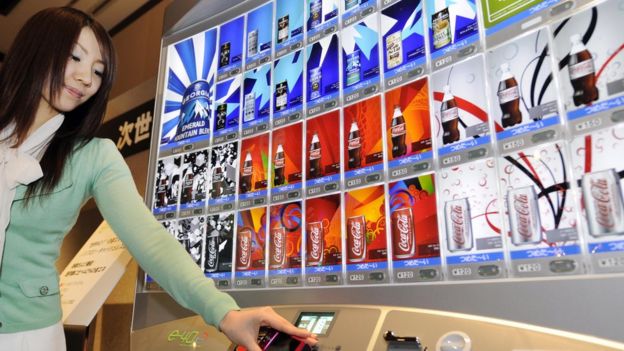
Coca-Cola says it markets dozens of new products on the Japanese market every year Getty Images
"[The move is a] modest experiment for a specific slice of our [Japanese] market." "We
haven't experimented in the low alcohol category before, but it's an
example of how we continue to explore opportunities outside our core
areas." Jorge Garduno, Coca-Cola's Japan president
"Young people don't feel like they are drinking alcohol because there is so much sugar and there is a lot of alcohol as well." "Health Canada needs to take a look at that." Lucie Charlebois, Quebec public health minister
"It was a mistake to enter this category to compete with Four Loko." "In fact, the Four Loko category should not even exist." "Last Friday I also ordered the removal of all advertisements that concern it — it’s the right thing to do." Aldo Geloso, co-owner, Geloso Group
It's clear that the FCKD UP cans were designed to appeal to a younger demographic, Christopher Curtis, Montreal Gazette
Montreal-area beverage producer, Geloso Group, produces a sweet-tasting drink whose consumption is aimed at young people, and is loaded up with alcohol, enough alcohol to rival any spirits in the selection of wines. It planned to compete with another beverage company located in Chicago whose drink, Four Loko, is hugely popular among teens. That beverage contains 11.9 percent alcohol content and was, in fact, recently removed from store shelves in Quebec because it contains ethyl alcohol, in violation of Quebec's alcohol laws.
Phusion Projects manufacturers Four Loko, and it is safe to assume they produce a beverage that attracts young consumers who may not realize how loaded the drink is with alcohol. On the other hand, the tins clearly state the alcohol content. But it obviously provides the drink manufacturer with ample incentive to continue producing it because the profits are appreciable. And it was that profit quotient that attracted the attention of the Geloso Group which, in 2017 introduced their own product, FCKD UP.
It is perfectly clear moreover, that Geloso Group targeted young people as consumers of its product; its advertising and the coloured cans that hold the drinks are not meant to attract any but the young. Most unfortunately, a dreadful occurrence was reported last week, where a 14-year-old girl, Athena Gervais, was found dead near a stream close to her Laval high school. She and friends had lifted cans from a convenience store nearby their high school and she is said to have consumed several of those cans before dying. Athena Gervais.Laval PoliceAthena Gervais, 14, disappeared Feb. 26. Her body was found behind her school three days later.
Now, the co-president of the company whose drink it was, has announced it is immediately discontinuing manufacture of the drink, and the Quebec-based convenience store chain Couche-Tard will no longer sell the offending beverage. This is not an illegal drink. Young people can purchase it and drink it, as they would any other drink. But what they are buying and consuming is a high-alcohol beverage at their local convenience store at lunchtime, in the process becoming intoxicated and ill. They're looking for the buzz, some deliberately wanting to become drunk.
"Health Canada is already working with the government of Quebec to address this issue", responded spokesman Eric Morrissette who also mentioned that alcoholic or energizing beverages are sold legally in Canada; Health Canada is not responsible for giving approval to their sale. On the Four Loko website there is a hypocritically sanctimonious statement that reads: "Unfortunately, any alcohol beverage can be abused if not consumed
responsibly. The issues of irresponsible alcohol
consumption will only be solved by increased education, stronger
enforcement of existing laws and personal responsibility."
In the industry that kind of beverage is referred to as "alcopop", with the full knowledge of what it contains and how it can affect the age demographic that advertising the product is meant to attract. It isn't particularly new on the market, it's been around since the 1990s in the United Kingdom where brands like Hooch, Reef, Smirnoff Ice and Bacardi Breezer became immensely popular, the names attracting teens who want to be adults and do the things that adults are known to do. The names of these drinks tell them they can.
They're easy to access and easy to drink. There's no off-putting odour emanating from them as there is with beer, it's the sweet taste that covers up the alcohol and caffeine-containing product, and taste is given a fruity flavour, like lemon, orange, mimicking the familiar but with the added fillip of producing a high. Their marketability is undeniable, as is the huge profit associated with their sales, making them controversial in that they encourage young people to indulge in drinking large quantities of alcohol.
Wherever there is profit to be made and the allure of diversifying popular products, there will be a huge corporation like Coca-Cola whose executives endlessly sniff out enhancing their bottom line. That huge international beverage manufacturer is looking at their Japanese market, planning to introduce just such an alcoholic pop to young Japanese who have been introduced to the concept with their own national brands. Where a local spirit called shochu is added to Chu-Hi, a canned sparkling flavoured drink, between 3 and 8 percent alcohol by volume.
Famously, Japan has street vending machines everywhere, selling food and hot and cold drinks in a culture that likes convenience and availability. And despite the questionable ethics involved in selling quasi but powerful alcoholic beverages to children, where there is profit to be made through the commercialization of children yearning to be adult and emulating what the mature population does, it's just a matter of popularizing a unique brand to grow the market and enhance the bottom line.
Students enter Poly-Jeunesse high school March 2, 2018. The body of Athena Gervais was found in a creek behind the school. Allen McInnis / Montreal Gazette