Ruminations

Blog dedicated primarily to randomly selected news items; comments reflecting personal perceptions

Sunday, July 11, 2021

When Success Turns to Desperate Need

"We cannot live with this variant. No place on Earth has unless they have their vaccination rates much, much higher than what we  have."
"Otherwise, it subjects the population to thousands and thousands of deaths."
Gladys Berejiklian, premier, New South Wales

A lone woman wearing a protective face mask pulls a suitcase through the city centre during a lockdown to curb the spread of a coronavirus disease (COVID-19) outbreak in Sydney, Australia, July 6, 2021.  REUTERS/Loren Elliott
A lone woman wearing a protective face mask pulls a suitcase through the city centre during a lockdown to curb the spread of a coronavirus disease (COVID-19) outbreak in Sydney, Australia, July 6, 2021. REUTERS/Loren Elliott
 
Celebrated internationally for their swift reactions that worked to suppress the global pandemic last year, the death toll in Australia and South Korea was comparatively low in comparison to the United Kingdom and the United States. One critical oversight: their vaccination rollouts have now placed them in a position of public vulnerability to COVID-19 outbreaks. And this, at a time when the Delta variant has been wreaking havoc world-wide.

On Friday, South Korea brought out its highest level of restrictions across Seoul and the surrounding area of virus-related restrictions, leaving half of the country's 52 million population affected. "We are facing the biggest crisis with our containment efforts with the daily new cases hitting a record every day", Prime Minister Kim Bookyun explained as he announced the new lockdown measures, including gatherings of over two people after 6 p.m. banned, and shutting school operations down.

The worst was yet to come for South Korea, warned head of the Korea Disease Control and Prevention Agency, even as the vaccine drive was strengthening. Gen.Paul LaCamera, leading 28,500 American troops stationed in South Korea, reintroduced tougher controls on military personnel movements. "While we have achieved a more than 80 percent vaccination rate, we are witnessing small clusters of the virus spread within select locations", he said.

In Japan, Prime Minister Yoshihide Suga was forced to declare a state of emergency in Tokyo with the additional statement that the Olympics will now be held for the most part in the absence of spectators. Across the Asia-Pacific governments have been forced to swiftly impose tougher lockdowns in the face of the highly contagious COVID-19 Delta variant's sudden resurgence, one that is straining health systems and creating anxiety among their public, with vaccination drives interrupted by delays and shortages.

Among the worst hit of the countries in the region, Indonesia's 270 million people are in the throes of its deadliest outbreak since the introduction of the pandemic; its medical system struggling to cope with record numbers of cases, and with a daily death toll that has doubled in the past week to over 2,000. Authorities warn the number of new infections may surge up to 70,00 after surpassing 34,000 in mid-week.

 
People wait in line to refill their oxygen tanks at a filling station in Jakarta
People wait in line to refill their oxygen tanks at a filling station in Jakarta. Indonesia is facing an oxygen crisis amid a surge in Covid-19 cases. Photograph: Wisnu Agung Prasetyo/SOPA Imag/Rex/Shutterstock
 
Hospitals are reaching capacity and turning patients away, with the government attempting to import oxygen tanks from neighbouring countries, their own supplies exhausted. Indonesia has been reliant on the Chinese Sinovac vaccines, but its rate of vaccination has been tardy, in the midst of supply shortages, apart  from its less-than-optimal efficacy rate, made all the more severe by the Delta strain.
 
Authorities in Australia warn thousands of people could die, taking into consideration the Sydney outbreak with its Delta variant link, should it not be brought under control. The city of 5 million has failed to quell active case clusters despite a two-week lockdown, requiring a tightened activation of restrictions in a desperate bid to block any further spread and to control the level of infection.
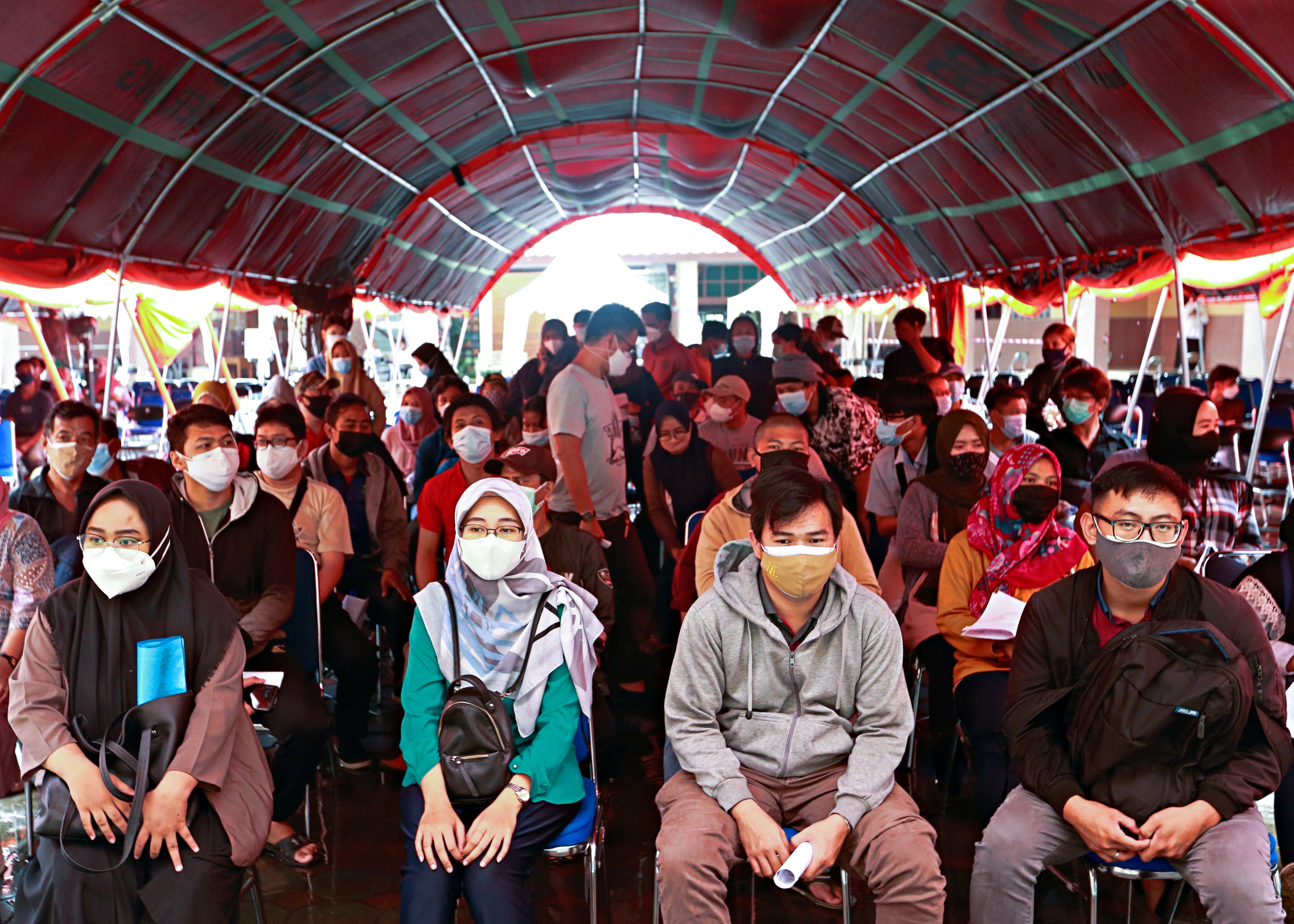
People wearing protective face masks sit before receiving a dose of the coronavirus disease (COVID-19) vaccine during the mass vaccination program at the Tangerang City Government Center, in Tangerang on the outskirts of Jakarta, Indonesia, June 30, 2021. REUTERS/Ajeng Dinar Ulfiana/File Photo
Mass Vaccination clinic, Seoul, South Korea -- Reuters

Labels: , , , , ,

Tuesday, October 13, 2020

The Tragedy of Canada's COVID Long-Term Care and Retirement Homes

"[Residents were gasping for air, their oxygen level had plummeted, they clearly had COVID-19 and were dying] and no one was there to provide the proper care, or look after them."
"I'll just be very open with you. It's still something I think about every day. It haunts me. I wish I could have done more."
"If we think back to those early days in February and March, what we were all worried about was a scenario like Italy and New York. A lot of the focus was on protecting acute care -- acute care hospitals, making sure we had enough ventilators. Some of those fears are coming back, and rightfully so. But we also have to do all we can to protect long-term care."
"These homes are not on separate islands."
"We know from the first wave it was health workers who unknowingly spread the virus."
Dr.Amit Arya, palliative care doctor, University of Toronto, McMaster University

"It's unsurprising to me, sadly, that we're having outbreaks in long-term care homes."
"[...The second wave began around the beginning of September] And since that time we've continued to accumulate two to three long-term care homes a day that are going into outbreak. Because who works in long-term care homes? They're people who don't live in long-term care homes. They come from the community where the transmission is high, and they are going to become infected themselves by living in the community and unknowingly import the virus [into care homes]."
"What happened in the spring was truly a humanitarian crisis. If we do not create emergency response plans that include things like this, the same level of catastrophe will happen again."
Dr.Nathan Stall, geriatrician, Sinai Health System, University Health Network, Toronto
Toronto’s Seven Oaks long-term care home, which was hit hard by a COVID-19 outbreak affecting residents and staff, is pictured on April 9. Deaths in long-term care represented more than 70 per cent of all COVID-19 deaths in Quebec, Ontario and Alberta. (Evan Tsuyoshi Mitsui/CBC)
 
What happened in the spring is what Dr.Amit Arya, who was part of a long-term rapid action response team dispatched into homes when they were in desperate straits came face to face with: residents ill, unprepared care workers, insufficient PPE, not enough workers to look after the most basic needs of the ill, the elderly, the infirm who went unattended, unfed, unwashed, thoroughly neglected, all too many of whom ended up dying. When the rapid action response teams entered those homes they sometimes found residents dead in their beds.

With a second wave of COVID-19 hitting provinces like Ontario, Quebec and Alberta in particular, Dr.Arya has horrible visions of similar scenes becoming a reality once again. In the spring when case numbers at homes and deaths were revealed to a horrified public, governments vowed to protect the vulnerable with new legislation, new hiring, new regulations. That was then, this is now. COVID is shifting from high case numbers in the young age 20 to 39 group that revealed itself over the summer to an increasing number of cases in older people.

Dr.Theresa Tam, chief public health officer of Canada has warned of a growing number of outbreaks in long-term care: "While these outbreaks involve a smaller number of cases than in April and May, we know that spread in these facilities often leads to death". Over 9,100 Canadians died in the spring, and outbreaks in long-term care and retirement homes represented fully 75 percent of all such deaths in the country.

Active outbreaks have been identified more latterly in 58 long-term care homes in Ontario alone, and in the past month 40 COVID-19 deaths. The Red Cross has been dispatched into seven homes in the Ottawa area to aid: "assess and stabilize the situation", in the words of federal Public Safety Minister Bill Blair. At the Millwoods Shepherd's Care Centre in Edmonton, 53 residents and 27 staff have tested positive, while seven residents have died.

Quebec, New Brunswick, British Columbia and Alberta have all reported outbreaks in their long-term care homes. An interim report from Ontario's patient ombudsman reflected reports of COVID positive staff forced to attend their work stations with staffing shortages making it beyond difficult to provide even the most basic care -- yet again, in a reflection of the spring situation. According to medical experts, Ontario and Quebec reduced the curve in the spring, containing community spread, while isolating the infection in understaffed, ill-prepared, long-term care homes.
 
 
Over 840 outbreaks took place at that time, the situation becoming so dire that members of the Canadian military were asked to attend nursing homes where they discovered residents were unwashed, dehydrated and occasionally, dead. Dozens of studies and advocates had given fair warning for decades of just such a once-in-a-lifetime pandemic, but to no avail. No governments anywhere were prepared for the eventual arrival of a global pandemic, all were taken by surprise when the SARS-CoV-2 virus causing COVID-19 made its appearance, bolting out of China.

British Columbia stands out for its foresight where a system of full-time work was promoted with standardized wages and sick leave for health workers limited to a single home. At the second week of September Ontario reported 1,827 resident deaths from COVID-19 in long-term care homes, in comparison to 156 deaths in B.C. homes where multiple-resident shared rooms were uncommon, but not in Ontario where shared rooms are standard.

Countries that implemented additional long-term care precautions at the same time as standard stay-at-home orders had fewer long-term care infections and deaths, says Tracy Johnson, CIHI's director of health systems analysis and emerging issues. (Evan Mitsui/CBC)

Labels: , , , , , ,

 
()() Follow @rheytah Tweet