Ruminations

Blog dedicated primarily to randomly selected news items; comments reflecting personal perceptions

Monday, January 30, 2023

Dealing With Stress and Anxiety

The determinants of our mental well-being go beyond our genes and brain chemistry to include inflammation, gut health, sleep, nutrition, hormones, chronic limbic hyperarousal due to  unresolved trauma, and even having our basic needs for community, nature, meaning and purpose going unmet. If we do have a chemical imbalance, it is probably a downstream effect of these other states of imbalance."
"In other words, anxiety is not all in your head; it's largely based in the body, and that's where it should first be addressed."
"While our cultural attitude toward mental health is to regard it as a genetic destiny and a matter of troubled brain chemistry, much of our anxiety is rooted in the body and is mostly avoidable. Eliminating unnecessary stress responses can make us more resilient in the face of unavoidable stressors."
Dr. Ellen Vora, holistic and board-certified psychiatrist, acupuncturist, and yoga teacher
What’s the Difference Between Stress and Anxiety?
 
An inventory of avoidable anxiety could include:
  • Hunger
  • Sleep deprivation
  • Being over-caffeinated
  • A Hangover (what is now spoken of as "hang-xiety")
  • Gut issues
  • Inflammation
  • Long stretches of being sedentary
  • Chemical fallout after consuming highly processed food
  • Late luteal phase (the days before the bleeding phase of the menstrual cycle)
  • Inter-dose withdrawal (the pharmacologic low-point when  you're due for your next dose of a psychiatric medication)
During the first year that the coronavirus pandemic struck the globe, according to the World Health Organization, global cases of anxiety and depression rose by 25 percent. Among mental health professionals the consensus appears to be that mental health struggles relate to chemical imbalance in our DNA implying that anxiety is chemical, determined by serotonin levels, leading to the belief that the issue reflects genetic destiny.  Applicable therapies and medications are prescribed accordingly.

There may, however be other available options, according to Dr. Ellen Vora. Therapy sessions are becoming more difficult to accommodate given the stressors and shortfalls of late on the health care system, and medications sometimes don't work for everyone. On the other  hand, much of what has an impact on our moods and body is another issue playing a critical role in mental  health. Dr. Vora speaks of two types of anxiety: true anxiety (or purposeful anxiety), and avoidable anxiety.

True anxiety symptoms, she points out, tell the individual that something is awry that should be paid attention to. Some introspection is required to analyze what certain symptoms may indicate as links to anxiety symptoms. Consultation with a health professional is a start. Avoidable anxiety, on the other hand, may represent the body reacting to a stress response. We live in a distracting world that presents us with issues that can be disturbing, both personally and in sympathy with occurrences elsewhere.

What occupies our minds and our thoughts can often bring on stress from information overload or constant exposure to events that are clearly upsetting on a macro level, but which we can do nothing about, ourselves. A solution can be found in focusing on the stress with a mind to addressing the locus of anxiety to  help lift the stress level of the body to eliminate unnecessary stress responses.

Identifying when anxiety has a physical basis can help in the recognition that life feels\somewhat overwhelmed than it is in actuality and that recognition alone can help lift the level of stress. Making it a practise to study how we react to external triggers arousing anxiety levels can help take steps to eliminate avoidable anxiety, as a heightened awareness helps to take charge of moods that stress, making us more resilient as we balance mood and anxiety.
"Experiencing occasional anxiety is a normal part of life. However, people with anxiety disorders frequently have intense, excessive and persistent worry and fear about everyday situations. Often, anxiety disorders involve repeated episodes of sudden feelings of intense anxiety and fear or terror that reach a peak within minutes (panic attacks)."
"These feelings of anxiety and panic interfere with daily activities, are difficult to control, are out of proportion to the actual danger and can last a long time. You may avoid places or situations to prevent these feelings."
"Examples of anxiety disorders include generalized anxiety disorder, social anxiety disorder (social phobia), specific phobias and separation anxiety disorder. You can have more than one anxiety disorder. Sometimes anxiety results from a medical condition that needs treatment."
"Whatever form of anxiety you have, treatment can help."
Mayo Clinic
img-banner - Betterhelp_mnt_fq_anxiety_imgbanner_39965

Labels: , , , , , ,

Saturday, April 13, 2019

The Pain-Free Mutant Gene

"Each of these mutations teach us something, and point to a particular gene as a potential target for new and more effective pain medications."
"They [statin drugs] were developed largely on the basis and discovery of incredibly rare families where everyone was having heart attacks in their 20s."
"But I'm reasonably confident that the lessons we are learning from the genes involved in pain will lead to the development of an entirely new class of pain medications."
Dr. Stephen G. Waxman, neurologist, Yale University

"I could feel that my body was changing [in pregnancy]. Don't worry, it's not as bad as people say it is [she assured prospective mothers on the basis of her own experience]."
"I can't remember him [her father] needing any painkillers. I think that's why I didn't find it odd [that she herself never did]."
"[Never depressed or frightened] I am very happy."
"I'm always forgetting things; I always have done. It's good in lots of ways but not in others. I don't get the alarm system everyone else gets."
"Learning about it now fascinates me as much as it does anyone else. I would be elated if any research into my own genetics could help other people who are suffering."
Jo Cameron, 71, Loch Ness, Scotland
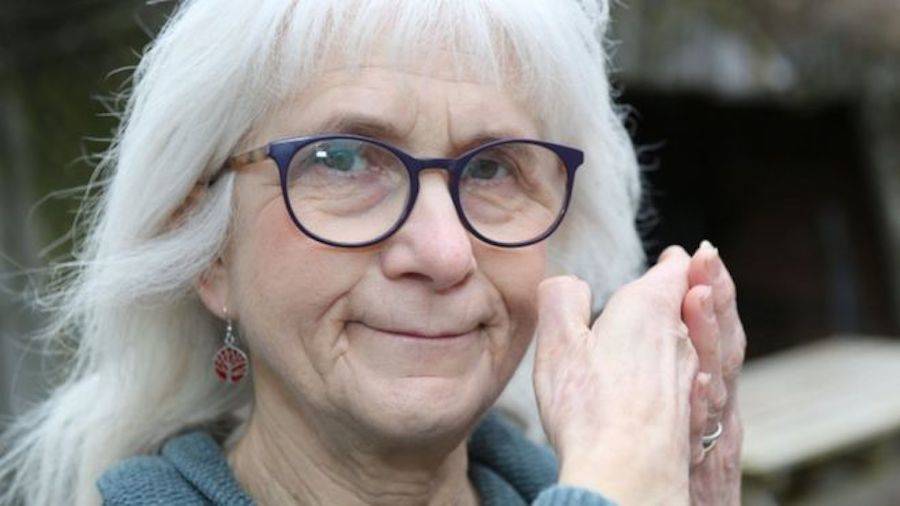
Jo Cameron
Jo Cameron’s genes also give her immunity against stress and depression.  
Peter Jolly/Rex/ShutterStock
"People with rare insensitivity to pain can be valuable to medical research as we learn how their genetic mutations impact how they experience pain."
"We would encourage anyone who does not experience pain to come forward."
James Cox, senior lecturer, University College London, UK


Researchers who studied the extraordinarily rare experience of a now-elderly woman living in Scotland concluded that she was in possession of a gene that made pain, anxiety or depression foreign to her nature. Their paper, published in the British Journal of Anaesthesia, saw them attributing her lifelong inability to feel pain to a genetic mutation, as yet unidentified. Their aspiration is that medical science will identify that gene which might lead to the development of a treatment for pain.

Throughout her life, Jo Cameron has never felt anxiety or fear, and her body has the capacity to quickly heal from any physical insult. "We've never come across a patient like this", commented head of the Molecular Nociception Group, John Wood, at University College London. For close to a century scientists have documented studies of individuals experiencing little or no pain, yet the genetic mutation appearing responsible for painlessness for Jo Cameron has never been identified.

According to Dr. Waxman, author of Chasing Men on Fire: The Story of the Search for a Pain Gene, who was not part of the study producing the recent paper, medical science needs alternatives for the treatment of chronic pain, which are less addictive.

Cameron's unique and rare genetic mutation came to the attention of medical science when, following a hand operation and expressing no pain, the doctor was puzzled that she had no need of painkillers. "I guarantee I won't need anything", she informed Devjit Srivastava, a consultant in anesthesia and pain medicine at a National Health Service hospital in northern Scotland, one of the paper's authors.

Questioned, it was revealed that at age 65 she had required hip replacement, but had felt no pain and as a result failed to notice that something was awry until her hip had degenerated severely. Similarly, cuts, burns, fractures which she also experienced also caused her no pain. Her husband, aware of this, became habituated to alerting her if something appeared amiss.

Dr. Srivastava referred his patient to University College London's Molecular Nociception Group, focused on genetic approaches to studying the biology of pain and touch. Scientists in recent decades identified dozens of others who process pain in unusual ways, but when Dr. James Cox inspected her genetic profile, there appeared little resemblance to that of other people known to be able to live without experiencing pain.

A gene that scientists identify as FAAH-OUT, common to all people, turned out to be the locus of her pain-free experience. "The patient has a deletion that removes the front of the gene", he announced. Cameron had simply taken it for granted that what she had experienced in lack of pain was common -- until all the interest scientists were taking in her condition finally impinged to persuade her how 'different' she is that her injuries seldom left scars; yet another peculiarity that scientists link to her genetic mutation.

Her low anxiety level is yet another point of intrigue for scientists where, on an anxiety disorder questionnaire, her score turned out zero out of 21 -- for a woman who cannot ever recall feeling depressed or frightened. Erratic, aggressive behaviour never impacted on her, which had been an aid to her efficacy as a primary school teacher who retrained to work with people with severe mental disabilities.

In a slight reversals of the positives associated with her condition, she is forgetful, loses her keys and her train of thought, even midsentence. And nor has she ever felt that "adrenalin rush" she has heard other people speak of; entirely foreign to her experience. The investigators are now prepared to focus on attempting to more fully comprehend how FAAH-OUT operates, with the intention of designing some manner of pain intervention around it.
Because she doesn’t feel pain, Jo Cameron burns herself quite frequently. The scars tend to go away quickly, she said, something else scientists are planning to investigate.  (Mary Turner / The New York Times)
Researchers attribute Cameron's virtually pain-free life to a mutation in a previously unidentified gene.

Labels: , , , , ,

Wednesday, November 22, 2017

Deliberate Negligence

"He knew he was making nonsterile drugs. Glenn Chin just didn't care."
Assistant U.S. Attorney Amanda Strachan

"The underlying factor is that the company got greedy and overextended and we got sloppy, and something happened,"
"We became a manufacturer overnight. So we were basically trying to have the best of both worlds." "We were going to hurt a patient. We were just thinking hurt a patient. We weren't compounding anymore, we were manufacturing."
Joe Connolly, NECC lab technician

"[It was] a complete investigatory failure on the part of the FDA [U.S. Food and Drug Administration]. The FDA could not determine the route of contamination. That was what their job was."
"Glenn Chin didn't know how to supervise anybody. Glenn Chin was not competent to do that job. Glenn Chin would do anything and everything Barry Cadden told him to do."
"Negligence, even gross culpable negligence, is not enough to support a second-degree murder conviction."
Stephen Weymouth, lawyer 
Barry Cadden, president of the New England Compounding Center, was sentenced to nine years in prison for his role in the deadly outbreak. (Stephan Savoia/AP)

When the month-long trial of the owner and the supervisor of the New England Compounding Center in Framingham, Massachusetts concluded, Assistant U.S. Attorney Amanda Strachan gave her summation, then showed the jury photographs of 25 people, victims of contamination in supposedly sterile drugs who succumbed to fungal meningitis, people who lived in Florida, Indiana, Maryland, Michigan, North Carolina, Tennessee and Virginia.

Glenn Chin whose position it was to supervise 20 people at the compounding center, faced a life sentence if he was convicted on a number of charges, including second-degree murder. Glenn Chin was described during trial procedures as the right-hand man of the person who had, with his wife, founded the New England Compounding Center, in 1998. Barry Cadden, that man, also faced trial on the same charges.

In March he was convicted on charges of conspiracy, mail fraud and racketeering, but acquitted on the charge of second-degree murder. He faces nine years in prison. Former NECC employees testified that cleaning logs were falsified, untested drugs shipped without alerting doctors and patients. The facility had a "clean room" where drugs were produced and it was there that deadly mold took hold when cracks in the floor became their breeding ground.

Despite knowing that the drugs the center was shipping off to doctors for use on their patients were compromised, Mr. Chin signed off on contaminated drugs to meet the pressure of client demand for the products produced by NECC. Chin and Cadden did more than cut corners; they made use of expired medication, mislabeled drugs and took to distributing drugs they well knew could be fungus-tainted.


(Cadden hired unqualified staff, ordering employees to cut corners for increased production and profit.
When Chin was hired in 2004, he also had no professional experience in compounding drugs or sterilization, learning everything from Cadden.)


That situation led to an outbreak of fungal meningitis. The disease claimed 76 lives and up to 700 infectious illnesses right across the country. Lawyer Weymouth informed jurors of a 2012 investigation by the U.S. Food and Drug Administration which failed to reveal the source of the contamination. One microbiologist  with the investigating team took swabs of the center's roof and boiler room, but missed samples of the clean room where medications were produced.

The Compounding Center advertised itself to doctors and hospitals as trustworthy, and the best compounding pharmacy in the country. It became such a trusted source of medications it could barely keep pace with the orders country-wide as the compounding pharmacy made and shipped drugs filling orders that hugely profited the center. While in reality some of those drugs were contaminated with a deadly mould.

The center was not the sterile, reliable, trustworthy place its owner claimed it to be. It was plagued by bugs and mice and for a facility that was expected to observe punctilious cleanliness to ensure its products were unfailingly beyond reproach, it was instead, filthy. The jury was informed that Chin had time and again ignored warning signs that the "clean room" had become a source of contamination.

The technicians working there claimed to have been intimidated by their supervisor, Glenn Chin, who followed orders from the owner, Barry Cadden. Sales representatives of the center assured medical centers, doctors and hospitals for years that the compounding center hired registered, trained technicians, and all medication was tested ensuring sterility, then place in quarantine before being shipped off. All these assurances were simply figments of imaginary assurances.

The contaminated injections of medical steroids which lead to an outbreak of fungal meningitis and other infections mostly affected people with back pain for whom the steroids were meant, with the result that 700 people in 20 states became ill in the most serious public health crisis in recent U.S. medical history. According to the federal Centers for Disease Control and Prevention, 64 people died as a result in 2012, while federal officials raised the total number of deaths to 76.

When the jurors returned with their verdict it was to find the supervisory pharmacist who oversaw the clean room and where he himself formulated the drugs in the mold-contaminated room that spread to the medication, not responsible for the deaths of people who wee injected with those contaminated drugs. They held that prosecutors had failed to prove beyond a doubt that Mr. Chin was responsible.
Glenn Chin, the supervisory pharmacist at the now-closed New England Compounding Center, departs federal court after attending the first day of his trial on Sept. 19. (Steven Senne/AP)
Glenn Chin, the supervisory pharmacist at the now-closed New England Compound Center, departs federal court after attending the first day of his trial on September 19.  Steven Senne/AP

Labels: , ,

Wednesday, February 22, 2017

The Quicksilver of Child Hand-to-Mouth

"It wouldn't be at all surprising for a two- or three-year-old to find a tablet and put it into his or her mouth."
"And it's important to understand that a single tablet could kill a small child. These are very dangerous drugs at the high end of the dose range."
"We don't know why the younger kids, under one, might have been exposed. It could have been an accident, it could have been a sibling. I suppose there's the possibility it could have been malicious. We simply couldn't say."
"It's incumbent upon parents and grandparents to keep their pills well out of reach -- ideally under lock and key, but certainly inaccessible -- and simply having a child-resistant cap isn't adequate."
Dr. David Juurlink, senior scientist, Institute for Clinical Evaluative Sciences, Toronto

"[Overprescribing of drugs and the growth of illicit drug use in Canada leads researchers to feel] there's some evidence that these numbers of cases are creeping up now with more accessibility of those medications in the house."
Dr. Yaron Finkelstein, emergency medicine specialist, Hospital for Sick Children, Toronto
About Sickkids
Sick Kids'

Drs. Juurlink and Finkelstein co-authored a new study on the rising incidents of young children being rushed to hospital because of inadvertent ingestion of prescription drugs. The study was published this week in the journal Pediatrics. 2002 to 2015 health records were used to identify 103 children age ten or under treated in a hospital in Ontario for exposure to a drug meant for an adult. These were children whose mothers were in receipt of prescriptions for an opioid, which was publicly funded.

It might not, under the circumstances, be too far a theoretical stretch in imagining that these are children growing up in underprivileged circumstances, where welfare services include providing pharmaceuticals to their families. It's also fair to say that in these circumstances children's needs may be somewhat neglected in some of these households, perhaps due to lack of awareness of the consequences that would ensue should young children be exposed to the harm posed by opioids.

It is precisely those infants and children whose mothers use opioids by prescription that are recognized as being at increased risk of hospitalization resulting from an overdose of pain medications. A control group of children who had not suffered incidents of opioid overdose, whose mothers had been prescribed an anti-inflammatory pain killer, matched each case of overdose for risk comparison.

And so it was made clear that children in families where the mother was prescribed an opioid were exposed to over twice the risk of being involved in an overdose incident compared to those children whose mothers were using anti-inflammatory pills. Codeine, oxycodone and methadone represented the commonly recognized cause of such drug overdoses, where over half the children given remedial treatment were under two years of age.

Nine of those children were babies under a year, while thirty-nine of the children were admitted to hospital, thirteen to critical care units. None of the 103 in the study died, resulting from their overdose incidents. Which is not to say that no children have died as a result of ingesting drugs. During the study period over 700 cases of opioid overdoses had been identified, with the researchers able to link only 103 of them through Ontario's drug benefit plan to maternal prescriptions.

Within the larger group, some of the children affected did die, but for privacy reasons, figures were not available.

It's difficult to credit that those in charge of the care of vulnerable children are not aware of the need to ensure that children not be exposed to medications whose ingestion could be lethal to them. Presumably, some of that larger number of 700 could not be traced for the simple reason that the adults had accessed illegal drugs on the street. Which hardly makes it excusable that the adults would not be fully aware of their guardianship obligations to the children in their midst.

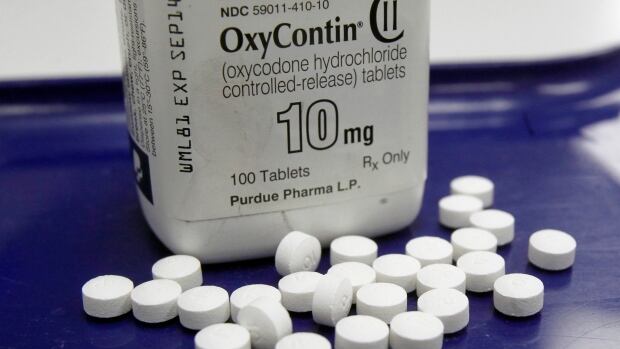
Codeine, oxycodone and methadone were the most common cause of the drug overdoses in young children, according to the new study.
Codeine, oxycodone and methadone were the most common cause of the drug overdoses in young children, according to the new study. (Toby Talbot/Associated Press)

Labels: , , , ,

 
()() Follow @rheytah Tweet