Ruminations

Blog dedicated primarily to randomly selected news items; comments reflecting personal perceptions

Monday, February 23, 2026

Reducing the Nature of Nuclear Proliferation to the Status of State Profit

"[The documents raise] concerns that the Trump administration has not carefully considered the proliferation risks posed by the proposed nuclear cooperation agreement with Saudi Arabia or the precedent this agreement may set." 
"[The document contends that reaching a deal with the kingdom] will advance the national security interests of the United States, breaking with the failed policies of inaction and indecision that our competitors have capitalized on to disadvantage American industry and diminish the United States standing globally in this critical sector."
"Nuclear cooperation can be a positive mechanism for upholding nonproliferation norms and increasing transparency, but the devil is in the details."
"This suggests that once the bilateral safeguards agreement is in place, it will open the door for Saudi Arabia to acquire uranium enrichment technology or capabilities — possibly even from the United States."
"Even with restrictions and limits, it seems likely that Saudi Arabia will have a path to some type of uranium enrichment or access to knowledge about enrichment."
"It behooves Congress [to provide a check on the administration's power to strike an agreement with the kingdom and] consider not just the implications for Saudi Arabia, but also the precedent that this deal will set, and vigorously examine the terms of the proposed 123 Agreement." 
Kelsey Davenport, director for non-proliferation policy, Arms Control Association, Washington 
 
"[If Iran obtains the bomb], we will have to get one".
[A weapon would be necessary] for security reasons, and for balancing power in the Middle East, but we don't want to see that." 
Saudi Crown Prince Mohammed bin Salmon
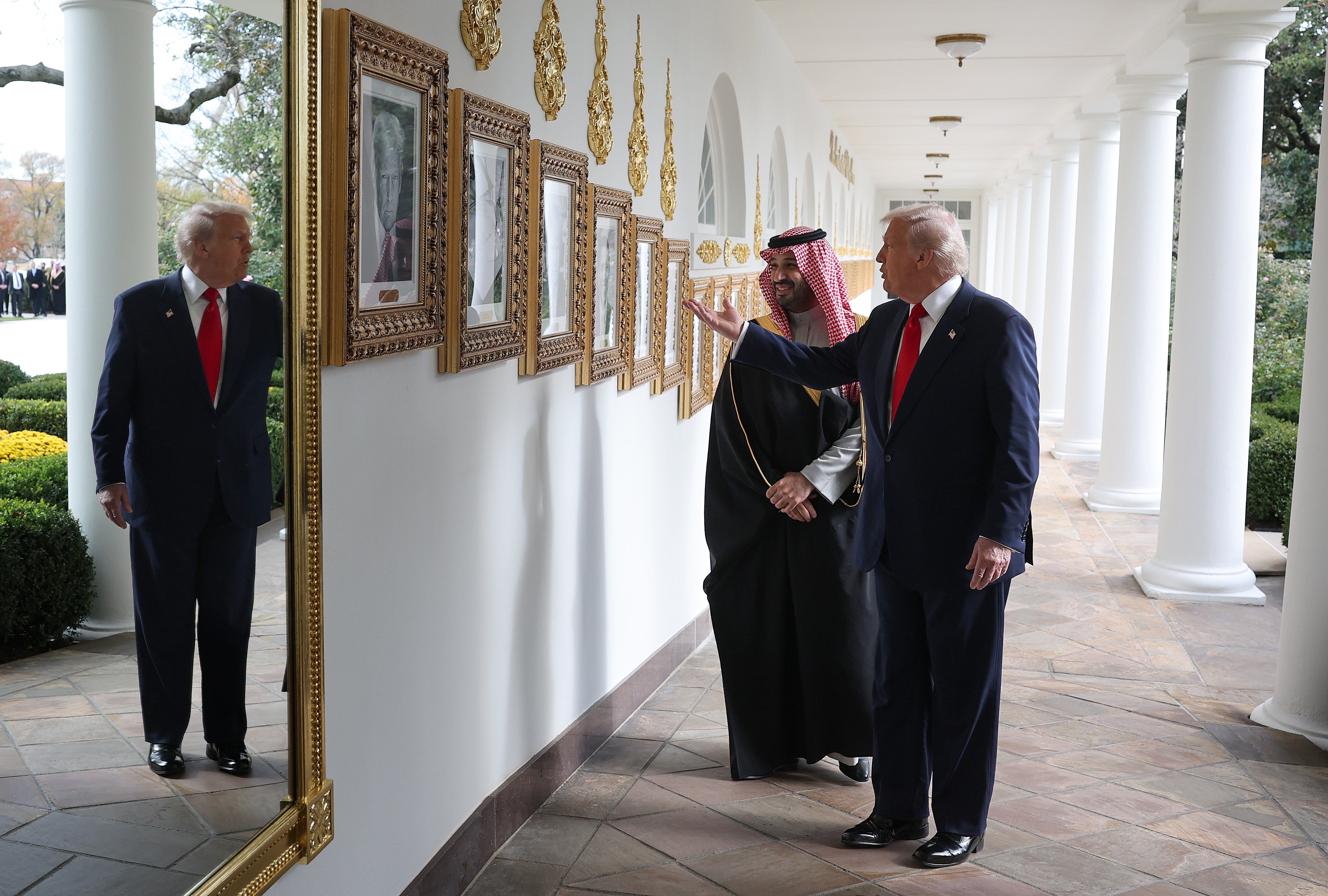
<p>President Donald Trump (R) shows Crown Prince and Prime Minister Mohammed bin Salman of Saudi Arabia the "Presidential Walk of Fame" as they walk on the colonnade at the White House on November 18, 2025 in Washington, DC</p>
President Donald Trump (R) shows Crown Prince and Prime Minister Mohammed bin Salman of Saudi Arabia the "Presidential Walk of Fame" as they walk on the colonnade at the White House on November 18, 2025 in Washington, DC   Getty Images
 
It could be done differently. There is the example of the United Arab Emirates neighbouring Saudi Arabia, which signed a '123 agreement' with the United States. With that agreement by the UAE and the U.S., with South Korean assistance the Barakah nuclear power plant will be built. The United Arab Emirates however, unlike Saudi Arabia, expressed no interest in achieving enrichment as part of its agreement. Instead it chose to opt for nuclear power generation for energy use, signing an agreement considered to be the 'gold standard' for nations seeking atomic power, according to nonproliferation experts. 
 

However, it seems the Trump administration has decided that Saudi Arabia could after all have some form of uranium enrichment under the proposed agreement with the U.S. as suggested by congressional documents. Raising proliferation concerns by arms control groups, in the midst of an atomic standoff between the Islamic Republic of Iran which has always denied its nuclear program would have a military component, now facing off against an American ultimatum to surrender all current and future prospects of nuclear research and production.

Any spinning centrifuges within Saudi Arabia, warn non-proliferation experts, could lead to a potential weapons program for the kingdom. A certain likelihood, given past assertions by Saudi Arabia's Crown Prince whose past statements were emphatic that should Tehran achieve the production of atomic bombs, he would pursue a similar program for Saudi Arabia. As it is, Saudi Arabia and Pakistan signed a mutual defence pact last year following Israel's attack on Qatar targeting Hamas officials.
Pakistan's own expertise in producing atomic bombs for its own arsenal could certainly ensure that under that mutual defence pact, a sharing of nuclear know-how could consolidate that pact. At the time of the signing, Pakistan's defence minister said as much when he declared that his country's nuclear program "will be made available" to Saudi Arabia should it be required. A declaration that some view as a threat meant to draw Israel's attention that it will not long remain the Middle East's sole nuclear-armed state.
 
The Trump administration, it seems, is aspiring for 20 nuclear business deals with world nations, one that includes Saudi Arabia, a deal that could be valued in billions for U.S. coffers. Perhaps the administration is that short-sighted it is incapable of looking beyond the wealth it could accrue to itself, to the situation as it appears to the non-proliferation crowd; lighting a match in the gas-saturated environment of the Middle East where conflicts are constant and a conflagration of immense significance could be enabled in an area where tribal and sectarian conflict and bloodshed are business as usual.
 
The United States views with its jaundiced eye competitors such as China, France, Russia and South Korea among those leading nations selling nuclear power plant technology. While the draft deal            would in theory have the U.S. and Saudi Arabia enter safeguard agreements with the International Atomic Energy Agency to include oversight of the "most proliferation-sensitive areas of potential nuclear co-operation", listing enrichment, fuel fabrication and reprocessing as potential areas of concern, there is the sobering example of years of fruitless negotiation with Tehran. 
 
https://assets.cfr.org/images/w_768/t_cfr_3_2/f_auto/v1758115503/IranNuclear_A/IranNuclear_A.jpg?_i=AA
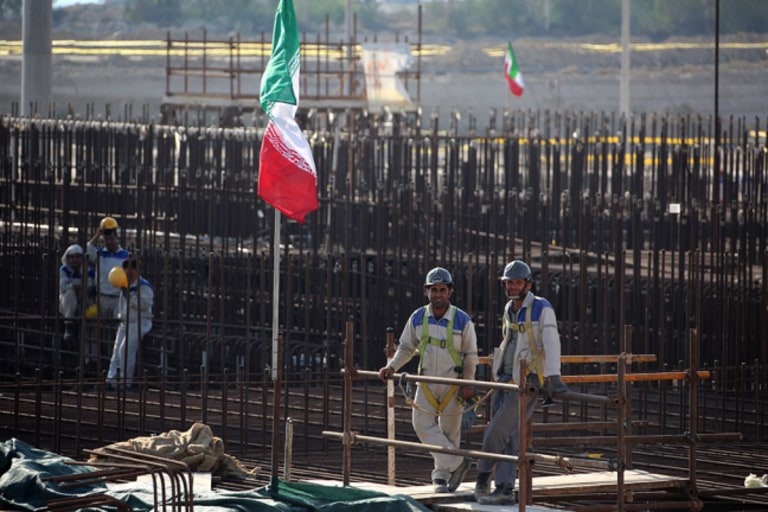
Workers on a construction site at Iran’s Bushehr nuclear power plant in November 2019. Atta Kenare/AFP/Getty Images
 

Labels: , , , , ,

Sunday, November 27, 2022

Capital Punishment in Saudi Arabia -- Decapitation

"Over the last two weeks executions have been taking place almost daily in Saudi Arabia after the authorities ended a 21-month unofficial moratorium on the use of the death penalty for drug-related offences."
"Those executed to date are four Syrians, three Pakistanis, three Jordanians, and seven Saudis."
"[These executions are] deeply regrettable."
Elizabeth Throssell, spokesperson, UN human rights

"While all eyes are on the football, Saudi Arabia is carrying out a horrifying execution spree, killing people like Hussein, an innocent man who was tortured by Saudi police to 'confess'."
Maya Foa, director, Reprieve human rights organization
Hands on rusty cage bars. © Getty Images.

“Saudi Arabia’s mass execution of 81 men this weekend [March 2022] was a brutal show of its autocratic rule, and a justice system that puts the fairness of their trials and sentencing into serious doubt.” 
“The shocking callousness of their treatment is compounded by the fact that many families found out about their loved ones’ deaths just like the rest of us, after the fact and through the media.”
Michael Page, deputy Middle East director, Human Rights Watch
Despite promising to stop using the death penalty for punishment of non-violent crimes Saudi Arabia now stands accused of carrying out executions almost daily in the past two weeks. Seventeen men were executed in Saudi Arabia since November 10 for drug and contraband offences, the latest three executions carried out on Monday, according to a UN human rights spokesperson.

Most executions of the total of 144 executions carried out in 2022 believed to be beheadings although circumstances surrounding such executions are "often surrounded in secrecy". Exact numbers of people incarcerated on death row in Saudi Arabia is unclear. Only execution numbers can be verified, according to the commissions' Elizabeth Throssell, at a Geneva press briefing.

She addressed the specific case of Hussein Abu al-Kheir, a 57-year-[old father of eight who "may be at risk of imminent execution", the UN believes. Amphetamine drugs were planted in al-Kheir's car while parked outside his home in Jordan, according to human rights groups. He was forced to confess to drug=related charges, under torture.
 
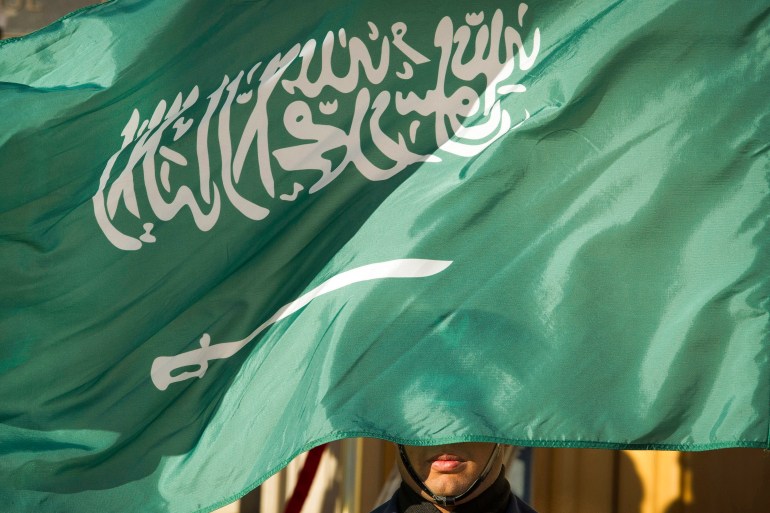
An honor guard member is covered by the flag of Saudi Arabia, in Washington
The number dwarfed the 67 executions reported in the kingdom in 2021 and the 27 in 2020 [File: Cliff Owen/AP Photo]
The capital Riyadh obscured by morning mist
 

Labels: , ,

Monday, September 05, 2022

The Twisted Social Conservativatism of Saudi Arabia

[Nourah bint Saeed al-Qahtani is accused of] disrupting the cohesion of society [and] destabilizing the social fabric."
"[Nourah bint Saeed al-Qahtani] offended the public order through the information network."
Saudi Criminal Court
 
"This seems like the beginning of a new wave of sentences and convictions by new judges who have been placed in the specialized criminal court." 
"Nothing in her court documents pertains to any violence or criminal activity." "The charges against her are really broad. They are using the counter-terrorism law and the anti-cybercrime law... that can criminalize any posting that is even remotely critical of the government."
"The Saudi government is sending a strong signal to the West that it does not care about human rights."
"But this is only half the story because even the crown prince would not allow such vindictive and excessive sentences if he felt that these actions would be met by meaningful censure by the United States and other Western governments. Clearly, they are not."
Abdullah Alaoudh, regional director, Democracy for the Arab World Now
 
"It's very hard to ignore the fact that we are seeing these sentences as [Crown Prince Mohammed bin Salman] has received increased legitimacy in the international realm."
Allison McManus, Freedom Initiative, Washington
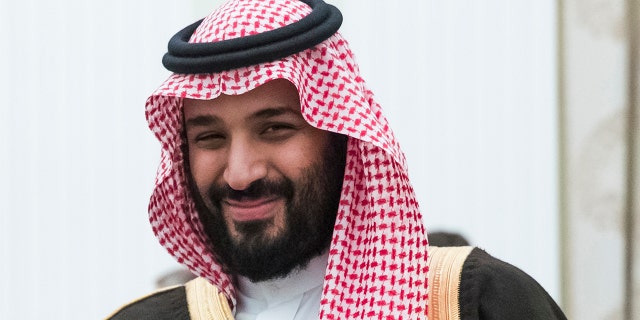
Saudi Crown Prince and Defense Minister Mohammed bin Salman
Saudi Crown Prince and Defense Minister Mohammed bin Salman (AP Photo/Pavel Golovkin, Pool, File)

Puzzlingly, at a time when the Saudi Crown Prince has pretty much taken the helm of government from his ailing father, and has led a slow but gradual relaxation of government rules for religiously acceptable behaviour for Saudi women there has been a renewal of harsh crack-downs hitting outspoken women of the very government that now allows women to drive a vehicle and decide on their own to  travel abroad unescorted by or having to secure permission from a male relative. 

The shocking news that  two women have been handed down effective lifetime-long incarceration as  a penalty for criticizing their government has gone far in setting back world opinion on the purported social modernization of the Saudi Kingdom. A Saudi doctoral student, 34-year-old Salma al-Shehab, who had returned to Saudi Arabia from her studies at the United Kingdom's Leeds University on a visit, was handed down a 34-year prison sentence in January 2021.

She had been found guilty of "providing succour to those seeking to disrupt public order", and "publishing false and tendentious rumours."  Before leaving Britain for her Saudi Arabia holiday, mother of two, Salma al-Shehab had injudiciously called for reforms and the release of prominent activists and intellectuals imprisoned under a crackdown on dissent overseen by Crown Prince Mohammed bin Salman. 
 
Now, her 34-year prison sentence has been outdistanced by the 45-year prison term meted out to Nourah bint Saeed al-Qahtani, who has no apparent history of activism, a woman from one of the largest Saudi tribes. A special criminal court sentenced al-Qahtani under the Kingdom's broad counterterrorism and cyber-crime laws. 
 
There is actually nothing unusual in an Arab country classifying government critics as 'terrorists'. Infamously this is precisely what Syrian President Bashar al-Assad did when he launched his endless civil war against Syrian Sunnis. 

It has not been revealed what al-Qahtani had posted, much less where her hearing had been held after being taken into custody on July 4, 2021. She had launched an appeal against her earlier conviction. The court normally handling political and national security cases delivered her sentence as though in severe punishment of her appeal of the original sentence.

Under the civilizing veneer of social progress into the 21st century, led by a new, 'progressive' leader, the Wahhabist tinged Kingdom is in no great hurry to effect too many freedoms for its citizenry, but in any event the ruling elites have no patience for Saudis, particularly women, nurturing a false belief that they have the right to be critical of their government; something like the divine right of kings. 

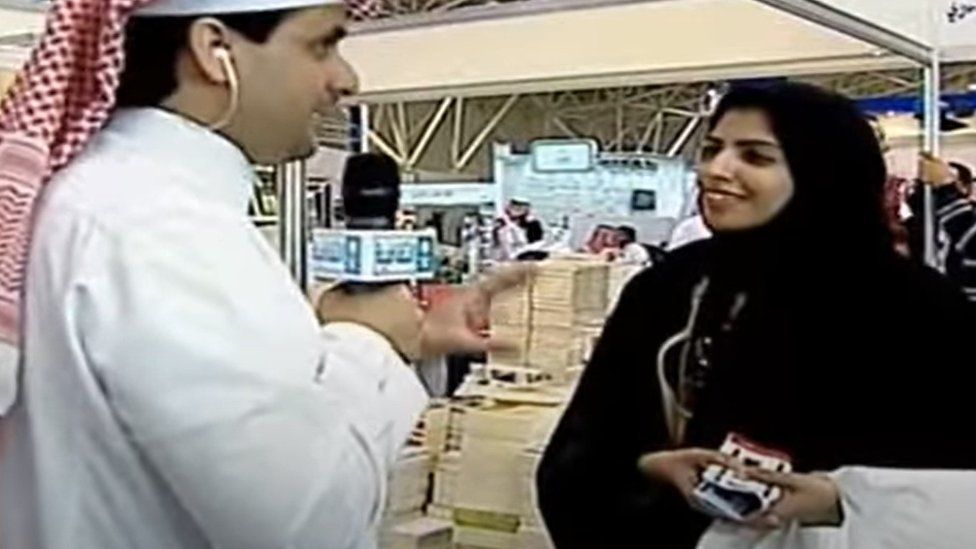
Salma al-Shehab was interviewed by Al Thaqafia TV at the Riyadh International Book Fair in 2014
Salma al-Shehab was interviewed by Al Thaqafia TV at the 2014 Riyadh International Book Fair

Labels: , ,

Friday, September 18, 2020

Migratory Early Man in Arabia

"The presence of large animals such as elephants and hippos, together with open grasslands and large water resources may have made northern Arabia a particularly attractive place to humans moving between Africa and Eurasia."
Michael Petraglia, Professor of Human Evolution and Prehistory, Max Planck Institute for the Science of Human History, Jena, Germany
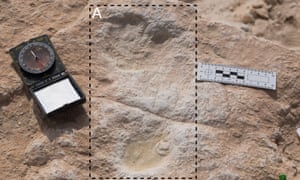
Human footprint in stone
Human footprint discovered at Alathar. Photograph: Stewart et al, 2020
"Environmental changes during the last interglacial would have allowed humans and animals to disperse across otherwise desert regions, which normally act as major barriers during the less humid periods, such as today."
"These findings suggest human movements beyond Africa during the last interglacial extended into Northern Arabia, highlighting the importance of this region for the study of human prehistory."
Ian Candy, Pleistocene archaeologist, Department of Geography, Royal Holloway, University of London, UK
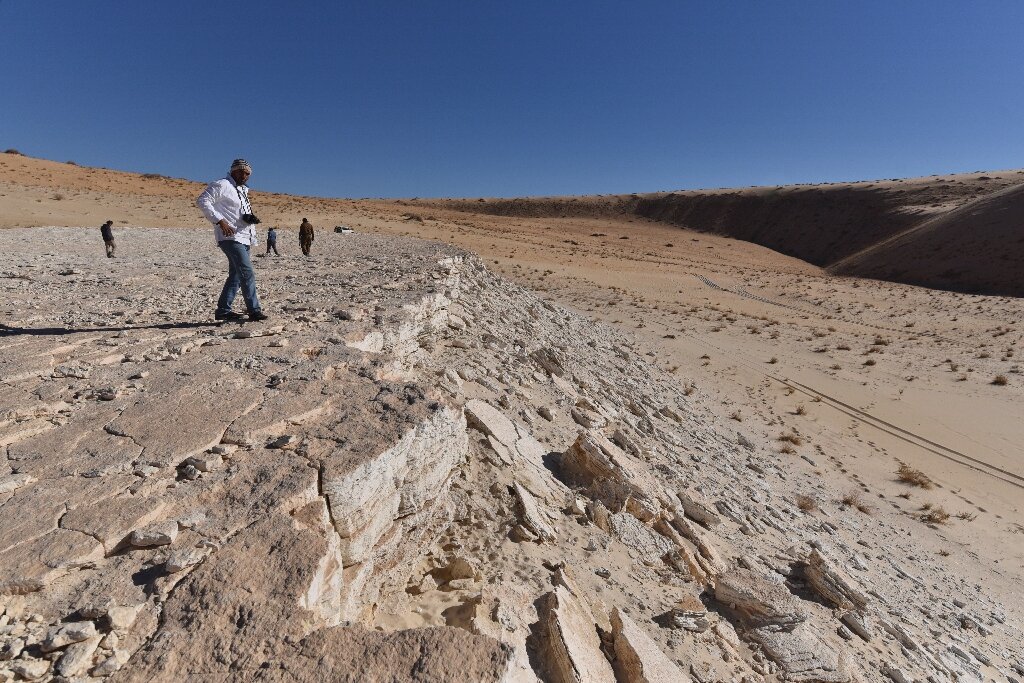
A team of researchers from Saudi Arabia, Germany, Australia and the UK. discovered seven archaeological layers at an excavation site in the modern-day Nefud Desert, a discovery written up in the Saudi Gazette and published in Science Nature. What the archaeologists discovered was that over time significant changes occurred to the environment which ranged from extremely arid to the opposite conditions. The exciting discovery of human footprints along with those of elephants, camels and other animals dating back 120,000 years represent an astonishing find on the part of the international team of paleoarchaeologists.
 
Discovering the ancient footprints and evidence indicating that at one time in ancient history a lush environment prevailed, has alerted scientists to a new reality, one demanding that hypotheses detailing human migration from Africa into Europe is about to undergo a major revision. The humans whose presence so long ago produced the footprints roamed the land, according to the newly informed data taking advantage of the presence of a lake whose near proximity sustained life in the very geographic region currently inhospitable to life.
 
Human footprints dating back 120,000 years found in Saudi Arabia
daily sabah.com

The sediment that had been gathered over time on top of the footprints had eroded, leaving the footprints exposed leading to the discovery of their existence in 2017. From the evidence; the height, gait and mass of the individuals who had been responsible for the footprints, scientists were led to the conclusion that it was Homo sapiens that had left those marks for posterity, and not any other species similar to 'man the wise' such as Neanderthals. Four of the prints resulted from a group of two or three early humans travelling together.
 
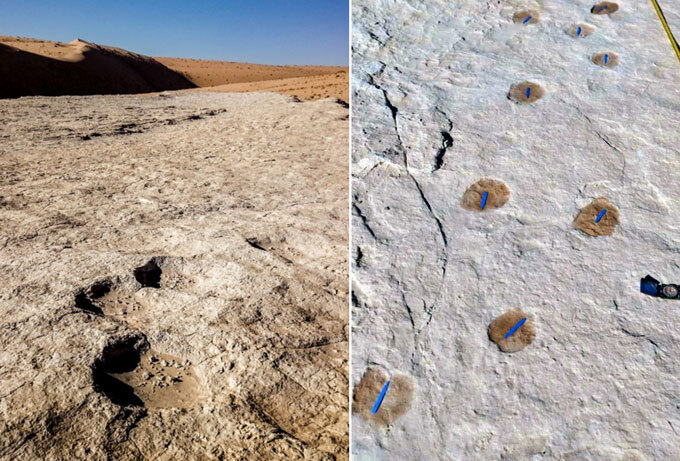
Elephant and camel footprints in Saudi Arabia
Preserved footprints, elephants and camels. M.Stewart/Science Advances 2020
At the site of the ancient lake, no tools were discovered, leading the researchers to speculate that human habitation was not directly beside the lake, that those living nearby travelled to the lake to collect water. A total of 233 fossils and 369 animal tracks were revealed to the archaeologists who make of the numbers the conclusion that the site represented a a popularly-frequented watering hole. 
 
Before this seminal discovery, scientists had believed humans had migrated out of Africa into the Levant using coastal routes. The recent findings, however, have led conclusions in another direction, with theories that early humans followed lakes and rivers in a period known as the "last interglacial". 
 
Pic: AFP /Paul Breeze
The footprints could help understand how humans spread out of Africa. Pic: AFP/Paul Breeze


Labels: , , , ,

Monday, November 16, 2015

Glacial Change

"Psychologically speaking it's good, but in terms of changing the reality on the ground it won't change anything."
"It is just to appease the international community and to silence their critics These councils don't have any power." 
"It's not an issue [women driving in Saudi Arabia] for the upper class because most of them have drivers. But it is an issue for working-class women who want to pick their children up at school."
Ali al-Ayami, director, Centre for Democracy & Human Rights in Saudi Arabia

"The position of women has changed radically in the past fifteen or twenty years. Hundreds of thousands of women have now travelled abroad and that's something you can't undo."
Richard Spencer, Middle East editor, The Telegraph, Britain

"This is hugely significant. We have over one thousand women convinced they can make a difference and who convinced their families to be part of this experience."
We really hope and we pray for this [recognition of human rights entitlements for women in Saudi Arabia]. But we know that change is very slow."
Hatoun al-Fasi, professor of history, King Saud University
The December polls will be the first since the 2011 decision by late Saudi King Abdullah bin Abdulaziz al-Saud to grant women the right to vote and run for office [AP]
As The Telegraph's Richard Spencer points out, Saudi women have been travelling abroad. Outside Saudi Arabia they are able to see the freedom that women take for granted living in democratic countries of the West. They, on the other hand, must depend on permission from a father, a husband or a brother to enable them to take that opportunity to travel. An obviously demeaning cultural determinant of women's place in a strictly observant Muslim community.

Professor Fasi, a women's rights activist, noted that of that thousand women who have chosen to register to run for public office municipally [the only government level that the new law coming into effect for this election permits them to] about thirty have dropped out resulting from pressure from their families. This exciting event for Saudi Arabian women, catching up to the gains made by women living elsewhere almost a century earlier, was a social gift from the late King Abdullah.

He ruled that women could run for public office [municipally]. And he set the date of 2015 when they would be able, for the first time, to exercise their franchise in experimental equality under Saudi law, based on Sharia. The large number of women who registered caught authorities by surprise. They had no idea that such numbers would surface, representing women eager to have a say in how their municipalities operate.

It does rather make sense that 50% of the population should have something to say about policies that so directly affect them, after all.

Remember, this is a culture that impresses upon women, in a rigidly patriarchal society, that they are subservient to the men in their lives. And how women in Saudi Arabia must behave in public is very circumscribed; they are not to be seen nor to be heard, and an all-encompassing black burqa shields them from public view, lest an inch of skin be seen and awake the lustful beast in men. They must be accompanied by a male relative in public. And must have permission to conduct official business.

Women in Saudi Arabia are not permitted to drive. They are completely dependent on their male guardians for permission to enable them to embark on a myriad of actions and activities taken for granted as normal daily routines elsewhere in the world. Spontaneity is stifled, women must know their modest place in society, else the world will not turn as it should. The law is not on their side when it comes to equal status under the law.

But certain things have changed. Despite the strict Salafist view of Sharia law, unlike what pertains under the Taliban, for example, women are given entry to higher education opportunities, the result of which is that women now account for up to 60 percent of university students. Saudi Arabia in the past decade has sponsored 750,000 students to study abroad, and roughly a third of them are Saudi women.

It is only in the last few years that women could work as clerks in stores. Little thought appears to have been given to Saudi women who shopped for lingerie, being served by male store clerks who were often foreign migrant workers.

Photo: Getty Images
Photo: Getty Images

Labels: , ,

Tuesday, February 25, 2014

Eminent Saudi Cleric: Female Genital Mutilation a 'Noble Act'

Tue, February 4, 2014
From the video below.


Sheikh Mohamad Alarefe is a popular Saudi Arabian Islamic theologian and a professor at the King Saud University. A recent “tweet” to his almost 8 million followers on his Twitter account stated: “Circumcision [FGM] is a noble act to do to women. There’s nothing wrong with doing it. Some religious scholars have issued fatwas that it’s not allowed because many that perform the circumcision cut too much and they cause damage to the woman.” 
 
An initial response fired back. One woman said succinctly: “God will take you, scums ... It is a duty to cut off your organs so we can get rid of your stupidity.”

Yet, a careful search by the Clarion Project showed almost no other replies from his many millions of followers. Whereas Arefe’s last 10 tweets garnered between 616 and 2009 “retweets,” this particular tweet praising FGM was only retweeted 11 times.

An even more careful search by the Clarion team showed that Alarefe had, in fact, deleted the tweet.

Alarefe’s tweet precedes the 10th anniversary of International Day of Zero Tolerance to Female Genital Mutilation to be marked this week on Thursday, February 6. According to data provided by the World Health Organization (WHO), an estimated 120 to 140 million women have been subject to this horrific and harmful practice. FGM is internationally recognized as a violation of human rights.

FGM is a brutal procedure involves the cutting out of all or part of the external female genitalia, oftentimes used as a rite of passage or a precursor to marriage. The practice is normally carried out on young girls just before or after the onset of puberty, but is also performed on newborn babies and older girls. Most cutting is done by a village lay person with improvised equipment and unsterile conditions.

The procedure serves no medical purpose and is known to cause complications such as severe bleeding, problems urinating, cysts, infections (including HIV/AIDS), pain and difficulty during sexual relations, infertility as well as complications in childbirth and increased risk of newborn deaths.  

The UN passed a resolution calling for the elimination of FGM in December 2012 and the practice is outlawed in many countries. Still, the practice continues – save for pockets of change around the world (see Clarion Project’s featured videos Handful of Ash: The Film That Changed FGM in Kurdistan and Kenyan Girls Fight Back: "I Will Never Be Cut').

The UN estimates that every year, three million girls are at risk of being cut. Translated into real time, that means that every five minutes – perhaps the amount of time taken to read this article – 30 girls have been mutilated somewhere in the world.
Read, print or download Clarion Project’s Fact Sheet on FGM

Labels: , , ,

Tuesday, January 07, 2014


Saudi survey shows men blame women for rising cases of molestation

Survey conducted by Riyadh-based King Abdul Aziz Centre for National Dialogue


Saudi men believe women are to blame for the rising cases involving molestation of females on the grounds they are seduced by women’s excessive make up.

The findings were included in a survey conducted by the Riyadh-based King Abdul Aziz Centre for National Dialogue and involved 992 males and females.

The survey, carried by Saudi newspapers, found that 86.5 per cent of the men polled believe that women’s exaggeration in wearing make-up is the main cause of the rise in molestation cases in public places in the conservative Gulf Kingdom.

About 80 per cent of the total persons polled believe lack of deterrent penalties and the absence of specific anti-molestation laws are also to blame for the phenomenon.

The report said 91 per cent of the respondents, all aged above 19, believe another key factor is the “poor religious sentiment” while nearly 75 per cent said the problem is caused by lack of awareness campaigns and warning notices at most public places.

Labels: , , ,

Thursday, October 24, 2013

Saudi Arabia sexual harassment video sparks social media outrage

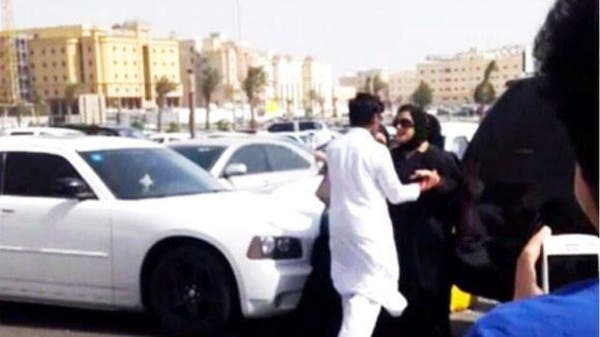
A screen grab of the video showing a man in a scuffle with a woman in Saudi Arabia. (Photo Courtesy: Arab News)
Al Arabiya
 
A video purporting to show a group of men sexually harassing women in an eastern province of Saudi Arabia sparked outrage on Wednesday on social media.

It led many social media users to call for harsher laws punishing sexual harassment in the kingdom.

The video shows a group of men chasing women in what seems to be a car park, with an apparent scuffle going on between the two groups.

A police spokesman for the province in question told Al Arabiya that they have seen the video and will analyze it to identify the harassers, describing the incident as “inappropriate behavior.”

A Twitter hashtag for the incident has opened the debate on the issue of sexual harassment in Saudi Arabia.

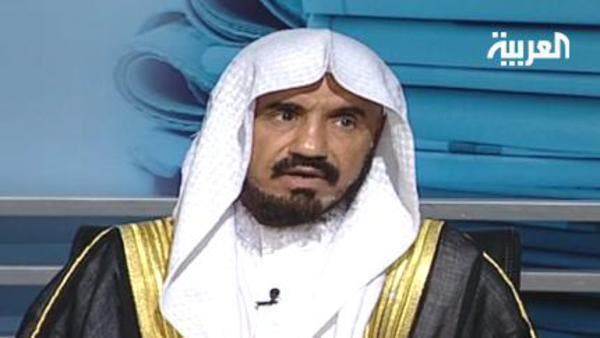
However, former judge and member of the Shura Council Mohammad al-Dahim told Al Arabiya that sexual harassment is not a phenomenon that occurs in Saudi Arabia, even if it appears so on social media.

Labels: , ,

Saturday, September 28, 2013

Driving affects ovaries and pelvis, Saudi sheikh warns women

Saudi Sheikh Salah al-Luhaydan said driving “could have a reverse physiological impact" on women. (Al Arabiya)
Al Arabiya
Saudi women seeking to challenge a de facto ban on driving should realize that this could affect their ovaries and pelvises, Sheikh al-Luhaydan, a judicial and psychological consultant to the Gulf Psychological Association, told Saudi news website sabq.org.

Driving “could have a reverse physiological impact. Physiological science and functional medicine studied this side [and found] that it automatically affects ovaries and rolls up the pelvis. This is why we find for women who continuously drive cars their children are born with clinical disorders of varying degrees,” Sheikh al-Luhaydan said.

Saudi female activists have launched an online campaign urging women to drive on Oct. 26.
More than 11,000 women have signed the oct26driving.com declaration that says: “Since there are no clear justifications for the state to ban adult, capable women from driving. We call for enabling women to have driving tests and for issuing licenses for those who pass.”

Sheikh al-Luhaydan urged these women to consider “the mind before the heart and emotion and look at this issue with a realistic eye.”

“The result of this is bad and they should wait and consider the negativities,” he said.

Twitter reaction

Al-Luhaydan's statement drew immediate reaction on social media, with many Saudis ridiculing his “great scientific discoveries.” A Twitter hashtag “Women_driving_affects_ovaries_and_pelvises” was created and is going viral among Arab users.
Female twitter user @Shams_AlShmous sarcastically applauded the sheikh’s “exclusive scientific achievement.”
A female user with the name of Ms Jackson @B_B1ack tells everyone: “What’s your understanding of physiology, leave it to our Sheikh al-Luhaydan.
Another female @Mshaal80 asked whether al-Haydan “studied Shariah, medicine or foolishness.”

Not part of Sharia

The head of kingdom’s religious police said last week that the “Islamic sharia does not have a text forbidding women driving.”
Sheikh Abdulatif al-Sheikh stressed that since he was appointed as head of the Committee for the Promotion of Virtue and the Prevention of Vice religious police have not pursued or stopped a woman driving.

Labels: , , ,

Sunday, February 03, 2013

Saudi Justice

Saudi Arabia has given women the right to stand for public office on municipal councils. This is an astonishing breakthrough. Women have much to be grateful for, in the fact that their current ruler, King Abdullah is a reformer. Women may now be employed in lingerie shops to spare female shoppers the embarrassment of being served by male employees.


 Women may not yet be granted driver's licenses, and it is unlawful for women to drive on public roads, but a few have done so. They may have enjoyed the exhilarating experience of driving, not so much the experience of being flogged for doing so. As delicate creatures to be protected they may not vote, they may not travel without the permission of a male relative, and they may not be treated in a hospital that also treats males.

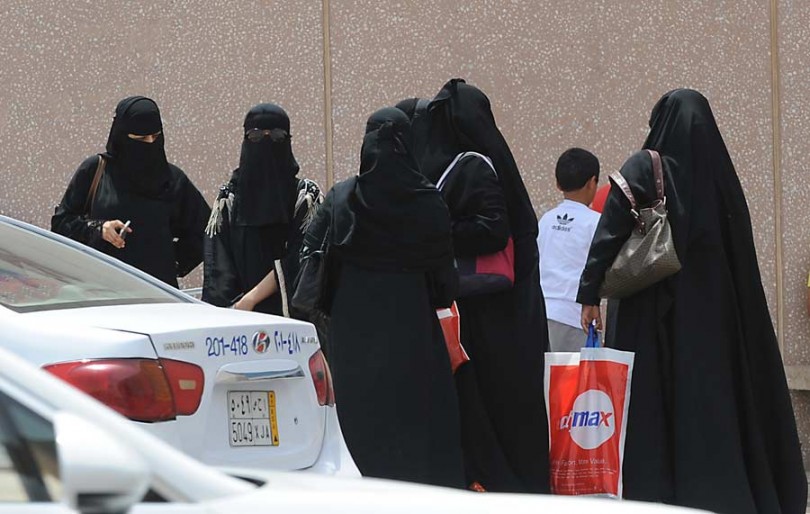
When popular shopping malls arrange hours when women may shop, men are excluded. Once within the confines of the mall women may, if they desire, remove themselves from the stifling confines of their full-body modesty-affirming burkas. And, in the process, breathe a little freedom. The burkas, needless to say, must be once again put in place when the women prepare to leave the confines of the mall, where they may seat themselves patiently awaiting their chauffeur-driven vehicles.

Women in Saudi Arabia: Too little, too late
Saudi women wait for their drivers outside a shopping mall in Riyadh. (Getty Images)

Arab women are exceedingly beautiful, and like females everywhere they are accorded to be bewitching creatures whose presence, uncovered, is capable of sending men's carefully groomed public personae into a very evil place. It is for their own good, and for the good of society in general that women in Saudi Arabia must respect the need to attire themselves in such formalized costumes designed to preserve their purity from the gaze of men.

Men, after all, cannot be expected to restrain themselves. Women have that utterly dreadful effect on men. Let a stray bit of skin be glimpsed, a lock of hair, and the devil possesses otherwise respectable men. Not, needless to say, the fault of the men incapable of resisting temptation. Therefore, to ensure that women are not molested, do not suffer the indignity and humiliation of unwanted attention, they must adhere to religious and cultural injunctions to cover themselves in respect of the social covenant.

Of course, it is rarely strangers that assault Saudi women, but rather relatives, and often very close relatives. Should a Saudi woman be assaulted, be violated by a father, a brother, an uncle, a father-in-law, it is always a result of her having invited rape, wickedly casting a Jezebel-spell over the poor male who hardly is aware of what is occurring, hapless and helpless victim to her wretched plans to despoil his honour.

When a 19-year-old Saudi woman was abducted and raped by seven men she was sentenced to 90 lashes, held culpable because she had been in a car with a man she was not related to, before the abduction took place. When, appallingly, she appealed and took steps to publicize her story to the media, her punishment was adjusted to 200 lashes and six months' imprisonment. Her lawyer's right to practise was suspended.

But thanks to the kindly intervention of a Saudi cleric help is on the way. Although, sadly this potential solution is being criticized as giving Shariah and Islam a bad name. Sheikh Abdullah Daoud in an interview on the Islamic al-Majd TV emphasized that the wearing of the veil would protect baby girls from sexual violation. He cited claims of sexual molestation against babies in Saudi Arabia, mentioning medical and security sources.

For his troubles and his sincere concerns, Sheikh Dauod has been widely condemned; some critics feel he should be held accountable for a ruling that denigrates Islam, and breaches individual privacy. That's right; 'breaches individual privacy'. Moreover, Sheikh Mohammad al-Jzlana, a former judge at the Saudi Board of Grievances, asserted to Al Arabiya that the ruling of Sheik Dauod denigrated Islam and made it look bad.

Of course, Fayhan al-Ghamdi, the Islamic cleric who raped, tortured and killed Lama al-Ghamdi, his 5-year-old daughter, has not in the least had such an effect on the reputation of Sharia law and Islam, not the least little bit. That is more than proven by the fact that he has been given a small fine, as "blood money", and no jail sentence, leaving him free to resume his clerical duties, advancing the divine faith of Islam. That will be of enormous comfort to the child's mother.

When the child was admitted to hospital on Christmas Day, 2011, she had a crushed skull, broken ribs and left arm, extensive bruising and burns. She died October 22, 2012. Saudi women's rights groups claim the child's father had doubted her virginity. A social worker from the hospital said the child had been raped "everywhere"; her back was broken. And the child's mother said hospital staff informed her that her child's "rectum had been torn open and the abuser had attempted to burn it closed."

The ruling of payment of blood money and no further punishment for the atrocity and death of a girl child by a Muslim cleric is based on Saudi laws stipulating that a father cannot be executed for murdering his children. Husbands, as well, cannot be executed for murdering their wives. Women, after all, are such vexing creatures.

Labels: , , , , ,

Saudi cleric who raped and killed daughter receives small fine

An Islamic cleric in Saudi Arabia has paid just £31,500 in 'blood money' after reportedly raping, torturing, and killing his 5-year-old daughter

by The Commentator on 3 February 2013 21:34
Fayhan-al-ghamdi.n
Saudi Arabian media sources have reported that an Islamic cleric who raped, tortured and killed his 5-year-old daughter, has been let off with a small fine, avoiding a jail sentence.

Lama al-Ghamdi was the daughter of Fayhan al-Ghamdi, an Islamic preacher who makes regular appearances on television. Under Saudi law, al-Ghamdi has had to pay only £31,500 in 'blood money', even after confessing to the heinous crime.

Gulf News reports that 5-year-old Lama was admitted to hospital on December 25, 2011 with multiple injuries, including a crushed skull, broken ribs and left arm, extensive bruising and burns. She died last October 22.

Activists from women's rights groups said that the father had doubted Lama’s virginity and had her checked up by a medic. A social worker from the hospital where Lama was admitted said the girl’s back was broken and that she had been raped “everywhere”.

According to the victim’s mother, hospital staff told her that her “child’s rectum had been torn open and the abuser had attempted to burn it closed.”

Ghamdi has apparently paid 200,000 riyals ($50,000; £31,500) in "blood money" - a sum that can be paid to relatives of a murder victim and which, if accepted, can replace a death sentence.

Human rights activists have indicated that judicial leniency towards male abusers reflects the highly problematic nature of the male guardianship system in Saudi Arabia.

Currently, women in Saudi Arabia are considered minors, and all are automatically assigned to the care and judgment of their most immediate male relative.

So far, three Saudi activists have raised objections to the ruling which is based on Saudi laws that state that a father cannot be executed for murdering his children, nor can husbands be executed for murdering their wives.

Labels: , ,

Alarabiya.net English“Burkas for babies”: Saudi cleric’s new fatwa causes controversy

To protect baby girls from being sexually exploited, the Saudi cleric, Sheikh Abdullah Daoud, has called parents to make their female children wear the Islamic headscarf. (YouTube picture)
A Saudi cleric has called for all female babies to be fully covered by wearing the face veil, commonly known as the burka, citing reports of little girls being sexually molested.

In a TV interview on the Islamic al-Majd TV, which seems to date back to mid-last year, Sheikh Abdullah Daoud, stressed that wearing the veil will protect baby girls. The Sheikh tried to back his assertion with claims of sexual molestation against babies in the kingdom, quoting unnamed medical and security sources.

Recently picked up on social media, Sheikh Dauod’s statement prompted wide condemnation from his fellow Saudis on Twitter. Some tweeps called for the Sheikh to be held accountable because his ruling denigrates Islam and breaches individual privacy.

Sheikh Mohammad al-Jzlana, former judge at the Saudi Board of Grievances, told Al Arabiya that Dauod’s ruling was denigrating to Islam and Shariah and made Islam look bad.

Jzlana urged people to ignore unregulated fatwas and explained that there are special regulations set by the Saudi authorities to administer religious edicts and appoint those who are entitled to issue them.

He said that he feels sad whenever he sees a family walking around with a veiled baby, describing that as injustice to children.

Labels: , , , ,

Saturday, January 12, 2013

The new appointees were chosen based on their academic and administrative achievements. (Al Arabiya)

King Abdullah of Saudi Arabia appointed on Friday 30 women to the Shura Council in a historical move, allowing women for the first time to be part of the kingdom’s formal advisory body.

The new appointees were chosen based on their academic and administrative achievements.
Thuraya Obaid, an executive director of the U.N. Development Program for 10 years and regarded as the first Arab woman to hold a U.N. post, was one of the newly-appointed councilwomen.

Another was Saudi writer and poet Thuraya Al Arrayed, who is well known for her journalistic skills. She is an active advisor to various NGOs in Saudi Arabia and the Arab region.

Also, Khawlah Al Krie is one of the kingdom’s leading scientist researchers on cancer in the King Faisal specialist hospital. She was granted the King Faisal medal and was previously chosen to be Al Arabiya’s person of the year.

Dr. Salwa Al-Hazza ia professor of medicine at the University of Al Faisal. She is president and consultant of eye surgery and diseases as well as the senior scientist and consultant of genetics at King Faisal Specialist Hospital and Research Center.

Al-Hazza is considered to be the first women to take part in King Faisal’s Hospital council of consultants.

After the historical decree, Saudi women are now relying on their fellow female council members to fight on behalf of the kingdom’s women and to obtain their complete citizenship rights.

Labels: , , , ,

Monday, January 07, 2013

Alarabiya.net EnglishMarriage or rape? 90-year-old Saudi weds 15-year-old girl

Close friends of the bride’s family said she was frightened on the wedding night, and locked herself in the room for two successive days. (Photo courtesy of www.youm7.com )
 
The recent marriage of a 90-year-old Saudi man to a 15-year-old girl has sparked condemnation from human rights and social media activists in the kingdom.
A member of the Saudi National Society for Human Rights (NSHR), urged authorities to intervene to save the child.
On Twitter especially, activists criticized the parents of the girl for giving her to a man decades older than her.

In an interview, the groom insisted that his marriage was “legal and correct,” and that he paid a $17,500 (SAR 65,000) dowry to marry the girl, who is the daughter of a Yemeni father and Saudi mother.

The 90-year-old told the story of his first night with the bride. He said she entered the bedroom before him, and she locked the door from inside so he could not enter. This, he said, made him “suspicious about some kind of conspiracy” by the girl and her mother.

He vowed to sue his in-laws to give him back the girl or return him the expensive dowry.

Close friends of the bride’s family said she was frightened on the wedding night, and locked herself in the room for two successive days before fleeing back to her parents’ home.

The member of the Saudi National Association for Human Rights (NSHR), Suhaila Zein al-Abedin, urged authorities to intervene “as soon as possible to save this child from tragedy.”

Abedin noted that marriage in Islam must be based on mutual consent, and this was not satisfied, as demonstrated by the girl’s move to lock herself in the room.

She said the girl’s parents were also to be held responsible for marrying their daughter to a man the age of her great grandfather.

Abedin urged the establishment of a minimum age of 18 for marrying girls, saying this would pave the way for punishing violators, according to a report by al-Hayat newspaper.

Jamal al-Toueiki, a psychologist, said forced marriage may subject girls to abuse and violence, and this could lead to their suicide if nothing is done to save them.

On Twitter, Mouhammad Khaled Alnuzha ‏@mkalnuzha, a legal expert, asked: “Is this a case of human trafficking crimes punishable by law?”

‏@sx84, who identifies himself as another legal expert, stated: "She is still considered as a product! A father sells his daughter without mercy, to be bought by money and status and power; all of it for the sake of fulfilling a desire.”

Nawal Saad @lhnalkhlwd wrote on his account: “When people of reason and wisdom are asked to be silent and the ludicrous are set loose, we will see these anti-human behaviors.”

Samira al-Ghamdi @SamiraAlGhamdi, a psychologist at a child protection center, wrote: “We need a law to penalize these acts … enough child abuse.”

She added that the story of the child bride should be titled “A 90 years old ‘buys’ a girl … or : A father ‘sells’ his daughter…”

Labels: , , , , ,

Wednesday, December 26, 2012

Alarabiya.net English

Saudi labor minister faces ‘deadly prayers’ from angry clerics

About 200 religious figures meeting at the labor ministry on Tuesday asked Minister Adel Fakeih to ban women from working in lingerie shops. (Photo courtesy of aleqt.com)
 
A group of religious figures in Saudi Arabia have threatened to strike the labor minister who seeks to create jobs for women with “deadly prayers.” They threatened to pray that he gets cancer like his predecessor Ghazi al-Gosaibi, who died of the disease in 2010.

During a meeting at the labor ministry on Tuesday, about 200 religious figures accused Minister Adel Fakeih of executing a “Westernization” plan and asked him to ban women from working in lingerie shops within a month or he will face their dangerous prayers.

The ministry began in 2011 enforcing a decision to replace salesmen with Saudi women at lingerie shops in a bid to create jobs for women and meet the demands of female customers embarrassed to buy lingerie from salesman.

During the meeting, various religious figures successively attacked the minister and gave him little time to explain his decision and its benefit for the Saudi economy and for Saudi women.

One religious man told the minister, “I supplicated against a senior official at the ministry and he received the (cancer) disease and he died; this was because he began implementing the feminization decision,” according to al-Eqtisadiah newspaper. The man reportedly referred to previous Labor Minister Gosaibi.

Another religious figure told the minister that the government’s job is to employ women and not to decide where they should be employed.

Addressing the minister, another man said, “I am warning you, do not ignite sedition; we only came here to provide advice; your ministry has thrown our daughters in places that don’t suit their values.”

After a wave of attacks the minister finally snatched an opportunity to respond to the bearded men in front of him. He defended the decision to employ women, saying that women occupied jobs during the era of the Prophet Muhammad, adding that it made more sense if women rather than men are in charge of selling women’s lingerie.

The minister further told the congregation that they should take their case to court if they saw that his ministry is violating the law.

Labels: , ,

Sunday, November 11, 2012

Alarabiya.net EnglishProminent Saudi preacher tortures five-year-old daughter to death

Lamaa breathed her last in an intensive care unit of a hospital in the Saudi capital Riyadh a few days ago after weeks of suffering from broken arms, skull fracture and head bruises, her mother told Al Arabiya. (Al Arabiya)
A five-year old Saudi girl has died after she was tortured by her father, described as a “prominent” religious scholar who often preaches on numerous satellite television channels.

Lamaa breathed her last in an intensive care unit of a hospital in the Saudi capital Riyadh a few days ago after weeks of suffering from broken arms, skull fracture and head bruises, her mother told Al Arabiya.
“He used all sorts of torture and abuse against Lamaa,” said the girl’s mother, now divorced from her brutal husband.

The mother explained that after she was divorced she had an “agreement” with her former husband regarding the daughter they shared.

Recently, he took his daughter for two weeks as per “the agreement” but he never returned her back, the mother said, adding that she was “surprised” to receive a call from the public prosecutor in Hotat Bani Tamim, located 160 km south of Riyadh, asking her to go to Shamisi Hospital.

The medical report indicated that Lamaa was tortured with whips and electric shocks. She was even burned with an Iron, the mother said.

The hospital matron said the man admitted to beating his daughter, but did not explain why.

“I was shocked and i could not believe what happened to Lamaa when i saw her and i could not believe that is no mercy in people's hearts,” Lama's mother said.

When she asked her former husband at the hospital why he tortured Lama, he replied with a “chuckle only.”

The mother and the hospital refused to provide the name of the man and only described him as a “well known” television preacher.

Labels: , , , , ,

Friday, November 02, 2012

Vatican joins King Abdullah intl center for cultural, religious dialogue

 Alarabiya.net English

The King Abdullah bin Abdulaziz International Centre for Interreligious and Intercultural Dialogue moves to promote mutual understanding among followers of different religions and cultures. (Al Arabiya)
The Vatican joined an international organization for cultural dialogue, founded by Saudi Arabia’s King Abdullah, as a founding observer on Thursday.

The King Abdullah bin Abdulaziz International Centre for Interreligious and Intercultural Dialogue (KAICIID), founded in 2011 and headquartered in Vienna, moves to promote mutual understanding among followers of different religions and cultures.

An official from the Vatican, representing the Holy See and the Catholic Church, joined the group as they convened on Thursday. The forum was attended by Saudi vice minister of foreign affairs, Prince Abdulaziz Bin Abdullah Bin Abdulaziz, as well as delegates from Spain and Austria, also founding members of the group.

The U.N.-recognized non-government organization focuses on interreligious and intercultural dialogue. Its goals include promoting human rights, justice, peace and reconciliation plus acting against the abuse of religion as a means to justify oppression, violence and conflict.

The Vatican’s Father Miguel Angel Ayuso, secretary of the council for interreligious dialogue at the Vatican, said the opportunity to join the KAICIID would enhance international dialogue.

“Dialogue based on respect, mutual understanding and collaboration is a vital necessity for our present and future … As an observer of the Holy See and a member of the Board of Directors for the Catholic Church I will have the opportunity to support the KAICIID in promoting these values,” Ayuso said.

The organization’s board of directors comprises high-level representatives of the major world religions (Judaism, Christianity, Islam, Hinduism and Buddhism).

The official opening and inauguration of KAICIID will take place on Nov. 26, 2012 in Vienna, a statement from the group read.

Labels: , , , , ,

Friday, October 26, 2012

Alarabiya.net EnglishMuslims around the world celebrate first day of Eid al-Adha

Palestinian Muslim worshipers pray at the al-Aqsa Mosque compound in Jerusalem’s old city on the first day of Eid al-Adha. (AFP)
Muslim worshipers around the world gather at mosques to mark the beginning of the four-day Muslim holiday of Eid al-Adha on Friday.

Eid al-Adha -- the Feast of Sacrifice -- is one of the most important holidays in the Muslim Calendar. It includes the pilgrimage to holy city of Mecca, known as “Haj”, which is one of the five pillars of Islam and is supposed to be undertaken by every Muslim who can afford to do so.

The holiday commemorates Prophet Abraham’s willingness to obey God’s command to sacrifice his son Ismael.

Muslims worldwide traditionally slaughter a four legged animal in commemoration. The meat is then distributed amongst the family and neighbors as well as the poor and needy.

But before the slaughter, men, women and children alike flock to mosques around the country to take part in the prayers.

In the West Bank city of Ramallah, Palestinian President Mahmoud Abbas hosted officials for holiday prayers at the presidential compound and later laid a wreath on the grave of the late Palestinian President Yasser Arafat.

“The upcoming month, November, we will go to the United Nations to get an observer state status so things can be clear. After this we can see what's next," Abbas told reporters after prayer.

Prayers in the Hamas-run and sanctions-hit Gaza Strip were attended by the Islamist-group’s leader Ismail Haniyeh who’s preaching reaffirmed unity between all Palestinians.

In neighboring Egypt, hundreds of Muslims gathered at Cairo’s Mostafa Mahmoud mosque to attend Eid prayers.

People in the crowd wished everybody a happy Eid and hoped that president Mursi’s presidency would be successful.

“We are 91 million people and I wish that we can all move to the same rhythm and heartbeat. I want to wish all the Egyptian people a happy Eid and on the forefront, his Excellency President Mohamed Mursi, a happy Eid to him as well,” said Abdel Kereem Fahmy.

Indonesians, who make one of the largest Muslim population in the world, marked the holy occasion with prayers that conflict in the Middle East to end.

“I hope Muslims in Syria can stop the civil war, that’s already suffered thousands of civilian casualties. Let’s make peace in this Eid al- Adha, the Holy day,” said Ahmad Jais, who came to pray at Jakarta’s Istiqlal Grand Mosque.

Despite the agreed ceasefire by both Syrian opposition and government, activists reported that least eight people were killed in the country.

Muslims in the Philippines were also highly charged when around 1,000 Filipino Muslims gathered in Rizal Park in downtown Manila past sunrise, despite rain showers, and joined prayers led by an imam.

Muslims from Manila, including Imam Ahmad Javier who converted from Christianity, expressed optimism about the peace framework agreement signed between the government and the country’s largest Muslim rebel group last week.

The pact raises prospects of an end to a 40-year-conflict that has killed 120,000 people and displaced 2 million.

“There’s a lot of hope. Of course, this [peace agreement] has been long awaited, and it’s gaining some clarity. So Muslims are continuing to pray for the success of the negotiations between the government and Muslims in Mindanao,” Imam Ahmad Javier said.

But in Bangladesh, Eid sentiments were apolitical and celebratory amid the hustle and the bustle as thousands of Bangladeshi Muslims filled the streets, ferry terminals and train stations on Friday to make it home in time for the Holy day of Eid al-Adha.

“To celebrate Eid festival I am going to my home, I bought a ticket but I could not get into that train. This one is also very crowded, it is impossible for me to take this train, it is just hopeless. But I must find another way to go home. Let me see what I can do,” said Sahana Begum, a female passenger.

Eid al-Adha, the second largest religious festival for Muslims, will be celebrated across the world on Saturday.

Labels: , ,

 
()() Follow @rheytah Tweet