Ruminations

Blog dedicated primarily to randomly selected news items; comments reflecting personal perceptions

Saturday, July 08, 2017

Neither-Nor Convulsions of Confusion

"I do not gender my child."
"It is up to Searyl to decide how they identify, when they are old enough to develop their own gender identity."
"I am not going to foreclose their choices based on an arbitrary assignment of gender at birth based on an inspection of their genitals."
Kori Doty, parent, British Columbia
A new poll from the Angus Reid Institute shows that 58 per cent of Canadians disagree with Ontario’s soon-to-be practice of issuing gender-neutral birth certificates for those who want them.Getty Images

Now that's different, one would have to admit, the name of Searyl. How many people have even ever heard of such a name. How might it automatically be assigned a gender? Searyl, a girl, or Searyl a boy. Take your pick. And 'taking your pick' is now high on the agenda of a number of righteous people who have become parents and who appear to resent biological gender identity. These are people who do not take kindly to being recognized as one of two sexes that nature endows her creatures with.

Certainly not all of her creatures, but most, and certainly by design, since the existence of those creatures, flora and fauna, were cleverly blueprinted by the originator of all that lives to reproduce. Survival and reproduction, and adaptation are all intertwined in the great design of existence. The great designs of science and nature focus on the most delicate and intricate of living systems, most of which co-exist in a great experiment of flourishing life.

Perhaps the most elemental and complex of the endowments we have been gifted with as humans is our brains, the capacity to think, to observe, to learn and to interact. Many do this as they were meant to do, developing their capabilities as they fit into and expand their potential. Many experience emotional temperamental resistance to the process, refusing to fit squarely into a diagram that fails to recognize their exceptionality.

And parents like the one quoted above fit some strange, preciously fey category where they themselves dabble in experimentation with their own. With themselves throughout their developing years to fashion a persona other than that which identifies with all others, and finally finding the opportunity to continue their experimentation into the following generation which they themselves have had a hand in nurturing to design.

Nature may have designed genitals for a distinct purpose, but anyone is free to reject that purpose with the claim that their minds and their physical purpose are at odds. Just as well for the future of the world that these are a distinct minority. Unfortunate that it is distinct minorities who make the most noise of being ostracized from the social contract, or suffering intolerance and discrimination, tweaking the conscience of the greater community.

Which in societies that have developed a collective conscience that recognizes human rights and the rights of minorities evokes a response that gratifies the demands of the minority. Leading to a situation where the LGBTQ2 communities scold and terrorize the greater balance of the wider community that has managed to shift their priorities to invite the minorities to stake their claims. Having done so, the position they occupy needs more room, and the majority is shoved over.

A poll conducted online by the Angus Reid Institute in the Province of Ontario discovered from responses that most people will not fully support non-binary identification of any kind. A majority of Canadians polled are prepared to oppose the province's plans to implement gender-neutral birth certificates, which are to be available to those who request them.


Even before that Draconian step in social-gender-identification accommodation, Ontario permits its residents to choose to place an X on their drivers' licence, eschewing the more identifying M or F. "There's a sense that with a driver's licence the person is at minimum 16 and has a sense of who they are and their gender by that age", observes Shachi Kurl, executive director of the Angus Reid Institute.

Men appear to be the most resistant to gender-neutral IDs; the older they are the more resistant, while women of any age have more tolerant tendencies relating to gender-neutral identification. Perhaps that is in recognition of women being more inclined to whimsy and playfulness generally, and men more practical-minded and direct in their mode of behaviour and expectations.

As far as absurd goes, can it go much further than a mother constraining the legitimacy of her language to use a plural to identify a singular individual? This is of course because that individual is so singular that nothing else does it justice. Instead of 'their', one might imagine the user having played with alternatives to 'he' or 'she' and in the end, deciding to reject 'it'. What a peculiar, preciously fey gift from a mother to her child, as though life is not sufficiently complicated.

Still from video CKNW

Labels: , , ,

Friday, March 10, 2017

Referencing the Holocaust

"[They] had to witness helplessly as the Jews of that [Hungarian town in 1944] town were herded by  gendarmes into cattle cars and how the gendarmes threatened and drove off local citizens, including his [supporter of client Anita Krajnc] mother, who were trying to give them [Jews being transported to death camps] water." 
"The Nazi[s] forced Jews and gays and gypsy [sic] and those they saw as others into trains and trucks and carted them off to slaughter. Is it the same right that the Crown now argues that [the farmer] has, that it was legal?"
"There are many important parallels that we can draw from the two things. One is our inability to have emotional contagion, somehow. Why don't we feel the suffering of others? How do we close ourselves out to that, whether it be Jews being herded into a train or whether it be pigs?"
Gary Grill, lawyer appealing before an Ontario court

"Everyone knows that giving water to thirsty Jews on a cattle train is a small act of charity and what really should have happened is they should have been saved, you know, from being gassed and murdered. And what I did was a small act of charity to that pig who was slaughtered."
"I feel guilty. If I'm guilty of anything it's for not doing enough and I'm sure the people who didn't do enough for the Jews and for others, that's the guilt that they feel." 
Anita Krajnc, defendant charged with public mischief
Anita Krajnc gives pigs water near a slaughterhouse in Burlington, Ont. Krajnc is on trial charged with criminal mischief charge for her act.
Anita Krajnc gives pigs water near a slaughterhouse in Burlington, Ont. Krajnc is on trial charged with criminal mischief charge for her act. (Elli Garlin)

It grates on Jewish sensibilities to hear time over time, the Holocaust as an episode of the most barbaric, sordid episodes in human history, a near-total genocide, being named as an example of horrors befalling victims of far more trifling events. As though the casual evocation of the grim history of a totalitarian government bent on overturning the world order, adding a sideline of mass extermination could be compared with infinitely less far-reaching, but compellingly sad events.

As though such comparisons deliberately trivialize the annihilation of millions of innocent children, their mothers, fathers, grandparents -- leaving survivors traumatized in a lifetime of mourning -- while the stunned world that preferred to avert their eyes under the pretense that such barbarity represented an overactive imagination, did nothing in response to stop the carnage.

In this instance, comparing that dread time in history to the carting off of animals to a slaughterhouse, with no pity or concern for the conditions in which the animals were kept prior to slaughter.

But this woman, 49-year-old Anita Krajnc, responded in compassion to the plight of thirsty pigs and attempted to give them water to assuage their thirst. In so doing, earning the umbrage of the farmer who was carting the animals, leading to the criminal charge of mischief for daring to approach and proffer some relief to the animals.

Now on trial for her public offence, her lawyer has likened her reaction and the response it elicited to the incomparably desperate condition of human beings treated like cattle on their way to the slaughterhouses of the Third Reich.

A society, however, immune to feelings of compassion for the anguish and suffering of animals, reflects a society which is so hardened-off of emotional support for other animals, that it is hard to imagine it would react compassionately if it were other humans in their midst who were the subject of inhumane treatment, and seen to be suffering before their very eyes. As such, perhaps it is apt indeed to contrast and conflate the two events.

It is no small cruelty to maltreat animals, no less so than to do the same to human animals.

The German population is known to love animals and to care for them, on the other hand. Their general support for ensuring that life was tolerable for animals they viewed as requiring the care of humans did not, unfortunately extend during the Nazi era to those other animals living among them who were considered to be dispensable sub-humans in a general atmosphere of anti-Semitism, and contempt for Gays and for Roma.

The window dressing of animal care on the one hand, and the willingness to submit to the propaganda machine portraying Jews as expendable scum, a convincing argument in the mass psychosis of hatred.

Is this a case for a universal conscience, or an example of the magnitude of horror minimized by slighting the existential rights to conscionable support of all animals?

Labels: , , , , , , ,

Thursday, December 08, 2016

The Cynical Millennials

"Happiness has gone up for this group, despite employment percentages having fallen, and the percentage living with parents going up. And that's different than for any other group." 
"People have switched so much time, more time than we would have predicted, to computers and video games, and our model attributes that to technological progress."
Erik Hurst, economist, University of Chicago

"Honestly, I realized it was a bad thing when my mom would say things like, 'When are you going to go apply for these jobs? When are you going to go back to school'?" 
"And then in the back of my mind I kept hearing fun facts about these games."
Jacob Barry, 21-year-old, Grosse Point, Michigan
Video games

Syda Productions / Shutterstock
Video games

Video games -- according to Erik Hurst, macroeconomist at University of Chicago's Booth School of Business and Alan Krueger, professor of economics and public affairs at Princeton, citing research reflecting a reality of today's world for young men -- have hooked those between the ages of 21 and 30. The pressure to find meaningful employment has so afflicted these tender psyches that they look for comfort in gaming. While they make themselves unable to support themselves financially by opting out of the search for employment, they feel comfortable, happier having shed the trauma of the job search.

Like children fixated on having fun immersing themselves in self-entertainment with the aid of new technology leaping ahead endlessly and advertising all of its irresistible advances in gaming play, they have bound themselves inextricably to 'having fun', in the process surrendering personal initiative and responsibility, rejecting the anguish that can accompany job interviews and follow-up queries only to be informed that they didn't make the grade, and the job they hankered after will not be theirs. Why submit oneself to that kind of stress? It isn't fun.

The research undertaken by Professor Krueger makes note of the fact that older unemployed men demonstrate "low levels of emotional well-being throughout their days and ... derive relatively little meaning from their daily activities". That is not the experience of younger men who decide not to undergo the same tortuous, demoralizing route of job-hunting, low expectations, and unending disappointments in a search that never seems to end, for many. Their ultimate game is avoidance.

Harvard and Gallup polls undertaken in 2015, along with research undertaken at University of Georgia and San Diego State University, discovered that Americans, between 1972 and 2012, veered toward becoming less trusting of society as they lost confidence in large institutions in the process; the news media, business, religious organizations, the medical establishment, Congress and the presidency all seem to have for one reason or another, disappointed the expectation of a youthful demographic of American men; millennials in particular.

Statistics indicate that up to 2015, 22 percent of men 21 to 30 years of age who achieved less than a bachelor's degree in their academic life, self-reported no work in the previous year, up from 9.5 percent in 2000. Of men between the ages of 25 and 54, only 88 percent were currently working or in the process of finding employment, numbers that represent the third-lowest among 34 developed countries, according to the White House Council of Economic Advisers. And this is occurring with the U.S. in general registering a fairly low unemployment rate in comparison to many other countries.
video%20games.jpg
As for young men lacking any college degrees, 75 percent of their time once used working, has now been displaced by computer time, and that is reduced to playing video games, the study points out, based on the time-use surveys of the U.S. Census Bureau. Young men without employment and lacking any college time were spending 3.4 hours weekly playing video games between 2004 to 2007. Between 2011 and 2014 that time doubled to 8.6 on average weekly, which doesn't in fact seem all that excessive for a leisure time activity. Though for 25 percent of unemployed young men three to six hours a day is spent gaming.


The concern is that video games do not in and of themselves promote any gain of a positive nature. They may, in fact, lead to other activities even more problematical than merely wasting time gaming. There is also the proliferation of pornography, prevalent and increasingly appearing in video games. Which has led the American College of Pediatricians to warn that online pornography has the potential of promoting callousness toward women, to incite men to consider rape and infidelity normal. And to guide men astray, shunning marriage and children.

What's more, people's inborn sense of conscience, the recognition between right and wrong, can become corrupted with the kind of unending exposure to violence and pornography through the medium of these games in which young men increasingly immerse themselves. Morality suffers, when through the auspices of video games people feel free to indulge in the  'harmless' exercise of power, committing vicious murders in a virtual landscape; actions for which there are no evident real-life consequences, but which can shape thought and impressionability.

Labels: , , ,

Sunday, November 27, 2016

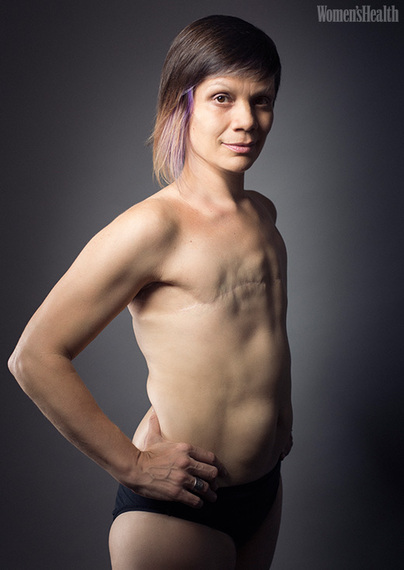
Naturally Flat Post-Mastectomy

“It’s a tremendous amount to put your body through, and it’s not like we’re going to get our breasts back,” said Rebecca Pine, 40, who decided against reconstruction surgery after a mastectomy. Credit Béatrice de Géa for The New York Times
"Reconstruction is not a simple process."
"Some women just feel like it's too much: It's too involved, there are too many steps, it's too long a process."
Dr. Deanna J. Attai, California breast surgeon

"That's the dirty little secret of breast reconstruction: The risk of a major complication is higher than for the average elective surgery."
Dr. Clara Lee, associate professor of plastic surgery, Ohio State University

"Having something foreign in my body after a cancer diagnosis is the last thing I wanted."
"I just wanted to heal."
Debbie Bowers, 45, Pennsylvania

"I was never told there was a choice. I went from the breast surgeon to the plastic surgeon, and they said, 'This is what you're going to do'."
Marianne DuQuette Cuozzo, 51

"[Focusing on the risk of complications with breast reconstruction is similar to focusing on plane crashes since] millions of flights land safely."
"Taking into consideration advances in surgical techniques] the aesthetic result can be better than the native breast."
Dr. David H. Song, chief of plastic surgery, University of Chicago

"It's a tremendous amount to put your body through, and it's not like we're going to get our breasts back."
"They [her reconstruction post-mastectomy] don't look or feel, in most cases, like our breasts [so she had the implants later removed]."
Rebecca Pine, 40, cancer survivor, New York

"A lot of the women in my support group had infections, and they were surprised at how many surgeries were involved."
"As I compared notes, I wondered, 'Why are all these women doing this to themselves'?"
Alicia Staley, 45, double-mastectomy
2015-10-16-1445026147-7958240-colin_gray_breast_cancer_finals_004.jpg
The Huffington Post

Dr. Marisa Weiss is the founder of breastcancer.org. She feels that doctors should not make the assumption that all their patients wish for reconstruction. "I've had go-go dancers who do not want reconstruction, and nuns who say, 'I need reconstruction'". But the very fact is that oncologists seem to sponsor the work done by plastic surgeons in breast reconstruction. If both are male, viewing the situation from the typical male perspective, it is a telling conclusion.

Some surgeons have the tone-deaf gall, as Dr. Song  did, to extol the virtues of breast reconstruction as an improvement over the original equipment that nature designed. As though a woman should appreciate a silicone implant sized and shaped to perfection over her own natural breast size and shape; perhaps some do, and certainly many would not. The implant is not a living part of the body, but an intruder. One that requires additional surgery which sometimes does not have the outcome promised.

So the promotion of breast reconstruction to enable women to "feel whole again", sounds like a public relations ploy to sell a dubious product in a society that has aesthetic standards for women to squeeze themselves in to, irrespective of whether this is what they really want. Many have no idea what they really want, they simply accept what they have been guided toward. And afterward, some women discard the end-product of that guidance.

Some women become accustomed to seeing themselves with scarred flat chests replacing their body shape that women are so affectionately proud of. It is a recognition of reality and the price one pays to recover from a dread disease. Dr. Attai points out that some of her patients, in particular those who originally had small breasts to begin with, are choosing to go the 'flat' chest way. And perhaps that choice falls within a middle-aged group, rather than a younger cohort of women undergoing surgery.

"Breasts aren't what make us a woman", stated Paulette Leaphart, 50, of New Orleans. She had a clotting disorder that obviated the possibility of reconstruction after a double mastectomy for medical-health reasons. She walked from Mississippi to Washington to raise awareness about the financial struggles faced by cancer patients. She did this during the summer months, topless, to bring attention to her focus.

Society has certain mores and expectations, and they come about as standard procedures when enough people accept them. Medical professionals have accepted the theory that part of breast cancer treatment includes restoration of the breast. The Women's Health and Cancer Rights Act of 1998 in the U.S. requires health plans to cover the cost of prosthetics and reconstruction procedures. But is it truly a requirement that all women must embrace?

Labels: , , ,

Friday, November 25, 2016

Which is the Oppressor now, the Heterosexual or the Homosexual?

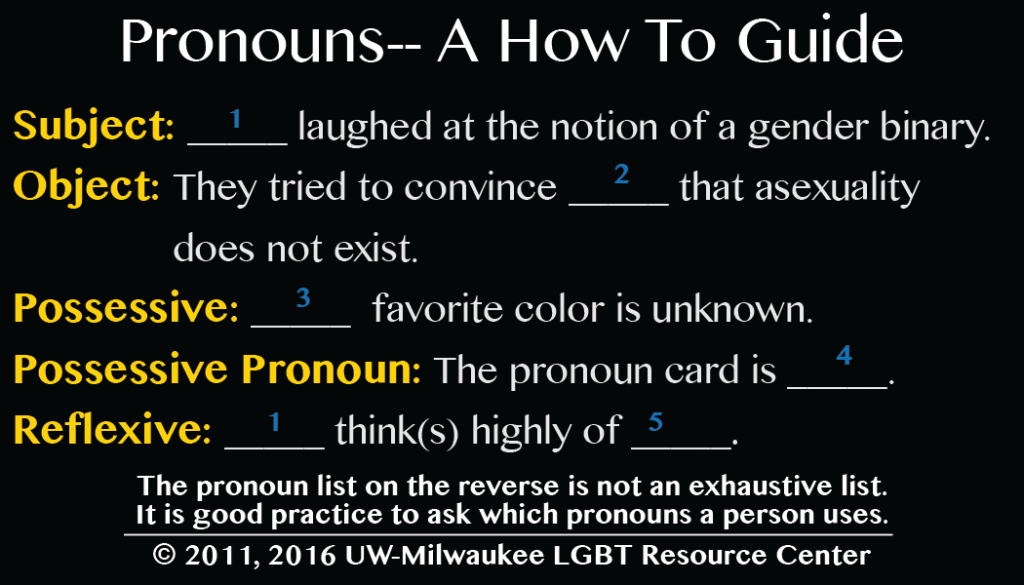
Pronoun cards 2016-01

Pronoun cards 2016-02


In the ongoing saga of University of Toronto psychology Professor Jordan Peterson, he is being reviled and excoriated by the vast army of the politically correct for having exhibiting publicly the unacceptable temerity as an individual who refuses to succumb to the popular social demands that what the LGBTQ2 community calls 'straights' accept without question their language rights. Infusing them with the epithet of 'homophobic' for failing to bow to ever-increasing, more ludicrously gender-bending demands of recognition and obeisance to the agenda of harnessing righteous indignation that among the 99% of society's heterosexuals there are those who refuse to honour their precious tantrums.

Professor Peterson posted several videos wherein he made it clear that the preposterous demands that language be co-opted and coded to reflect the vast cornucopia of new and evolving gender identities requiring that the prevailing, traditional historical language of gender identity be scrapped in favour of adopting LGBTQ2's labyrinthine logic that distorting pronouns well beyond recognition will satisfy the wounded psyches of those who happen not to fall into the recognized and naturally occurring sex roles of male and female.

Tyler Anderson/National Post
Tyler Anderson/National Post    Quinn Valkyrie holds a sign at a protest against anti-political correctness professor Jordan Peterson at University of Toronto on Oct. 5.
 
The passions that Professor Peterson's perfectly sane explanation that language, though malleable, should never be the victim of a minuscule minority's field of complex identity issues aggressively pursued so that the general public has an obligation to learn a multitude of pronouns to satisfy the whimsical demands of that wounded one percent in society confused about their gender identities, has been swift and corrosive. His more 'understanding', compassionate and politically correct academic peers were quick to criticize his outspokenness. His university has looked askance at the controversy and his academic standing within it may be imperilled.

Governments themselves are literally bending over backwards, pretzelling themselves to bend language completely out of shape and understanding in a confusion of responses, all genuflecting in the direction of the Lesbian, Gay, Bisexual, Transgender community which has been enthusiastically  engaged in proving that tired old adage that it is the squeaky wheel that gets the grease. And so, amendments which recently passed in the Canadian House of Commons after having been given the green light of acceptability by the Canadian Human Rights Code and the Criminal Code add "gender identity" and "gender expression" as grounds for legal protection in Canada.

The University of Toronto set up a forum to argue the need for those amendments. On the dissenting side was Professor Peterson, and on the assent-demand side were two female professors, one of whom was Dr. Mary Bryson of the University of British Columbia, both experts on the issue of gender identity and gender expression. Perhaps both also qualify as experts on gender oppression as well, intimidating and threatening those whose social morals don't quite align with their own. It has been reported that a former student of a Women's Studies course in 1991 at UBC found herself in a state of fearful and disgusted apprehension taking Dr. Bryson's course.

U of T Professor Jordan Peterson debates Bill C-16 on Nov. 19, 2016.
Dave Abel/Postmedia Network   U of T Professor Jordan Peterson debates Bill C-16 on Nov. 19, 2016. Dr. Bryson is third from left.
"The students sat there in stunned, awkward silence. We had no idea what to say, what to do or where to look."
"We told them [the university] everything that was happening I assumed that Bryson wouldn't be permitted to teach at UBC any more."
"Imagine a male professor forcing female students to watch violent pornography. Imagine a male professor inviting a male guest speaker to drop his pants and expose himself to students. Imagine this prof telling students how to dress for his class and forcing them to publicly announce their personal grooming habits and their sexual orientation, and then proceed to shame students on that basis."
"It would be a national scandal."
Former UBC student, name withheld

"We take seriously any concerns raised by past or current students about their learning experiences at UBC."
"[However, the university requires] some time to look through our files as this involves a course taught 25 years ago."
Dr. Angela Redish, provost, acting academic vice-president, UBC
Professor Bryson, one of the two who debated against Professor Peterson on Bill C-165 and the Ontario Human Rights Code gender provisions, was not dismissed from UBC's teaching staff. What did occur in fact was that she became tenured, then was elevated to the post of director of the university's Institute for Gender, Race, Sexuality and Social Justice, and more latterly was named senior associate dean of the education faculty. The young woman, now in her mid-40s who spoke of her ordeal in Professor Bryson's Women's Studies class graduated with her master's in religious studies from UBC and moved on and into her career, her experience with Dr. Bryson, a bad memory.

The course she took part in was labelled "From the Margins: Lesbian Subjects Matter". In 1993 an article written by Dr. Bryson and a co-author, described a course co-taught by them in 1991. Their article was titled "Queer Pedagogy: Praxis Makes Im/Perfect", published in the Canadian Journal of Education. In the article they pointed out that the heterosexual and white students in their class were informed they would need to "function and circulate differently in a lesbian-identified space". Their students were advised to "choose either to remain silent about their sexual identification or to present themselves as 'out lesbians'."

Their class, they pointed out was one where the "unsayable" could be uttered, where so-called deviant images could be represented ... within the oppressive confines of the always-already heterosexualized classrooms. Where heterosexuals were identified as the enemy and, in the words of the former student "those of us who liked men, who had intimate relations with men were mocked .... " Aside from declaring their sexual orientation, students were informed that all sex with men was inherently violet. The students were exposed to a "Butch/Femme in Paradise", short video containing graphic images, which Dr. Bryson explains as "an art film" where the activities were "entirely consensual".

Actually, degenerate is the first descriptive that comes to mind.

Labels: , ,

Thursday, April 07, 2016

Professional Respect, Public Professionalism

"Quite frankly, when I was [not] knowing whether I was going to live or die, the last thing I needed to have shoved in my face was a skull. That was offensive."
"If I saw a gang of bikers that had full-on tattoos and were mean-looking and were noisy and had club symbols on their jackets, I'd be afraid of them."
"I don't want that feeling in emergency."
Marie Molloy, Lake Country, British Columbia
Jeff Bassett for National Post
Jeff Bassett for National Post   Marie Molloy at her home in Carrs Landing, Lake Country, B.C. on April 4
"The right of patients is to have quality and safe care. A tattoo has no influence on quality and safe care."
"You can dig deep on this one and it gets into very dangerous territory. What about a seven-foot male nurse looking after a newborn? ... Or what if you look 'too young?'"
Linda Silas, president, Canadian Federation of Nurses' Unions

"Currently, you can't look anywhere without seeing a tattoo. You try and encourage students to be as professional as possible, but if society's norms accept tattoos as being normal ... that is not policeable."
Beverley O'Connell, dean, University of Manitoba nursing college
Standards of professionalism may not have eased, but visual representations of professional standards most certainly have. Entering any hospital in Canada now it's difficult to tell from appearances who the nursing and other professionals are. The once-distinguished nurses' and other hospital employees' apparel of neat white garments enabled instant identification. And with it the respect that naturally follows that identification. And with the respect for the profession that cares, came the comfort of trust.

Now, nurses are more likely to be wearing short, colourful, patterned smocks and jeans, or just any casual clothing, not necessarily all that neat and tidy. They are no doubt proficient, know their duties and perform them well, but not accoutered as one might expect them to be. And something is lost in the process. The nurses may redeem themselves by the application of their professional skills, but they no longer have the appearance that gives reassurance of those skills taken on trust.

Vulnerable people dependent on the professionalism and good will of those looking after their medical and health needs at a critical time in their lives are hardly in a position to complain. When complaints are lodged they bear an aura of disgruntlement and unpleasantness and in response to that impression there are natural fears that the individual performing his/her professional expertise will exert somewhat less effort, in response to criticism.

Mrs. Molloy was certainly in a vulnerable position when she was admitted to her local hospital's emergency department and treatment began to keep her alive. She suffers from rheumatoid arthritis positioned in her larynx and coincidentally has an abnormally small airway. Her condition was exacerbated in the aftermath of unrelated surgery and she struggled to breathe, ending up in the emergency department of the Vernon Jubilee Hospital.

The treatment given her remains a blur to the woman. When she awoke after a seven-hour bout of unconsciousness the first thing she saw was an emergency worker beside her, his arm at eye-level, inked with a skull, and it frightened her enormously, seeming to portend a sinister outcome for her to survive the health emergency she was going through. Afterward, after her recovery, she lodged an official complaint but hospital administrators were not impressed.

Some nursing schools in Canada insist that students cover up their tattoos, and although most health facilities in Canada have no official policy restricting body art, studies suggest that patients perceive their display in a negative light. At the Ottawa Hospital, administrators attempted to have staff cover their tattoos. But in 2013 a labour arbitrator ruled that to be an infringement on employees' rights. Toronto's University Health Network representing four of Canada's largest hospitals has no policy on tattoos.

Empirical research on the issue appears to support the reality that the public, exposed to people wearing tattoos in hospitals as health professionals, fail to impress patients with their lack of the appearance of professionalism. It could most certainly be construed as a lack of respect of patients for health professionals to have no proper dress code, let alone restraint in the presentation of tattoos in a situation, and a venue that calls for a professional appearance, if only as a visual assurance.

In 2012, a study in Maryland found that patients exposed to pictures of health workers reacted less than favourably to tattooed and pierced employees. A survey of 765 patients in Italy certainly seemed to suggest that all of those questioned considered it to be inappropriate for doctors to have long hair, visible tattoos or body piercing. It does serve to leave an impression that is not professional, and with that impression comes a diminution of trust in a professional's abilities.

At the University of Manitoba the nursing college established a policy meant to discourage students from giving an appearance of non-professionalism. Students were given instructions that tattoos were to be covered while on clinical rotations at health-care facilities. That rule was initiated by the students' association itself. Perhaps the issue is that people are too casual about the need to themselves observe respect for their profession, and by extension, respect for the perceptions of people requiring professional health services.

NP Graphics

Labels: , , ,

Wednesday, April 06, 2016

At The Time and Place of Her Choice

"You've either tried a long time to get pregnant, or you've had IVF and finally you get pregnant and you say, 'I can't take any chances, I'm going to have a caesarean section. It makes perfect sense -- you've tried so hard for so long and you've got the idea this is your last chance. It's not safer, but it's believed to be safer [theoretical scenario]." 
"You have to put something in the surgical indication box [provide a valid medical reason to enable an elective C-section]. You can't just say, 'she wants one'. So you have to put something like pathological fear of vaginal childbirth. A favourite is fibromas [fibroids]. Apparently, we're having an epidemic of fibromas [popularity among pregnant women for caesarian delivery]."
"But I think that, even without this special case, the older mother will be more likely to be counselled to have a caesarean or choose a caesarean."
"The new generation of [female obstetricians] are living it for themselves -- an increasing proportion are choosing never to have a vaginal childbirth, so you can imagine what they're telling their patients. They're afraid of pelvic floor dysfunction, urinary incontinence, sexual dysfunction."
"If you think childbirth is nothing more than an opportunity to pee in your pants, you'll counsel  your patients accordingly."
Dr. Michael Klein, professor emeritus, University of British Columbia
C3
"If you think of the days before anesthesia, women were told 'in sorrow thou shalt bring forth children'. There was almost this religious idea that pain is part of your rite to passage to motherhood, and there is an element of that still remaining -- the idea that all women should give birth vaginally unless they medically absolutely cannot."
Pauline Hull, coauthor, Choosing Caesarean: A Natural Birth Plan

"Sometimes it's the fear of the unknown of a vaginal birth, or the fear of damage to the perineum, or the act that they're older and they're going to have only one child."
"Maybe as we get older, we just like things more scheduled and less uncertain."
"And if they want it, [caesarean option], in many cases, we'll go ahead and do it."
Dr. Jon Barrett, chief of maternal-fetal medicine, Sunnybrook Health Sciences Centre
There was a time that caesarean sections represented emergency delivery, when the normal delivery route was not possible, because of a breech position, or some other kind of threat during childbirth to mother and child. Normal delivery was natural, it was the way that women have always given birth, assisted or otherwise, throughout the ages. And the kind of intrusive surgery characterized by a caesarean section was considered abnormal, dangerous and needful only under certain circumstances.

All that changed about a decade ago when women were persuaded that caesareans were more convenient; they could select a suitable delivery date and there would be no suspense. There would also be no tears, no pain, they'd be under the sedation of a skilled anesthesiologist and their baby would be neatly plucked out of its sanctuary, no need to push and grunt and feel excruciating pain. Apart from real medical emergencies when the baby's presentation is not favourable or other reasons, delivery by caesarean has skyrocketed.

At first the joke going the rounds was that these usually older women who chose the surgical technique were simply 'too posh to push', and then concern was raised among the medical community why so many sections were taking place as a matter of choice, not necessity. Women now give birth to fewer babies in the developed world, and the age of expectant mothers has increased as well, a potent driver of caesarean sections. It is a more dangerous method for both mother and child, and expensive as well.

During 2014-15, 17 percent of women under age 35 delivered their first baby by C-section, while for first-time mothers over age 35 that figure was 23 percent, according to statistics from the Canadian Institute for Health Information. Another study out of Ontario found that for women over age 40, almost one in two (43 percent) chose C-section.

Older women in pregnancy are likelier to present with obesity, gestational diabetes or other conditions increasing the likelihood of a surgical birth, but those complications in themselves don't explain the disproportionately high rates of C-sections. Genuine concern over lasting damage to the pelvic floor muscles along with an irrational fear of vaginal delivery, and then another symbol of the present age: "precious baby" syndrome all were seen to add to the push for surgical intervention.

Canadian researchers concluded through a study of breech pregnancies that healthy women carrying a healthy fetus undergoing a planned C-section risked rare but more prevalent postpartum cardiac arrest, bacterial infections in their reproductive tract, along with blood clots and hysterectomy, than those in the planned vaginal delivery contingent. A study undertaken in 2006 of over six million births discovered neonatal mortality rates to be higher among infants delivered by caesarean (1.77 per 1,000 live births) than those vaginally delivered (0.62 per 1,000 births.

The World Health Organizations states that doctors should not undertake C-sections "purely to meet a given target or rate, but rather focus on the needs of patients". Newly published guidelines support a woman's right to a planned caesarean, in Britain. According to Dr. Klein, some doctors are "running scared" as a result of a higher risk of unexplained stillbirths in older women. "The baby just dies in utero and we don't know why", explained Dr. Klein.

And Dr. Klein spoke of doctors being aware of a fallout of too many C-sections where a rise in placenta accreta occurs The placenta attaches itself to an old C-section scar on the uterus. Those who support maternal choice caesareans argue that though the costs associated with the section procedure have skyrocketed, the cost involved in surgery to repair damaged pelvic floors more than balances out the equation.

C9

Labels: , , ,

Friday, March 25, 2016

Eating Patterns and Healthy Lifestyles

"Once  you get used to it, it's not a big deal. I'm not hungry at all in the morning, and this is other people's experience as well. It's just a matter of getting adapted to it."
"From an evolutionary perspective, it's pretty clear that our ancestors did not eat three meals a day plus snacks."
Mark Mattson, neuroscientist, National Institute on Aging, Maryland

"When you have low insulin and low IGF-1 [hormone; insulinlike growth factor linked to cancer and diabetes], the body goes into a state of maintenance, a state of standby. There is not a lot of push for cells to grow, and in general the cells enter a protected mode."
Valter Longo, Longevity Institute, University of Southern California
Soup & Salad Diet
The Fountain of Youth may not be a fountain after all, but a discovery not yet gained, that using some kind of protocol -- perhaps with the more sparing use of food to stall cell-aging -- humankind could be capable of living longer, living healthier lives. Dr. Mattson speaks of not having eaten breakfast for the last 35 years of his life, and since he never liked having breakfast to begin with, not missing one whit bypassing the opportunity to stoke up the body engine after a good night's sleep.

Of course, there have been some scientific enquiries into the fact that many people don't like eating breakfast. One of which appeared to reach the conclusion that if some people in some lines of work -- say for example, an airlines pilot who regularly skips eating breakfast, has an early flight, his brain, not having been given glucose for a prolonged period of time, might not be responding with the same kind of alacrity and accuracy as it would had he eaten breakfast.

Dr. Mattson takes his theory and his own bodily needs which he obviously uses to bolster his assumptions to quite some degree. He sometimes as well skips lunch, indulges in a midafternoon run, and sometime in the afternoon indulges in a meal or a series of smaller meals in a six-hour period that will contain all of his daily calories, which he estimates to be around 2,000.

Three meals a day, at specific intervals throughout the day is a ritual of particularly recent vintage. Through  human history food availability has not been as conveniently accessed as it is today. For one thing throughout most of human history, people struggled with food scarcity. A seasonal, episodic opportunity to access food would have prevailed, and people simply adapted to survive.

Part of that survival mechanism was the ability to store calories in the form of fat over the skeleton in times of plenty and the body would retrieve that stored fat at times of food scarcity. Our livers and muscles store carbohydrates as glycogen, and our fat tissue contains energy reserves capable of sustaining the body when food is unavailable.

Dr. Longo has studied the effect of fasting in laboratory mice, discovering that two to five days of fasting monthly had the effect of reducing biomarkers for diabetes, cancer and heart disease. Encouraged by the results, the research has now been expanded to studying those same effects on people. Fasting, explains Dr. Longo, lowers insulin and IGF-1, having the effect of slowing cell growth and development.

Should this be corroborated in further research, the conclusion would result that the process aids in slowing down the aging process, while reducing disease risk factors. Time-restricted feeding, which is what Dr. Mattson himself engages in, suggests cancer risk may be lowered using that technique, while assisting people to control for a moderate, healthy weight.

Alternate-day fasting is being studied at the University of Illinois at Chicago, on obese adults. Dr. Krista Varady has discovered through trials of eight to ten weeks that people lose about six kilos on average, experiencing marked reductions in LDL cholesterol, blood pressure, triglycerides and insulin.

 Dr. Mattson's experience in intermittent fasting demonstrated that mice were protected from strokes, Alzheimer's and Parkinson's disease through that feeding regimen, extending life spans by 30 percent. He found that this type of fasting had the effect of increasing proteins protecting brain cells, enhancing the test animals' ability to repair damaged DNA. The stress associated with fasting, he concludes, makes cells stronger.

One benefit of fasting is that it forces the body to shift from the use of  glucose for energy to using stored body fat, converted to compounds called ketones. According to Dr. David Ludwig of the Harvard T.H. Chan School of Public Health, ketones represent a "clean" energy source, burning more efficiently than glucose.

Ketones are what the body uses for energy during undiagnosed diabetes, when insulin is no longer produced from the beta cells of the Islets of Langerhans. A characteristic 'milky' odour on the breath reveals that ketones are being burned by the body seeking an energy source, when it can no longer convert ingested glucose in an absence of insulin production.

"It takes a very disciplined person to skip a couple meals every day", cautioned Dr. Ludwig, a protocol that may prove too difficult and which may slow metabolism. He advocates as a more practical approach, to limit sugar int he diet and processed carbohydrates; to replace them with natural fats, protein and unrefined carbohydrates.

Personally, I'd advocate for skipping daily lunch. I've been doing it for 50 years.

The 5:2 diet calls for two days per week of minifasting where the aim is to go a long stretch, say 14 to 18 hours, without eating. During these two fasting days, you also eat only about 600 calories, give or take.
The 5:2 diet calls for two days per week of minifasting where the aim is to go a long stretch, say 14 to 18 hours, without eating. During these two fasting days, you also eat only about 600 calories, give or take.    Viennaslide/the food passionat/Corbis

Labels: , , ,

Tuesday, February 23, 2016

The Vulnerable Brain

"Earlier [chronological age of cannabis use] is worse, because the teenage brain is still developing and it seems like cannabis is hijacking that development. That is the problem."
"If it is going to be legalized, regulation has to be key. Just because it is [sic: will be] legal doesn't mean it is a benign drug."
Dr. Andra Smith, neuro-scientist, psychology professor, University of Ottawa

"We may be living in an environment where legalization is coming, but let's not forget about youth whose brains are developing and are at risk for mental health disorders."
Dr. Tony George, medical director, complex mental illness, Centre for Addiction and Mental Health, Toronto

"They felt that cannabis makes them better drivers, some young people reported that they felt it helped their focus and attention at school … we also heard from young people that they felt marijuana prevented and even cured cancer."
"So there's a real opportunity here to bring some clarity to this issue about what does the evidence really say about this drug and its health effects?"
"The key message is marijuana is not a benign subject. There are significant effects, whether you are looking at cognitive functioning, mental health, risk of addiction-impaired driving."
"The purpose of [Monday's public forum] was to convey that message."
Amy Porath-Waller, director of research and policy, Canadian Centre on Substance Abuse
The Canadian Centre on Substance Abuse held a town hall on marijuana's effects on youth at Ben Franklin Place in Ottawa Monday, Feb. 22, 2016.
The Canadian Centre on Substance Abuse held a town hall on marijuana's effects on youth at Ben Franklin Place in Ottawa Monday, Feb. 22, 2016. (Andrew Foote/CBC)

"I think in the end our goal [is that] the evidence is going to be compelling enough that we're going to really try to move forward on delaying use of cannabis by young people and preventing it as much as possible."
"The issues of access, minimum age, controlled sales, those are all important elements so that when people do have access to the drug they're adults, they can appreciate the effects it's going to have on their lives, they have more responsibilities, less leisure time."
Nancy Langdon, Ottawa Public Health supervisor

The Canadian Centre on Substance Abuse (CCSA) fielded its researchers and officials in a series of public forums set up for Halifax, Ottawa, Toronto, Vancouver and Calgary to interface and interact with local public health departments to ensure that their message of the potential disruptive health effects of youth smoking marijuana are well known. A kind of heads-up before the introduction by the current Liberal government of a new legalized status for marijuana, a promise made during the election campaign of last October.

That legislation is imminent, and many within society await it eagerly. Marijuana has proven to have its uses, both in a social setting for adult 'relaxation' and as a remedial health issue and pain reliever. Currently, as under the previous regime, medicalized marijuana by prescription was made legal under the auspices of the federal health department. This new looming legislation will serve to expand its legal status making it as available to adults without prescription as alcohol and tobacco.

And therein lies the concern. While legalizing marijuana is a reasonable option, removing the stigma and penalties that came with its use as a banned product where users could be arrested for breaking the law and imprisoned for its recreational use, the time has come to remove that criminal penalty under government regulatory use. At the same time because research has demonstrated that there are problems inherent in its use for developing brains of young people, which marijuana can disrupt harmfully, an alert was required.

And so, the travelling fora was born, named by the CCSA The Effects of Cannabis use during Adolescence. The Centre feels it will be necessary to protect the health of young Canadians for strict regulation to ensure that marijuana is kept out of the hands of young people. It's a little like locking the barn door after the horses have galloped off, since a drug and alcohol use survey of 2013 found that 22.4 percent of young Canadians between 15 and 19 had used cannabis, in any event.

A large crowd filled Dundas Square in Toronto as pot smokers gathered on April 20, 2011. (Peter Power/The Globe and Mail)

In fact the use of cannabis among the young appears roughly two-and-a-half times more prevalent than adults aged 25 and older using marijuana. As far as most teens were concerned, in information relayed about attitudes, conveyed during focus group interviews, there is a widely-accepted belief that marijuana is essentially harmless in its effect; simply that it is a pleasurable, mild and benign commodity which adults in their insistence on controlling and withholding pleasure from the young, characterize as harmful.

Researchers and health-care advocates are aware of a growing body of evidence that make it clear there are serious mental and cognitive issues involved for frequent marijuana users among the young. And the earlier the use of marijuana is initiated, and the more frequent its use, the more potential damage will accrue. The very architecture of the still-forming brain in adolescence can be permanently altered, quite apart from its effect in impaired executive function.

A protester lights a joint during a 4-20 marijuana rally on Parliament Hill in Ottawa  (Sean Kilpatrick/The Canadian Press)

Research has linked teens who regularly use cannabis and have used it by age 15 at least on 50 occasions, with lower test scores and a reduced academic performance in comparison with their peers who prefer not to smoke. A higher risk of psychosis and schizophrenia has also been linked to heavy marijuana use by adolescents. Swedish research revealed that people who used cannabis on more than 50 occasions by age 18 were six times likelier to develop schizophrenia than those who refrained.

Though the causal relationship between marijuana and psychosis still has room for further research, the suggestion is that those with a predisposition to schizophrenia could be vulnerable to the psychosis-inducing effects of tetrahydrocannabinol (THC), the active ingredient in marijuana. And there also looms the concern that the issue of driving under the influence of alcohol will be mirrored by rising incidents of driving under the influence of pot, presenting another scourge on the roads.

The active ingredient in marijuana is tetrahydrocannabinol or THC, which, when ingested, produces a range of effects that include a sense of well being; a feeling of relaxation; enhanced sociability; difficulty concentrating; distortions in sense of time, vision and hearing; and at higher doses, auditory and visual hallucinations. Other effects include increased heart rate, reddening of the eyes, sedation, increased appetite, and decreased muscle tone. The extent of these effects and the actual experience of the user will be determined by a number of important factors that can vary greatly.
Use of any drug has some measure of risk attached to it, and marijuana is neither a demon weed nor a benign substance. As with all substances, it is important to distinguish between casual, regular and heavy use, with negative effects being more likely with heavier use. Studies of effects are hampered because marijuana is often used in combination with other substances, particularly tobacco.CPHA - Canada's Public Health Leader

Labels: , , ,

Friday, January 29, 2016

The Desecration of Academia

"When I was a student, despite being deeply interested in comics and making them, it never occurred to me to do something with them as my work. It simply wasn't a possibility."
"And now I [get] to make comics at the highest level of study and teach them."
"If they [the public] can learn to look at themselves and the world in a slightly different way, they can discover new possibilities for how they can be in the world."
Nick Sousanis, post-doctoral fellow, comic studies, University of Calgary

"If there was a generation that resisted comics as literature, that generation is now gone. The battle has been fought and won."
"I  hoped people would understand, and clearly they did, that I'm a writer first. My main interest is story, and story structure. Regardless of the form or genre they were writing in, students appreciated my helping them get their story up on its feet structurally."
Scott Chantler, cartoonist, Waterloo, Ontario

"We've seen a definite transformation in terms of attitude toward comics and a recognition that they might not necessarily want to put them always on par with the great classics of literature, but definitely that they are a valuable form of reading."
"There are a lot of people working very hard but for not much remuneration [attempting to ply a living producing comics]."
Benjamin Woo, professor of communication studies, Carleton University
01654a8a-a23a-4e8a-913e-966d25c67a97-1
IDW Publishing

There you have it, academia surrendering to the new discipline of literary (?) comics. All right, comics generally as a medium for story-telling. Japanese manga led the way into public acceptance, no doubt. I once wandered through a manga shop in Tokyo and swiftly wandered my way back out again, finding nothing therein to arouse my interest; in fact if that exposure did anything it evoked in me a swift and total distaste in the knowledge that thinking adults would gravitate to the form of literary expression that manga represented.

But of course manga also explored and exploited the gritty side of human society and perhaps that was their real attraction for their readership. In Canada, no less a literary figure -- honoured by some and detested by others -- than Margaret Atwood has issued comic books and isn't that fascinating. Some might interpret that state of affairs as Ms. Atwood declaring her talents as a writer fit for comic book format and content, and some would be hard put to disagree.

Comic photo for a comic writer

Who might have imagined that academia might ever stoop so low as to offer courses in comic book literature? The very linkage of comic books and literature is breathtaking in its audacity and the breadth of its arrogance. Nick Sousanis represents what is put out as a growing cadre of 'scholars' who have emerged into the light of academic acceptance hastening to celebrate comics as a serious academic study field. Gag on that, if you will.

If you won't, then consider this from 1 Corinthians 13:11 : "When I was a child, I spoke as a child, I understood as a child, I thought as a child, I talked as a child, but when I became a man, I put away childish things." That recognized fitness of chronology and thinking pursuits from antiquity to the present has resonance here. Pictographs represent an undeveloped mind struggling to understand what language will eventually answer far more elegantly and precisely than a picture.

But there it is, public acceptance of comics has long been a fact. A visit to any bookstore or library will invite those inclined to peruse the offerings of comic book publications. So that the child in the otherwise-reluctant reader of books can dally and tell themselves that they're indulging their inner child and simultaneously reading literature of an adult variety, even while they clearly are not. If the classics are now published in cartoon form, they have been cartoonishly edited and diminished.

This is an opinion of someone who treasures both reading and literature, someone quite obviously reluctant to be unpegged from tradition. Quite the opposite, for example, of Scott Chantler the cartoonist who was slotted into a three-month appointment as writer-in-residence at the University of Windsor's English department. Which to traditionalists represents an academic travesty, but to Mr. Chantler, recognition too long in arriving.

That a Holocaust memoir was produced and won a Pulitzer Price is something I cannot even imagine, let alone come to terms with. Nor does it appear possible that Carleton University professor of communication studies Benjamin Woo merited a Governor General's Gold Medal for his PhD dissertation on nerd culture: comic books as nerd culture? Aren't 'nerds' imagined as closet intellectuals?

The final blow to literary sanity is that Nick Sousanis presented a comic book format in his PhD dissertation at Columbia University's teachers college. Is nothing sacred any longer?

"Critical Inquiry" Merges Comics and Academia


Comic Book Resources

Labels: , ,

Thursday, January 28, 2016

Tradition Beset By Aimless Addictions

"Smoking provides huge challenges to our health system, and it has huge societal impacts. It's something that people think about every day, whether they are smokers or non-smokers."
"It helps them through the day."
"Our lives have been hard and a lot of people don't see it as their primary concern. That isn't necessarily an excuse, it is just a reality."
Natan Obed, president, Inuit Taparlit Kanatami [national Inuit organization]

"Cancers such as lung and breast can be viewed as an indicator of the rapid social, economic and environmental changes that indigenous peoples are experiencing."
Study, International Journal of Circumpolar Health

"We hear from young women ... that they don't want their children to smoke, and they wish their mom had told them not to smoke when they were growing up."
"People recognize that they don't run so far in soccer, play so hard in hockey if they smoke. They understand it does affect their health."
"People do go outside and smoke, even in -50 and -60 C weather, and that's an enormous success."
Frankie Best, Nunavut health department
People make their way through the -46 C with wind chill temperatures in Iqaluit, Nunavut in 2014.
Sean Kilpatrick / Canadian Press    People make their way through the -46 C with wind chill temperatures in Iqaluit, Nunavut in 2014
 
As though Inuit peoples don't have enough challenges, struggling with poverty, isolation, familial dysfunction, food scarcity and mental health problems -- now their diminished lifestyle, so far removed from their heritage and traditions, while still living in the same environment which required resolute resourcefulness to ensure they would survive the hostile nature of that environment -- no longer practise the customary lifestyle that kept them healthy and alive.

Tobacco was used by First Nations as a ceremonial aid, much like people in Asia used incense:
"For many First Nations people, tobacco has been used traditionally in ceremonies, rituals, and prayer for thousands of years. It is used for a variety of medicinal purposes and its ceremonial use has powerful spiritual meaning establishing a direct communication link between the person giving and the spiritual world receiving. In the traditional sense, the most powerful way of communicating with the spirits is to smoke tobacco in a sacred pipe." Health Canada  www.hc-sc.gc.ca
Some southern First Nations people are said to have introduced the use of tobacco to Europeans, to begin with as the indigenous people interacted with them during European settlement in North America. And not until the 1700s was tobacco part of Inuit social life when whalers, fur traders and northern explorers arrived in the forbidding geography, coming in contact with Inuit communities. 

And then, it appears, just as occurred with the introduction to alcohol, the use of tobacco became an integral part of the social life of Inuit people, to the extent that the majority smoked.

It's estimated that about 90 percent of pregnant Inuit women smoke throughout their pregnancy. Statistics Canada's figure stands at 63 percent of adult Inuit devoted to tobacco use, while local research claims that figure to be a gross underestimation. Surveys conducted around Nunavut indicate that eight in ten of the Inuit population is given to smoking, representing a rate of tobacco use five times that of the general Canadian population.

This is not a feature only of Canadian Inuit, but is reflected as well among other ethnic populations across the Arctic in Greenland and in (Siberia) Russia, for example. A people among whom the incident of cancer was once uncommon now struggles with the steepest rate of lung cancer anywhere else in the world, as Inuit and other First Nations living in their remote communities absorb the most injurious habits of a southern lifestyle.

Territorial governments, only too aware of the scale of the problem, have committed to spending millions on anti-smoking programs. Stressing at the same time that smoking tobacco does not represent a tradition in Inuit culture. The tagline "Tobacco has no place here", represents a strenuous public relations effort on the part of authorities to wean Inuit away from their self-harming habit, among others that have proven to assail them with health conditions previously unknown. 

The rising rate of lung cancer among Canada's 165,000 Inuit is reflected in the Inuit of Alaska and Greenland, according to the study, co-authored by Kue Young, dean of the University of Alberta's public health department.

Labels: , , ,

Wednesday, January 20, 2016

How Do You Judge Competency?

"We suggest the burden of proof lies with the Supreme Court [of Canada] to demonstrate the legitimacy of the nomination of physicians as the exclusive purveyors of a non-medical practise. ...Particularly when the ethos of medicine has historically forbidden participation in this very act."
"We need to consider this matter carefully, use sound medical judgement and seriously think through the highly contestable nature of what the courts [and perhaps our government] are asking us to undertake."
"We could actually have patients incurring harm that they may not have anticipated."
"The other concern is, how do you establish a standard of care for assisted death? How do you judge competency? What would that look like for assisted death?"
Dr. Cheryl Mack and Dr. Brendan Leier, Canadian Journal of Anesthesia

"A timeline set by the Supreme Court for legislation is one thing, but for us to actually get to the point we can safely provide it [doctor-assisted death/euthanasia] is another. It just seems like it's coming awfully fast."
"[We do not object to a] rational [suicide] But that's assuming, of course, we can distinguish between what is a rational suicide, and what is an irrational one."
Dr. Cheryl Mack, assistant professor of anesthesiology and pediatric palliative care medicine, University of Alberta
The actual process of assisted dying isn't as simple as it seems.BRENDAN SMIALOWSKI/AFP/GettyImages

As chair of the clinical ethics committee for the University of Alberta hospitals, Dr. Mack and her co-author have set out to warn both those in their profession and the government, along with the Supreme Court that they have well founded and grave  apprehensions about tasking doctors and in particular those in her line of work with the dreadful business of hastening death, when their very professional code has always pledged otherwise.

Their fear of some instances where things go dreadfully wrong reflects the possibility of patients experiencing convulsions, a longer-than anticipated "time to death", or "awakenings" while waiting for the fatal drugs to take their effect. The medical profession in its entirety is none too pleased with being tasked by society through the Supreme Court of Canada ordering the government to issue guidelines for the decriminalization of assisted dying. They might prefer that "euthanists" be authorized to take the initiative in providing the service.

The concerns of anesthesiologists are several, and Dr. Mack and her co-author enumerated them in the article she co-authored for publication directed at the audience in her profession. Will her profession be tasked with developing "recipes" for euthanasia? Will it be up to the anesthesiologist to make a determination based on how they perceive the patient's state of mind? Pointing out that informed consent is represented by giving due warning to patients of the potential risks involved in the procedure.

And those potential risks are those which her profession must balance on a regular basis, but rarely in the process of hastening death rather than keeping the Grim Reaper at bay. The article points out that some patients sometimes respond to drugs in ways that the anesthesiologist least expects; each individual is truly different in how the drugs play out in their systems. "We can foresee potential complications" they warned, in a process that is never simple.

"Depending on what kind of safeguards are in place, and who's present, you can have reactions to overdose -- convulsions, vomiting, aspirations", Dr. Mack warned, of the consequences that can ensue when a doctor prescribes a fatal drug overdose, depending on the patient to self-administer. With lethal injection there is the possibility of "awareness" representing an unusual complication of general anesthesia during surgery when sleep drugs fail, leaving the patient paralyzed and awake.

The three-step process most common with euthanasia; a drug to relax the patient; a general anesthetic to induce artificial coma; and a neuromuscular block to cause respiratory arrest, cardiac arrest and death, can go awry for nothing, no protocol is failsafe, just as all humans are differentiated by their reactions to common procedures. "We take a lot of care with our monitoring and our assessment of the patient to judge depths of anesthesia", Dr. Mack stated.

If an error occurs during the euthanasia process; the muscle relaxant injected before the coma is sufficiently deep to prevent the patient from being aware of the effects, that person could die by suffocation in a paralyzed state while remaining conscious of what is happening. Quebec has proceeded with providing euthanasia services since the act became legal in December. The provincial guidelines state that while the risk of loss of consciousness may be "inadequate" is low, should the IV catheter be inserted improperly or the drugs injected too slowly, effectiveness would be complicated.

Physician-assisted death could, in the space of a year in Canada, result in 7,000 such assists annually. In the Netherlands, where euthanasia and assisted suicide represent roughly three percent of total yearly deaths, their experience might serve as an anticipatory template for the procedure in Canada. Among those who deplore the very concept of assisted death and euthanasia, other solutions to coping with the end-of-life and unmitigated suffering are raised, most notably the need to bolster a country-wide palliative care program.

Labels: , , , ,

 
()() Follow @rheytah Tweet