Ruminations

Blog dedicated primarily to randomly selected news items; comments reflecting personal perceptions

Thursday, August 09, 2018

Zika: It's Not Over Until It's Really Over....

"We are still early in the Zika story, and we still have lot to learn about how these children will grow and develop. We expect there will be multiple outbreaks in the future [around the world]."
"I think the bottom line is that the Zika story is not over. People may feel like it's behind us. For these children, it's not over, and we need to know as much as possible so that we can be prepared [should something similar happens again]."
"There remain] opportunities for improvement [in the screening of children who may have been exposed to Zika in utero]."
"We really urge parents to get recommended care — brain images after birth, having measurements taken, getting a developmental screening and having an eye evaluation."
Margaret Honein, director, U.S. Center of Disease Control Division of Congenital and Developmental Disorders

Maria de Fatima, right, joins her 18-month-old son, Joaquim, who was born with Zika-related microcephaly, in a manual-dexterity therapy session in Recife, Brazil, in May. (Eraldo Peres/AP)

The U.S. Centers for Disease Control advised couples to abstain from sex or to use condoms for a minimum six-month period following the event of a male partner contracting Zika. That has now changed, changed however in recognition of the importance of new findings, leading health officials to alter that recommendation only this week, from six to three months since research newly concluded that one of every seven babies born to American mothers infected with Zika during pregnancy developed a health condition of some kind. Linked to that finding is that the risk of sexual transmission is narrower than was thought to be the case.

The findings in question represent the data outcome of the first long-term study of its kind. Focusing on Puerto Rico and other U.S. territories where most Zika cases were discovered as the disease swept across the Americas over two years ago, children born with the Zika syndrome pointed researchers toward the sheer numbers involved. Infection during pregnancy can lead to severe brain-related birth defects in babies, even though when most people become infected they may have symptoms ranging from mild to irritating but they don't tend to become ill.

Letting down their guard and failing to realize that although adults are able to shrug off the symptoms of Zika, pregnant women carrying the infection can transmit it in alarming numbers to their offspring. For babies there is no resemblance to the mild illness with fever, rash and joint pain that results in infected adults; infection during pregnancy can have infinitely more serious consequences. The new mega-study searched for the presence of medical conditions in these affected babies whose symptoms arose after birth.
The Associated Press
A mother stands in her home with her 2-month-old son, who was diagnosed with microcephaly – a condition linked to the mosquito-borne Zika virus – in Puerto Rico in 2016.  The Associated Press

This was a seriously ambitious study that looked at 1,450 infants of one year of age and older whose mothers had been infected while pregnant with the Zika virus. Most of these occurred in Puerto Rico, but American Samoa, the Marshall Islands, the U.S Virgin Islands and Micronesia births were also included in the survey. Six percent of the children had birth defects; abnormally small heads (microcephaly), damaged brains, or eye irregularities -- amounting to roughly 30 times the rate that afflicts the general population of children.

Later-developing problems likely Zika-caused, including seizures, developmental delays and difficulty swallowing or moving, encountered by the researchers, increased the percentage involved to 14% birth defects resulting from infected pregnancies. During the course of the study, researchers found that some children were not receiving medical attention to determine whether any problems existed. Only a third were recommended for eye exams by a specialist, half received a hearing evaluation and fewer than two-thirds were given brain scans.

The obvious  takeaway was that children requiring treatment or therapy or both will be missing out. Needless to say, poverty plays a part in factoring in who gets important medical advice and tests, and who does not. Lack of education surrounding the dangers involved and cautionary action to be taken is also reflected in poverty. Zika can be spread through sex or blood transfusions, not only through infected mosquitoes' bites.

Labels: , , , ,

Tuesday, January 02, 2018

Zika's Dreadful Toll

"A child might be making those raspberry sounds, but they are not making even the sort of consonant sounds like 'mama, baba, data'."
"Children wouldn't turn to the sound of a rattle or they wouldn't be able to follow an object, which typically a child can do by six to eight weeks of age."
"What we suspect is that because they have experienced so much damage to the brain, that connection of an object being presented and being transmitted to the back of the brain is not happening, so that is a significant cognitive impairment."
Dr. Georgina Peacock, director, division of human development and disability, C.D.C. National Center on Birth Defects and Developmental Disabilities, Atlanta, GA, U.S.A.
Zika babies facing increasing health problems with age
Baby with microcephaly. Photo: U.S. Centers for Disease Control and Prevention

"It's heartbreaking. We would expect that these children are going to require enormous amounts of work and require enormous amounts of care."
"These are the worst of our fears [that no amount of treatment will suffice to improve these children's development]."
Dr. Brenda Fitzgerald, director, Centers for Disease Control and Prevention in America
"It's very difficult to manage those children [Zika babies], because they need multiple types of specialists", explained Dr. Ernesto Marques, an infectious disease expert located at the University of Pittsburgh, Pennsylvania. Brazil, to begin with, has limited public health resources, and many of the parents of babies affected by the Zika virus are rural and poor. Vision therapy, glasses and Botox to relax rigid muscles appear promising interventions.

Most Zika babies have vision and hearing problems of a nature sufficiently serious as to interfere with their ability to learn and to develop normally. The first of those babies are now reaching two years of age with the more severely affected among them failing development indexes, an indication they will need special care throughout their lives. Confirmed by the results of a study published by the Centers for Disease Control and Prevention in America.

Fifteen of the most disabled children born with disabilities inflicted by the Zika virus leaving them with abnormally small heads -- the condition of microcephaly -- were the subjects of that study. The infants, at 22 months, demonstrated the development expected in babies under six months of age. These severely affected infants were unable to sit  up, chew food, and had acquired no language skills.

Of the total of close to three thousand Zika babies born in Brazil, it is unclear how many will realize outcomes quite so severe as the study's children. Early indications are, however, that there may be hundreds of such babies. "Our results are similar to this study", affirmed Dr. Camila Ventura, head of clinical research at the Altino Ventura Foundation providing physical therapy, vision care and other services in Pernambuco state to its registry of 285 Zika babies.

The study had the cooperation of the Brazilian Ministry of Health and other interested organizations. Children from Paraiba state, the epicenter of the Zika crisis, were evaluated. Originally 278 babies born in Paraiba between October 2015 to the end of January 2016 were studied. For a follow-up evaluation, 122 families agreed to take part. In the end, eight girls and seven boys with a range of symptoms that had seen no improvement since infancy formed the kernel of the study.

All of these children had severely impaired motor skills, meeting the evaluative conditions for a cerebral palsy diagnosis, with one single exception. Most of these infants had seizures and problems sleeping. Among them, eight had been hospitalized, mostly for bronchitis or pneumonia, and nine experienced difficulties eating or swallowing, potentially lethal deficits that could see food stuck in the lungs, or of leaving the children malnourished.

Two years on, how are the Zika babies doing?
Nearly 3,000 children were born with Zika-caused microcephaly in Brazil alone. Photo credit: EPA/Percio Campos


Labels: , , ,

Sunday, March 19, 2017

Zika Updated

"These babies, most of them or all of them, they're going to live very long lives, you can keep them alive a long time, and they will need assistance from someone 24 hours a day."
"The consequences to the society are huge."
Dr. Ernesto Marques, infectious disease, Oswaldo Cruz Foundation, Recife, Brazil
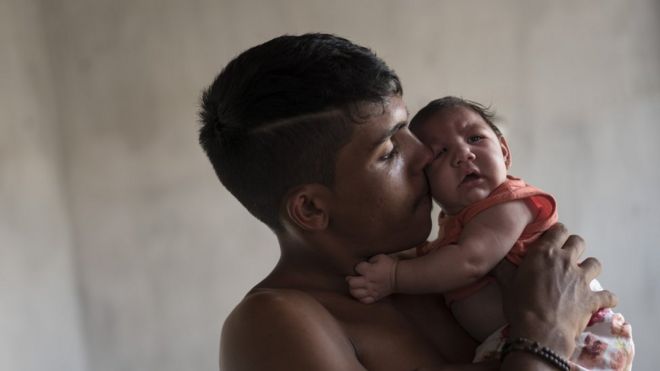
Child with microcephaly
Dejailson Arruda and his daughter Luiza, who was born with microcephaly-- Associated Press

The babies born of mothers exposed to the Zika virus are now well over a year old. Brazil had the misfortune to see the catastrophic occurrence of disastrous birth defects in babies with Zika-infected mothers. Some with brain damage profound enough that the future is not yet clearly understood for these babies. It was just over a year ago that the World Health Organization issued their declaration identifying Zika as a global health emergency as the mosquito-borne virus made its way across Latin America.

The dismay experienced by families whose babies were immediately identified after birth with microcephaly when they presented with abnormally small, misshapen heads represented a bleak outlook for those babies and the abilities of their families to cope with what was then, and is still, an unforeseen future. In impoverished areas of northeastern Brazil where the phenomenon was first noted, families struggle to be able to do what they can for these unfortunate babies.

In the process the strain and emotional stress of concern and relentless physical efforts to cope with the unthinkable has strained family relationships and threatened livelihoods when parents had little choice but to leave the workforce for the imperative of caring for these horribly physically and mentally impaired babies. Brazil's high rate of teenage pregnancy led to many girls in their early teens becoming pregnant and bearing Zika babies.

"Congenital Zika syndrome" has caused some of these babies to be threatened with frequent seizures, with problems breathing, trouble in swallowing, weakened muscles and joints, leaving them unable to even lift their heads. They have extreme vision and hearing problems and their mothers must cope with the addition of their infants' fierce irritability; as though the child is aware of its limitations and frustrated by them.

Many of these children have severe neurological development impediments to milestones of development normally anticipated in infants, while theirs more closely resembles that of three-month-old infants even as they pass their year-old birthdays. What must seem particularly horrifying to many parents who felt relieved that their baby was born seemingly normal, is to discover their children being diagnosed as among the recognized new waves of impaired children.

Babies who had all the appearances of normalcy at birth now identified through emerging symptoms as being among the impaired, as their brains fail to develop. "We only know what's easy to see", commented Dr. Vanessa Van der Linden, a neuropediatrician in Recife, one of many devoted physicians and therapists doing their utmost to aid families in their coping agonies at public hospitals and non-profit clinics.

Yet, some children are no longer accepted for therapeutic services when their development is seen to have reached their limits.

Infants display serious dysphagia, swallowing problems that affect older Zika babies when their brains are unable to coordinate ordinary eating skills. For some, despite attempts such as thickening formula, feeding tubes threaded through the nose is required. The unfortunate diagnosis of compromised visual, auditory and motor skills leaving the infant with no head control, an inability to roll over or to sit becomes the dreaded reality.

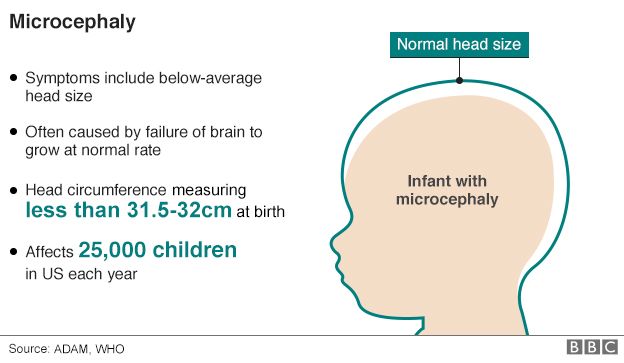
Graphic showing babies' head size

Labels: , , , , , ,

Saturday, July 23, 2016

Through sexual contact

  • Zika virus can be spread by a man to his sex partners.
  • In known cases of sexual transmission, the men developed Zika virus symptoms. From these cases, we know the virus can be spread when the man has symptoms, before symptoms start and after symptoms resolve.
  • In one case, the virus was spread a few days before symptoms developed.
  • The virus is present in semen longer than in blood.
Centers for Disease Control and Prevention. CDC twenty four seven. Saving Lives, Protecting People 

Now, an additional complication has arisen, where scientists have discovered a case where a woman was responsible for spreading the Zika virus to a man, in the United States. Many researchers now acknowledge that mosquito infection of the Zika virus, while the major vector for transmission, is not the only one. And it is concerning that sex, not generally acknowledged to spread Zika through intimate contact, is now recognized as yet another driver of the condition.

Women in Latin America, according to two reports, are likelier to be infected than are men, even though both genders are equally exposed to the presence of mosquitoes, and thus equally vulnerable to be infected with Zika by mosquito bites. The differences in the genders seem to appear and become evident at the age when sexual activity is initiated by natural processes, fading as women become older.

It is known that the Zika virus persists in semen for months which explains why it is that women attempting to conceive are given clear warning to avoid unprotected sex with men from areas where the virus is prevalent. Argentina, Canada, Chile, France, Germany, Italy, New Zealand, Peru, Portugal and the continental U.S. have all reported infections that were almost certainly passed through sex.

A study released in May by Brazilian and European biostatisticians found that in Rio de Janeiro with its 6.4 million population, "a massive increase of Zika in women compared to men existed". The study authors found that women generally visit doctors more frequently than do men, including pregnant women; to be tested for Zika. Even so, women remained 60 percent likelier than men to be infected.

And it was sexual transmission, according to Flavio C. Coelho, a Vargas Foundation biostatistician, and the lead author of the study, that "was the most probable cause". Donald A. Berry, a biostatistician at the University of Texas M.D. Anderson Cancer Center waved off the results of the study, with the admonition that confusion over dengue with similar symptoms is so common that these variables alone could have accounted for the infections differential between men and women.

Researchers at the Colombian health ministry and the U.S. Centers for Disease Control and Prevention studied birth defects linked to the virus, finding age and gender disparities. Young boys and girls in Colombia had been infected with the Zika virus at approximately similar rates. After age 15, once sexual activity began, female rates of infection rose steeply. Women in Colombia by age 25 to 29 proved three times likelier as opposed to men of the same age to be diagnosed with Zika.

But as the women became older the margin began to taper off, until after age 64 the infection rates stabilized, and were comparable in numbers. According to Margaret A. Honein of the C.D.C., women 45 to 64 years of age in Colombia were nearly twice as likely as men of that age group to be infected. And no evidence exists that sexual transmission was an issue in the first Zika outbreaks that took place on Yap Island in Micronesia and in French Polynesia in 2007 and 2013 respectively.

Labels: , , , ,

 
()() Follow @rheytah Tweet