Ruminations

Blog dedicated primarily to randomly selected news items; comments reflecting personal perceptions

Thursday, August 27, 2026

Come One, Come All!

"Never use threat, force or pressure to make someone have sex."
"Women can ... choose who they marry."
"If you have sex with someone without their consent, this is called rape"
"Rape is a serious crime in the U.K. You could go to prison, lose your support and accommodation, and it will affect your asylum claim."
New U.K. orientation manual for migrants 
 
"All permanent residents and protected persons are eligible for IRCC-funded settlement services [to] help them integrate and build a successful life in Canada as quickly as possible and include information on rights and freedoms of individuals according to Canadian law, understanding of Canadian values, as well as their responsibilities and obligations."
Immigration, Refugees and Citizenship Canada spokesperson
600 Gaza refugees enter Canada in 2005  CBC News
 
The United Kingdom, overwhelmed by the presence of migrants, faces a long string of social/cultural problems related to different customs and values being transplanted alongside the migrants into Britain. An epidemic of violence has erupted for several years unlike what the United Kingdom has previously experienced, a stream of non-stop incidents that fall far outside the normal social contract of the Emerald Isle's traditional population. Rapes by migrants perpetrated against vulnerable men, women, teens, even children, taking place in wooded areas, parks, beach change-rooms and rental units.
 
https://www.centromachiavelli.com/wp-content/uploads/2025/01/grooming-gangs-regno-unito-1200x400.jpg
Grooming Gangs in the U.K. Machiavelli Foundation
 
It took long enough for the British Government to pay attention to the scandals that for years had stalked communities where Muslim men, mostly of Pakistani origins, whose sex culture was responsible for grooming gangs focused on raping and using young Caucasian girls as sex slaves, renting out their services for fun and profit. It wasn't that the situation was unknown to British authorities, but that it was quite simply too inconvenient for them to 'notice' much less act on the practise, given the large Muslim population and accusations of 'Islamophobic' racism to be avoided at all costs.
 
Canada too, as it happens, finds itself in inconvenient waters with the surge of the past decade of immigrants, refugees and migrants infiltrating Canadian society. And in Canada not-too-subtle incidents of migrants in the country bringing with them customs contradictory to Western human rights values where incestuous relations, stranger-rape, organized crime, underage marriages, polygamy, genital mutilation offend Canadian customs and laws.
 
In 2015, during the federal election Prime Minister Stephen Harper's election campaign was rife with outrage from civil rights groups and the growing Muslim community in Canada over his government's release of 'instructions for immigrants' booklet Discover Canada: The Rights and Responsibilities of Citizenship that advised foreigners entering Canada as landed immigrants and permanent residents on their way to achieving citizenship, that Canada's welcome did not include 'barbaric cultural practices' such as spousal abuse, 'honour killings', female genital mutilation, and forced polygamy.
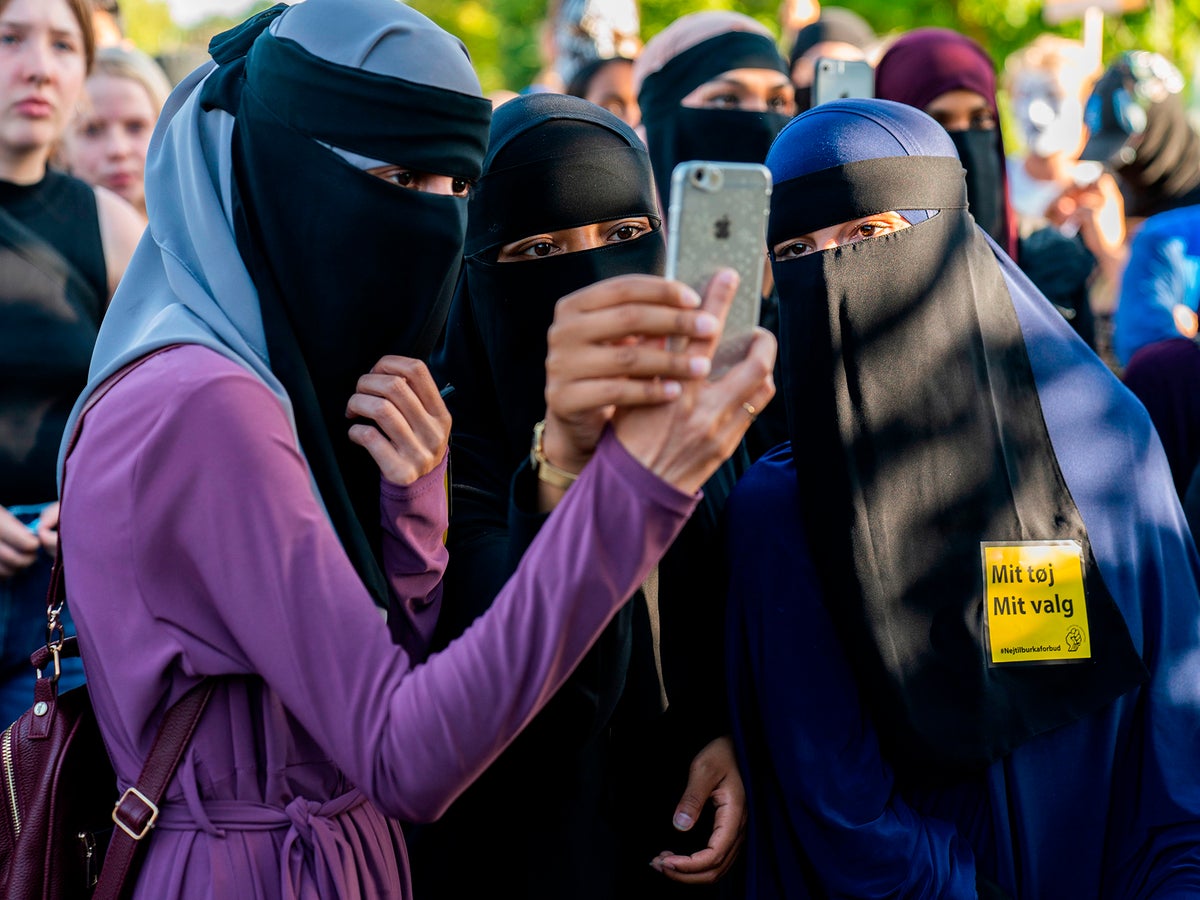
 
https://static.independent.co.uk/s3fs-public/thumbnails/image/2019/04/24/11/the-hijab.jpg?width=1200
Burqa ban in Great Britain?  Independent
 
How times have changed; the instructions of yesteryear rejected by the electorate have, by necessity since then been rejuvenated where marriage fraud warning is circulated by government auspices. In Canada too there are those requiring an explanation why it is frowned upon to rape children. A 'Pre-Departure Guide for Newcomers to Canada', published in 2025 focuses on newcomer rights rather than their responsibilities to the new country they will inhabit. 
 
Gently there are hints as to what is now of vital importance to this current progressive government; an acceptance of the presence of transgenderism, where readers are instructed that the LGBTQ-2 community in Canada is not only accepted, supported and valued, but so too is the right of the nation's children to question their from-birth designation as male or female. Issues such as 'lining up', 'making eye contact' and 'using underarm deodorant' are given their due place in the booklet.
 
Criminal activities are also addressed such as a jail term will come with carrying a firearm without a permit, and unwanted sexual touching or remarks may elicit a fine, or even prison. Bribery, polygamy, female genital mutilation and 'Making, sharing or owning photos of naked children', 'forcing others into marriage', and 'having sex with children', are similarly frowned upon and the letter of the law may be applied. Although truth to tell, the justice system goes easy on skin tones and ethnicity and cultures, with reduced sentences applied.
 
Family violence is frowned upon and "Killing a family member as a way to save a family's honour", is definitely unacceptable. Also addressed is the virtue of working for a living, rather than becoming wholly dependent on Canada Child Benefit payments which, when enough children in a family receive those generous benefits can sustain a family, without a breadwinner breaking a sweat. ($679.75 per month ($8,157 per year) for each child under 6, and $573.58 per month ($6,883 per year) for each child aged 6 to 17 for the 2026–2027 year.
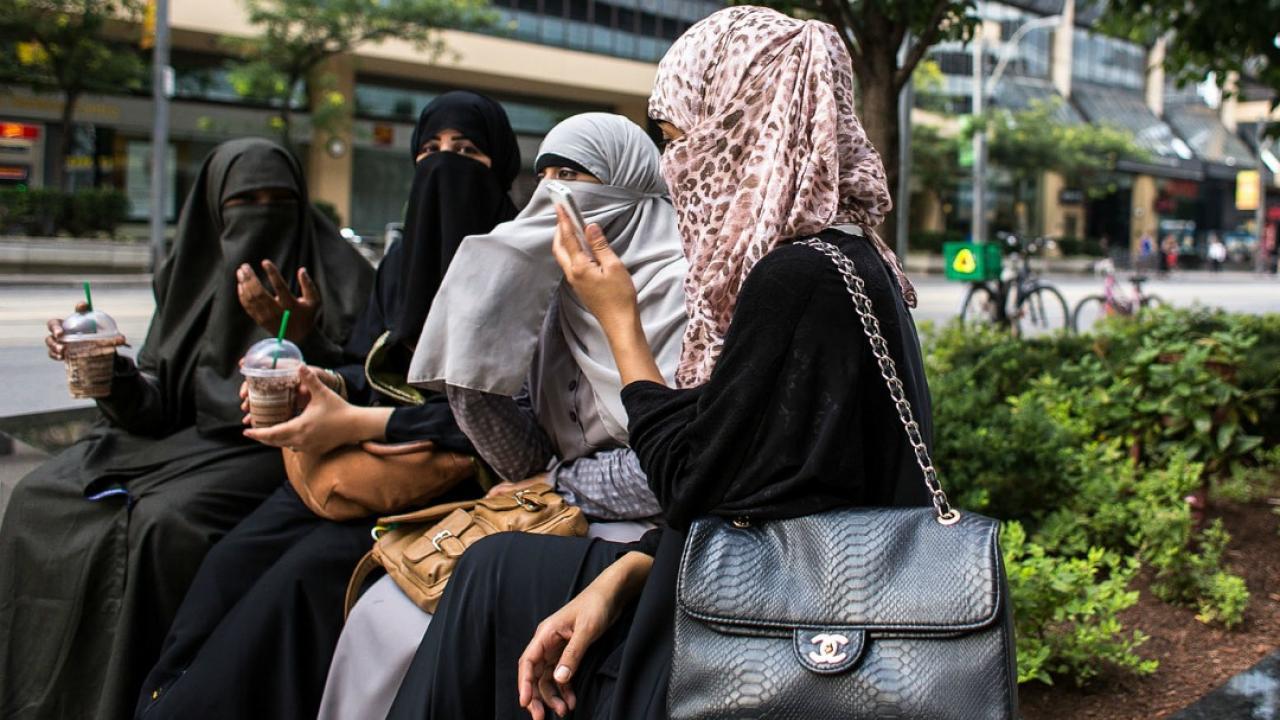
 
What Muslim female dress as a wedge issue means for Canada | TVO Today
What Muslim female dress means as a  wedge issue in Canada  TVO Today


Labels: , , , , , , , , ,

Wednesday, June 22, 2016

Normalized Canine Butchery

"Grandpa strokes my poodle on his lap and says, 'This is just the right size for a bowl of bosintang. He's joking, but whenever he says that, I snatch my dog from him."
Kim Yoo-na, 14, Wonju, South Korea

"It's the difference between heaven and hell [the life of a pet dog and one raised to be eaten in South Korea]."
"I was not ashamed of my way of making a living [raising dogs to be slaughtered for the table], but I was not proud of it either."
Gong In-young, dog-meat farmer, Wonju, South Korea
Thailand's Illegal Dog Meat trade
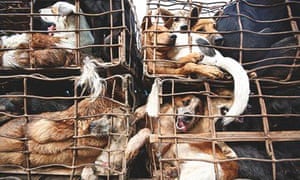
Trucks containing 130 dogs are seized on the highway between Thailand and Vietnam. Photograph: Luke Duggleby

Ten to twenty million dogs are slaughtered for their meat in China on an annual basis. A tradition that dates back to the time of Confucius. Dogs are bred, raised, kept in cages then sold to slaughterhouses in China, South Korea and other Asian nations where people consider dog meat an indispensable part of their cuisine. Mr. Gong, for example, keeps dogs locked up in steel cages, and there they are kept their entire lives; fed until they are mature enough to be taken to the slaughterhouse, their meat going to the marketplace.

That this is the tradition that keeps Mr. Gong in business supplying a market for ardent dog-meat aficionados has not kept this 55-year-old from loving and doting on an elderly Spitz on his farm, whom he has named Snow-White and who is viewed as one of his family. The dissonance in how he views the two, his beloved pet, well cared for and treasured, and the dogs that have no present and no future; his mind is shut, as a farmer and dog breeder-for-meat, to their plight.

Animal-rights groups have been attempting to reach people like Mr. Gong, to instill in them a humane reaction to the tradition of viewing dogs as table meat. Those groups estimate that 30 million dogs, most of which have been stolen or are feral, are slaughtered annually for meat throughout Asia. In South Korea the trade in dog meat is of an industrialized nature.

Over 17,000 dog farms, some raising over a thousand animals each, supply two million dogs to the marketplace for dog meat. This is a tradition held to be centuries-old, according to government data. Huskies, Rottweilers, Golden Retrievers and other breeds are held in Mr. Gong's cages complex, barking and struggling at the wires of the cages they're held in. As the dog-eating season in summer draws near, dog traders come to visit.

The value of a 36-kilogram dog is about $250. In transporting the dogs, they are crowded into cages unable to move; some suffocate before arrival at slaughterhouses where they are meant to be electrocuted. From there, wholesale meat dealers deliver the carcasses to dog-meat restaurants. Koreans name their special dog dish "bosintang", or "soup good for your body", popularized at a time when meat was in short supply.

It is a culinary history of which Koreans take great pride, including those who shun the dish, taking umbrage when foreigners criticize the practise. Yet South Korean tastes are changing as are their attitudes toward the practise of eating dog meat, particularly among the young for whom keeping pets has replaced eating dogs. The very idea of eating dog meat is grotesque and disgusting to young Koreans.

Mr. Gong's own son would never touch dog meat. Recently, he watched as the process of taking 17 of his dogs in flight to the United States under an agreement with the Humane Society International group whose campaign against dog farms in South Korea has made some inroads. Mr. Gong expressed his reaction, viewing photographs of the dogs now living abroad as pets, saying he "felt better".

Yulin, in southern China, has an annual dog-meat eating festival, where protests from animal rights activists have had no effect whatever. At dozens of restaurants across the city, vendors slaughtered dogs, cooking their meat for their avidly awaiting clients. In reaction, activists bought dogs from dealers planning to slaughter them, doing whatever little they could to ease the plight of individual dogs under the circumstances.

Labels: , , , , ,

Wednesday, January 27, 2016

 Bagel, Bagelry, Smoked Meat and Deli

"We must conclude that Christian Montrealers did not widen their taste for bagels, bagelries, smoked meat and delis to a taste for Jews nor for Judaism [for most had no idea they were buying] an artifact [of Jewish culinary heritage]."
"It would seem that Montreal's gastronomical heritage corresponds ... almost exclusively to Jewish culinary specialties."
"It was a neutral zone [affinity for traditional Jewish cuisine on St.Laurent Boulevard] that was a meeting point between the French, English and Jewish communities, and which enabled the bagel to become this iconic food." 
"Bagels and smoked meat were originally intended for the Jewish immigrant community but they soon became popular with workers [particularly those in the surrounding garment industry] who saw in them hearty and affordable food."
Oliver Bauer, theology professor, University de Montreal
bagel- fairmount- Jewish Food
Jewish Business News
"Quebecers likely think of smoked meat and bagels the same way they think of poutine -- as local Quebecois culinary staples."
"Those who are aware of their origins -- regardless of whether they harbour prejudice or not -- may subscribe to the same view as those who believe Jewish doctors are tops. A kind of reverse, albeit more gentle, racism."
Bill Brownstein, columnist, Montreal Gazette
montreal smoked meat sandwich (2)
Jewish Business News
According to Professor Bauer, and more than certified by the history of the Jewish presence in the Province of Quebec, and Montreal in particular, a general taste for Jewish dishes did nothing to persuade Quebecois to look upon the presence of Jews in their midst with more sympathy and favour. The culinary gap may have been bridged with the attraction of mouth-watering Jewish food specialties, but the culture gap remained unbridgeable.

And the simple fact seems to be that most gentiles have no idea whatever that bagels originated as a Jewish bakery item. "Most people are not making a political statement by going to Schwartz's", stated Professor Bauer, quoting sociologist Morton Weinfield of McGill University maintaining that a deliberate dissociation between smoked meat and bagels from Judaism and Jews helped Quebecoise support their traditional stance on "les Maudits Juifs"; detesting the latter and obsessively devouring the former.

The very fact that the Quebecois had the presence of Jews in their midst to thank for the presentation of delectable food had no bearing whatever in the general opinion of French Canadians with respect to the Jewish presence in their province, and complaints about the expanding Jewish presence at University de Montreal and McGill in the 1930s, were not about to be limited because of smoked meat and bagels.

The Jews thrived in Montreal, despite the presence of lively anti-Semitism, and so did the delis and bagel bakeries. The Jews thrived thanks to their insistence that they had a right to live there and attend university and do anything that any other person living in Quebec could aspire to, and they pushed back against adversity. The delis and the bagelries thrived because they had the custom of not only their Jewish clientelle but an ever-expanding army of specialty-food-appreciating non-Jews.


Schwartz's deli in Montreal is considered "a Quebec place and not a Jewish place". It was a 'Jewish place' and it still presents Jewish deli food, but it was bought out by Celine Dion, the Quebec/Las Vegas superstar celebrity, renamed La Charcuterie Hebraique de Montreal. Now in gentile hands, tradition prevails; mayonnaise, thought to be a dairy-based product, is not served with meat presented Kosher-style. And it is hugely popular with tourists who flock there to sample 'Montreal smoked meat'.

A Tourism Montreal blog invited readers to "taste Montreal's culinary heritage", listing ten restaurants, six of which are Jewish. Tourism guides always recommend bagels and smoked meat when visiting Montreal. Typically eastern European Jewish foods which 19th Century immigrants to Canada setting in Quebec to flee Central European pogroms brought with them, for nostalgia and comfort. St. Laurent Boulevard, the Main, was the dividing line between the city's anglophone and francophone communities, and it was there that most of the bagelries and delis were established.

Professor Bauer theorizes that the hole in the centre of bagels symbolizes the vacuum in the Jewish diaspora representing the six million Jews who perished in the Holocaust. Others speak of the round shape representing infinity. Bagels are served at circumcision ceremonies for newborn baby boys, and during periods of mourning the death of a Jew. Symbolism galore.

Labels: , , , , , ,

Sunday, January 04, 2015

Leaving Islam

"I just couldn't agree with most of the stuff, especially with the treatment of women -- that got me out of Islam."
"They [her family] think I'm a bad Muslim. But I doubt if they'd ever think I'm an ex-Muslim. That would be the end. He [father] would never accept my apostasy."
"There was a lot of pressure to be completely religious. [Punishment followed transgressions]...There was a tear in a page [Koran] and my father assumed I'd ripped it. He got my hand -- and put it on the stove."
"I just filled in two bags of my papers and stuff and told my brother, 'I have to take out the trash', and there was a cab waiting for me and I went straight to the shelter."
Halima, 18, Ontario biology student

"As a kid I really believed with all my heart, but my faith just kind of went away. It flickered out. I stopped feeling the presence of God. And that's when I took seriously the possibility of Islam being wrong."
"There really isn't a defence for any of it [religion]."
"I realized that I don't want to stick to just one way of looking at the world."
"I wanted to do my part for the apostate community, I guess. To normalize the process of apostacizing ... To say, 'I'm an ex-Muslim, you are not alone, you are not the only apostate in the world' There's such a taboo surrounding apostasy in Islam."
Zain, 27, Pakistani Canadian

"There's great animosity towards ex-Muslims. You're treated like a traitor, just for not believing the same thing. And you're expected to keep your mouth shut and not criticize the religion."
"I wanted to belong [to be a good Muslim]. I wanted to feel connected to my roots. I wanted to have a certain identity. And I really wanted to believe."
"Men can date, have sex outside of marriage can marry somebody not of their religion -- they can pretend to have their wives convert -- they can go through the motions. But if we want to be free, we have to leave. There is no middle ground for women."
Kiran Opal, founding-member EXMNA: Ex-Muslims of North America
Empowering? Really?

It certainly is not Islam alone that prefers to have its faithful remain faithful. Other religions are quite the same in that respect, as are other cultures representing ethnic groups, as well as ideologies. Most view those that leave the fold as traitors to a common faith, belief, cause and work to impose isolation and suffering on those who dare to withdraw from or reject those sacraments that held them to the community of faith, cause or belief.

In many faiths, the result of some intrepid soul risking being rejected by those they are emotionally closest to, of bringing shame to them from within the community is to be viewed with incredulous dismay disdain and dismissal, so that hearts are hardened toward them and just as they have chosen to reject what is of inestimable value to those who have given themselves over to the religion, culture or ideology, they find themselves alone in an unfamiliar, desolate place of mind, struggling to find themselves.

Most religions, however, do not view those they know as apostates as no longer worthy of life. God, after all, regardless of the religion that claims the Almighty, happens also to be the fount of life, the maker of life. So how much sense does it make for a religious authority to delegate to itself the taking of life? Yet some countries devoted to their fundamentalist version of Islam -- a growing phenomenon all over the world of Islam -- take it upon themselves to sentence those who leave Islam to death.

It is not only the religious authorities that pronounce capital punishment upon those of their citizens who are incautious enough to make it be known that they will no longer live as Muslims, but the extended families of those who remove themselves from the Islamic orbit. For women, breaking away from the tradition of 'modesty' under Sharia that requires them to be subservient to men, and who have little defence against rape when they are held to have led men astray, their lives may be forfeit to the Islamic charge of having defiled Islamic precepts of female purity.

For Halima, the young Ontario biology student whose strict Muslim family initiated a process to have her marry a 50-year-old Yemenite and enable his re-settlement in Canada, that constituted the final break. She could not envision herself at 18 married to a 50-year-old man she did not know, and living a traditional life of an obedient Muslim woman; she chose freedom and opportunity. "Come home -- or you'll regret it", her father wrote to her, and Halima would know very well what that regret might constitute; "honour killings" by family members of those who transgress have made their mark.

When Zain with his Pakistani background, born of immigrant parents to Britain, pursued philosophy, the study of Friedrich Nietzsche freed his mind of doubts and by age 19 he no longer believed. He made online contact with a young woman in Canada and they planned to elope. When his parents discovered his plan to marry a woman who was not Muslim they attempted to convince him to reject this path. But he had left the faith and at age 20 left Britain for Canada, and there married the young Canadian woman.

It is doubtful he will ever be reconciled with his parents. He fled Britain to find his destiny in Canada, outside Islam, and with a young woman not of his ethnic group, his culture and the religion he was born into. And now that he has been very public with his apostate status his extended family became aware from an online testimony in aid of others like himself, and they took it upon themselves as pious Muslims to "collectively shame[d] my parents for being bad parents", leaving them socially isolated. Forgiveness is not to be found in that dead zone.

A young Bengali-British woman interviewed for Simon Cottee's soon-to-be-published The Apostates: When Muslims Leave Islam, spoke of the shame and self-hate experienced by those vulnerable to being shunned and cast out and held to be less than human for their choice to leave Islam. "It was rough and I could barely pull myself together ... because I knew they wouldn't accept me", leaving her "lost, as though I don't know who I am anymore".

Enter a support group established in Toronto and in Washington in 2013 for ex-Muslims to find comfort and companionship within the emotional embrace of others like themselves who mustered the courage to find their own way in life, outside Islam. EXMNA: Ex-Muslims of North America was set up to help these rejected souls meet others like themselves. The group states its opposition to avoidance of religious criticism.

Its motto is "No Bigotry and No Apologism", aptly describing their mission to oppose those who fall in line behind accusations of "Islamophobia"; insisting that moral relativism is a false yardstick by which to measure Islam. Kiran Opal, one of the group's founders, experienced doubts about Islam and Sharia, but it was not until her family brought candidates for marriage within the faith to her attention that she realized she would have to be responsible for herself to escape the trap.

Kiran Opal in her complaint overlooks one important thing; when men marry outside Islam, they seek to convert their wives to Islam, and that usually solves the problem. Islam is a prosetylizing religion, it has always, and continues to, focus on converting non-Muslims to Islam. This represents an important obligation due Islam by its faithful. Women, on the other hand, deciding to marry a non-Muslim do not necessarily observe the need to convert their husbands because they are isolated and rejected to begin with, for marrying outside the faith.

She, like others who leave Islam, know that in making that decision they leave behind much more than just a religious belief. Islam is a complete way of life, a social, political cultural structure whose strictures are well defined, with immutable expectations from its adherents. Leaving Islam means leaving family, friends, and all that is familiar in life. Leaving those who decide they can no longer live within its confines with guilt and indecision and a profound sense of loss; all that was ever familiar and dear to them sacrificed to achieve their individuality and an altogether different future.

Labels: , , ,

Monday, January 20, 2014

Muslim Marriage Normalcy

"When a young girl is married and gives birth, the vicious cycle of poverty, poor health, curtailed education, violence, instability, disregard for rule of law ... continues into the next generation, especially for any daughters she may have.
"Child marriage legitimizes human rights violations and abuses of girls under the guise of culture, honour, tradition and religion."
Equality Now, international human rights group report
CAI109-119_2014_131813_high.jpg
Yemeni school students hold up posters denouncing child marriage, as they take part in a protest outside the parliament building in Sanaa, Yemen -- The Associated Press
FILE - In this Tuesday, March 23, 2010 file photo, Yemeni school students hold up posters denouncing child marriage, as they take part in a protest outside the parliament in Sanaa, Yemen. In the Middle East, Saudi Arabia and Yemen are the only Arab countries that do not have laws that set a minimum age for marriage. According to a December 2011 Human Rights Watch report, approximately 14 percent of girls in the Arab world’s poorest nation of Yemen were married before the age 15, and 52 percent were married before 18 years old. Arabic reads, "no for killing childhood " and "Fawzya Abdullah: a victim of underage marriage." (AP Photo, File)
- See more at: http://www.timescolonist.com/rights-group-says-laws-are-failing-to-protect-girls-from-being-forced-into-early-marriages-1.794671#sthash.8WffoB4u.dpuf
Using statistics provided to them by the United Nations Population Fund, the human rights group Equality Now revealed in a weekend report that over 140 million girls worldwide will be married off before they turn 18, over the next decade. This occurs in India, but it is common in Afghanistan, Cameroon, Guatemala, Jordan, Kenya, Malawi and Mali. It occurs most often in Muslim-demographic areas of the world.

And as people migrate from those countries to take up residence as immigrants or refugees in Western countries, they bring the tradition with them. It is part of their accepted culture, stemming from religious belief that their religion, mostly Islam, supports the 'marriage' of girl children to men their families agree to surrender the children to. Paving the way for a lifetime of subjugation and marital slavery in childbirth and isolation.

Custom and tradition enter the picture in the society's acceptance of girl children used to restore or maintain family honour, or to settle a debt, or to obtain some financial gain. As far as the child's family is concerned a wedding equates with one less mouth to feed. And the wedding dowry is of useful practicality to the impoverished, used by the family to support itself. The law of the country may say one thing, but social normatives make it legitimate to give a child in marriage before age 18.

Early marriages may be encouraged with the intention of providing protection for young girls against sexual predation. In and of itself the prevention of a young girl being raped means that the family honour will not be besmirched. The United Nations population fund claims rates of child marriages highest in the poverty-stricken West African country of Niger. There, 75% of girls are married before they are 18, while a third are wed before age 15.

In Bangladesh, child marriage rates stand at 66%. In Central African Republic and Chad the rate is 68%, while in India, 47% of girls are married before age 18. Saudi Arabia and Yemen are the sole Arab countries in the Middle East that have no laws setting a minimum age for marriage. A 2011 Human Rights Watch report stated that about 14% of girls in Yemen were married before age 15; 52% before age 18.

Born in the Middle East, Africa or East Asia, the lot of young girls is not an enlightened one.

Labels: , , , , , , ,

 
()() Follow @rheytah Tweet