Ruminations

Blog dedicated primarily to randomly selected news items; comments reflecting personal perceptions

Thursday, August 27, 2026

Come One, Come All!

"Never use threat, force or pressure to make someone have sex."
"Women can ... choose who they marry."
"If you have sex with someone without their consent, this is called rape"
"Rape is a serious crime in the U.K. You could go to prison, lose your support and accommodation, and it will affect your asylum claim."
New U.K. orientation manual for migrants 
 
"All permanent residents and protected persons are eligible for IRCC-funded settlement services [to] help them integrate and build a successful life in Canada as quickly as possible and include information on rights and freedoms of individuals according to Canadian law, understanding of Canadian values, as well as their responsibilities and obligations."
Immigration, Refugees and Citizenship Canada spokesperson
600 Gaza refugees enter Canada in 2005  CBC News
 
The United Kingdom, overwhelmed by the presence of migrants, faces a long string of social/cultural problems related to different customs and values being transplanted alongside the migrants into Britain. An epidemic of violence has erupted for several years unlike what the United Kingdom has previously experienced, a stream of non-stop incidents that fall far outside the normal social contract of the Emerald Isle's traditional population. Rapes by migrants perpetrated against vulnerable men, women, teens, even children, taking place in wooded areas, parks, beach change-rooms and rental units.
 
https://www.centromachiavelli.com/wp-content/uploads/2025/01/grooming-gangs-regno-unito-1200x400.jpg
Grooming Gangs in the U.K. Machiavelli Foundation
 
It took long enough for the British Government to pay attention to the scandals that for years had stalked communities where Muslim men, mostly of Pakistani origins, whose sex culture was responsible for grooming gangs focused on raping and using young Caucasian girls as sex slaves, renting out their services for fun and profit. It wasn't that the situation was unknown to British authorities, but that it was quite simply too inconvenient for them to 'notice' much less act on the practise, given the large Muslim population and accusations of 'Islamophobic' racism to be avoided at all costs.
 
Canada too, as it happens, finds itself in inconvenient waters with the surge of the past decade of immigrants, refugees and migrants infiltrating Canadian society. And in Canada not-too-subtle incidents of migrants in the country bringing with them customs contradictory to Western human rights values where incestuous relations, stranger-rape, organized crime, underage marriages, polygamy, genital mutilation offend Canadian customs and laws.
 
In 2015, during the federal election Prime Minister Stephen Harper's election campaign was rife with outrage from civil rights groups and the growing Muslim community in Canada over his government's release of 'instructions for immigrants' booklet Discover Canada: The Rights and Responsibilities of Citizenship that advised foreigners entering Canada as landed immigrants and permanent residents on their way to achieving citizenship, that Canada's welcome did not include 'barbaric cultural practices' such as spousal abuse, 'honour killings', female genital mutilation, and forced polygamy.
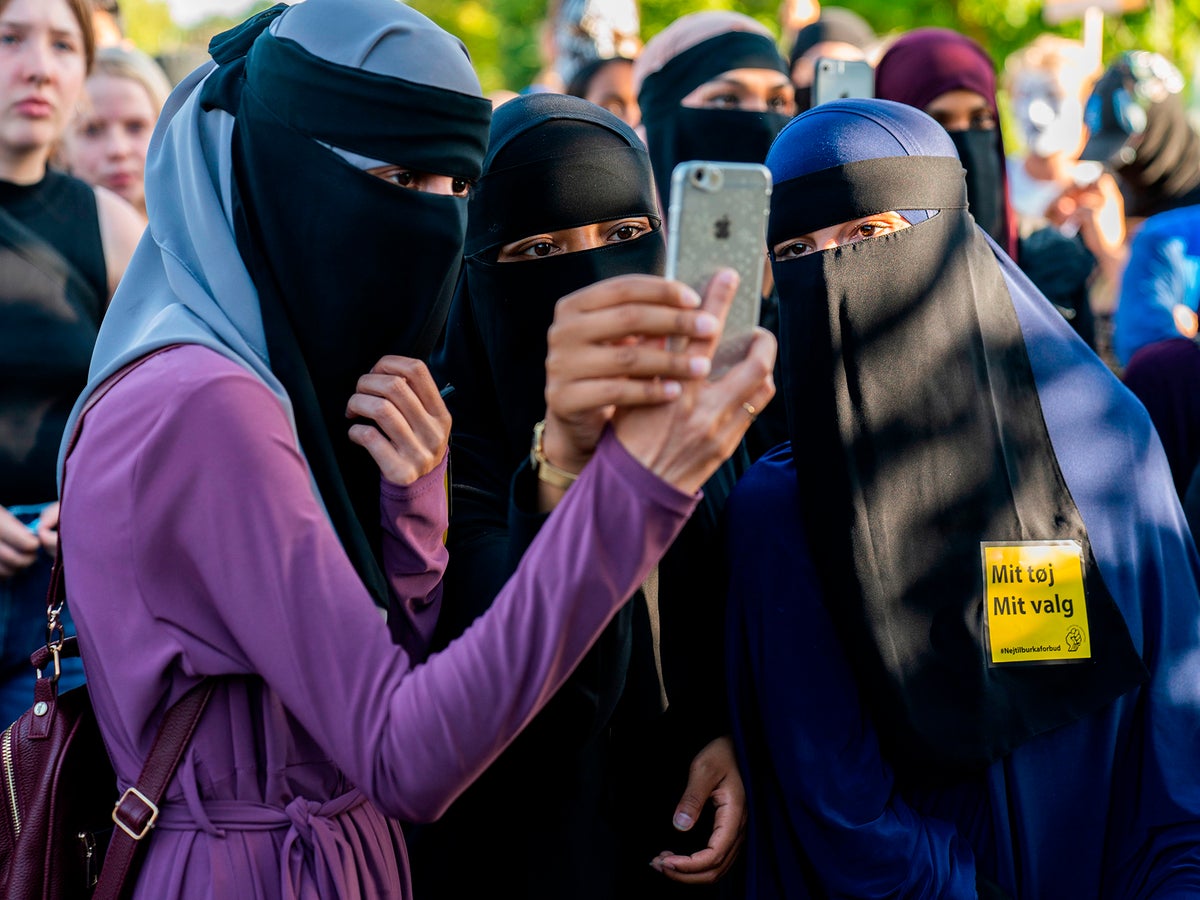
 
https://static.independent.co.uk/s3fs-public/thumbnails/image/2019/04/24/11/the-hijab.jpg?width=1200
Burqa ban in Great Britain?  Independent
 
How times have changed; the instructions of yesteryear rejected by the electorate have, by necessity since then been rejuvenated where marriage fraud warning is circulated by government auspices. In Canada too there are those requiring an explanation why it is frowned upon to rape children. A 'Pre-Departure Guide for Newcomers to Canada', published in 2025 focuses on newcomer rights rather than their responsibilities to the new country they will inhabit. 
 
Gently there are hints as to what is now of vital importance to this current progressive government; an acceptance of the presence of transgenderism, where readers are instructed that the LGBTQ-2 community in Canada is not only accepted, supported and valued, but so too is the right of the nation's children to question their from-birth designation as male or female. Issues such as 'lining up', 'making eye contact' and 'using underarm deodorant' are given their due place in the booklet.
 
Criminal activities are also addressed such as a jail term will come with carrying a firearm without a permit, and unwanted sexual touching or remarks may elicit a fine, or even prison. Bribery, polygamy, female genital mutilation and 'Making, sharing or owning photos of naked children', 'forcing others into marriage', and 'having sex with children', are similarly frowned upon and the letter of the law may be applied. Although truth to tell, the justice system goes easy on skin tones and ethnicity and cultures, with reduced sentences applied.
 
Family violence is frowned upon and "Killing a family member as a way to save a family's honour", is definitely unacceptable. Also addressed is the virtue of working for a living, rather than becoming wholly dependent on Canada Child Benefit payments which, when enough children in a family receive those generous benefits can sustain a family, without a breadwinner breaking a sweat. ($679.75 per month ($8,157 per year) for each child under 6, and $573.58 per month ($6,883 per year) for each child aged 6 to 17 for the 2026–2027 year.
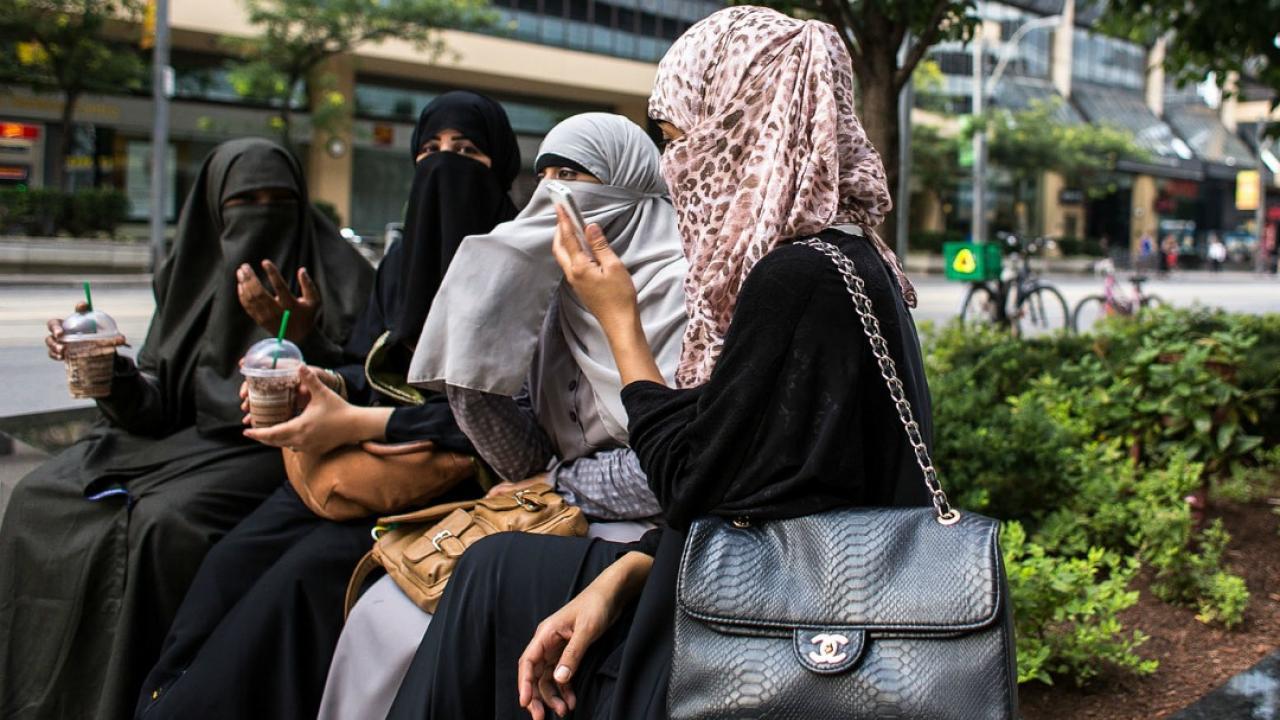
 
What Muslim female dress as a wedge issue means for Canada | TVO Today
What Muslim female dress means as a  wedge issue in Canada  TVO Today


Labels: , , , , , , , , ,

Thursday, June 27, 2019

Our Ultimate Consuming Culture

"Unlike drugs or alcohol, from which we can be totally abstinent if we want to be, shopping and eating have to be done."
Dr. April Benson, psychologist

"Here's how it works: The initial pleasurable experience -- ooh la la, that bag! -- releases the neurotransmitter dopamine in the nucleus accumbens, a part of the brain that plays a major role in our neural reward circuitry. Each time we do this pleasurable thing, dopamine is released faster, more intensely. The bits of the brain charged with memory encoding record the purchase as a nice experience, thus generating a conditioned emotional response to the cue."
Linda Rodrigues McRobbie, freelance writer, London

"Over time, the pleasure associated with an addictive behaviour subsides, but because the memory of the desired effect and the need to recreate it persists, desire becomes compulsion."
Dr. Carolyn Mair, psychology consultant

"[Corporate interests and marketers exploit our acquisitiveness desires to convince us that specific foods, porn, alcohol are desirable, their language steeped in self-reward.] That's part of the strategy to normalize and make innocuous these things that really aren't."
"Their revenue streams are really dependent on the heavy consumers. Corporations, especially those that market temptation goods, depend on excessive consumption for their bottom line."
Dr. David Courtwright, emeritus professor of  history, University of North Florida
To determine the 10 states profiting the most from vices such as gambling, alcohol and cigarettes, 24/7 Wall St. reviewed revenue from "sin taxes" as a percentage of the state's total tax revenue. Perhaps surprisingly, Nevada doesn't top the list despite being home to the world famous Sin City itself.
"With more materialistic attitudes and more marketing, it's making it harder in general for people to deal with this stuff."
"We have all this media, and yet we're supposed to be able to control our shopping and we're looked down upon if we don't."
Dr. Ricardo Rieppi, psychotherapist
Shopping in Bloor-Yorkville: High-End Fashion and Boutiques

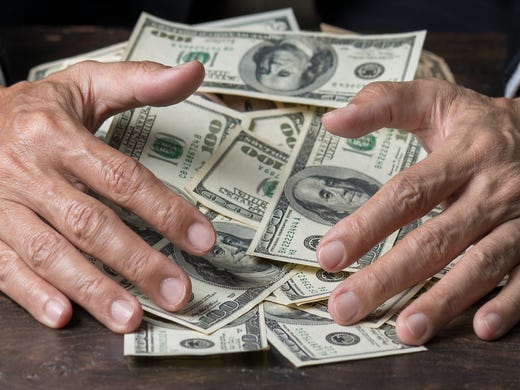
The shopping compulsion: it teases and attracts and compels us to respond to all the advertising we're exposed to on so many levels that have become commonplace and an adjunct to our lives. Everywhere we go, everything we tune into from radio to television, videos and social media make it all so accessible and so interesting, piquing our already-heightened sense of acquisitiveness in a consumer-oriented society. So many items become 'must-haves'. All the more so when they're being flogged by celebrity figures.

Shopping once entailed a physical presence; you deliberately embarked on a mission to go downtown to a shopping area to look about at what was on offer. Now you know what's on offer, advertisements pop up each time you're on line, every time you use your smartphone, everywhere you look while out driving and billboards beckon. And really, it's no longer an effort to shop. In days gone by shopping was carried out in rural areas by the use of mail order items. Now people don't have to haul themselves to shopping centres, the Internet makes it all so simple.

We are indoctrinated and geared through social media influence to want to shop, to acquire the most up-to-date fashions, the latest technological gear, the current home fashions, so readily accessible, all we do is click and it's in the virtual shopping basket and payment is remote, no handing over of cash. In excess of 197 million people buy goods through Amazon monthly. According to Walmart, the largest retailer in the world, $500-billion in sales last year alone beefed up their bottom line. Their top-selling items? laptops, crayons, Instant Pots....really!

Holiday Shopping in Toronto: You Can’t Get This Online

In the United States last year, American credit card debt represented a record $870-billion; that's a lot of 'stuff' and it's linked to "compulsive buying disorder"; at least the 19 million Americans who represent the obsessive purchasing segment of the population falling into the category of buying-stuff-they-don't-really-need grouping. German psychiatrist Emil Kraepelin originated the term "oniomania" (buying mania) in 1915 to identify a compulsion he thought of as close to kleptomania.

One survey identified 64 percent of Americans who bought items on impulse later regretted that indiscretion, a condition we call buyer's remorse. So many things that aren't needed, aren't even wanted or particularly liked, but purchased in response to a compulsion to buy items that will later end up being donated to thrift shops, original tags and all. It all began in earnest in the 1980s with the proliferation of malls alongside an increase in disposable incomes. According to experts in the field, compulsive shopping affects a minimum of six percent of the population.

What may be even more surprising is that it isn't only women but men too who tend to compulsion-shop. Researchers point out that shopping helps many people over rough spots in their lives; coasting over depression as a distraction, however temporary. We are tempted by dissatisfaction with life, by feelings of anxiety to elevate our emotions to a more tractable and pleasant position by pleasing ourselves with new acquisitions; a band-aid solution to whatever ails us. It is an addiction that is difficult to regulate and discipline.

Herald the Holidays at Yorkdale Shopping Centre

Labels: , , , , ,

Wednesday, April 03, 2019

Bottoms Up!

"With modern technology, some of the art of distilling has been lost. So to go back and see where it all came from was eye-opening."
"I thought, '[Plague water, how could that possibly taste good?' But in fact it tastes like the base for chartreuse."
"Some combinations of botanicals create surprising results -- they just make each other pop, in a way we didn't expect."
Jon Kreidler, founder, Tattersall Distilling, Minneapolis

"Herbs were the only medicine you had [in the Medieval era]. But plants are ephemeral and seasonal, so you'd put them in alcohol to have something shelf-stable."
"[As distilling became an industrial enterprise], a lot of amazing spirits went by the wayside."
Amy Stewart, author The Drunken Botanist: The Plants That Create the World's Great Drinks

"As I was touring the space, people would ask me what type of alcohol they would have consumed at these parties."
"We thought it would be fun to not just talk about alcohol in the period rooms, but to offer a taste as well."
"We realized we needed to contact real professionals [to achieve that practical end]."
Nicole LaBouff, curator, Minneapolis Institute of Art
Rare books and manuscripts from the Wangensteen Historical Library of Biology and Medicine at the U of M feature historic food and drink recipes.
Gallery: Rare books and manuscripts from the Wangensteen Historical Library of Biology and Medicine at the U of M feature historic food and drink recipes.   Carlos Gonzalez – Star Tribune
So that's how it began; public curiosity twigging a curator's interest in collaborating with a local brewery to produce beverages that would reflect those available during a much, much earlier era as medicinals that later morphed into sociable party spirits. The collaboration between the University of Minnesota and the Minneapolis Institute of Art and Tattersall Distilling has brought an entirely new focus on potable alcoholic beverages.

It's a serendipitous twinning that has produced award-winning gins, bitters and liqueurs. Next up: plague water.

What's plague water? A tonic to ward off diseases, produced by apothecaries of the Medieval era; a combination of angelica root, gentian and other herbs. That alcoholic concoction has now been revived by Tattersall, in the spirit of re-discovery, enterprise and art. The craft distilling industry is expanding enormously, and as it does, it intersects with an alert and fascinated group of historians focused on the role of alcohol in everyday life of the times.

Plague Party is a cocktail made with the historic spirits Plague Water and Aqua Mirabilis, pineapple juice, lime juice and honey sage syrup at Tatters
Carlos Gonzalez – Star Tribune   Plague Party is a cocktail made with the historic spirits Plague Water and Aqua Mirabilis, pineapple juice, lime juice and honey sage syrup at Tattersall Distilling.

Scholars are alert to the distiller's efforts enabling them to acquire a better understanding of how and what people ate and drank in the distant past. For their part, distillers are re-discovering their own history. Tattersall has made good use of the large inventory of the Wagensteen Historical Library of Biology and Medicine, at the University of Minnesota where, among its 72,000 volumes -- some of which date back to 1430 -- are hundreds lingering on the curative properties of roots, weeds, seeds, metals and ... animal parts.

Rare books and manuscripts from the Wangensteen Historical Library of Biology and Medicine at the U of M feature handwritten food and drink recipes. T
Rare books and manuscripts from the Wangensteen Historical Library of Biology and Medicine at the U of M feature handwritten food and drink recipes. Top Ð The Modern Art of Cookery Improved or Elegant, Cheap and Easy Methods of preparing moft of the Dishes in Vogue, Ann Shackleford, 1767. Middle Ð Book of Receipts, Ann Ward, c. 1724. Manuscript. Bottom Ð Art of Distillation.     Carlos Gonzalez – Star Tribune
The curative properties of these varied products of nature reflected the function of Medieval medicine in mixing and matching the ingredients into a concoction for optimum efficacy. When the ingredients were mixed with alcohol as a preservative, the resulting spirits led to combining sugar into the mix to create cocktails, leading to the industrial production of alcoholic beverages by distillers. In perusing the ancient recipes, a few dozen were chosen for re-creation.

Milk punch for example, currently a popular drink among bartenders, is made through adding citric acid to milk to have it curdle, them skimming off the solids so all that is left appears a yellowish, slightly sweet liquid mixed with alcohol. Plague water's renaissance saw some creative substitutions since some ingredients were simply unavailable or not to be used because they were discovered to be toxic. Plague water has a pleasant, earthy, herb-infused flavour.
Three cocktails made with historic spirits at Tattersall Distilling are Plague Party, Saffron Bitters Tonic and Clear Skies Ahead.
Three cocktails made with historic spirits at Tattersall Distilling are Plague Party, Saffron Bitters Tonic and Clear Skies Ahead.   Carlos Gonzalez – Star Tribune


Labels: , , , ,

Wednesday, June 22, 2016

Normalized Canine Butchery

"Grandpa strokes my poodle on his lap and says, 'This is just the right size for a bowl of bosintang. He's joking, but whenever he says that, I snatch my dog from him."
Kim Yoo-na, 14, Wonju, South Korea

"It's the difference between heaven and hell [the life of a pet dog and one raised to be eaten in South Korea]."
"I was not ashamed of my way of making a living [raising dogs to be slaughtered for the table], but I was not proud of it either."
Gong In-young, dog-meat farmer, Wonju, South Korea
Thailand's Illegal Dog Meat trade
Trucks containing 130 dogs are seized on the highway between Thailand and Vietnam. Photograph: Luke Duggleby

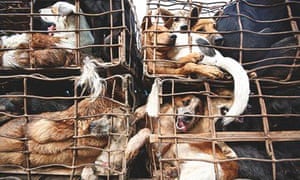
Ten to twenty million dogs are slaughtered for their meat in China on an annual basis. A tradition that dates back to the time of Confucius. Dogs are bred, raised, kept in cages then sold to slaughterhouses in China, South Korea and other Asian nations where people consider dog meat an indispensable part of their cuisine. Mr. Gong, for example, keeps dogs locked up in steel cages, and there they are kept their entire lives; fed until they are mature enough to be taken to the slaughterhouse, their meat going to the marketplace.

That this is the tradition that keeps Mr. Gong in business supplying a market for ardent dog-meat aficionados has not kept this 55-year-old from loving and doting on an elderly Spitz on his farm, whom he has named Snow-White and who is viewed as one of his family. The dissonance in how he views the two, his beloved pet, well cared for and treasured, and the dogs that have no present and no future; his mind is shut, as a farmer and dog breeder-for-meat, to their plight.

Animal-rights groups have been attempting to reach people like Mr. Gong, to instill in them a humane reaction to the tradition of viewing dogs as table meat. Those groups estimate that 30 million dogs, most of which have been stolen or are feral, are slaughtered annually for meat throughout Asia. In South Korea the trade in dog meat is of an industrialized nature.

Over 17,000 dog farms, some raising over a thousand animals each, supply two million dogs to the marketplace for dog meat. This is a tradition held to be centuries-old, according to government data. Huskies, Rottweilers, Golden Retrievers and other breeds are held in Mr. Gong's cages complex, barking and struggling at the wires of the cages they're held in. As the dog-eating season in summer draws near, dog traders come to visit.

The value of a 36-kilogram dog is about $250. In transporting the dogs, they are crowded into cages unable to move; some suffocate before arrival at slaughterhouses where they are meant to be electrocuted. From there, wholesale meat dealers deliver the carcasses to dog-meat restaurants. Koreans name their special dog dish "bosintang", or "soup good for your body", popularized at a time when meat was in short supply.

It is a culinary history of which Koreans take great pride, including those who shun the dish, taking umbrage when foreigners criticize the practise. Yet South Korean tastes are changing as are their attitudes toward the practise of eating dog meat, particularly among the young for whom keeping pets has replaced eating dogs. The very idea of eating dog meat is grotesque and disgusting to young Koreans.

Mr. Gong's own son would never touch dog meat. Recently, he watched as the process of taking 17 of his dogs in flight to the United States under an agreement with the Humane Society International group whose campaign against dog farms in South Korea has made some inroads. Mr. Gong expressed his reaction, viewing photographs of the dogs now living abroad as pets, saying he "felt better".

Yulin, in southern China, has an annual dog-meat eating festival, where protests from animal rights activists have had no effect whatever. At dozens of restaurants across the city, vendors slaughtered dogs, cooking their meat for their avidly awaiting clients. In reaction, activists bought dogs from dealers planning to slaughter them, doing whatever little they could to ease the plight of individual dogs under the circumstances.

Labels: , , , , ,

Thursday, May 12, 2016

Valuing Food

"I've been feeding myself like this for years. Not because I have to, but because of my political convictions."
"I find our way of consuming and throwing out food is totally absurd, as if it had no value."
Aladdin Charni, Freegan Pony restaurant, Paris
Freegan Pony - Paris, France. Comptoir de la cuisine
Freegan Pony website

"Hands down - this is the coolest and hippest spot in Paris at the moment."
"What is Freegan pony? Tucked away at the edge of Paris, you'll find this gem in the most improbable spot. The vibe here is definitely very underground and you really must come see for yourself to experience it."
"When I was here, we had a delicious tomato soup as a starter, then a dish with couscous type grains and tomato and fried onions with a white sauce, followed by rice pudding for dessert."
"Once you open the door to this underground lair, you first sign up at a small table and are explained the concept, as well as given a membership card to the association. Reservations are an absolute  All the tables, furniture, decoration, silverware, etc is all second hand and gives it a really vintage feel. It's really an experience eating here."
"It can be a bit nippy in here, so make sure to bring an extra sweater and dress warmly!"
"You then wait for the kitchen staff to call your name. One of the members of the association came over and explained the concept and the evening's menu to us, letting us know that they had put a lot of love into sorting through all the Rotten tomatoes and salvaging what they could. It was cool to have that kind of interaction with the association members/volunteers and give it a more personalized feel. I'm sure it's not an easy task concocting menus and cooking for 50!"
"At the end, when you've finished eating, you must clear away your dirty dishes and leave them in a designated area, which will have been explained and shown to you upon entry (just like at the cafeteria)."
"At the end, it's up to you to choose how much to pay. There is no set price, and you choose to give the amount you want. It really makes it accessible to everyone."
"To sum up : if you haven't been here yet, seriously what are you waiting for? This place is AWESOME. Can't wait to come back!"

Freegan Pony review, Elizabeth W., Paris
There are many people who think about food, and the shortages of it around the world. These are the people who deplore the fact that while we in the developed world have an abundance of whole foods to choose from, all too many of us choose quasi-food, pre-packed, pre-processed, and unhealthy, to represent our diet. The ready availability of food that has been processed ad infinitum, taking it about as far as it's possible to go from its natural state, responds to the fact that people have no patience with cooking for themselves.

There's also a dearth of time available, when so many other things call out for attention in a busy lifestyle, so choosing inexpensive, energy-dense and nutrient-deficient food has become 'normal'. What has also become normal is that too much of this kind of diet leads to populations becoming increasingly overweight-to-obese, suffering significant health problems with the onset of chronic, life-challenging diseases and illnesses as a result of what has become an unfortunate habit.

While we are obsessed with food since without it we cannot exist, we accept counterfeit food posing as healthy alternatives because advertising and public relations have convinced us that these choices make our lives easier and less complicated. There's a demographic that is turning now to realizing that whole foods that present as less-than-perfect in their natural forms; fruits and vegetables that have grown somewhat deformed rather than perfect in shape and colour, means that before they even get to the farm gate they're disposed of, since no one will buy them.
Freegan Pony - Paris, France. Petit apéro chou
Freegan Pony website

Some supermarkets, sensitive to the demands of shoppers who look for these products and expect to pay less for these fruits and vegetables which have all the nutrient value of their more perfect cousins, are beginning to stock them. Some markets have appeared that specialize in these agricultural products that were once spurned, to meet these new demands from shoppers. And then there is the issue of wasted food, where a significant proportion of what is grown is not sold while still fresh, and as a result, discarded.

In Paris, on the 19th arrondissement across a square under a highway overpass there is a set of metal doors where a bright green painted pony identifies a restaurant within, known as the Freegan Pony restaurant. Food is prepared there on a daily basis, and the food that is presented has been sourced from dumpsters. The Freegan Pony restaurant represents an illegal squat; no license or legal permission has been obtained, but there it is, fully operational, popular and pleased to give service to discriminating tastes.

Paris's Rungi market is where most of the food prepared in the restaurant kitchen is harvested, where tons of food at the end of shelf life at the market is discarded daily. Freegan Pony is vegetarian, sometimes preparing vegan meals, whose dishes most often reflect the savour of an ethnic flavour. The usual clientele is mixed; homeless migrants from Afghanistan, for example. But also Parisiens interested in addressing the issue of food waste and eating in an unpretentious yet cool environment.

The restaurant fills an obvious need. While France has instituted a new law requiring supermarkets to donate unsold food to food banks and the like, this does not extend to food wholesalers. And it is there that Freegan Pony obtains its reclaimed food that goes into its creatively imaginative daily menu which changes constantly to reflect whatever has been collected on any given day. The restaurant serves up to 80 meals nightly, four nights a week, and it is a pay-what-you-wish system.

"I arrived once, and all we had was cabbage, and ... 50 kilos of parsnips ... and a bunch of oranges", laughed Mardi Hartzog, one of the restaurant's cooks. "And so then you just have to start getting really creative. It did end up being mostly a soup, but then I also made a really nice sauce with some over-ripe persimmons, so sometimes you get inspired by things you didn't think were possible", she explained.

Freegan Pony - Paris, France. Another view of inside
Freegan Pony website

Labels: , , , , ,

Saturday, March 15, 2014

Canadian Values

"Canadians seem to have a nice balance between a freedom to do what you want to do, a freedom from fear of poverty or violence and the freedom to be me. With Canadians, the multicultural diversity, sexual orientation diversity, the abled and disabled, we have a very inclusive attitude that everybody is in the family and we've got to help everybody."
"Not that we're that close to each other, what with the differences in provinces, Quebec, the Atlantic and so on, but that we are close enough to have the common programs that we all embrace."
Michael Adams, president, Environics Institute
View of Centre Block at night.
PWGSC - Parliament Hill, Ottawa, View of Centre Block at night

In a speech delivered to the Wilson Center's Canada Institute Mr. Adams, whose firm is involved in "original public opinion and social research on important issues of public policy and social change" points out the variances in social culture between Canada and the United States. And his conclusions might seem counter-intuitive to many who have always regarded Americans as compassionate and kind, involved in community.

Stands to reason, after all, since Americans typically are more generously giving to charitable causes than are Canadians. And in the United States, social philanthropy is far more developed than it is in Canada. Some might suggest that this is guilt at play, not necessarily altruism, since the most generous of philanthropists in the United States have typically been fabulously wealthy industrialists who gained their fortunes riding roughshod over the public interest to attain them.

In any event, Mr. Adams spoke of research that led to certain conclusions. Pointing out that Americans and Canadians respond far differently to society's needs in their personal perceptions of how they should react. The differences, he says are stark. Canadians have a more robust sense of community, aligned with a greater sense of individual freedom than do Americans. It's the 'I'm All Right, Jack' syndrome, one supposes.

Americans, on the other hand, speaking with a broad brush of generalization obviously, are burdened with a strong sense of patriotism and conformism. Unlike Canadians, Americans tend not to consider their country representing one community pulling in tandem for the public weal. Americans have a religious belief that success is the result of virtue, and failure goes to the undeserving. In the American view, he posits, a just world is one in which the rich are admirable, the poor are not.
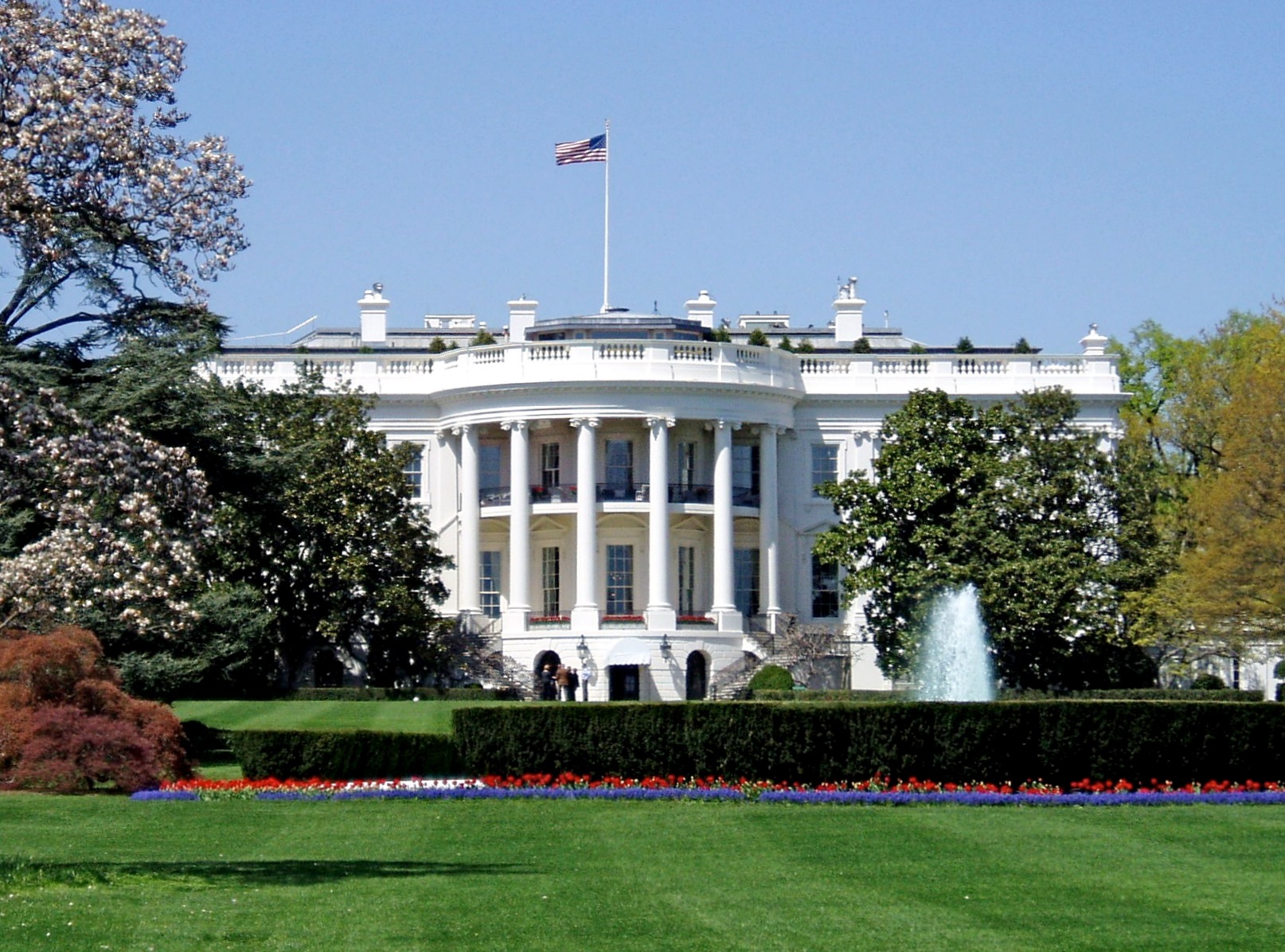
The south portico of the White House -- Wikipedia

"If you don't deserve it, then you really don't deserve my tax dollars and you don't deserve my charitable dollars", he explained. "So you are on your own." Rather a harsh condemnation of perhaps what came out of the frontier mentality and individualism. A new Pew Institute study posited the question : Is belief in God essential to morality? Fifty-three percent of Americans responded in the affirmation while 31% of Canadians did so.

Issues of authority, patriotism, work ethic, ownership, religion and patriarchy represent the important issues on the American values landscape. Separated out somewhat and moderated by necessity in view of whether Americans are drawn to the Republican or to the Democratic agenda in the public discourse, scale of priorities and realization of core needs. Perhaps going a long way to explaining why millions of Americans were left catastrophically adrift with no health insurance.

Republicans, averred Mr. Adams, attract conformists and authoritarians (conservatism), while Democrats are attractive to the idealists in society. And then there's this last little adjustment in the scale of opposites and political affiliations relating to ideology and moderation. The American Democrats are more aligned to the Canadian Conservatives in values and priorities. There really is no Canadian-style Republican party.

Canadians represent themselves as being more idealistic, self-reliant and open-minded socially and culturally. The American public retains its strong sense of duty and work ethic, risk-taking and attention-craving (think celebrity-culture!). Needless to say these are all issues that seep over from one camp to the other in varying degrees. But by and large it's safe enough to conclude that the two societies really are different.

Labels: , , , ,

Monday, January 20, 2014

Muslim Marriage Normalcy

"When a young girl is married and gives birth, the vicious cycle of poverty, poor health, curtailed education, violence, instability, disregard for rule of law ... continues into the next generation, especially for any daughters she may have.
"Child marriage legitimizes human rights violations and abuses of girls under the guise of culture, honour, tradition and religion."
Equality Now, international human rights group report
CAI109-119_2014_131813_high.jpg
Yemeni school students hold up posters denouncing child marriage, as they take part in a protest outside the parliament building in Sanaa, Yemen -- The Associated Press
FILE - In this Tuesday, March 23, 2010 file photo, Yemeni school students hold up posters denouncing child marriage, as they take part in a protest outside the parliament in Sanaa, Yemen. In the Middle East, Saudi Arabia and Yemen are the only Arab countries that do not have laws that set a minimum age for marriage. According to a December 2011 Human Rights Watch report, approximately 14 percent of girls in the Arab world’s poorest nation of Yemen were married before the age 15, and 52 percent were married before 18 years old. Arabic reads, "no for killing childhood " and "Fawzya Abdullah: a victim of underage marriage." (AP Photo, File)
- See more at: http://www.timescolonist.com/rights-group-says-laws-are-failing-to-protect-girls-from-being-forced-into-early-marriages-1.794671#sthash.8WffoB4u.dpuf
Using statistics provided to them by the United Nations Population Fund, the human rights group Equality Now revealed in a weekend report that over 140 million girls worldwide will be married off before they turn 18, over the next decade. This occurs in India, but it is common in Afghanistan, Cameroon, Guatemala, Jordan, Kenya, Malawi and Mali. It occurs most often in Muslim-demographic areas of the world.

And as people migrate from those countries to take up residence as immigrants or refugees in Western countries, they bring the tradition with them. It is part of their accepted culture, stemming from religious belief that their religion, mostly Islam, supports the 'marriage' of girl children to men their families agree to surrender the children to. Paving the way for a lifetime of subjugation and marital slavery in childbirth and isolation.

Custom and tradition enter the picture in the society's acceptance of girl children used to restore or maintain family honour, or to settle a debt, or to obtain some financial gain. As far as the child's family is concerned a wedding equates with one less mouth to feed. And the wedding dowry is of useful practicality to the impoverished, used by the family to support itself. The law of the country may say one thing, but social normatives make it legitimate to give a child in marriage before age 18.

Early marriages may be encouraged with the intention of providing protection for young girls against sexual predation. In and of itself the prevention of a young girl being raped means that the family honour will not be besmirched. The United Nations population fund claims rates of child marriages highest in the poverty-stricken West African country of Niger. There, 75% of girls are married before they are 18, while a third are wed before age 15.

In Bangladesh, child marriage rates stand at 66%. In Central African Republic and Chad the rate is 68%, while in India, 47% of girls are married before age 18. Saudi Arabia and Yemen are the sole Arab countries in the Middle East that have no laws setting a minimum age for marriage. A 2011 Human Rights Watch report stated that about 14% of girls in Yemen were married before age 15; 52% before age 18.

Born in the Middle East, Africa or East Asia, the lot of young girls is not an enlightened one.

Labels: , , , , , , ,

 
()() Follow @rheytah Tweet