Ruminations

Blog dedicated primarily to randomly selected news items; comments reflecting personal perceptions

Friday, October 04, 2019

Pot Concerns from the Scientific-Medical Community

"I'm not here to demonize cannabis. We don't need to go back to reefer madness. But we can't say it does not harm."
"If we have several million people smoking marijuana every day, we want to know what the effects are."
"When we study a new drug, like a statin, for example, it is a single drug -- a single molecule. We know what receptors it works on, why it works, how it works, and have tested it extensively under rigorous conditions to ensure it is both safe and effective."
"To expect 70 chemicals of unknown dose to exert a specific effect, or even a net positive effect, is magical thinking."
"From a public health perspective, the balance of evidence so far is that using marijuana is not good for your heart, blood vessels and brain."
Dr.Chris Simpson, cardiologist, 2014/15 president, Canadian Medical Association
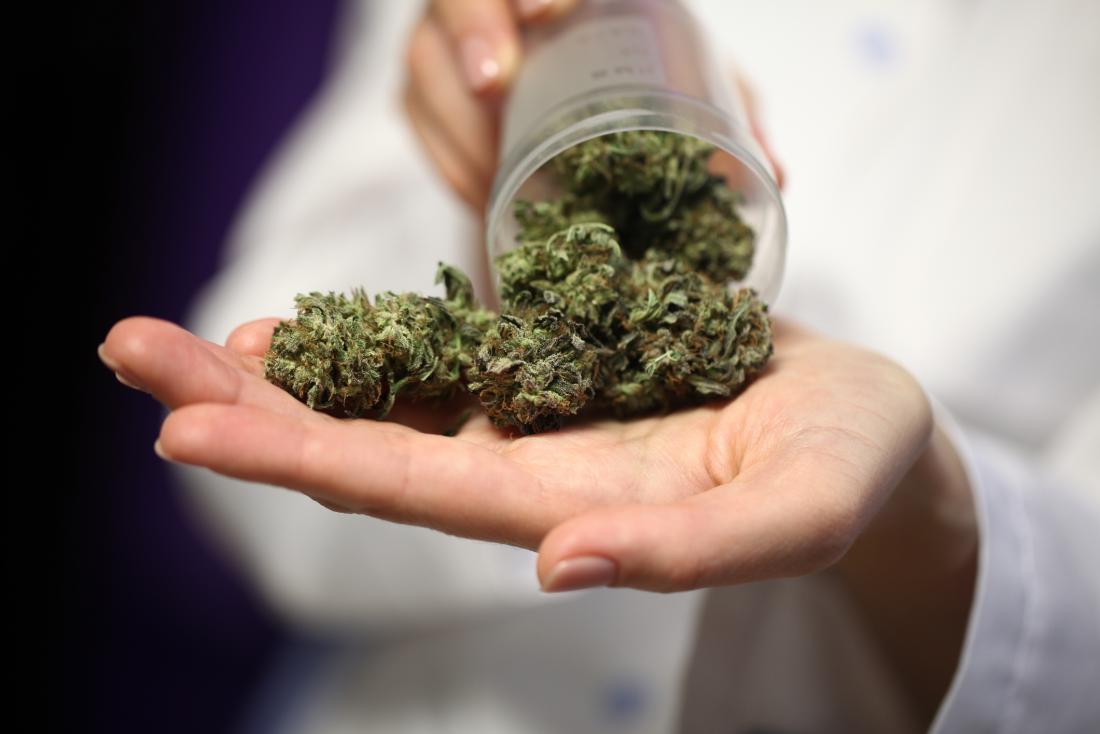
Marijuana in hand
Marijuana in edible form may have cardiovascular risks for people at risk.
There are 70 cannabinoids of unknown dose in each joint of marijuana. What is a great unknown is the manner in which these chemicals interact with the endocannabinoid system, and thus the effects are unpredictable. Since the growing incidence in North America -- federally in Canada, and state-by-state in the United States -- of cannabis legalization, the belief has grown of the safety and usefulness of marijuana for medical purposes. And nor do recreational users of cannabis think otherwise than that their use of the now-regulated drug is perfectly fine.

That, aside from the growing numbers of high-school students using pot, or e-cigarettes in vaping, grown immensely popular. And with its popularity another concern from the medical-science community over the effect of an unknown substance which is known to have a deleterious effect on the still-maturing brain of people under 21. Much less that vaping has now been associated with lung disease, to the effect that it has now been attributed as the cause of death of 18 people in the United States, and the hospitalization of one thousand. In Canada this same phenomenon is beginning to emerge.

According to Dr. Simpson, preparing to address researchers, health professionals and policy-makers at the Canadian Stroke Congress, someone who has smoked a joint becomes as vulnerable within the passing of an hour to a heart attack as someone who has just finished shovelling a heavy load of snow. The greater the THC content -- the psychoactive compound in marijuana, the higher the risk, stresses Dr. Simpson, explaining that THC serves to activate certain blood vessel receptors. So that, when THC binds to the receptors the buildup of plaque results, making blood "stickier", a condition then leading to blood clot creation.
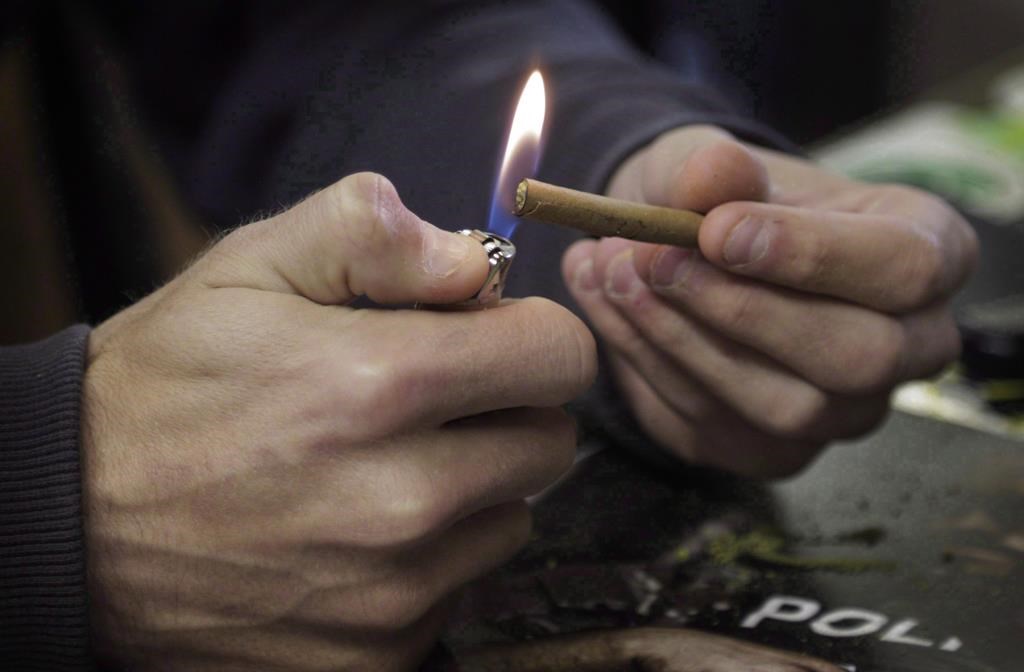
A man lights a marijuana cigarette  THE CANADIAN PRESS/Joe Mahoney

"In the case of a stroke, a blood clot lets go and travels to the brain", this expert on cannabis interaction with the heart muscle and health conditions leading to stroke explained. He acknowledges the potential that some of the 70 chemicals known to make up marijuana may be useful. On the other hand, marijuana remains a largely unknown quality with respect to human health. It becomes even more complicated to judge the effect on health in marijuana use since people who smoke pot also frequently are cigarette smokers.
"There is this huge popular misconception about cannabis, driven by social media and the cannabis industry, that it is a medicine or it is harmless. "I worry when people say that cannabis is a natural product that has been used for a thousand years and so it must be safe. Countering that belief is tough. There are huge gaps between what people believe and what is reality."
"It hits you like a ton of bricks at the one-hour mark or so and you can overdose very quickly because of the delayed reaction."
A five-year study of hospital statistics from the U.S., looking at a period from 2010 to 2014, shows the incidence of stroke has risen steadily among marijuana users even though the overall rate of stroke remained constant over the same period. The study was presented on Friday during the third day of the World Stroke Congress in Montreal. (Sean Gallup/Getty Images)

Labels: , , , , , ,

Tuesday, January 29, 2019

Grooming With Care

"Kids are smart and they're watching everything and everyone."
"The conversations should be about authenticity and honesty."
"There is a difference between discretion and hiding. Hiding encourages stigma because it is something that you keep from people. Having discretion is about responsible use."
"It's maybe not that I don't trust my own kids. I keep it [cannabis] locked and away from them so that they understand that it's an adult-use product."
"My job is to be a responsible user and store it [cannabis] responsibly and have these conversations. I want to have a dialogue with my kids about this."
Ashleigh Brown, founder, SheCann

"I just asked myself, 'I know my adult children are smoking it, so why am I the one hiding it?"
"We're all adults here."
Sabine Dolby, 56, Toronto

"There are downsides to [cannabis use], but if we don't talk about it, how are we really going to know?"
April Pride, founder, Van der Pop, cannabis lifestyle, Seattle


In this post-legalization world of cannabis access beyond medical use and into the recreational sphere parents of teens find themselves suddenly faced with the need to discuss the use of pot with their adventurous children, adolescents forever attracted to the exotic and 'forbidden'. It's good strategy. Just as good strategy and very badly needed, as when parents begin to discuss with their children the ins and outs of intimate sexual relations, how babies are born and how best to deal with one's hormonal cravings to experiment and learn first-hand what all the fuss is about.

In the Toronto of recreational marijuana legality, a recent event titled Women & Weed took place, where a number of speakers addressed the audience interested to hear first-hand from those upon whom they look as 'experts' to guide them in their own perplexing search how best to handle the sensitive issue of parent-child discussions revolving around the use of cannabis. Uppermost in mind of these parents is the certain knowledge that young people will and do extend themselves to discover first-hand what's happening.

That, linked to the medical community warning of the deleterious effects of marijuana use for young people whose brains are still developing and who, with the use of pot, can expose themselves to harm, makes the issue of primary importance. At that event, the founder of SheCann, an online portal enabling women in Canada to share their own use of medical cannabis experiences, emphasized the importance she places personally on making these discussions a continuous dialogue.

The #1 Parenting Tip of All Time

Ashleigh Brown of SheCann spoke of her own experience with medical cannabis begun in 2016, using it medicinally giving her children the decided impression that pot was a medicine, nothing more. Then she initiated discussions with her 14- and ten-year-old daughters about cannabis used by different people for a host of reasons; not necessarily confined to health. Both she and April Pride stressed the importance of conversations with children, to prepare them for the inevitability of being knowledgeable to a degree about weed they'll come across in future on the street and at parties.

There is a correlation, they stressed, between advising and discussing with children the effects of recreational alcohol, and no less so with cannabis. And one of the critical issues in such discussions is to explain why it is that marijuana is meant to be used only by adults, and until such time as young people join that category of maturity, its use can present a future health danger. Both women explained that they lock their pot away from their children. Despite which they feel that avoidance of conversation about cannabis use creates an aura of stigma, unhelpful in persuading kids to make considered decisions.
Kids Smoking Weed | Teens Smoking Pot

They recommend using resources as for example from Canadian Students for Sensible Drug Policy which views problematic drug use as a distinct issue of health, not an issue for the criminal justice system, advocating instead for harm reduction support. Talking to children about why and how people make use of cannabis is a start. Sabine Dolby who uses cannabis by prescription hid it from her children when they were young. Now, aged 24 and 30, she smokes with her children as a regular user and with legalization, feels relieved not to have to hide her use any longer.

The Canadian Centre on Substance Use and Addiction's position is that consuming cannabis on a regular basis during adolescence has the potential to cause loss of concentration and memory, and reduce thinking to incoherence. In a 2015 report, the Centre stated that regular use of cannabis is associated with experiencing psychotic symptoms and the development of schizophrenia, particularly among those with a family history of the condition.

There is a caveat that connection between cannabis use and mental illnesses, particularly acute anxiety, is not clear entirely, requiring additional research. The general consensus remains, however, that the effect of cannabis on not-yet-fully developed brains -- up to age 21 to 25 -- makes it imperative that such discussions do take place.

Marihuana leaves in head
Maren Caruso/Offset (leaves); Kichigin/Shutterstock (head); Sergejs Makarovs/Shutterstock (leaf)

Labels: , , , ,

Wednesday, October 17, 2018

Canada's Big Day in "Progressive" Legislation

"I have been hearing more and more about it over the past few months. Physicians have been seeing more of it in emergency departments."
"They [Ontario doctors] are watching Wednesday [October 17, legalization date for recreational cannabis in Canada] approach and wondering what will happen."
"We want the government to spend more time researching, tracking and understanding usage patterns."
"Decriminalization is associated with healthier, safer communities. It brings it out of the shadows so it can be treated like any other substance. [The OMA uses a] harm reduction [view of the legalization of cannabis]."
"[The work of the Ontario Medical Association and physicians] is to educate the public so they make safe decisions]."
Dr. Nadia Alam, head, Ontario Medical Association
CHS sufferers feel compelled to take hot baths  Project CBD

"Fundamentally, the federal government needs to take responsibility for the consequences of this controversial legislation."
"To that end, it must provide adequate funding for robust monitoring of cannabis use among all segments of society, especially among youth and other populations at particular risk."
"[Any increase in cannabis use as a result of its legalization] should be viewed as a failure."
Canadian Medical Association Journal editorial

"While cannabis may be legal as of October 17, driving high is not."
"If you are charged with driving impaired by drugs, you face the same consequences as driving impaired by alcohol, which is a 90-day driver's licence suspension, a seven-day vehicle impoundment and criminal charges."
"If you plan on getting high and/or drunk, plan your ride home so we do not have to plan it for you."
Ottawa Police Service
 Person smoking marijuana
Cannabinoid hyperemesis syndrome, which includes symptoms like vomiting and abdominal pain, can affect chronic users of marijuana. Source: Shutterstock.com

Just as physicians who are practising members of the Ontario Medical Association are becoming familiar with a newly-revealed syndrome resulting from excess and prolonged use of marijuana, they are also being informed of their professional duty to ensure that they do their utmost to inform the public of this new health menace relating to the new federal law legislating the de-criminalization of recreational marijuana, joining the years'-old freeing up of marijuana for medicinal purposes in a new atmosphere of freedom to indulge.

A notable new phenomenon of rising numbers of people appearing at hospital emergency departments in Ontario of recent months with a hitherto unseen condition related to heavy, chronic cannabis use has become a matter of some consternation in the medical community. And it is this syndrome which has compelled the Ontario Medical Association head, to alert both the professional community she serves and to put on notice the governments involved in this new public territory of normalizing cannabis use while setting up commonsense restrictions.

The syndrome is called Cannabinoid hyperemesis, identified by nausea of a severe nature and vomiting, alarming symptoms that obviously all is not well with a patient. First to be reported in 2004, according to the British Columbia Pharmacy Association, it is a frequent visitor to users who have accustomed themselves to one to five years of daily or even weekly use. Waves of severe vomiting ensues which hot showers appear to provide relief from.
Image
It is this very visible and concerning syndrome, along with all manner of other potential imponderables that has the medical community in Canada concerned with the introduction of legal cannabis for recreational purposes. According to Dr. Alam, one of the more acute concerns is that improved access to marijuana will invariably increase its use, most particularly with young adults, and that THC -- the active chemical ingredient in cannabis responsible for achieving those highs -- is now present in higher concentrations than once was the case.

According to one study on the matter, the cannabis now being produced has been altered to contain about three times more THC than was present 40 years earlier. And since it is well known that young people up to age 25 are at risk when using cannabis while their brain function is not yet fully mature, still in its later development stages, the effect on that age group is particularly concerning. Add to that the awareness of doctors that a connection exists between marijuana use in youth and mental-health issues inclusive of psychosis, then add in impaired driving and there is a perfect storm warning.

Public health education logically requires that the government of Ontario track the impact trajectory of legalization in an effort to understand its import for the future. Aside from these concerns, Dr. Alam recognizes the advantage of positive outcomes through legalization; more public information and discussion relating to the use of cannabis. People would be more encouraged to speak to their doctors about usage, critical to ensuring that as much helpful information is relayed as possible.

Furthermore, as an anesthesiologist herself, Dr. Alam is aware of the importance of a patient conveying to doctors their regular cannabis use to ensure that during surgery proper dosages of anesthetic are applied, since patients who are users could have a higher tolerance for sedatives and the possibility they could launch into withdrawal while anesthetized during surgery would be in no one's best interests, to say the very least.
Cannabis is an antiemetic — but paradoxically, chronic use can cause intermittent debilitating vomiting known as cannabis (or cannabinoid) hyperemesis syndrome (CHS). Since the legalization of cannabis in several states in the U.S., hospital visits for persistent or cyclic vomiting have increased. With cannabis use in Canada increasing, pharmacists should be aware of CHS in order to help patients and other health-care professionals avoid delay in diagnosis and effective treatment.
Cannabinoid hyperemesis syndrome (CHS) is similar to cyclic vomiting syndrome. The association of CHS with chronic cannabis use was first reported in 2004, although the authors had noticed cases of hyperemesis with cannabis use for years. CHS typically occurs in younger patients who began using cannabis at an early age. It manifests after one to five years (though the range can be between four months to 27 years) of daily or at least weekly use. Between episodes, patients with CHS may be relatively symptom-free or experience morning nausea and occasional vomiting, anorexia and abdominal pain lasting for weeks to months. Then severe vomiting and retching begin suddenly.
Hot showers or baths provide temporary relief. A history of compulsive bathing or showering suggests the diagnosis of CHS. Vomiting may last hours to days (typically 48 hours) and then stops.
Complications include acute dehydration, renal failure, erosive esophagitis, weight loss, and scalding from hot showers. Patients may also experience social distress, impaired job performance and absenteeism. CHS may go undiagnosed for years, resulting in repeated hospital and physician visits, fruitless  investigations and ineffective treatment.
Home


Image

Labels: , , , ,

Friday, August 10, 2018

Are We Becoming Concerned Yet?

"We are witnessing the beginning of a real debate around the wider legally regulated availability of drugs in Canada. The legalization of cannabis has opened peoples' minds to the idea of responsible regulation, whilst the opioid crisis has forced the debate into new territory. The window of opportunity is now wide open."
"Which drugs would be available, to whom, and where? These are tricky questions, but once we are able to answer under a legally regulated model where government has taken back control, rather than abdicating all responsibility to criminal market forces. More risky substances could be available only via a medical prescription model with supervised use, like heroin in Switzerland. Certain medium-risk drugs, including certain stimulants and party drugs, could be available on a rationed basis to adults from pharmacies, perhaps with a licensed buyer model, once they have proven they understand the risks. Other lower-risk drugs could be more available through appropriate licensed retailing, as we are about to do with cannabis."
David-Martin Milot, medical specialist in public health and preventive medicine, Canada
Steve Rolles, Senior Policy Analyst, Transform Drug Policy Foundation, United Kingdom
One in seven cannabis users with a driver's licence said they had got behind the wheel at least once within two hours of using the drug in the past three months. (Shutterstock)

So, open our minds a little further, beyond merely legalizing marijuana, so that criminal charges would not apply to anyone using once-forbidden drugs. Serious 'substances' needing a medical prescription and supervised use; medium-risk drugs available on a rationed track from pharmacies after an educational interrogation, and low-risk drugs obtained through licensed retailing. To some people with an independent streak this might seem like the same old interfering government auspices that so irritates those who feel they should be empowered to just get the stuff and get on with it.

The result being that the kind of black market activities with freely available drugs of all descriptions whose prices are becoming more 'affordable' increasingly, will remain in force, due to popular demand. Complete with the sociopathic compulsion to maximize profitability by 'cutting' drugs with cheaper, more powerful alternatives. People being people, are psychologically driven to resistance against imposing rules for anything they feel is their right to engage in without interference from any source.

As for imposing rules and expecting that law-abiding citizens will adhere to them for everyone's benefit, it ain't necessarily so.

Not until November, two months' hence will pot be entirely legalized in Canada, with a few provisos that edible forms will remain illegal, and only government-appointed sources will be mandated under license to sell those forms of the drug that are permitted, leaving the system in place for medical marijuana to its own devices. And one can only wonder what the end result will be; do government authorities really believe that cannabis will be kept out of the hands of vulnerable youth whose brains, still in their formative stage science has shown can be deleteriously affected with its use?

This appeal to legalize all drugs is an interesting one, reflecting in large part desperation on the part of government agencies and the medical community in the emergency efforts to deal with a rising tide of opioid overdoses leading to death. Aligned with the recognition that up to the present, laws that have criminalized non-medical drug use have failed dismally, in lock-step with the reality of criminal gangs from street corner operations to national syndicates having flourished -- and their scruples end where profits begin.

A new Statistics Canada survey reveals an "alarming" number of Canadians have driven a vehicle while high on cannabis or have been passengers in such vehicles.
A new Statistics Canada survey reveals an "alarming" number of Canadians have driven a vehicle while high on cannabis or have been passengers in such vehicles.     CKWS
Statistics Canada has just released its second quarterly national cannabis survey, and according to the results an "alarming" number of Canadians evidently don't think twice about driving while high on cannabis. Admittedly, nowhere near all cannabis users flout common sense, yet 14 percent with a driver's licence revealed that within two hours of consuming cannabis they decided to get behind the wheel of a vehicle ... and this, while cannabis use yet remains illegal.

Five percent of Canadians over age 14 have been a passenger in a vehicle being driven by someone who had used cannabis in the preceding two hours. Public danger? You bet. These quarterly surveys being conducted by Statistics Canada represent an effort meant to measure social and economic impacts involved in the legalization of cannabis. It's one thing to discourage people from driving while high but the issue of cannabis strength and individual users' reaction to pot, certainly complicates the matter.

This second quarter data revealed that roughly 4.6 million Canadians, representing about 16 percent of Canadians age 15 and over, reported the use of cannabis in the three-month period before the survey was undertaken. Men, close to two times likelier than women to drive while high on marijuana. On the national scene, cannabis use was higher in Nova Scotia at 21 percent than the national average, with Ontario at 18 percent -- Whitehorse 23 percent, Yellowknife 27 percent and Iqaluit 33 percent.
"I think if you compare it to alcohol, they're shocking [statistics that the rate of Canadians who drive after using using pot is triple the number of those consuming alcohol in the preceding two hours before driving]."
"I think [however, that] once people get the idea that police do have the tools, that they can detect drug-impaired drivers, especially cannabis, then I think like alcohol with the breathalyzer it'll start to lower those rates."
Andrew Murie, CEO, MADD Canada
You think?
According to Statistics Canada’s latest cannabis survey, 14 per cent of users are driving within two hours of consumption.
According to Statistics Canada’s latest cannabis survey, 14 per cent of users are driving within two hours of consumption.  (Sean Kilpatrick / The Canadian Press)

Labels: , , , ,

Monday, April 23, 2018

Teach Who, What?!

"Most of the time, they [high school drug education] would give us these fact sheets on cannabis. Then we'd all take it out to the corner and get high and laugh at it because we thought it was stupid."
"They said if you use at all it's problematic. I knew that wasn't true, because I saw a lot of people using that didn't have a problem with it."
"They [adult authorities] really try to scare you, using fear tactics. So it kind of blurs the line for you: What information can I trust? What kind of things are they lying about?"
"If they would have said, 'If you have mental-health issues you are more likely to use [cannabis] as a coping mechanism', I might have reflected on that."
"I moved out, went to college, left the town where there wasn't much to do. I was just too busy to be getting high and not doing anything."
Heather D'Alessio, 22, Canadian aspiring to university

"The evidence shows that an abstinence, fear-based message does not resonate with the majority of kids. It tends to work best with the kids who are the least likely to use drugs in the first place."
"It's almost saying to kids, 'Look, the way we've communicated with you in the past hasn't always been effective'. Part of that is acknowledging they used to lump it [cannabis] together with every other illicit drug and just say, 'This is your brain on drugs'."
"They need to somehow distinguish their new messaging from that, and say, 'You have to believe it when we say there are additional risks when you use cannabis when you are a teenager and when you are younger."
David Hammond, professor of public health, University of Waterloo, Waterloo, Ontario
Pot enthusiasts of all ages gathered below the Peace Tower on Parliament Hill for the annual cannabis celebration known as 4-20. Julie Oliver /Postmedia

When authorities issue warnings of any nature on any topic the usual reaction of teenagers is an automatic suspension of belief, simply because this is the normal way that the teen-age brain assimilates information it rejects out of hand. Any cautions emitted from the mouths of adults are immediately suspect. The reaction that kicks in is one of rejection linked to an instant determination to take on whatever is being warned against.

Canada has the dubious distinction of being recognized as the country with the highest rates of marijuana use in the world. According to Statistics Canada, 20 percent of Canadian youth between the ages of 14 to 19 report having used marijuana at least on one occasion in 2015; it is not the teens who represent the highest users however, but people between the ages of 20 to 25, whose use is close to 30 percent. Since the Canadian government is on the cusp of legalizing recreational marijuana it has launched a new education campaign.
Who uses cannabis?

Pubic health advocates are very well aware of the threat that marijuana use in teenage to the low-20s can represent to the still-maturing brain. They and government are invested in educating young people of the potential dangers inherent in starting and using cannabis at too young an age. Impulsive teens tend to comport themselves as they see fit, however, even with the best-intentioned advice when it runs counter to their values that "everyone does it".

The cannabis-awareness campaigns launched by the federal government and considered a critical portion of the concerned effort to ensure that young people don't accustom themselves to frequent marijuana use once the drug becomes legal, in a sense ignore the fact that even in the current atmosphere of illegality the drug is easily acquired and widely used, by teens and anyone else interested in its narcotic, mind-altering effects.

"We don't know exactly what works in drug education, but we know what doesn't work", stated a cannabis policy researcher, adviser to the group Canadian Students for Sensible Drug Policy which is geared toward involving youth in the creation and delivery of useful educational programs. As it happens, Heather D'Alessio is also a board member for the student group which produced a tool kit for educators and parents on cannabis education.

Among other issues addressed in the tool kit is avoidance of high-potency products such as "shatter", and a caution on mixing pot with tobacco, along with reducing frequency of use. The purpose of the kit is geared to minimize the potential for any harm in cannabis use, stressing the importance of education based on evidence. Many young users fail to understand that driving while under the influence of pot is as dangerous as driving while inebriated.

Dr. Sinthuja Suntharalingam, staff psychiatrist at Children's Hospital of Eastern Ontario, spoke of teenagers she has treated suffering psychotic episodes that too much marijuana use triggers. "They are quite taken aback that cannabis can do this. Some of the parents are using it themselves, so it's really hard for them to accept it (pot) can be causing this (psychotic episodes)." And no one wants to accept that cognitive deficits can result from using pot at an early age.

Ms. D'Alessio revealed her struggle with anxiety and depression in her teen years without being aware of any connection to her use of cannabis. "There was no discussion around lifestyle, or what makes some individuals more likely to have an (addiction) issue." She became so comfortable using pot that she was soon smoking daily and by Grade 11 was completely addicted. She faults the lack of useful education given to her and her peers in high school. Avoidance of responsibility in poor decision-making?

Eventually she underwent a psychotic episode, was hospitalized for several weeks, and recovered with the help of a course of anti-psychotic medication that enabled her to return to school. She has cut down on her cannabis use, though she still uses occasionally. Aware that her lungs could be impaired smoking pot, she no longer smokes, involved in sports and unwilling to compromise the things she values in life. Working full time, "I'm saving up for school. I have other priorities", she now says.

Cannabis consumption through the decades

Labels: , , , ,

Sunday, April 01, 2018

Cannabis Legalization Employment Headaches

"Most employers are not at all prepared for legalization. They're getting quite frantic about it -- about what types of policies to put in place, and about what types of policies would be lawful."
"My view, and I think the view of most employment lawyers, is that it wouldn't be sufficient to simply apply your alcohol policies to marijuana use for at least one reason -- a growing number of employees use marijuana as a legal medication."
"Just as in a workplace where there is no zero-tolerance alcohol policy, unless there is a zero-tolerance marijuana policy, there is absolutely nothing that would prevent an employee from having a toke and coming back to work."
"Alcohol has been legal since prohibition, but it's not as if employees show up drunk to work all the time. You'd expect that there would be a similar reaction with marijuana."
"That employees don't generally want to be impaired at work, they don't generally want to create safety problems, or employment issues for themselves."
Danny Kastner, principal, founder, Kastner Law, past chair Ontario Bar Association labour and employment executive

"This is not an accommodation issue anymore [employers] are going to have to deal with it properly."
Scott Allinson, vice-president, public affairs, Human Resources Professionals Association
Some employer groups are asking Ottawa not to legalize recreational marijuana until workplace safety issues are resolved. (CBC)


"We're caught in a potential Catch 22: how do you protect the worker and those around them as well as deal with legalized marijuana?" 
"It is a pressing concern for the industry because of the … potential catastrophic impacts of somebody doing a critical safety job when they're impaired."
Cameron MacGillivray, president of Enform, Calgary-based oil-and-gas safety group 
One of many campaign promises that led to Prime Minister Justin Trudeau's ballot-box victory in 2015 over the-then Conservative-led government was the implementation of legalized recreational marijuana. Medical marijuana by prescription is legal, while recreational use of cannabis is not, but it will be by around July first of 2018. Companies involved in production and services relying heavily on safety in the workplace have lobbied the federal government ahead of legalization to declare the use of cannabis prohibited in safety-sensitive workplaces.

As far as this government is concerned, it will have completed its electoral promise when cannabis is legalized, and the problems inherent in use of a product that has the potential of impacting on users' actions and reactions and mental state is not their problem. This is a 'gift' the federal government has given voters who consider it as such, and a burden it has laid upon provincial governments, municipalities, police, the medical community and employers. In other words, here is a problem but it's not ours; you look after it.

Internal federal government documents point to federal officials disinclined to any particular measures relating to workplace marijuana use; the employer will have to figure it out on their own and establish best-practices reactions. Labour lawyers are rolling up their sleeves, recognizing the issue for the challenge it represents and will, without doubt, work in tandem with employers on addressing cannabis use during working hours.


According to the 2017 Canadian Cannabis Survey, 21.5 per cent of the nearly 10,000 respondents admitted to using marijuana to get high before or during work last year, and 7.7 per cent said they do so weekly — and even daily.
According to the 2017 Canadian Cannabis Survey, 21.5 per cent of the nearly 10,000 respondents admitted to using marijuana to get high before or during work last year, and 7.7 per cent said they do so weekly — and even daily.  (AP FILE PHOTO)

"It’s a concern that’s been growing, and we know we are not alone in that growing concern. The Toronto Transit Commission is not taking any view on the legalization of marijuana. Our interest and our focus is on safety in the workplace. The steps we’ve taken really pre-date the discussion around legalization."
"Random testing is not about, ‘ah ha, I got you’. Random testing is a mechanism to further enhance safety and to deter unsafe behaviour."
"You need sophisticated occupational health programs."
Megan MacRae, executive director of human resources, TTC

"[There’s also no such thing as] over-communicating [to both workers and managers to promote safety in the workplace]."
"[Boeing has an ongoing campaign that pushes the concept] be smart, be sober, be safe  [and to let everyone know there is an Employee Assistance Plan there to help, aside from a 'zero-tolerance' policy]."
"We work with the managers to focus on impairment indicators in the workplace: the bloodshot eyes, the odour of marijuana and slurred speech."
"We have also ramped up our employee training materials to talk to them about: ‘Do you want to be working next to co-worker who has impaired judgment or slow reaction times?’ — which are really critical from a safety standpoint."
Julie Daugherty, certified substance abuse program administrator, Boeing Canada
The Human Resources Professionals Association along with the Public Services Health & Safety Association and the Business of Cannabis (cannabis sector platform) group conducted a survey in January that found 71 percent of employers surveyed felt uneasy about marijuana legalization -- stemming from the simple fact that they are unprepared, and have no idea how to go about feeling prepared to handle this hot-potato issue.

The new Cannabis Act, Bill C-45 along with the regulations accompanying it, make no mention of marijuana and the workplace. Health Canada's Cannabis Act Q&A notes "impairment in the workplace is not a new issue, and is not limited to cannabis", implying employers might take steps to handle cannabis impairment in a manner similar to how they deal with other on-the-job types of impairment issues.

The most commonly encountered substance on workplace drug tests long before legalization, the issue itself is not new. The legalization of a product that has the potential of complicating the workplace is, however. "[Employers] want to know, what can we tell them to do, tell them not to do, and what investigative steps can we take? Where will we have to draw the line in the sand?", explained  an associate at labour and employment firm Hicks Morley Hamilton Stewart Storie LLP.

At present, businesses are permitted by law to ban the use of alcohol and reacting when employees appear under the influence of alcohol during work hours; similar reactions could be viewed as suitable applied to cannabis. Workplaces where vehicles, large equipment and machinery are in use mostly ban all drug and alcohol use in particular positions, placing employees who must 'medically' use intoxicating substances out of bounds of those positions.

Those, on the other hand that don't fall into the category of safety-sensitive and which haven't established zero-tolerance policies may wish to reconsider their policies. According to a Human Resources Professionals Association survey of 2017, 11 percent of the 650 participating companies held a policy addressing medical marijuana. It is the issue of impairment that concerns employers, questioning how they can detect impairment, what kind of mechanism has the precision of a breathalyzer, and if random testing is feasible.
An external file that holds a picture, illustration, etc.
Object name is 1880792f1.jpg
Some licensed producers will enter the recreational market if marijuana is legalized but others will remain strictly medical.
Image courtesy of Alcatr/iStock


Labels: , , , ,

Friday, October 13, 2017

Be Advised :  Rough Road Ahead

"It will be essential for those tasked with [educating youth about Cannabinoid Hyperemesis Syndrome -- CHS] this massive undertaking to figure out what to say by engaging stakeholders, including the Canadian Association of Emergency Physicians, in order to shed some light on CHS."
"We need to find out how to say it and who should say it so youth will listen."
"And, this all needs to be done starting now; we are on a tight time frame, after all. July 1 [2018, when Marijuana possession becomes lawful in Canada] is coming up fast, and we aren't ready."
Dr. Jessica Ross, emergency physician, Ontario
Marijuana
In this Feb. 17, 2016 photo, plants grow at the home of Jeremy Nickle, in his backyard in Honolulu, Hawaii. (AP / Marina Riker)

Abdominal pain, nausea and intractable vomiting resulting from chronic, regular cannabis use is a condition with a name: Cannabinoid Hypermesis Syndrome. Some doctors are familiar with the symptoms to enable them to make an accurate diagnosis and proceed with appropriate treatment, which of necessity includes persuading teens that it is not in their best interests to smoke pot. And some physicians have never heard of CHS, much less are knowledgeable about its symptoms; ergo, no diagnosis will be made in identifying an ill teen accompanied by a worried parent.

Dr. Ross, on the other hand -- in her capacity as an emergency physician, once she had ascertained that the very sick young man who had been admitted to her hospital in the company of his frantic mother had no fever, no diarrhea, and hadn't recently been on a trip to the tropics -- was able to identify the symptoms and link it to the cause. Her questioning of the 14-year-old boy and his mother elicited few clues, but the light slowly began to dawn when Dr. Ross suggested that the boy's mother briefly withdraw. And then it was that the boy admitted that he is a casual imbiber of alcohol and a daily pot smoker.

At the ripe old age of 14, the tow-haired boy said he was actually a veteran pot user, had been smoking it daily for a full two years. Making Dr. Ross quite confident in diagnosing his symptoms. She ran a few tests and then informed her patient and his mother that his vomiting was a result "of all the pot you've been smoking". Dr. Ross is becoming fairly confident and comfortable about such diagnoses, even while she is fairly perturbed and definitely uncomfortable that the syndrome is on the increase.

That being so, she is more than slightly concerned at the impending legalization of recreational marijuana. All the more so that cannabis use in the youth of Canada is taken as a casual reality, with more young people using the drug than most parents are prepared to credit. Young people feel relaxed about their cannabis use -- after all, 'everybody does it' and whatever is popular is a must for youth who are otherwise engaged in proving how 'different' they are from everyone else.

Young people in grades 7 through to 12 in responding to surveys affirm that one in five have tried cannabis, with over one in ten using it in the past month, while the average age of initiation into the ritual use of pot appears to be 15 years of age. In the United States, Colorado legalized marijuana use and if a dependable example is sought, they can qualify as a model for avoidance given they experienced close to a doubling of CHS cases following liberalization.

Hazards such as dangerous dehydration can result from CHS, which also contributes to absenteeism from school and from the workplace, even if setting aside the effect it has on an already overburdened health care system with emergency departments seeing the same sufferer on multiple occasions. And diagnosis is often elusive, leading to needless and expensive tests and prescribed treatments after consultation, which bypass correct diagnosis until an accurate diagnosis finally occurs.

Despite which the belief persists among young people that marijuana use is pretty safe. Education for parents, their children and health-care practitioners must be dependably in place to inform all parties. Health Canada has made it a priority to educate about the health effects of  cannabis, particularly among the young, while the Canadian Pediatric Society and the Canadian Psychiatric Association have produced positions statements giving warning of  cannabis harms to youth.

Risks such as impaired brain development, increased prevalence of mental illness and diminished school performance as well as lifetime under-achievement are real potentials and people need to understand this to be fact, not fiction, as they would prefer to believe. All to the good; Dr. Ross applauds their efforts, yet on the other hand, wonders why mention of CHS in these documents is completely absent.
Cannabis use has become one of the most commonly abused drugs in the world. It is estimated that each year 2.6 million individuals in the USA become new users and most are younger than 19 years of age. Reports describe marijuana use as high as 40–50% in male Cyclic Vomiting Syndrome patients. It is this interest in cannabis in the World, coupled with recognition of a cyclic vomiting illness associated with its chronic use that beckons a review of the most current articles, as well as a contribution from our own experiences in this area. The similarities we have demonstrated for both cannibinoid hyperemesis syndrome and cyclic vomiting make the case that cannibinoid hyperemesis syndrome is a subset of patients who have the diagnoses of cyclic vomiting syndrome and the role of marijuana should always be considered in the diagnosis of CVS, particularly in males.
Mithun B. Pattathan, Reza A. Hejazi, and Richard W. McCallum  U.S.National Library of Medicine: National Institutes of Health: Published online 2012 Jun 29.

Labels: , , , ,

Sunday, July 09, 2017

Paying Justice Forward

"Such individuals [those whose Criminal Code conviction is for marijuana possession only] would benefit [by a universal pardon] in terms of not experiencing possible travel restrictions and being able to access more labour market opportunities, resulting in economic benefit to governments as well."
Anindya Sen, economics professor, University of Waterloo

"It doesn't require a resume, it doesn't require a job interview, sometimes it doesn't even require start-up capital -- someone will just give you something on consignment [selling marijuana]."
"You walk down Yonge Street and people come up to you [young black men] all the time, 'Hey man, you got weed'?"
"[Black youths are] targeted and over-policed [making them ineligible for many well-paid jobs. [Facing unemployment they turn to selling marijuana]." 
"Amnesty is an economic and social imperative. But first and foremost it's a moral imperative."
"There should be an amnesty because the application of the [marijuana] law was unjust and biased. [And it was] arbitrarily enforced along race lines."
Kofi Hope, executive director, CEE Centre for Young Black Professionals
Flowering marijuana plants are pictured during a tour of Tweed in Smiths Falls, Ont., on Thursday, Jan. 21, 2016. (Sean Kilpatrick/THE CANADIAN PRESS)
Flowering marijuana plants are pictured during a tour of Tweed in Smiths Falls, Ont., on Thursday, Jan. 21, 2016.
(Sean Kilpatrick/THE CANADIAN PRESS)

"He [Pierre Elliott Trudeau] reached out to his friends in the legal community, got the best possible lawyer and was very confident that he was going to be able to make those charges [against son Michel for marijuana possession] go away."
"People from minority communities, marginalized communities, without economic resources, are not going to have that kind of option to go through and clear their name in the justice system. [That is a] fundamental unfairness of this current system ... that it affects different communities in a different way."
Prime Minister Justin Trudeau
THE CANADIAN PRESS/Adrian Wyld

"It just seems like that discussion hasn't been happening at all and it really feels like they're [government] riding this wave of legalization, and how great it's going to be with the Cannabis Act, and how this is putting us forward into the future -- and they're not taking a look at what it's done in the past at all. And that is seriously concerning."
"It's the same story all the time in the justice system. Those who can pay for and afford justice will get it."
"If they were serious about this, why are they not engaging with more groups who are directly legally representing the people who have been most affected by these laws?"
Caitlyn Kasper, lawyer, Aboriginal Legal Services, Toronto
Perhaps because the privileged, like the Trudeaus, don't give all that much thought to the consequences of what they take for granted and how it will affect others, without their privileged access to very special justice. As, for example, when Margaret Trudeau was charged with Driving While Under the Influence. A serious public and social misdemeanor, one that is responsible for dreadful accidents and death, both to the impaired driver and helpless victims. In Margaret Trudeau's instance no accident occurred, she was seen to be driving erratically and stopped.

And nothing stopped her from playing the system of the privileged wealthy paying for the costly professional guidance and representation that would see her found not guilty, playing the mental health card to milk all the public sympathy in support of not holding her responsible for her choice that would agree with the finding that she was not responsible, poor thing. And citing in her defense the Charger of Rights and Freedoms with gratitude to her husband. Just as her husband chose to lift their son out of charges, so did their son's mother do likewise. Canadian justice, Trudeau-style.

This is the same Trudeau style that casually hit upon a number of election promises during the last general election that saw oldest son Justin, Margaret's "golden boy"  elected to the same Canadian political pinnacle as his father before him. Whereas his father had genuine political experience, was an academic intellectual, writer of treatises, the son was suited to government on a number of counts the first of which was his ownership of the Trudeau name. His varied experience limited to drama coach at a private school, and snowboarding expert.

Within Canada's illicit drug scene, marijuana is the most used and the most popular of all drugs. It is  used by people of all walks of life, as a recreational relaxant. The 2015 Canadian Tobacco, Alcohol and Drugs Survey put its usage at roughly one in ten Canadians age 15 and older and one-third of Canadians reported having used marijuana at some point in their lives, and that would include our current Liberal Prime Minister. So his electioneering promise to make the recreational use of marijuana legal, past the previous government's initiative to legalize medical marijuana, was immensely popular.

Legalization is set to take place by July of 2018. In the interim, the possession and sale of marijuana remains illegal, and criminal penalties apply. There will eventually be a legal marijuana industry for the sale of both medical and recreational marijuana. Like any other industry particularly one that services peoples' cravings, there is huge profit to be made, and entrepreneurs are anxious to get the show on the road. According to Canadian police and Statistics Canada, drug-related offences rose by 52 percent from 1991 to 2013.

It has become a profound absurdity that a popular substance given medical-use clearance, and the promise that its recreational use is to become legalized, remains illegal and charges are laid against those using it for other than authorized medical use. Under the Controlled Drugs and Substances Act, in 2013 two-thirds of 109,000 police-reported drug offences involved cannabis. Half of all offences represented possession of cannabis; cocaine coming in a lame second at 16 percent.

Police have taken to using discretion to ensure that many marijuana cases are kept out of the courts. To do this, some marijuana-related offences are"cleared"; disposed of before reaching court. As an example, a first arrest for simple possession can result in an unconditional release called a "diversion" with no criminal record, but the system reflects that first charge so that should a second arrest occur the penalty increases; conditions are placed that lead to administrative charges for breaching conditions and jail time can result.

Key details in the legislation
  • Sales to be restricted to people age 18 and older, but provinces could increase the minimum age.
  • New fines or jail time for anyone who sells cannabis to youth or creates products appealing to youth.
  • Adults could publicly possess up to 30 grams of dried cannabis.
  • Sales by mail would be allowed in provinces that lack a regulated retail system.
  • Adults could grow up to four cannabis plants.
  • Adults could produce legal cannabis products, such as food or drinks, for personal use at home.
  • At first, sales will entail only fresh and dried cannabis, cannabis oils and seeds and plants for cultivation.
  • Possession, production and distribution outside the legal system would remain illegal.
  • The existing program for access to medical marijuana would continue as it currently exists.

Labels: , ,

Tuesday, May 30, 2017

CMA Calls for Age Increase for Youth Using Legalized Marijuana

"Simply put, cannabis should not be used by young people. It is toxic to their cortical neuronal networks, with both functional and structural changes seen in the brains of youth who use cannabis regularly."
"Most of us [doctors] know a young person whose life was derailed because of marijuana use."
"You can end up with a bright boy or girl with promise, who's ended up basically on the fringes of society. That is why I wrote this editorial. My worry is this legislation will increase the likelihood that kids who are vulnerable will have easier access to marijuana."
"There is a higher risk of having these mental-health disorders [among young people who smoke marijuana]."
Dr. Diane Kelsall, interim editor-in-chief, Canadian Medical Association Journal
4/20 cannabis
In this April 20, 2016, file photo, people smoke marijuana during a 4/20 cannabis culture rally in Toronto. (Mark Blinch/The Canadian Press via AP, File)

It was a campaign promise that the current Prime Minister of Canada made to the electorate, one among many, most of which promises have not in fact been kept. But the promise to pass Bill C-45, to legalize marijuana use with certain provisions is one that appears to be on track for implementation. And if and when passed, this Bill would legalize marijuana use for adults over the age of 18, even though current research shows the human brain reaches maturity around age 25.

That's a problem, given the fact that a Canadian Paediatric Society position paper on cannabis points to its effects on children and youth making them vulnerable to serious potential effects such as increased mental illness, including depression, anxiety and psychosis. Lowered school performance and diminished lifetime achievement are linked to the use of marijuana by young people whose brains are still developing. Developing out of marijuana use is an increased risk of smoking tobacco; the risk of impaired neurological development and allied cognitive decline; and addiction risk.

Canadian youth were recognized to rank highest in use of cannabis among 43 countries in Europe and North America, according to a 2010 study. By the time Canadian youth reach age 15, one third had smoked marijuana at least once. Although the Liberal government states its bill is meant to prevent youth from acquiring cannabis, the bill permits up to four plants to be grown for personal use. "If it's a public health approach, why would you have that available in people's homes?" asks Dr. Kelsall.

"What is going to happen over time is you're going to have people with four very, very (potent) plants and there's no way that you would know that youth aren't accessing those plants." That, in the face of studies of MRI's show definite changes in people's brains who smoke marijuana is extremely worrying for its link to mental-health problems, particularly concerning young people. Bill C-45 would make it possible through changes to the Criminal Code, for anyone selling marijuana to youth to be sentenced up to 14 years in prison. Tougher punishments for driving under the influence are also contemplated.

The Canadian Medical Association has recommended that government raise the legal age for buying marijuana to 21, that the quantity and potency of marijuana those under 25 could access be restricted. These, adds Dr. Kelsall are "pragmatic recommendations" meant to balance the need to protect young people, in recognition that youth who cannot buy marijuana legally will manage to acquire it from illegal sources.

A pot smoker has a joint at the annual 4/20 day, which promotes the use of marijuana, in Vancouver. Cannabis shouldn't be used by young people, a medical journal editorial says.
A pot smoker has a joint at the annual 4/20 day, which promotes the use of marijuana, in Vancouver. Cannabis shouldn't be used by young people, a medical journal editorial says. (David Horemans/CBC)

Labels: , , , , ,

 
()() Follow @rheytah Tweet