Ruminations

Blog dedicated primarily to randomly selected news items; comments reflecting personal perceptions

Friday, February 28, 2020

Preserving Wild Animal Populations From Extinction

"[Reporting the results of four visits to Mong La] the wildlife trafficking capital of the world [the writers] observed 42 bags of scales, 32 whole skins, 15 fetuses or pangolin parts in wine, and 27 whole pangolins for sale."
Global Ecology and Conservation

"If we heed the warning not only will we protect human life but we could actually save species like pangolins."
Peter Kights, CEO, WildAid

"The problem is not the animals, it's that we get in contact with them."
Sara Platto, professor, animal behaviour, Jianghan University, Wuhan

"If the illegal animal trade was at the root of this outbreak, it is going to be really difficult to trace, and I suspect most of the evidence is gone already – destroyed or spread out across the black market." 
"People aren't going to want to talk, because of the consequences [of the illegal trade and consequent penalties." 
Texas A&M University virologist Benjamin Neuman
A rescued pangolin in search of food on a private property near Johannesburg on Saturday. (Themba Hadebe/AP)
Wildlife such as the pangolin, a scaly ant-eating mammal, could be the b eneficiaries of the recent coronavirus outbreak, which is believed to have begun with the consumption of wild meats.  Getty Images

Pangolin meat, characterized as "dark with a sticky, stringy texture" is a sought-after dinner table delicacy in some areas of the world. There are claims that pangolin scales which cover the body of the small creatures -- keratin, like human fingernails, and rhinoceros horns are useful in treating a wide range of ailments, from infertility to rheumatoid arthritis making them a sought-after ingredient in traditional medicine and folk remedies.

It is difficult to change cultures, all the more so when they have the staying power and influence of tradition. That the South China Morning Post reported in 2018: "There is no scientific evidence showing that pangolin scales are effective as a treatment" may appeal to rational intelligence is expected, but at the same time there is nothing either rational or intelligent in beliefs based on faith in tradition.

Two continents, Africa and Asia, play host to eight species of pangolin, all known to be vulnerable or critically endangered. Despite being considered a protected species through international trade law, a million of their number has been trafficked in the past decade, according to the World Wildlife Fund. A short while ago, 9,500 kilograms of pangolin scales were seized by officials from shipping containers in Nigeria, representing a likely 20,000 animals taken from the wild.

A trade ban has been in place since 2017, and shipments such as that violate the ban, an occurrence that is becoming more common, representing organized criminal networks expanding their business from ivory to pangolins. Scientists, in view of the current epidemic of COVID-19 and the new and growing threat of zoonotics -- viruses leaping from wild animals to humans -- suspect pangolins may have been the source of the new coronavirus.

Nature recently reported "So far, the closest match to the human coronavirus has been found in a bat in China's Yunnan province". The quote above from the journal Global Ecology and Conservation, represents a finding by researchers Vincent Nijman, Ming Xia Zhang and Chris Shepherd when they took stock of what was popularly for sale at the Mong La wildlife market, located on the border of southwestern China and Shan State in Myanmar where pangolin wine is seen for sale.

The researchers had estimated that pangolin products were valued at close to a million a year sold in Myanmar, but fetched much higher prices once the forbidden goods crossed into China "where prices of pangolins and their parts have risen considerably over the last decade". The World Wildlife Fund estimates the value of wild species trafficking as a whole to be roughly $20 million in annual value.

The timid, scaly pangolin is thought to be among the most highly poached mammals in the world. The animal had been implicated in the coronavirus outbreak earlier in the month by researchers at the South China Agricultural University. According to the experts there, pangolins appear to be the intermediary in the virus jump to humans, but "the mystery is far from solved", reported Nature.

"I do think the government has seen the toll it takes on [the] national economy and society is much bigger than the benefit that wild-eating business rings", observed Jeff He, China director at the International Fund for Animal Welfare. In a move to halt the spread of the coronavirus, officials in China have issued an order to ban all consumption of wild animal meat, inclusive of pangolins, peacocks, civets, turtles and badgers.

Should such an order be brought into permanent legislation, after the emergency fears of viral contamination leading to COVID-19 infection, it would repesent a great leap forward for the preservation of animal species now threatened with extinction resulting from the voracious appetite in China for exotic animal species, but it would require a commitment on the part of the government to expunge this particular tradition from its cuisine and pharmacological culture.
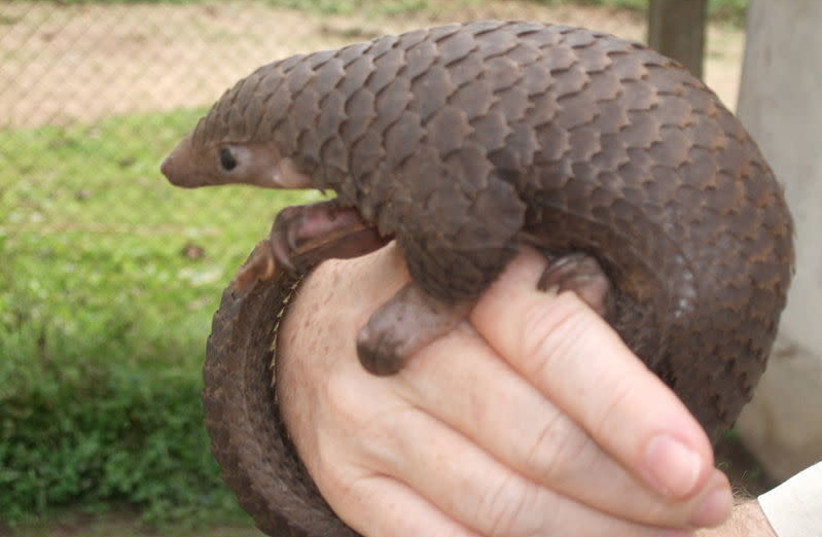
Pangolins, the most trafficked mammal in the world after humans, could be the cause of the coronavirus outbreak. (photo credit: Wikimedia Commons)
Pangolins, the most trafficked mammal in the world after humans, could be the cause of the coronavirus outbreak.
(photo credit: Wikimedia Commons)


Labels: , , , , , ,

Sunday, January 12, 2020

An Insatiable Appetite = Extinction

“It is likely that the lack of reproduction was among the major causes of extinction,”
"As no individuals exist in captivity, and no living tissues are conserved for potential resurrection, the fish should be considered extinct."
Research paper, Science of the Total Environment journal

“It’s very sad. It’s a definitive loss of a very unique and extraordinary animal, with no hope of recovery."
"This is the first of these very large freshwater fish to go and many are at risk—the concern is that more will go extinct, but the hope is that we can reverse their decline before it’s too late."
Zeb Hogan, fish biologist, University of Nevada, Reno

"The extinction of the paddlefish is a huge loss and reflects the critical status of the Yangtze River ecosystem."
"The ecology of the Yangtze River is close to collapse due to human activity in past decades [overfishing, pollution and dam construction]."
Pan Wenjing, forest and oceans manager, Greenpeace East Asia
Chinese Paddlefish
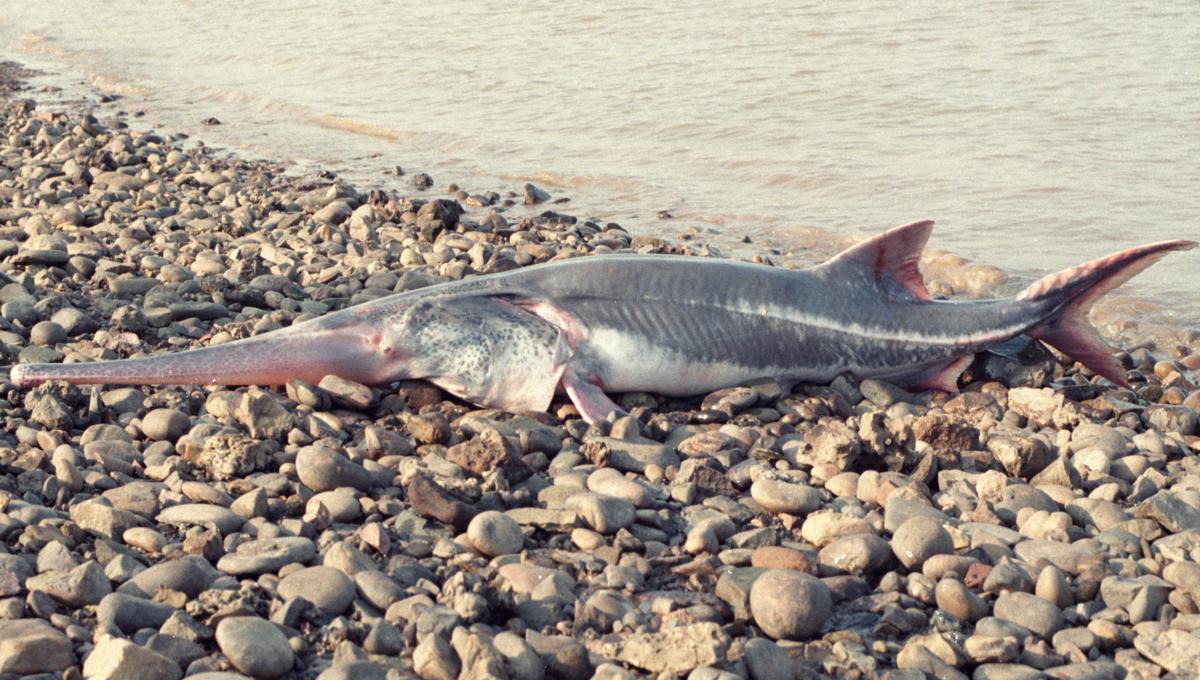
A Chinese paddlefish specimen made in 1990 is seen on display at the Museum of Hydrobiological Science of the Chinese Academy of Sciences in Wuhan, China. The Chinese paddlefish's sharp, protruding snout made it one of the largest freshwater species in the world. (Museum of Hydrobiological Science of the Chinese Academy of Sciences via AP)
"The Chinese paddlefish, Psephurus gladius, was one of only two extant members of a relict lineage that was most diverse and widespread 34–75 million years ago."
Hui Zhang, Chinese Academy of Fishery Sciences, Wuhan, China

"Of the estimated 8 million animal and plant species on Earth, about 1 million are threatened with extinction."
"The problem in China, with its rapidly developing economy and urbanizing population, has been particularly acute. Since 1970, almost half of China’s terrestrial animals have vanished."
"The Yangtze River, a key fishery and former home to the Chinese paddlefish, is so dead that President Xi Jinping has said it has reached a 'no fish' level."
"Meanwhile, consumer demand for wildlife products, like tiger-skin rugs or bear bile for medicinal use, is responsible for a boom in the trafficking of endangered species."
Adam Minter, Bloomberg Opinion
No paddlefish here.
No paddlefish here. Photographer: Goh Chai Hin/AFP/Getty Images
It was once considered one of the largest freshwater species of fish in the world. It is now considered extinct. The Chinese paddlefish was one of those strange-looking specimens of the piscine world with its overly-lengthened snout, and it was also identified as a Chinese swordfish. Its ancient lineage dated it back to at least 34 million years. A fish that could grow to aged maturity of seven metres in length. Overfishing, habitat fragmentation and loss of biodiversity in its Yangtze River home spelled its demise.

Scientists from the Chinese Academy of Fishery Sciences, the University of Kent in England, and the University of South Bohemia in the Czech Republic collaborated on the research that produced the paper pronouncing the end of the ancient fish. They found the fish's existential collapse matching all the criteria for inclusion on the International Union for Conservation of Nature's Red List (IUCN).

Since the late 1970s, populations of the Chinese paddlefish saw a dramatic decline corresponding with major dam construction on the Yangtze River, to which it was a native fish. The Gezhouba Dam, built on the main stream of the immense river, followed by the opening of the gargantuan Three Gorges Dam project in 2003, represented the very last year that anyone was able to sight a live Chinese paddlefish.

In 2017 and 2018, a survey discovered 332 species of fish in the Yantze, yet a single specimen of Chinese paddlefish eluded the researchers who estimate that the fish became extinct between 2005 and 2010. Overfishing in the most populous country of the world; pollution and dam-building reduced its numbers. Not all that long ago, in the 1970s, fishermen harvested 25 tons of Chinese paddlefish from the Yangtze River. By the 1990s, almost none remained.

A predictable outcome for a species of fish that had been on Earth longer than humanity, but whose unfortunate and tragic end resulted from the presence of humans who sought the delicate flesh of this giant fish predator for their dinner tables. A great predator of the seas, a relative of the sturgeon and American paddlefish, had suffered the fate of being victimized by a predator more populous and more dedicated to its dinner table than its own hunting habit.


 Chinese paddlefish

Labels: , , , , ,

Friday, March 08, 2019

Non-Existent Fashion Scruples

"[The Crocodylus niloticus listed under Appendix I of the Convention on International Trade in Endangered Species of Wild Fauna and Flora is] threatened with extinction."
"Trade in specimens of these species is permitted only in exceptional circumstances."
The Washington Convention

"Morally, one has to wonder whether it's appropriate to be selling an item that so much cruelty has gone into producing."
"[The right thing to do would be to give it a proper burial or to destroy it] rather than sell it off and promote the idea that luxury bags made from brutally killed endangered animals are something desirable for society."
Camille Labchuk, animal rights lawyer, executive director, Animal Justice
Interior view of the crocodile-skin Birkin bag up for auction by the government of Canada. Public Services and Procurement Canada

In 1984 actress Jane Birkin happened to meet Hermes chairman Jean-Louis Dumas on a flight, according to Hermes publicity material. The actress informed the man who headed one of the most prestigious producers of handbags in France that her search for a stylish yet practical bag with enough room to carry baby bottles had eluded success. "No sooner said than done, the empathetic, clever Monsieur Dumas designs a deep and supple holdall", claimed the Hermes website. Not only did Jane Birkin get a bag to her specifications, but the bag itself was named in her honour.

At some later date when she became aware of the endangered species designation given to the very animals from which her bag and others like it were produced, she asked that her name be taken off the bag's identity. What happened to her original bag is perhaps not known; whether it saw the use she contemplated when she travelled with her little girl, or whether she set it aside for a more utilitarian, less celebrated label that worked just as well or even better than the one produced for her.

However, one of these bags modelled after her own and produced by Hermes had been seized by court order, forming part of a forfeiture, which is how it came into government hands in 2014. It has been retained in storage up to the present time, but was recently put up for auction by an agency specializing in selling surplus government items. Potential bidders had to make appointments to view the bag: "Walk-ins will be turned away", stated the government auction listing.

And the potential of bidding for the French designer bag was of necessity limited to those who could or would attempt its ownership through a minimum bid of $26,289. A whole lot of money for anyone to slap down for possession of a mere handbag. It is by necessity a plaything and proud possession of the moneyed and the unscrupulous. Celebrity bait. The bag is advertised as in pristine condition, a minor scratch on the interior lining.

An authentication letter accompanies it from an executive of the manufacturer established in New York, certifying its market value; approximately $30,000 -- and up. In 2017 just such a bag was sold at auction for an astonishing $380,000 by Christie's auction house in Hong Kong, proving in action that old maxim that too many people have more money than brains.

Another, sold more recently in London at christie's went for $300,000. As far as legalities are concerned there is little of issue in selling such a handbag since the purpose of the the Washington Convention is to prevent trade across borders, not within borders; added to which a personal effects exemption applies, into which category a handbag would likely fall.

Still, since the Nile crocodile is listed at the highest level in the international treaty restricting trade in endangered species, the government agency overseeing the sale of this item warns that whoever becomes the successful bidder, will be unable to export the bag without a special government permit. This bag, produced in Paris in 2011, in government hands for the past five years should have, as Ms. Labchuk suggested, been destroyed, in reflection of its unethical moral status.

Jane Birkin. Christophe Ena/AP file photo

Labels: , , , ,

Monday, April 23, 2018

Teach Who, What?!

"Most of the time, they [high school drug education] would give us these fact sheets on cannabis. Then we'd all take it out to the corner and get high and laugh at it because we thought it was stupid."
"They said if you use at all it's problematic. I knew that wasn't true, because I saw a lot of people using that didn't have a problem with it."
"They [adult authorities] really try to scare you, using fear tactics. So it kind of blurs the line for you: What information can I trust? What kind of things are they lying about?"
"If they would have said, 'If you have mental-health issues you are more likely to use [cannabis] as a coping mechanism', I might have reflected on that."
"I moved out, went to college, left the town where there wasn't much to do. I was just too busy to be getting high and not doing anything."
Heather D'Alessio, 22, Canadian aspiring to university

"The evidence shows that an abstinence, fear-based message does not resonate with the majority of kids. It tends to work best with the kids who are the least likely to use drugs in the first place."
"It's almost saying to kids, 'Look, the way we've communicated with you in the past hasn't always been effective'. Part of that is acknowledging they used to lump it [cannabis] together with every other illicit drug and just say, 'This is your brain on drugs'."
"They need to somehow distinguish their new messaging from that, and say, 'You have to believe it when we say there are additional risks when you use cannabis when you are a teenager and when you are younger."
David Hammond, professor of public health, University of Waterloo, Waterloo, Ontario
Pot enthusiasts of all ages gathered below the Peace Tower on Parliament Hill for the annual cannabis celebration known as 4-20. Julie Oliver /Postmedia

When authorities issue warnings of any nature on any topic the usual reaction of teenagers is an automatic suspension of belief, simply because this is the normal way that the teen-age brain assimilates information it rejects out of hand. Any cautions emitted from the mouths of adults are immediately suspect. The reaction that kicks in is one of rejection linked to an instant determination to take on whatever is being warned against.

Canada has the dubious distinction of being recognized as the country with the highest rates of marijuana use in the world. According to Statistics Canada, 20 percent of Canadian youth between the ages of 14 to 19 report having used marijuana at least on one occasion in 2015; it is not the teens who represent the highest users however, but people between the ages of 20 to 25, whose use is close to 30 percent. Since the Canadian government is on the cusp of legalizing recreational marijuana it has launched a new education campaign.
Who uses cannabis?

Pubic health advocates are very well aware of the threat that marijuana use in teenage to the low-20s can represent to the still-maturing brain. They and government are invested in educating young people of the potential dangers inherent in starting and using cannabis at too young an age. Impulsive teens tend to comport themselves as they see fit, however, even with the best-intentioned advice when it runs counter to their values that "everyone does it".

The cannabis-awareness campaigns launched by the federal government and considered a critical portion of the concerned effort to ensure that young people don't accustom themselves to frequent marijuana use once the drug becomes legal, in a sense ignore the fact that even in the current atmosphere of illegality the drug is easily acquired and widely used, by teens and anyone else interested in its narcotic, mind-altering effects.

"We don't know exactly what works in drug education, but we know what doesn't work", stated a cannabis policy researcher, adviser to the group Canadian Students for Sensible Drug Policy which is geared toward involving youth in the creation and delivery of useful educational programs. As it happens, Heather D'Alessio is also a board member for the student group which produced a tool kit for educators and parents on cannabis education.

Among other issues addressed in the tool kit is avoidance of high-potency products such as "shatter", and a caution on mixing pot with tobacco, along with reducing frequency of use. The purpose of the kit is geared to minimize the potential for any harm in cannabis use, stressing the importance of education based on evidence. Many young users fail to understand that driving while under the influence of pot is as dangerous as driving while inebriated.

Dr. Sinthuja Suntharalingam, staff psychiatrist at Children's Hospital of Eastern Ontario, spoke of teenagers she has treated suffering psychotic episodes that too much marijuana use triggers. "They are quite taken aback that cannabis can do this. Some of the parents are using it themselves, so it's really hard for them to accept it (pot) can be causing this (psychotic episodes)." And no one wants to accept that cognitive deficits can result from using pot at an early age.

Ms. D'Alessio revealed her struggle with anxiety and depression in her teen years without being aware of any connection to her use of cannabis. "There was no discussion around lifestyle, or what makes some individuals more likely to have an (addiction) issue." She became so comfortable using pot that she was soon smoking daily and by Grade 11 was completely addicted. She faults the lack of useful education given to her and her peers in high school. Avoidance of responsibility in poor decision-making?

Eventually she underwent a psychotic episode, was hospitalized for several weeks, and recovered with the help of a course of anti-psychotic medication that enabled her to return to school. She has cut down on her cannabis use, though she still uses occasionally. Aware that her lungs could be impaired smoking pot, she no longer smokes, involved in sports and unwilling to compromise the things she values in life. Working full time, "I'm saving up for school. I have other priorities", she now says.

Cannabis consumption through the decades

Labels: , , , ,

Sunday, February 18, 2018

"The whole species is essentially female," Mutant Clones : Procambarus virginalis

"It's extremely impressive. Three of us once caught 150 animals [marbled crayfish] within one hour, just with our hands."
"People would start out with a single animal, and a year later they would have a couple hundred."
"Maybe [as a singular species] they just survive for 100,000 years. That would be a long time for me personally, but in evolution it would just be a blip on the radar."
Frank Lyko, biologist, German Cancer Research Center

"If you have one animal, essentially, three months later, you will have 200 or 300. The whole species is essentially female."
"In 2017, they occupy the area [in Madagascar] the size of Ohio. That's a hundred-fold increase in just a decade."
Wolfgang Stein, neurophysiologist, Illinois State University

"Based on what is known about the reproductive behaviour of the marbled crayfish, we do not recommend Canadians keep these animals as pets."
"Human release of animals is one of the ways invasive species are introduced and become established in new areas."
"Unauthorized release of any aquatic animal into a waterbody from which they did not originate is illegal under the regulations."
Becky Cudmore, regional manager, aquatic invasion species program, Fisheries and Oceans Canada 
The all-female marbled crayfish reproduces by cloning — and while it's a relatively new species, there are already huge populations around the world.
The all-female marbled crayfish reproduces by cloning — and while it's a relatively new species, there are already huge populations around the world. (Submitted by Wolfgang Stein)
Crayfish enthusiasts have the option of going along to their favourite pet store to poke about in the aquariums there and pick up a new pet for themselves, a marbled crayfish. In the late 1990s the marbled crayfish attracted the attention of aquarium hobbyists in Germany. Professor Lyko tracked down one individual who bought what the shop owner described to him as a "Texas crayfish", back in 1995. The size of the beast amazed the hobbyist, but nowhere near as much as the enormous batches of eggs it produced.

Hobbyists eventually realized that their female crayfish hadn't come in contact with a male of the species, yet was producing hundreds of eggs at a time. The person whom Dr. Lyko interviewed described his desperate efforts to give away resulting crayfish to friends. They were called marmorkrebs and were available in pet shops throughout Germany. With their popularity, owners realized these crayfish never stopped laying eggs yet had no mates, all their progeny were female and each capable of reproducing.

It was a short distance from acquiring these unique little beasts, observing their reproduction, running out of friends to gift them with, and taking them finally in desperation to local streams, rivers, lakes where they effortlessly and studiously multiplied. And it is these crayfish that Dr. Lyko and his research crew have studied in the past five years, managing to sequence the genomes. The study published recently in the scientific journal Nature, Ecology and Evolution, pointed out that the marble crayfish, now commonly seen around the world, is one of nature's most remarkable species.

A scientific marvel, in the sense that twenty-five years ago they didn't exist. Their amazing proliferation represents one of nature's true anomalies. In that a sole drastic mutation in one lone crayfish produced, in an instant of time, the marbled crayfish as it is known today. The mutation is credited with the capability of the creature to clone itself, and in that quarter-century of existence it has spread through Europe and has entered other continents to spread there as well. Its presence in Madagscar threatens native crayfish; it arrived in 2007 and now numbers in the millions.


"We may never have caught the genome of a species so soon after it became a species", marvelled biologist Zen Faulkes, of the University of Texas Rio Grande Valley, commenting on the study. Scientists, in 2003, confirmed the marbled crayfish absolutely were producing selfclones. Small portions of DNA were sequenced from the animals and a similarity found to a crayfish species called Procambarus, native to Central and North America. It took another ten years and Dr. Lyko and colleagues determined the entire genome of the marbled crayfish.

The Marmorkrebs thrived wherever they landed; initially taken by hobbyists out of their crowded aquariums to local waterways. The crayfish, it would appear, took themselves out of the lakes and streams they began to populate, and walked themselves over to uninhabited waterways to begin colonizing them as well. Marbled crayfish colonies turned up in the Czech Republic, Hungary, Croatia and Ukraine in Europe, and soon enough in Madagascar and Japan. They are now, as well, in North America.

Scientists hypothesize that two slough crayfish likely mated, one of which had a sex cell mutation. The mutant crayfish sex cell had two copies of each chromosome, where normal sex cells contain only one. The two sex cells managed to fuse and the result was the capacity to produce a female crayfish embryo with three copies of each chromosome rather than the normal two.

What is also notable is that no deformities resulted out of that extra DNA. The new mutant crayfish had no need of normal sexual reproduction since she was able to induce her own eggs to divide into embryos, all of which resulted in females inheriting the identical copies of her three sets of chromosomes and themselves capable of multiplying. The rest is scientific history.
Marbled crayfish
An ad selling the marbled crayfish appeared on Kijiji in the Toronto area. (Kijiji)


Labels: , , ,

Monday, June 26, 2017

Illegal Asian Wildlife Trade on the Menu

"Legal trade stimulates demand, confuses law enforcement efforts, and opens a huge opportunity for laundering illegal products, which is why ivory markets are now being closed globally."
Scott Roberton, director, Wildlife Conservation Society, Asia program

"When fingers are pointed at China about their tiger farms, they tend to point the finger back at the U.S. and say, 'They have as many tigers as we have, why are  you not criticizing them'?"
Leigh Henry, senior policy adviser, World Wildlife Fund
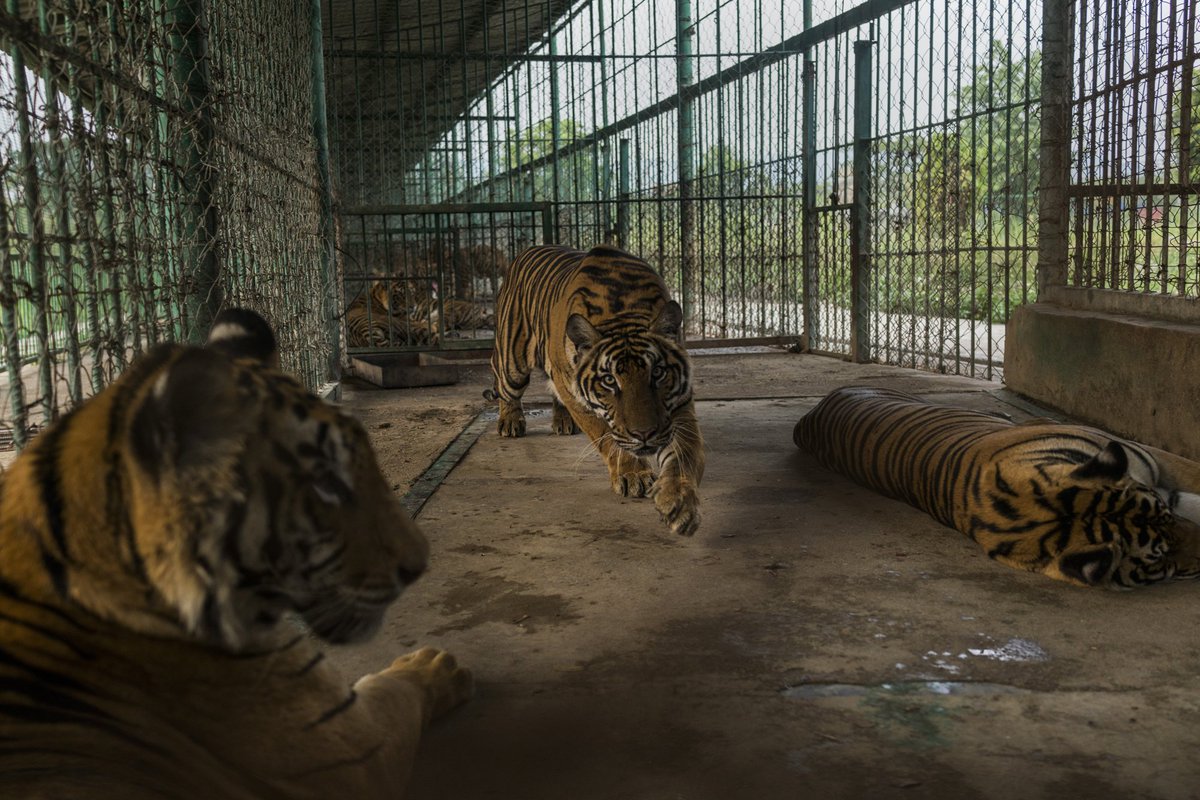
At the Kings Romans complex in Laos, tigers roam cages. Photograph Adam Dean, The New York Times
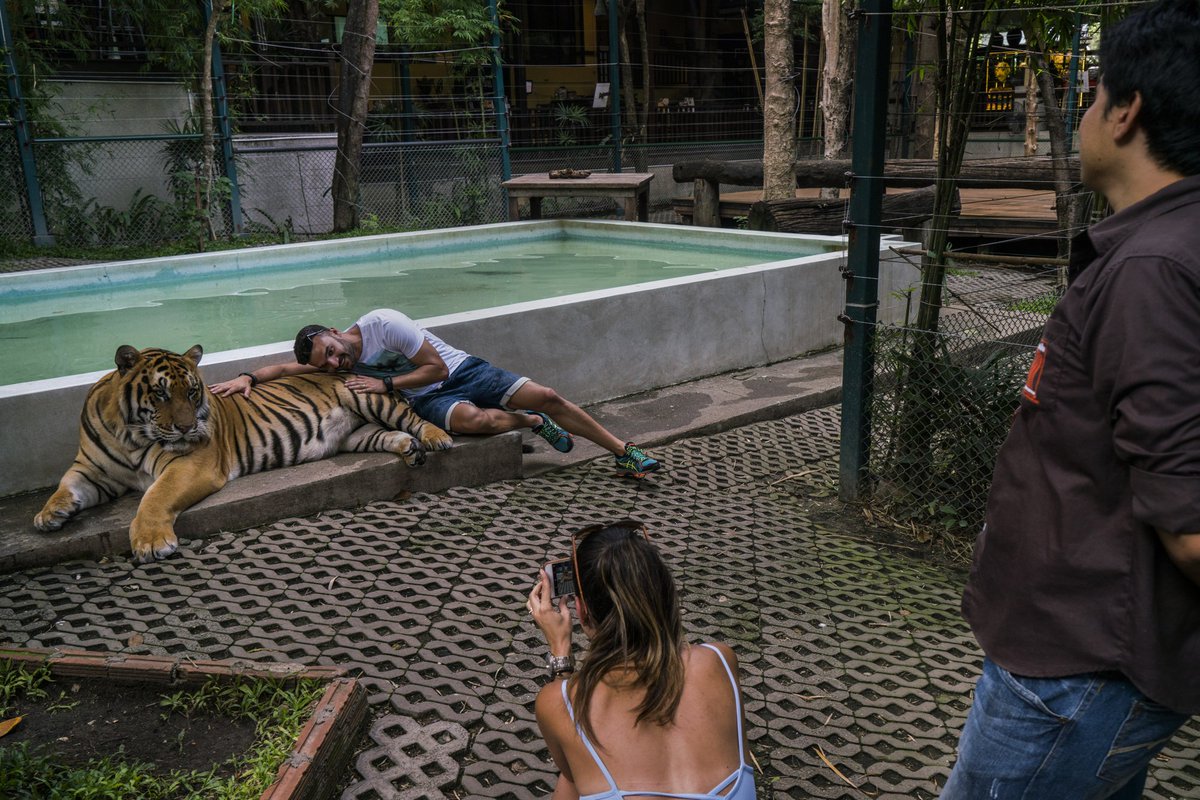
It seems rather lunatic, and likely because it is certainly immoral, yet across the United States an estimated five thousand tigers are held in petting zoos and even as attractions at truck stops. Most unbelievably they are also privately owned by people who seem to feel that a tiger out of its natural element will do just fine as a pet living somehow in their backyards. The kind of stupidity and hubris exhibited by people who don't appear to be capable of thinking beyond their own vain conceits is mind-boggling. But they're not on the menu.

On the other hand, there is yet another dimension to the keeping of these large cats in confinement, away from their natural habitat, and that is for the purpose of entertainment yes, but also as culinary stars in the East, where jaded tastes require a pick-me-up such a placing rare animal meat on the menu. As unlikely as it may seem, there are those people living in the East whose 'refined' tastes include a yen for tiger meat on their plates.

In Laos, a casino operated and owned by Hong-Kong-based Kings Romans Group comes complete with hotels, a cockfighting and bullfighting ring, a shooting range, shopping center and a zoo. This leisure entertainment complex is located in an area named the Golden Triangle Special Economic Zone. As for the zoo, it is claimed by conservationists that it is in fact a holding centre, a farm where animals are raised for slaughter.

Throughout Southeast Asia such farms are commonplace, where big cats of noble lineage are kept, illegally butchered for a profitable industry comparable in illegality, harmfulness and profitability to the global drug and arms trades, alongside that of human trafficking. All of which speak volumes for the sensibilities and morality invested by nature in human beings.

At Kings Romans, restaurants feature plates of bear paw, pangolin (on the endangered list) and sauteed tiger meat. Tiger wine is also available for the discerning food-and-wine aficionado. "The place is just a mess. Pretty much anything goes", commented Debbie Banks, with the Environmental Investigation Agency in London, who in 2015 with the group Education for Nature-Vietnam issued a report.
Kings Roman Group casino, Golden Triangle Special Economic Zone. Photographs by Adam Dean for The New York Times

From that report the world could have learned that meals, medicine and jewellery produced from tigers, leopards, rhinoceroses, bears and elephants -- all protected species -- were being sold openly in the economic zone, spurring the Laotian government to stir itself to raid a few businesses. Little, however, changed beyond that "cosmetic effort", reports Ms. Banks.

In Laos, an estimated 700 tigers are held on farms, with thousands more believed kept throughout Southeast Asia. There are over 200 breeding centers in China where an additional 5,000 to 6,000 tigers are kept. Contrast that with the fact that fewer then four thousand tigers remain in their wild natural setting. It has been rumoured from trusted sources that some Laotian politicians are involved in the farms.

All Southeast Asian nations signed on to the Convention on the International Trade in Endangered Species (CITES), in effect agreeing that tigers can be bred, but only for conservation purposes. Conservationists have a stock of evidence that zoos and farms serve as fronts for commercial big cat breeding in Laos and other Asian countries.

Two tiger farms in China are supported by government investment. In China there are government officials who feel that such facilities should be legal, on the basis that their presence relieves pressure mounted to hunt wild animals for their body parts and organs. An investigation that took place in 2008 revealed that half of 78 wildlife farms surveyed launder animals caught in the wild.

That investigation by Vietnamese officials in tandem with the Wildlife Conservation Society, was augmented by a later 2016 study of 26 Vietnamese wildlife farms which found that each and every one took part in laundering; presenting animals as being farmed when in fact they were caught in the wild.

A tourist at Thailand's Tiger World, Photograph by Adam Dean for The New York Times

Labels: , ,

 
()() Follow @rheytah Tweet