Ruminations

Blog dedicated primarily to randomly selected news items; comments reflecting personal perceptions

Saturday, August 10, 2019

Medical Professional Malfeasance

"What we need now is regulatory action -- we need Health Canada to be actually taking steps to shut down clinics that are providing unproven therapies."
"These are mostly for-profit clinics. I really think we need careful oversight by the regulatory bodies, like the colleges of physicians and surgeons."
"[Medical licensing colleges have a mandate to protect the public, and doctors seem to be common] purveyors [of unproven stem cell therapies so that] if it's not the colleges' obligation to stop doctors from misrepresenting the science, then whose responsibility is it?"
Timothy Caulfield, professor, health law and policy, Canada Research Chair, University of Alberta
A person injects something into a petri dish. Canada is doing less to protect Canadians from junk science — in this case, trendy, expensive and unproven stem cell therapies — than the U.S., a new paper argues.
A lab technician injects something into a petri dish. Canada is doing less to protect Canadians from junk science — in this case, trendy, expensive and unproven stem cell therapies — than the U.S., a new paper argues.

Everyone is eager to make a 'killing'. Where there's huge profits to be had, don't discount the flexible morals of professionals in the health field succumbing to the allure that their credentials can be leveraged into a hot business opportunity. And so it is that for-profit clinics are now proudly promoting unauthorized stem cell therapies to those who feel the risk is worth the money in the hopes that these therapies will offer them much in exchange.

A new study has linked such clinics to some results of these therapies ranging from blindness, serious blood infections, tumour development and even death as outcomes of some of these therapies. Clearly a threat to public health to say the very least. And Canada's health authority appears to be doing very little to protect Canadians from the conduct of doctors lacking professional ethics, preferring instead to portray themselves as what they evidently are not; healers. Whose primary interest is amassing wealth.

Dr. Mark Berman injects a patient with a solution he says is rich in adult stem cells at his practice in Beverly Hills, Calif., in this December 2014 file photo. (Raquel Maria Dillon/Associated Press)

In contrast, American regulators in recent years have worked toward permanent injunctions against clinics operating in Florida and California. Others have been fined for deceptive advertising in their aggressive enforcement efforts. New York Attorney General Letitia James in April filed a lawsuit against a Manhattan-based stem cell clinic. The response from Canadian regulators has been by comparison, "relatively mute", according to the paper published in BMO Medical Ethics.

Neither Health Canada nor the Competition Bureau have acted with determination to protect the public against unscrupulous clinics. Canadian medical colleges appear disinterested in instructing doctors to put a stop to their "evidence-free" therapies. The study authors point to what they consider a "simple lack of political will". The simple fact is that little scientific evidence exists to support such therapies beyond a few procedures like bone marrow transplants in treatment of specific cancers.

In 2018 a study identified 43 such clinics, 17 of which were located in the Greater Toronto Area. The clinics are obviously profitable, charging upwards of $3,500 per injection site. With multiple injection sites involved, discounts are available. Cells are harvested from an individual's belly fat or bone marrow, and after manipulation or processing "reintroduced" or injected back into the patient as purported treatment for arthritis, fractures, ligament or tendon injuries, tennis or golf elbow, rotator cuff tears and pitcher's elbow.


At some clinics stem cell therapy is promised as a healing solution for such conditions as ALS and Parkinson's disease, while at others wrinkles and "face/neck" sagging are treated, with any potential risks inherent in the process failing to be mentioned, or simply shrugged off as inconsequential. True, Health Canada issued a warning in May that unproven stem cell therapies might cause life-threatening or "life-altering" risks. Unauthorized "autologous" therapies making use of a person's own cells, despite marketing claims, have never been proven safe or effective, stressed the agency.

According to Blake Murdoch, a research associate at University of Alberta's Health Law Institute, the Competition Bureau would do well to isolate statements unsupported by science. Drs. Murdoch and Caulfield, authors of the new study had previously jointly filed a complaint with the Competition Bureau in August 2017 against a clinic claiming stem cell therapy "is the medical technique best approximating perfection" in the treatment of backaches and various sports and joint injuries. Nothing whatever came of it.

Referred to as the body's "master" cells, stem cells differentiate into many kinds of cells, useful for growing or regenerating tissue damaged by disease or injury, but few treatments, however hypothetically promising have yet been proven effective through scientific research.
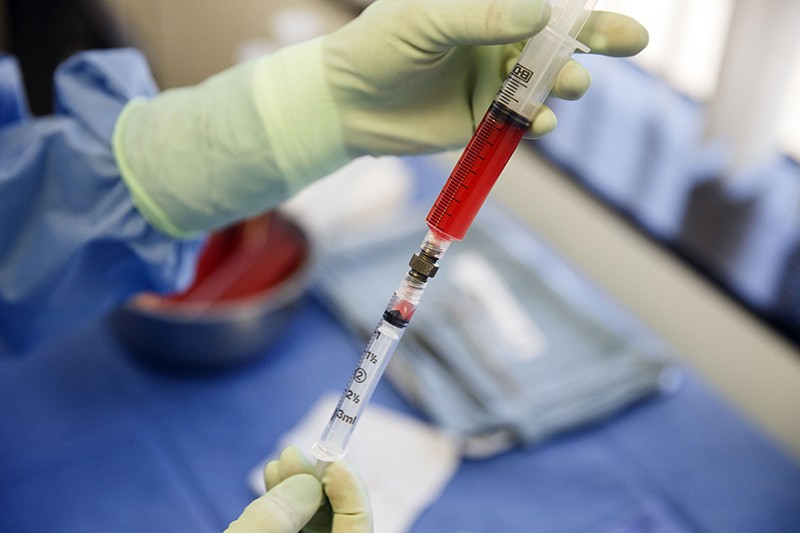
Photo of a syringe containing cells prepared for stem cell therapies for a patient
A clinician prepares a syringe containing stem cells used for therapy.   Credit: Patrick T. Fallon/Getty

Labels: , , , ,

Wednesday, May 09, 2018

Suffer the Little Children to Come Unto my Manipulations

"It's often an 'us' against 'them' perspective and I don't think it needs to be."
"But when they overstate what is outside of their realm [of medical expertise], quite honestly that borders on the fraudulent."
Dr. Douglas Mack, assistant clinical professor, McMaster University, Hamilton, Ontario

"There's lots of anecdotal reports and scary memes where they show the obstetrician or midwife pulling the baby out by the neck."
"But there's no legitimate evidence that any appreciable percent of babies suffer subluxations to the spinal bones or any injury that would be amenable to adjustments ... They're just scare tactics."
Dr. Clay Travis Jones, pediatrician, Newton-Wellesley Hospital, Boston

"[The Canadian Paediatric Society recommends that] parents should be made aware that there is a lack of substantiated evidence for the theory of subluxated vertebrae as the causality for illness in children."
Canadian Paediatric Society statement

"Any attempt to manipulation the immature, cartilaginous spine of a neonate or a small child to correct a putative chiropractic subluxation should be regarded as dangerous and unnecessary."
Samuel Homola, retired chiropractor, journal Bioethics

"The single most worrying thing I find is just this complete disregard for evidence and scientific truth."
"There are a lot of good practitioners [chiropractic] out there, a lot of responsible ones who are very different from their radical counterparts."
Ryan Armstrong, doctor of biomedical engineering
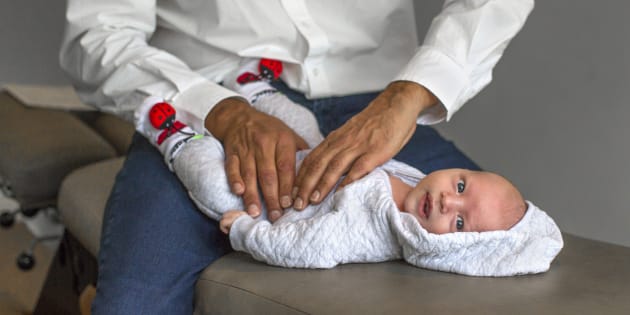
Newborns experience “nerve interference” or a misaligned cervical spine from the birthing process, even when delivered via Cesarean section, and should get treatment as soon as possible, some chiropractors say.   Getty Images

Parents are very vulnerable to suggestion from reputable medical practitioners, since they are utterly focused on the health status and overall well-being of their children, particularly new parents with newborns and infants. And many have been listening to claims some chiropractors make disreputably, promoting spinal manipulation for babies and children. Such adjustments, say these chiropractors, are gentle when applied on newborns; no popping, cracking or crunching.

Parents are assured that a specific vertebra is identified and pressure applied similar to the gentle fingers of a housewife probing a tomato for ripeness. Conventional medicine looks upon these chiropractic inroads into medical science with alarm, viewing the issue as applications of "scare tactics", in claiming that up to 80 percent of newborns require spinal adjustment in treatment of the "trauma" of childbirth.

According to these unscrupulous worry-mongers, "nerve interference" or a misaligned cervical spine results from the process of birthing; a situation that occurs even through Cesarean section. It is imperative, they stress, that corrective treatment take place swiftly to enable chiropractic manipulation to "peel away" the inevitable symptoms of autism as well as aiding toddlers who are non-verbal to overcome whatever constrains their ability to speak.

And while spinal manipulations in adults can be of assistance in alleviating acute low back and neck pain -- according to studies -- some chiropractors extend claims toward childhood; recommending manipulations in children to treat many childhood problems: colic, constipation, ear infections, digestive disorders, hyperactivity and bed wetting. Children, so the claims attest, receiving chiropractic care have "superior" health compared to those who do not.

Furthermore, spinal adjustments can be useful in aiding with learning disorders and dyslexia, along with the alleviation of food and related allergies in children. Dr. Mack, a pediatric allergy specialist, sees the results of gullible parents exposing their children to the false claims of chiropractors who assure parents that manipulation can help straighten their children's misaligned spine or vertebrae, and at the same time help them "outgrow their nut allergies" with treatment.

"They go and try the nuts, and they end up having a severe reaction", he explained.
Hero Images via Getty Images

A warning was issued by the American Academy of Paediatrics, that children exposed to spinal manipulation may be at risk of rare, serious complications. Researchers at University of Alberta in 2007 reviewed 13 published studies to discover 14 injuries to children after receiving chiropractic treatment, nine of them serious, two fatal with one child dying from a brain hemorrhage, the other of a suspected neck fracture. Ten of those injuries attributed to chiropractic care.

In the annals of the Canadian Paediatric Society, a 2007 study revealed that two children, receiving chiropractic treatment, failed to receive medical treatment by a medical doctor, the end result being that they both died as a result of delayed treatment for meningitis. The CPS  emphasizes that "parents should be made aware that there is a lack of substantiated evidence for the theory of subluxated vertebrae as the causality for illness in children".

In Canada, 8,500 licensed chiropractors practise their profession under provincial regulators. The College of Chiropractors of Ontario explains that its members are not constrained from treating patients of any single age, and that "many can and do treat children"; their advertising must meet certain criteria, and must not be misleading or false. Evidently there are some among their members who fail to meet those critical criteria, with little intervention on the part of the regulators.

Labels: , , , ,

Saturday, December 16, 2017

Marine Animals At Risk of Extinction

"You do have to use the extinction word, because that's where the trend lines say they are. That's something we can't let happen."
John Bullard, National Oceanic and Atmospheric Administration

"The current status of the right whales is a critical situation, and using our available resources to cover right whales is of high importance and high urgency."
Mark Murray-Brown, Endangered Species Act consultant, NOAA
There are only about 500 North Atlantic right whales in existence.
There are only about 500 North Atlantic right whales in existence. (Center for Coastal Studies/NOAA)

Natural Resources Defense Council (NRDC), International Fund for Animal Welfare (IFAW), the League for Coastal Protection, Cetacean Society International, and Ocean Futures Society formed a coalition attempting to hold the U.S. Navy responsible for the damage its technology imposes on marine creatures. In a court brief, the coalition cited the Navy's own documents estimating that sonar testing was expected to kill 170,000 marine mammals, causing permanent injury to over 500 whales and deafness in 8,000 others. 
North Atlantic right whale breaks the ocean surface off Provincetown, Mass., in Cape Cod Bay.
Source: Associated Press

Though two lower courts agreed with the coalition that the U.S. Navy is responsible for mayhem in the Pacific in particular, the U.S. Supreme Court ruled for the Navy, that it should be permitted to continue its mid-frequency sonar testing as a requirement upholding national security. "The U.S. Navy could use a number of proven methods to avoid harming whales when testing mid-frequency sonar", objected IFAW’s Fred O'Regan. "Protecting whales and preserving national security are not mutually exclusive."

This has been a dreadful year for one of the most endangered whales on Earth, the North Atlantic right whale. In 2017 alone, seventeen of the gigantic oceanic mammals have died, and scientists are puzzled by the cause, although speculation is rife. According to the National Oceanic and Atmospheric Administration only about 450 right whales are left alive; when 17 of their number expire the situation verges toward the existentially catastrophic.

John Bullard of NOAA, views the threatened existence of right whales of such momentous crisis he feels that regulators in the United States and Canada are required to step in, because if nothing is soon done to help their recovery, they simply will not manage on their own to recover, and the planet will lose another important species whose presence at the moment in such scarce numbers is already rare.
A North Atlantic right whale dives, near a New England Aquarium research boat.
A North Atlantic right whale dives, near a New England Aquarium research boat. Photograph: Alamy

Marine mammal researchers are doubly concerned that the year 2017  has been  a poor reproduction year, and added to that the high rate of mortality, the prognosis presents as beyond grim. Scientists estimate that roughly 100 breeding female North Atlantic right whales are now left to contribute what they can to the swiftly diminishing pool. Females have been dying at greater rates than males in a species decline that has accelerated since 2010.

The proliferating presence of ever-larger sea-going vessels is certainly one of the  reasons these giant marine species are facing extinction. It's a hugely uneven contest when an immense steel-hulled vessel challenges the right-of-way of a living creature. The sounds emitted by ocean-going vessels confuse and disorient whales. Military vessels' use of sonar equipment generate sound waves that assail the whales with high-decibel sound for hundreds of miles causing whales to attempt to escape the sounds with often deleterious results when whales become beached.
right whale deaths infographic
At least 14 right whales have been found dead in Canadian and U.S. waters this year. At least 11 of those were found in Canadian waters and it's not clear whether some of the carcasses that washed up in Newfoundland had drifted from where they were first spotted in the Gulf of St. Lawrence. (CBC)

Fishing vessels setting out their fishing gear are frequently cited causes of the death of whales as a result of gear entanglement. Giving birth in temperate southern waters, the animals then travel to New England and Canada in spring and summer, their traditional feeding grounds. Every one of the 17 deaths occurred off the coasts of New England and the Canadian Maritimes.

Recent scientific studies offer other hypotheses. One, published in the journal Nature Scientific Reports points to whales moving about far more than has been previously assumed, with some scientists suggesting that whales could be venturing far from traditional protected areas searching for food, and in this manner placing themselves in harm's way.

Yet another study published in the journal Endangered Species Research recounted that scientists found whales that suffer long entanglements in fishing gear produce hormone levels indicating high stress, revealed by studying their  feces. That stress impacts negatively on reproductive capacity, should they survive the entanglement event.

The development of a long-term plan to monitor the right whale population trends and habitat, and to study the impact of commercial fishing on right whales has been recommended in protection of the species, an initiative of a five-year NOAA review.

A rare North Atlantic right whale calf lies dead on a beach in Chatham, Massachusetts in 2016.
A rare North Atlantic right whale calf lies dead on a beach in Chatham, Massachusetts in 2016. Photograph: AP

Labels: , , , ,

Friday, May 05, 2017

Food Fraud: Adulteration, Replacement, Mislabelling

"A good fraudster is someone who technically hides very well his game. We're not supposed to discover the issue, but when it turns badly and when the fraud is done by people that have no scruples in what they are doing, it can even lead to tragic consequences."
"An important measure is beefing up traceability measures. Food ingredients are sourced from all over the planet but that doesn't mean there shouldn't be the right traceability to prevent food fraud from occurring."
Samuel Godefroy, leading expert, food risk analysis, Laval University, Quebec

"I think essentially you're dealing with the future of food."
"If you don't have trust from the consumers, it becomes very difficult to add any value and grow the food business."
"Food categories that are more vulnerable to food fraud are fish, seafood, liquids, spices, fruits, vegetables and meat products. Canada has seen its share of cases in recent months, one of the most notable ones is Mucci Farms in Ontario. The company was fined $1.5 million for selling Mexican tomatoes as a product of Canada. The company denies the labelling was intentional and faults their computer system. Other cases have emerged, mostly whistleblowers trying to give food fraud more attention. Cericola Farms, one of the largest poultry processors in the country, was in court over organic mislabelling allegations, but the case has gone quiet since October. The number of cases is adding up. The Canadian Food Inspection Agency received more than 40 complaints in 2016 and many expect that number to increase in 2017."
Sylvain Charlebois, researcher of food fraud, Dalhousie University, Halifax 

"We have to remember the people conducting the fraud are interested in making money." 
"But sometimes it's in ways that we haven't anticipated, so it's important to exchange information and make sure all the players in the system have open channels of communication in order to address this critical issue."
Aline Dimitri, deputy chief food safety officer, Canadian Food Inspection Agency
In this photo, lobsters are processed at a seafood plant in Maine. Sylvain Charlebois argues that seafood is one of the products vulnerable to 'food fraud.' Robert F. Bukaty / AP

Research undertaken by Michigan State university concluded that food fraud reached $40-billion worldwide; fraud that is inclusive of mislabelling country of origin, using 'organic' labels falsely, altering expiry dates, producing counterfeit products -- as well as adulterating or substituting ingredients. The 2008 scheme to adulterate milk powder with a chemical that produces plastic in China, caused the death of four children and made 300,000 people ill.

Instances of wood pulp discovered to be used as a 'filler' in Parmesan cheese, garlic powder 'filled' with talc, misrepresented pure virgin olive oil, the widespread problem of food fraud by unscrupulous purveyors seeking to use inferior products, adulterating pure food with inedible and sometimes dangerous ingredients represents a problem that just doesn't want to go away. And it will not, as long as those seeking to gain profit from short-cuts or the production of dangerous and inferior products go undetected.

The mislabelling of seafood with inferior, more plentiful substitutes is a common problem, occurring in Canada and the United States. A CBC Marketplace study discovered that 34 of 153 fish samples taken from grocery stores had been mislabelled, when lower-priced fish was given a higher-priced fish labelling, for obvious reasons of illicit profit to the detriment of the consumer. The Canadian Food Inspection Agency randomly checks food samples and cites non-compliance with labelling laws by food suppliers.

Some 70 instances of non-compliance with labelling laws annually over the past five years have been published on the (CFIA) Food Inspection Agency's website. And no one researching the ubiquity of food fraud feels this to be an accurate number of fraudsters; merely the number that random checks have ferreted out. Food items like olive oil, honey and maple syrup all have been found adulterated by the CFIA. Mr. Godefroy, in his capacity as a food fraud expert, recommends increased resources for those random checks.

Barcoding technology can be used in the identification of food fraud through testing the precise molecular level production of a food item, determining whether it is organic and what its geographical origin is. DNA analysis technology remains costly and slow, but Mr. Charlebois of Dalhousie University, sees a future where people could access affordable hand-held DNA analysis devices to use while in the supermarket or at home to themselves detect the existence of food fraud.

The University of Guelph, in fact, is working with the CFIA on a goal to simplify DNA analysis technology, making it more cost-effective and accessible in the near future to the general public. A good proportion of Canadians are concerned that the basic foods they purchase are not really reflected on the labels identifying their ingredients. People with specific health conditions in particular are alert to the problems inherent in food fraud, according to a survey a Dalhousie research team conduced on line.

CTV Toronto: Consumers worried about food fraud

Labels: , , ,

 
()() Follow @rheytah Tweet