Ruminations

Blog dedicated primarily to randomly selected news items; comments reflecting personal perceptions

Monday, July 04, 2022

Learning to Live With Long COVID

"I am able to do what I need to do. My workplace allows me to adapt. If I worked at Tim Hortons or was a nurse working 12-hour shifts, there is no way I could do it. I can't even imagine."
"This is really about pacing yourself  and learning to live differently. A component of rehab is talking about adapting to new realities and new limits."
"It was like a bad cold, not the worst illness I have had in my life [COVID], to be honest."
"It [Long COVID] was almost a surreal lack of energy and lack of ability to do anything. [Even walking around a grocery store] brought me down."
"My hope is I continue to be able to manage well within some new boundaries. I consider myself pretty fortunate. Compared to some people, I live a really good life."
Monique Stone, 41, Anglican priest, Julian Norwich Church, Ottawa
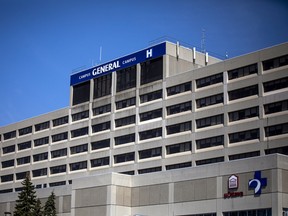
A file photo of The Ottawa Hospital General Campus. Since the hospitals’ long COVID rehab program began last year as a pilot, 41 patients have been through it. There are another 53 people waiting to get in.
The Ottawa Hospital General Campus. Since the hospitals’ long COVID rehab program began last year as a pilot, 41 patients have been through it. There are another 53 people waiting to get in. Photo by Ashley Fraser /Postmedia
A rehabilitation program has been set up at The Ottawa Hospital for patients suffering from Long COVID. Most of the participants are in their prime years accustomed to a busy, active life before they had developed Long COVID. Following a bout with the disease during which they had only mild symptoms, its aftereffects has left them struggling to maintain themselves with basic everyday tasks. 
 
Once their therapy has been completed, a long line-up of others suffering similar symptoms awaits the opportunity to sign into rehabilitation.

This is a program that offers physical, psychological and social support, in teaching people new skills and insights to help them live with Long COVID. The demand for these services is expected to grow even larger as more people are being exposed to new subvariants of Omicron that are more contagious even than it has been. These are not yet in-person programs, but are conducted virtually, through a week-long immersion in learning to live with their disability.

Most of those participating in the program had another issue in common aside from contracting COVID; they had relatively few symptoms, but rather mild cases of COVID-19. The lingering effects, however, seriously affecting their capacity to function as they once did with daily life's tasks, great and small, including work. Among participants the most common symptoms are extreme fatigue that increases with activity; cognitive difficulties; brain fog and problems with breathlessness, anxiety and fear, and chest tightness.

It is believed that Long COVID affects between ten and thirty percent of those with COVID. Published recently, a Canadian study has identified microscopic abnormalities affecting the way oxygen was exchanged from the lungs to red blood cells in those with Long COVID, as a possible cause. Recent research points as well to an increased risk of neurodegenerative disorders, including Alzheimer's disease and Parkinson's disease for people testing positive for COVID-19.

No actual treatment for the condition has yet been devised. Some people with the lingering effects may be able to return to the workplace and eventually see their baseline health and energy levels return. Others may have to resign themselves to living with these long-term alterations to their health and impaired physical capabilities.

Most program participants are women with the average age of 44. Among them are many health workers, or people in leadership roles through professional work. They may have positions they will be unable to return to, perhaps not full-time. However, patients who have been exposed to the program state they feel better able to manage their symptoms, which has enabled them to have an improved quality of life.

Labels: , ,

Thursday, September 09, 2021

For Some Sufferers, The COVID Battle Carries On

"Most of us had been expecting this. There is no way something like this goes through the population without a number of people being left with severe disability."
"These are people in their 40s who cannot make it up a flight of stairs without becoming exhausted."
"Everyone would rather be back at work. These people are struggling day to day. There are emotional consequences. It wears you down."
"Ir really does affect people. I am seeing people who probably don't recognize their lingering symptoms are COVID-related who might benefit [from treatment]."
"We have data showing that patients do improve, and rehabilitation is a big part of it."
Dr.Shawn Marshall, physical medicine and rehabilitation specialist, The Ottawa Hospital
sick teenager
 
Long following the acute phase of the global pandemic has worn its way through the global population and settles into its future as a seasonal recurrence that can be controlled through updated vaccines year-to-year to account for mutations just as occurs with the seasonal flu, the condition now recognized as Long COVID will continue to plague some people. Fatigue, shortness of breath or difficulty breathing, coughing, joint pain, chest pain, memory problems, sleep or concentration problems, muscle pain or headache and racing heartbeat represent the most common of Long COVID symptoms.
 
COVID does not finish with many people, leaving them free to resume their normal lives once its expected course period has run out. COVID has a way, not yet quite understood by the medical-science community of affecting multiple organs. As a result, rehabilitation requires complex treatments. Some studies conclde that twenty percent or more of those who contract COVID-19 will be left with lingering health effects. Recently, a study in the United Kingdom found that 14 percent of children can be expected to suffer long term adverse effects from COVID.
 
NDTV News
As many as 1 in 7 children may have symptoms linked to the coronavirus months after testing positive for COVID-19, the authors of an English study on long COVID in adolescents. The study was conducted by University College London and Public Health England.

Health workers represent many patients whom Dr.Marshall treats through WSIB Ontario, the provincial workplace compensation board. Rehabilitation's purpose is to aid in improving breathing, mobility and the capacity to complete routine daily tasks in everyday life, aiming toward normalcy, following COVID. Up to 20 percent of all cases across Canada throughout the first pandemic wave have been people in the healing arts who continue to be infected at a high rate.

A nurse who is a young mother and before COVID struck was healthy and capable of working and looking after her child, is now incapable of picking up a bag of groceries without experiencing severe heart palpitations. Personal support workers, fit before contracting COVID-19 are being treated by Dr.Marshall for their Long COVID condition which leaves them barely able to climb a flight of stairs. In many instances Long COVID sufferers face the frustration both of their stubborn ill-health symptoms and the struggle to be taken seriously by doctors they consult.

Dr. Marshall who specializes in their rehabilitation, speaks of patients who will be forever changed by Long COVID. Many people long after their infection, suffer from a high heart rate, fatigue and nerve pain, along with lung damage. Many are unable to return to normalcy; to work, much less perform the most basic, once-normal functions of life. An impact that leaves many with serious financial losses -- alongside their health issues.

Involved in opening and staffing Long COVID clinics, some doctors work on improving patients' breathing, mobility and capabilities in pursuing a normal lifestyle. Post-acute COVID-19 syndrome -- the medical term for Long COVID -- describes persistent symptoms or long-term complications of COVID-19, the expression of which remains puzzling to the medical community.

More research and funding would help, states the COVID Long Haulres Support Group Canada founder, Susie Goulding. In the  United Kingdom and the United States funding has been committed in setting up specialized clinics as well as research funding to achieve an improved understanding how Long COVID can best be treated. The presence of the more virulent Delta variant, dominant across Canada, adds extra urgency to the situation, as Goulding hears from greater numbers of concerned people on a daily basis.

There are over 14,000 Canadians with Long COVID symptoms who have joined the longhaulers support group. Sixty percent of those surveyed last May by the support group spoke of having to take work leave, 60 percent to reduce working hours, and 25 percent had to be placed on disability leave resulting from their continuing health issues. 

See the source image
"There are so many people who are looking for a practitioner who will actually believe that they have Long COVID. There is still a lot of denial."
"The magnitude of issues caused by the constellation of Long COVID symptoms is not well understood. Long COVID clinical guidelines, treatment protocol and resources are critically needed to manage and support families."
Susie Goulding, founder, COVID Long Haulers Support Group Canada

Labels: , , ,

Wednesday, January 27, 2021

Hope for Spinal Cord-Injured Patients

A hand picking up a tiny bead
Marcus Donner/Center for Neurotechnology
"As a rehabilitation physician, my experience was that there was always a limit to how much people would recover."
"But now it looks like that's changing. It's so rewarding to see these results."
Dr.Fatma Inanici, lead author, research, University of Washington 

"Both people [in the study] who had no hand movement at the beginning of the study started moving their hands again during stimulation, and were able to produce a measurable force between their fingers and thumb."
We're seeing a common theme across universities -- stimulating the spinal cord electrically is making people better."
Chet Moritz, associate professor of electrical and computer engineering, rehabilitation medicine and physiology and biophysics, University of Washington
A timeline blocking out the treatment plan for each month of the study
 
Participants in a new study out of the University of Washington have seen significant improvements in their mobility with a five-month exposure to physical therapy and spinal cord electrical stimulation. The complete mobility impairment that results from spinal cord injury devastates lives; victims are unable to engage in simple taken-for-granted tasks like eating or drinking on their own; they become completely dependent physically on vital daily assistance to aid in ordinary life-tasks.

Spinal Cord Injury B.C. estimates there are 85,556 people in Canada whose physical decline has resulted from spinal cord injury, with no cure for the condition. Typically, patients take part in exercise therapy in hopes of improving motor function, while previous research has indicated that implanting a stimulator to deliver electric current to a damaged spinal cord could offer help to paralyzed patients in their goal to recover mobility.
 
Two researchers watch as a participant squeezes a device to test his grip strength
Chet Moritz (left) and Fatma Inanici (center) observe as a participant (right) measures grip strength (by squeezing the device in his hand). The participant has sensors on his arms (black cases) to measure his arm muscle activity during the task. Note: This photo was taken in 2019.  Marcus Donner/Center for Neurotechnology
 
Researchers at University of Washington have gone one step further in a bid to accelerate the drive toward success in restoration of a measure of mobility for those with spinal cord injuries. A non-surgical therapy with the use of patches to stick to the skin like a Band-Aid delivers electrical pulses to the injured area. Their study, operational for five months, recruited six people with spinal cord injuries among whom some were able to move fingers and thumbs, and others possessed no mobility at all.

Researchers monitored baseline limb movement in the first four weeks of the study, moving on to include intensive physical therapy for the second month, training three times weekly for two hours. In the third month physical therapy was combined with Transcutaneous Electrical Spinal Cord Stimulation. The last two months of the study saw participants grouped in the severity of injuries where those with less severe injuries received an additional month of training followed by a month of training in combination with stimulation.
 
The participants with more severe injuries saw their training combined with stimulation followed by training alone, and while some participants regained some level of hand function during training alone, all six participants realized improvements when stimulation was combined with training. Participants moreover, maintained improvements, able to resume hobbies some three to six months following treatment. 

What turned out to be equally if not more encouraging was that some participants saw improvements in other health areas including achieving normal heart rate, improved body temperature regulation and in bladder function.

A researcher attaches small round patches to the back of a participant's neck
Fatma Inanici applies small patches that will deliver electrical currents to the injured area on a participant’s neck.    Marcus Donner/Center for Neurotechnology

Labels: , , , , ,

Thursday, July 04, 2019

Cardiac Rehabilitation Post-Angioplasty

"The use of cardiac rehabilitation after coronary stenting carries the strongest recommendation in our clinical practice guidelines."
"Unfortunately, the use of cardiac rehabilitation among eligible patients remains low."
"We found it interesting that there were a diverse set of factors associated with patients ultimately attending cardiac rehabilitation. This suggests that multi-faceted strategies, such as insurance redesign, may need to be tested and implemented to improve cardiac rehabilitation use."
Dr. Devraj Sukul, University of Michigan, Ann Arbor

"Ideally, cardiac rehab would be provided without cost to all patients who qualify regardless of financial ability."
"I think the one-on-one aspect -- and the fact they have been out of the hospital for about one week --  allows them to ask a lot of questions in a relaxed fashion, and then they see that this type of program has a lot to offer them."
"Even if a patient cannot attend all the sessions due to finances or distance or both, I encourage them to at least attend one or two sessions."
"They can learn a significant amount about diet and exercise and gain pointers on how to create their own program at home."
Dr. Ellen Keeley, University of Florida Health, Gainesville 
Cleveland Clinic exercise physiologist Audra DiRauso sets up an exercise bike for Anthony Rugare during a cardiac rehabilitation class in 2009. Despite benefits from rehabilitation such as better quality of life and lower rates of rehospitalization, patients may not attend. (Mark Duncan/Associated Press)

A Michigan study concludes that a mere one in three heart patients makes the effort to enrol in cardiac rehabilitation following a blocked heart artery clearance through stent insertion, despite the rehabilitation instruction being highly recommended as a follow-up therapy for its value in informing people post-surgery on best practices to enhance recovery and increase chances related to ongoing future heart health.

The obvious reasons that the health community urges heart patients following stent insertion to follow up with attending cardiac rehabilitation instruction is the acquisition of beneficial knowledge leading to better quality of life and lower rates of re-hospitalization. But realistically, it is also acknowledged that patients may hesitate to attend knowledge sessions as a result of insurance coverage, costs and access to a rehabilitation facility to begin with.

Doctors increasing their efforts to convince patients to take advantage of their referrals for cardiac rehabilitation has been a helpful strategy, but according to the authors of the paper, recently published in the Journal of the American College of Cardiology, more must be undertaken to ensure that patients are convinced despite inconveniences or cost, to attend such sessions.

Dr. Sukul and colleagues reached their conclusion after studying over 42,000 Michigan patient-records who had undergone percutaneous coronary intervention (PCI), a common process to clear a blocked heart artery which typically uses a tiny tubular stent to maintain open blood vessels. Their meta-analysis included the use of two databases of medical and health insurance records, enabling them to track patients who had been referred to cardiac rehab following care at one of 47 Michigan hospitals between 2012 and 2016.

Of particular interest to the researchers were the factors that came into play to influence patient participation in cardiac rehabilitation. Of 30,075 patients who were discharged to their homes with a referral for cardiac rehabilitation, the study team found that 8,000 had attended one session at least within 90 days following discharge. They found as well that people were likelier to attend if an "acute" reason such as certain types of heart attack mandated they do so.

Patients with additional chronic health conditions such as diabetes and peripheral artery disease were found to be less likely than others to attend rehabilitation. Those patients covered by Medicare Fee-For-Service insurance were less likely to attend cardiac rehabilitation than those covered by private Blue Cross Blue Shield of Michigan plans and among all patients with Medicare, those covered by Medicaid (state-run insurance plan for the poor) were even less likely to commit to attending a session.

Distance from a patient's home ZIP code to the nearest cardiac rehab session appeared to make no difference in who was likely to attend rehab but if the cardiac rehab location was over two miles' distance from the site where the PCI procedure took place, patients tended to be less likely to attend cardiac rehabilitation.

According to Dr. Keely of University of Florida, Gainsville, where she along with colleagues operate a clinic evaluating heart attack patients after hospital discharge, patients are more likely to enrol when they understand what such sessions involve; exercise, nutrition counselling and critically, smoking cessation. Dr. Keely feels that "pop-up" sites using community center space along with mobile units and telemedicine could become invaluable in helping those who live a fair distance from conventional cardiac rehabilitation sites.
Cardiac Rehabilitation (CR) is a program that combines lifestyle changes, education and supervised physical activity to help patients recover after cardiac events. Cardiac rehab has been demonstrated to reduce the likelihood for re-hospitalization, complications of cardiac disease, and sudden death.  Additional benefits of CR include improved quality of life and confidence with daily tasks. Patients report improvements in physical symptoms, blood pressure and lipid management, decrease in psychological distress, and marked improvement in quality of life.   cardiac rehab imagePatients undergo a thorough evaluation by the clinical team before beginning the program. The evaluation includes an assessment of clinical history by our nursing team, lab work, and a stress test (if appropriate).  Upon enrollment, a team of certified clinical exercise physiologists prescribes an exercise program individualized for each patient and works with each patient for up to 36 sessions. Patients also have weekly interaction with our registered dietitians and social work can be consulted as necessary. The staff reviews the medication and works with the primary care physician and cardiologist to assure the patient is compliant with evidence based therapy
Cardiac Rehabilitation, University of Michigan


Labels: , , ,

 
()() Follow @rheytah Tweet