Ruminations

Blog dedicated primarily to randomly selected news items; comments reflecting personal perceptions

Thursday, June 05, 2025

Canada's Gross Mismanagement Under Trudeau Liberals : OECD

"Rapid population growth has exacerbated previous housing affordability challenges. Housing supply should keep pace with immigration targets."
"The skill composition of recent immigration, which included many students and temporary workers, has also likely reduced average labour productivity."
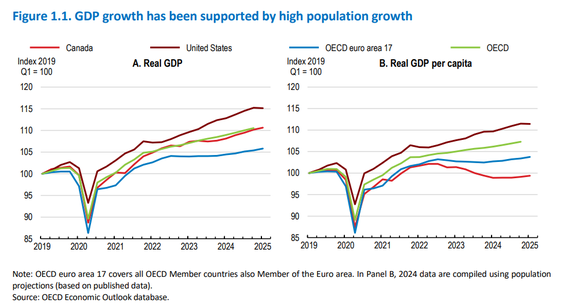
"[Canada's] GDP per capita growth has lagged in recent years, particularly compared to its close neighbour, the United States."
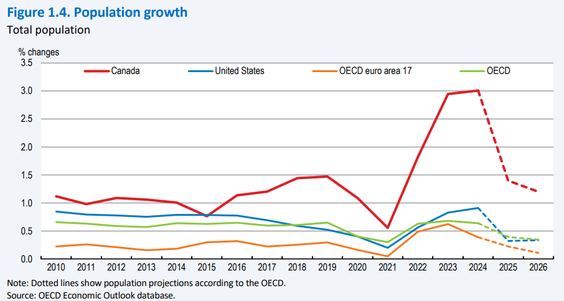
"Canada's population grew rapidly, by 3.0 percent in 2023 and 2.5 percent in 2024. This is much faster than in other OECD countries such as the United States or countries in Europe." 
Organisation for Economic Co-operation and Development (OECD) 
https://i.cbc.ca/1.7550745.1748957910!/fileImage/httpImage/image.JPG_gen/derivatives/16x9_1180/usa-trump-tariffs-canada.JPG?im=Resize%3D780
A Canadian flag is shown near the GM Oshawa assembly plant in Oshawa, Ont. (Carlos Osorio/Reuters)
 
A group of 38 countries representing the developed world, the OECD conducts a comprehensive "economic survey" of each of its members, produced by economists from within the OECD every two years, presenting the completed survey to the member-country for its edification. In the latest issue of its survey for Canada, the report was anything but flattering to the way in which the Canadian government under the Liberal Party under the leadership of its former prime minister Justin Trudeau had governed the country. Under that leadership productivity suffered; openly excess immigration resulted in a crippling of the country's universal health care system, and its unaffordable housing stock, all the while doing its utmost to conceal from the Canadian public the state of economic growth in Canada.
 
The most recent survey presented to Canada placed a particular focus on housing, goods affordability and worker productivity, areas where the  country now ranks with the developing world's most laggardly. Record high immigration was singled out for its effect on worsening the problems. Canada, warns the OECD, has accepted millions of new immigrant workers into its labour force, lacking comparable increases in "productivity-enhancing investment". The stagnant economy that has resulted relates to workers in Canada receiving an increasingly short share of the economic pie in total.
 
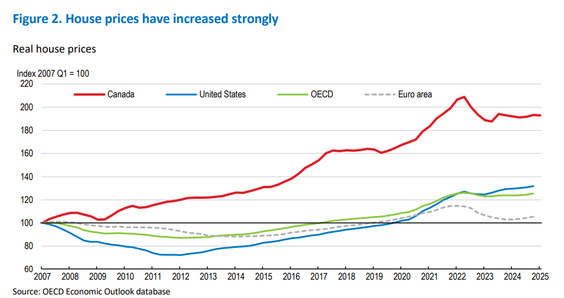
Canada's previous immigration intake system prioritized high-skilled immigrants in professions such as medicine and engineering. In contrast, migration flows now are mostly comprised of low-skilled workers. Statistics have indicated that Canada has become an outlier on housing affordability, placing in the OECD's most recent tally of "price to income" ratio the regrettable situation that identifies Canadian housing to be the highest of all member states other than Portugal. 
 https://smartcdn.gprod.postmedia.digital/nationalpost/wp-content/uploads/2025/06/OECD2.png?quality=90&strip=all&w=564&type=webp&sig=PdIy5cUuZRlUsnRwG28YCQ
 
In OECD rankings of gross-domestic-product growth per capita, Canada has been identified as one of the worst performers over the past ten years that correlate with the governance of the Trudeau Liberals. For comparison, GDP growth per capita from 2014 to 2022 was close to three times higher than Canada's in the United States, at 1.7 percent. A note of optimism appeared in the report in its summary with the declaration that Canada's economy is "resilient", endowed with "robust public finances".
 
Canada's immigrant intake represented a million newcomers absorbed annually. In 2022 the Canadian population was about 38.5 million; three years later it stands at 41.6 million, increased by over three million, judged to be some six times faster than its peers in the OECD where in 2023 the average OECD country grew by 0.5 percent, in comparison.  The report confirms as well a phenomenon Canadian analysts have warned of since 2023: that Canada has been in a "per capita" recession for several years.
 
https://smartcdn.gprod.postmedia.digital/nationalpost/wp-content/uploads/2025/06/Screenshot-2025-06-03-023321.png?quality=90&strip=all&w=564&type=webp&sig=S3iGMGaFatEQojCdVa08-w
This worked out to about one million newcomers entering Canada each year. At the beginning of 2022, the Canadian population stood at about 38.5 million. Now, it’s at 41.6 million, an increase of more than three million.
 
While the injection of three million people appeared to increase GDP, given their impact on the economy paying rent, buying groceries and thus contributing to the amount of money circulating within the economy, on an individual basis the reality is that the average Canadian's wealth and purchasing power has been notably dropping. When ranked by "real GDP per capita", Canada's economic performance falls behind dramatically. The subtitle of the report aptly reads: "GDP growth has been supported by high population growth".  
"Inflationary pressures from higher tariffs will require a more cautious approach to lowering interest rates."
"Increased government spending, particularly on housing affordability and new social programs, has recently worsened the general government balance, although it had previously been in surplus." Organisation for Economic Co-operation and Development 
 https://smartcdn.gprod.postmedia.digital/nationalpost/wp-content/uploads/2025/06/OECD3.png?quality=90&strip=all&w=564&type=webp&sig=_B2YulCp7VEocKgR66TLzQ


Labels: , , , , , ,

Monday, November 11, 2024

The Consuming Agenda of Climate Change and Woke Genderism

"[While Trump's] false [and] outrageous [comments and behaviours were offensive and objectionable, the Harris campaign faced major ideological obstacles]."
"Put another way, the takeover of the Democratic party by progressive, so-called woke issues was devastating to Harris's campaign especially as Trump and the Republicans successfully painted her as an unreconstructed 'left-winger'."
Michael Hirsh; 'Why She Lost', Foreign Policy magazine

"Across the last decade, the defining pattern of national politics has been class de-alignment: a vast migration of working-class voters away from the Democratic Party."
Matt Karp, Princeton University

"America is a failed democracy. Our media failed us, our institutions failed us, our people failed us."
"Worst of all, we now pose a major threat to the planet."
Michael E. Mann, climate science extremist, Pennsylvania University

"We have more liquid gold, oil and gas. We have more liquid gold than any country in the world. More than Saudi Arabia. We have more than Russia."
"We're gonna have to seal up those borders, and we're gonna have to let people come into our country. We want people to come back in. But we have to, we have to let them them come back, but they have to come in legally."
President-Elect Donald Trump
https://assets2.cbsnewsstatic.com/hub/i/r/2024/11/11/46741b31-647a-4c74-9212-55d6854b74b1/thumbnail/1280x720/961a20d5405e5628c92e98d6f63671eb/ot-patheshiftfd-new-3328655-640x360.jpg?v=dc2545c4ab2eed12a36d08149f07343c
CBS News
 
The U.S. presidential election is now over, and while much of America is pleased, much of it is not. The stock market rose significantly in response to the election outcome. Investors anticipate that the U.S. economy, freshly released from anti-business constraints, largely environmental concerns and high taxes is set to boom. The election results left Democrats and aligned activists in an agony of misery with the realization that the Democrats' social and economic ideas have come to a thudding halt. Woke genderism and extreme climate agendas along with costly industrial policy interventions failed to move the electorate.

Kamala Harris was weighed down by the very ideological mainsprings she supported and spoke so glowingly of as achievements. Her chirpy happy-style along with her evasiveness when questioned and the gushing flow of meaningless words did her no favours. Nor did a tide of voter rejection of the  extreme progressive elements of the Biden agenda that she carried forward.

The Democrats really did believe that its infrastructure spending driving up debt and devotion to climate and clean energy programs would popularize them and bring them to an electoral lead in the polls. They simply failed to recognize that voters, in response to a Democratic agenda they would not support, saw their Republican adversary bathed in a new light of promising delivery from the ideology of woke in all its manifestations.

On the one hand, upper-class voters continued to gravitate to the Democrats, while working class and the middle class support for an agenda that had no appeal for them, dwindled. Their obsessive focus on climate issues and carbon control alienated voters who struggled against inflation and an economy that failed to lift them into economic security.Their concerns over the cost of living and social disruptions were simply never addressed. Polls indicated that climate concerns formed no part of that demographic's concerns.
 
https://img.i-scmp.com/cdn-cgi/image/fit=contain,width=1024,format=auto/sites/default/files/d8/images/canvas/2024/11/12/14d955c6-8156-47c8-bf8e-1c7b14c2013a_8da7d962.jpg
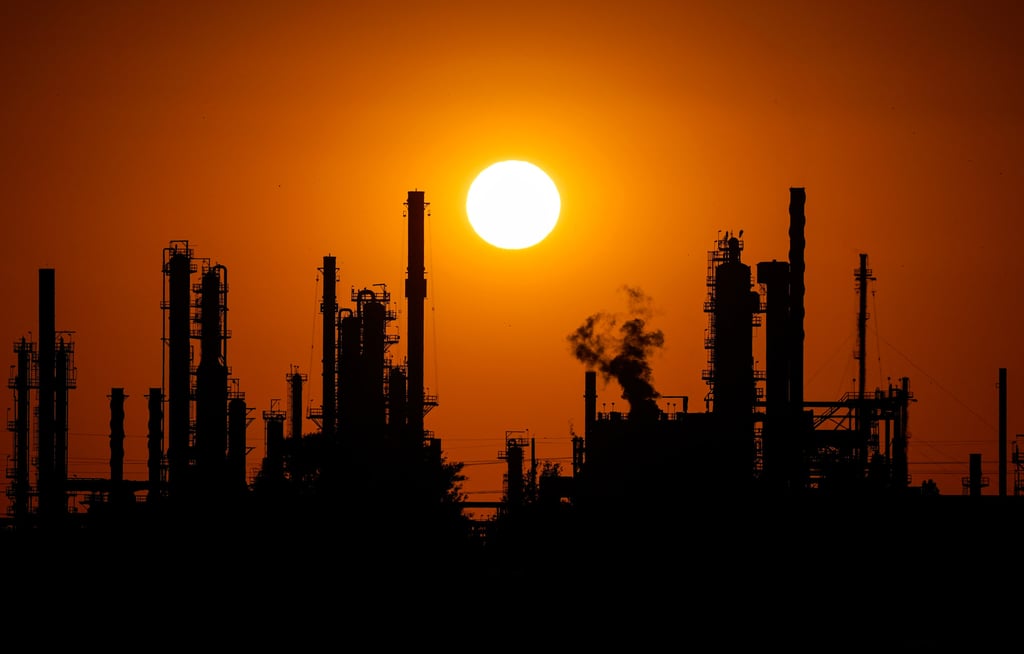
Oil refinery is silhouetted against the setting sun in McPherson, Kansas. Photo: AP
 
The existential hyperbole that environmental doomsayers spouted and the Biden administration catered to had no firm focus in the world inhabited by the average American voter. This is not an attitude solely of the American public exhausted by the constant drumming of climate change alarmism and the costs that accompany it; it is an emerging global phenomenon.

It appears that governments wherever they are located are increasingly feeling a backlash of citizen revolt against irritating and expensive climate change agendas promoted by the West and flouted by the East. America's northern neighbour has seen its Liberal government equally invested in climate change, adversarial to the trade and export potential of its vast reserves of oil and gas, insisting on keeping it in the ground for the sake of the environment rather than producing profit for the sake of the country.

https://cdn.i-scmp.com/sites/default/files/styles/1200x800/public/d8/images/canvas/2024/11/12/8e8d85ce-1bce-4c79-9284-3045c880e1be_7af95631.jpg?itok=8D8Y00Cn&v=1731381413
South China News
"This is the revenge of the regular old working-class American, the anonymous American who has been crushed, insulted, condescended to."
"They're not garbage, they're not Nazis, they're just regular people who get up and go to work every day trying to make a better life for their kids, and they feel like they have been told to just shut up when they have complained about the things that are hurting them in their own lives."
Scott Jennings, CNN

Labels: , , , ,

Saturday, January 01, 2022

A Tsunami of Omicron

"We just can't have everybody just being taken out of circulation because they just happen to be at a particular place at a particular time."
Australian Prime Minister Scott Morrison

"Delta and Omicron are now twin threats driving up cases to record numbers, leading to spikes in hospitalization and deaths."
"I am highly concerned that Omicron, being highly transmissible and spreading at the same time as Delta, is leading to a tsunami of cases."
Director-General Tedros Adhanom Ghebreyesus, World Health Organization
People wait outside a COVID-19 testing centre, amid the coronavirus disease (COVID-19) outbreak in Manchester, Britain, December 28 , 2021. REUTERS/Phil Noble
 
Britain, Italy, Spain Portugal, Greece, Cyprus and Malta have all registered record numbers of new cases. In the United States, the seven-day average of new daily cases hit its own record of 258,312, a Reuters tally confirmed...as opposed to the previous peak last January when 250,141 cases were registered. The saving grace is that surge aside, deaths and hospitalizations remain comparatively low, CDC director Dr.Rochelle Walensky pointed out.

Over the past seven-day period, according to Reuters data, global COVID-19 infections reached record highs as the Omicron variant sped uncontrollably through populations, leaving governments to wrestle with how they might conceivably contain the spread, and at the same time sparing fragile economies from paralysis.

On average every day worldwide, between December 22 and 28, close to 900,000 cases were registered, many countries posting new all-time highs in a previous 24-hour period. Among them the United States, Australia and many European countries, as well as Bolivia. Studies suggest Omicron is less deadly than previous variants yet even so, huge numbers of positive tests equate with some countries' hospitals soon becoming overwhelmed and at the same time businesses may struggle to carry on, with workers quarantining.
 
A situation that has led some governments to consider shortening the period of isolation for people who test COVID-positive, or have been exposed to someone who is positive, through sheer fear of the impact on the economy resulting from too many people being kept at home. Spain announced a reduction of their quarantine period for those testing positive to seven days from the current ten.
 
Italy is planning to relax isolation rules for people coming into close contact with infected people. U.S. health authorities released new guidelines this week that would shorten the isolation period for people with confirmed infection to five days from ten, confined to people who are asymptomatic. Olivier Veran, French health minister, informed lawmakers that his country was being overcome by a "dizzying" rise in cases where 208,000 have been reported in the space of a day -- representing a national and European record.
 
People wearing protective masks queue for booster injections of a coronavirus disease (COVID-19) vaccine as the pandemic continues, at a vaccination centre at the University of Malta in Tal-Qroqq, Malta December 29, 2021. REUTERS/Darrin Zammit Lupi
People wearing protective masks queue for booster injections of a coronavirus disease (COVID-19) vaccine as the pandemic continues, at a vaccination centre at the University of Malta in Tal-Qroqq, Malta December 29, 2021. Reuters
 
An increase of 60 percent over the previous week was seen in the United States where current seven-day daily average cases sit at close to 240,400, while the hospitalization rate for the same period is up 14 percent to about 9,000 per day over the same period, with deaths about seven percent, to 1,100 daily, given early data from Britain, South Africa and Denmark. The risk of hospitalization from Omicron is lower than from Delta according to the WHO.

Mike Ryan, the WHO top emergencies expert stated it to be too premature to draw definitive conclusions since Omicron so far was in circulation largely among younger, less vulnerable age groups. 182,027 COVID cases were reported in Britain, a new record exceeding the previous highest figure registered by fully 50,000, according to government statistics. Record cases were reported in Ireland as well, with over 16,000 new infections.

Prime Minister Boris Johnson, however, has been persuaded not to bring in new restrictions in England to limit the Omicron spread, now accounting for 90 percent of all community infections. Almost 18,300 new cases have been registered in Australia, eclipsing the previous high of around 13,300. Demand for free testing kits in Spain from the Madrid regional government has far outstripped supply, with long queues forming outside pharmacies.
 
The economic impact of huge numbers of people being forced into self-isolation as a result of having had contact with an infected person has governments increasingly concerned. Spain and Italy took steps to relax some isolation rules, but China is adamant about its policy of zero tolerance to the extent that it has placed the 13-million people in Xian, capital of central Shaanxi province, under rigid lockdown for a seventh day, where people cannot leave their homes even to shop for food.

Residents take nucleic acid tests in Xi'an on December 27, during a city-wide lockdown.

Labels: , , ,

Tuesday, March 09, 2021

COVID-Inspired Baby Bust

"Being stuck at home with a partner doesn't meet the necessary ingredients for increased fertility rates."
"More sex is insufficient for a baby boom to occur."
Dr.Liz Allen, population expert, Australia
 
"We certainly anticipate there to be a rebound [in the post-COVID birthrate]." 
"But we're not so sure about an overshoot - a boom that helps to offset the bust."
Dr.Emily Smith-Greenaway, University of Southern California
 
"So what we did was we looked back at what happened to birth rates after the Great Recession. There’s a link of about a 1 percentage point increase in the unemployment rate leads to about a 1% reduction in the birth rate. And then we also look back at what happened during the Spanish flu. And what’s really interesting to think about is back then people didn’t even have access to modern contraceptive technology. Nor did the Spanish flu lead to a recession. So that was really just a public health crisis. But it led to a sizable reduction in births. And so based on what we see in the data from those two previous periods, we predict that there’s going to be something like an 8% to 10% drop in births on account of this current pandemic."
Melissa Kearney, professor of economics, University of Maryland
Melissa Kearney, professor of economics at the University of Maryland, says when it comes to the COVID baby bust, "one of the big questions is, how many of these missing births are going to be delayed versus never happened." Sean Gallup/Getty Images
baby
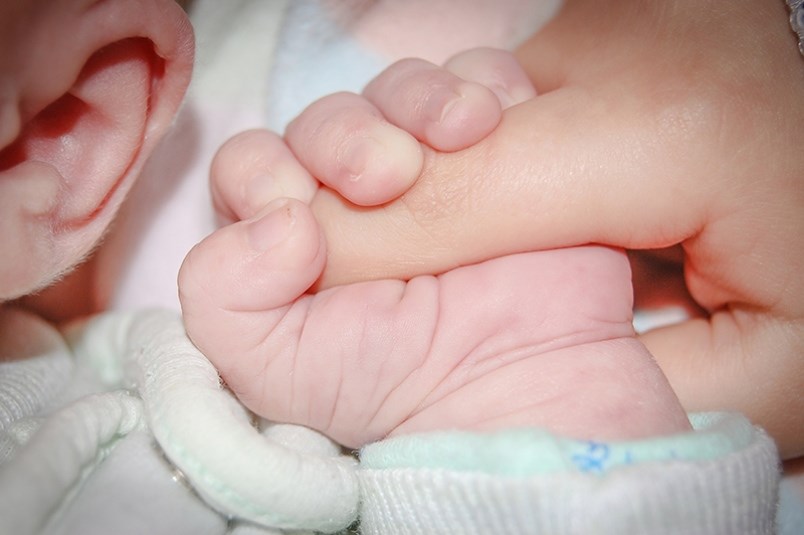
Photo: Baby/Pixabay
A CBS News gathering of annual data from 32 states indicated 95,000 fewer births in 2020 than in 2019; equivalent to a four percent drop nationally. Statistics in Europe appear to point to a similar situation. France, known as the "baby-making champion of Europe" has seen its high fertility rate declining even further during the pandemic. France's National Institute of Statistics and Economic Studies claims the birthrate fell precipitously at the beginning of the year with a shortfall of 13 percent in comparison to the January 2020 rate.

Fertility plans in Germany and France showed a slight downward change in a study of women aged 18 to 34 conducted between March and April, early in the pandemic. Close to one-third of those planning a birth for 2020 in Italy and Spain set the project aside for the year. Italy, where COVID-19 hit particularly hard saw its birthrate fall 21.6 percent from the same month the previous year. In Germany, France, Spain and the U.K.,half or more respondents stated they remain dedicated to having a child, but were inclined to wait...

In Italy, France and Spain during physical distancing rules where extended family members could no longer act as care-givers, child-bearing decisions were impacted by delay. Australia has seen its country's birthrate below population replacement levels, though this situation dates back to 1957. In the Nordic countries apart from Denmark, a decline in fertility is also markedly high. "The fertility figures in Finland, Norway and Iceland are lower than they have ever been", stated Gunnar Andersson, professor of demography at Stockholm University.

Some would-be parents are waiting until more is known about the vaccines for COVID-19 before they conceive.
Some would-be parents are waiting until more is known about the vaccines for COVID-19 before they conceive


Labels: , , ,

Monday, April 27, 2020

Defying Illness and Death for Life-as-Usual

"What we see is that in many states, you see an increase in influenza-like illnesses, and then a week or two later, you see an increase in deaths due to pneumonia and influenza."
"It provides some confirmation that what we are seeing is related to coronavirus."
"We decided to look at all deaths from pneumonia, or all deaths overall, and see how those numbers were changing,"
Dan Weinberger, epidemiology of infectious diseases, Yale University
Protesters demonstrate against safer-at-home orders at the Colorado Capital in Denver on Sunday. Some counties there have implemented stricter measures than the state, which had announced an easing for some businesses starting Monday. (Jason Connolly/AFP/Getty Images)
"In New York City, this discrepancy [between numbers forecasted and numbers realized] was even more stark, with three to four times as many excess all-cause deaths as pneumonia and influenza deaths."
"For instance, California had 101 reported deaths due to COVID-19 and 399 excess pneumonia and influenza deaths."
"Many states experienced a notable increase in the proportion of total deaths due to P&I (pneumonia and influenza) starting in mid-March through March 28 compared to what would be expected based on the time of year and influenza activity."
"In some states, such as Florida and Georgia, the increase in deaths due to pneumonia and influenza preceded the widespread adoption of testing for the novel coronavirus by several weeks."  
"Given the lack of adequate testing and geographical variability in testing intensity, this type of monitoring provides key information on the severity of the epidemic in different geographic regions."
"It also provides some indication of the degree to which viral testing is missing deaths associated with COVID-19 directly or indirectly."Research report, published in MedRxiv
Public antibody testing ramps up as US coronavirus cases approach 1 million
The United States has been hit by one of the globe's worst epidemics of novel coronavirus. The death toll is approaching 58,000, increasing at a steadily rapid rate. Despite this, a growing number of state governors appear to be defying reality, in lock-step with the president anxious to see a return to normal life, in particular that business as usual would resume. The economy has been put to a standstill. From a situation of full employment and more jobs than people to fill them, suddenly mass unemployment has struck the country. On Saturday alone, there was an additional 2,404 coronavirus deaths reported.

Yet, a belief born of desperation appears to be informing decision makers, that the worst of the outbreak could have passed, matching pressure from the corporate community that the devastated U.S. economy must see some relief from the imposition of lockdown. Across the country anger and frustration have seen protests erupt, with citizens decrying the unneeded security steps, that their liberties have been abridged, that the American way of life has been upended for no good and reasonable purpose.

As evidence of that looming distrust in government action in response to the advice from their top expert medical advisers, Americans are demonstrating their penchant for ignoring stay-at-home orders in a demonstration of quarantine fatigue. A team led by the University of Maryland, with the use of mobile-phone data, discovered that Americans have been leaving the confines of self-isolation in increasing numbers.

Operating manager Barry Lennon cleans up the table of customer Duke Scott in the empty dining room of the J. Christopher's restaurant on Monday in Brookhaven, Ga. As of Monday, restaurants around Georgia are allowed to offer dine-in service. (Jessica McGowan/Getty Images)

In California, thousands of people have gone to the beaches amid soaring temperatures on the weekend, choosing to entirely ignore the state governor's orders. Demonstrations have been reported in Springfield, Ill and Baton Rouge, La. Demonstrations in Michigan, where one of the worst breakouts has occurred in Chicago, have been supported by conservative groups. In response the governor agreed to ease some of the imposed curbs allowing some businesses to reopen.

In Georgia, Governor Brian Kemp is allowing hairdressers, nail salons and tattoo parlours to re-open their premises; hardly the essence of 'essential' services for a population in lockdown against a dread disease. There have been guidelines issued that clients and staff wear masks and customers be asked questions of their health conditions; with no way to monitor compliance. A raft of businesses will be permitted to operate over the coming week in around 20 states.

According to the director of the Johns Hopkins Center for Health Security, Tom Inglesby, he believes the country is "at the end of the beginning" of the crisis. As for President Trump, he has stated that his daily White House briefings are to be scrapped, "not worth the time and effort".

Some health experts and local politicians are concerned that restrictions put in place to slow the spread of COVID-19 are being lifted too soon in some U.S. states such as Georgia.

Labels: , , , , ,

Thursday, April 16, 2020

Re-Opening the Economy in Denmark

"I won't be sending my children off no matter what."
"I think a lot of parents are thinking, 'Why should my little child go outside first'/"
Sandra Andersen, founder, My kid is not going to be a Guinea Pig, Facebook

"I don't think it's right for the kids not to hug their friends."
"We keep the kids home, because the situation in the day cares before the COVID-19 outbreak were not OK, and the conditions they are setting up now are even worse."
Nonne Behrsin Hansen, Copenhagen, Denmark

"Suddenly, these moms feel like they just have to throw their kids to the front line and I think their reaction is: 'Don't mess with our kids."
Esme Emma Suteu, founder, Momster

"We're all a bit nervous and we'll have to ensure that we stick to hygiene rules."
"We have a lot of washing hands during the day. We don't have masks and we have to keep a good distance from each other so that's a very difficult task."
Elisa Rimpler, Danish Union of Early Childhood and Youth Educators

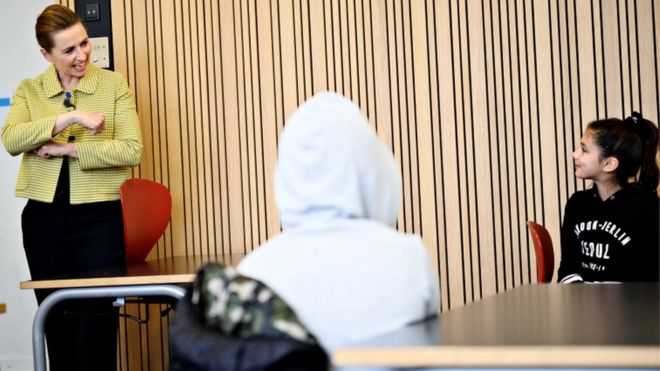
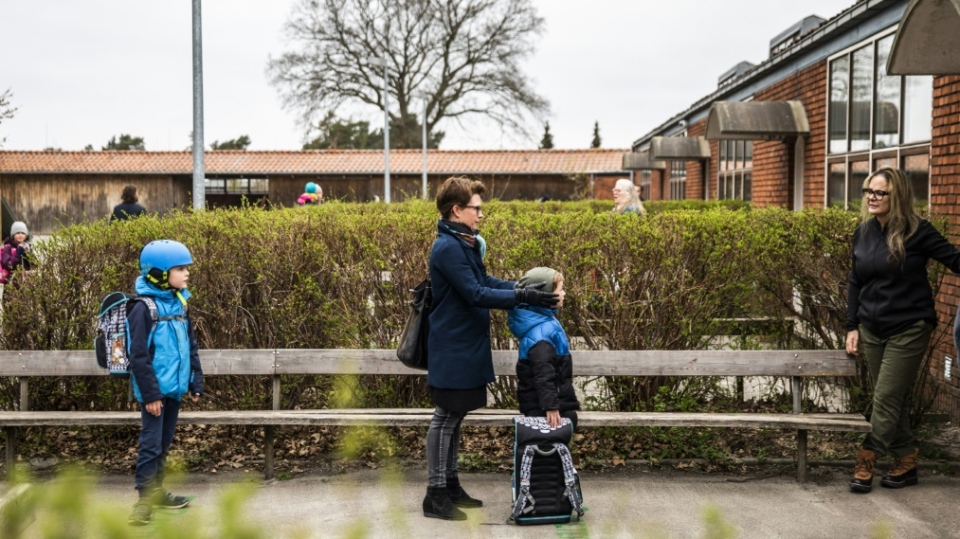
The Danish prime minister welcomed children on their return to school in Valby on Wednesday
The Danish prime minister welcomed children on their return to school in Valby on Wednesday     Reuters  

One of the first countries in Europe to decide to close down its schools in reaction to the influx of novel coronavirus cases, Denmark with its population of just under 6 million now feels the time is right to re-open them for children up to the fifth grade to "get the economy going again", according to Prime Minister Mette Frederiksen. To free up parents by allowing the children to return to school, so their parents can return to the workforce to rescue a faltering Danish economy.

Instructions have gone out to teaching staff to ensure that social distances are maintained between children. Among the population there are many who are less than pleased, even while others express confidence in the move. An online network of thousands of Danish mothers signed onto Momster have little confidence that Danish authorities have matters relating to the novel coronavirus under control.

Concerns that newly reopened schools and daycare centres may serve to open a new front of COVID transmission leading to a second wave of cases has moved thousands of Danish parents to express their foreboding by keeping their children at home, despite the official re-openings. Denmark has not seen the kind of flood of coronavirus cases seen elsewhere in Europe, like Italy or Spain, France or Britain, but the decision has brought a heated debate over priorities; health safety or the economy.

Denmark first in Europe to reopen schools after coronavirus lockdown
Children distancing at Korshøjskolen in Randers . Bo Amstrup/Ritzau Scanpix

Up to Tuesday the virus had infected over 6,600 Danes and resulted in close to 300 deaths. Shops were ordered closed, along with bars, restaurants, cinemas and gyms.

It was when the Danish health authority recommended an easing up after the lockdown of a month's duration had succeeded in reducing the rate of new cases, to relax the lockdown by opening up schools to children up to age eleven.

At the department of infectious diseases, Aarhus University, scientist Christian Wejse acknowledged parents' concerns "because we've spend a month trying to avoid contact". But he stated that the age group of children in question fall into a category "where few fall ill, and those who do won't get very sick". He points to Sweden as an example, where schools have remained open and no dramatic rise in infections has arisen. Children, he assured the skeptical, seem not to be a major driver of infections.
"I feel great, really good about the kids going back to school."
"I think we're all going to be sick at one point and they told us the children are going to be less sick and affected by this virus."
"I think it's good that they're going back to school... We need to go back to daily life."
Caroline, 38, mother of two, Copenhagen

Denmark schools
Schools in Denmark were closed on March 17 in an effort to curb the COVID-19 epidemic, though many had shut before then. (AFP)

Labels: , , , , ,

Saturday, June 08, 2019

Medical Care in Putin's Russia

"A very natural thing is happening."
"The worsening economy, the declining real wages, is souring public opinion."
Ekaterina Schulmann, political scientist

"I voted for Putin, we all voted for Putin."
"I never thought I would have to protest."
Dr. Yuri I. Korovin, 61, Okulovka, Russia
relates to Putin’s Health-Care Cuts Spark Protests in Russian Heartland
Yuri Korovin

Between the Seychelles and Greece, Russia ranks 73rd in the world in per capita gross domestic product. This year, Russia's state statistics agency released a survey that about a third of the Russian population was unable to afford a spare pair of shoes to take them through the winter. Russians have tolerated because they have little choice, five years of declining wages adjusted for inflation.

Russians focus now on the disconnect between Russia's rise abroad and the reality of its stagnating home economy.

The Kremlin has been busy securing a place of influence for itself in the Middle East. Helping Syria prosecute a murderous war against its own rebellious civilians along sectarian divisions is costly not only in lives but in munitions and aerial support of Syrian state troops, as well as establishing a Russian sea port and air base in the embattled Middle East nation.

If state funding is directed toward this outward display of Russian might what is left to support the local economy?

Moscow's war in Ukraine in support of ethnic Russian Ukrainian rebels and its securing of the Crimean Peninsula, earning Russia crippling economic sanctions and falling trade ties, its 'argument' with Great Britain over poisoning ex-spies, and Vladimir Putin's love/hate affair with the White House administration of Donald Trump, no less accusations of cyber-espionage and political mischief in the affairs of other countries' elections have done the country no favours.

Russia's economy suffers but who suffers the most is the Russian population. No amount of treasury was spared in proudly unveiling Russia's new generation of ICBMs and other instruments of war. A strike was organized recently by a new doctors' union, highlighting that physicians and ambulance medics have been pushed to labour action resulting from poor pay, garbage disposal issues, crumbling infrastructure and a drop in the quality of medical care.

In rural Russia, doctors like Dr. Korovin from Novgorod, Okulovka, where he is the only doctor in his near region, are paid an annual salary of $8,670. For an hour-and-a-half operation, after-hours (when he is paid more) treating a man with a stab wound in his lower abdomen, his pay was 500 rubles ($7.70). Paid out of Russia's state-run insurance program.

Doctors and nurses demanded during their strike that local authorities fulfill a decree signed by President Putin that doctors be paid twice the average salary of the region where they work -- which would amount in the Novgorod region to 744,000 rubles, or $11,448 annually, well above Dr. Korovin's current take-home pay.

Should the government react by firing the doctors there would be no health professionals left to treat the population. Provincial towns and cities are facing a situation as it is, where doctors are leaving in droves, hoping that employment in areas in and around major cities will earn them a living wage. Hospitals in the Novgorod region have 229 openings for doctors, and no takers.

Dr. Korovin, a soft-spoken man with a mop of white hair and a surgeon's skilled hands, mentions he has treated just about everyone in town. On a recent day, he examined an older man who had broken a rib in a fall, then tended another man's cut foot. He removed City Council member Andrey Karpusenko's appendix a few years earlier.

"Of course, we need to raise salaries", agreed Mr. Karpusenko. But given Russia's current economic straits no one is expecting the health workers' protests to influence any change in the situation.

www.vsyako.net
Photo: Alexey Sukhorukov / RIA Novosti

Labels: , , ,

Thursday, November 30, 2017

A Puzzling Conundrum on Longevity

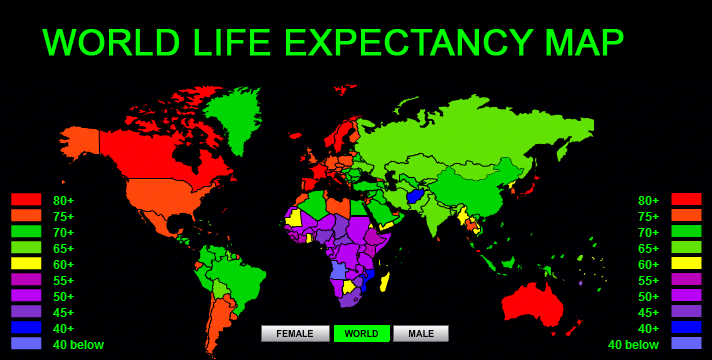
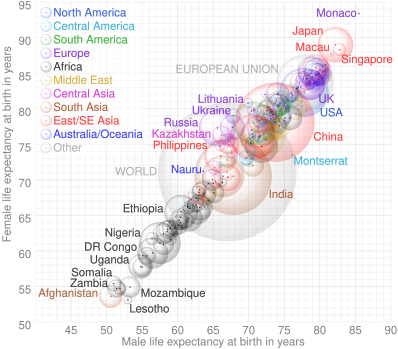
"Worldwide, the average life expectancy at birth was 71.5 years (68 years and 4 months for males and 72 years and 8 months for females) over the period 2010–2015 according to United Nations World Population Prospects 2015 Revision,[3] or 69 years (67 years for males and 71.1 years for females) for 2016 according to The World Factbook.[4] According to the 2015 World Health Organization (WHO) data, women on average live longer than men in all major regions and in all individual countries except for Mali and Swaziland.[3]" WikipediaImage result for global map on longevity

From the year 2000 to 2011, the beginning of the 21st Century, vast advances in human mortality took place, as mortality rates in first world countries dropped, seeing averages of several months being added to peoples' lifespans for each of those years. In or around that last year of 2011 some mysterious change occurred and the trend came to a jarring halt. Mysterious because science cannot account for it.

While the United States, Canada, Australia, Japan and Western Europe had realized impressive scales of magnitude in lengthening lifespans, it would have been relatively simple to expect that this would continue upwards giving people fortunate enough to live in those countries ever-lengthening lives, until the unexpected occurred and suddenly something changed. The acceleration plunged and remained static.

In Canada for example, lifespans which had been growing swiftly slowed to 0.4 months a year beyond 2011, representing a fifth of the advances before 2011. A similar shift occurred in the United States and most of Europe, with the United Kingdom and Spain particularly facing a dismal rise. Lifespans for particular age groups in the U.S. and the U.K. diminished since 2011.

And the reason or reasons? No one knows, although there are any number of plausible theories of causation that have been raised. Austerity measures the government of Britain took in the wake of the Great Recession is pointed out as a possible cause there, with cutbacks in health care spending resulting in increased deaths in the population.

The reasons posited in the United States are different; deaths resulting from drug and alcohol poisoning, suicides, chronic liver diseases all have seen a sharp increase since 1999. Especially opioid use is seen as responsible for a mortality rate spike in certain age groups. And then there is the global malaise of obesity rising still in many countries inclusive of the U.S., Canada, the U.K. and Germany.

Obesity did not suddenly rise in 2011; it existed prior to that date yet mortality improvements were seen to continue rising up to 2011. In Spain the mortality improvement statistics sank at a rate more steep than for almost any other country, and its obesity rate remains fairly well unchanged since 2011. Then there is medical advances that served to elongate peoples' life expectancy; the theory there being that those advances have come to a gradual slowdown.

Since the 1950s, there has been a realized two-third drop in early deaths from cardiovascular disease, an improvement in both medical therapies and longevity whose accelerated rate is unlikely to be repeated any time soon. On the other hand there is the potential for cancer death rates to be reduced through a breakthrough, not yet on the horizon.

Japan stands out in this global conundrum; with the lowest mortality rate compared to other advanced nations, it continues to achieve reductions in mortality rates since 2011, standing above and apart from the shift seen in global mortality trends. As for all others, a likely hypothesis is that a root cause exists afflicting much of the glove, since the Great Recession.

And as unlikely as it may seem to some, that root cause has been identified as large gaps between wealthy and indigent in developed countries; the U.S., as an example demonstrates one of the largest margins between its rich and its poor populations in developed countries. It is distinguished by having the lowest life expectancy, while Sweden with the smallest income disparity is less affected than other countries in Europe in mortality trends.

In the United States, in the year 2015, the U.S. experienced a falling life expectancy, the first in decades. While there will continue to be increased deaths resulting from decreased longevity, these countries can anticipate trillions of dollars in savings from the reduced cost of defined benefit pension plans and Social Security systems in North America and Europe.

Wikipedia

Labels: , , , , ,

Sunday, May 28, 2017

Unsustainably Exploiting the Oceans

"Chinese fleets are all over the world now, and without these subsidies, the industry just wouldn't be sustainable."
"For Senegal and other countries of West Africa, the impact has been devastating."
Li Shuo, global policy adviser, Greenpeace East Asia

"Foreigners complain about Africa migrants coming to their countries, but they have no problem coming to our waters and stealing all our fish."
Moustapha Balde, 22, Senegal

"We always thought that sea life was boundless. [Now], we are facing a catastrophe."
"I understand why [local fishermen in Joal, Senegal] they hate me [for his campaign targeting Chinese boats and Senegalese boats alike against overfishing]. They are just trying to survive from day to day."
Abdou Karmim Sall, 50, president, Joal fishermen's association

"Sometimes the Chinese pay bribes [to local African authorities] to get access [along the African seacoast, for fishing], and that money doesn't trickle down, so the population is hit by a double whammy."
Rashid Sumaila, director, Fisheries Economics Research Unit, University of British Columbia Fisheries Center
Chinese Fishing at Sea in Western Africa在海的中国钓鱼在西非
A Chinese fisherman and three local e local sailors clean recently caught shark. (Greenpeace/Liu Yuyang)

Senegal has close to a 500 kilometer coastline along the Atlantic, and for the country the ocean represents their economic lifeblood, with seafood their main export. Fishing-linked industries give employment to close to 20 percent of the Senegalese work force. Declining fish stocks and drought linked to climate change has led millions of rural Senegalese to migrate to the coast, placing a further burden on sea dependency.

In the small fishing village of Joal, the population has swelled to 55,000 souls and as a result 4,900 pirogues fish from Joal, a substantial increase from the few dozen that were part of the local scene when Abdou Karim Sall was still in his teens. More latterly at age 50, he became a local celebrity
when he personally detained captains of two Chinese fishing boats fishing close by his village illegally.

Large, foreign-owners trawlers capriciously trawl the seacoast; at last estimate, over 100 of the boats representing European, Asian and locally flagged vessels. Apart from those fishing vessels, there are other boats flying Senegalese flags despite their ownership by Chinese companies. Chinese boats are flagged as among the worst offenders, stealing 40,000 tons of fish yearly from Senegalese waters, representing about $28-million the nation might have profited by.

What has been happening in Senegal is repeated throughout West Africa where countries like Guinea-Bissau, and Sierra Leone have few boats to police their national waters. "We used to have big grouper and tuna, but now we are fighting over a few sardinella" buyer Sente Camara, 68, complained. "The future is dark", she added.

In the nation of 14-million, impoverished Senegal has seen its fishing stocks plummet, and local fishermen with their hand-hewn canoes have a difficult time competing with the megatrawlers whose nets scoop every living thing out of the seas. The fish are sent abroad, much of it becoming fishmeal for chickens and pigs in the United States and Europe.
West African small-scale Local Fishermen in Senegal西非地方渔夫
Local fishermen in Senegal cast their nets. Other than a motor and GPS, their boat lacks any modern equipment. (Greenpeace/Liu Yuyang)

Fewer returns from the sea translates to far less income for fishermen, itself ensuring high food prices for all Senegalese citizens traditionally dependent for protein on fish. China is the world's largest seafood exporter, its population accounting for over a third of all fish being consumed globally, with China's fishing industry giving employment to over 14-million people, another 30 million relying for their livelihood on the fish industry.

Indonesia has responded to the presence of Chinese trawlers caught poaching by impounding scores of them. A Chinese vessel was sunk by Argentina when it attempted to ram an Argentinian coast guard ship. Chinese fishermen and South Korean authorities have clashed with deadly results. Beijing, however, views its fishing vessels as a forerunner of its territorial ambitions in the South China Sea where in Hainan Province the government motivates boat owners to fish around the Spratly archipelago and the Paracel Islands claimed by the Philippines and Vietnam respectively.

Chinese fishing boats are not entirely on their own; they have naval power back-up, and Chinese naval frigates have driven off thousands of Filipino fishermen dependent on the rich fishing areas around the Spratly Islands.  China's distant-water fishing fleet has expanded to include close to 2,600 vesselsm most of them so large they scoop up as much fish in a week as Senegalese boats bring in throughout the space of a year.

The journal Frontiers in Marine Science estimates that China's fishing predation costs West African economies $2-billion yearly in lost income, while Chinese government subsidies valued at close to $22-billion-worth between 2011 and 2015, has created a dependency among Chinese boat owners.

West African small-scale Local Fishermen in Senegal西非地方渔夫
Local fishermen beat the sides of their boat and sing traditional songs as they pull their nets in. (Greenpeace/Liu Yuyang)

Labels: , , , , ,

Tuesday, January 24, 2017

End-of-Life Health Costs

"Neither patients nor physicians should consider costs when making the very personal decision to request, or provide, this intervention."
"As death approaches, health care costs increase dramatically in the final months. Patients who choose medical assistance in dying may forgo this resource-intensive period."
"Providing medical assistance in dying in Canada should not result in any excess financial burden to the health care system and could result in substantial savings."
Report, University of Calgary research

"There was no agenda to this cost analysis. We're definitely not suggesting that medical assistance in dying be chosen over any other way of dying."
"We're just trying to describe the reality that may exist in Canada [under a new law]."
Dr. Aaron Trachtenberg, resident, internal medicine, study co-author

"[The difference between one and four percent of all deaths] represents a grey zone of about 8,000 Canadians. The very notion of costing end-of-life care and estimated savings with medical aid in dying is a bitter ethical quandary for some."
"We should quickly move past counting dollars saved from medical aid in dying, and count instead the days of unbearable suffering that result from missed opportunities to provide palliative care."
Dr. Peter Tanuseputro, Bruyere Research Institute
New research suggest medically assisted dying could result in substantial savings. But the study's author says costs should not be considered when individual patients consider the option.
New research suggest medically assisted dying could result in substantial savings. But the study's author says costs should not be considered when individual patients consider the option. (Chris Kreussling)

Indeed, the conclusion reached by the research team out of the University of Calgary, published in the Canadian Medical Association Journal of the economic efficacy in savings up to $139-million annually in aiding dying patients to kill themselves before the natural process of dying completes its journey -- as a remedy to high health costs associated with the last living days of people moving toward the final days, weeks, months of their lives -- does leave an acrid taste in one's sensibilities.

The analysis, based on those Canadians expected by the system to choose an assisted death, and the amount of time a person's end-of-life might be quickened, the costs of care immediately preceding death based on emergency department trips, dialysis treatment and hospital admissions led to the calculation that the cost of offering doctor-hastened death would lead to a gross medical-health savings that would more than balance the cost of doctor-aided death as opposed to continued health care until death.

With the experience of the Netherlands and Belgium as a guide, the researchers were able to estimate medical assistance in dying would play a role in one to four percent of all deaths in Canada, resulting in approximately 10,722 deaths annually. Of those deaths, an estimated eighty percent would be struggling with cancer; fifty percent would be between 50 to 80 years of age, and sixty percent would have had their lives cut short by an average of one month. Based on physician fees in Ontario the calculation was that direct total cost of doctor-hastened death would range from $269 to $756.

Medical assistance in dying (MAID) in practise, has the potential to reduce annual health spending by $35-million to $139-million. For 2016, Canada was projected to spend $228-billion on health care. According to one Ontario study, the average person is responsible for generating $14,000 in health-care costs through the last thirty days of their life, inclusive of receiving intensive treatment which, in the end, serves frequently to temporarily delay otherwise-imminent death.

"Canadians die in hospitals more often than, say, our counterparts in America or Europe and … we have a lack of palliative care services even though we are trying to improve that. And therefore people end up spending their final days in the hospital", explained Dr. Trachtenberg further. "Hospital-based care costs the health care system more than a comprehensive palliative care system where we could help people achieve their goal of dying at home."

Hospice volunteers caress the hands of terminally ill patient
John Moore / Getty Images   Hospice volunteers caress the hands of terminally ill patient

Labels: , ,

Sunday, May 29, 2016

Incentivizing Corporate Humanitarianism

"It basically shows us that the end of the road isn't very far away for antibiotics -- that we may be in a situation where we have patients in our intensive-care units, or patients getting urinary tract infections for which we do not have antibiotics."
Centers for Disease Control and Prevention Director Tom Frieden

"The return on investment based on the current commercial model is not really commensurate with the amount of effort you have to put into it." 
David Payne, head, GlaxoSmithKline PLC's antibiotics drug group

Pharmaceutical companies are in business to make money. Big money, lots of it. Which is why they are jealous of their patent protection rights, and fight shortening the time of those rights' expiration before they fall into the public realm legally, and generic drug manufacturers who have not invested time and funding in research to produce those successful drugs that sell so well, can produce cheaper versions, more financially accessible to the health care system and patients.

Because the principle upon which they operate is investment for research and profitability very little attention is paid to orphan diseases which do not strike many people in a society, or chronic illnesses which, because of their rarity mean there will be a limited audience for new drugs launched on the market to treat them, at great cost. That cost, of course, is passed on to the consumer. And if that consumer happens to suffer from a health malady that not many do, they will either go without and suffer the dread consequences or pay handsomely.

But what to do when there is a daunting health crisis of extreme proportions that, in theory, can strike anywhere at anyone and any time, and the consequences are so dire that without that investment in discovery and manufacture of a remedy many will die, but pharmaceutical companies stick to their investment/gain game plan because this is their winning formula in a free enterprise, capitalist system? They are not moved by humanitarianism because this is not the philosophy that drives them.

And at this juncture in the history of human health and the science of medicine this represents a shocking wake-up since what is described as the "nightmare" of all superbugs, a prospect which has had epidemiologists on the edges of their beds, awake at night in a suspension of anticipation, has finally appeared. Researchers have discovered an individual carrying bacteria resistant to antibiotics; not just any antibiotics, but those of last resort, used when all others fail.

This most fearful of all bacteria was discovered in the urine of a 49-year-old woman in Pennsylvania; a strain of E. coli resistant to the antibiotic colistin. Colistin represents that last-resort antibiotic used for extremely lethal types of superbugs, which include a family of bacteria known as CRE, dubbed by health officials "nightmare bacteria". A nightmare bacteria has the capacity to destroy the lives of up to 50 percent of infected patients.

According to the Centers for Disease Control and Prevention, CRE is among the most urgent public health threats in the United States, which is a leader in medical science and technology.  According to American health officials, antibiotic-resistant bacteria are the cause of two million serious infections country-wide, and 23,000 deaths on an annual basis. And they will be on the rise with the introduction of this latest morbid bacteria.
 
Ironically, it is the overuse of antibiotics that has led to the rise of these resistant bacteria. And of course, those same profit-greedy pharmaceuticals who have made a literal killing off the sales of antibiotics used both properly and to excess. It is not only doctors who err in prescribing their use when they are counter-indicated, but patients suffering from viral conditions demanding them. Anti-bacterial soap, so widely used by an infection-wary public has added to the situation.

When antibiotics began showing up in livestock feed, the humans who eat the table meat that results end up ingesting additional antibiotics. They also end up in water systems and agricultural run-off, exacerbating an already dire situation of antibiotic surfeit. And while pharmaceutical companies are not entirely averse to spending research dollars to create more powerful antibiotics they feel entitled to financial compensation.

At the turn of the year 80 drugmakers and companies specializing in diagnostics inclusive of
Pfizer Inc, Merck & Co, Johnson & Johnson and Glaxo, signed a declaration calling for cooperation between government agencies and drug producers for the creation of incentives to make research and development of new antibiotics more attractive to the pharmaceutical companies. A new business model was recommended.

Profit not to be linked to higher sales. Governments and health groups to be prepared to proffer lump-sum payments for the development of successful new antibiotics. As a prelude to this potential future alliance between government and private industry, a panel representing the British government suggested drug companies be offered up to $1.5 billion for successful development of a new antibiotic.

Labels: , , ,

 
()() Follow @rheytah Tweet