Ruminations

Blog dedicated primarily to randomly selected news items; comments reflecting personal perceptions

Friday, June 12, 2026

Moderate Alcohol Consumption? Evidently Not!

"After one drink or more a day it [alcohol-attributable death] increases substantially."
'[It is important for drinkers to know how much-- or how little alcohol can cause harm]."
"When you tell people, 'Well, alcohol is not good for you, they're going to say, 'Well, how much? And that's very reasonable." 
Priscilla Martinezx-Matyszczyk, Public Health Institute researcher
The findings of a U.S. study to investigate alcohol-related health harms aligned with years of research that say health risks go up with one drink a day and that no level of alcohol has a protective effect on mortality. (iStock)
 
A newly published American study, a draft of which was published in the Journal of Studies on Alcohol and Drugs, was released last year. Criticism from the alcohol industry sidelined the study, according to a former federal health official, who wrote an editorial published alongside the study. "The evidence is really pretty straightforward", former associate administrator for alcohol prevention and treatment policy at the Substance Abuse and Mental Health Service Administration, Robert Vincent. who wrote the editorial firmly stated. "There is no safe level of alcohol."
 
The study made it clear: moderate drinking does not get a clean bill of health, however much people wish it to. It is implicated in an increased risk of early death and diseases like cancer, heart and liver disease. There is absolutely no net positive health benefit in consuming any level of alcohol. Consuming seven drinks weekly over a lifetime has been linked to one alcohol-attributable death per 1,000 population, the study labelled Alcohol Intake and Health concluded.
 
Similar conclusions on the dangers of moderate alcohol consumption have been reached by a number of recent studies. According to polls, fewer Americans are now consuming alcohol, while others consider even drinking in moderation to be part of an unhealthy lifestyle. Greatly elevated health risks in alcohol consumption is recognized for association with a limit of two drinks daily.
 
https://i.cbc.ca/ais/8d07080d-8c27-4e9a-98e2-b9d71d1be2e7,1766091563673/full/max/0/default.jpg?im=Crop%2Crect%3D%280%2C0%2C1919%2C1079%29%3BResize%3D860
In 2023, the Canadian Centre on Substance Use and Addiction pointed to the risk of consuming more than two standard drinks per week. In Proof: The New Science of Alcohol, The Nature of Things host Anthony Morgan speaks to researchers around the world to learn more about the risks of moderate drinking. (Emilie Mercier)
 
As unwelcome as the findings are, 14 drinks weekly was associated with a one-in-25 chance of an alcohol-related death. "What any of us might have considered 'moderate' consumption is pretty risky", Tim Naimi, a co-author of the report stated. Leading alcohol industry groups to remind consumers that social health guidelines and the industry itself have routinely stressed moderation. 
 
Previous studies on alcohol-related illnesses were reviewed by the researchers as they conducted the study on alcohol-related illness to isolate that fractions of deaths and disease that are attributable to alcohol. The study authors applied those findings to U.S. data on alcohol use and mortality and morbidity, to estimate the risks of death and illnesses as fallout at various levels of alcohol usage. Vehicle crashes attributable to alcohol consumption was also considered.
 
Alcohol consumption overall was found in aggregate, to raise the risk of acquiring over 200 diseases by extrapolation. Links between alcohol and dementia, as well as cancers such as breast, colon and rectum, and heart disease, have been highlighted by previous studies linking consumption to fragile health condition outcomes.  
 
One dissenter, not involved in the study was Warren Thompson, retired physician and associate professor emeritus of medicine at Mayo Clinic College of Medicine, who ventured the opinion that some medical questions on alcohol remain  unsettled. Some studies, he pointed out, continue to investigate the potential health benefits of small mounts of alcohol. "I think one [drink a day] is a good limit", he said.  
"The challenges confronting alcohol policy today are not rooted in scientific uncertainty."  
"What remains contested is whether evidence will meaningfully inform policy when it conflicts with commercial interests." 
"[While in the Trump administration, he was] asked to kill the study [but refrained from doing so]." 
Robert Vincent, formerly with the Substance Abuse and Mental Health Services Administration
 
"I'm glad that they had a message that corresponds with our science, and that is that less is best."
"But giving people quality information is necessary to make a truly informative guideline."
Dr. Timothy Naimi, director, University of Victoria Canadian Institute for Substance Use Research 
Rows of bottles sit on a shelf in front of a sign reading 'American Whiskey.'
Earlier this year, the Trump administration released new guidelines that advised consuming 'less alcohol for better overall health.' The researchers of this latest study said their findings support a more detailed and forceful recommendation that adult drinkers consume one drink or fewer a day. (Tina Mackenzie/CBC)

Labels: , , , ,

Wednesday, January 17, 2024

"Risky Drinking" Syndrome

"There is somewhat an implicit understanding that we don't talk about that."
"Doctors shy away from asking, and patients also believe that they disclose a weakness or a moral problem if they disclose that they have problems with alcohol."
"So, you would expect a doctor to ask, 'do you smoke? How about running up a stairway? Are you completely out of breath? Is your heart pumping?"
"Like checking cholesterol, doctors should get used to checking alcohol."
"Almost everybody has somebody among their friends or family who has problems with alcohol -- 'Uncle so-and-so can't control his drinking. He's a weak character." 
"Women have been increasing their consumption."
"If you hear in parliamentary debates, 'Oh, we have to protect our young'...No. It's the age group of the parliamentarians -- it's us, it's the adults who drink that much."
Dr. Jurgen Rehm, senior scientist, Centre for Addiction and Mental Health, Toronto
https://www.ctvnews.ca/content/dam/ctvnews/en/images/2023/10/16/gregory-megner-1-6602776-1697456482098.jpg
 (AP Photo/Julio Cortez)

There are new guidelines aimed at doctors and their patients, revolving around alcohol consumption, a topic up to the present viewed as verboten, but now being prioritized in view of a startling statistic: roughly one in five people in Canada age 15 and older meet the criteria for alcohol use disorder during their lifetime. And the purpose of the new guideline is to ensure that proven and needed treatment is offered to people to reduce alcohol-related medical conditions. 

Moderate to heavy drinkers, according to one study, who abstain from drink for a month gained improvement in their insulin resistance, weight and blood pressure, along with a decrease in circulating concentrations of cancer related growth factors. And then there is 'on the other hand', where Dry January is capable of revealing symptoms of a serious problem should heavy drinkers begin experiencing severe withdrawal symptoms, according to Harvard Health Publishing.

The new Canadian guideline offers advice identifying and managing high-risk drinking and alcohol use disorder (AUD), starting with annual screening of adults and youth. Dr. Rehm asserts that queries relating to alcohol consumption should become routine in medical examinations. AUD, one of the most prevalent mental disorders, fails to attract the medical attention it deserves, states Dr. Rehm.

All the more so, since Canadians consume greater amounts of alcohol than the global average, including over the median for high-income countries; embedded in Canadian culture where governments promote drinking not only for the revenue they derive from alcohol sales, but also by catering to popular public demand. And, says Dr. Rehm, alcohol is relatively "dirt cheap". AUD, he states is one of the most persistently stigmatized mental health conditions.

Canada's drinking guidelines released last year caution the safest amount of alcohol to imbibe in relation to optimum health, is none. Any alcohol consumption that exceeds one or two 'standard' drinks weekly increases risk of cancer. 12 ounces of beer, five ounces of wine, 1.5 ounces of whisky vodka or other spirits represent a 'standard' drink in volume. Alcohol should be used 'sparingly', is a statement that most people polled on the issue agreed.

Dr. Rehm's committee recommends a start with a "single alcohol screening question" to identify risky drinkers. A brief question that asks "How many times in the past year have you had five or more drinks in a day (for males) or four or more drinks in a day (for females)?" A response of one or more signals doctors to engage in a more detailed interview. If someone has at least two of the 11 criteria: more than once wanting to cut down or stop drinking; spending time drinking; being sick or getting over after-effects of drinking, wanting a drink so urgently "you couldn't think of anything else", they meet a diagnosis of AUD.

Included are other criteria; drinking more or for longer than planned; feeling tense or anxious because it takes more alcohol than it once did to experience the same effects; and drinking even though it's causing problems with relationships. Meeting two to three criteria signals mild AUD; moderate AUD if four or five criteria are met, and severe AUD with six or more. 
 
The guidance offers advice on managing withdrawal and plotting treatment plans that can include medications. Its goal is the reduction of untreated heavy drinking. About 17,000 Canadians die yearly from alcohol-attributable diseases, yet fewer than two percent of eligible people receive therapy.

https://www.ctvnews.ca/content/dam/ctvnews/en/images/2023/10/16/amanda-hintzen-1-6602770-1697456250300.jpeg
Amanda Hintzen is shown in a handout photo. Hintzen's alcohol addiction became so severe that she sought help from a family doctor, only to be given medications for related symptoms without treatment to address the severity of the alcoholism. THE CANADIAN PRESS/HO

Labels: , , , ,

Thursday, January 19, 2023

Unsafe At Any Time In Any Amount

"Many Canadians are unaware that alcohol consumption increases the risk of cancer, and most don't realize they are drinking unsafe amounts."
"The less alcohol you drink, the lower your cancer risk."
Andrea Seale, CEO, Canadian Cancer Society
"The last time we did the guidelines, it was in 2011."
 "In ten years there's definitely been significant improvements in our understanding of mortality and morbidity associated with alcohol use."
" We have a much better understanding of the link between alcohol and cancer."
Catherine Paradis, interim associate director, research, CCSA

New guidelines have been issued by the Canadian Centre on Substance Use and Addiction, an agency of the Canadian government, with the advice to the public that the illusion of safe-drinking is wishful thinking. The report recommends that warning labels be placed on alcohol products informing consumers of alcohol's link to cancer.

The research was compiled over two years with the use of 6,000 peer-reviewed studies by a panel of 23 experts from 16 organizations. Low- to high-risk of alcohol is covered in the report, the outcome of which is the determination that two drinks weekly falls into a low-risk category, whereas the last guideline dated 2011 suggested a maximum of 15 drinks each week for men and ten drinks for women as the ideal to see negative health effects reduced.
 
One /standard drink:
  • 142 mL (5 oz) of wine, 12% alcohol content
  • 43 mL (1.5 oz) of spirits, 40% alcohol content
  • 341 mL (12 oz) of beer or cider, 5% alcohol content
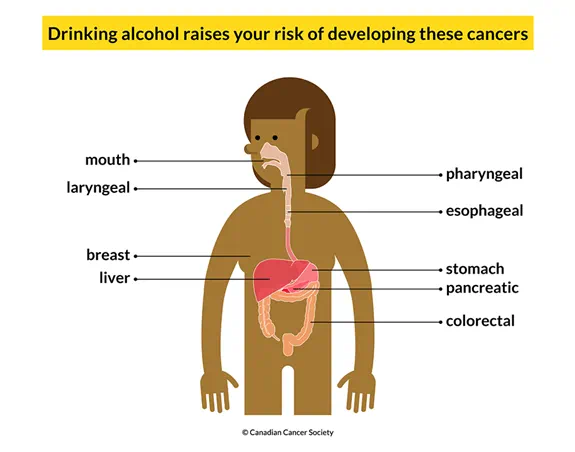
Body showing that drinking alcohol raises your risk of developing mouth, breast, liver and other cancers
The new guidelines found a moderate risk between three to six drinks weekly, including for breast and colon cancer. Each drink following that number increases risk of heart disease, liver disease and seven types of cancers. The findings appearing in the report are quite precise: Liver, heart disease and stroke, depression, anxiety and suicidal ideation were associated with drinking as well.

Most Canadians, according to a corresponding survey, are at risk of the hazardous health impacts of drinking, with 40 percent of respondents having consumed six or more drinks weekly, and an additional 17 percent three to six drinks a week. No evidence of health benefits in drinking was found by the research which cited as well the increased risk of injury and violence associated with the use of alcohol.
"[Alcohol causes 18,000 deaths yearly in Canada according to the latest data], with most cases being breast or colon cancer, followed by cancers of the rectum, mouth and throat, liver, esophagus and larynx."
Report on Alcohol Consumption
National health data, quoted by the report, reveals that alcohol use costs Canada $16.6 billion annually; of which $5.4 billion is spent on health care. Adding warning labels to bottles and packaging is not very popular with the alcohol industry which has called for an independent review of the report.

A person walks past shelves of bottles of alcohol on display.
A person walks past shelves of bottles of alcohol on display at an LCBO in Ottawa in this 2020 file photo. The Canadian Centre on Substance Use and Addiction (CCSA), which released its final report Tuesday, says no amount of alcohol is safe and that consuming any more than two drinks a week is risky. (Adrian Wyld/The Canadian Press)

Labels: , , ,

Thursday, April 29, 2021

All-Nighters' Consequences

Alcohol can cause dehydration, triggering those nauseating symptoms. (Stock, Getty Images)
Alcohol can cause dehydration  (Getty Images)
"Alcohol is the most commonly used drug in the world, but we still don't really understand all the effects it has. Relative to other drugs, the dose we tend to consume is simply enormous."
"The brain is much like the skin. A baby's skin is soft ... but as it ages it becomes tougher, then, as you get older, it becomes wrinkly and less elastic and slower to heal. It's the same with the brain, which becomes less efficient with age, with less reliable connections and slower performance. Not surprisingly alcohol will only serve to make that performance even worse."
"Sleep issues are commonplace among the middle-aged. We tend to drink socially at the end of the day and ... alcohol disrupts it still further. Inevitably, it's going to have an impact the following day."
"In middle age, there are often other issues in play, such as stress at work, with all the pressures and responsibilities that brings, and they can lead to irregular eating and poor sleep. Add alcohol to that mix, and it's easy to see how people in midline can begin to really suffer the day after drinking."
"It's thought that the headache component of a hangover is actually migrainous, and it's often the case that those that do suffer with severe headaches or migraines can also be incredibly sensitive to alcohol, to the point where even a sniff of it can induce one." 
Dr.John Janssen, neurologist, Netherlands
"If we expect to feel terrible, we may spend the day on the sofa, feeling sorry for ourselves."
"During hangover, we produce a toxic substance -- acetaldehyde -- created when our body is metabolizing alcohol. Not only is this responsible for the vomiting, nausea and heart-racing during your hangover, it can also interact with neurotransmitters in the brain pathway involved in mood and cognition."
"So if age influences metabolism of alcohol, then we might expect poorer cognition in older drinkers during hangovers."
Sally Adams, assistant professor, health psychology, University of Bath
Front view of a teen with tousled hair suffering head ache sitting on a couch in the living room at home
That splitting headache after a heavy night may ease with age, research suggests. (Posed by a model, Getty Images)

The severity of hangovers along with their frequency, a new study from the Netherlands finds, declines with age. Research shows that people between ages 18 to 25 experience on average, 2.2 hangovers monthly, whereas those in the 56-to-65 age bracket have only 0.3 hangovers in comparison, and by the time they reach age 66 that frequency falls to 0.1 per month. How to avoid a hangover with its nausea, irritability, dehydration, headaches and vomiting? Well, the obvious solution is to abstain from alcohol, but for most people that's not an option in a world where socializing and alcohol go together.

But then, there's this to consider; it just isn't the same experience for everyone. The effects of alcohol consumption and consequent hangovers can vary widely, with some drinkers able to sleep it off, even as the less fortunate will suffer the full round of symptoms. Dr.Adams, a specialist in the psycho-pharmacology of alcohol, is a strong believer in expectations ushering people toward an experience. As far as she is concerned, the single most important factor in determining how a person will feel following a night of drinking in terms of mood and cognition is attributable to the amount of alcohol consumed.

In middle age, people are far different physically and metabolically than they were in their younger years when it was the thing to drink-till-dawn at age twenty. The middle-aged are likelier to have gained a higher percentage of body fat and since fat cannot absorb alcohol, tolerance to it decreases accordingly. The middle aged also have less body liquid, increasing the opportunity of dehydration to develop, meaning the alcohol will remain longer in the body's system.
 
Extra.ie
 
Memory, attention levels and co-ordination can be affected when heavy drinking has led to hangovers. "Hangxiety" is an unshakable sense of gloominess that overwhelms the individual in worries over everything happening in one's life assuming a much larger dimension. Some people may also be more predisposed to developing hangovers after a night of alcohol imbibing than others. Preferential drink choice can also impact the outcome. The advice is to avoid brown spirits, wine and anything mixed with energy drinks; to select vodka or gin with a low-sugar mixer like soda water and a squeeze of lemon or lime.

A workable remedy is to drink at least two litres of water over the course of the day, and to ingest slow-release carbohydrates like eggs on whole-grain toast, pasta, rice or sweet potatoes for the required glucose release.
"A balanced meal containing all key food groups prior to drinking is essential to slow the release of alcohol into the bloodstream. It also helps to protect your stomach lining."
"Clear spirits also contain lower levels of congeners, which can increase the intensity of any hangover."
Lily Souter, nutritionist
A new study has found that hangovers get less – yes, less – severe as we get older.

Labels: , , , ,

Wednesday, February 03, 2021

Alcohol? Nope. Sorry About That!

"Even modest habitual alcohol intake of 1.2 drinks/day was associated with an increased risk of atrial fibrilation [irregular heartbeat]."
"Alcohol consumption at lower doses [was associated with lower overall instances of heart failure]."
"Due to large sample size, we had power to detect associations even at low doses of daily alcohol intake."
"The level of consumption that minimizes health loss is zero."
European study -- European Health Journal
A bottle of beer
Just one drink a day leads to health risks   Getty Images
 
Sometimes assurances that seem too good to be true are quite simply that, in the end -- too good to be true. People enjoy relaxing with alcohol at the end of the day, or to pick up a meal, or to celebrate, or to share with friends. Alcohol is seen as obligatory at social events. And for years we've been reading that health experts have been assuring the imbibing public that drinks in moderation are good for health. That red wine in particular boosts heart health when taken in modest amounts. 
 
Health Canada, as an example goes so far as to recommend a maximum of ten drinks weekly for women and 15 drinks every week for men, as an acknowledgement that people will indulge, and it would be best for a national health authority not to exactly admonish the public for their pleasurable habits, but to help them to understand that in the interests of overall health, moderation is the key to good balance and to good health.
 
And then suddenly, it's all wrong. The long-standing assurance that a glass of wine daily is heart-healthy is not supported by a new European study that concludes even a discreet number of alcoholic drinks over the course of a day, a week, can lead to heart problems. That lower overall instances of heart failure can be identified with decreased alcohol consumption. 
 
The study was thorough in its examination of medical histories of over 100,000 people, to find that the risk of irregular heartbeat and other cardiovascular incidents increased whenever alcohol was introduced in any quantity. Just one drink a day raises the risk of developing heart arrhythmia by 16 percent. "Strong controversy" over the link between moderate drinking and adverse heart health is a reality, the report cautions, adding that most public health agencies tend to avoid recommending total abstinence from alcohol.
 
Woman drinking red wine
A glass of red wine a day is not healthy, say researchers    Getty Images
 
A growing body of evidence indicating even small amounts of alcohol can have negative human health effects is growing. Worldwide attention was focused on a 2018 report published in The Lancet which claimed any amount of alcohol was unhealthy. That report resulted from researchers going through close to 600 studies for data from 195 countries which concluded "the level of consumption that minimizes health loss is zero". 

British statistician David Spiegelhalter responded to that mega-analysis by a scathing critique that included: "There is no safe level of driving, but governments do not recommend that people avoid driving. Come to think of it, there is no safe level of living, but nobody would recommend abstention." The irony is that medical science has expressed confidence in the link between heavy drinking and cardiovascular complications, but the dangers of casual drinking impacting heart health only began to be seriously considered when "holiday heart syndrome" that emerged in the late 1970s, gave a heads-up warning.

That was when it was noticed with alarm that otherwise healthy people went through an unexpected, short-lived health crisis when they were struck with irregular heartbeats following about of alcohol-infused partying.

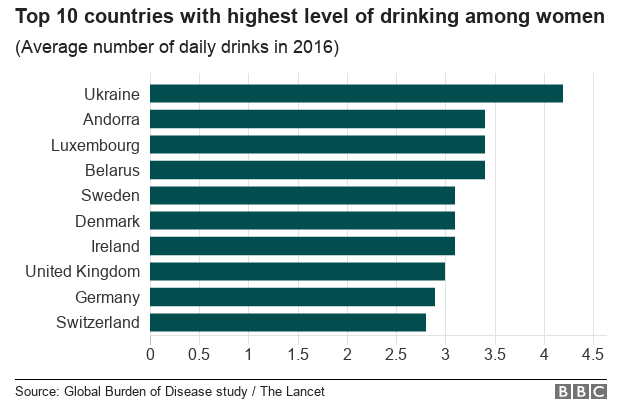
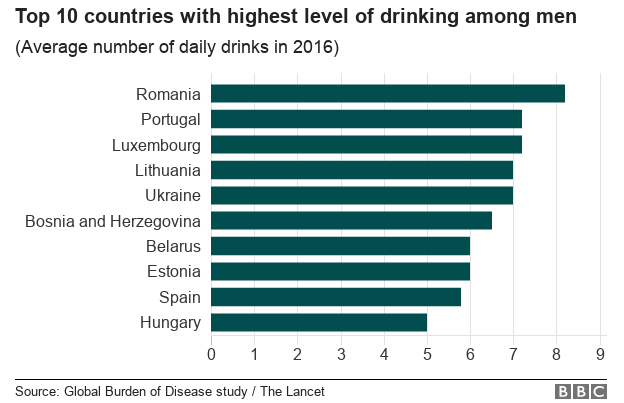
A chart on female drinkers around the world
Table of British male drinkers around the world 
 
Hmmm, where's Russia notorious for its level of alcohol consumption, in these graphs?

Labels: , , , ,

Tuesday, April 28, 2020

COVID Stress, Fear. Boredom and Alcohol

"At times of lockdown during the COVID-19 pandemic, alcohol consumption can exacerbate health vulnerability, risk-taking behaviours, mental health issues and violence."
"Alcohol consumption is associated with a range of communicable and noncommunicable diseases and mental health disorders, which can make a person more vulnerable to COVID-19."
"In particular, alcohol compromises the body’s immune system and increases the risk of adverse health outcomes."
"[Governments should consider] restricting access [during the COVID-19 pandemic, complemented by] communicating with the public about the risks [and] maintaining and strengthening alcohol and drug services."
World Health Organization, Europe 

"People turn to substances to cope with stress and trauma."
"These substances offer an immediate source of control. Having a drink or smoking can make you feel better right away."
"But long-term, as you get into addiction, then really the substance itself is driving that cycle of coping and stress rather than the outside environment itself."
Michael Chaiton, associate professor, Dalla Lana School of Public Health
A shopper wears a mask and gloves at the liquor store. Alcohol sales across Canada increased in March as people stocked up to stay home. (Evan Mitsui/CBC)
Alcohol-related COVID-19 misinformation is not hard to find on various social media platforms. The public was informed by health experts early in the first wave of infections from SARS-CoV-2 that alcohol consumption plays an inimical role in the novel coronavirus, enabling the virus to stake a larger claim on the human body. At first people were just having fun about Corona beer, and then things began taking an uglier turn with the word, as in the name of a young boy in Australia with that given name being bullied.

Alcohol is viewed as a social good, as a relaxant, tempering moods during  times of high tension. Self-congratulating videos began appearing on Instagram and other platforms as people were eager to demonstrate how they were handling the new rules around self-segregation, having virtual on-line cocktail hours with friends. And then there were the supposedly reliable heads-up claims that alcohol would kill the virus, leading people to load up their systems with alcohol in the hopes of forestalling infection.


Leading the World Health Organization to issue a six-page instruction on COVID-19 and alcohol consumption in the public interest: "Under no circumstances should you drink any type of alcoholic product as a means of preventing or treatment COVID-19 infection." Irrespective of which Canadians, in a reflection of what is occurring on a global scale, have taken to drinking more and more frequently since the implementation of social distancing.

One quarter of Canadians aged 35 to 54 and one-fifth aged 18 to 34 respond that they have increased their alcohol consumption, even as 10 percent over age 54 report drinking more frequently, according to a Nanos poll commissioned by the Canadian Centre on Substance Use and Addiction. Rita Notarandrea, CEO of the addiction centre, points out the obvious; that stress and anxiety can lead to an increase in substance use.

View image on Twitter

"Disrupted routine may be accompanied by loneliness and anxiety about the current situation. With the possibility that people are stocking up and there is more alcohol in the home than usual, some might drink more than they typically do", added senior research and policy analyst at CCSA, Catherine Paradis.

Increased alcohol use has been recognized in many areas of the world, leaving some experts concerned that misinformation plays a role in the situation. "Consuming alcohol will not destroy the virus", the WHO urges on the public. It also addresses misconceptions about drinking and stress relief, pointing out that alcohol is known to amplify symptoms of anxiety, depression and other mental disorders.

And underlying the twin concerns of contracting COVID, and seeking relief from the pressures of stress and worry, a new survey shows half of Canadians who participated reporting their mental health situation has been exacerbated as a result of the global pandemic. The Angus Reid Institute set out to illuminate how economic uncertainty and social distancing measures caused by the pandemic affect the psychological balance of Canadians.

When asked to describe their primary emotions in recent weeks, 44 percent of respondents stated they are worried, 41 percent that they're anxious, and 30 percent that they are quite simply bored.

A liquor store lineup is 50 people deep in downtown Toronto as shoppers await their turn, CBC

Labels: , , , , ,

Wednesday, July 24, 2019

Self-Empowered to Benefit by Reduced Health Outcomes

"The widely held view of the health benefits of alcohol needs revisiting, particularly as improved methods and analyses continue to show how much alcohol use contributes to global death and disability."
Newly published study in the Canadian Medical Association Journal

"[ER visits are the] tip of the iceberg."
The bodily harms are often not the biggest issue. It's the impact on the family."
"Our study shows that people aren't meeting those guidelines [maximum daily serving guidelines]. They're not even close." 

"I think all of society, to be quite frank, needs to see this this data."
"It's a responsibility of all of society to look at these numbers. Look how sobering they are and make sure that the trends don't continue."
Dr.Peter Tanuseputro, researchers, physician, assistant professor, University of Ottawa
Patients who visited emergency departments for alcohol intoxication were disproportionately more likely to result in hospital admissions, according to the study published in the Canadian Medical Association Journal. (Shutterstock/SpeedKingz)

"There's a generational effect. Younger women who were drinking in the early 2000s are still drinking more."
Dr. Daniel Myran, family physician, public health and preventive medicine resident, University of Ottawa

"The Ontario government has gone in the opposite direction with such glee and without any embarrassment."
"There was falling alcohol consumption around the time of the financial crisis. But about the time of the recovery, people started to drink again."
"In the past five years, there has been a rapid uptick in deaths and hospital presentations."
Timothy Stockwell, director, Canadian Institute for Substance Use Research, University of Victoria

Tobacco kills more people [than alcohol]. But having an alcohol addiction is more likely to result in disruption to people's lives. If you include harms to others, alcohol is the most harmful substance out there."
"We're not saying that alcohol shouldn't be available, but that it should be available in a public health model."
Dr. Sheryl Spithoff, family, addiction medicine physician, Women's College Hospital, Toronto
According to a CMAJ study, alcohol-related visits by women went up 86.5 per cent during the study period, compared to 53.2 per cent for men. (Justin Tang/Canadian Press)

A new study recently published by researchers at the Institute for clinical Evaluative Sciences, The Ottawa Hospital, the Bruyere Research Institute and the University of Ottawa, derived its conclusions by sifting through 2003 - 2016 hospital administrative data province-wide. During that period more than 765,000 emergency room visits took place in the province, all attributable to alcohol consumption. Intoxication accounted for 44.6 percent of visits, with 21.4 percent representing harmful use; 11.4 percent for withdrawal, and alcohol dependence accounted for 10.9 percent.

For women around legal drinking age, alcohol-related emergency room visits were seen to peak, while for men the peak was in their early 50s. Although men remain at greater risk of alcohol-related harm, women are steadily catching up. Women ages 25 to 29 saw an increase of 240 percent in alcohol related ER visit for the years 2003 to 2016. Dr. Daniel Myran, lead researcher for the study, noted that young people drink in more harmful patterns, and are failing to age out of their pattern of consumption.

The study is viewed as yet another tranche of growing evidence linking alcohol with serious social costs. Alcohol is known to cause liver disease, addiction and withdrawal problems, heart damage and cancer. According to Cancer Care Ontario, 3,000 cancer diagnoses annually might be avoided were people to follow safe alcohol consumption guidelines. Alcohol consumption accounts for between two and seven percent of breast cancer cases.

As for the health-care system, the estimate is that alcohol care costs totalled $4.32 billion across the country in 2014, while alcohol-related deaths increased by 26 percent for women and by five percent for men between the years 2001 to 2017. One survey that Cancer Care Ontario reported resulted in the information that one-third of Canadians only are aware they are able to reduce their risk of cancer by reducing their alcohol consumption.

Guidelines for low-risk consumption in Canada are under two drinks daily; ten for a week, or three drinks on special occasions for women -- while for men three drinks a day, 15 for a week, and four on special occasions; figures supplied by the National Alcohol Strategy Advisory Committee at the Canadian Centre on Substance Use and Addiction. A standard 740 mL bottle of wine contains over five servings; a serving of beer is 341 mL.

Dr. Myran points out that marketing alcohol to women has become both targeted and sophisticated. Convincing women that alcohol consumption represents an issue of empowerment for women. "It can be very seductive", he points out pointedly. "It's pretty low down on the agenda politically. You have people in one area collecting revenue and other people who are aware, but who don't have the power", noted Timothy Stockwell. "We are all blissfully unaware that this does so much harm. It's a silent problem. We don't question it much. It's like the industry owns parts of our minds."


Labels: , , ,

Saturday, March 30, 2019

Availability and Consequences : Alcohol and Hospitalizations

"Alcohol deregulation appears to have resulted in increased alcohol-related harms in Ontario." "Deregulation [with the relaxation of alcohol sales and extension to stores and longer hours of sales] has likely had negative impacts far beyond the reported emergency department visits."
"[The situation of expanded alcohol sales outside the more highly-regulated Liquor Control Board of Ontario should be studied as a [natural experiment that can be used to better understand the relationship between alcohol availability and harms."
"[Placing limits on the number of alcohol outlets and their weekly hours of operation] should be part of any alcohol strategy."
New study on Deregulation of Alcohol and Hospital Admissions
The Ottawa Hospital emergency room.
In Ottawa alone, alcohol led to 6,100 emergency department visits between 2013 and 2015, 1,270 hospitalizations during the same time and 140 deaths (between 2007 and 2011), according to Ottawa Public Health. Ashley Fraser / The Ottawa Citizen

The convention of alcohol sales in the province of Ontario has long baffled and irritated provincial residents who look abroad envying the availability of wines and beers in supermarkets just across the border in the United States. In Ontario's neighbouring province of Quebec, liquor is sold in depanneurs (convenience stores) and they will even deliver to the customer's home. In Ontario, spirits have been sold in provincially-regulated stores; Brewers Retail for beer and LCBO-controlled outlets for wines and hard liquors.

Ontarians have chafed at the indignity of it all, at the lock on their freedom to shop anywhere for a product that is popularly consumed and recognized as a part of any food-and-drink culture. Where a dour Presbyterian outlook on liquor consumption means that bars and restaurants must make application to the LCBO for a license to enable them to serve alcohol. Bars wishing to qualify had to make a measure of foods available; restaurants knew that without a liquor license their eating establishment would fail to draw customers.

Finally, appeals to the government to relax what has been seen as Draconian and outdated laws on
'protecting the public' by making it difficult to buy a product heavily taxed to provide government with a reliable revenue stream was mismatched with the current, more relaxed culture, less driven by an atmosphere of general alcohol-consumption disapproval far removed from the prohibition years that ended in dismal failure. The move to deregulation was initiated in 2015 when a Liberal government expanded beer and wine sales across the province to grocery stores.

The current Conservative government is set to expand that initiative and loosen restrictions to an even greater degree. According to the authors of the study published in the journal Addiction, that further expansion will result in greater harms to the public, attributable to more alcohol availability. Dr. Daniel Myran, a public health resident at University of Ottawa, lead author of the study expressed the opinion that further expansion of alcohol sales in the province would "lead to more emergency department visits due to alcohol".

According to the province's finance minister, it is time for the government "to treat people like responsible adults". An further relaxation of alcohol-sales-restrictions is therefore in order where beer and wine sales are to be expanded to corner stores, big box outlets and a larger choice of grocery stores across the province. Dr. Myran's research undertook the study of a link between alcohol access and emergency department visits attributable to alcohol use, by comparing hospital emergency department visits before deregulation and after.

Geographic areas where grocery stores were licensed to sell alcohol were brought into the study equation, as compared with areas where no such sales took place in grocery stores. Alcohol-related rates of visits to hospital emergency departments the study revealed, rose by 17.9 percent during the period of the study (2012 to 2017), a number in excess of all other emergency visit for various other reasons. The regions with grocery stores selling alcohol post-2015, showed in addition, a six percent greater increase for hospital emergency visits in comparison with those areas absent alcohol sold in grocery stores.

While previous research had associated increased alcohol access with health harms associated with alcohol use, this study is the first to focus on Ontario alone.Over 23 million Canadians over the age of 15 reported the use of alcohol in 2017. The consumption of alcohol has been estimated as the cause of 6.6 percent of deaths in men and 2.2 per cent in women. Of the total number of Canadians using alcohol, 21 percent reported having consumed enough that they would be at risk of chronic and immediate alcohol-related harm.

Alcohol has led to 6,100 emergency department visits between 2013 an 2015 in Ottawa alone, during the same period. According to Ottawa Public Health, 140 deaths that occurred between 2007 and 2011 were attributable entirely to alcohol consumption. The takeaway to which is the indelible impression that many people indeed are not prepared to behave in a manner recognized as "responsible".

Beer on shelves. ERIC THOMAS / AFP/Getty Images

Labels: , , , , ,

Saturday, April 14, 2018


Wishing It Were So, Doesn't Make The Grade

"As much as they try and account for different variables, we can’t say definitively that having more than seven drinks a week is going to lead to a lower life expectancy for an individual."
"That’s based on so many factors — their genetic ability to metabolize alcohol, their other overall health and wellness, whether they eat well, exercise, whether they manage their stress."
"From a health perspective, what you’re not supposed to do is save up all your drinks for the weekend. For better health, keep your daily drinking moderate."

"One study comes out saying one thing and other researchers try to replicate those results, and they may or may not. It takes time for a body of evidence to accumulate."
"It’s really important for us not to kind of flip-flop or worry about changing our entire lives based on one study."
Desiree Nielsen, registered dietitian, Vancouver 
Health benefits from drinking alcohol? Sorry, but it’s just another case of something that is too good to be true, say experts. Photograph: Inti St Clair/Getty Images/Blend Images

“Above two units a day, the death rates steadily climb."
"The paper estimates a 40-year-old drinking four units a day above the guidelines [the equivalent of drinking three glasses of wine in a night] has roughly two years’ lower life expectancy, which is around a 20th of their remaining life. This works out at about an hour per day. So it’s as if each unit above guidelines is taking, on average, about 15 minutes of life, about the same as a cigarette."
"Of course, it’s up to individuals whether they think this is worthwhile."
"[It represents] a massive and very impressive study. It estimates that, compared to those who only drink a little, people who drink at the current UK guidelines suffer no overall harm in terms of death rates, and have 20% fewer heart attacks."
David Spiegelhalter, Winton professor, public understanding of risk, University of Cambridge


There was a time -- and it seems not all that long ago -- that pregnant women were urged to drink beer, informed it was a good source of protein and would aid their pregnancy nutritionally. And even now people continue to think that a little alcohol consumed during a pregnancy cannot be harmful to the fetus, even while scientific research is desperately slamming that fiction, pointing out that even small amounts of alcohol taken while pregnant can result in various levels of fetal alcohol syndrome in children whose mothers drank while pregnant.

Now, a new and very large international study finds that those men and women who regularly imbibe over seven drinks on a weekly basis can look forward to their devotion to alcohol coming with a dear price; early death. At the very least, dying at a sooner date than their peers who are careful to studiously restrict alcohol intake to an occasional drink on special occasions. 

"What this is saying is, if you're really concerned about your longevity, don't have more than a drink a day", David Jernigan, alcohol researcher at  Johns Hopkins University, observed. He was not involved in the research that combined 83 studies' results conducted in 19 countries which tracked alcohol consumption for close to 600,000 people. The focus of the researchers was who developed and died from stroke and various types of heart disease.

Roughly half the study participants divulged having had over 100 grams of alcohol weekly. In American terms 100 grams is the equivalent of seven 12-ounce cans of beer, five-ounce glasses of wine, or 1.5 ounce shots of run, gin or other distilled spirits. Among whom researchers discerned a higher risk of stroke, heart failure and associated problems within that group.

The study estimated that 40-year-old men who consume up to the current American guidelines that permit for good health, can expect to sacrifice one to two years of life in contrast to men who take no more than seven drinks each week. Isn't moderation the key in everything in life, to guarantee longer life? The risk inherent in too liberal alcohol consumption may reflect that elevated blood pressure and cholesterol levels result from alcohol consumption. 

Currently, no more than seven drinks weekly for women and 14 for men reflect the recommendations by the U.S. government. Studies found that women react quicker to alcohol effects at amounts lower than do men, attributed in part to women weighing less than men on average, and that blood alcohol concentrations rise quicker in women.

Canada and Sweden reflect similar guidelines to those the Department of Agriculture in the U.S. has set, while countries like Spain and Romania set their upper limit for men at 20 drinks weekly. Until several years back, British guidelines reflected American standards, when the U.K. brought recommendations for men down to match those for women.

Labels: , , , ,

 
()() Follow @rheytah Tweet