Ruminations

Blog dedicated primarily to randomly selected news items; comments reflecting personal perceptions

Thursday, August 20, 2020

Government of Alberta

"Prussian carp pose threats to native fish populations by out-competing native species for food and habitat, as well as spreading new diseases and pathogens. They are easily spread from one water body to another, and it is extremely costly and difficult to try and manage, contain and destroy them once they have become established. It is also illegal to move live fish from one water body to another. Penalties for illegally transferring fish can be up to $100,000 and/or a year in prison." Jess Sinclair, spokesperson, Environment and Parks Ministry, Alberta

"This might be a little shocking, but males are not actually needed for reproduction for this species. This is a bit unusual in the fish world. The females can reproduce clonally. They can clone themselves over and over and over again. The females lay the eggs and actually take sperm from another species, so another species will fertilize the eggs but they won't actually contribute any genetic material. This allows them to reproduce in huge numbers. It also means that all the individuals, and we've done some preliminary genetic work, they're all clones. They're all identical to one another."                                                                                                   "Goldfish are found throughout the province and people do release them. And we think that's how this little guy got in here and now they're really starting to take over. We think they first came here in 2000 and the reason it took so long to find them is that people misidentified them as goldfish. They first arrived in Medicine Hat and since then, we find them all the way up to the city of Red Deer, and they are literally everywhere."                                                                                               Mark Poesch, researcher, assistant professor, Faculty of Agricultural, Life and Environmental Sciences, University of Alberta 
Non-native Prussian carp, which are closely related to goldfish, are being found in “significant” numbers in the Red Deer River and its tributaries. (Contributed photo).

Yet another invasive species causing consternation in Canada. This time it's another fish. Not as gruesome as the snakehead, but doing its best to give conservationist, environmentalists and the governments of Alberta and Saskatchewan a headache. "Catch it, kill it", a notice on the Alberta government website urges. "If you catch Prussian carp while angling, please kill it and either take it home to eat or properly dispose of it in the garbage."

It is edible; a relative of the species goldfish, it can weigh up to three kilograms at full maturity, and it presents an existential danger to native fish due to its amazingly rapid reproduction, meaning that the food sources for fish undergo a highly competitive race for survival. In sheer numbers this invasive carp is capable of out-fishing native species.
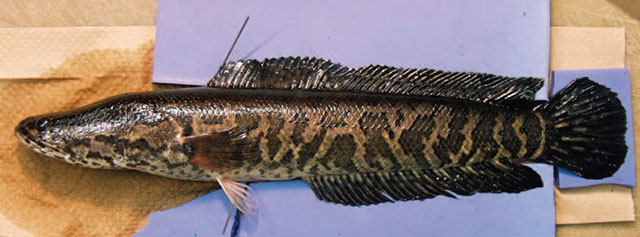
Northern snakehead. Photo: U.S. Geological Survey

Like the snakehead fish that has proven to be a concern for the Great Lakes, and which can be found throughout large swaths of the United States, gradually moving into Canada, these fish out-compete native species for habitat and for a finite food supply. The Prussian cap has been seen n Alberta since 2015, but how it entered the province's waterways is not known. And it is able to survive on land, searching out new habitat "for relatively long periods of time".

A government fact sheet dating from 2015, updated in 2018, points out that "Many invasive carp were imported as pond or aquarium species of sold in Asian food markets". Some obviously found their way into waterways at the hands of people who released them there. And the rest is, as one says, history. "It's a little freaky. They're very opportunistic fish. We believe humans are also picking them up and moving them around", commented Nicole Kimmel, invasive species expert with the Alberta government.

Invasive species become a real existential danger to native species; boring insects from abroad threaten tree species in Canada, fungi, aquatic creatures and vegetation that reproduce exponentially, taking the place of native species. What invasive species mostly have in common aside from their threat to native species is that, removed from their home territory, they thrive because they have been geographically separated from the presence of other organisms that normally keep them in control.

Wild boar have become a problem in the Prairie Provinces; they're habitat destructive, difficult to control. A variety of invaders such as bloodsucking sea lampreys have established themselves in Lake Erie. The alarm has been sounded on some species known to inhabit waterways in Ontario, such as the Weis Catfish one of the largest freshwater species, named The European Maneater, on the "prohibited" list.

British Columbia enacts fines of up to $250,000 for anyone caught releasing snakeheads, nicknamed Frankenfish, able to grow to a metre in length and to move overland in search of new waterways to establish themselves in. The Central Park Lagoon in Burnaby was drained when a snakehead was spotted in it, to be able to catch and kill it, in 2012.

A snakehead fish captured from Central Lake pond in Burnaby, B.C., June 9, 2012. Nick Procaylo/Postmedia/File


Labels: , ,

Saturday, March 23, 2019

Dwindling Wildlife Diversity

"It was the right move [to rescue the sole remaining caribou in a now-extinct herd]. That animal was not going to survive."
"[Mountain caribou have massive hoofs] pie plate or dinner plate, that's not an exaggeration [to function like snowshoes as they traverse mountain slopes]."
"[They are elusive animals] They don't call them the grey ghost for nothing."
"I am resolute about the return of that species [Selkirk caribou to the Lower 48]. It's too easy to say, 'Well, they're not here, let's quit'. That's not the tribe's [Kalispel Washington tribe] perspective."
Ray Entz, director of wildlife and terrestrial resources, Kalispel Tribe, Washington

"[The Selkirk population had grown to almost fifty in 2009 but since then the numbers have been] going down, down. They have no future with one, two or three animals."
"The caribou are just a more vulnerable species. They don't kick hard like a moose. They're not as skittish as a deer. They never have twins."
"So with these changes [in habitat and range], they're the ones that pay the price [easy kill for predators]."
Leo DeGroot, government wildlife biologist, British Columbia
File photo of the isolated population of mountain caribou inhabiting the Selkirk Mountains of southern B.C.Handout
The decision to capture the sole remaining Selkirk caribou once it was determined that one of three remaining last year wearing radio collars had been killed by predators and no sign had been seen or heard of the other in months, led Canadian wildlife managers to move to bring in the surviving female and place her in a protective pen to enable her survival. She was caught in a net shot from a helicopter and then sedated by biologists and transported to a maternity pen near Revelstoke, British Columbia.

Used as temporary caribou obstetric wards and nurseries where wildlife managers move pregnant females to feed them until their calves are over a month old, the pens now hold the captured Selkirk caribou and three other animals; one a calf born there and brought back when its mother was killed and two others from yet another dwindling southern mountain herd. The hope is to capture a female from a herd nearby to become familiar with the other refugees so that when they are released in one fell swoop, the new female will lead them to her habitat and safety in the wild.

The Kalispel Tribe is involved in the international move to conserve the South Selkirk herd, named so in reflection of the steep mountains where they live. Traditionally, historically, the tribe had hunted the caribou. That particular herd was considered by biologists to be "functionally extirpated", one of 15 isolated subpopulations within a broader group recognized as southern mountain caribou living in various landscapes from the northern tundra herds, all of which are shrinking, reflecting human development and altered habitat.
A female mountain caribou from the beleaguered Southern Selkirks herd feeds in a wet meadow in the southern Selkirk Mountains of British Columbia, Aug. 8, 2017

At one time, northern New England and upper portions of Great Lakes states -- Minnesota for example -- were populated by caribou, but their range narrowed and contracted northward over time. Fewer than thirty animals remained by 1983, leading to the Selkirk herd joining the endangered species list. Since 2012, there has been no sightings in the United States, according to a management plan linked to a multiagency international group studying the population which lives in inland temperate rain forests.

In the winter, the mountain caribou migrate to higher elevations to search for furry arboreal lichen that hang from old-growth trees, representing their seasonal survival food; their massive hooves enabling their grip on the snowy slopes. Their forest habitat has been fragmented over generations through the intrusion of logging operations, roads, power lines and oil exploration and mining in Canada. In place of the mature trees logged out, immature vegetation grew in, opportunistically attracting moose, deer and elk.
Numbers of caribou in B.C. are in decline — with just six remaining in the two most southerly herds. (Getty Images)
Their presence in turn attracted opportunistic predators which led to wolf culls in Canada but which did little to aid the survival of the caribou, less able to defend themselves than other species. And as they fell prey to wolves and mountain lions their numbers diminished dramatically. A caribou breeding program is foreseen for the near future in Canada but prospects of captive-bred animals released before four years have passed is remote, along with the uncertainty of whether they would restore the Selkirk herd or another herd facing a precarious existence.

The Center for Biological Diversity and several allied groups announced they plan to sue the U.S. Fish and Wildlife Service for its failure in designating protected caribou habitat in northern Idaho and northeast Washington. When the agency proposed setting aside over 375,000 areas in 200, opposition from recreational snowmobilers and others resulted in the agency cutting that protected acreage down to about 30,000, and while a federal court ordered Fish and Wildlife to reconsider, no decision has been issued as yet.

https://www.ctvnews.ca/polopoly_fs/1.4163991.1541439888!/httpImage/image.jpg_gen/derivatives/landscape_620/image.jpg
A female mountain caribou from the beleaguered Southern Selkirks herd feeds in a wet meadow in the southern Selkirk Mountains of British Columbia, Aug. 8, 2017.

Labels: , , , , , ,

Thursday, July 19, 2018

“Tundra be Dammed: Beaver Colonization of the Arctic.”

"That's when I started getting interested in beavers [speculating what species in a warming Arctic would be next to colonize its range]. These guys are small, highly industrious engineers."
"We have caught the beavers in the act. We are really only at step two of a ten-step process in understanding what is going on, and the implications of it."
"Is it a good thing or a bad thing? Put it this way: if someone went into a land manager's office and wanted to get a permit to do all the work that the beavers are doing in the Arctic right now, it would be a lot of paperwork. But I see these guys as facilitating change in the Arctic -- and accelerating the changes that are already underway."
"It’s kind of the next wildlife you’d expect in tundra, but with much bigger implications."
"I love the fact the beaver is the Canadian national animal. You just need to look at the map to see how well beavers recolonized the rest of North America after over-trapping."
"They are now in all the lower 48 states, and Alaska is the last standing -- and it's going to fall."
Ken Tape, associate professor, University of Alaska Fairbanks
Beaver (Castor canadensis) family enjoy the fruits of their considerable labors, Denali Nat'l Park, Alaska.  Getty Images/iStockphoto
"We do not know how beavers reached the Beaufort Coastal Plain, but they would have had to cross a mountain range or swim in the sea."
Yukon biologist Tom Jung, northern Yukon Territory
Beavers are everywhere there is water that can be dammed, a lodge built to hold a beaver colony and ample supplies of poplar from nearby forest enclaves are present, where the beavers with their sharp incisors easily cut through the thickness of a mature tree trunk, judging where the cut should go and where the tree will fall. Loggers know to cut a notch in a tree trunk to control the fall of the trees they're harvesting. Can it be possible that the logging industry studied the successes of beavers and simply emulated them in harvesting techniques?

Or does their similarity of operational techniques in best-practise logging reveal that beavers whom nature has equipped so splendidly to manipulate its natural surroundings to create a habitat for itself and in the process one that will appeal to other forest creatures from aquatic animals to wolves, coyotes, foxes, moose and more taking advantage of the industrious beavers' foresight in altering an environment to make it more likely to grow vegetation attractive to the greater populations of wildlife, indicate it has been as naturally endowed as humans to alter its landscape?

Beaver were once  viewed as a natural resource of great commercial value, when its pelts were desired for human garments and headgear. Certainly a renewable resource, but yet one so mercilessly hunted and trapped that the trapping profession that was so robust for far too long, collapsed along with the kind of culture that saw them as furnishings for sartorial purposes. With the absence of the beaver resulting from near-extinction in areas they had long been known to inhabit, the natural environment changed too, absent their engineering know-how and custodial care.

The landscape changed in their absence and all the creatures that so hugely depended on their presence in building dams, creating beaver meadows and ponds that in turn proved perfect habitat for both vegetation and animals, began to vanish; the previous lush presence of both turned barren as the lakes dried up, the vegetation receded, the animals looked elsewhere for the perfect environment where they could exist. Since then, however, those hardy, industrious animals have made a comeback, their presence common all over North America, including Mexico.
A beaver swims in a pond in Elk Island National Park east of Edmonton Alta. Max Maudie/Edmonton Sun
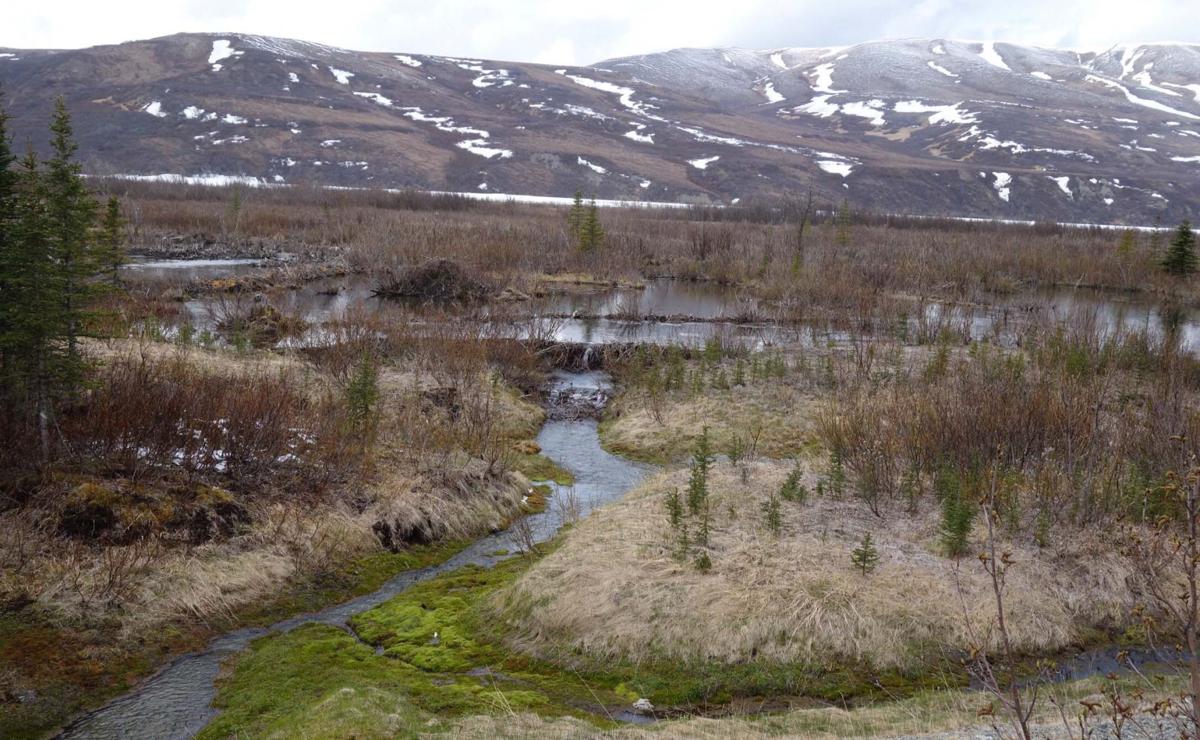
And now, it seems, with the advent of noticeable climate change and the warming effect that has melted areas of the Arctic's glaciers, altering the tundra in Alaska, beaver are now settling that far north. It's likely a toss-up which arrived first in the area known for its permafrost -- gradually losing the permanence of the tundra frozen rigid in frost -- the beavers or the moose now venturing out of forests to feed on woody shrubs, since beaver habitation is known to attract moose for the salubrious effect it has overall on the environment.

Dr. Tape and his colleagues have been studying the issue of the entrance of a previously unknown presence of animals venturing into the Alaskan tundra known more for the presence of Grizzlies than of beavers. They produced a new research paper titled Tundra be Damned: Beaver colonization of the Arctic. Never having actually seen a beaver living and working in a tundra environment, Dr. Tape and his fellow researchers began studying decades' worth of satellite images featuring a 18,293-square kilometre area of permafrost in northwest Alaska.

Aided immeasurably by the capacity of satellites to photograph images from space, they discovered 56 new beaver pond complexes in a landscape they knew to previously be absent of the presence of beavers. The beavers' activities have wide-ranging consequences, 'improving' the natural presence of geological features favourable to the presence of a wide variety of vegetation and animals forming a complete ecosystem in a chain of existence favoured by nature. As beavers dam up rivers and streams creating ponds, wetlands proliferate.

The ecosystem that has been altered is healthier when dams filter out pollutants and the resulting ponds fill with new life and the risk of flooding becomes more remote. Changes in the Arctic have the potential to be quite dramatic. A beaver pond that expands, washing over permafrost, degrades frozen ground, rinses soils away, releases carbon dioxide and methane in the process, as the frozen area no longer holds the carbon dioxide its melted state releases. The presence of beaver and their activity accelerates the permafrost retreat.  
Beavers at home
Signs of the American beaver in Alaska include a dam on Phelan Creek near Isabel Pass in the Alaska Range. Photo: Ned Rozell

Labels: , , , , , , ,

 
()() Follow @rheytah Tweet