Ruminations

Blog dedicated primarily to randomly selected news items; comments reflecting personal perceptions

Wednesday, March 15, 2017

Society's Dementia Dilemma

In the city of Ottawa alone calls came in to the Ottawa Police Services to report that 1,600 adults were missing, in the last year. "After 30 years of being here, I can tell you without a doubt that those numbers are higher than they were even five years ago", stated Sgt.Reno Rushford of the Missing Persons Unit.
"It used to be, I could go to a house on a street and say, 'Have you seen Mr. Jones?' and everybody on the street would know who he was. Today, it would be 'I didn't know there was a man living there'. There's a neighbourhood disconnect that wasn't there twenty years ago."
"If everyone with Alzheimer's was physically fit, then there would come a time where everyone would have a period of [wandering]."
"As the disease progresses, physically you're still very well, but cognitively you don't remember. And if you don't recognize that you've been to this place before, then your mind map starts breaking down."
Dr. Frank Knoefel, Bruyere Research Institute Memory Program
Memory complaints are common within the elderly population, and their frequency usually increases with age. Decline of memory function is a normal process of aging, but they also may be the result of a pathological condition such as Alzheimer's disease.

When a search situation is mounted, it doesn't take long before the matter is resolved for the most part; roughly 95 percent of wanderers are discovered to be within a half-kilometre of where they started out. On occasion, however, they have been gone for a substantial period of time and are found quite a distance away from home. In winter, when it's extremely cold and windy, the loss of "executive function" where clear cognition has been disrupted because of Alzheimer's the situation can turn deadly.

When police open a missing persons file for an adult wanderer suffering from Alzheimer's they look for some quick answers to give them directional opportunity: Is the person on medication? Do they have mental-health issues? Is this the first time they've wandered? Does a pattern relating to their wandering exist with respect to visiting old neighbourhoods or former places of employment? This narrowing down of options can help lead searchers as directly as possible to the wanderer, preventing disaster.

The most common cause of dementia is Alzheimer's disease, accounting for about two-thirds of cases. A progressive, eventually fatal disease that destroys brain cells, Alzheimer's has a strong correlation to aging albeit with a defined genetic link. In its early stage, symptoms may include forgetfulness, mood changes or problems with communication, which are common enough issues faced by many people, not necessarily, nor confined to those with Alzheimer's onset. And as such, those symptoms are easily overlooked and misidentified.

Memory and communication problems increase by the time the person reaches the middle stage, and assistance will be required to function. It is at this point in the progression of the disease that the tendency to wander begins to manifest, even though Alzheimer's may not yet have been diagnosed. This also happens to be the longest stage in the trajectory from onset to death. When late stage Alzheimer's arrives, 24-hour care is required and mental capacity will have been stringently reduced.

By this time the sufferer has become quite ill and frail and consideration among family members as to whether to continue home care or seek long-term facilities that are capable of housing and caring for the patient becomes a primary concern. The final, end-of-life stage represents a situation of awaiting death while giving comfort to the patient along with the specialized care required.

Many in the field of health care with a special emphasis on care for the elderly predict that Alzheimer's disease and other dementias will be more prevalent in an aging society, that within the next fifteen years the number of those with dementia will double, with up to 1.5 million Canadian sufferers. With no cure in sight, let alone ameliorating protocol to prolong the quality of life, Dr. Knoefel and others in the field begin to think in unexplored directions.
"Maybe we just need to think differently about the brain. I'm not as fast as I was in my 20s. I know I can't run the 100 metres in ten seconds for the rest of my life. Why do I expect my brain to do that? Why can't we just say, 'Hey, this is good news. We're living longer, but you know what? When you get out to that end, we're going to have to think about how we take care of ourselves differently."
We're going to have to think differently about how we design our spaces so that people who need more clues about where they are, are given that chance. Rather than think of it as the 'war on Alzheimer's', we need to say, 'This is a reality. How do we live with that? How do we minimize its impact'?"
So at the Bruyere, where quality of life linked to palliative care is the goal, research has been launched on how to make homes 'smarter', with perhaps an additional set of 'eyes and ears' to remove a portion of the burden from the caregiver. For example, if the sound of an Alzheimer's patient rising from bed, approaching a kitchen stove or a front door is heard, have a voice recording speaking familiarly to the person: "It could send a voice message; 'Honey, why don't you come back to bed'; like a substitute spouse."

At the Acute Care of the Elderly unit of the Queensway Carleton Hospital, rooms are colour-coded for the ease of visual hints when a confused patient attempts to find their way around, back to their room. Flooring is uniformly the same light colour, as those with dementia feel more comfortable with a light floor, misinterpreting dark areas for holes they could stumble through. Dark flooring as a consequence is used where patients are excluded from wandering.

The Alzheimer's Society has a host of coping strategies, such as painting or wallpapering doors to give them less of an appearance of being a door, of moving the locks on doors to make them less accessible, to placing hats and coats out of direct sight so no reminder of exiting the house can be triggered. Furniture arranged differently, to alter the movement flow in a room, away from exits. iPhones programmed to track a person; GPS devices worn like a wristwatch.
Unfortunately, there is no vaccine against dementia. Yet lifestyle and other factors play a role in the risk of developing a disease that may cause dementia. So, healthy lifestyle choices regarding diet, nutrition...exercise is recommended.

Labels: , , , ,

Thursday, March 31, 2016

In Remote Communities What Qualifies as Sub-Standard?

"We have seen states of emergency declared in Northern Ontario, Saskatchewan and Manitoba. We have read painful stories of suicide, addiction and disease."
"I have spoken to First Nations leaders who are deeply concerned for their people, but just as deeply committed to finding real, lasting solutions. I have assured them of our government's firm resolve to work with them in partnership, to find those solutions. But this will not happen overnight."
Canadian federal Minister of Health Jane Philpott

"This ongoing medical crisis is related to access to medical services. Canadians would not, and should not accept the access to health care that those in these remote communities live with on a daily basis."
"Any care beyond primary care is provided away from the home community."
Weeneebayko Area Health Authority

"Unfortunately, it is not something that is news [lack of on-site urgent medical care on isolated aboriginal reserves] to us. It is something that has been an issue for many of our communities for a long time now."
"The shock of losing so many people in one tragic event [catastrophic house fire killing 9 members of one family] is overwhelming. There's a tremendous loss and overwhelming grief that all of us are feeling."
Nishnawbe Aski Nation Grand Chief Alvin Fiddler
CTV National News: Significant housing concerns

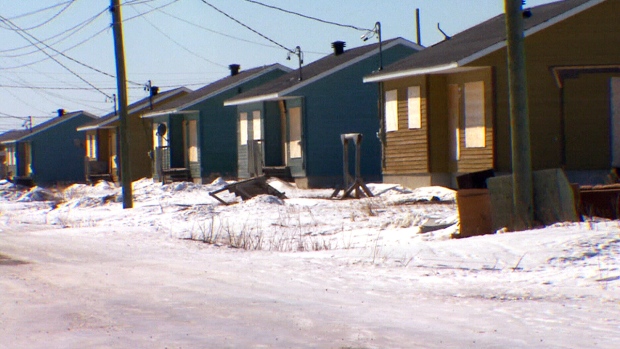
Poverty, crowded, unsanitary conditions have led to yet another crisis on remote, isolated First Nations reserves with children being found suffering from eczema and suspected scabies cases. Although eczema has a genetic base of origin allergens and irritants in the atmosphere can also trigger its appearance, and unsanitary conditions don't help. And in the Northern Ontario community of Kashechewan with its low incomes laundry soap is far more expensive than it is in urban areas. This is a community that is accessed only by plane, boat or ice road.

Three doctors from the Weeneebayko Area Health Authority issued an open letter to governments emphasizing the need for increased resources to address persistent problems at this reserve and others just like it situated elsewhere across the country. There is inadequate availability to medical resources, unsurprisingly, in these remotely-situated traditional communities. Nurses, support medical services and physicians are available only sporadically. People suffering from serious health problems are required to be transferred to hospitals in urban communities.


Derek Stephen of Kashechewan posted photos on social media of the angry-looking bumps and rashes on his niece's legs and face. The baby is now receiving medical treatment in Timmins, Ont.
Derek Stephen of Kashechewan posted photos on social media of the angry-looking bumps and rashes on his niece's legs and face. The baby is now receiving medical treatment in Timmins, Ont. (Derek Stephen/Facebook) 

According to the latest figures available from Statistics Canada, in 2011 there were six million, three hundred and twenty-nine thousand, four hundred and fourteen (6,329,414) Canadians living rurally, representing 19 percent of the Canadian population, as opposed to 81 percent living in urban areas. Rural areas of small towns face similar challenges of ensuring there is potable water for residents, of having volunteer fire fighters, of hoping to persuade newly-graduated medical practitioners to open a practise in their town.

People living even more remotely, with sparse numbers of neighbours rely on their own wells and septic systems, and must travel distances for medical assistance. These are not necessarily First Nations people, but those who prefer, or whom circumstances of life decree that they live isolated lives. In so doing, they must become resolutely capable of looking after their needs in the knowledge that their location necessarily restricts municipal services of any kind.

First Nations leaders regularly raise the issues of sub-standard health care and lack of mental health services, let alone that homes on reserves are often inadequate, requiring upgrades. People who live rurally know they have the responsibility to look after their properties. People living on reserves do not own the homes they live in; they live more or less as wards of the state, since reserves receive public funding for all their needs. Since they have no personal investment in property they take no care of it, though they depend on the housing to live decently.

Living in remote, isolated communities where are the employment opportunities to come from? Children who are educated on reserves are reliant on the quality of education that their own councils deem appropriate for them, not on curricula and teaching methods that are standard in urban communities. Little wonder reserves are under-served. Residents have generally made a choice to live where they do; they are mobile and could live elsewhere than on reserve, but to do so is to be independent of government handouts.

And irrespective of the financial resources placed at the disposal of native councils there seems never to be enough to cover all needs. Part of the problem resides in the proclivity of council members, and chiefs to ensure that their extended families benefit disproportionately, while other tribal members come second. The allocation of funding meant for specific public welfare purposes is not always properly distributed, since those handling the funding often use it for non-essential and self-serving purposes.


A fire on the Pikangikum First Nation has claimed nine lives. PHOTO: KYLE PETERS
 
In the remote northern Ontario First Nation community of Pikangikum, three children under five along with six adults, all from one family representing three generations, died in a house fire late Tuesday. Sometimes there is fire-fighting equipment on reserves, but scant few among the unemployed residents step forward to form volunteer brigades and no one becomes knowledgeable in the use of the equipment which just sis there, untended and unused.

When such calamities occur, and they do with regularity, including numerous suicides particularly among the young, condolences from local, provincial and federal politicians are quick to appear, along with pledges for additional funding to solve the unsolvable.


Labels: , , ,

Monday, September 28, 2015

Suicide Run Amok

"I think the word 'contagion' scares people, because people do start to be worried about young people in their family catching suicide -- or it to be an epidemic in that way -- but suicide doesn't work that way."
"But that we do have evidence of is exposure. Where, if you are a young person and you know someone that has ended their life by suicide, there is an elevated risk that you will, in turn, end your life by suicide."
"The government [of Nunavut] deserves to be shamed for this [not funding anti-suicide strategy]."
"Child sexual abuse is another huge problem. But nobody is willing to talk about it."
Dr. Allison Crawford, psychiatrist, Nunavut

"I had never been exposed to suicide before that [1977 suicide of his two older brothers]. To me, that seemed to be the beginning, and it was usually young men committing suicide."
"Look, we have the highest suicide rate in Canada. Our leadership should be shouting about it from the hilltops."
"Let's make suicide prevention our number one issue."
Jack Anawak, 64, Repulse Bay, Nunavut

"The rates of major psychiatric illness found in this study were higher than in the general Canadian population. The rates of major depressive disorder among Inuit in our study were higher than the national average."
"There's no one single cause for suicide. What the study showed is that suicide is the outcome of a process that starts much earlier."
"Protective factors are also very, very important and they're also part of the picture. Our study is not able to give precise answers because the data we collected could not identify the causes. But there's definitely a pattern there."
"I don't think we could implement a suicide prevention strategy without tackling the mental health problems and substance abuse and childhood adversity."
"This is a process that starts at some point early in life, which in a way tells us there's different windows of opportunity to intervene on suicide prevention."
Eduardo Chachamovich, lead author, report on Nunavut suicide study, 2013
The sun over Iqaluit at noon in December. An inquest into Nunavut's devastating suicide rate has laid bare the territory's lack of capacity to cope, but to trigger federal help, a territory has to ask, writes Laura Eggertson.
The sun over Iqaluit at noon in December.  (Jeanette Gevikoglu) 

The territory of Nunavut's coroner, Padma Suramala, decided to initiate an inquiry/inquest into the prevalence of suicides among aboriginal Canadians, and specifically the high rate of the expression of hopelessness leading to suicide in the far North of Canada. Statistics show that since 1999, 479 Inuit have taken their own lives. The methods used range from hanging themselves, shooting themselves, overdosing, and stabbing themselves.

That number of Inuit children attempting suicide aged 11 to 14, represents 50 times the national average, out of a population of roughly 28,000. A young boy of 15 and older is almost ten times likelier to commit suicide than someone living in the south. In 2013, 45 suicides took place, a dozen of whom were women while 33 were men mostly in the age range of fifteen to twenty-five. The oldest committing suicide that year was 72 years of age, the youngest 13.

The soul-searing emotions of depression, substance abuse, emotions of utter hopelessness and despair can occur to vulnerable people anywhere, and they do, and they are responsible for taking lives everywhere, but the sheer volume of suicides taking place in Canada's far north speak of a far more fundamental issue that drains people's will to live. Researchers speak of the connection of child sexual abuse with later suicidal impulses among the young. Offenders in Nunavut are charged with sexual violations against children and youth at 10 times the national rate.

Research conducted not only in Canada's north but also among troubled youth in Alaska and Greenland reflect similarities. What all three places where Inuit live have in common is the transition in lifestyle, when beginning in the 1950s a social experiment took place with grave consequences seen today. In the 1950s, 60s and 70s, the federal government decided to change a society of hunters and gatherers into an urbane collective; people living in isolated settlements, becoming accustomed to shopping for their food.

As an example, Jack Anawak speaks of the rapid social transformation responsible for confusing traditional roles. He himself grew up with the tradition of hunting and trapping. He already had a family of his own by age 17, with all the responsibilities that normally accompany such a familial status. The food his wife and children relied upon was food he was responsible for providing, and not through a trip to the local grocery; he set traplines and he hunted.

When the social transformation took place, he witnessed the deterioration in purpose that struck his brothers, leading them to suicide in 1977. Additionally in that same generation many young Inuit were sent to residential schools, taken from their families and exposed to a modern lifestyle for the purpose of wrenching them away from a traditional Inuit lifestyle, where they lost memory of their heritage, their language, and were taught instead practical European lifestyle skills.

It isn't that the high suicide rate is being ignored. Years earlier the government of Nunavut, along with the Nunavut land claims organization, a suicide prevention group and the RCMP studied how they might best develop a suicide prevention strategy. In 2010 the completed strategy was announced, consisting of better access to improved mental health services along with suicide-intervention training for responders, including police, teachers, community leaders and parents.

Government departments were supposed to mobilize to "transform the way suicide prevention happens in Nunavut". But adequate funds were never set aside specifically for that purpose, and the plan was never fully implemented. If financial assistance was required to augment whatever the Nunavut government was prepared to allocate, there is a mechanism whereby, if requested, the federal government is prepared to help.

Canada has an Emergency Management Act, and an Emergency Management Framework. Ottawa is prepared to respond to any request for assistance, and to do so swiftly. The federal government has committed to a federal role in suicide prevention or any other emergencies that must be addressed. Requiring "resources beyond their capacity to cope in an emergency or disaster" is a recognized responsibility of the federal government. But it will act only if and when aid is requested of it.

So while the inquest mapped out the situation prevailing, in the process revealing the territory's inability to cope with the epidemic of suicide, federal assistance has not to date been requested, though it obviously should be. There is an atmosphere of malaise that is acknowledged but not much appears to be done to combat it, and that is the issue of sexual violence aimed primarily at women and children, although men too suffer such abuse in the territory.

Some 52 percent of women and 22 percent of men reported sexual abuse in childhood of the most severe nature; according to data from the Inuit Health Survey of 2007-2008. Cases of children presenting with sexually transmitted infections, along with other evidence of sexual abuse are identified by psychiatric nurses and psychiatrists, according to Dr. Allison Crawford, director of the Northern Psychiatric Outreach Program for the Centre for Addiction and Mental Health, Toronto.

"The degree of childhood abuse is something that I think is talked about even less than suicide. It's still present and prevalent in communities", she testified at the inquest. "We have a new case that's come to the attention of mental health at least monthly, and sometimes more frequently. Social services do become involved automatically, and often the RCMP will become involved. But often the outcome — there are very few consequences."

Labels: , , , ,

Friday, August 23, 2013

Failing Aboriginal Children

"It's an interesting process with respect to First Nations. We [the provincial government] are accountable, essentially, for children in protection and that gets delegated to First Nations authority. But the funding is from the federal side, so the accountability is to us, but the funding is from the federal government.
"We have a number of people working with them directly as role models and mentors. We've been working with those boards and we have a very good relationship and we're doing a lot of work with them on processes and procedures."
Dave Hancock, Alberta Minister of Human Services
First Nations children are over-represented in their high numbers in the province's child welfare system. Of all children in the care of the province, fully 68% are First Nations children. First Nations are jealous and protective of their sovereignty. For they are, after all, nations, and they consider themselves to be fully capable of administering all of their own services. Funded, of course, by the province and by the federal government.

Which is to say funded by the tax-paying component of the Province of Alberta and all Canadian taxpayers in general. With the exclusion of aboriginals living in tribal First Nations reserves. Native Canadians living on reserves do not pay taxes; they are excused from this onerous civic obligation because they are First Nations; the first nations to live on the land we now call Canada. They were first, all others mere late-comers and as such colonialists.

Aboriginals living on reserves need not pay taxes, in fact general tax revenues are the means by which the federal government is able to pay huge sums of money to all First Nations reserves. Where housing, schools, medical services and all other civil infrastructures are paid for by the universal collection of taxes and reserve-transferable funding. One might think that people who have lived forever on the land know how to raise their children and how to employ themselves gainfully, living off the land.

The traditional way of living is always extolled as hugely desirable for any number of reasons; not the least is that it represents a noble way of life and a way in which ancestors can be honoured. The mystery here is why people who declare themselves to be sovereign, capable and spiritedly proud of their heritage are so fiscally dependent, and so sadly incapable of looking to their own devices. The worst thing is the common failures in raising children in secure and loving homes.

Perhaps it is a matter of transitional values being so utterly confusing. Too many families raise too many children on reserves with no regard to those children's welfare; they are not adequately cared for, fed, valued, educated. Their exposure all too often is to alcohol and drug addiction, sexual abuse and a nasty lifestyle of semi-abandonment. Which accounts for the numbers of aboriginal children in care.

The home of Ethan Yellowbird is pictured after his fatal shooting July 11, 2011 at the Samson Cree reserve.
Ian Jackson / THE CANADIAN PRESS FILE PHOTO   The home of Ethan Yellowbird is pictured after his fatal shooting July 11, 2011 at the Samson Cree reserve. 

Just as First Nations strenously object to their children being adopted outside their First Nations communities, they also insist on administering themselves the many types of civil programs that exist within their communities to provide social welfare, as is done elsewhere, in all other communities. The trouble appears to be the lack of accountability, of professional behaviour, of commitment to the welfare of the children they are tasked to support.

A recently-released report on the activities of the Kasohkowew Child Wellness Society which manages child welfare in the Samson Cree First Nation is a case in point. A 13-month-old girl in their care died as a result of gross incompetence in best practises relating to child welfare. "An ordinary reasonable caregiver with average education would have sought medical intervention for a child with symptoms of pneumonia serious enough to have caused her death", wrote Judge Bart Rosborough.

He made a number of recommendations in the interests of providing better health-care training for foster parents, for the child died in the custody of a foster parent. A foster mother who, in fact, worked as a caseworker at the same child welfare agency that managed the child's file. The little girtl had been in and out of hospital ten times prior to death for respiratory problems, including pneumonia and a bout of meningitis being suspected as well.

The judge pointed out inequities in financing care for aboriginal and non-aboriginal children. At the time of the enquiry he sat on, the Samson Cree Nation had two thousand children, and 322 of them were under permanent guardianship orders. The disparity in funding is a grave problem. On the other hand, he saw misuse of funds at the time of the baby's death, with staff members sent on expensive out-of-country 'educational' seminars.

Funds being diverted to activities described as "cultural activities", were also mentioned. Where choices were made to fund these types of events even in the face of case workers being fired because of tight budgets. Another issue was impossibly sloppy filing where one client's files could be scattered over a number of different places, difficult to pull together for a well-rounded picture of the client's history and needs.

All of the recommendations issued by Judge Rosborough had been accepted, said one of the women who sits on the board of directors at the Kasohkowew Child Wellness Society.

Labels: , , , , ,

Saturday, August 17, 2013

Obligatory Responsibilities

"Clients must take responsibility for any costs to replace lost, stolen or damaged devices and supplies, and to repair any devices or supplies damaged due to the neglect or wilful misconduct of the client, family or friends.
"Clients are encouraged to purchase private insurance to protect their assistive devices in the event of loss, theft or damage."
David Jenson, spokesman, Ministry of Health and Long-Term Care, Ontario
Brand new electric wheelchair.... $10K chair for $3.5K!!!! image0

Clearly enough 58-year-old Terri Holloway did not read the fine print. That the woman is physically impaired and requires assistance to enable her to lead a quality lifestyle as much as is possible for someone suffering from fibromyalgia, lupus, chronic fatigue and severe back problems requiring surgeries which made walking difficulty. Falling under the malign physical health effects from bronchitis and asthma, and now anticipating additional tests to confirm she may have lung cancer, is beyond dispute.

For that reason alone, Ontario's Ministry of Health and Long-Term Care represents one of the major public health welfare services that has been involved in looking to the woman's needs. They have become more wary of late in generously providing wheelchairs that suddenly disappear. Having discovered that some clients use them as they would cars, running the machines into the ground prematurely. Just an example of misuse, the kind of easy disposability attitude of those who haven't paid out of their own pockets for what they need.

Evidently a year earlier Ms. Holloway's husband died of a heart attack at age 54. He had his own acute health problems, HIV one of them. Back in 2010 they were hoping to be assigned a wheelchair-accessible apartment through social housing. "All I want is a place with an elevator, a balcony and a laundry room", her husband was quoted as saying at the time for a newspaper interview. Her husband had experienced three heart attacks, and avoided climbing stairs. For fear of precipitating an angina attack.

They were both long-term clients of the social welfare units set up by the Government of Ontario funded by taxpayers. Canadians have never objected to the need to support those in distress and in need of welfare assistance. Ms. Holloway's complaint is that her two-week-old tax-paid $10,000 wheelchair was stolen on August 9. Thus hugely compromising her mobility and by extension her obvious quality of life.

She had left the new wheelchair on the sidewalk outside a shop she had entered close to the LCBO outlet on Montreal Road in east-end Vanier. No more, she claims, than ten minutes after she had entered DTM Electronics she exited to discover her new wheelchair was nowhere to be seen. She would know it of a certainty by the legend she placed on back of the chair: "Witch Crossing. Trespassers will be Toad."

Her sense of humour, however, has been deleteriously impacted by her loss. "(But) it's not my fault. I didn't park it outside, put a sign on it that said Take Me", she said defensively when informed that there was no intention on the part of the Ministry of Health and Long Term Care to leap to the rescue by replacing her spanking-brand-new-but-abducted, expensive wheelchair any time soon. Such expensive aids are not a revolving door of ongoing entitlements.

It is standard procedure to ensure that such expensive items be insured. Quite apart from the fact that owners of such expensive, durable, functional and readily-resold items should be expected to take exquisite care of their treasured assists. One occupational health therapist skilled in assisting the disabled in procuring such devices informs that leaving wheelchairs unattended presents thieves with an irresistible invitation.

All clients are therefore encouraged to take out insurance. If the cost is unaffordable, the Ontario Disability Support Program, the very program from which Ms. Holloway draws benefits, will assist in paying the insurance toll. Nope, says Terri Holloway, no one ever suggested she take out insurance. And no one ever informed her, she claims as well, about a control switch on the machine which, once engaged, would defy attempts at theft.

Ms. Holloway has not been left completely in the lurch. She will not be forced to remain a hermit: "Sitting at home 24/7 isn't what it's cracked up to be", she observed wryly, proving her sense of ironic humour remains tardily intact. Some good soul purchasing a new wheelchair for themselves at Canada Care Medical heard of her plight, and asked that her old wheelchair be offered to Ms. Holloway.

The hope being that she will appreciate this second-time-around opportunity fully benefiting her, and feel some sense of personal responsibility in ensuring its safe-keeping. No one is entitled to boundless reams of generous provisions without making an effort to themselves be responsible against theft.

Witch now represents a reality she had been fully toad about.

Labels: , , ,

 
()() Follow @rheytah Tweet