Ruminations

Blog dedicated primarily to randomly selected news items; comments reflecting personal perceptions

Monday, May 17, 2021

Canadian First Nations' Discrimination

"We see once again disparities across the board that put Indigenous peoples on the wrong side of the coin -- and we have to start to answer why."
"I think if we're to study this in further detail, I would predict that we would find racism as one of the crux points in terms of where the journey of an Indigenous person in Canada is different than a non-Indigenous person."
"But those are challenges in a high-income country that pretty much stamps the words, 'universal health care' onto our currency."
Dr.Nadine Caron, first female First Nations general surgeon in Canada

"If we have better data, that will show us what is working and what isn't working."
"It shouldn't matter if you live in Ottawa or Shamattawa, your access to quality of care should be the same."
Dr.Jason McVicar, Metis anesthesiologist, The Ottawa Hospital
qualicum bay first nation's canoe adventure - first nations stock pictures, royalty-free photos & images
Getty Images
 
Indigenous communities in Canada are well known  to suffer greater health issues than do other Canadians. A situation reflective of social-economic factors more than anything, accounted for largely by income, education,  housing, employment and food security. A recently published paper attributes these factors to 'vestiges' of colonialism and disastrous government policy, and this may be largely correct, though there are undoubtedly other factors at play. Not the least of which is Indigenous peoples' continued embrace of the past and their cultural preference for living in isolated communities on traditional tribal land.

In those communities employment is scarce, private property is not part of the reservations system, wholly funded by the federal government through the Department of Indian Affairs, now titled Indigenous and North Affairs Canada. Housing on reserve land is substandard and crowded. People who have no personal investment in the homes they occupy will not care for them and everything uncared for has a tendency to fall apart. Potable water is always an issue in Northern and isolated communities. The most basic ingredients for good health outcomes missing.

Indigenous peoples in Canada have not been well served by their leaders; many reservation band councils are corrupt and fail to share equally among all who live on reserves the benefits that should accrue to all through annual reserve funding through universal general tax-funded allocations, while other reservations are led by responsible, innovative councils who conduct band affairs fairly and equitably with a view to being self-sufficient and productive.

When health issues arise, both physical and mental, it would be of immense value to have expert health professionals available near at hand, but in remote communities this is obviously not possible. Clinics can have a role, but they can only be as efficient and useful as the medical staff that would agree to be posted in those communities. Isolation does not make for happy hunting grounds. Many who live on reserves live in extreme poverty, violence is common, alcohol and drug addiction and a high rate of suicide is as well.

A study was published in the Canadian Medical Association Journal out of research conducted in Ottawa, which found that Indigenous patients had a 30 percent higher death rate following surgery than non-Indigenous patients. That Indigenous patients are likelier to die following an operation than are other Canadians, and less likely to be able to schedule the surgery that they require for heart conditions, failing organ transplants, or joint replacement.
 
this new game is so much fun - first nations stock pictures, royalty-free photos & images
Getty Images
 
Post-operative complications such as pneumonia are more common with Indigenous patients, according to the CMAJ study which was based on a systemic review of 28 previously-published studies which also found that Indigenous people had lower rates of life-saving surgeries like kidney transplants, heart operations and C-sections, along with significantly lower rates of knee and  hip replacement surgeries. "There's real data here showing real differences in outcomes for Indigenous populations", Dr.Donna May Kimmaliardjuk, the first Inuk heart surgeon in Canada, pointed out.

The study authors feel that statistical evidence of systemic racism First Nations, Metis and Inuit medical patients have complained of in Canada, proves their complaints correct. According to the study it is past time for a comprehensive national plan to be developed with the goal of improving surgical care for Indigenous people. As well, such a plan would include a commitment to collect better health-care data on the Indigenous experience. 
 
There are complications that non-Indigenous patients don't face: For surgery, those living on reserves must be flown out to large city centers for hospital care. Being a long way absent from home and the emotional support of family members, having to be temporarily housed in a city for post-surgical follow-up care until complete recovery has been established is disorienting and emotionally upsetting for people, not liable to hasten recovery.

The goal of the study was to synthesize all available data on surgical access and outcomes for Indigenous people, which saw researchers identify 28 studies involving 2.9 million patients, roughly ten percent of whom were Indigenous, allowing them to compare surgical experiences of Indigenous people with those of other Canadians. Some 20 of the studies were used to compare rates of surgery and wait times between Indigenous and non-Indigenous patients.
 
beautiful kayaker - first nations stock pictures, royalty-free photos & images
Getty Images

Two of those studies found kidney transplant recipients for Indigenous patients seeing them experience wait times over three to seven months lengthier than their non-Indigenous counterparts. Four other studies found Caesarian delivery rates to be three to five percent lower among Indigenous women. (Since Caesarian deliveries have latterly transitioned from a medical necessity procedure to a convenience procedure in many cases despite certain dangers associated with the procedure, that can only be seen as a plus.)

Higher rates of amputation was seen among Indigenous patients in three studies on diabetic patients. Which could conceivably be traced to less self-monitoring and adjustment of daily insulin doses against blood-glucose level tests, linked perhaps to poorly diabetes-educated exposures, or simply personal neglect on the part of the person with diabetes, resulting in severe nerve damage ultimately requiring amputation.

Hip and knee replacement surgeries saw Indigenous patients about half the rate of non-Indigenous patients in other studies. Both urban and geographically isolated Indigenous populations experienced less effective surgical care than other Canadians, the researchers found, despite Indigenous people suffering a greater disease burden; living in poverty, lack of adequate education and employment opportunities, crowded living conditions, which should logically trigger an alert.

Quality surgical care requires screening and diagnosis, along with access to hospitals and followup appointments, representing a challenge when Canada's Indigenous population is culturally diverse and widely distributed, with great numbers living in remote Northern communities, the study noted. Needless to say, poverty, lack of education and remunerative employment, along with good housing conditions, afflicts many low-income and unemployed Canadians who are non-Indigenous. Their condition leaves them as well vulnerable to neglect and privation.

inuit mother and daughter traditional dress baffin island nunavut - first nations stock pictures, royalty-free photos & images
Getty Images


Labels: , , , , , ,

Saturday, October 14, 2017

Politically Correct : Chiefly in Magnitudes of Utter Stupidity

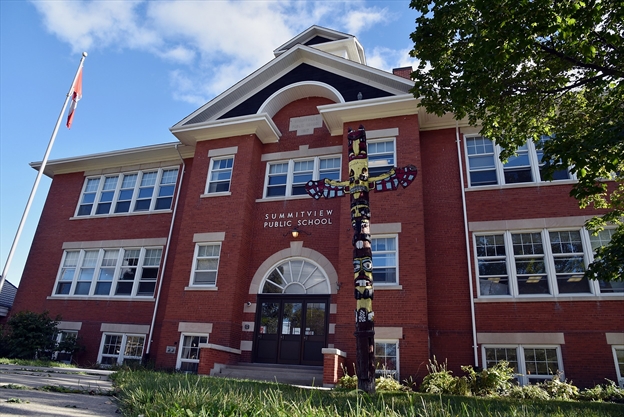
A plan has been put forward to have the York Region District School Board remove this totem pole from in front of Summitview Public School in Whitchurch-Stouffville. The totem has stood there since 1974. - Mike Barrett/Metroland
"While initially constructed with positive intentions, our understanding of how cultural appropriation affects our leaning environments has developed significantly."
"The totem pole was created without consultation or involvement of members of Indigenous Nations, including members of the Indigenous Nations of the West Coast for which the totem pole is unique."
York Region District School Board

"At that time, there was less awareness to what appropriation was."
"The First Nation felt it was probably not done with any ill-intent. That's why we're not jumping up and down with our arms in the air."
"Everybody's just trying to do the right thing here."
Lauri Hoeg, Chippewas of Georgina Island, Band councillor

"Listen, I think we've engaged in some significant learning since the totem pole went up."
"The one big thing for me is around the spaces that we're creating in our schools."
"We're looking to engage in some learning, as a starting point."
Drew McNaughton, Summitview Public School Superintendent, Stouffville, Ontario
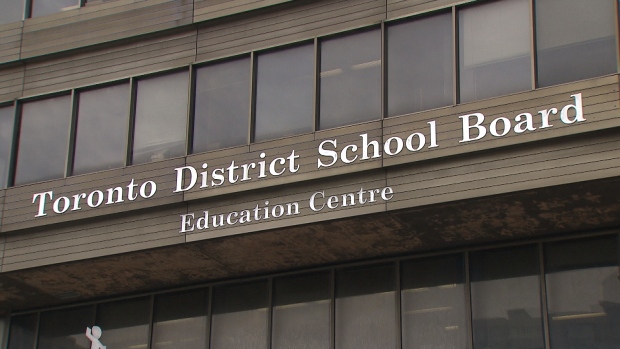
TDSB

"It may not have originated as an Indigenous word, but the fact is that it [the word "chief"] is used as a slur in some cases, or in a negative way to describe Indigenous people."
"With that in mind, as it has become a slur in some cases, that's the decision the administration has made to be proactive on that [to henceforth disallow the use of the word chief in any context]."
Ryan Bird, spokesman, Toronto District School Board

"If that usage is going to genuinely hurt a group of people, then I would say yes, by all means, let's see if we can find an alternative."
"On the other hand, the word originated outside of the context of First Nations cultures ... and the First Nations associations that it has, I don't think are negative."
Mark Morton, University of Waterloo's Centre for Teaching Excellence
We are canting at a galloping pace toward the very last gap in touchy-feelly empathy and rejection of anything that might possibly be construed as cultural appropriation -- heaven forfend -- or (gasp!) perceptions of bigoted expressions aimed at Indigenous people or their culture. An elementary school in Ontario has decided in a righteous fit of sanctimony that a totem pole erected decades ago as an exercise in children understanding and respecting historical culture, was to be summarily removed from its place adjacent the school's front entrance.

In 1973 former teacher Bernadine Mumford began a project as part of a focus on Canadian history, in the process enthusing her grade 6 students and the project was begun, everyone happily contributing to the carving and erection of a distinct and complimentary facsimile of a traditional West Coast totem pole, in sympathetic recognition of the "great harm" done in the past to Indigenous peoples. "It bothered me that there was an implication it was racist", she latterly said, to a local newspaper.

However, the spectral reality of victimhood, real or perceived, raised its accusing head. She was informed that a complaint had been broached to the school board about the structure, that the York Region District School Board identified as "community-based concerns"; one individual lodging an impassioned complaint to demonstrate her/his commitment to upholding the human rights and dignity of First Nations by taking the initiative to demand the removal of a disrespectful object mocking tradition is all it would take.

People in positions of authority have raised their antennae over such complaints of purported racism and no one wants to defend themselves by pleading not guilty and in so doing proving to the skeptical ultra-sensitive that no harm was intended, rather a project was meant to convey empathy and recognition of past wrongs. The merest whiff of controversy serves to light a firecracker under the seat of anyone held to be publicly accountable, and they move with righteous indignation blazing firmly in their culpable breasts.

When the board consulted with representatives from the Chippewas of Georgina Island, a local First Nation, though the totem pole does not reflect their own traditions, the Chippewas gravely agreed: the totem pole must be removed as an affront to First Nation dignity. In the matter of removing the offensive word "chief" from usage in any context whatever to assuage the perception that it is a word recognized as an epithet-arrow aimed at aboriginal hearts, there is nothing to discuss; the deed is done.

What is most harrowing about all of this is the simple fact that these intellectual simpletons have the last word on the kind of education Canadian children are exposed to, manipulating and avoiding any measure of discomfort through controversy that might be experienced when totally absurd notions arise implicating normal interactions of language and intention for fear that something, somewhere will be certain to offend someone at some time.

Summit View Public School letter
This letter was sent home to parents of students at Summit View Public School in Whitchurch-Stouffville Sept. 29. - YRDSB letter

Labels: , , , , ,

Saturday, June 17, 2017

Historical Retrospective

"It seems horrible to hang five men at once."
"Yet the blood of 21 whites calls for retribution."
Justice Matthew Baillie Begbie, 1864, British Columbia supreme court chief justice

"[The six chiefs were not  criminals and they were not outlaws."
"They were warriors, they were leaders, and they were engaged in a territorial dispute to defend their lands and their peoples."
B.C. Premier Christy Clark, Quesnel, B.C., 2014
The Law Society of B.C. will remove a statue of Sir Matthew Baillie Begbie, known as B.C.'s 'hanging judge,' from its lobby because it’s a colonial symbol that offends natives. Arlen Redekop / PNG

The event named the Chilcotin War between Canada's First Nations tribes and the provincial government of the 1860s is seen at the present time through the lens of colonialist fault, when native peoples found themselves, their heritage and culture and the land they lived on in dispute by Europeans who claimed it for themselves as sovereign territory the original inhabitants had no right to. There were efforts at treaties that would defuse the hostilities between the two sides, but they were placatory in nature with little substance to support any recognition of equality.

At the-then provincial capital of New Westminster in 1964, news was received of a massacre, warranting the dispatch of two volunteer militias to seek revenge on a war party comprised of some 25 Tsilhqot'in warriors whose Chief Klatsassin lead an attack on a work camp. Three of the work camp members escaped the deadly assault. The crew had been building a road to the interior. The work crew had been fast asleep and when dawn broke found themselves facing a war party.

Fifteen of the work crew were killed in the attack, and a following attack killed another six. The volunteers dispatched to meet the war party in combat succeeded only in doing physical harm to each other in friendly fire. Five Tsilhqot'in chiefs offered to negotiate for peace. As they approached the white camp they were manacled, charged, convicted and hanged though one of the condemned chiefs explained "We meant war, not murder".

When another chief advanced toward authorities with gifts in a traditional method of seeking forgiveness for his part in the massacre, he was hanged in New Westminster. The chiefs had a defined and planned purpose for the attack, it was to influence the colonial authorities to move away from their ancestral territories. Their presence had brought epidemics of smallpox whose result was destructive to Tsilhqot'in communities.

Some of the road crew that had been slaughtered by the road party had contemptuously promised the Tsilhqot'in that they could expect an increase in the incidence of smallpox, thanks to the roads they were building to advance the presence of whites in the geography that the First Nations considered their own. And which brought not only whites with their hostile arrogance, but disease and exploitation to the indigenous communities their presence suffocated.

The Law Society of British Columbia has issued authorization to remove a statue of Justice Begbie from the lobby of their building for the purpose of making people "feel comfortable and included on the premises". In response, Chief Joe Alphonse, Chair of Tsilhqot'in National Government sang praise for the society's removal of "this monument to injustice and symbol of B.C.'s colonial past."

In one fell swoop phasing out the honours that historically fell to the first chief justice of the province for representing the tenor of the times. Also obliterated will be the school names in honour of the man, street names, and plaques dedicated to Justice Begbie located province-wide. The Tsilhqot'in Nation has called for the name of Justice Begbie to be removed "from all public places".

This politically correct move to assuage the present-day indignation of First Nations over past events perceived to represent wrongs against their ancestors leaves little room for negotiations. Writing into the record, for example, that matters might have taken a different turn but could not, reflecting the political/social tenor of the times. Justice Begbie was adhering to a code of conduct and laws enacted that reflected the values of those times in which he lived.

In any society at any time, a planned assault for the purpose of destroying lives whose presence and purpose were perceived to be potentially injurious to the interests of the attackers, would see them being held liable for murder in the first degree. Frontier, colonialist justice made quick work of exacting the ultimate penalty from those involved in the war party and the deaths of 21 human beings.

History attests that Justice Begbie officially represented a racist system, but he was himself inclined to be more socially liberal, representing a personage who acknowledged indigenous title, accepting indigenous testimony when the majority of British Empire colleagues would not hear non-Christian witnesses. Justice Begbie familiarized himself with a number of indigenous languages, giving him the capability of speaking with indigenous witnesses, including the chiefs and surviving work crew members.

Undated photo of Matthew Baillie Begbie, B.C.'s first chief justice. VANCOUVER SUN


He presided over courts in barns, cabins and fields of stumps. He became fluent in Secwepmc and Tsilhqot’in. He told the government in 1860 that First Nations held aboriginal title that had to be recognized. He opposed efforts to displace First Nations from land desired by settlers. He forced provincial legislation ensuring that First Nations women were entitled to a share of the estates of white partners. And often he commuted the expected death sentences for First Nations — something he never did for a non-aboriginal offender. Some of his best judgments thwarted racist provincial legislation directed at Chinese communities, which he denounced as infringing on their personal liberty and equality before the law. Stephen Hume, Vancouver Sun, April 2017 

Labels: , , , ,

Monday, December 05, 2016

A Seriously Depleting Vital Coastal Resource

"These big industrial fisheries are chasing the fish. In west Africa, larger vessels are moving closer and closer to shore. A lot of these indigenous communities, all they have are dugout canoes."
"What you've seen is as people have less access to their traditional fishing ground people have turned to eating more food in the stores."
"People are wondering about the effects on their health. There's an elevation in cases of diabetes."
"A lot of communities are very similar, their food and cultural practices. What do they do if the fish are gone?
"We are at risk of losing human cultures that have been around for thousands of years, which makes this issue much more than environmental."
Andres Cisneros-Montemayor, research associate, University of British Columbia
University of British Columbia
A new study has been released by UBC, published in PLOS One. And, in a sense, it reflects what we already know about how the hunger for seafood and intrusion into national waters in Africa has affected Somalia. Former Somalian fishers have found their formerly abundant catch being scooped up by foreign fleets who have no compunction over fishing in waters traditionally the territory of Somalians, and in fact within the legal offshore territorial claims recognized internationally, by the country.

But Somalia is a poor African country, torn by countless wars, and with a weak government unable to defend or fend for itself. So the former fishing folk turned to piracy, and found that calling far more advantageous to them financially than fishing which formed part of their cultural heritage, ever was. It was a kind of revenge, in a sense, against large global commercial shipping fleets, to capture the ships and crews and hold them for ransom. This action wasn't meant to be beneficial to the country, but to the crews who signed on to this illegal, corrupt activity.

Perhaps, in a sense, no more illegal and corrupt than the giant fishing fleets that placed their indigenous fishers out of commission. What happened was that enough influential, wealthy nations saw their corporate interests at risk and their insurance rates climb, so they jointly challenged the pirates whose gains enabled them to buy larger, more technical craft, and advanced arms and to become something akin to local warlords who were supported by investors from offshore, like Qatar.


Pirates had long plagued fishermen off the Somali coast, but now they were taking the huge freighters which are the lifeblood of international trade. Getty

That, of course, is an entirely different story than the one that the UBC study targets. Its conclusion was to demonstrate that indigenous people living on the world's coastal regions eat far more fish than those living in nations' interior regions. And linking their foodsource to their culture and their native religion. It is estimated that, overall, people consume roughly 102 million tons of seafood annually; a vital source of nutrition for people living in proximity to the world's oceans.

Coastal residents eat fifteen times per capita more fish than those living elsewhere in the world, equalling 2.3 million tons; two percent of the global catch. Fish, however, because it is so important to these indigenous communities, has served as a central theme of their culture and religion; seafood long considered to represent a gift from the gods. Coastal peoples living in the Americas, Asia, Africa and the Arctic for starters, view seafood as critical to their very existence. And it is.
Mothers and children handlining for fish in the evening in Kavieng, Papua New Guinea. Image by Colette Wabnitz

But overfishing and the movement of fish from their traditional ocean-sourcing areas, resulting from climate change, could soon enough have the effect of removing those resources entirely. Huge commercial ships are encroaching increasingly on native fishing areas on the African coast, even as ocean stocks are diminishing. This study points out what anthropologist hadn't previously realized; how much indigenous people living on coasts rely on fish for their traditional diet and their health.

United Nations data was useful in identifying and defining indigenous populations. Some 370 million people worldwide are considered to represent indigenous populations, about five percent; mostly ethnic minorities native to the regions they inhabit. There are about 27 million people in almost two thousand communities, in 87 countries that encompass the coastal indigenous culture of seafood consumption. Native coastal people occupy their positions universally world-wide.

From the Pacific Northwest in the U.S. and Canada; in the Arctic regions, in Australia, New Zealand, Latin America, the Caribbean and Europe, all represent a portion of the geographic areas where indigenous populations have existed for centuries, while the world progressed in its advancement toward 'developed' status around them, as though the two occupying the same geography were in isolation to one another, and in many instances, that is precisely so.

Local fish on sale at the Saturday market in Kavieng, Papua New Guinea. Image by Colette Wabnitz.
Local fish on sale at the Saturday market in Kavieng, Papua New Guinea. Image by Colette Wabnitz

A database was created by the researchers to aid in determining how much of the global catch is used where coastal indigenous people live. In so doing, it was discovered that coastal indigenous people took 75 kilograms per person, while the rest of the world consumed 20 kg per person. The study was unable to determine whether coastal natives were consuming more or less fish than what occurred in the past.

"That's why these baseline studies are so important", cautioned Dr. Cisneros-Montemayor. "Since this [study] is the first one, we have no number to compare it with. But people on the ground have noticed a big decline in consumption of these foods. People have noticed a decline in their culture and social cohesion."

indigenousseafood-infographic
The study “A global estimate of seafood consumption by coastal Indigenous peoples” was published in PLOS ONE.

Labels: , , ,

Sunday, January 31, 2016

By the Grace of God

"It is a beautiful country here, but it is very unforgiving."
"When he got off the plane, he was pretty keen on going back right away to Fort Severn [Hudson's Bay]."
"He'd been walking for the last two hours after his snow machine ran out of fuel. He said the road was fine when he left Peawanuck but it wasn't  until 7 p.m. or 8 p.m. when he started missing the trail. It didn't help his headlight burnt out. Hence why he was walking around trying to feel for his track [made on the journey in] beneath the snow."
"He said he had difficulty finding his trail and he kept feeling disoriented, fatigue and hypothermia."
"He is a well-known and respected pastor, a highly respected community elder along the coast. He was dressed appropriately but didn't have a tent or stove. His sat [satellite] phone wouldn't work."
"He was tired. You could tell he was fatigued and  you could tell he had hypothermia but he was still in good spirits. He didn't want to go to the nurse's station; he wanted to go to a friend's house to rest and warm up."
Sgt. Matthew Gull, commander, Peawanuck patrol, Canadian Rangers
Sgt. Peter Moon, Canadian Rangers
Photo: Sgt. Peter Moon, Canadian Rangers    Sgt. Matthew Gull, on the left, of the Canadian Rangers, a largely aboriginal Canadian Forces reserve unit, coordinated the local rescue efforts

A man whose knowledge of the geography and weather conditions and how swiftly they change was bred in the bone, and further inculcated through a lifetime of experience, but whose trust in the Divine smiling beneficently down on a messenger of faith might perhaps have convinced him he would have nothing to fear, ever, at the hands of mother Nature.

Setting out on a winter afternoon at four p.m. with the intention of reaching his destination in six  hours' time, with no provisions should his plans go awry.

And they did, badly. He had insisted that he must return to St. Peter's Anglican Church in Fort Severn, about as remote a community as any southern-based Canadian might ever imagine. A community on Hudson's Bay, of 335 First Nations souls, all of whose spiritual well-being the Reverend Moses Kakekaspan, 71, felt responsible for. Not that they were his only charges, for he had been even further afield, on a pastoral trip to the community of Kashechewan.

Having completed his visit he flew from Kashechewan into Peawanuck, the closest destination to his Fort Severn home; from there he would snowmobile the 186-kilometre journey. As he set off for home he informed rangers that he anticipated his arrival time at Fort Severn to be around ten that evening. En route, with the wind chill calculated into the equation, the temperature dropped to a truly frosty -43C, with steadily falling snow.

The good Reverend was repeating his original path in reverse through Polar Bear Provincial Park near the Hudson Bay coast. Rangers in Peawanuck called in to their counterparts in Fort Severn at half-past ten to determine whether Reverend Kakekaspan had arrived safely, then checked with his wife, only to be informed he had not yet arrived. Still absent after another hour passed, a search was launched, calling in the Ontario Provincial Police to assist.

Father Kakekaspan was found eventually after his tracks were followed. He was intercepted by Rangers Maurice Mack and Aaron Isaac, walking 20 kilometres north of Peawanuck around 7 the following morning. He had run out of fuel twelve hours earlier, left his snowmobile and took up his journey by foot. His satellite phone failed to work. And he had decided to turn back to Peawanuck since it was closer at that point, he estimated, than Fort Severn.

Sgt. Matthew Gull, Canadian Rangers
Photo: Sgt. Matthew Gull, Canadian Rangers  Moses Kakekaspan recovers in a nurse’s station after being lost in a -43C winter storm

After he had recovered following a brief stay at the Peawanuck nursing station, he was escorted back to Fort Severn by two of the Fort Severn Rangers who had been among those searching for  him: Sgt.Mary Miles and Ranger Sinclair Childforever, the latter one of many children fostered by Father Kakekaspan and his wife Thelma, over the years.

Labels: , , ,

Monday, September 28, 2015

Suicide Run Amok

"I think the word 'contagion' scares people, because people do start to be worried about young people in their family catching suicide -- or it to be an epidemic in that way -- but suicide doesn't work that way."
"But that we do have evidence of is exposure. Where, if you are a young person and you know someone that has ended their life by suicide, there is an elevated risk that you will, in turn, end your life by suicide."
"The government [of Nunavut] deserves to be shamed for this [not funding anti-suicide strategy]."
"Child sexual abuse is another huge problem. But nobody is willing to talk about it."
Dr. Allison Crawford, psychiatrist, Nunavut

"I had never been exposed to suicide before that [1977 suicide of his two older brothers]. To me, that seemed to be the beginning, and it was usually young men committing suicide."
"Look, we have the highest suicide rate in Canada. Our leadership should be shouting about it from the hilltops."
"Let's make suicide prevention our number one issue."
Jack Anawak, 64, Repulse Bay, Nunavut

"The rates of major psychiatric illness found in this study were higher than in the general Canadian population. The rates of major depressive disorder among Inuit in our study were higher than the national average."
"There's no one single cause for suicide. What the study showed is that suicide is the outcome of a process that starts much earlier."
"Protective factors are also very, very important and they're also part of the picture. Our study is not able to give precise answers because the data we collected could not identify the causes. But there's definitely a pattern there."
"I don't think we could implement a suicide prevention strategy without tackling the mental health problems and substance abuse and childhood adversity."
"This is a process that starts at some point early in life, which in a way tells us there's different windows of opportunity to intervene on suicide prevention."
Eduardo Chachamovich, lead author, report on Nunavut suicide study, 2013
The sun over Iqaluit at noon in December. An inquest into Nunavut's devastating suicide rate has laid bare the territory's lack of capacity to cope, but to trigger federal help, a territory has to ask, writes Laura Eggertson.
The sun over Iqaluit at noon in December.  (Jeanette Gevikoglu) 

The territory of Nunavut's coroner, Padma Suramala, decided to initiate an inquiry/inquest into the prevalence of suicides among aboriginal Canadians, and specifically the high rate of the expression of hopelessness leading to suicide in the far North of Canada. Statistics show that since 1999, 479 Inuit have taken their own lives. The methods used range from hanging themselves, shooting themselves, overdosing, and stabbing themselves.

That number of Inuit children attempting suicide aged 11 to 14, represents 50 times the national average, out of a population of roughly 28,000. A young boy of 15 and older is almost ten times likelier to commit suicide than someone living in the south. In 2013, 45 suicides took place, a dozen of whom were women while 33 were men mostly in the age range of fifteen to twenty-five. The oldest committing suicide that year was 72 years of age, the youngest 13.

The soul-searing emotions of depression, substance abuse, emotions of utter hopelessness and despair can occur to vulnerable people anywhere, and they do, and they are responsible for taking lives everywhere, but the sheer volume of suicides taking place in Canada's far north speak of a far more fundamental issue that drains people's will to live. Researchers speak of the connection of child sexual abuse with later suicidal impulses among the young. Offenders in Nunavut are charged with sexual violations against children and youth at 10 times the national rate.

Research conducted not only in Canada's north but also among troubled youth in Alaska and Greenland reflect similarities. What all three places where Inuit live have in common is the transition in lifestyle, when beginning in the 1950s a social experiment took place with grave consequences seen today. In the 1950s, 60s and 70s, the federal government decided to change a society of hunters and gatherers into an urbane collective; people living in isolated settlements, becoming accustomed to shopping for their food.

As an example, Jack Anawak speaks of the rapid social transformation responsible for confusing traditional roles. He himself grew up with the tradition of hunting and trapping. He already had a family of his own by age 17, with all the responsibilities that normally accompany such a familial status. The food his wife and children relied upon was food he was responsible for providing, and not through a trip to the local grocery; he set traplines and he hunted.

When the social transformation took place, he witnessed the deterioration in purpose that struck his brothers, leading them to suicide in 1977. Additionally in that same generation many young Inuit were sent to residential schools, taken from their families and exposed to a modern lifestyle for the purpose of wrenching them away from a traditional Inuit lifestyle, where they lost memory of their heritage, their language, and were taught instead practical European lifestyle skills.

It isn't that the high suicide rate is being ignored. Years earlier the government of Nunavut, along with the Nunavut land claims organization, a suicide prevention group and the RCMP studied how they might best develop a suicide prevention strategy. In 2010 the completed strategy was announced, consisting of better access to improved mental health services along with suicide-intervention training for responders, including police, teachers, community leaders and parents.

Government departments were supposed to mobilize to "transform the way suicide prevention happens in Nunavut". But adequate funds were never set aside specifically for that purpose, and the plan was never fully implemented. If financial assistance was required to augment whatever the Nunavut government was prepared to allocate, there is a mechanism whereby, if requested, the federal government is prepared to help.

Canada has an Emergency Management Act, and an Emergency Management Framework. Ottawa is prepared to respond to any request for assistance, and to do so swiftly. The federal government has committed to a federal role in suicide prevention or any other emergencies that must be addressed. Requiring "resources beyond their capacity to cope in an emergency or disaster" is a recognized responsibility of the federal government. But it will act only if and when aid is requested of it.

So while the inquest mapped out the situation prevailing, in the process revealing the territory's inability to cope with the epidemic of suicide, federal assistance has not to date been requested, though it obviously should be. There is an atmosphere of malaise that is acknowledged but not much appears to be done to combat it, and that is the issue of sexual violence aimed primarily at women and children, although men too suffer such abuse in the territory.

Some 52 percent of women and 22 percent of men reported sexual abuse in childhood of the most severe nature; according to data from the Inuit Health Survey of 2007-2008. Cases of children presenting with sexually transmitted infections, along with other evidence of sexual abuse are identified by psychiatric nurses and psychiatrists, according to Dr. Allison Crawford, director of the Northern Psychiatric Outreach Program for the Centre for Addiction and Mental Health, Toronto.

"The degree of childhood abuse is something that I think is talked about even less than suicide. It's still present and prevalent in communities", she testified at the inquest. "We have a new case that's come to the attention of mental health at least monthly, and sometimes more frequently. Social services do become involved automatically, and often the RCMP will become involved. But often the outcome — there are very few consequences."

Labels: , , , ,

Saturday, February 14, 2015

Life Experiences of Aboriginal Girls

"We must all stand together to condemn these senseless acts of violence, particularly by our own people. We must stop hurting one another, we must end the pattern."
Cameron Alexis, AFN [Assembly of First Nations] Regional Chief, Alberta
"They're pretty dark [her pencil sketches]. I started drawing because it helped me express ,my feelings. It's like an escape from the reality, I guess."
"The world needs more creative people that are my age. We are the future."
"I actually had to go hide in someone's yard because this car was following me. [I waited there for] ten minutes until another person down the street went out to  start their vehicle."
"I was thinking of my parents. They didn't know I went out, I had wanted to surprise them."
"It's like my entire life became this horror movie and I'm just waiting to be kidnapped or murdered. I'm 16 years old and no aboriginal girl should ever stress over things like that."
Faith, 16 

"I can't avoid any street because any street I'm on, I get followed."
"I had been having a few issues while walking place to place during the night in the Maples, where I live. I would be getting followed and harassed by people who I don't even know, which is very disturbing to me because I haven't done anything wrong to make them feel the way they feel about me."
"A man in a white car pulled up beside me and a friend while the police drove right past us and didn't do anything, even though the police pulled into the parking lot in front of us. The man saw the cop car and drove off, but [it upset me] that the police didn't take any action or find anything suspicious or notice a car pulled up beside two young girls on the road where there is no parking zone."
"Now, ever since this happened, I have been having problems with going places during the day or night because of what I have been seeing on the news about all these young teenage aboriginal girls being murdered and missing."
"I now carry a pocket knife with me for protection."
Carolee, age 16

"I was at a Halloween party and I didn't notice I put my phone on vibrate and I had seven missed calls from my grandma and my uncle."
"If I ever drank, I'd probably get yelled at and grounded. I'm from a really tough family."
"Winnipeg is known for the most murders and the most drunk people. There's so much bad people here."
Liberty, age 15

"School is where I love to be. I feel cool. I walk into the hallways and everyone moves all at the same time, I just walk through the middle. It's like they all go 'phssh!'"
"I don't like being at home. When I was two or three, my grandma took me home from the hospital. My mother was too young to take care of me. She was 17 when she had me. I lived with my grandma for the first few years, and my mom and my dad were kind of there."
"I was supposed to see her [favourite cousin] the day before she was murdered. I kind of just held it together throughout the day [at school]. I don't know exactly what happened. I just know she was murdered in her house. It kind of makes me sad and scared. Whoever did it could still be out there killing more people."
"I don't like talking [about any missing or murdered women]. It's hard for me. I'm sensitive in a lot of ways -- I have sensitive skin, sensitive eyes, sensitive ears."
"I don't feel safe anymore. And I worry about my younger siblings. If anything ever happened, I wouldn't be able to live with not having them with me."
"I want to live in a very big house and get married."
Angel, age 16

"The most important person in my life is my girlfriend, Chantal. She's my fulfilment, my happiness and the comfort of home to me -- I would do anything to prevent something bad from happening [to her]."
"I thought it was bad and wrong of me to think of even kissing a girl or liking one. So I didn't acknowledge it very much. [It was] a hard time for me. My parents weren't accepting of it. They would joke around ... or give me dirty looks. They don't buy me clothes -- just sweaters and shoes - because I dress like a boy."
"She [Chantal] buses over after school and [we] just chill -- watch movies, eat or go skating or [go on] walks or to see our friends. Sometimes we join youth programs together."
"I send [Chantal] home every night with a knife. I'm always worried, sitting on my bed waiting for her message, telling me she's home, knowing she's walking to and from the bus stop alone, and unaware of what could happen to her."
"[Mainly], my dream is to eventually gain happiness in myself [and be] confident. And have a family with a beautiful girl."
Taylor, age 16


These are teen-agers like any other girls of their age, with many of the same self-absorbed concerns and hopes for their future, trying to find comfort and feel their way around the world of emerging adulthood, but they are teens with a heritage of First Nations cultures within Canada. And so, they have a very special burden; that of discrimination emanating from non-natives who feel superior to those of aboriginal ancestry, even while that aboriginal ancestry is a matter of justifiable pride to the girls.

Their background as First Nations children is also that of familial dysfunction, of drug addiction and alcoholism, of violence against women, of unemployment, of runaway children living on the streets of Winnipeg, plying the trades to enable themselves to live. It is a situation where aboriginals living on reserves in often-remote, inaccessible areas of the country are poverty stricken, and dependent on government handouts to enable their existence. Above all, it is a history of aggravated disrespect, and grudging negotiations between tribal leaders and governments.

Because of the rampant racism they know surrounds their ancestry and their culture, the girls are wary. Because of the violence that many have experienced, not necessarily first-hand, sometimes anecdotally, sometimes through extended family, they are hyper-aware of personal safety and the gloom of bad things happening to others, hoping to avoid having them happen to them. They are meeting as a group in a classroom at Winnipeg's Maples Collegiate Institute.

There are a dozen girls, aged between 15 and 19, meeting to discuss issues of importance to them. And they're attending a four-day workshop initiated and put on by a number of concerned social groups to explore their attitudes and apprehensions, aspirations and experiences. These are not aboriginal girls who are homeless and bypassing an education. These girls mostly do very well at their academic studies and plan to further their education.

They live in a neighbourhood of Winnipeg, a suburb where average family income is slightly higher than the city's median income, where the streets have modest bungalows and the school they attend supports indigenous culture. Each of them has experienced situations few non-Native girls have. Though for many young girls from other backgrounds  some of their experiences would be familiar. Some have been bounced from home to home, displaced from reserves, suffer some degree of depression anxiety, eating disorders.

And they talk about lurking dangers on Winnipeg's streets. Where aboriginal women are targeted by strangers. There's a story going the rounds of a back van driving around "kidnapping girls/women for sex, then dumping their bodies." One girl states, "It's not so much a coincidence. I think it's a plan."  But, in fact, it's an urban legend of sorts, there is no black van, there are no girls being kidnapped for sex, their bodies dumped, according to police.

Little wonder, though, that the girls speak of these things, for they do happen, as thankfully isolated, but horrific events and it is aboriginal girls that are targeted, sure enough. The girls taking part in the workshop are usually mute about these things, not sharing them with family members, nor with other girls their age, let alone teachers, or journalists, since it isn't a pleasant subject for them. But it does describe their lives.

Labels: , , , , ,

Sunday, February 02, 2014

Lost At Sea

"His condition isn't good, but he's getting better. The boat is really scratched up and looks like it has been in the water for a long time.
"He's staying at the local council house and a family is feeding him. We've been giving him a lot of water, and he's gaining strength."
Ola Fjeldstad, Norwegian anthropology student
One mightn't wonder that Jose Ivan, so far from his home in Mexico, wouldn't quite resemble the man he was when he set out for El Salvador back in September 2012. Neither he nor his companion would likely have given a thought to anything awry occurring on their expedition. Their boat was extremely shipworthy and they trusted that they would have no difficulty reaching their destination, most obviously; else why ship out?

Theirs was an eight-metre fibreglass vessel equipped with propeller-less engines, a craft capable of circumnavigating the globe. And if that was indeed their intention they might have planned to succeed in such a venture. But their destination was far more modest. Despite which their boat drifted over 13,000 kilometres from Mexico. And they survived the sixteen months being adrift on the vast blue Pacific eating turtles, birds and fish caught with their very own hands.

Imagine after all that time together in isolation, trusting that their ingenuity would see them through, sharing a challenge to human survival they might never have imagined would occur to them, only to have one of them eventually dying of exposure and starvation, the other surviving, despairing at his loss of human companion, forcing himself to go on, to continue catching whatever living thing he could to survive, drinking rainwater, and substituting it for turtle blood when water was not available.

Jose Ivan was found washed up on Ebon Atoll (inset) which is part of the Marshall Islands Jose Ivan was found washed up on Ebon Atoll (inset) which is part of the Marshall Islands
 
Islanders on the remote Pacific atoll of Ebon, a coral atoll of 22 islands where fewer than one thousand people live on a land mass of 2.2 square miles at an elevation of nine feet above sea level strung around a deep lagoon, were doubtless amazed to see the battered boat float onto their reef. To see an emaciated, bearded man, his hair long and unkempt, dressed in torn underpants alone, skin raw from sun and salt, speaking only Spanish, with a turtle for a companion.

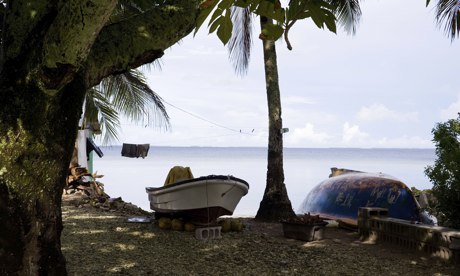
Boats in the Marshall Islands, where José Ivan finally landed after 16 months adrift in the Pacific
Boats in the Marshall Islands, where José Ivan finally landed after 16 months adrift in the Pacific. Photograph: Alamy
 
Ola Fjeldstad, a Norwegian anthropology student, happened to be present at the time on Ebon, conducting research at that southernmost outpost of the Marshall Islands, and it was she who spoke to the AFP news agency. After he was found, he was taken to the main island  to meet the mayor who in turn contacted officials in Majuro, the Marshalls capital. They await the arrival of the sole plane capable of landing at Ebon, out of service for maintenance.

It's been difficult trying to communicate with him. I've gotten to know him through pictures he's drawing. He said he was on his way to El Salvador by boat when it started drifting. We've been feeding him nutritious island food and he's getting better," said mayor Ione deBrum. "He has pain in both knees so he cannot stand up by himself. Otherwise, he's OK."

A basic health examination revealed Mr. Ivan to be suffering from low blood pressure. He is managing to walk slowly with the aid of island people. His ordeal does not appear on the surface to have done any kind of irreparable damage to his health. Yet another tale to be added to the annals of seemingly miraculous human survival against the odds of facing nature at her rawest.

Impossible to imagine the kind of courage it would take to face day after day of isolation and privation. Hope inspires human beings to endure the unendurable and ultimately survive.

Labels: , , , ,

Friday, January 17, 2014

Cultural Insensitivity

The world has been placed on notice. That is, the part of the world that thinks it cares about offending minorities or other cultures or religious beliefs or habits or pretensions or actually just about anything that might present as giving offence. Taking care with political correctness, thinking twice and then looking over your shoulder and thinking again -- hard -- is the order of the day.

Some might think of a scheme to have fun, lighten the atmosphere, use a symbol of some type to raise funds for charity; what have you; now the trend is to wait for the criticisms to fall as they may.
"As far as this particular image is concerned, I doubt that many Kanaka Maoli [native Hawaiian] voices would be raised in protest for a bunch of students in a very cold place who are trying to imagine being in a warmer place."
"Native people here have long since lost control of that icon, of people surfing, the diamond head in the background, the big blue wave. That has become such an appropriated, and huge, marketing tool for corporate tourism that when it's being appropriated, it's actually being appropriated from them and not from us."
Jonathan Kay Kamaka-wiwoole Osorio, Professor Hawaiian studies, University of Hawaii
A University of Saskatchewan student group's “Hawaiian Night” fundraiser was rebranded as “Tropical Night” after complaints over the original poster (L).
Handout    A University of Saskatchewan student group's “Hawaiian Night” fundraiser was rebranded as “Tropical Night” after complaints over the original poster (L).
"I can understand there is cultural sensitivities we may not have been aware of, but in my opinion, we changed the event very proactively on our own terms.
"We removed the original image of the female surfing as it was seen to be sexualizing indigenous women, and we changed the image to one of a small island with palm trees and sun in the background."
Dylon Pollon, vice-president, Arts and Sciences' Student Union (ASSU), University of Saskatchewan

Innocently enough, in a spirit of fun, a student group with the arts and sciences department of University of Saskatchewan had a brain-wave; in the midst of a cold, snowy winter lighten the atmosphere and the mood by planning for a Hawaiian-themed fundraiser. Then, in the spirit of never knowing when and where lightning may strike, accusations of racism thwacked the organizers upside the head. Bringing them quickly to their senses - run for cover!

A group on campus representing the movement Idle No More (for those with short memories, Idle No More is a proactive/reactive/activist, no-nonsense, no sense of humour, First Nations movement to liberate Canada's indigenous peoples from the historical and current yoke of colonialist racism. The poster depicting a woman surfing in a bikini with a pink lei thrown over her shoulders, looking quite delectable and enjoying her experience, elicited outrage and condemnation.

"It's basically an outsider selling an outsider culture to other outsiders without really reflecting on that process", was the opinion of Adam Gaudry, assistant professor of native studies at the university. Take that! Obviously, given the general social climate surrounding the white-hot topic of native empowerment following on generations of discrimination and neglect, sensitivities run high and any half-baked ideas revolving around having fun at the expense of aboriginals is distinctly lacking class.

And here is a perfect instance of one native group in an entirely other country taking umbrage on behalf of another native group living a far distance in a climate nothing like our own, who it would seem, from what a Hawaiian professor of Hawaiian history has to say, couldn't care less. Might, in fact, be hugely amused both by the poster, its implication of a warm, sunny destination and pleasure soaking up the surf and sun, a matter of national pride, in fact.

No sooner did the accusation of apprehended racism rear its ugly head than the student union moved with impressive alacrity to remove the offending image and replace it with a decidedly less glamorous but inoffensive one. Poof! gone the bikini-clad beauty ... Poof! in with the palm tree, sun, sandy island, and blue, blue Pacific Ocean. Harmless, lacking oomph! in the same manner as the one it replaced, but acceptable.

Mr. Gaudry, however, finds the "Tropical Night" exchange poster still problematical, concerned the intent is still there, and the change merely superficial. "To appropriate someone else's cultural traditions to celebrate a party that involves alcohol without involving the people who are supposed to be represented removes the agency of the people whose culture is represented, and how their culture is practised", he admonished.

The voice of reason responds with Mr. Osorio adding while he sympathizes with native students and professors "who have seen their own cultural icons appropriated, disfigured and, in some cases, mocked in a variety of different ways", speaking for his own culture, native Hawaiians actually couldn't care less.

Should Jews become outraged at the pillaging of Yiddish terms and words being absorbed into the lexicon of English buzz-words uttered by people who feel clever using them as they are so richly expressive of situations and observations that they become irresistible to those who consider themselves clever and cool appropriating expressions to show how au courant they happen to be?

Help yourselves.

Labels: , , , ,

Tuesday, April 09, 2013

Life on First Nations Reserves

There is never any end of problems relating to the isolated geographic status of First Nations reserves. Those reserves which First Nations people are proud of insisting preserve their natural way of life, their heritage.

But there is no longer much that is 'natural' and inherited by custom in that culture for which the practical everyday details of life are no longer practised. Living on the land in isolated First Nations communities has become a habit, one that is weighted with a belief that in so doing, the culture and the history is being prolonged, promoted and honoured.

Understandably, there is love of the land, the natural surroundings, for they are beautiful. On the other hand, there is also the conflict involved with living in a hemisphere whose weather and atmospheric challenges are severe and manifold. Then there is the dreary reality that no one living in those heritage-positioned reserves on treasured ancestral land lives in the manner that their predecessors did; hunting, planting, taking the necessities of life from the land.

What the residents of Indian bands do on those reserves is simply bide time. There is little employment, there are few attempts to make life meaningful apart from the abstract of honouring their ancestors by remaining in the worshipped geography where they abided meaningfully at one time in dim history.

Food is brought into the community; potable water must be water that is treated with modern purification devices. And because of the long distances that food must travel to be shipped in by air or motor vehicle countless times throughout the year, food, or whatever substitututes for food, tends to be very expensive.

The diet of reserve residents no longer resembles the diets of their ancestors, for they no longer make themselves responsible for providing for themselves through hunting and planting, though there is some effort at supplementing in season the foods that are brought in by air or iceroads in the winter months.

First Nations have lost the will and the knowledge and the ability to be resourceful, capable and self-sustaining.

Their homes are those provided for them on the reserve where housing is allocated by band council; their income is funding distributed by the band council and received through a government department whose purpose is to look to their welfare, using public tax dollars to ensure that children are educated and health concerns are looked after.

Having to make no effort to look to their own devices on their own behalf, life becomes meaningless. Ancestor worship cannot and does not fill all those required gaps in human need that activity, satisfaction in providing for oneself and one's children, seeing children grow into healthy, fulfilled individuals to carry on tradition and aspire to make meaning of their lives, all remain absent.

Children in those far-flung communities are abandoned to their own devices, their elders consumed with the need to use alcohol or drugs to achieve a sense of well-being in the absence of any other, normal activities that would bring that emotional sense to them. Children themselves, from sheer boredom and witnessing what elders do, take to sniffing glue.

Dogs' welfare is also ignored, and they are left free to wander the community, to multiply in numbers and forage for themselves, becoming feral and unresponsive to human command in their condition of semi-starvation, and occasionally attacking and harming small children. And now First Nations reserves in the northern regions of Manitoba Ontario and Quebec face a reality of health clinic closures.

Health conditions of the residents of First Nations reserves is far worse than those for comparable communities outside reserves. Convenience foods with poor nutritional value make up the bulk of food consumed, not whole foods; manufactured quasi-food is convenient, and costs less than good quality whole foods, their reliance on salt, fat, sugar tempt, wreaking havoc on human organs.

Diabetes, and the results of long-term diabetes, in nerve damage, eyesight loss, stroke, heart problems, kidney damage and obesity all afflict First Nations reserve residents in far greater numbers than other populations living elsewhere within Canada. Where, though the need is not so great, access to health care facilities is far more accommodating.

"Without adequate service, the nursing stations and hospitals may have to close for periods of time which could result in liability to Canada. As a result, the use of contract relief nursing is urgently required", declares a notice on a government procurement website for Health Canada.

"Nursing stations are the only contact (people on reserves) have for health care. The nurse is the first contact in terms of when people are ill and when there's a health emergency. If you don't have a nurse, I don't know how you manage", commented Ontario Regional Chief Stan Beardy.

But there is a high turnover of nurses. Providing primary health care on isolated reserves is not the first choice of employment for most nurses, unless they are particularly driven by a charitable instinct. And even then, burn-out and a sense of desolation and despair impel many nurses to return to places they are more familiar with, preferring to leave reserves for others to commit to.

And there's the rub; there simply are not sufficient 'others' to commit to spending years of their lives in those isolated, problem-prone reserves. Health Canada reports that the three-year departure rate for nurses working in remote and isolated First Nations communities comes in at 55%.

Labels: , , , ,

Saturday, March 30, 2013

Serving Children's Needs

In a community about as geographically remote as one can get, neighbours alerted local authorities that something appeared awry. A nearby resident of a home where seven young children were present without any parental supervision, complained. That complaint resulted in Chief Simeon Tshakapesh of Natuashish setting out to visit the home in question.

He took a mental health worker and staff from Child, Youth and Family Services with him.

They discovered children staggering about, vomiting, attempting to exit the home through windows. When RCMP also responded on the remote Labrador reserve, they discovered on the premises two unsecured firearms. And there was ammunition as well.

No adults anywhere to be seen. The seven children ranged in age from 9 to 12.

Only one of the children belonged in the house. The others were from other homes. When the RCMP checked they were unable to find any of the parents of any of the children. They had been left to their own devices. And they had spent the time sniffing gas, becoming ill from the effects of their self-destructive behaviour.

Eventually the parents of some of the children were located.  The children were taken into protective custody by the staff from Child, Youth and Family Services to safe homes or foster homes within Natuashish.

"It's disgusting" said Chief Tshakapesh afterward in an interview.  "Just very young kids sitting on the couch and garbage everywhere." Charges may in the offing with respect to the unsecured firearms and ammunition. That one of the children had a lighter in his possession was another item of concern.

The nine-year-old boy had been left on his own for four days before authorities discovered him inhaling gas with the six other children, all of them pre-adolescents.

Natuashish is accessible only by water or air, situated on Labrador's north coast, close to Davis Inlet. It is a new community, developed in 2002 where Mushuau Inni live.

Labels: , , , ,

Sunday, February 24, 2013

Issues, Conundrums, Misery

First Nations communities in Canada are assailed with world-class problems. High unemployment, isolation, drug and alcohol dependency, dysfunctional families on reserves, high levels of resentment, boredom, lack of educational opportunities, sometimes-inadequate medical treatment, and high rates of suicide plague all too many of them. Children are born with fetal alcohol syndrome, into families unprepared to adequately nurture and support their offspring.

Out of this sad and sorry reality results a high rate of criminal activity and incarceration, far surpassing their numbers within the country on a community-percentage scale. One of the other offshoots of these circumstances is that resentment that breeds a special kind of social divestiture. There is the First Nations insistence on being sovereign, as First Nations, answerable to their own distinct cultural imperatives and system of justice.

A social distance and values-inheritance that sets First Nations apart from the larger community is considered part of their treasured inheritance.  Not so treasured is the wide-ranging violence that emanates from these communities, an inchoate rage sometimes turned inwardly through the plague of self-harm through addictions, neglect and criminal activities. And predation on women and children. The plight of children left to their own devices and harming themselves represents an agonizing misery.

It is hardly surprising that groups of young aboriginals become involved in serious crimes, from drug smuggling, to tobacco smuggling, gun-running to casual violence. And then there are the occasional confrontations with other elements of the Canadian identity, with young armed men in volatile situations reacting to what they see as the casual take-over of traditional native lands awaiting treaty obligation fulfilments.

These situations bring bands of young aboriginal 'warriors' in direct confrontation with corporate interests, with other members of Canadian society, and with government agencies and the law. Invariably, the law will step back, not wishing to accelerate any kind of incident that will swiftly get out of hand. In Ontario there have been such incidents in the past, and they have not ended with good will being extended on both sides.

The issue of First Nations children not having access to equal educational opportunities compared to those of other children not living on reserves; the issue of aboriginals living in remote communities having to be flown out to established medical institutions for medical treatment far from home, the issue of high suicide rates within the communities, the issues of sexual predation, violence and killing, the issue of social prejudice.

These communities fail themselves by refusing to step into the larger society and meld with it, taking advantage of all the opportunities equally available to others, while still retaining those parts of their cultural awareness that have meaning to them. They are failed by their national elected chiefs who are not adequately representing their full interests. They are failed by a government hemmed in by its own inability to act conclusively.

Labels: , , , , , ,

Saturday, February 23, 2013

More Dysfunction From Attawapiskat

De Beers Attawapiskat Impact Benefit Agreement report: "...since the start of construction, over $360-million in contracts have been awarded to solely owned or joint venture companies run by [Attawapiskat]. In 2012, contracts awarded to the community were over $40-million. To build capacity within the community, two training facilities have been constructed in the community at a combined cost of almost $2-million. We currently employ over 60 full-time employees from the community, and over 100 from other First Nations."

This is a report issued from the De Beers Victor Mine, 99 km west of the James Bay Cree community of Attawapiskat. The giant international diamond mining company has invested $1-billion in the creation of this mine, and this on the basis of expectations, for nothing has yet been extracted as a proven extraction potential to maintain the mine in operation over its proposed life-time span.

Because of preliminary studies and the expectation that mining will ultimately produce a robust return on natural mineral resources in the area, four local communities including Attawapiskat were awarded impact benefit agreements, to ensure that diamonds extracted from their traditional heritage lands will end up benefiting the people of the lands.

This is precisely the kind of business venture that Native communities hope to benefit from; their natural resources mined and the corporate interests investing the infrastructure and expertise taking the time and the interest in training them to make employment opportunities open to them. And in the same process, using band auspices through the provision of needed services to augment the joint benefits to be accrued.

The company additionally undertook to be responsible for maintaining the 250 km ice road from the town of Moosonee at the southern tip of James Bay up to Attawapiskat, to provide three months of vehicular access to communities approachable otherwise only by fly-ins. When the Attawapiskat reserve was short of housing units, De Beers volunteered to provide some additional units to serve the community.

De Beers, in attempting to operate the Victor Mine in a corporately responsible manner answerable to the needs of local communities has every right to expect co-operation from those who benefit from its presence. It might even be said that this relationship presents as a test case; whether outside corporate interests can make such investments and trust that locals whom they will employ can become reliable partners.

The same report, however, sets out a disagreement with four local families who have been staging a blockade of the ice road spur leading from the main Moosonee-Attawapiskat ice road to the mine. With access impeded because of the wildcat blockades, mine operations have been compromised. The narrow window due to seasonal weather concerns where the ice road may remain viable, makes the situation even more untenable.

A month earlier when the situation was first revealed, the Attawapiskat band council arranged an urgent meeting to try to get to the heart of the matter. Nothing appears to have been resolved, and it is not clear from communication that appears less than forthcoming, whether the band is in support of the blockades or simply incapable of doing anything to relieve the situation, or alternately, disinterested. Speaking of more dysfunction on an already-dysfunctional reserve.

The diamond company is losing timely business opportunities to proceed with its plans. The band council is losing the opportunity to provide needed services to the company. And those band members who value their jobs with De Beers are being held back from their employment with the company. The standoff is to no one's advantage, yet it continues.

Where a court order has been issued and the opinion of the presiding judge is that "individuals with private interests are holding a multinational to ransom ... it smells of coercion", it is clear that legal action should be taken. But while the judge is of the opinion that the OPP should lay charges against the demonstrators, the police force is demonstrating no interest in becoming involved.

Just as anywhere else that First Nations feel they have a right to impose their dissatisfactions in any given situation upon others, inconveniencing and sometimes threatening and worse, security agents of the state feel disinclined to act, and they are supported by the provincial government, as happened at Caledonia, and more latterly at the road and bridge blockades mounted by the "Idle No More" protests.

"What is the message being sent to the world, when five or six disgruntled ex-employees ... can shut down a business of 500 people at a cost of millions? That there is no law in Northern Ontario", pointed out Neil Smitheman, a lawyer representing De Beers.

What will inspire other corporate interests to invest in projects on Indian land, offering benefits to bands and their members with this kind of business-adverse atmosphere prevailing?

Labels: , , ,

 
()() Follow @rheytah Tweet