Ruminations

Blog dedicated primarily to randomly selected news items; comments reflecting personal perceptions

Monday, August 31, 2026

Smoke Gets In Your Eyes -- Your Lungs and Your Brain

"It's not just a few days in these extreme events that you need to protect  yourself."
"It is also the days when the sky looks OK [while air quality indexes or weather reports warn of the presence of smoke]."
Dr. Kai Chen, associate professor, Yale School of Public Health 
 
The health effects of short-term PM2.5 exposure, and subsequently smoke, can range from relatively minor (e.g., eye and respiratory tract irritation) to more serious health effects (e.g., exacerbation of asthma and heart failure and premature death). In addition, there is initial evidence that short-term smoke exposure may lead to preterm birth (Picciotto et al. 2024) and impact brain function (i.e., cognitive performance as measured through a brain-training game) (Cleland et al. 2022). Fine particles are respiratory irritants, and exposures to high concentrations can lead to persistent coughing, phlegm, wheezing and difficulty breathing. Exposure to PM2.5 may affect the body’s ability to remove inhaled foreign materials, such as viruses and bacteria, from the lungs. For example, some studies have reported an increase in the risk of COVID-19 cases and deaths in response to wildfire smoke exposure (Zhou et al. 2021; Meo et al. 2021; Schwarz et al. 2022). Although most healthy people will recover quickly from smoke exposure, some may experience health effects such as pulmonary inflammation and transient reductions in lung function (U.S. EPA 2019).
United States Environment Protection Agency  
https://www.bccdc.ca/PublishingImages/Wildfire%20smoke%20in%20Vancouver.jpg?RenditionID=2
Vancouver skyline   Wildfires and smoke have always occurred in British Columbia, but they are becoming more frequent and severe as the climate changes. Wildfire smoke is a form of air pollution that can affect your health.  BC Centre for Disease Control 
 
https://www.canada.ca/content/dam/hc-sc/images/services/publications/healthy-living/human-health-effects-wildfire-smoke/human-health-effects-wildfire-smoke.jpg

Evaluation of air pollution from wildfires presents unique challenges, compared to air pollution from other sources, such as traffic or industrial point sources, as smoke exposure is seasonal and episodic in nature (Gould et al., 2023). Also, as the number and size of wildfires impacting an area are variable and as smoke production from wildfires is not constant or steady, the concentration of smoke experienced by populations can vary considerably, and can include high levels of exposure for short time periods or moderate exposure levels lasting for several days or longer. Additionally, to evaluate the health effects of wildfire smoke, it is necessary to distinguish the contribution of wildfire smoke from that of other sources of air pollution within the mixture that people are exposed to. To address this, researchers have employed a variety of methods to assess exposure to wildfire smoke for use in health studies including use of land-based PM monitors, satellite imagery, air quality modelling, comparison of fire versus non-fire periods, proximity to wildfire burn area, and self-reports. In these studies, the most commonly used surrogates for wildfire smoke exposure are PM2.5 (particles with a diameter of 2.5 micrometres or less) and PM10 (particles with a diameter of 10 micrometres or less). For the primary investigations included in the systematic reviews considered here, the health outcome data were based on administrative sources (for example, mortality registries, health care utilization data), surveys, or self-reports. In addition, most of the primary studies focused on short-term or episodic exposure to wildfire smoke (that is, daily exposure), while some of the studies assessing mental health impacts considered health effects in years following the wildfires, and studies of reproductive or developmental impacts considered wildfire smoke exposure during the gestational period. It is noted that the health effects of PM2.5, a key pollutant in wildfire smoke, have been extensively studied and Health Canada has evaluated the health risks of ambient PM2.5 (that is, PM2.5 from all sources combined) (Health Canada 2022). 
Government of Canada 
People who are exposed to smoke from wildfires, according to more recent scientific investigations, are increasingly assailed by lung-damaging toxins, but new discoveries identify that hearts, brains and other body organs are also being damaged by wildfire smoke. Smoke exposure could sound the death knell of up to 1.9 million people in the United States alone, over three decades, according to one 2025 study. Lungs can be penetrated deeply by the concentration of airborne particles known as PM2.5, from wildfires.
 
PM2.5 is a primary pollutant that air quality indexes measure, but fails to reflect other substances that can be contained in wildfire smoke that include lead, mercury and formaldehyde, cautions Karl Nadeau, dean of the University of California, Los Angeles Fielding School of Public Health. Preliminary research suggests that wildfire smoke may be of greater harm than air pollution from more common sources such as car exhaust. Fire in proximity to urban areas, moreover, may be of particular toxicity, through consuming buildings vehicles and electronics.
 
https://news.stanford.edu/__data/assets/image/0023/163904/gettyimages-2192923816_0.jpeg
Smoke and flames from the Palisades Fire fill the sky as seen from the Pacific Palisades neighborhood of Los Angeles. | Getty Images
 
Associations between wildfire smoke and cardiovascular hospitalization, diabetes complications, preterm birth, cancer, impaired cognition and other problems, as well as respiratory effects including  attacks of asthma have been associated through scientific analytical studies. Wildfire smoke was linked in a 2024 study to deaths from cardiovascular, digestive, endocrine and kidney diseases. Asthma attacks and heart attacks can increase within an hour, in the presence of the severity of ambient smoke, pointed out professor Michael Brauer with the University of British Columbia.
 
Cognitive effect research has seen a significant expansion, explains Stephanie Cleland, associate professor at Simon Fraser University in British Columbia. Dr. Cleland was lead author of a 2022 study finding smoke exposure to be associated with lower scores on a 'brain training' game. A link between cumulative exposure throughout a school year and lower standardized test scores was also found through research, while other studies indicate a possible association with dementia. 
 
Less dramatic, lower-level exposures over time have an add-on impact, according to Professor Chen, who suggests the wearing of masks to be avoidance-helpful to exposure to ambient smoke during such events, not necessarily only when the surrounding air is redolent of burning, charred wood, and the atmosphere turns grey in reduced visibility with wildfire smoke. One study published in 2025 linked the risk of death from all causes with three-year exposure to wildfire smoke. Yet another 2025 study concluded that as average wildfire exposure increased, North Americans over age 65 suffered a higher risk of dying from chronic obstructive pulmonary disease.  
 
https://ucalgary.ca/news/sites/default/files/styles/ucws_news_hero_image_desktop/public/2026-08/GettyImages-1198428440_2.webp?h=748417e7&itok=QkT98ngt
A woman wears an N95 mask to protect herself from high levels of smoke pollution. Daniiielc, Getty Images
 
"The data pretty clearly say that there is no safe level of exposure to wildfire smoke: the more exposure we get, the worse a range of health outcomes. The data also pretty clearly show that our notion of sensitive groups should probably be greatly expanded. In addition to kids, elderly populations, or anyone else with preexisting conditions, like asthma, we need to think about populations like pregnant people whose birth outcomes can be substantially affected by exposure. Portable indoor filtration is often the best option for many households, and well-fitting N95 masks can help when outside. "
"Climate change, and in particular increasing fuel aridity brought about by hotter temperatures and variable rainfall, is playing a central role in the recent rapid increase in wildfire activity and smoke exposure throughout the US. It is certainly not the only factor, but is substantially amplifying the risk brought about by other factors, which include a century of fire suppression that has left abundant fuels in our wildlands, as well as increased human construction and activity in the wildland-urban interface. We can say with strong confidence that climate change has made these events much more likely and much more severe."
Marshall Burke,  associate professor, Stanford Doerr School of Sustainability 

Labels: , , , , , , , , , ,

Monday, March 28, 2022

Life, Ebbing and Flowing

"Given that cross-coupling between alpha and gamma activity is involved in cognitive processes and memory recall  in healthy subjects, it is intriguing to speculate that such activity could support a 'last recall of life' that may take place in the near-death state."
International Neuroscientist Study Team
 
"We measured 900 seconds of brain activity around the time of death and set a specific focus to investigate what happened in the 30 seconds before and after the heart stopped beating."
"Just before and after the heart stopped working, we saw changes in a specific band of neural oscillations, so-called gamma oscillations, but also in others such as delta, theta, alpha, and beta oscillations."
"Through generating oscillations involved in memory retrieval, the brain may be playing a last recall of important life events just before we die, similar to the ones reported in near-death experiences."
"These findings challenge our understanding of when exactly life ends and generate important subsequent questions, such as those related to the timing of organ donation."
"As a neurosurgeon, I deal with loss at times. It is indescribably difficult to deliver the news of death to distraught family members."
"Something we may learn from this research is: although our loved ones have their eyes closed and are ready to leave us to rest, their brains may be replaying some of the nicest moments they experienced in their lives."
Dr Ajmal Zemmar, neurosurgeon, University of Louisville, US
Image: Okrasiuk/Shutterstock.com

The brain activity of an 87-year-old patient was inadvertently recorded in hospital as the elderly man died. Subsequent analysis of electroencephalography recordings of the man's brain in the 30-second period before and following the patient's heart stopping to beat suggested to the investigating scientists that interaction had taken place between different brain waves; that the process continues once blood stops flowing in the brain.

This observation, new to bioscience, may indicate that life-scenes flash before the eyes of an individual in the instant prior to death. A finding that the international team of scientists has reported. Should this prove to be a universal phenomenon and not simply an observation of one individual case, it seems that the potential for 'recall of life' may be a common experience for those facing and moving into death. 

The study's observations and subsequent theories were published in the journal Frontiers in Ageing Neuroscience. Despite which the researchers note that their assessment and the conclusions brought away from the study relates to one single observable incident recorded and studied for its implications. That the phenomenon cannot yet be considered to be  an end-of-life occurrence common to all individuals.
 
In the instance of the 87-year-old Canadian man with epilepsy, a brain scan was ordered and simultaneously the man had a heart attack and died. He was not immediately disconnected from the EEG machine, thus the accidental recording was made, and came under investigation by the researchers. This happenstance occurrence, tragic as it was for the man and his family, gave neuroscientists the opportunity to study the resulting recording.

Labels: , ,

Saturday, October 02, 2021

Merck's New Antiviral COVID Treatment

"An oral antiviral that can impact  hospitalization risk to such a degree would be game-changing."
"[Existing treatments are] cumbersome and logistically challenging to administer. A simple oral pill would be the opposite of that."
Amesh Adaija, senior scholar, John Hopkins Center for Health Security 
 
"Most people have heard of Tamiflu, and they've heard of acyclovir,. Acyclovir is a type of antiviral used to treat chickenpox, herpes and shingles."
"We didn't develop a ton of other antivirals."
"Stop progression of disease, so you take them and you forget about it, right? The second thing we'd like the pill to do, if you're taking it for symptomatic disease, is stop long Covid, right? It's not just 'Don't let me get progressed and die -- don't let me have lingering cough, lingering headache.' "
"Treatment to serve as prevention], so someone with Covid-19 is less likely to transmit it to others. We'd like it to wipe out the SARS-CoV-2 replication in the nose so fast that your nose is no longer a danger to me."
Dr. Myron Cohen, professor of medicine, microbiology, immunology and epidemiology, University of North Carolina.
molnupiravir
This undated image provided by Merck & Co. shows their new antiviral medication. (Merck & Co. via AP)

"This is going to change the dialogue around how to manage COVID-19", chief executive Robert Davis of Merck & Co. pharmaceuticals stated. In collaboration with partner Ridgeback Biotherapeutics both plan to apply for U.S. emergency use authorization in the shortest possible time-frame along with plans to make regulatory applications worldwide. Their antiviral pill has the potential to significantly decrease death or hospitalization for people most at risk of contracting serious COVID-19.

Experts in the field view the antiviral, named molnupiravir, as a true breakthrough in treating the SARS-CoV-2 virus haunting the world community and strangling economic development. The treatments currently in use representing infused antiviral remdesivir from Gilead Sciences Inc., and generic steroid dexamethasone are administered once a patient with COVID has been hospitalized

Critical Phase III trial results were positive enough for the antiviral to convince outside monitors to recommend an early halt to the trials; they had given sufficient proof of the efficacy of the treatment. Both Swiss drugmaker Roche Holding AG and Pfizer are focusing on the development of an easy-to-administer antiviral pill. Only antibody cocktails which must be given intravenously have been approved to the present for non-hospitalized patients.

In Merck's study, a planned interim analysis of 775 patients studied hospitalizations or deaths, finding that 7.3 percent of people given molnupiravir were hospitalized with none dying, for 29 days following treatment, in comparison with hospitalization of 14.1 percent of placebo patients among whom there were eight deaths. The trial involved international patients representing a wide spectrum of study entrants with molnupiravir taken every 12 hours for a period of five days.
 
Viral sequencing performed to date indicates molnupiravir to be effective against all variants inclusive of the highly transmissible Delta strain. Adverse events rates were similar for both molnupiravir and placebo patients, according to Merck. With the expectation that the potential new treatment may aid in preventing serious illness from COVID, scientists have broadly welcomed the new antiviral.
 
The worldwide assault on the human body by the SARS-Cov-2 virus through COVID-19, has succeeded in causing the death of close to five million people around the world.
"This is the most impactful result that I remember seeing of an orally available drug in the treatment of a respiratory pathogen, perhaps ever."
"I think getting an oral pill that can inhibit viral replication -- that can inhibit this virus -- is going to be a real game changer."
Dr. Scott Gottlieb, former commissioner, US Food and Drug Administration

Labels: , , , , , ,

Friday, May 22, 2020

COVID-Confused? Here, Let Me Help!

What is obvious is what is known. The world is in a global pandemic. Of such a virulent nature that it has closed down society as it has developed over the years, presenting us with a faint resemblance of the familiar, where people are ordered to remain separate from others lest the opportunistic virus be given a clearer mandate through oblivious carelessness to infect ever greater numbers of the people than the five million already infected worldwide by its insidious, insistent, triumphant presence.

What is known is that this is a zoonotic, a virus that leaped the species chasm from wild animals to human animals, and that it first emerged in a city of northern China, Wuhan, in a province that became the first to be inundated with the virus, and consequently locked down, where so many presentations at hospitals swamped their capacity to react, and health workers began to succumb to its evil influence.

Known? That China sought at first when the virus initially presented and its own physicians began warning of an unusually dangerous presence of viral pneumonia and puzzling deaths, to deny that any unusual public health threat had arisen. It failed to give vital information to the World Health Organization to prepare to recognize a looming global threat, influencing a too-late declaration issued to the world at large of a global pandemic.

It is also known that in Europe, Italy, Spain, France and the United Kingdom suffered vast numbers of infections; that Russia has been smothered with cases, that in North America the United States has succumbed to the virus with a fury, hospitalizing and killing thousands of health-vulnerable people. In the Middle East, Iran, though claiming otherwise, has seen COVID-19 strangle its population, while India and Africa are striving to control a pestilent disease that thrives within poverty-stricken crowded conditions.

It is well and truly known that the world economy is in tatters, that countries that took steps to attempt to protect their populations from the worst deadly effects of the SARS=CoV-2 virus causing COVID-19 by shutting borders, businesses, social spaces, warning people to remain secluded indoors, venturing out only for emergencies, infrastructure and finances -- are in free-fall.

A Mexican flag stands on display next to a closed beach in the town of Bucerias, Nayarit state, Mexico, on Thursday, April 23, 2020. Cesar Rodriguez/Bloomberg
And there's more, much more:
  • The elderly; those over 65 and well beyond are at higher risk of infection and ultimately losing their lives to COVID since risks tend to rise in lock-step with advanced age. But this is a very strange disease; some individuals aged 100 and even beyond who were infected, have recovered and somehow escaped the Grim Reaper. 
  • Irrespective of age, those with such chronic conditions such as diabetes, obesity, cancer, heart disease and other serious health conditions are also at grave risk. The combination of age and any of these conditions accelerates the risk of lost mortality.
  • Self-isolation; quarantining oneself is immensely useful, given that density is dangerous, representing a situation beloved of the virus which loves to send out emissaries from a host to those located conveniently nearby to represent yet another depository of viral danger. 
  • Observe the differences in countries, where heavily-populated Germany went into lockdown and Sweden, heavily populated as well, deliberately failed to; so a low death rate occurred in Germany and a high rate in Sweden. This.is.not.rocket.science.
  • In Florida notorious as a haven for the elderly, a low death-rate has been seen which studies explain is due to the majority of its vulnerably elderly chose to voluntarily remain within their homes, even in the absence of government-mandated lockdown.
  • No evidence, only rumours, that heat or warmer weather may slow the disease spread or possibly deters its spread. Just as there is no evidence that when cold weather returns in the fall, a "second wave" of new outbreaks will occur.
    • The world awaits a life-saving vaccine against COVID, though no one has any idea what it might be, how it could work, and when it will be discovered. On the other hand some scientist believe COVID will of its own volition fade away after 70 days of terror.
There, wasn't that useful? Don't you feel better already? Prepared to launch yourself off on a vacation to some exotic spot. If they aren't under quarantine. If they will permit entry. If you aren't too fearful to venture out. If there are flights to that destination. If you're prepared to distance yourself and to wear a mask to soothe the resentment of the locals that  you've come from abroad to threaten them with the possibility you might be carrying the virus while unsymptomatic....

How about Italy, China or Mongolia. Even Egypt or Portugal? All have high hopes to rescue their tourism season...

A visitor wearing a face mask following the coronavirus disease (COVID-19) outbreak poses for pictures at the Badaling section of the Great Wall in Beijing, China, April 24, 2020.Carlos Garcia Rawlins / Reuters

Labels: , , , , ,

Thursday, December 05, 2019

Patient Harm from Medical Misadventure

"A 1999 Institute of Medicine (IOM) report, found up to 98,000 people were dying in US hospitals each year from preventable medical errors."
"In 2016, a review from Johns Hopkins hit on an unimaginably high number. Looking at studies published since the IOM report, many of which were based only on insurance claims, these researchers concluded that 251,454 hospitalized patients died from medical errors each year."
"A recent and more rigorous study came up with a far more conservative number than either the IOM study or the Hopkins research."
"Rather than simply looking at 'medical errors', authors of this study examined all adverse events and their link to patient mortality, whether a mistake or not."
"Using data from the Global Burden of Diseases, Injuries, and Risk Factors (GBD) between 1990 and 2016, instead of simply using insurance claims, the new study settles on a number 50 to nearly 80-fold smaller than the Hopkins review."
"Across the entire study period, the authors found 123,603 deaths in which adverse events were determined to be the underlying cause of death. And after controlling for population growth and ageing over those 26 years, they found that those rates had actually fallen by over 20 percent."
"Of all the deaths related to adverse events, the study found 8.5 percent could be attributed to misadventure, or medical errors such as accidental laceration or incorrect dosage, and 14 percent could be attributed to adverse events associated with medical management."
"This isn't to say that mistakes made by medical professionals are not a problem, or that they shouldn't be fixed. Merely that grossly exaggerating this number to the point of a crisis, where a huge number of people who are hospitalized could die from a medical mistake, is demonstrably false and dangerous."
Science Alert
main article image

"Canadians place great trust in health-care organizations and are generally satisfied with the health care they receive. In 2005, 85 per cent of Canadians who received health care were 'very' or 'somewhat satisfied' with the services they received." "Additionally, in a recent Canadian Institute for Health Information survey of patients accessing primary care, more than three-quarters (76 per cent) reported that the quality of the primary health care they received in the past 12 months was either 'excellent' or 'very good'."
"However, a growing body of evidence over the past decade has demonstrated that misadventures during surgical and other medical care are common around the world, and Canada is no exception." "These misadventures are tragic for individuals and costly for society, as they can result in disability, death, or prolonged hospital stays. A Canadian study estimated that about 7 per cent of adults seeking acute care in Canada experience a misadventure; from these cases, close to 60,000 are potentially preventable. The latest OECD figures show that about 150 deaths are caused by misadventures during medical care each year in Canada."
The Conference Board of Canada 
Auditor General Bonnie Lysyk released her annual report for 2019 on Wednesday, and called for immediate action to reduce the number of patients who are injured while receiving care in Ontario's hospitals each year. (Paul Chiasson/Canadian Press)

"Each year, Ontario hospitals discharge one million people. Of those, about 67,000 people were harmed during their hospital stay."
"Many [long-term care home residents] require assistance eating and drinking and rely on long-term-care home staff help to maintain their health."
"Ontario has committed to spend $3.8 billion over ten years to 2026-2027 for mental  health and addictions services, so it's important that funding is allocated appropriately to meet the needs of Ontarians."
Ontario Auditor General Bonnie Lysyk, 2019 annual report
The audit found that hospitals are currently not required to report so-called "never-events" - a medical error that should never happen, such as leaving a foreign object inside a patient - to the Ministry of Health.
The audit found that hospitals are currently not required to report so-called "never-events" - a medical error that should never happen, such as leaving a foreign object inside a patient - to the Ministry of Health. File/Global News

Close to 70,000 patients receive injuries while in the process of receiving care in hospitals annually in Ontario, according to the province's auditor general who called for government action to help in reducing that number. The auditor general's team audit of acute-care centres resulted in the finding that six of every one hundred patients treated then discharged from hospitals in the province received harm during the process of health care provided to them.

Hospitals have no legal requirement to report to the Ministry of Health any medical error that should never happen, called "never-events". In that category would be leaving a foreign object inside a patient after surgery. The audit team visited six of thirteen hospitals that do track "never-events", finding that 214 incidents had occurred since 2015. Hospitals failed to comply with required safety practice standards on occasion, and what's more nurses repeatedly fired for reasons of incompetence often were re-hired by other hospitals.

Credit Ontario Ministry of Health and Long-Term Care

The audit recommended that hospitals and nursing agencies should be alert to and prepared to share information such as this with one another regarding poorly-performing nurses. Disciplining doctors was found to take years and in the process deleteriously impacted a hospital's budget; potentially making hospital administrations loathe to undertake needed disciplinary action. In one instance it cost a hospital $560,000, taking several years to finalize the discipline of a doctor with "practice issues".

Two other hospitals involved in disciplinary action against the very same physician laid out $1 million for their efforts to discipline the man. As legal costs for physicians in discipline matters are paid by taxpayers since government reimburses doctors for malpractice insurance fees, the auditor general felt the outcome is that doctors are willing to draw out disciplinary cases for years since there is little personal cost to themselves.

Food and nutrition in long-term care homes was another issue the auditors found is lacking to meet quality standards, when food is given patients that includes an excess of sugar and salt, and lacking sufficient fibre content. In three of five homes inspected by the audit team, patients were served food past their best-before date. Liquid whole eggs that were three months past best-before dating, was served in one of the homes, as an example.

hospital
iStock.com/Chinnapong

And as for addiction services, the audit team found wait times for treatment, opioid-related emergency department visits and death rates all rising, regardless of increased government funding. Adequate policies and procedures are lacking, to deliver timely addiction services, to monitor service providers, or to measure and report on effectiveness, according to the report's findings.

Another point of contention is that $40 million of the province's $134 million opioid strategy is equally distributed throughout all Ontario regions, and not preferentially based on need.

Labels: , , , , ,

Tuesday, August 06, 2019

Forgotten Baby Syndrome

"Never leave a child unattended in a motor vehicle, even for a minute. That should be a rule that you make for yourself; even if I forgot something in the house, I need to run back in the house with the child."
"You have to get your cellphone at some point, usually, so that's a good way to remember [the child's presence in the back seat by placing your cellphone beside the child's seat]."
If the child is in distress, we've talked to the police about this and they recommend that you do whatever you can to get the child out of that car."
"Regardless of the exact mechanisms and circumstances that lead to these tragic incidents, experts believe that under the right circumstances, forgetting an infant or child in the back seat could happen to anyone. It’s important to be aware of potential pitfalls and set strategies and habits in place as reminders that can help prevent attention shifts and lapses in memory."
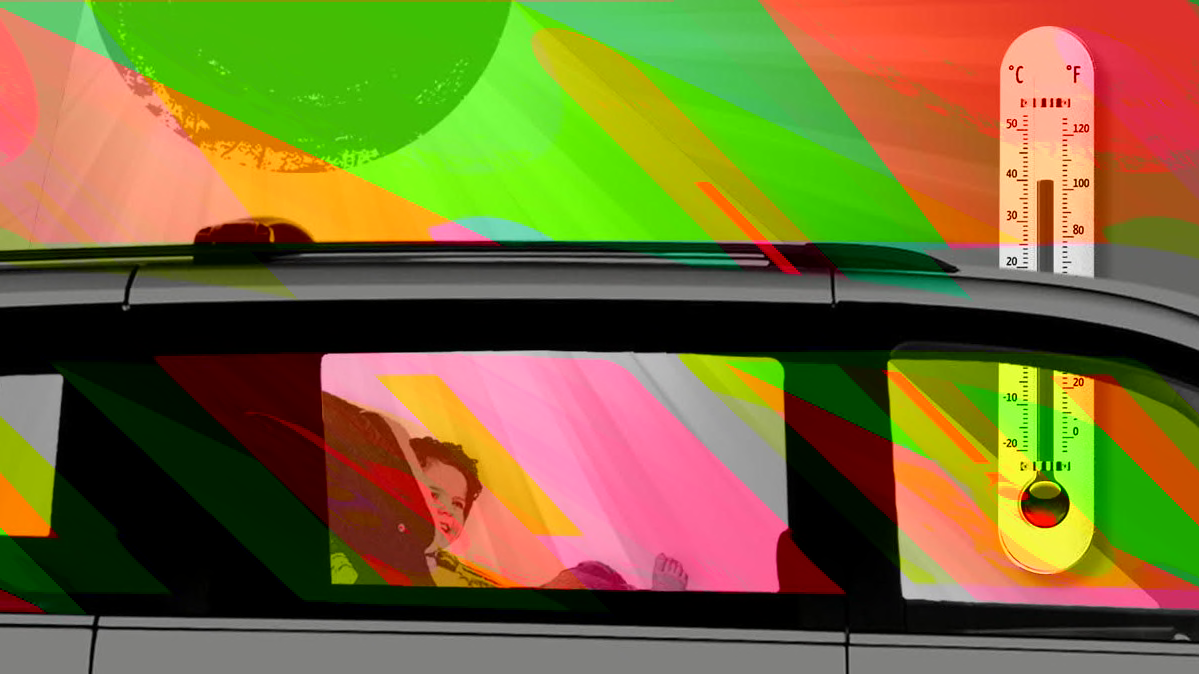
"On a sunny day, the interior temperature of a vehicle can rise to dangerous levels within a short period of time. For example, an outside temperature of 22.2°C can result in an interior temperature above 40°C in just an hour. These temperatures are extremely dangerous and can lead to hyperthermia – a condition where the body temperature is elevated beyond normal. Young children are particularly susceptible to this and in developing a heatstroke as their bodies heat up quicker."
Dr. Joelene Huber, Hospital for Sick Children, Toronto, Assistant Professor, Pediatrics, University of Toronto
About Sickkids
"You know, I think we all know that, especially working parents, when you're under stress, when you're sleep deprived, your memory might not be functioning the way you wish it were. And that is exacerbated when you're doing something habitual, like driving to work every day in the same route. When there's a change in routine, sometimes the parent will forget to do the change and go back to the original autopilot routine that they're used to. In a lot of these cases - and this is what's shocking about it - in more than 200 cases in the last two decades or so, parents have literally forgotten about their younger child and gone and brought their older child to a day care setting and forgotten the younger one is in the car. They sort of reverted to the old pattern that they remember from years ago."
"Sometimes you have prosecutors who look at this situation and realize it was just this horrible, tragic mistake. Sometimes you have prosecutors who look at the situation and say, wait a minute, is there something wrong here? Could the parent have been on drugs? Was there some extenuating circumstances that led to this parent's forgetting? And, you know, the people who study this do recommend that prosecutors look into the circumstances of the death. There is always that small chance that the parent somehow was negligent or the parent had even intended to kill the child. But it is a small subset of the number of children that have died in this way, according to the people who study this."
Sharon Otterman, The New York Times  
Forgotten Baby Syndrome, How Anyone Could Forget Kids in Hot Cars
Illustration: John Ritter

In the United States, thirty babies, infants or very young children, die yearly from being left in a closed vehicle on a hot, sunny day. In Canada, with one-tenth the population of the United States, one child a year is lost to what many refer to as "Forgotten Baby Syndrome". Accidents, where children are stranded alone in hot cars, leading to a child's agonizing death. A new study out of the Hospital for Sick Children in Toronto points to habits that parents could absorb into their routine that would help them to always bear in mind that their child is with them.

To never lock the car, for example, without first performing a routine, thorough scrutiny of the back seat. The back seat is where the baby seat is located. And in that baby seat may be a child who has fallen asleep. A quiet child can be overlooked, its presence automatically discounted because a parent's brain happens to be elsewhere at the time; to get to work on time, an important meeting you're late for, concerns over just about anything, family- or work-related. We're pressed for time, with none to be wasted.

On the other hand, the issue of forgetting a child's presence, while it can certainly happen to anyone who is distracted, should make all of us metaphorically sit up and take notice. Take notice in particular about something we rarely forget; our indispensable cellphones. Now, that's automatic, to take possession of it, always have it with us in easy grasp. So, placing that item so indispensable to our day beside the child in the back seat will help to recall the presence of the child. Something there doesn't quite compute necessarily, but it could work.

In the study, the authors pointed out that simple forgetfulness was integrally involved in four of six deaths recorded between the years 2013 and 2018 in Canada, according to their research recently published in Pediatrics and Child Health. Most of the deaths that came under study related to adults forgetting their most immediate mission -- on the way to another destination for the day; to drop a child off at daycare; speeding directly on to that second, important destination and failing to recall that the child wasn't placed securely at daycare for the day.

In 2013 a child just shy of two years of age was picked up by his grandmother at her daughter's home after working a nightshift. With the child in her car, she simply forgot to drive him to the daycare and he was left in the car, and he perished in that car. The grandmother pleaded guilty to failing to provide the necessities of life, receiving a suspended sentence and two years of probation. Hers, however, is really a life sentence; she will never outlive the fact that she was responsible quite directly for the death of her grandson.

Dr. Huber recommends that parents arrange for their child-care providers to call, sound an alarm should one of their charges be absent without prior notice. Another recommendation is to place a stuffed toy in the infant car seat, and that the stuffed toy be placed on the front seat of the car when a child is put in the car seat, as a reminder to the parent or the driver that the plush toy will be placed back in the car seat when the child is taken out of it. Above all, emphasizes Dr. Huber, remember the mantra "Look before you lock".

As for anyone who happens to notice a child alone in a car in hot weather, they should immediately dial 911 for assistance. A "greenhouse effect" occurs inside cars, sending the interior temperature to deadly heights, even when the outside temperature is a moderate 21 or 22C.


Labels: , , , , ,

Saturday, October 13, 2018

Coming to a Hospital Near You : Fine-Tuning Predictive Demise

"In Canada, we don't like to talk about death and dying. We think patients have the right to their own information to tell them about what is going to happen to them."
"We still live in a paternalistic society where we don't think the patient can handle that information or don't think they should have this information."
"If you watch Netflix, it will tell you what Netflix thinks you like based on your previous choices. In health care, we are just figuring this out. These tools are to help patients make informed decisions."
"Too often,  you visit your doctor and your doctor has only [a] limited amount of time and limited information."
"We think patients have the right to know and seek out care that is appropriate to their needs. If a patient knows that they have a year to live, they should be receiving palliative care, supportive care, in order to stay at home."
"Clinicians don't do it enough, partly because we live in a death-denying society and partly because it is hard, especially if you don't have a terminal cancer diagnosis."
Dr. Peter Tanuseputro, investigator, Bruyere Research Institute, palliative care physician


So, then, if as a strong-minded individual with a positive outlook who has been given a diagnosis that includes the certainty that the dread disease you have been detected with will shorten your life much sooner than you might have thought conceivable, and you muster all the internal resources at your command to manage to defy the prognosis of an early death, this venture newly embarked upon by health care providers to assess and digitally calculate end-of-life certainty would identify you as an errant anomaly whose instinct would spurn the medical community's offer to know more precisely how long you have to live.

In the interests of conducting an aura of  'informed conversations' about death and all that it denotes to a family, researchers at a newly instituted National Centre for Individualized Health developed an algorithm predicting the months or years on the closure of their patients' lives and how best to treat those patients to ensure whatever is left to them represents quality of care, dependent on the results of this new predictive protocol. Dr. Tanuseptro who himself treats his palliative patients with house calls feels many elderly patients would wish to know exactly the time when they, in the vernacular would 'cash in their chips'.

Everyone, he asserts with the confidence of someone convinced he is serving the public interest, is deserving of the enabling courtesy to access such information which after all is based on their very own health information along with data that has been collected through the universal health care system, across the Province of Ontario The end-of-life calculator's results has the potential of leading care-givers to provide treatment seen as more appropriate to the patient's condition, itself leading to greater numbers of people taking benefit from palliative care services.

Data recently released from the Canadian Institute for Health Information indicates that 15 percent only of Canadians currently are recipients of palliative care during their end-of-life period of languishing, awaiting death. Among that 15 percent, stressed Dr. Tanuseputro, a substantial number receive that level of personal care at a too-late period in their decline toward death.

So RESPECT, the acronym by which the predictive algorithm is known (risk Evaluation for Support Predictions for Elder-life in the Community Tool for the End of Life), is used to calculate -- based on a series of 24 questions relating to the type of disease a patient has and how difficult they find it to care for themselves -- how long they have left to live. Ontario's health system's data was collected to help develop the algorithm.

RESPECT is being pilot-tested in the Windsor-Essex region as a tool to aid people whose condition is tenuous, to understand whether they might benefit from palliative care. With the use of big data, RESPECT is among a series of algorithms meant to help older people to reach a finer understanding whether palliative care would be of benefit to them. Needless to say, if the medical community feels that this new type of 'clarification' represents an improvement over the status quo that in itself tends to propel people under duress toward acceptance.

When the project is fully completed for release to the public the plan is to present it as an accessible tool to be used by individuals and family members on the projectbiglife.ca website. And that's when people will be able to ask themselves the critical questions: Do I really want to know? Of course, the medical community has already answered the question. But this is not a project to which everyone must sign on to, since it is as yet voluntary.

Researchers are in the throes of developing tools to help calculate how long it will take before an individual is poised to retreat to a nursing home, as well as their imminent risk of hospitalization. These predictive tools are viewed as assists to preventive measures that may help people remain longer in their own homes in some instances; alternately, to obtain care that seems most appropriate to their current condition.

Abstract

Introduction Older adults living in the community often have multiple, chronic conditions and functional impairments. A challenge for healthcare providers working in the community is the lack of a predictive tool that can be applied to the broad spectrum of mortality risks observed and may be used to inform care planning.
Objective To predict survival time for older adults in the home care setting. The final mortality risk algorithm will be implemented as a web-based calculator that can be used by older adults needing care and by their caregivers.
Design Open cohort study using the Resident Assessment Instrument for Home Care (RAI-HC) data in Ontario, Canada, from 1 January 2007 to 31 December 2013.
Participants The derivation cohort will consist of ∼437 000 older adults who had an RAI-HC assessment between 1 January 2007 and 31 December 2012. A split sample validation cohort will include ∼122 000 older adults with an RAI-HC assessment between 1 January and 31 December 2013.
Main outcome measures Predicted survival from the time of an RAI-HC assessment. All deaths (n≈245 000) will be ascertained through linkage to a population-based registry that is maintained by the Ministry of Health in Ontario.
Statistical analysis Proportional hazards regression will be estimated after assessment of assumptions. Predictors will include sociodemographic factors, social support, health conditions, functional status, cognition, symptoms of decline and prior healthcare use. Model performance will be evaluated for 6-month and 12-month predicted risks, including measures of calibration (eg, calibration plots) and discrimination (eg, c-statistics). The final algorithm will use combined development and validation data.
Ethics and dissemination Research ethics approval has been granted by the Sunnybrook Health Sciences Centre Review Board. Findings will be disseminated through presentations at conferences and in peer-reviewed journals.


Algorithm for predicting death among older adults in the home care setting: study protocol for the Risk Evaluation for Support: Predictions for Elder-life in the Community Tool (RESPECT) BMJOpen

Labels: , , , , , ,

Friday, June 22, 2018

Destiny's Child

"I didn't see how we were going to get out of it alive [1996 Mount Everest blizzard]. The cold was so painful, I didn't think I could endure it anymore. I just curled up in a ball and hoped death would come quickly."
"You’ve gone so far up the mountain, you’ve come so far from home, and you spent six months preparing for this goal … . There’s no way you’re going to turn around unless things are really going south."
"I thought, 'Well, old girl, it's been a good ride. No regrets'."
Charlotte Fox, American mountaineer

"Charlotte had survived so much up high."
"It was stunning and profoundly sad that she died that evening of May 24 in a household accident."
Alison Osius, Rock and Ice magazine

"Finding her body was a very shocking and difficult thing. There was something profound about [the experience of] Fox's death."
"She gave me a gift when I arrived [evening before her death]. She recently had a birthday and she told me, 'I'm happy to be 61'."
"Those words, ‘I’m happy,’ might have gone right in and out of my ears if this hadn’t happened. … To be the last person with her, with my hands on her heart, and to remember those last words she said to me, I have to look at it as a privilege rather than a horror. … I got to send her off, with love."
Kim Reynolds, friend
Charlotte Fox, a survivor of the 1996 Mount Everest expedition, died last week after an apparent fall.
Charlotte Fox, a survivor of the 1996 Mount Everest expedition, died last week after an apparent fall.  (AP)

Some people are driven to prove themselves to themselves; that they have the endurance, stamina, strength and agility let alone the determination to forge ahead where most others would hesitate and then decide that the odds were not in their favour of survival. She was one of those rare creatures who did forge on, did reach the  impossibly-heighted summits of the world's tallest, most environmentally  hostile mountain ranges. The imposing heights, the mind-boggling geological features, the constant threats posed by frighteningly inclement weather did not appear to faze her.

This women whose search for challenge and adventure seemed inexhaustible appeared not to permit age to slow her down, continuing to climb and trek two 8,000-meter mountains in the two years preceding her death. This was a woman who broke records, as the first female summitteer to climb three mountains "at altitudes of 8,000 meters or higher" following her success in summitting Mount Everest, and despite the dreadful toll that summit had taken in eight lives forfeited, while she herself endured such misery that she felt she would welcome death.

On Everest her supplemental oxygen had run out at a height where hypoxia was a constant threat, and at a time when wind, cold and snow imprisoned her in her tent post-summit, with feet frostbitten, unable to do anything to preserve body heat other than assume a fetal position alongside her climbing companions, awaiting their miserable end. Jon Krakauer's account of that dreadful night and its death toll repeated her memorable account of circumstances that had overtaken climbing groups competing for their opportunity to summit, encountering a jam at the critical Hillary Step.
In this photo taken on May 17, 2018, mountaineers make their way to the summit of  Mount Everest, as they ascend on the south face from Nepal. PHUNJO LAMA/AFP/Getty Images
Delays, confusion, crowding, all contributed to a late descent just as a dreadful howling storm descended on the mountain and visibility was eliminated as climbers and their guides found themselves in an impossible situation, anxious to find their way down to their final camp before that day's ascent to the top. "Into Thin Air" recounted a tense and desperate time of exhaustion, mental depletion, determination to survive, and heroic self-sacrifice on the part of one climber, Anatoli Boukreev, to rescue as many desperate people descending as the last of his strength could manage.

Charlotte Fox's childhood was in North Carolina; she was fascinated by high altitudes and for thirty years was a ski patroller in Colorado. She was the first American women to climb three mountains at altitudes of about 26,246 feet (8,000 meters) or higher, the first to summit Pakistan's 8,000-meter Gasherbrum II which she felt was her greatest accomplishment, and then in 1995 summitted Cho Oyu in the Himalaya. At age 59 her last climb was 7,129-meter Baruntse.

In 1993 her boyfriend died in an avalanche, and she lost her husband to a paragliding accident in 2004. She was no stranger to the tragedies that visit those rare souls who push limits that would make others blanch with horror. Death had touched her intimately when it claimed those dearest to her as they challenged nature's geological and atmospheric boundaries and their own instinct for self-preservation, failing to survive the threats their own natures demanded of them.

In the end it was a pedestrian household accident that claimed her life. A woman who had thought nothing of challenging the geological giants that nature had designed, survived each and every demanding physical effort and the impediments that chance offered to stop her from success in her bold ventures, but she was incapable in the final analysis of forestalling death that came to visit as she descended a steep wood staircase at her own home when, it would seem, she stumbled and fell at age 61.

Life 'went south' for Charlotte Fox on May 24, 2018, at her four-and-a-half-story home perched on a steep mountainside overlooking Telluride, Colorado.

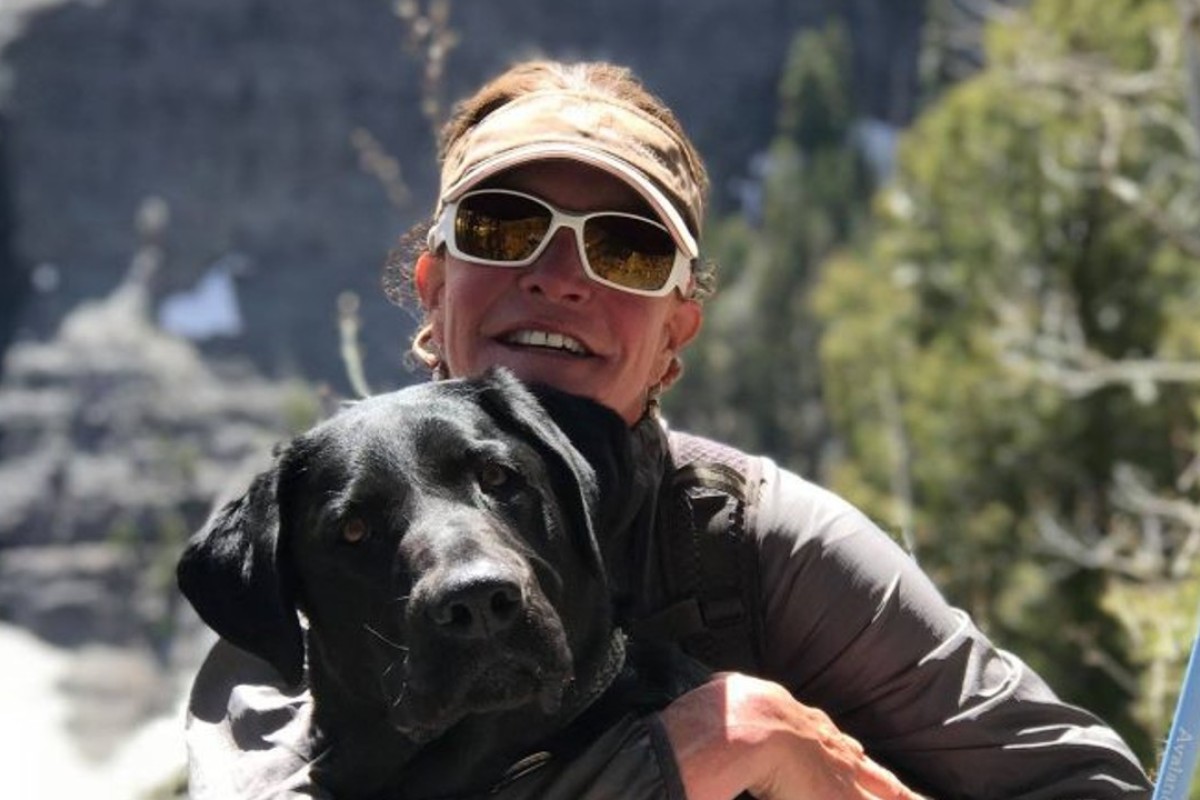
Charlotte Fox and her dog Gus. Fox has died after falling at home. Photo: Amy Denicke
Photo: Amy Denicke   Charlotte Fox and her dog Gus

Labels: , , ,

 
()() Follow @rheytah Tweet