Ruminations

Blog dedicated primarily to randomly selected news items; comments reflecting personal perceptions

Thursday, June 15, 2023

Migrant Tragedies at Sea - And Still they Come

"In the afternoon, a merchant vessel approached the ship and provided it with food and supplies, while the [passengers] refused any further assistance."
"[It was impossible to accurately estimate the number of passengers. It appeared that the 25- to 30-meter [80- to 100-foot] vessel capsized after people abruptly moved to one side]."
"The outer deck was full of people, and we presume that the interior [of the vessel] would also have been full."
"It looks as if there was a shift among the people who were crammed on board, and it capsized."
Coast guard spokesman Nikos Alexiou 
 
"The last time we spoke was eight days ago, and [my wife] told me that she was getting ready to get on the boat."
"She had paid $5,000 [to smugglers]. And then we all know what happened."
Kassem Abu Zeed, 34-year-old Syrian refugee living in Hamburg
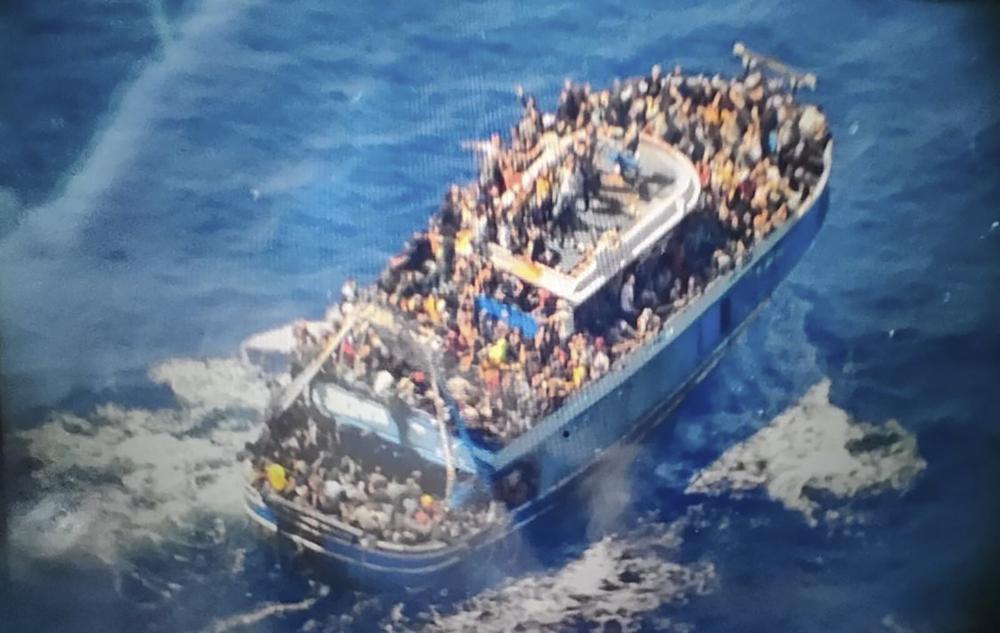
This undated handout image provided by Greece's coast guard on Wednesday, June14, 2023, shows scores of people covering practically every free stretch of deck on a battered fishing boat that later capsized and sank off southern Greece. A fishing boat carrying migrants trying to reach Europe capsized and sank off Greece on Wednesday, authorities said, leaving at least 79 dead and many more missing in one of the worst disasters of its kind this year.(Hellenic Coast Guard via AP)
Hellenic Coast Guard via AP

A fishing boat capsized on Wednesday and sank off the Greek coast, carrying migrants determined to reach Europe. First count is 79 people dead and hundreds missing in what is considered to be the worst drowning disaster of migrants this year. The vessel had been spotted and was reported. The Italian coast guard alerted Greek authorities and the European Union border protection agency, Frontex on Tuesday of the presence and approach of a migrant-carrying ship.

Following the alert, Frontex aircraft and two merchant ships spotted the boat as it headed north at  high speed. Additional aircraft and ships were sent to the area. Repeated calls to the vessel of offers of assistance were dismissed by those aboard the ship. The coast guard then followed the ship as it neared the coast, eventually to watch in helpless dismay as the ship sank in mere minutes. One of the rescued passengers informed them that the below hold had held over a hundred children.
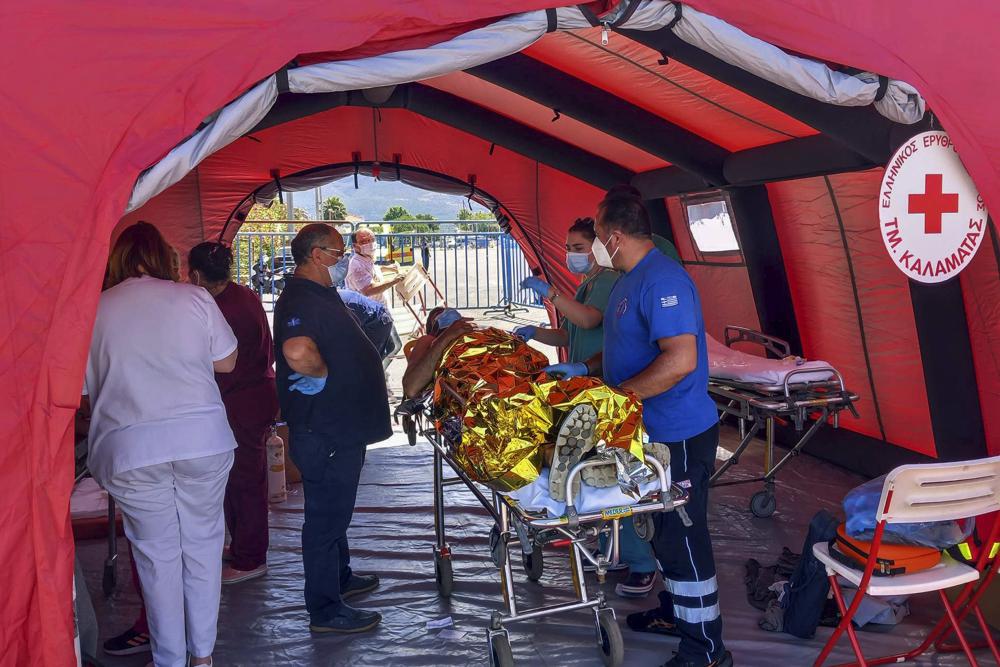
A survivors receives first aid after a rescue operation at the port in Kalamata town, about 240 kilometers (150miles) southwest of Athens on Wednesday, June 14, 2023. Authorities say at least 70 people have died and dozens are feared missing off the coast of southern Greece after a fishing boat carrying migrants capsized and sank. (www.argolikeseidhseis.gr via AP)
Associated Press

A vast search-and-rescue operation ensued and would continue overnight, involving coast guard, navy and merchant vessels and aircraft. How many passengers might be trapped in the vessel or could still be in the water was unknown, but initial reports suggested that hundreds may have been on board. The vessel was judged to have a tight capacity of 500 people, and it was thought that the number of people on it when it capsized exceeded that cap by at least 250 additional passengers.

Nine of those rescued have been placed under arrest, initially suspected as traffickers. Someone made the decision to spurn all offers of assistance and it could not have been the passengers. Those in authority from the ship detained to respond to questions over details of the ship's passage and its passengers will have much to answer for. According to Greek authorities, 104 people were rescued following the sinking overnight in international waters, 75 km southwest of Greece's Peloponese peninsula.

The oceanic area where the sinking took place is close to the deepest area of the Mediterranean; depths of such magnitude that could hamper efforts to locate a sunken metal vessel. At the southern port of Kalamata, some 70 exhausted survivors were bedded down in sleeping bags and blankets in an immense warehouse. Outside the structure, paramedics set up tents for first aid requirements. The migrants were also offered psychological support.

Among the survivors were 30 people from Egypt, ten from Pakistan, 35 from Syria and 2 Palestinians. The Greek coast guard spoke of having recovered 79 bodies.
"Those smugglers were supposed to only have 500 on the boat and now we hear there were 750."
"What is this? [Five of his relatives were on board the boat]. Are they cattle or humans?"
"How can they do this?"
Mohamed Abdi Marwan, who spoke by phone from Kobani
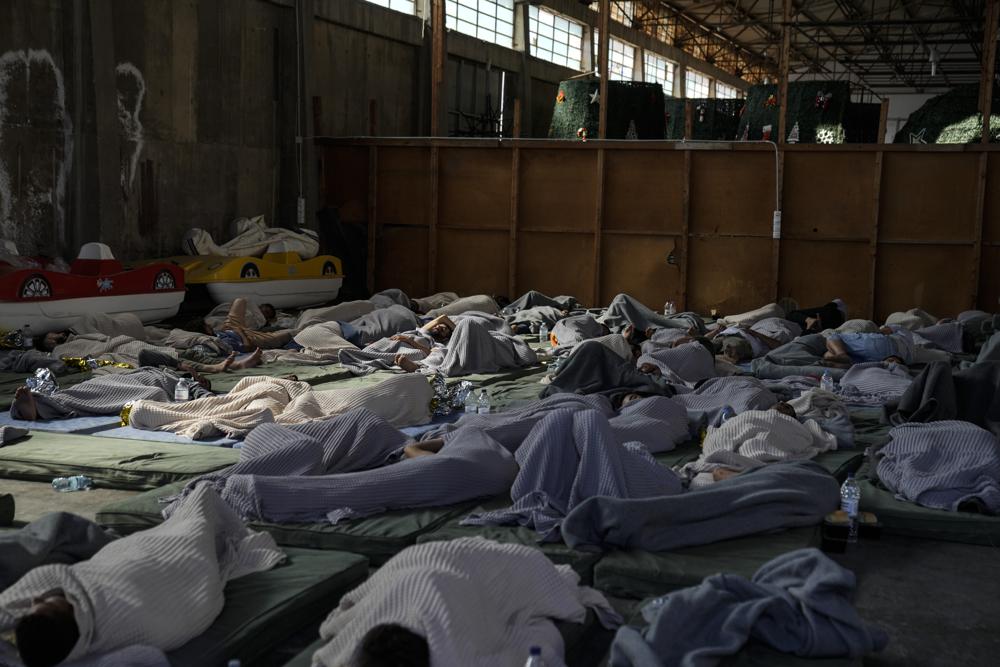
Survivors of a shipwreck sleep at a warehouse at the port in Kalamata town, about 240 kilometers (150 miles) southwest of Athens, Wednesday, June 14, 2023. A fishing boat carrying migrants capsized and sank off the coast of Greece on Wednesday, authorities said, leaving at least 78 people dead and many dozens feared missing in one of the worst disasters of its kind this year. (AP Photos/Thanassis Stavrakis)

It appears that the nine survivors arrested on suspicion of being part of the smuggling ring that had arranged the voyage, are all Egyptian nationals. The shop had originally departed from an Egyptian port heading for the area of Tobruk in Libya where the migrants were awaiting pick-up. Bound for Italy, the boat is believed to have sailed from Tobruk, one of the main departure points for smuggler's boats carrying people attempting to reach Europe.

Labels: , , , , ,

Tuesday, January 17, 2023

Another Migrant Tragedy

"The agents told them that stormy cold weather conditions were ideal cover to cross into the U.S. undetected. They said it was their best opportunity and last chance to cross into the United States or return to India or stay back in Canada."
"'You have to walk in -35 degree Celsius to evade arrest by Canadian or U.S. security agents. Follow the lights of an American gas station because you will find no navigation available in the dark and extreme weather'."
Indian police official
 
"The victims were taken to Toronto in Canada and later to Vancouver. The agents then dumped them at Winnipeg in Manitoba province, leaving them to cross over to the U.S. on their own."
"[The migrants were] forced [to] walk in the snow [to cross the border]."
"There are deputy agents, main agents in India. The crossing agents in Canada and the U.S. help with legal and other assistance."
"The two wanted accused are agents from Canada and the United States."
Deputy Commissioner of Police Chaitanya Mandlik
Jagdish Patel, left; son Dharmik; wife Vaishali and daughter Vihangi are shown in this family photo released to the media at the time of their death in January 2022. Two men in India have now been charged with acting as immigration agents, culpable homicide, human trafficking and criminal conspiracy, in relation to the deaths of the Patels. (Vaishali Patel/Facebook)
 
It was a year ago that the bodies frozen in the snow on frigid winter terrain were found. They had set out with a larger group of an additional eleven people hoping to make the passage on foot from Manitoba during blizzard conditions. In the dark of night and white-out blizzard conditions, feeling the misery of -34degree Centigrade probing relentlessly through their winter parkas and boots, they became disoriented and separated from the larger group. They were a father, mother and two children, ages three and eleven.

Of the larger group of eleven, seven made their way to safety. After walking through these abysmal conditions for over eleven hours, the seven were apprehended by U.S. Border Patrol officers. The cause of death for Jagdish Patel, 39, his wife Vaishaliben Patel, 37, their daughter Vihangi, and three-year-old son Dharmik was ascribed to exposure to extreme cold. These were people originally from western India, the state of Gujarat, and they knew little about survival in Arctic conditions.

Theirs is a preventable tragedy. There have been others caught out in foul winter weather in isolated terrain who have suffered from frostbite, to the extent of losing limbs, in their determination to reach a desired destination. This family lost everything. The trend to illegal migration, to enter a country, pass through its borders surreptitiously rather than undergoing the lengthy process of legal immigration is on the rise everywhere. 
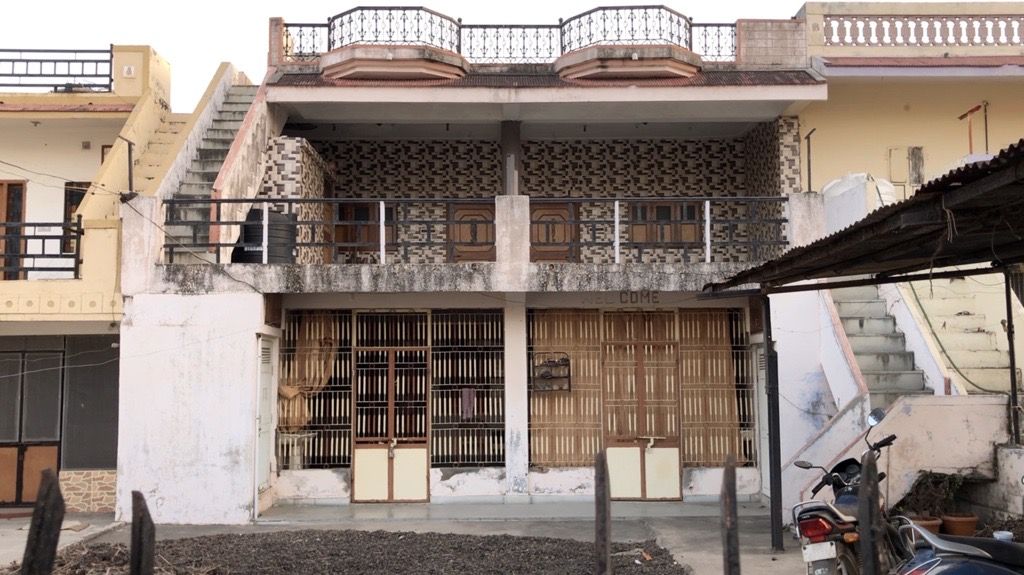
The Patels' home
Patel family home in India
 
Elsewhere, the crossings themselves are so fraught with danger -- usually those undertaken by sea passage on inadequate vessels holding too many hopeful migrants -- the carnage of drowning deaths is pitifully large. There are opportunistic migrants, and there are people desperate to escape endemic poverty, discrimination, local violence, drugs, and conflict.Usually refugees listed with the United Nations have a fairly good chance of being accepted by Western democratic nations.

The aspiration to join a wealthy country for the imagined promises of future stability, acceptance, wealth, a good education for children and access to universal health services has its draw on people who believe that other countries' residents enjoy a superior, material and political way of life. The family of four that perished on a cold stormy winter night walking across the border form Canada into the United States chose a risky way of achieving their goal.

They were prepared to pay handsomely for the services of people smugglers, never imagining that they would be paying for a horrible trial that would end in the deaths of their two vulnerable children and themselves under dreadful circustances. Now, India has arrested two of four human traffickers they name as 'agents' who acted as seasoned enablers for unlawful entry across a country's borders, with the intention of living on an underground economy, or declaring themselves refugees to await an official government decision on acceptance or rejection of their claim.
 
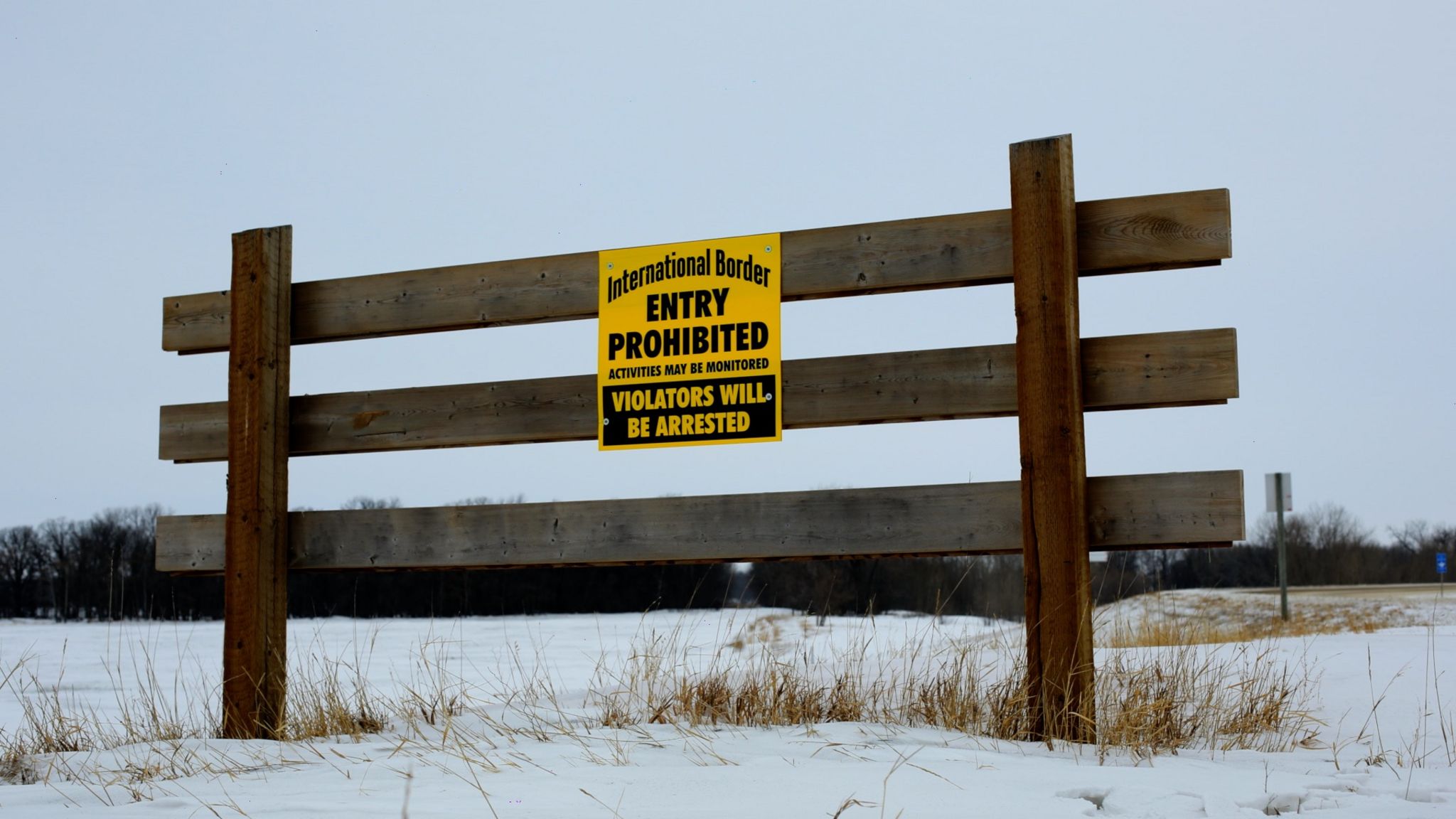
"Entry prohibited" sign
 
The Patel family was reported to have been reluctant to cross the border under such extreme weather conditions, but that they succumbed to the assurances of the 'agents' looking after their aspirational welfare. Two of the smugglers were arrested and charged with culpable homicide, although four in total are suspected to have formed an illegal immigration network recruiting citizens of India who are able to pay the toll demanded to smuggle them into the United States.

The other two suspects forming the gang of four have been identified as one in Canada and another in the United States; 'crossing agents'. They were to be paid some $10,000 per person for smuggling these people to their destination of choice. So these were not people trying to escape poverty, but rather people from the world's largest democracy, hoping to enter the United States illegally to make a new life for themselves there; their rationale for that choice is unclear.

The group of illegal migrants a year ago in the care of organized smugglers had the benefit of being given identical cold weather clothing consisting of new winter coats with fur-trimmed hoods, gloves, ski masks and insulated rubber boots. The alleged driver assigned to pick the migrants up on their entry to Minnesota was arrested soon after the discovery of the bodies of the Patel family. His case is yet to be heard in court while authorities in the U.S. continue to investigate the human smuggling ring.

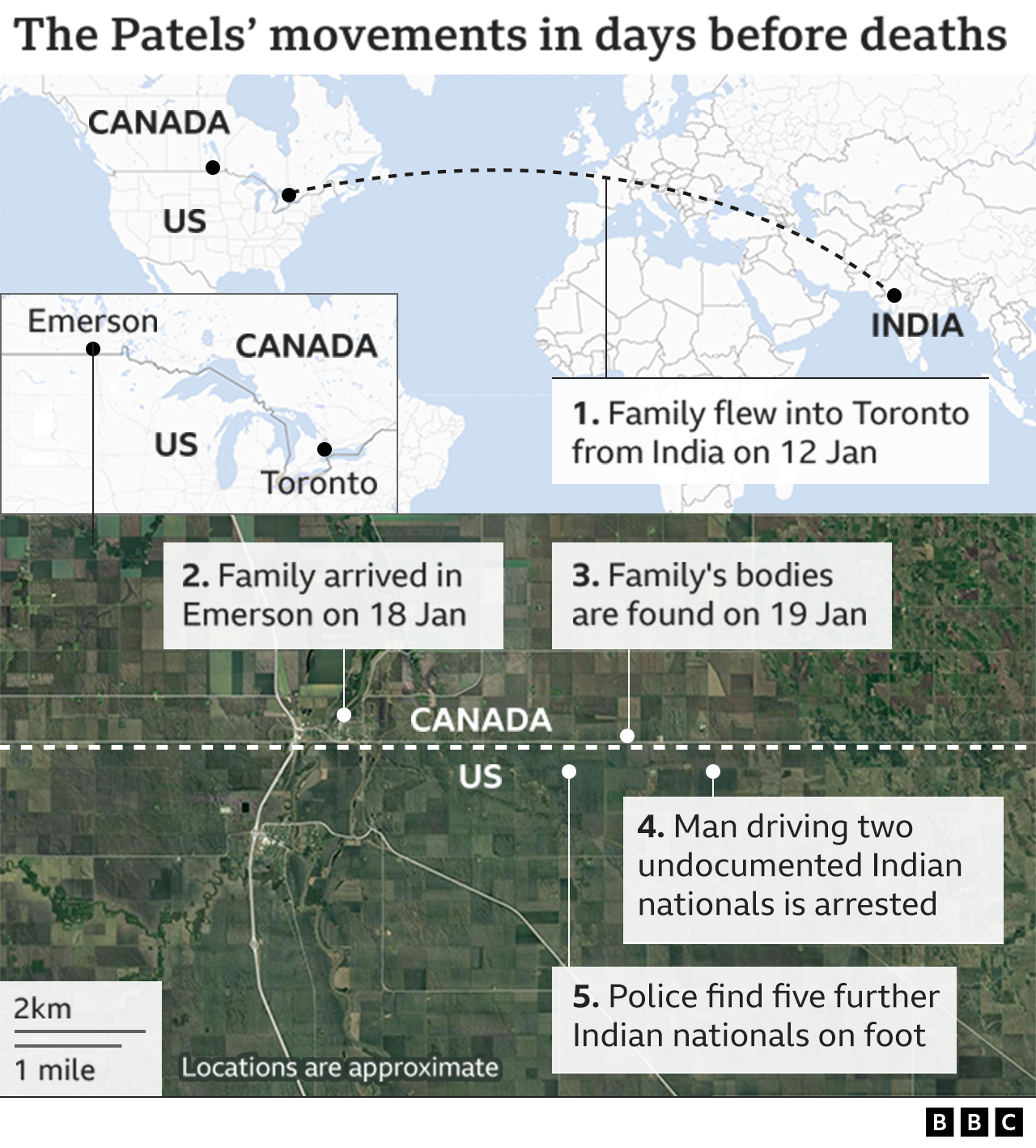
A map of the Patels' journey from India to Canada

Labels: , , , , ,

Wednesday, February 16, 2022

Tragedy at Sea

"Our thoughts go out to all the families of this crew [capsized Spanish fishing trawler 50-metre Villa de Pitanxo."
"One of the advantages overnight is you can potentially spot flares or strobe lights. It has allowed us to focus our efforts and centralize our search."
"The visibility has decreased with fog so it is making it a little bit challenging on the water."
"I've seen 10- to 15-metre swells. Five to five-and-a-half [metres] is still a bit of a rough ride, depending on the type of vessel you are in. The Spanish fishing vessels that are assisting in this search are designed for this weather."
Lt.Cmdr. Brian Owens, spokesman, Joint Rescue Coordination Centre, Halifax
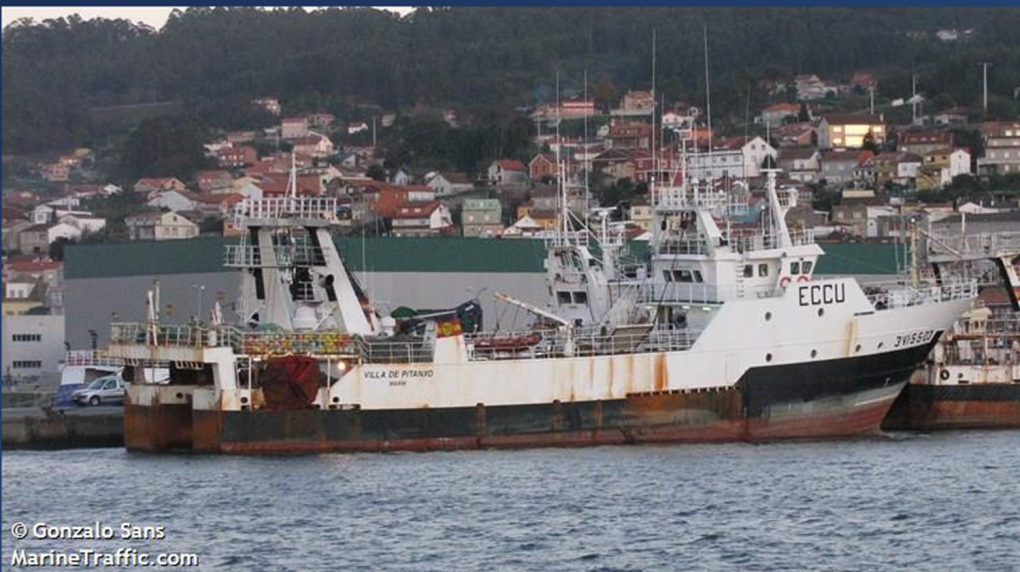
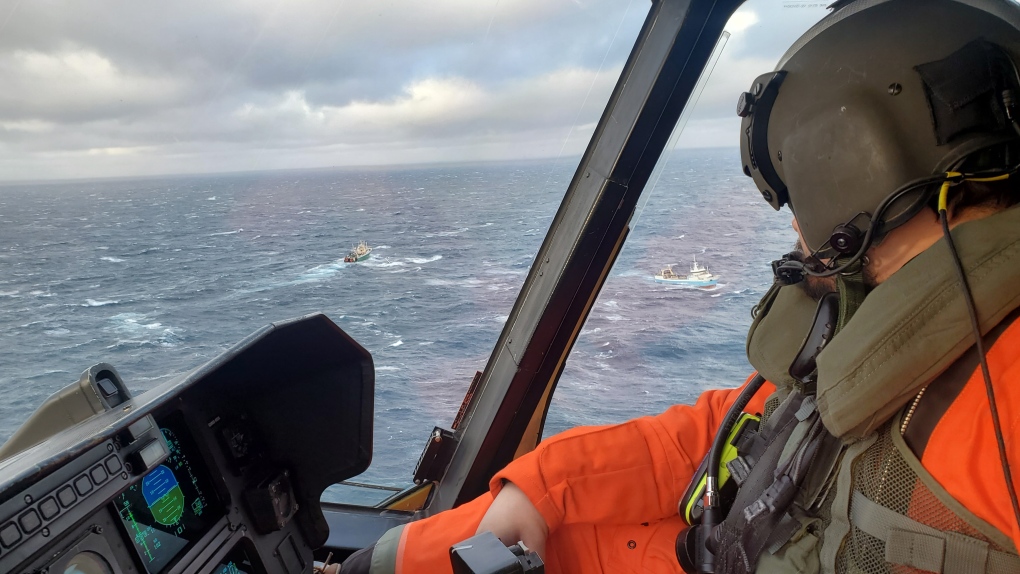
Spanish fishing vessel sank on Tuesday off Newfoundland Coast


The Spanish port town of Marin in northwestern Galicia is in mourning. Many of its residents make their living fishing in the deep, dangerous waters of the Atlantic. The sinking of the fishing trawler and the confirmed loss of ten fishermen's lives represents the biggest tragedy it has suffered on record. The total crew on the vessel of 24 has not yet been accounted for. 
 
Three survivors were found -- by another Spanish fishing boat that had responded to the first distress signal received after midnight on Tuesday -- rescued from their life raft. Which leaves nine crew whose fate has yet to be officially accounted for as the search continued. 

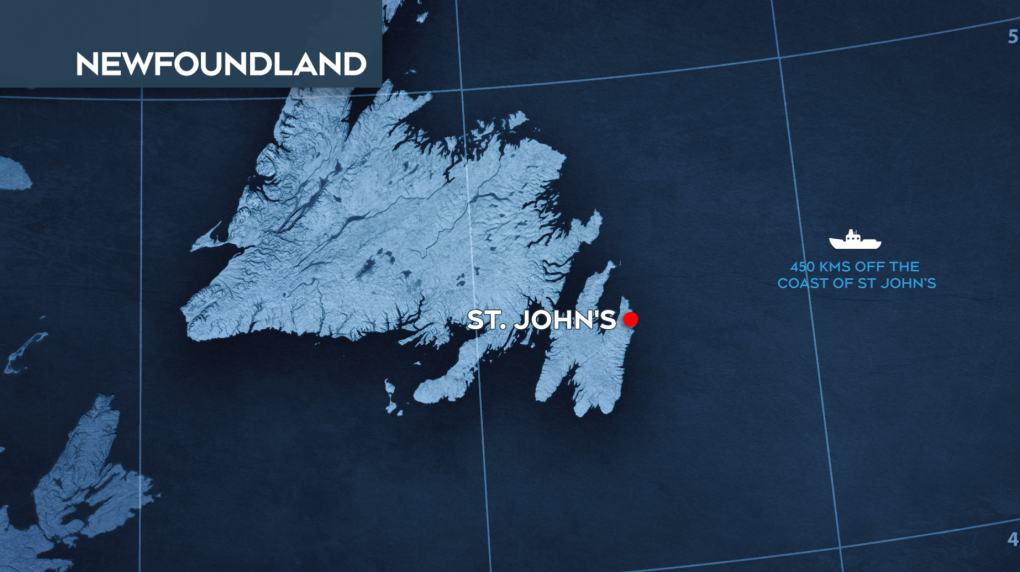
The area, 460 kilometres east of St.John's, Newfoundland is being conducted largely by the Halifax-based Joint Rescue Coordination Centre. There was some initial question whether the survivors would be brought to St.John's for medical treatment, or shipped directly back to Spain. In the interim they are being cared for by the members of the crew that rescued them. Their condition was unknown. 

Search aircraft over the Atlantic near Newfoundland   The Canadian Press
 
A debris field was located earlier in the day in the North Atlantic. According to Lt.Cmdr. Owens, some life-jackets, fishing equipment, gear and an empty life-raft were discovered floating about at the site. Search teams were faced with dangerous sea conditions; the region experiencing 74-kilometre-per-hour winds and 5.5-metre sea swells. In that area of the North Atlantic conditions can be even fiercer at times.

Three Cormorant helicopters were rotating in and around the area, flying from St.John's to the Hibernia offshore oilfield and then out to the search site. A provincial airlines aircraft and a C130 Hercules out of Greenwood, Nova Scotia were conducting sensor sweeps. "A number" of Spanish fishing ships have been on scene, assisting, and the Canadian Coast Guard vessel Cygnus was en route to the debris site where the Villa de Pitanxo sank at roughly 1 a.m. Eastern Time in rough seas.

 
"This is the end of an active [36-hour] search. All vessels, all aircraft that were participating in this search and rescue have been returned to home base."
"The conditions have been extremely difficult with 10 metre seas, 45-knot winds, and visibility down below three nautical miles."
"It’s been extremely challenging for them to continue that search."
Lt.-Cmdr. Brian Owens
 
"There’s probably between 10 and 15 vessels out there at this time of year, despite the conditions of course."
"Most of these vessels are large bottom trawlers, they are obviously pulling a lot of weight, assuming their nets are fairly full."
"And obviously in very, very rough seas."
 Fred Kingston, executive secretary, Northwest Atlantic Fisheries Organization

Labels: , , , , ,

Monday, January 24, 2022

Risking Life for a New Life

"The investigation into the death of the four individuals in Canada is ongoing along with an investigation into a larger human smuggling operation."
Affidavit, John Stanley, special agent, U.S.Homeland Security

"[The agency] deeply regrets the tragic loss of life."
"Whatever the circumstances, no one should ever have to choose such a perilous journey."
Rema Jamous Imseis, Canada representative, United Nations High Commissioner for Refugees
 
"They believe that that's the only country [the United States] that has a lot of opportunities." 
"And there's [an] envy factor that [makes them think], 'That person can go to … that particular country. Why not me?' So they would land here and then they try to, you know, go back to or travel to [the] U.S. and migrate there, right? That's their motivation." 
 "But they don't realize the fact that Canada has equal opportunities, right? And they can make their life here, too."    
"They may not have realized the fact that walking so long a distance is not practically feasible."
Akhil Shah, president, Friends of Gujarat, Brampton, Ontario
Four people, one an infant, were found dead in a Manitoba field near the Canada-U.S. border, on Wednesday. A U.S. Homeland Security agent believes they may have been victims of a wider human smuggling operation. (Submitted by RCMP)
 
Canada signed an agreement in 2004 with the United States that asylum seekers who attempt entry to Canada from the United States at an official border crossing are sent back to the U.S. and vice versa, each being recognized as a safe country to seek asylum in; those declaring themselves refugees are meant to remain in the first country accessed. 
 
On the other hand, those deliberately bypassing official border crossings to declare themselves refugees when they're apprehended by Canadian law agents like the RCMP are escorted into Canada and invited to file a refugee claim, and to remain in Canada while their claim is being processed -- to be either accepted or denied on the basis of assessed claim merit. 

Canada was intercepting thousands of people from Africa and Haiti and the Middle East during a period of several years when haven-seeking refugee claimants -- but mostly migrants -- were passing from the United States in to Canada, at a time when the U.S. was attempting to come to grips with the millions of illegals living underground in America.

Recently, even while the U.S. is attempting to cope with tens of thousands mostly Central American migrants and haven seekers on their southern border with Mexico, a small number of aspirants to enter the U.S. from Canada has drawn attention from U.S. border agents and Homeland Security. What has spotlighted this new border incursion event is the discovery of four members of a family from India found frozen to death just over the border from northern Manitoba attempting to enter the U.S.

At this time of year, freezing temperatures and frequent blizzards become threats to human life. The family, comprised of two adults, a teenager and a baby, became disoriented, had no idea where they were or where they were heading, and succumbed to the severe cold, dying on an isolated patch of snow-covered ground in a sparsely populated area. They had walked for hours, were exhausted and died of exposure.

They were headed for Minnesota with the expectation they would meet at an assigned destination where they would be picked up and driven to an appointed place. American investigators have arrested and charged 47-year-old Steve Shand of Florida with human smuggling. He was driving a 15-passenger rental van from the airport in Minneapolis. At the time that agents stopped the van five other Indian nationals were nearby having "walked across the border expecting to be picked up by someone on the U.S. side", after having walked for 11 hours.

Human smuggling experts say the initial investigation and arrest connected to a family being found frozen to death near the U.S. border points to a “sophisticated operation.”  John Woods/The Canadian Press

Labels: , , , , , ,

Thursday, April 15, 2021

Surviving the Titanic

Titanic
Luxury White Star Liner 'Titanic', which sank on its maiden voyage to America in 1912, seen here on trials in Belfast Lough, Jan. 12, 1912. Photo: Getty Images/ Topical Press Agency

He was a little boy who was witness to the extraordinary events of his time, a century ago. But like all small children his view of what occurred would resemble nothing an adult, haunted by an existential experience like none other would recall. At age six, he would have no idea that he was a child of privilege, of wealthy parents. To this singular child, and likely other children on board RMS Titanic on its first and only TransAtlantic voyage from the United Kingdom to the United States, there was nothing extraordinary about being on a huge ocean liner sailing across the Atlantic in the company of their parents, with a nanny responsible for their care.

When the great ship hit an iceberg and sank, 52 children in steerage lost their lives to the icy Atlantic. One child who had been on the top deck where first-class passage was located by comparison, perished. Six-year-old Douglas Spedden was hardly aware that something horrible was taking place when he found himself in a lifeboat of nine-metre-length alongside 37 other people, when his last memory was of falling peacefully asleep in his upper-deck stateroom. Among them was his father, his mother and his nanny, so all was well.
 
In this photo taken early in the Titanic's maiden voyage, passenger Douglas Spedden can be seen playing with his top on the ship's promenade deck. The photographer. Frank Brown, would disembark in Ireland and avoid the sinking.
 
It took an estimated half hour, or a little longer for about one thousand, five hundred people to freeze and drown, screaming their anguish, not among those in lifeboats as the ship slowly submerged on that moonless night. Their fear and misery expressed in loud cries for help, from those who had safely evacuated from the ship and floated around it, waiting for rescue, shivering in the dark and the cold. Not as cold as the -2C Atlantic, however.

Their Mayday had alerted all other ocean liners in the region, desperately speeding toward the Titanicm attempting to reach the scene to effect rescue. When recovery ships from Halifax steamed onto the ocean graveyard, they saw masses of human bodies, some of them clutching children to their frozen chests. Little Douglas had been promised, as he was bundled into a lifeboat, that he would soon see beautiful stars in the dark heavens above.

A special edition bear released by Polar’s original maker, Steiff, to commemorate Douglas’s companion during the sinking.
Special edition Polar bear  Steiff
Icebergs surrounded the lifeboats, creating another otherworldly experience for the child who turned to his nanny and remarked "Look at the beautiful North Pole with no Santa on it!". All was well with his world, after all, in the presence of his father, his mother and his nanny. Oh, and his comfort-companion, "Polar", the teddy-bear.

A photograph remains of Douglas playing on the top deck with a spinning top, his father looking on. The photograph was taken by an Irish Jesuit priest, who briefly boarded the Titanic on its first leg, and taking a number of photos over succeeding days, then disembarking as the ship reached its last European stop, to carry on across the Atlantic. Douglas was immortalized, that photograph now among the historical memorabilia of a dreadful maritime disaster.

If Douglas was still alive, he could be asked what he thought of the stars he saw that night. He might, or he might not recall seeing the ship's lights still blazing an hour after its collision with the iceberg. He might remember hearing the band playing on the top deck with its remaining sparse crowds. There were 30 empty seats on the lifeboat that carried Douglas and the other passengers from the sinking ship.

First class hospitality did not in and of itself guarantee rescue, though it certainly did no harm. What did ensure that those in first class would survive while those in steerage mostly did not, was the fact that first class cabins were located on upper levels close to the boat deck for easy access to the lifeboats. Private stewards were in the service of most upper-deck families to efficiently guide them personally to safety.

Douglas Spedden in 1913.
Douglas Spedden in 1913
While below in steerage passengers were pretty well on their own, trying to puzzle out their way through a maze of corridors, and finding dead ends, as time sped by and opportunities were lost. Douglas, that bright child of privilege, survived the disaster that was the RMS Titanic. Three years later, when he was nine years old, still a child, still vulnerable, his luck ran out.

The little boy chased after a ball he had been playing with at the family vacation home in Maine. There weren't many private cars around at that point of the emerging history of motor vehicles, and their speed was not anything what modern cars can achieve, but the motor vehicle that hit Douglas was said to have been speeding. And Douglas became the first automotive fatality in the state.

Labels: , , ,

Saturday, July 20, 2019

Life Emulating Fiction

"[Appleby was a] beloved business partner, leader, mentor, friend and brother to many in our community, and a loving husband and father to his wife and children."
"He will be remembered for his quick humour, strong leadership, care and compassion for his crew and — above all else — his devotion to his family."
"Words cannot express how dearly he will be missed."
Acme FX
Emergency crews were called to the area of North Queen Street and Shorncliffe Road in Etobicoke about an industrial accident on Thursday. (Garry Asselstine/CBC)
"The executive producers, along with everyone in the Titans family, Warner Bros. Television Group and DC Universe, wish to express our deepest condolences, and heartfelt love and support, to Warren's family and friends at this most difficult time."
"[Appleby had a 25-year career in TV and movies, and was] beloved by all who worked with him."
Warner Bros.
"This is just the worst fear of what we do."
"But he would deliver. The gags were good and it was safe. There would be times where we'd be doing something and it would be '3, 2, 1' and he'd go, 'Abort, abort -- stop, stop, stop'."
"He would have seen something that one of us didn't see, whether it was an instinct or something." There's that fine line between making it great and making sure it's safe, and as far as I remember, ironically, nobody has ever really been hurt on one of his sets."
J. Miles Dale, filmmaker, friend, collaborator
Warren Appleby pictured with his wife and two children. (Submitted by family)
"When you see these spectacular effects in movies and TV shows, there is an element of danger in producing them for the benefit of the camera." 
"We just have to make sure that whatever changes to procedures and rules and processes that are necessary that come out of looking at this very carefully, hopefully will bring a tiny degree of comfort to Mr. Appleby's family, but more importantly will make sure that people are safe going forward."
Toronto Mayor John Tory
"Titans" is part of the DC Universe. (Photo: Dave Kotinsky, Getty Images for DC UNIVERSE)
"I knew Warren as a top-notch FX man but I admired him as a father and family man, and a colleague, too."
"He always gave you his 100% percent. He was very near and very dear and an integral part of our core team. He will be always be beloved and admired."
Guillermo del Toro, 2018 best picture Oscar "The Shape of Water" 
Perhaps it's an inevitable part of some peoples' lives. People like inveterate alpinists for whom every mountain peak is a challenge, where something within urges them forever on to ascend the most forbidding peaks on Earth in deadly weather conditions for the opportunity to stand on top of that conquered peak and know they had the stamina and fortitude to succeed. Eventually the intrepid climber whose renown is spoken with reverence by all those who look upon him as a mentor inspiring their own ambitions, meets his end while summitting. 

And those who love him grieve and say he died while doing what he best loved.

It seems that Toronto-based special effects co-ordinator Warren Appleby was of that ilk. People inspired to do dangerous things seem psychologically armoured by the self-assurance that nothing will go wrong. It can, for other people, but not for them because they know the risks, they are skilled at assessing potential problems making them capable of avoiding them by circumventing the circumstances that can lead to disaster. It takes but one unwary moment, and the intervention of uncontrollable events. 

Warren Appleby was known for avoiding unnecessary risks before proceeding. As the quintessential professional who knows his craft and the possibilities of things going awry he was admired for the fact that he could deliver the end result that made the films he was involved with as a technical adviser and events manager, spectacular. On Thursday in Toronto an accident occurred while testing a special effect for the series Titans. 

Warren Appleby's 25 years in the business where he was acknowledged for leadership qualities, humour and confidence born of earned self-assurance gave the world of entertainment the professionalism of a consummate master of the genre. One whose luck, quite simply, ran out. During that test, the explanation given by Toronto police recounted, the equipment exploded in the special effects facility. 

The 'equipment' was a vehicle being prepared for roll-over effects. Something broke away from the vehicle and flew with high impact to fatally strike the man. He died en route to hospital. As it does with all industrial-type accidents the Ministry of Labour is investigating the deadly accident. And thus ends a prolific career, a man proud of his role in helping to create outstanding films, involved in credit-worthy productions such as the series The Strain, the films It, It Chapter Two and Oscar-winning The Shape of Water.

Warren Appleby, who was tragically killed working on the TV show "Titans" pictured with his wife Jennifer and two sons. (Photo: Courtesy of GoFundMe/Warren Appleby)

Labels: ,

Wednesday, March 01, 2017

One of the Most Amazing People

"Anyone with lungs can get lung cancer. I'm hoping that by sharing my story with others that I'm able to change the face of lung cancer to show that if a 26-year-old, non-smoking, new-mom-to-be can get lung cancer, then anybody can."
"That day [when her son was born] was filled with so much happiness and love. It was also filled with fear -- fear of not getting to see my son grow and fear of missing out on so many of his life's
'firsts'. We recently celebrated his first birthday -- a day that I was so afraid of missing. I feel as though I am living on borrowed time and am so unbelievably grateful to be here to share each day with him."
"These past two weeks have been incredibly challenging. Unfortunately, last Tuesday we learned that the drug that I had taken since February, Lorlatinib, was no longer working and I had progression of disease ... This time to both lungs."
"Despite the fact that we always knew that this could happen [and with lung cancer, there was a very high probability], I was just so close to that miracle. My NED [no evidence of disease] status was taken away from me much sooner than I had hoped."
Elizabeth Dessureault, 27, lung cancer victim, Ottawa, Ontario
Elizabeth Dessureault and son Jack.
Elizabeth Dessureault, with her son Jack when he was 18 months old.

"We are all desperately sad here today. She leaves a huge impression on all the people she touched."
"That's what Lizzie did so effectively -- to bring to the public eye in that lung cancer can affect anyone. Such a beautiful young woman and such a positive attitude. She really just lit up every environment she was in."
Dr. Paul Wheatley-Price, president, Lung Cancer Canada, oncologist, Ottawa Hospital Cancer Centre

It was an initial diagnosis, shocking in its finality, delivered to Elizabeth Dessureault in April 2015 when she was five months into her pregnancy that warned her and her family she hadn't long to live. At age 26, that kind of diagnosis for a young woman in seemingly good health, preparing to carry a pregnancy to term, to learn that she might live a year, no more, with her advanced-stage non-small cell adenocarcinoma lung cancer, would have shattered anyone's equilibrium.

Digesting the diagnosis with no doubt disbelief, this young woman nevertheless was determined to see her pregnancy through, even while she was undergoing treatment, and she did, successfully. She and her husband knew that they both desperately wanted to be able to nurture their child, and they did, for a short while, lavishing their love on a little boy they named Jack. That short while lasted until Saturday, when Jack's mother ended her destiny with cancer, in hospital.

The chemotherapy treatment she received to be able to continue living and to bring Jack into the world, two months' premature, enabled her to live with her child for a year and a half, before she slipped away. Elizabeth Dessureault was raised in a non-smoking family, and nor was there ever any knowledge of a genetic predisposition in her family to cancer. She was an elementary school teacher, she married the man she loved, and they looked forward to having a family of their own.

The public automatically relates to lung cancer as a preventable disease, one common to habitual smokers. Lung cancer causes the death of 10,000 women yearly in Canada alone, twice the number of women who die from breast cancer. Lung cancer kills more women than all other female cancers combined, yet 14 percent of those who are diagnosed with lung cancer have never been smokers. With lung cancer the five-year survival rate is 17 percent, though 85 percent for breast cancer.

She wrote in her blog and her Facebook page "From Lizzie's Lungs" in December that cancer had spread to her bones and she was also developing blood clots. "On the bright side, my brain scan was clear! (I'll take wins where I can get them!)"  On an earlier occasion she had written that living with cancer had become her "new normal".
"Despite everything that has happened ... I absolutely love my life. I consider myself to be one of the luckiest people in the world because I am surrounded by the most amazing people."
Image result for elizabeth dessureault, jack
elizabeth-dessureault-_-family-_-hr

Labels: , , ,

Wednesday, November 02, 2016

Speaking The Dismal Truth to Political Correctness

"Because much of the aboriginal population in Canada is just satisfied being alcohol or drug abusers, living in poor conditions, etc. ... they have to have the will to change, it's not society's fault."
"And of course this has nothing to do with missing and murdered Aboriginal women ... it's not a murder case ... it's [sic] could be a suicide, accidental, she got drunk and fell in the river and drowned who knows ... typically many Aboriginals have very short lifespans, talent or not."
Police Sgt. Chris Hrnchiar, Ottawa Police Services

"Although I had long since forgiven the officer for his racist tirade, I have a renewed sense of disappointment based on the new details that we learned today."
"Even if [his role] was tangential, it's close enough to me that somebody that close should display and exercise greater sense of professionalism and decency."
"Annie deserved better, far, far better."
"The greater issue for me is racism in policing. There should be some reaction at the organization level, too. They can't deny now that there is an issue of racism among their ranks."
Veldon Coburn, adoptive father of Annie Pootoogook's child
Inuit artist Annie Pootoogook, of Cape Dorset, Nunavut, is seen here in a still from a 2005 documentary. She was found dead on Sept. 19 in Ottawa.
Inuit artist Annie Pootoogook, of Cape Dorset, Nunavut, is seen here in a still from a 2005 documentary. She was found dead on Sept. 19 in Ottawa. (CBC) 
"[Hrnchiar's actions were] completely inappropriate, [his] peripheral involvement [in the case should have excluded him from] insulting and racist [comments on Annie Pootoogook's death]."
"[Hrnchiar's comments] tarnished [the police service reputation. The community [Inuit community in Ottawa] demanded an investigation immediately; [Hrnchiar will] forever be labelled by his comments."
Prosecutor Christiane Huneault
It is a tragic but indisputable fact of life that indigenous peoples of North America have always had an irresistible attraction to alcohol, and it has ruined the lives of all too many who fall prey to its addictive misery. The effect of alcohol for the First Nations people of Canada has robbed many of the dignity of life, of a life well lived. Those addictions have transformed the culture of proud peoples helpless to defend themselves from their own genetic disposition to crave the effects of alcohol poisoning even while it wreaks havoc with their lives and their communities.

A case in point is the short life of Inuk artist Annie Pootoogook, an Inuk artist whose paintings have been recognized for her authentic genius in portraying through her drawings, the life of Inuit in the Far North. She was the recipient of notable awards for her talent, her paintings drew attention in North America and in Europe, and have been much in demand. An award of $50,000 through the Sobey Art Award furnished her with ample indication that she was highly respected as an artist. Validation came in the form of her works being exhibited across the globe.

But she latterly lived on the street in Ottawa, and had done so for almost ten years. Her struggles with addiction left her living in shelters or on the street, panhandling, content with the sale of her drawings to anyone who would pay the $25 or $30 she would part with them for, providing the means by which she bought cigarettes and alcohol. She had a common-law relationship with a non-aboriginal man who also lived on the street and at one point they acquired a publicly-paid apartment of their own.

Fine Liner Eyebrow, by Annie Pootoogook
Fine Liner Eyebrow one of Pootoogook's drawings on display at the National Gallery of Canada. (Annie Pootoogook/National Gallery of Canada/Dorset Fine Arts)

Those who followed this woman's career were dismayed at the turn her life had taken. She had decided at one point that she would seek help for her addiction, and she did. But nothing seemed to give her the required impetus to manage to transcend her craving that left her a far lesser person than she was. She had a child while living rough on the street, the baby was delivered in a bathroom at the Salvation Army installation in downtown Ottawa.

She and her common-law husband meant to raise the child, but living as they did it was impractical for the sake for the child, and the child was surrendered for adoption. She had had another child at an earlier time when she was living in her home community of Cape Dorset in Nunavut, and that child was being raised by other Inuit, as is the custom within the Inuit community. On September 19, Annie Pootoogook's lifeless body was discovered in the Ottawa River. By that time she was no longer with the father of her child.

Although her death was initially thought to be accidental in nature, police have since felt that perhaps there might have been something suspicious about the death, that particular "elements" warranted additional investigation. And so the Police Services asked the public for assistance if anyone had any information on the artist's whereabouts and activities in the days preceding the discovery of her body. Of course, there was a news report on the death, and in response to the news item, Sgt. Hrnchiar wrote his comments on his Facebook account.

It was the comments that he committed to that sparked controversy when the adoptive father of Annie Pootoogook's daughter happened to see them on line. The Facebook account features Sgt. Hrnchiar in uniform, displaying a police badge surrounded by a black band, in memory of a fallen fellow officer. Mr. Coburn brought those comments to the attention of the chief of police in Ottawa and the city's mayor, and an internal investigation ensued.

It transpires that although Sgt. Hrnchiar was not professionally involved in the investigation, he was a sergeant in the forensic identification section and as such supervised the detective who did work on the case, and who was responsible for identifying Ms. Pootoogook. The upshot of the investigation of the sergeant's unsolicited and inappropriate -- given the circumstances -- public remarks was his apology while pleading guilty to two counts of discreditable conduct under the Police Services Act.

The public censure that arose over the revelations of his unseemly, however true comments did in a sense compromise the police in the opinion of the Inuit community, thus doing a grave disservice both to the police services and the Inuit community for his lack of tact. The impetuous, ill-thought-out nature of this man's decision to submit to his wish to comment on this matter was clearly inappropriate given his profession and the situation of an open criminal investigation.

However, because he has expressed remorse for his posting of those comments, and suggested that he be exposed to help from the diversity and race relations unit, he has partially redeemed himself in the opinion of his peers and police authorities. He has, through his reaction to charges against himself, acknowledged the deleterious impact of his comments on others. And while the indigenous community would prefer to see this officer fired, for this man of 30 years' experience who apologized profusely, a penalty of a three-month demotion to first-class constable and mandatory multicultural training has been proposed.

Untitled (Kenojuak and Annie with Governor General Michaelle Jean)
Pootoogook made this drawing following her visit with former governor general Michaelle Jean when an exhibition opened at the National Gallery in 2009. (Annie Pootoogook/National Gallery of Canada/Dorset Fine Arts)

Labels: , , , ,

Wednesday, July 27, 2016

Ottawa's Deadly Arrest Revisited

"Memory is one of the least reliable pieces of evidence in a court of law. That's where cameras come in."
"I tell my students in class: 'Videotape to your heart's content. It's legal."
"Anything that will facilitate the truth coming out should be welcome."
Darryl Davies, professor of criminology, Carleton University, Ottawa

"The post-mortem report is critically important. The police have a right to use force. The question is:
Was the force reasonable?"

"If they [police] had arrested him or detained him and the person went into medical distress, then they have a duty to make sure that this person receives medical care immediately."
Ian Scott, former Special Investigations Unit director
YouTube video screen grab of Abdirahman Abdi outside his front steps following arrest.

"Many members of the Ottawa Muslim and Somali communities have serious concerns about how this tragic incident unfolded, including whether prejudice had something to do with Mr. Abdi's treatment."
"A thorough investigation [is called for, into Abdirahman Abdi's arrest and subsequent death associated with that arrest]."
Ihsaan Gardee, executive director, National Council of Canadian Muslims

"It's not normal. The way [the police] acted was not reasonable."
"We easily fall to the trap of the emotions to say, 'Us against them'. Especially what's gone on now in America. We don't want that kind of thing to happen. We don't experience the same things as in America -- especially in Ottawa."
Abdourahman Kahin, founder, Muslim Presence, Ottawa

"We've lost a neighbour We're shocked, we don't know why this happened, but we wanted to come together."
"That's one of the most important things we can do as a community over the next several weeks -- talk to each other."
"You know, I am looking forward to finding out what happened from the investigation, but I do trust that this is a fairly isolated incident. [The police have been] fantastic community partners [in the neighbourhood."
Ottawa Municipal Hintonburg Councillor Jeff Leiper
Mourners arriving for a memorial pass flowers laid outside the apartment where Abdirahman Abdi lived and was fatally injured after being arrested by Ottawa Police officers.
THE CANADIAN PRESS/Justin Tang
There is a slightly clearer understanding of what occurred and the time elements involved in Sunday's tragedy that led to the death of 37-year-old Abdirahman Abdi, a man known to his neighbours as being on the autistic spectrum with a clear mental disorder and unable to verbalize his thoughts to communicate with others. While he was known to be intellectually fragile, he was also regarded as a peaceful man. On Monday he died in hospital, a situation resulting from rough treatment by police in the process of arresting him.

Police had responded to 911 calls which were reporting that the man was inside a Bridgehead coffee shop in Hintonburg -- very close to the family apartment where Mr. Abdi lived with his parents and siblings -- where he was behaving in a physically abusive manner. Evidently he had been grabbing at women's breasts. It wouldn't have taken long for police to respond, an administrative police building was situated nearby. And when police arrived on the scene, they ordered Mr. Abdi, whom they described as continuing to be "assaultive", to surrender himself.

Instead -- and it isn't known whether he would have understood what was being communicated to him, despite living in Canada for the past nine years -- the man fled the short distance (270 metres) to the street where his apartment building stood. He was captured, shot with pepper spray, hit with batons with some notable measure of physical force, according to witnesses. Finally he was arrested and handcuffed. By then he was face down on the ground, comatose, blood on his face and spreading on the pavement.

People witnessing the event saw a violent beating, and they recorded what they saw on cellphone video. Two experienced Ottawa Police Services officers have been identified and removed from active duty while the SIU investigates what precisely had taken place, to determine responsibility. The officers are well thought-of, neither having ever experienced disciplinary proceedings. One had been commended for extensive volunteerism helping a women's charity, the other received a commendation for skill, good judgement and dedication to a high standard of police conduct and humanitarianism.

One witness had recorded 27 minutes while Mr. Abdi lay on the ground, as police wiped blood from his face and performed chest compressions before and after the arrival of paramedics. It had previously been asserted it took 15 minutes before paramedics arrived, and another ten minutes before the victim was conveyed by ambulance to hospital. But actual records show that paramedics arrived five minutes and 24 seconds following their dispatch.

Moreover, complaints that police waited too long before radioing for paramedics appear to have misjudged the time element, since Police Chief Charles Bordeleau quotes record-keeping that indicates within 23 seconds of Mr. Abdi's requirement for medical assistance being noted, the call for paramedic assistance went out. At police headquarters the priority nature of the call was emphasized to paramedics.

The 26-minute time frame quoted appears to have taken in the time the first calls reporting Mr. Abdi groping women at the coffee shop began, to the time he was conveyed to hospital. Police are shown at various times in the bystander videos attempting to apply pressure to the fallen man's bleeding head. His death is in the category of a suspicious in-custody death. Only a post-mortem examination will reveal the cause of death.

That, and the results of the SIU investigation will determine whether or not the police officers involved will be cleared of wrong-doing in the use of excessive force.

Labels: , ,

Sunday, June 26, 2016

In The Capable Hands Of Loving Parents

"Ultimately it comes down to whether we  have the right to vaccinate or not vaccinate without being held liable ... or whether or not we have to rush our children to the doctor every time they even get just the sniffles in fear that something may just randomly happen and then we're held liable."
David Stephan, Lethbridge, Alberta

"The trial was not about vaccination. This is far beyond a child that has the sniffles."
"Mr. Stephan's post conviction actions demonstrate a complete lack of remorse. To this day he refuses to admit his actions had any impact [on the death of his toddler son]."
Justice Rodney Jerke, Lethbridge courthouse
Ezekiel Stephan
Ezekiel Stephan. (Facebook Photo)

This was a child with bacterial meningitis who had the gross misfortune to be born to a couple whose belief in naturopathic medicine was unshakeable. The father and the child's grandfather, in fact, were involved in the manufacture of 'natural' medicaments. The little boy Ezekiel became gravely ill, and his parents treated the child with natural concoctions that they deemed were appropriate.

The little boy had been extremely ill for two weeks, but the parents had no intention of seeking conventional medical help to diagnose and to treat the child. The home remedies they used included hot peppers and horseradish root, along with supplements and smoothies. To augment their home treatment they conferred for advice with naturopaths.

When the receptionist of one of the naturopathic clinics understood how ill the child was she urged them to immediately seek medical help. That advice was ignored, even though it was the naturopath herself who had instructed the receptionist to render that advice. Instead the couple continued their shopping, to acquire a tincture of echinacea to be administered to the gravely ill little boy.

Soon afterward the little boy stopped breathing and an ambulance was called. The mother had consulted a nurse who was a neighbour, who had diagnosed the probability of meningitis and who had also urged the parents to take the child to a hospital. The parents were charged in the death, a trial was held and they were convicted of failing to provide the necessities of life to their little boy.

In the interim, between that event and the scheduled appearance in court for sentencing, these parents of three other other children have spoken publicly, given interviews and made no secret that they refuse to bear any responsibility in the death of the child. It appears that there was no argument that these were not loving parents, whose grief at the death of the child was genuinely evident.

But they remain firm in their belief that their response was appropriate. The father, David Stephan, felt they had been tried in the media, and the court of justice acted as an "incredible lying machine". Moreover, blame was placed for the child's death on the first responders whose ambulance hadn't been equipped breathing equipment for the paramedics to resuscitate the blue-tinctured infant.

The mendacious trope of vaccinations causing autism, long since scientifically and medically debunked, came in handy for David Stephan to divert attention from his and his wife Colett's neglect of their child's medical needs, and it was evident that their message hit the mark for the true believers who have given their full support to the couple throughout this sad affair.

Supporters, no fewer than 70 who appeared at the courthouse, shouting to the pair "we love you", prayed for them. When the sentence was read out the crowd cried out in anguish at the unfairness of sending this man to prison for four months, his wife to house arrest for three months. A website supporting the pair suggests that "Alberta Justice framed Zeke's parents".

Handout / THE CANADIAN PRESS
Handout / THE CANADIAN PRESS      David and Collet Stephan pose with their children (left to right) Enoch, 1, Ezra, 8, and Ephraim, 3, while holding a photo of Ezekiel.


Labels: , , , , ,

Tuesday, May 31, 2016

Coping With Grief

"Everyone's talking about the heat. But I'm like, 'Bring it on'. I know what suffering is. I've seen it first hand, and this isn't [it]."
"It was hard. Finishing that last stretch on Queen Elizabeth. I was crying. I would run a marathon every day if I could have her [8-year-old daughter Kate] back. The running has been getting me out of bed. I could just feel her [presence] when I ran." 
"There was a happiness about [Kate]. Anyone she met she made them feel like they were her best friend."
Julie Drury, marathon racer, Tamarack Ottawa Race Weekend

"[Kate] loved Ottawa's Race Weekend." 
"There's a lot of firsts without her. You just feel raw."
Brian Drury, race participant, Ottawa
The Drury family; Photo: Love Bunny Photography

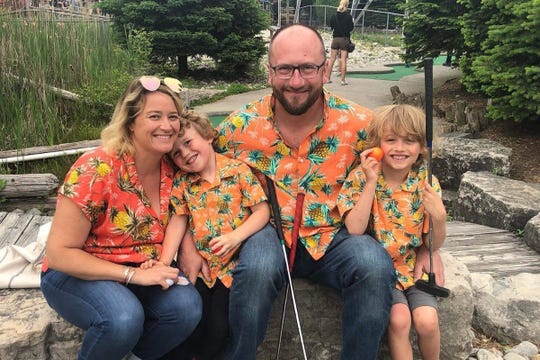
Jack Drury, all of eleven years old, Kate's brother, was at the race weekend, too. The Drurys were a neat little family of four; mother Julie, father Brian, son Jack and daughter Kate. They've been reduced by one. Now they're a family of three; parents and a single child. Jack had donated bone marrow to his younger sister in hopes of saving her life. That was nine months ago. Jack raced the 5K in his sister's memory.

After the hopeful ordeal of the bone-marrow transplant, everything went "terribly wrong". And Kate died suddenly months after the procedure that failed, after all, to save her from the dark oblivion of death. The occasion of her death is still raw for her family. She died six months ago so that's hardly surprising. For her parents, their eight-year-old child's death will always be a raw memory.

Kate died from the effects on her young body of a rare type of mitochondrial disease identified as SIFD. It is a disease that can cause debilitating physical and intellectual disintegration; loss of muscle co-ordination, muscle weakness and pain, seizures, vision or hearing loss, gastrointestinal problems and organ failure. This is a dread disease for which there is no cure.

Kate's mother Julie organized 150 runners to specifically fundraise, to participate in the race weekend for the very particular purpose of raising research funds in memory of her daughter. She imagined how balming it might be to their ailing hearts to know they were instrumental in raising funds for research, that science might, through their efforts some day find if not a cure then a protocol to prolong life.

She was determined to raise $42,000, to reflect the 42.195 kilometres represented by Sunday's run. As Julie ran, the marathon supporters cheered for her. Her supporting team were all dressed in bright pink Team Mito shirts. "It's been an incredible show of support. The people who are signed up to run for us are friends, some are neighbours and there are some people who I've never met", Julie said before the race.
race weekend
Julie Drury and her son Jack Drury after finishing the 5K race part of Tamarack Ottawa Race Weekend on Saturday. On Sunday, Julie Drury ran the full marathon to raise funds and awareness for mitochondrial disease, a disease her daughter, Kate, died from six months ago. CBC 
It was when the race concluded that it became clear they had met the goal and surpassed it. The $50,000 that was raised in Kate's memory is to be presented to a mitochondrial disease research group located at the Children's Hospital of Eastern Ontario. The focus of the group will be the rare form of mitochondrial disease that had shortened Kate's young life so drastically and painfully.

Kate, in fact, was the first person in the world to have been diagnosed with the rare form of mitochondrial disease that lodged in her body. As a result, her cells were donated to enable the medical/scientific community to research and discover more about her disease so that others who are suffering might be helped.

Mitochondrial disease is not all that uncommon; it affects one in 4,000 people. It was Kate's particular form of the disease that is rare; a distinction that anyone would have preferred, if it had been humanly possible, to avoid.

Labels: , , , ,

Wednesday, April 13, 2016

Above All, Do No Harm

"Because of possible harm to children, [provincial bans exist on indoor tanning beds for minors along with bylaws disallowing children under 16 in tattoo parlours]."
"There's also the consent aspect -- that children aren't mature enough to say no to these outfits."
"If [children] are not mature enough yet to say, 'Mum, I'm not going to that quack, I need to go to a doctor', then there could be an argument for a legal restriction to protect children."
"...The behaviour in Lethbridge suggests that they're not professional, because a professional would have called the Director of Child Welfare and said, 'This parent is unwilling or unable to provide the child necessary medical treatment." 
Juliet Guichon, bioethicist, lawyer, University of Calgary
Facebook
Facebook     David Stephan, 32, and his wife Collet, 35, have pleaded not guilty to failing to provide the necessities of life for their son, 19-month-old Ezekiel, who died in March 2012
 

And at a year and a half of age, Ezekiel Stephan was in no position to tell his parents, much less understand that what they were exposing him to in naturopathic medicine taking the place of professional medical science would be the death of him. Because he did die, when he could have been saved if his parents had taken him to a  hospital for treatment, as they were advised to do, even by the naturopath whom they consulted. They are now on trial in Lethbridge, Alberta for failing to provide their son with the necessities of life.

David and Collet Stephan, Ezekiel's parents, believed in what they exposed their son to. They operate a nutritional supplements company. And they have pleaded not guilty to the charges laid against them. Ezekiel's parents believed their son had the croup, and they took to treating the child with homemade smoothies and natural remedies. They felt confident they were doing the right thing for him, giving him ginger root, olive leaf extract and water with maple syrup. None of which helped his condition of viral meningitis. "There’s nothing in the world that will bring him back", complained Ezekiel’s father. "What good could possibly come out of this (trial)?"

Though the little boy had been sick for weeks, it was only once he stopped breathing that an ambulance was called for, and the child subsequently airlifted to Alberta Children's Hospital in Calgary. Five days later he was taken off life support. He had suffered a lung infection which then had developed into viral meningitis. A family friend had informed the parents their child in all probability had meningitis; as a nurse she had a fairly good idea what he was suffering from and urged the parents to seek medical intervention.

The reaction to that advice, which was echoed by a naturopath whom they visited, was to give the little boy water with maple syrup, juice with frozen berries, and a drink comprised of apple cider vinegar, horseradish root, hot peppers, mashed onion, garlic and ginger root. No doubt they felt that what didn't kill him might very well cure him. It did neither. Now provincial authorities will consider whether a new law needs to be formulated, to restrict naturopaths from treating children.

Collet Stephan had visited a naturopath and bought a tincture of echinacea called "Blast" from the clinic. At the trial the naturopath testified she had been busy with another client when the child's mother had called the clinic, but she had firmly instructed a staff member to inform the mother the boy needed to be brought immediately to hospital. She testified that she was not questioned whether echinacea could be used to treat meningitis.

"Many parents of young children distrust conventional medicine and have] an almost magical belief that there is some pill or preparation called 'natural' that will wipe things away", said Calgary pediatrician Dr. Ian Mitchell. He feels that restricting naturopaths from seeing children would only serve to drive matters from sight, discouraging parents from informing doctors of natural products they may be using whose interactions with other medicines could be "disastrous".

"We want people to be open with us", he stated, and it is his belief that society should neither condemn nor judge parents who embark on initiatives driven by distrust of conventional medical science and who cling to belief in alternatives which may in the final analysis, harm their children.

Labels: , , , ,

 
()() Follow @rheytah Tweet