Ruminations

Blog dedicated primarily to randomly selected news items; comments reflecting personal perceptions

Thursday, January 03, 2019

Marine Animals in Peril

"I spent all of my undergrad and my masters referencing this [2006 overview of the world's fresh waters] paper, and it was just becoming outdated."
"A lot of the threats are still present, but so many new ones have emerged. There are now 3,700 major hydro power dams that are either planned or under construction [many of them in India and South America]."
"We're seeing there is definitely a shift [in chemicals]. We are seeing a lot of pharmaceuticals in water, like antibiotics that are accumulating in the river systems and are going without treatment."
"For the most part [unused pills flushed down the toilet] they get into the ecosystem undetected. [Other pollutants cause] a range of impacts [on fish] ranging from reduced abundance of fish to effects on individual fish [as, for example] inter-sex fish ... that are essentially stuck between two sexes."
"They are happening under the water's surface and there aren't the same cheerleaders for these lesser-known fish as there are for the killer whales off the coast, or seals. They really do get forgotten. We can monitor things on a huge scale. We can monitor an entire drainage basin and know what's in the fresh water and in the terrestrial habitat."
Andrea Reid, Doctoral biologist candidate, Carleton University

"They [researchers] are now finding fewer inter-sex fish in the Grand [River]."
"[This overview of issues] will keep the alarm bells ringing. We need to keep looking forward instead of being reactive. .. But within all of this there is also some optimism, I think. People do care, [and] there are some advances in water treatment."
"But some of these [conservation measures] are not engineering changes. They are about wholesale changes in human behaviour."
Steven Cooke, biology professor, Carleton University, Ottawa
Palau National Marine Sanctuary, Indonesia

The ecological threats faced by fish today endanger their existence in a way unknown generations ago. The presence of antibiotics in water systems along with micro-plastics pose lethal threats to the survival of fish. Then there is the plight of exotic fish that people buy over the Internet and once they become too large to manage they are dumped into Canadian waters. Canada does not yet and perhaps never will experience the issue of large, dangerous fish and reptiles that the Florida Everglades has undergone, when exotic fish and reptile owners 'free' their fish into the wild.
An Argentine black and white tegu is caught in one of 160-plus traps set out by a University of Florida research team. The group collaborates with the Florida Fish and Wildlife Conservation Commission, the National Park Service, the U.S. Geological Survey, the U.S. Fish and Wildlife Service, and the South Florida Water Management District to contain and reduce the tegu population Photo: Karine Aigner
When ecologist David Dudgeon published a review of the world's fresh waters it was considered hugely authoritative and used as a university reference for the following dozen years. Now, Andrea Reid, completing her PhD in biology felt it timely that an update was produced. Working alongside other biologists including Dr. Dudgeon, an update has been published in the journal Biological Reviews.

Containing the booming Burmese python population has become virtually impossible for the Florida Fish and Wildlife Conservation Commission, and so the agency and its partners created the month-long Python Challenge to enlist the help of the public. Pythons are believed to have decimated the Everglades' populations of small mammals, but they will also eat waterbirds like herons, egrets, ibises, and spoonbills. Photo: Karine Aigner


Among threats to fish life, dams have been blocking rivers to produce hydroelectric power, a situation that has been many decades in the making, and their presence by happenstance prevents fish from their customary biological imprinting; migrating up and down waterways as they hatch, mature and return to their native waters to spawn. Fish 'ladders' put in place in dams have partially solved the problem, and in North America some of those dams have been removed to restore natural aquatic habitation.

The concerns over the omnipresence of microplastics in the world's waterways relate in part to the deleterious effects on aquatic life of which fish represent a large portion. Plastics of every size and shape have been implicated in the deaths of whales, turtles and other aquatic wildlife who ingest plastic but are unable to digest these substances with no nutritional value as they it end up mutilating their interiors, and tangling their fins.

An estimated million seabirds die annually resulting from ocean pollution and ingestion or entanglement in marine debris. Even marine debris like discarded fishing lines and nets create deadly hazards for marine animals when they are directly or indirectly thrown into rivers, oceans and lakes.  About 80 percent of plastic trash originates from landfills, washing into rivers and reaching oceans where sharks can become entangled and coral reefs damaged.
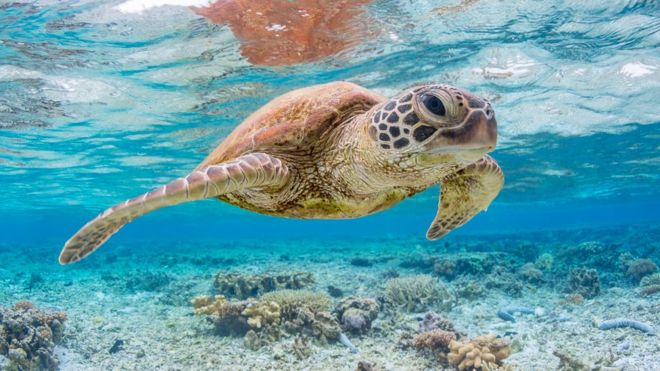
sea turtle
A new study suggests that ingesting even a single piece of plastic can be deadly for sea turtles. Google

And although pollutants from chemicals have been around for quite a while, there has been a notable increase of their presence as people are increasingly prescribed medicinal drugs, excreting them in their urine where they reach waterways and impact on fish and other marine creatures. Sewage treatment plants remove solids and kill germs, they have not been designed to remove chemicals. when people flush down unused pills or excrete them in urine, fish absorb them in their habitat.

The result is fish have fewer offspring, or offspring whose genetic material has been damaged. Most of these impacts occur downstream from urban centres. There have been changes for the better; locally a sewage plant in Kitchener-Waterloo, Ontario has been upgraded to remove many pharmaceuticals and the result is that researchers are finding fewer fish being deleteriously impacted.

Researchers also use environmental DNA (eDNA), genetic traces left by animals in water or on land when they slough off bits of skin or scales or leave droppings. Samples are taken to learn how species interact, a monitoring that makes available solid information to governments and regulators who can respond by designing conservation measures that answer to any given identified need.

But there is always another important part of the puzzle, and that involves the public, and awareness. That it is not positive ecological practise to thoughtlessly dump medicine into a toilet, but to return unused pills to the pharmacy where they were bought. And to take care with their plastic discards by reusing or recycling them, for starters, and just perhaps buying less of disposable plastic 'conveniences'.
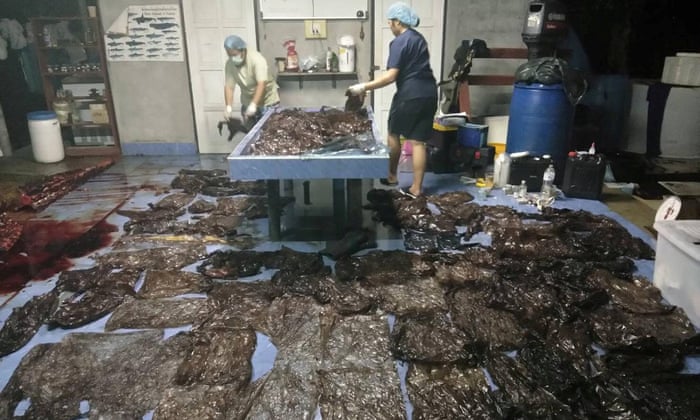
Some of the plastic bags extracted from a whale’s stomach in Thailand. Photograph: Social Media/Reuters

Labels: , , , ,

Wednesday, August 01, 2018

What Price Convenience of Processed Foods....?

"[The report features] some striking and surprising concerns about the lack of attention that these chemicals have received by regulatory agencies. Pound for pound, children eat more food and therefore have a higher level of exposure compared to us adults. In addition, their developing organ systems are uniquely vulnerable. ...There can be fundamental disruptions in various endocrine functions that can manifest not only in early childhood but potentially in later life as a result of prenatal or infant exposure."
"It's not simply calories in, calories out. That used to be a convenient framework for thinking about obesity, but now we know that synthetic chemicals disrupt how calories are processed and ultimately converted into protein vs. sugar vs. fat."
"Even at a basic level, we understand that thyroid hormone is not only important for brain development but also heart function, bone function, muscle. Practically every organ system is touched by thyroid hormone function." 
"There are safe and simple steps that families can take to limit their exposure: reducing canned food consumption, avoiding microwaving plastic. This is also another opportunity to emphasize the need for fresh fruit and vegetable consumption as opposed to other highly processed or packaged foods. Not only because of the nutrients and how they differ but also because of the chemical contamination that is much greater ... in fast food and other packaged foods."
Dr. Leonardo Trasande, director, Division of Environmental Pediatrics, New York University School of Medicine


"Chemicals used in everyday products need to be rigorously evaluated for their full potential of human health impacts before they are made widely available in the marketplace." 
Dr. Maida P. Galvez, associate professor, Department of Preventive Medicine and Pediatrics, Icahn School of Medicine, Mount Sinai

"[Americans] should know that all plastics intended for contact with food are reviewed for safety and must meet stringent FDA safety requirements before they can be used in food packaging."
"Consumers want to know that the products they purchase -- including packaged foods -- will perform as expected, provide the desired benefit and are safe for their families."
"Plastics packaging is critical to protecting the quality and integrity of food, and to help in the safe transportation and storage of food."
The American Chemistry Council represents chemical industry companies 

While Canada has taken some action against risky chemicals in recent years, such as banning some phthalates from children’s products and becoming the first country to ban bisphenol A in baby bottles, many more also pose potential risks, one expert says.  Charla Jones/The Globe and Mail
"I think this kind of statement [from the AAP -- American Academy of Pediatrics] really sends a clear signal to government in Canada and elsewhere that the issue of exposure to hormone-disrupting chemicals and other toxic chemicals in food products is something that shouldn’t be taken lightly."
Muhannad Malas, toxics program manager, Environmental Defence advocacy group
This report issued on behalf of the American Academy of Pediatrics is meant as long overdue heads-up to the medical community and the public at large to advise and inform of the potential risks being taken to children's health through exposure to chemicals of uncertain effect. How the ingestion and other exposure to many of those chemicals may in the long term affect children's health is unknown, but an obvious matter of concern to the American pediatric community. Who fear that insufficient attention to details such as knowing precisely the effects of chemicals being used represents a risk to human health through misplaced trust in the food industry.

Food additives, packaging and chemicals used to make plastic containers and other consumer products are regulated differently in Canada, however, where food additives are regulated by Health Canada under the Food and Drugs Act, prohibiting the use of harmful substances in food. Although the Canadian Environmental Protection Act can be used to regulate toxic substances, there are those critics who feel the federal government should consider toughening up this law to guard against emerging threats, a legal reform issue government appears to be committed to.
In the United States, roughly a thousand chemicals are considered to be "Generally Recognized as Safe" evidently not requiring approval from the Food and Drug Administration. According to the FDA any substance purposed for use as a food additive is subject to its approval, "unless the substance is generally recognized, among qualified experts, as having been adequately shown to be safe under the conditions of its intended use." This laissez-faire attitude failed to impress the academy, which urges government to consider revising its Generally Recognized As Safe process, to ensure it is more transparent and in the process mandating additional tests for toxicity before approving chemicals to be used in food items.
For their study, the involved researchers organized chemicals into direct additives, including colorings and flavors added during food processing, along with indirect additives, such as those contained in the plastics, dyes and adhesives used in packaging that have the potential to contaminate food after processing. The researchers took care to point out that most damaging compounds, such as artificial chemicals like phthalates and bisphenols used in plastic food containers have the post-process capacity to disrupt  the endocrine system and reduce fertility.

The researchers pointed out that Black Americans and those in the population identified as low-income families are frequently found to reflect the highest levels of BPA, known as a potential disruptor of puberty timing which can cause obesity through promoting lipids storage. Low-income families are more given to obtaining foods containing BPA which appears in canned goods -- less costly, more readily available where large supermarkets or convenient access to fresh fruits and vegetables are not as prevalent in their neighbourhoods. That obesity is more prevalent as well among low-income and children of colour in the U.S. possibly links to their higher consumption of processed foods containing BPA.
Colours derived through chemicals used in sweetened fruit juices which despite the name contain a paucity of fruit are linked by studies to their potential to aggravate pre-existing conditions such as attention deficit disorder. Yet another common chemical used in plastic packaging of dry foods, Perchlorate, is known for its potential in altering early brain development and impacting thyroid function. The avoidance of processed meats, most particularly throughout pregnancy, and of food packaged in plastic labelled with recycling codes 3 (phthalates) 6 (styrene; a suspected carcinogen) or 7 (bisphenols), replacing them with plastics labelled "biobased" and alternately "greenware", attesting them to be corn-based, not produced with bisphenols represents good self-defence practise.
When microwaving, glass should ideally be substituted for plastic containers. The simple hygienic basics of hand-washing before and after handling foods and drinks along with washing fruits and vegetables that aren't normally peeled before being consumed should represent normal practise.
"Families can eat organic; they can avoid the use of pesticides in their homes to get rid of unwanted creatures; they can avoid aluminum can food consumption; they can avoid microwaving plastic and machine-dishwashing plastic containers", offered the study lead author, Dr. Trasande.

There are other common-sense things that families can do to protect their health: "Simply air out their homes every couple of days" to help in the removal of chemical dusts emanating from electronics and other materials; in particular flame retardants. "As pediatricians, we’re especially concerned about significant gaps in data about the health effects of many of these chemicals on infants and children", noted Dr. Trasande. "Even small disruptions at key moments during development can have lifelong consequences."
GettyImages-451855586
Pediatricians warn that the common additives found in processed foods severely harm children's development. (Photo by Joe Raedle/Getty Images)

Labels: , , , , ,

Tuesday, April 03, 2018

Your Morning Wake-Up

Superior Court judge Elihu Berle said in a proposed decision Wednesday that Starbucks and other coffee companies failed to show the threat from a chemical compound produced in the coffee roasting process was insignificant. (Gregory Bull/Associated Press)
"While plaintiff offered evidence that consumption of coffee increases the risk of harm to the fetus, to infants, to children and to adults, defendants' medical and epidemiology experts testified that they had no opinion on causation."
"Defendants failed to satisfy their burden of proving ... that consumption of coffee confers a benefit to human health."
Judge Elihu Berle, Los Angeles Superior Court

"This lawsuit has made a mockery of Proposition 65, has confused consumers, and does nothing to improve public health."
William Murray, president, CEO, National Coffee Association
Is coffee healthy?
Is Coffee healthy?  CNN

"I firmly believe if the potato chip industry can do it [find a way to manufacture their product by means other than the inclusion of the chemical acrylamide], so can the coffee industry."
"A warning won't be that effective because it's an addictive product."
Raphael Metzger, Lawsuit attorney
Henceforth, in that great, populous and vast nanny-state of California it will be incumbent by law for those selling coffee to post warnings of the carcinogenic effect of coffee. Oh, not the coffee itself, but a chemical produced through the roasting process of the bean, you see! Starbucks Corp. leading the coffee industry pushback in the court case, stated that the presence in coffee of the chemical at the minute levels known to exist pose no risk, is not harmful, and benefits of coffee consumption quite outweigh other concerns.

The Council for Education and Research on Toxics is on the warpath, insisting that the coffee industry take steps to alter its coffee bean processing to remove acrylamide, a precursor to polymers enitrely. When the Council similarly sued potato chip makers years ago, this is just what that industry did. Failing that, it insists that the danger to consumers be disclosed by posting warning signs or labels in full !shocking! view of the consumer. And as it happened, the Council had its persuasive way.

Under a law passed overwhelmingly in 1986 by California voters, consumer protection groups have been enabled to pursue lawsuits calling for  culling cancer-causing chemicals from a wide variety of products. The Safe Drinking Water and Toxic Enforcement Act (Proposition 65) requires that warning labels for some 900 chemicals known to cause cancer or birth defects alert consumers. Advocacy groups can sue on behalf of the state, collecting a portion of civil penalties for their troubles.
Drinking more coffee leads to a longer life, two studies say
Drinking more coffee leads to a longer life, two studies say    CNN

There is no lack of scientific studies concluding that there are definite health benefits associated with drinking coffee. The cancer agency of the World Health Organization removed coffee from its "possible carcinogen" list in 2016, and studies indicating coffee is unlikely to be the cause of breast, prostate or pancreatic cancer have been well publicized. It lowers risks of liver and uterine cancer as well, according to the Agency.

And these positive results from research, along with other research lauding coffee for its heart-healthy effects give coffee producers the comfort and confidence to state in their defence that removing acrylamide from their product would ruin the flavour. The chemical arises when food products are roasted, broiled or fried under high heat, but not boiled. Posted warnings already appear in many coffee shops, but they are placed in obscure, little-noticed areas. Even those that consumers see however, fail to dissuade them from enjoying their coffees.


The coffee industry has the opportunity to challenge the ruling within the next few weeks, but if the ruling is allowed to stand as is, stiff financial penalties could become an uncomfortable reality where the judge would be able to set another phase of trial relating to civil penalties up to $2,500 per person exposed daily over an eight-year period -- representing an astronomical cost to a potential 40 million Californians.

For many coffee lovers, it's difficult to take the situation seriously: "It's like cigarettes. Like, damn, now I've got to see this? Dude, I'm enjoying my coffee", said Los Angeles lawyer, Darlington Ibekwe. "I just don't think it would stop me", Jen Bitterman, a digital marketing technologist commented. "I love the taste, I love the ritual, I love the high, the energy, and I think I'm addicted to it."

A Los Angeles judge has ruled that California law requires coffee companies to carry a cancer warning label. (Justin Sullivan/Getty Images)

Labels: , , ,

Wednesday, February 21, 2018

"Pure", Fresh Water? Caveat Emptor....

"[The goal is to produce water] that is ultra high quality and secure, totally disconnected from all infrastructure."
"Just take a breath of air. Take a deep breath. No matter how wealthy or poor you are, you can take a breath and own that air that you breathe."
"And yet water -- the government brings it to you."
Cody Friesen, founder, CEO Zero Mass Water, California

"You're going to get 99 percent of the bad stuff out. But now you have dead water."
"Real water should expire after a few months.] It stays most fresh within one lunar cycle of delivery."
"If it sits around too long, it'll turn green. People don't even realize that because all their water's dead, so they never see it turn green."
"Tap water? You're drinking toilet water with birth control drugs in them."
"On top of that they're putting in fluoride. Call me a conspiracy theorist, but it's a mind-control drug that has no benefit to our dental health."
Mukhande Singh, founder, Live Water
Live Water
"Without water treatment, there's acute and then chronic risks."
"There's evidence all over the world of this, and the reason we don't have those conditions is because of our very efficient water treatment."
Dr. Donald Hensrud, director, Healthy Living Program, Mayo Clinic, Rochester, Minnesota

"The natural food industry has been in the dark ages when it comes to water."
"Now there is a renaissance [in the sale of untreated water]."
Seth Pruzansky, CEO, Tourmaline Spring

"It has a vaguely mild sweetness, a nice smooth mouth feel, nothing that overwhelms the flavor profile."
Kevin Freeman, shift manager, Rainbow Grocery cooperative, San Francisco
Catherynne Valente‏Verified account @catvalente
I need you to understand that in this article the Raw Water people are talking about the flavor profile & “mouth feel” of untreated, unfiltered water they found somewhere, for which they charge $36.99 per 2.5 gallons. Spoiler: the mouth feel is giardia, the flavor is dysentery.
It's the hugely popular next-to-the-Earth-and-Mother-Nature experience, spurning tap water that has been filtered and treated to remove minute particles of effluent and bacterial content, in the process producing potable liquid safe to drink that modern technology has made possible allowing us to bypass pathogens waiting to pounce and make us ill from their contaminating influences playing havoc with our immune system and bodily defences.

Getting off the water grid complements removing one's lifestyle from all the 'grids' that make modern life secure and comfortable. No end of start-ups have been popping up in the United States promising "raw water" will rejuvenate your taste and your lifestyle, and they will deliver the goods; unfiltered, untreated, unsterilized spring water. Yours to be had for $36.00 each 10 liters, and a mere $14.99 for refills. Rush right over to Live Water.

There's Tourmaline Spring in Maine, Live Water in Oregon, Zero Mass Water in Silicon Valley. With it, you can evade that ubiquitous chemical, fluoride; nor will you be drinking water that has passed through lead pipes. The beneficial minerals that have been filtered out will be yours to imbibe with 'raw' water. Millions of dollars have  gone into funding this fringe phenomenon heading for mainstream culture, thanks to the influence and investment from Berkeley California's Silicon Valley.

You too can have installed a Source system retailing for a mere $4,500 (including installation), that works by drawing moisture from the air to filter it, and produce ten liters of water daily, storing up to 60 liters. Alternately, make your at-home-produced pure water through the use of a reverse osmosis filter. Yet bear in mind, your goal is not to achieve the production of pristine water. You do want to have all the benefits, according to Mukhande Singh, founder of Live Water, of "real water" containing the richness of natural minerals.

On the other hand, Dr. Hensrud points out that E.coli bacteria, viruses, parasites and carcinogenic compounds can all be present in untreated water. As for fluoride, in point of fact science has never identified it with mind-control capabilities, but there is ample scientific evidence through research that it does a bang-up job in aiding dental health. It is, perhaps, mental health that comes top of mind when ruminating over the propensity of people to equate 'natural' with good and 'treated' with threats to health.

Clayoquot Lake, British Columbia   Photo: JSR


Labels: , , , , ,

Wednesday, May 24, 2017

Consumer Caution Advised in Energy Drinks

"The energy drink industry claims that their products are safe because they have no more caffeine than a premium coffee-house coffee."
"However, energy drinks also contain a proprietary 'energy blend', which typically consists of stimulants and other additives. Some of these ingredients [including taurine and guarana] have not been FDA-approved as safe in the food supply, and few studies have tested the effects of caffeine consumption together with these 'novelty' ingredients."
"On top of that, energy drinks are highly marketed to adolescent boys in ways that encourage risky behaviour, including rapid and excessive consumption. As a result, emergency room visits by young people in connection with energy drinks are rising."
Dr. Jennifer L. Harris, Rudd Center for Food Policy and Obesity, University of Connecticut
The multiple ingredients in different brands of energy drinks need more scrutiny, researchers say.
The multiple ingredients in different brands of energy drinks need more scrutiny, researchers say. (Canadian Press)


Over 500 energy drink products are now on the market; their popularity is manifest by the extent of their sales, and in lock-step with their popularity is the allied phenomenon of increasing visits to hospital emergency centres, and even deaths attributed to their consumption. A 32-ounce container of an energy drink is now being linked with potentially harmful blood pressure and heart function changes beyond alarming and owing not only to the caffeine in those drinks but other key ingredients present in them.

Consumers like energy drinks. And people who convince themselves that anything that is freely available on the market and that suits their lifestyle cannot be a threat to their health, simply will not believe that these drinks indeed can very well pose a threat best avoided. The manufacturers of the energy drinks, after all, attest to their perfect safety, in itself persuading consumers there is no threat to their health in their consumption. But the growing body of evidence appears to firmly point in the opposite direction.

Caffeine up to 400 mg, reflected in the consumption of up to five cups of coffee is considered to be a safe daily dose by the U.S. Food and Drug Administration. Energy drinks mostly contain caffeine, and plenty of it, but it is the other ingredients in those drinks about which the level of safety is largely unknown, concluded a study team whose results were published in the Journal of the American Heart Association.

A research team led by Sachin A. Shah of David Grant Medical Center on Travis Air Force Base along with the University of the Pacific in Stockton, California, set out to compare physical alterations resulting in a group of 18 healthy men and women after they had consumed an energy drink and after another drink with a similar dose of caffeine, lacking any other ingredients had alternately been consumed.

The energy drink given the test subjects contained four ounces of sugar, several B vitamins, and a proprietary 'energy blend' of taurine and other ingredients most often linked to drinks like Monster Energy, Red Bull, and 5-hour Energy. And that energy drink also contained the obligatory 320 mg of caffeine, analogous to what would be contained in four cups of coffee. Alternately another drink was given the participants which held only the 320 mg of caffeine, nothing additional.

The research team then measured the study participants' blood pressure along with measuring heart electrical activity for 24 hours following the consumption of the drinks. Using an electrocardiogram (EKG) for the heart measurement activity, it was discovered that a change identified as QTc prolongation, a condition associated with life-threatening irregularities in the heartbeat, was present post-energy drink consumption, but not after consuming the caffeine beverage.

Blood pressure was seen to increase by about five points after the energy drink was consumed, and in comparison less than a one point increase was noted after the test subjects drank the beverage containing caffeine only. In addition, blood pressure remained in that elevated state for the following six hours. The study points out that healthy individuals are not threatened by these changes, but people with particular heart conditions would do well to exercise caution with these energy drinks.

hi-energy-drinks-teen-852-c
Just as adolescents are taught to drink alcohol responsibly, they could receive a similar message about energy drinks, pediatricians say. (Jack Dempsey/Associated Press)

"The energy drink amount tested by the U.S. researchers in this study was equal to twice the amount that is permitted to be labelled in Canada for maximum recommended servings per day."
"Health Canada's recommended maximum amounts are based on all of the ingredients of energy drinks, not just the caffeine."
Canadian Beverage Association

Labels: , , , ,

Sunday, March 26, 2017

Endocrine Disrupters : Falling Birth Rate

"Your odds of getting into Harvard or Stanford are higher than your chances of being accepted as a donor at the major sperm banks."
"The bar is lower for members of ethnic groups that tend to be shorter. And given a perpetual lack of African-American donors, height may not be a disqualifier for black donors."
Tamar Lewin, The New York Times

"[Scientists report an increasing proportion of sperm] are misshapen, sometimes with two heads or two tails."
"Even when properly shaped, today's sperm are often pathetic swimmers, veering like drunks or paddling crazily in circles. Sperm counts also appear to have dropped sharply in the last 75 years, in ways that affect our ability to reproduce."
Nicholas Kristof, The New York Times

"Semen quality and fertility in men have decreased. Not everyone who wants to reproduce will be able to. The costs of male disorders to quality of life, and the economic burden to society, are inestimable."
Dr Andrea Gore, professor of pharmacology, University of Texas at Austin, editor of the journal Endocrinology

A sperm under the influence of an endocrine disrupting chemical in sunscreen. Because of chemicals like these, sperm have trouble swimming properly to deliver the goods. Credit Prof. Timo Strünker, Münster, Germany
"I think we are at a turning point.  It is a matter of whether we can sustain ourselves", stated Dr Niels Erik Skakkebaek, a Danish fertility scholar and pioneer in the field. This failure of the human body to continue to produce viable sperm in convincing numbers to ensure that the biological imperative to reproduce, thus sustaining the species remains intact, appears to be a scientifically universally-recognized global phenomenon of frightening proportions.

In Hunan province, China, where in 2001, 56 percent of sperm-donor applicants met health standards, that number descended precipitously to 18 percent by 2015. This was a large study, involving over 30,000 men. The findings led to the obvious conclusion that "The semen quality among young Chinese men has declined over a period of fifteen years."


What an irony; couples who are turning increasingly to medical interventions when they find themselves unable to procreate, look for help with sperm or eggs healthier than their own as they launch themselves into a long, frustrating and very often failing effort to achieve parenthood through assisted reproduction technology. Yet they have become dependent on sperm increasingly more difficult to harvest because failing sperm health is afflicting availability of suitable alternatives at sperm banks.

Sperm banks are increasingly finding it difficult to accept sperm from donors when the men  being recruited are seen to increasingly have low sperm count and sperm whose condition is far less than optimal in condition. The growing relative rarity of healthy sperm has driven the price of a sperm vial up astronomically. Sperm banks look for a good personal health history in recruits. A sparsity of sperm, those of poor quality, and white males of short stature tend not to qualify.

Scientific studies have indicated that a chemical type known as endocrine disrupters are likely responsible for the sub-par quality of sperm in male populations. If it were any other kind of chemical the warning could be circulated that the chemical is to be avoided by all means. But if that chemical is one used in many of the most common products utilized by society today, it becomes difficult to distance oneself from it.

These are the chemicals in plastics, in pesticides, in cosmetics and other products whose safety is taken for granted, and which manufacturers regard as indispensable to the manufacture of their frequently- and commonly-used products. A seven-year experiment was conducted on an Ontario lake by Canadian scientists who added endocrine disrupting chemicals to the water to observe the impact on fathead minnows. Males were turned into intersex fish, incapable of reproducing.

Denmark, along with South Korea, Spain, Germany and Italy are sufficiently concerned with sustainable reproduction, as to look elsewhere for additional answers to the cause of the dilemma, not entirely convinced that quantity and quality of spermatozoa is responsible for the notably lower success in achieving pregnancies.

There has been a increase in testicular cancer among young men. There is the biological problem of undescended testicles, as well as a congenital malformation of the penis, called hypospadias. Both, of course, could also be derived from the prevalence in the products we use of bio-disruptive chemicals.
Additives known as endocrine disrupting chemicals (EDCs) compromise male fertility by interfering with a membrane-bound calcium channel that normally controls motility of sperm cells, according to researchers in Germany and Denmark. EDCs are used in hundreds of household products—including toothpastes, sunscreens, cosmetics, plastic bottles, and toys—and scientists determined that they can cause fertility problems in previous studies. But a study published in the journal EMBO reports yesterday (May 12) is the first to posit a mechanism for how the chemical additives affect fertility in the human reproductive tract.
The Scientist, May 2014


Labels: , , ,

 
()() Follow @rheytah Tweet