Ruminations

Blog dedicated primarily to randomly selected news items; comments reflecting personal perceptions

Tuesday, June 11, 2019

Sex or Text?

"Several high income countries have recently reported a decline in the frequency with which men and women have sex. Sexual inactivity might not seem an obvious focus for public health attention—concern is generally reserved for sexual activity and its adverse outcomes such as unintended pregnancy, sexually transmitted infection, and sexual dysfunction—but regular sexual activity has benefits for health, well being, and quality of life."
"Research indicates that men and women who enjoy an active sex life are fitter, happier, and have better cognitive function and increased life expectancy. Evidence shows that sexual activity might help prevent infection by bolstering immune function; protect against cardiovascular disease by lowering heart rate and blood pressure; and reduce stress by increasing release of oxytocin."
Authors: Kaye Wellings, professor, Melissa J.Palmer, research fellow, Kazuyo Machiyama, assistant professor, Emma Slaymaker, associate professor, London School of Hygiene and Tropical Medicine study, British Medical Journal

"[There appears a connection between smartphone tyranny and the weakening of] the boundary between the public world and private life ... You get home and continue shopping or buy tickets -- everything except for ... talking."
"You don't feel close when you are constantly on the phone."
"Several factors are likely to explain this decline, but one may be the sheer pace of modern life."
"It is interesting that those most affected are in mid-life, the group often referred to as the ‘U-bend’ or ‘sandwich’ generation. These are the cohorts of men and women who, having started their families at older ages than previous generations, are often juggling childcare, work and responsibilities to parents who are getting older."
"What is important to well-being is not how often people have sex but whether it matters to them.
More than half of the men and women taking part in the study said they’d prefer to have sex more often, which could partly stem from unfavourable comparisons with what they think is the norm."
“Most people believe that others have more regular sex than they do themselves. Many people are likely to find it reassuring that they are not out of line."
Kaye Wellings, lead author, study Changes in, and factors associated with, frequency of sex in Britain: evidence from three National Surveys of Sexual Attitudes and Lifestyles (NATSAL)



A study on mobile phone use while performing other activities was presented at a symposium on how digital technology is affecting relationships
A study on mobile phone use while performing other activities was presented at a symposium on how digital technology is affecting relationships ( Getty )

A recently published major sex survey of 34,000 Brits points out the grip of the Internet has led the United Kingdom to join other countries ranging from Finland to Australia, in research validating that populations are less engaged in sexual union. One of the world's most thorough sex surveys -- The National Survey of Sexual Attitudes and Lifestyles (NATSAL) which has conducted surveys every decade since 1991, released its latest findings representing the period up to 2012.

That finding validates that sex life in Britain, as in many other countries of the world where the Internet has taken precedence over all other modes of communication, including face-to-face, is responsible for people fixating on social media and all manner of Internet searches and communications, at the expense of one-on-one relationships of an intimate order; namely sex or conjugal relations, which are steadily on a downward spiral.

In 2012, 13.2 percent of women in Britain reported having sex on ten occasions or more in the past month, as compared to 20.6 percent back in 2001. For men, the figure over the same period dropped from 20.2 percent in 2001 to 14.4 percent by 2012. Those are the numbers representing couples who have continued to engage in sex. In sad contrast both men and women who had not experienced any sex in the past month had risen to almost 30 percent whereas in 2001 the figure stood at 23 percent of women and 26 percent of men.

As far as the authors of this latest study are concerned, it is the rise of smartphone use (the ubiquitous and hugely popular iPhone was launched in 2007), where the Internet has made its way into all aspects of peoples' lives. Digital life for most people has become an endless 24/7 affair. The compulsion to endlessly check email, to scroll, to scrutinize alerts, to engage in games and tab-opening are all identified as playing their part in destroying peoples' personal, intimate lives and concentration on other day-to-day concerns.

It is the social life of millennials that has fixated the interest of researchers, who delve into their sex lives for data applicable to that demographic. They, after all, came of age online. As a result the social contract requiring face-to-face relationships to bloom has passed them by with the disinterest of those who have more interesting fish to fry. The gap that exists in social awareness and custom between people over 35 and those under 28 in the modern social construct is immense.

Yet, this most recent NATSAL survey identifies that the steepest decline in having sex appears not among the young and single, but rather within the over-age 25 demographic who happen to be in long-term stable relationships; married or cohabiting. In this group the odds of having had sex ten or more times by either men or women was about halved between 2001 and 2012. These are the people who bring the Internet into bed, where the tendency is to continue working, organizing, shopping, communicating.

The survey looked no further than 2012 for its conclusions. But no one doubts that the situation has only exacerbated as the public ever more fiercely embraced their indispensable iPhones, abandoning flesh-to-flesh contact. The Wall Street Journal conducted a poll, finding a rising number of Americans (36 percent of 28-to-38-year-olds, and 16 percent of those over 39), will make the inevitable choice of Internet over sex.


Fig 1


Labels: , , , , ,

Friday, August 03, 2018

Post Sex What?!

"These assumptions are pervasive within masculine subculture and include that males always desire and experience sex as pleasurable."
"The experience of PCD [post-coital dysphoria] contradicts these dominant cultural assumptions about the male experience of sexual activity."
"Previous studies on the PCD experience of females showed a similar proportion of females had experienced PCD on a regular basis."
"As with the men in this new study, it is not well understood. We would speculate that the reasons are down to biological and psychological factors."
Robert Schweitzer, School of Psychology and Counselling, Queensland University of Technology, Brisbane
A couple sitting in bed and looking upset after having a disagreement 
Men can feel depressed or argumentative after sex too Credit: Digital Vision/People Images

Who knew? I mean really, who might have imagined it! But there it is, a recently revealed phenomenon informing us anew of just how complex the human condition is that runaway emotions we might hardly anticipate would rise to disturb our sense of complacent well-being at a time when our psyches should be revelling in relaxed leisure of escaped tension, and instead plunge us into a despairing emotion of unsettled disquietude...

Anyone who has never experienced 'post-sex blues' can be excused, however, for not being aware that such a syndrome even exists, for it seems improbable and puzzling indeed. But a new stidu published in the Journal of Sex & Marital Therapy through research work done by a team from the Queensland University of Technology in Brisbane, Australia certainly gives the touch of scientific respectability to something that might otherwise pose as an urban legend.

The Brisbane researchers surveyed over 1,200 men from Britain, Australia, the United States, Russia and New Zealand, a fairly good cross-section of nation-representatives to conclude that 41 percent of the men in the study asserted their experience of the condition at some time during their sex-active lives. A number that came in a mere five percent less than among women.

Women admit to feeling weepy, irritable and needing to be comforted when post-coital dysphoria occurs to them, a condition that typically lasts in a time range between five minutes to two hours, a reaction always assumed applied to women only, never men. In fact, according to this recently published study, one in five men  stated the symptoms had struck them within the previous month.

The feeling experienced by a number of the study subjects ranged between "emotionless and empty", to "unsatisfied, annoyed and fidgety". Emotions that seem on the surface more suited to women expressing after-sex feelings, than one might associate with men. But then, that is the whole point of the conclusions reached by the study -- a shared emotional experience of disappointment regardless the gender.

Some of the male respondents recounted the experience of feeling emotionally detached, even to the point of recoiling at the touch of a sex partner, post-sex.

It is an evident fallacy, the belief that men always enjoy sex; a popular assumption that hinders men from admitting that sex can leave them depressed, and argumentative. According to the reasoning of some researchers, the phenomenon occurs when feel-good hormones start to diminish in the wake of orgasm. Still other researchers feel the cascade of hormones resulting from orgasm triggers post-coital headaches.

Hearing of the condition some might leap to the conclusion that guilt can be involved relating to one-night-stands of casual sex, which at one time was ascribed to women's after-reactions. But it may, according to some psychologists be linked to cultural assumptions of shame or guilt about having sex. Seemingly negated, however, by the new research finding that long-term sex partners and married couples are not immune to "post-sex blues", in fact.

A 2011 Australian study quoted a third of women interviewed stating -- including among those with loving relationships -- that depression set in even after satisfying sex.

About 41 percent of men had experienced PCD in their lifetime. Picture: Flickr.com

Labels: , , , ,

Friday, April 13, 2018

And Never The Twain...

"Their potential interest in younger women is not likely [to be] converted into sexual activity."
"Sure, some older men have a strong preference for clearly younger women, but most tend to also find older women attractive."
"An interesting finding is that as men age, they become less picky about age. They report an interest in both younger and older women."
"Natural selection has probably shaped men’s sexual strategies to include a particular interest in highly fertile, young women. But because women, in many cases, are more picky with respect to sexual partners, most men could not find a partner unless their sexual motivation would be more inclusive."
"Humans tend to have long-lasting sexual relationships and this would not be possible if all men were [only] interested in young women."
"We look for many different characteristics when choosing a partner, and age is just one of them."
"The findings might help relax the belief that men are mainly interested in young women."
Jan Antfolk, Abo Akademi University, Turku, Finland 


Do the conclusions of a study on an aspect of human behaviour shaped by biology, environment, heritage and culture readily transfer to other geographical jurisdictions whose social culture might be quite different? To some extent it would, when the major thrust of the study has been to derive an opinion from synthesizing observable results and responses from a demographic, since though customs vary from geography to geography, basic human instincts tend to coalesce around some fundamental realities.

A primitive reality is that nature equipped men to hunt out nubile young women to carry their seed, on the premise that the most promising childbearing years would be likelier to produce offspring that were healthier and likelier to survive, than those produced by an aging female, thus promoting the  survival of the genetic blueprint of the man imprinted to ensure he would gravitate to the most viable solution for his predicament, that of survival; of his very particular genetic inheritance.


Many hundreds of thousands of years may separate us from our progenitors, the original human strain within which nature implanted that primal urge, but nature's organisms while developing through evolutionary strides in many areas, have never abandoned any of the facets of human interaction associated with survival. All of us, men and women, admire youth, its presence, liveliness, beauty and promise for the future. Men in particular are drawn to the freshness and sensuous attraction of youth; in their deep subconscious it equates with fecundity.

Young women with firm limbs and skin, curvaceous and dewy, capture the attention of most men as objects both of admiration and desire. Men have always been attracted to, and respond to the allure of younger women as possible sexual partners; the commonplace scenario of a man leaving his aging wife for a much younger women is no urban legend. But men are also practical and at some level for many men if what they desire is unattainable, they will settle for what they can attain.

What they can attain, a woman whose age is more reflective of their own, makes for a more comfortable lifestyle fit. There is nothing enjoyable about being married to someone decades younger then yourself who gravitates to a style of life more suited to the young than a man settled into his 50s and 60s is likely to appreciate. And from the younger woman's perspective, being saddled with an older man has its very particular detriments ranging from physical attraction to physical decline in all its permutations.

The Finnish study, the results of which was published in the journal Evolutionary Psychology, included over 2,500 people and concluded that if an older man remains inflexible about his inclination to date younger women, he may find himself dating no one. The urge for companionship, particularly when one ages, comes in direct competition with the urge to procreate; not that older men want to procreate; rather their urge is to go through the motions; sterile sex.

Once an older man fully understands the playing field he was once familiar with has changed; that he is no longer sexually attractive as a physical specimen, with advanced age to the younger women he pursues, he realizes that women as young as his daughter, while appealingly attractive, are also inappropriate as lifestyle companion choices. In his 50s, a transference of interest takes place, toward women whose age and interests in life more closely mirror his own.

"If you are with someone 20 years younger, they've probably got a different life experience. When you get to a certain age, you start to creak at the seams. If you're dating someone younger, there well may be a mismatch in your pace of life", observed 68-year-old Jonathan. "After a 20-year relationship I began online dating. I was talking to girls in their 20s because those were the ones I felt most attracted to. But none seemed interested. All they wanted to do was send me titillating pictures of themselves. When I tried to take things further, they ghosted me. I hadn't expected them to be so immature", he said.

The question there might more logically be who was the more immature? Close to 70 he had little interest in women in their 50s, or 60s, so how mature is that?

Adults in the study group were between the ages of 18 and 50, some single, some in long-term relationships, most were heterosexual and about a third of the participants identified as bisexual or homosexual, surprisingly. All ventured an age range they considered appropriate for a sex partner and were queried about the past five years of their sexual activities. In general young men preferred women their own age. But were open to women substantially younger.

The average age of heterosexual men in the study was 37, with most considering sex with women around 21 in contrast to heterosexual women at 35, with their youngest partner choice being 27. It seems as women age they place greater limits on how young a man they are willing to have sex with; the definition of "too young" increased by about four months for each year a woman gained in age.
 Age-appropriate preferences evolved within the male grouping as well, but not quite to the extent seen with women's. As they aged, their youngest age limit increased each year by two months on average. In the final analysis, most of the men it turned out, were having sex with women closer to their own age. Their 'druthers, in preferring younger women were more fantasy than fact.

But of course these findings reflected Finnish society and culture; how the findings translate elsewhere around the world is debatable.

BEVERLY HILLS, CA - AUGUST 07: Playboy founder Hugh Hefner (L) and TV personality Crystal Harris attend the Beverly Hills City Council and Playboy Enterprises, Inc.'s celebration of the return of Playboy headquarters to Beverly Hills on August 7, 2012 in Beverly Hills, California. (Photo by David Livingston/Getty Images)


Labels: , , , ,

Friday, December 22, 2017

A Very Special Christmas Gift

"We found that, around Christmas, people are generally happier and they're also less anxious and more calm."
"Every time you see these moods arise you see an increase in sex searches on Google."
"I think we conclusively show it's not a biological adaptation to the solar cycle because even with Australia and Brazil we see the same holiday effect and they're in opposite phases at any given time. So it can't be a biological adaptation to fewer  hours of sunlight."
"This shows how data from social media can actually disprove a hypothesis that was the most well established one in biology."
"Now we just need to find out what the social triggers are that increase biological reproduction around these times."
"I suspect it's because Christmas is very family-centered and specifically child-centered in terms of gift-giving and the story of baby Jesus. Christmas also marks the end of a cycle because it's at the end of the year, so maybe this just makes people feel more calm."
Dr. Luis Rocha, professor of informatics, Indiana University


Men had increased arousal at more revealing pictures in December to February
And here we thought that Christmas spurs feelings of nostalgia, of loving families affirming their faith in Christianity and the wonders of the birth of a baby who grew to be a man of immense philosophical wisdom to set out to teach the world that people have an obligation to one another, that their creator had invested them with the capacity to overcome their base instincts and emotions for the greater good of peace and equality and that to prove just how imperative it is, the creator was prepared to sacrifice his earthly son to emphasize that message and empower believers to achieve the goal that humanness imposed upon them.

So, apart from the ecstatic delight of children at the colourful blinking lights on evergreens growing from a pot on their living room floor, and all the wonderful gifts that a mischievous old elf clambered down their home chimneys to carefully array under that green, glowing tree, there is a special gift for adults, as well, beyond the amusement and pleasure afforded parents in witnessing their adorable children enjoy that cherished tradition.
Getty Images
Indeed, the holiday celebration of the birth of Christ represents a religious festival of immense importance to worshippers of Christ, the  holiday arriving at the bleakest of seasons in the northern hemisphere, when daylight hours are short and cold plagues comfort in every conceivable way. A time when family, near and extended, make a special effort to come together to renew familial bonds for the emotional comfort of reliving their commitment to one another and to the religion that provides them with the spiritual assurance they crave.

Now comes the result of new research, recently published in the journal Scientific Reports, concluding that during the Christmas season of bright good cheer, peoples' interest in sex reaches a crescendo. Data was analyzed from 130 countries with the use of Google Trends by researchers searching out sex-related terms through the space of a year, to discover a huge spike occurs when people Google sex terms just around the Christmas season.

That !Aha! moment that led to the further conclusion that this spike in sex interest nine month afterward resulted in a boom of September babies. Curiosity about the phenomenon spurred researchers to make use of Twitter to perform a "sentimental analysis" searching for words associated with emotion such as "love" and "thankful". What exactly might it be that during the Christmas season elevated peoples' amorous instincts?

There was an already existing hypothesis that held an abundance of September births was readily explained by examining biological factors not cultural ones, with the biology hypothesis leaning toward the human reproductive cycle, based on Earth's orbit, making it likelier to conceive around the winter solstice. This theory collapses somewhat when bringing in those living in the southern hemisphere when the winter solstice occurs in June. Only at Christmas time does sex-Googling spike.

The researchers didn't stop there. They forged on to discover that sex interest peaked as well during Eid al-Fitre which marks the end of the Islamic holiday of Ramadan. And while Eid al-Fitre is a movable celebration, not occurring on the same date yearly, sex interest nonetheless shifted, according to the holiday's presentation date. Furthermore, the pattern of these specific religious holidays eliciting in people an urge to procreate had no counterpart in other holidays.
Other holidays have much in common in a celebratory, cultural way with Christmas, resulting in family gatherings, time off work, special food, yet it is Christmas and Christmas only that inspires people to yearn for sex.

It turns out people are more interested in sex around the holidays, which could explain why most babies are born in August and September. Getty Images
"We didn't see a reversal in birth rate or online interest in sex trends between the Northern and Southern hemispheres -- and it didn't seem to matter how far people lived from the equator."
"Rather, the study found culture -- measured through online mood -- to be the primary driver behind cyclic sexual and reproductive behavior in human populations."
Dr. Luis M. Rocha, study co-author


Labels: , , , , ,

Monday, November 13, 2017

Heart-Stopping Sex

"This [sex partners' reluctance to attempt CPR] likely explains the relatively low survival rates despite mostly shockable initial cardiac arrest rhythms."
"It is also recognized that sexual activity may trigger nonfatal acute cardiac events such as myocardial infarction [heart attack]."
Research study: Journal of the American College of Cardiology

"There is plenty of evidence that performing CPR by bystanders until the ambulance arrives translates to significantly better survival for cardiac arrest."
"By definition, a cardiac arrest occurring during sexual activity is witnessed by a partner, and if CPR would have been initiated by the partner this would have been likely to save the lives of some of these [studied] patients."
Aspo Aro, cardiologist, Cedars-Sinai Heart Institute, Los Angeles, study lead author

"There was no data out there to tell them whether their risk is low, medium or high [heart patients' risk of having sex]."
"Here's a situation where you have a captive audience ... I mean, it's tough not to have a partner for sexual activity."
"Maybe the setting was not great and the shock was too much. And, you know, who knows who the partner was -- if it's your spouse, or it isn't. We really didn't study those things."
"[Regardless], clearly we have to increase the awareness of doing CPR, no matter what the circumstances are."
"[For bystanders], just try to get out of your shock and get to it. Here is someone who is a loved one -- all you have to do is put your hands on the chest and put your muscles to work. It increases the chance of them making it out of this whole thing alive."
Dr. Sumeet Chugh, cardiologist, director, heart rhythm centre,  Cedars-Sinai Heart Institute
seniors in bed

Sex does not pose a significant risk for cardiac arrest, study finds   MedicalNewsToday

One of the issues discussed in group discussions in preparing open-heart surgery patients for resumption of their normal lives post-surgery while still recovering in hospital, is the resumption of sexual activities. And while care is cautioned, patients are generally informed there is no reason not to resume their normal lives in all respects. The issue of potential heart-stopping situations in the post-recovery period or after is not necessarily broached. And likely that is because that potential remains relatively uncommon and doctors do want their patients to realize a full recovery and to maintain their normal lifestyles.

Dr. Chugh, the senior author of this newly published study and his research colleagues, undertook an examination of the records relating to over 4,500 instances of sudden cardiac arrest, to discover that of that total 34 were linked to sexual activity, with 94 percent of that number being male. What dismayed and shocked the doctors is their conclusion that the men's sex partners appeared unwilling to swing into CPR mood and action.

Dr. Aro wrote in the study the observation that sex is not without risk. In a German study of the issue, 0.2 percent of autopsied natural deaths were found to have been linked with sex. Sudden cardiac arrest -- as distinct from a heart attack when blood supply to the heart is stopped or diminished because of a blockage -- occurs when the heart stops beating, abruptly. This represents a "mostly lethal condition" whose result is over 300,000 deaths in the United States annually; between 35,000 to 45,000 in Canada.

Dr. Chugh acknowledges that patients themselves are known to make enquiries about the risk of having sex, but that a dearth of information was available. Which led the researchers to analyze data from the Oregon Sudden Unexpected Death Study, initiated in 2002 and ongoing, representing the largest community-based study involving a population of roughly a million people, in Portland. Past medical history, blood, genetic and allied risk markers from people who "literally drop dead in their homes or anywhere outside hospital" was collected for the study.

The result was to enable the researchers to identify 4,557 sudden cardiac arrests in Portland occurring between 2002 and 2015, of which 34 occurred during or in the minutes after sex with those affected likely on average to be male, middle-aged and with a  history of heart disease. One in 100 instances of cardiac arrest in men was found to be associated with sex; the comparable number in women was one in 1,000. And while the absolute risk is taken to be "extremely low", even among the heart disease community, the researchers deplored the finding that the sex partner was loathe to respond.

Men, accounted for 70 percent of all sudden cardiac arrests, and women 30 percent in the cardiac arrests related to sex, so it was concluded that while men appear grossly over-represented, the reason is unclear. The researchers theorized that men might have been using medications, stimulants or possibly had consumed alcohol before sex. Alternately, they might have been more ill, as a result of their heart disease, and as a result, more vulnerable.

The discovery that bystander CPR was performed in 11 heart stoppages involving sex appears a useful explanation for the survival of only six of the 34 people. In August, another study found men to be four times likelier to die from a cardiac arrest if it occurs during sex; French researchers found that these men waited twice as long for resuscitation, spending an average of 8.4 minutes with no assistance, compared to men who experienced a cardiac arrest while involved in sports, walking or gardening, according to the Independent newspaper.

The chance of survival decreases about ten percent for every minute passing without the administration of CPR and defibrillation when an abnormality in the heart's electrical system causes a cardiac arrest.
Learn CPR CPR IN THREE SIMPLE STEPS
(Please try to attend a CPR training course)  CLICK HERE FOR A VIDEO DEMONSTRATION
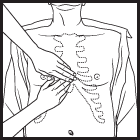
1. CALL Check the victim for unresponsiveness. If the person is not responsive and not breathing or not breathing normally. Call 911 and return to the victim. If possible bring the phone next to the person and place on speaker mode. In most locations the emergency dispatcher can assist you with CPR instructions.
2. PUMP
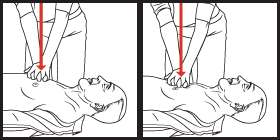
If the victim is still not breathing normally, coughing or moving, begin chest compressions.  Push down in the center of the chest 2-2.4 inches 30 times. Pump hard and fast at the rate of 100-120/minute, faster than once per second.

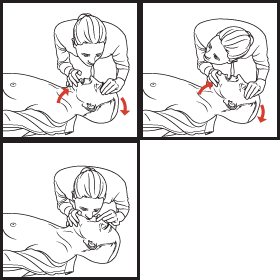
3. BLOW Tilt the head back and lift the chin. Pinch nose and cover the mouth with yours and blow until you see the chest rise. Give 2 breaths.  Each breath should take 1 second.
CONTINUE WITH 30 PUMPS AND 2 BREATHS UNTIL HELP ARRIVES
NOTE: This ratio is the same for one-person & two-person CPR.  In two-person CPR the person pumping the chest stops while the other gives mouth-to-mouth breathing.

Labels: , , , ,

Monday, July 03, 2017

Sex? Why Not!

Working with your partner

Dr. Marjorie Green, clinical instructor in obstetrics and gynecology at Harvard Medical School, works with postmenopausal women who have difficulty becoming aroused or experience discomfort during sex. She says communication with one's partner is the foundation of a healthy sexual relationship, and advises the following:
  • Be honest. Don't try to fake it if your libido has dropped. Let your partner know when sex is painful.
  • Compromise. If one of you wants to have sex more frequently than the other, you should try to find a middle ground.
  • Experiment: If intercourse is painful, the two of you might try new positions and techniques that may be more comfortable. It may help to remember that vaginal intercourse isn't the only option. Genital stimulation and oral sex may provide as much satisfaction as you need.
Dr. Green acknowledges that even the most compatible couples have to make adjustments as their relationship matures. "Being in a new relationship can bring a surge of libido, but after a while the shine begins to wear off and you may need to work at it," she says. To restore the luster, she suggests couples try doing things they used to enjoy together at the beginning of their relationship. Recreating the atmosphere that set the stage for romance years ago can have the same effect today.
Harvard Health Logo 

sex in midlife and beyond
Image: © Ridofranz /Thinkstock

If you Google 'health, mid-life sex', what comes up is a whole lot of advice, and most of it is geared toward women; women with reduced libido, women going through menopause, women requiring a psychological boost to gear them toward working at valuing sex as they once did when they were young. Having sex with a trusted, loving partner because it's good for them and it's good for their partner. The 'partner', generally a male, presumably has no issues curtailing his desire and functionality.

As in: men are always ready for sex, it's always uppermost in mind and a nagging desire that is never fully sated. Women, on the other hand, once they've passed the urgency of their child-bearing years when nature equipped them to heights of desire, can take it or leave it; mostly the latter. But then, research has shown that in leaving it they're depriving themselves of huge health benefits. Of various types, all of which no one would really want to pass over.

Scientists, for example, from Oxford and Coventry universities came up with some interesting food for thought recently when they published the results of their research in The Journals of Gerontology, Series B: Psychological and Social Sciences, that appears to suggest regular sexual activity in the age-50-and-beyond group produces benefits, from enhanced verbal fluency and visual memory; their brains responding to the stimuli associated with sex.

At Rutgers University, MRI scanners show that the brain is flooded with blood, oxygen and nutrients when orgasm occurs, and these are the active nutrients that neurological function is associated with. It is akin to physical exercise, the results of which are that exercising the body stimulates it to improved health. Men too, benefit hugely, since remaining sexually active appears to be a formula that results in prostate cancer being less likely to occur.

Cardiovascular benefits for women, and for men too, and cancer avoidance as well -- what's not to like and enjoy in that formulation? Evidence exists that people maintaining active sexual activities have the capacity to live longer, more fulfilling lives than those who eschew sexual communion. Imagine, enjoying a sex life in and beyond middle age, and in the process stimulating one's brain.

"People don't like to think that older people have sex. But we need to challenge this conception at a societal level", commented Dr. Hayley Wright of Coventry University, the study author. "There are countless reasons to continue having sex in your 50s and older, from improved emotional health to the many physical benefits", added Barbara Bloomfield, author of Couples Therapy: Dramas of Love and Sex.

A team at McGill University in Montreal found in their 2016 research that women who engage in sex regularly also improve their memory function. The researchers discovered a link between sex on a regular basis and concomitant growth of nervous tissue in those areas of the brain controlling emotions and memory.

Research scientists at the Royal Edinburgh Hospital discovered older couples engaging in regular sex appeared five to seven years younger than their contemporaries who rarely indulge in sex. The ten-year study was led by Dr. David Weeks, who found that pleasure was derived from loving sex, releasing hormones making skin more elastic and youthful. Casual sex, he found, failed the test.

Dr. Carl Chenetski of Wilkes University in Pennsylvania led a study that found couples who have sex once or twice weekly produce 30 percent higher levels of IgA, which "is the first line of defence against colds and flu". Raising the body's levels of immunoglobulin A (IgA) represents yet another health bonus resulting from having regular sex.

Trinity College in Dublin found that couples who maintain a healthy sex life in their later years were not as likely to feel depressed, and exhibited more positive feelings about aging itself. Eight thousand people over age 50 took part in that study. Research also suggests that regular sex reduces the risk of heart attack. Sex engaged in at least once weekly was found by researchers at Queen's University in Belfast to cut the risk of heart attack or stroke in half.

So, what's keeping you?!
We can only speculate whether this is driven by social or physical elements – but an area we would like to research further is the biological mechanisms that may influence this.
"Every time we do another piece of research we are getting a little bit closer to understanding why this association exists at all, what the underlying mechanisms are, and whether there is a ‘cause and effect’ relationship between sexual activity and cognitive function in older people."
"People don’t like to think that older people have sex – but we need to challenge this conception at a societal level and look at what impact sexual activity can have on those aged 50 and over, beyond the known effects on sexual health and general well being." Dr. Hayley Wright, Centre for Research in Psychology, Behaviour and Achievement, Coventry University, Coventry, England
Image credit: Shutterstock

Labels: , , ,

Wednesday, June 21, 2017

Sex Roulette

"Oftentimes, people don't realize they have a gap in their knowledge. People don't know what they don't know."
"I don't think we can call that [2006 survey questioning Canadian women where 64 percent reported an unintended pregnancy, with 61 percent reporting in 2017] much of [a] change."
Dr. Jennifer Blake, chief executive, Society of Obstetricians and Gynaecologists of Canada

"A person who is using withdrawal as a contraceptive method is someone who has not planned for contraception, period. They haven't thought about the need to practice contraception. A significant proportion of Canadian women are essentially making a spontaneous decision in the absence of any planning for sexual activity."
"It's fair to say a wide swath of the sexually active adult population in Canada is not taking care of their sexual and reproductive health."
"We sometimes make the assumption that as teenagers grow into young adults and then into full adulthood, they become naturally more responsible. But we know condom use declines with age. I don't see anything that shows people get better at protecting sexual and reproductive health as they get older."
Alex MacKay, executive director, Sex Information and Education Council of Canada
Condoms are one of the favoured forms of contraception, according to a survey of more than 3,200 Canadian women. WPpost image

A recent survey undertaken by the Society of Obstetricians and Gynaecologists of Canada revealed some interesting, somewhat surprising and most certainly disappointing realities. One of the survey's major findings was that women no longer seek contraceptive information from doctors; instead they look online for their options, even though many of the women responding to the survey stated that they don't necessarily trust online information.

The fact that women, who at one time saw their doctors on a yearly basis for an annual Pap smear, and that routine has been placed on a back burner, with women seeking out their family doctor less frequently may explain in part the situation. What was also revealed was that one in four women has no idea how to proceed when they miss taking a birth control pill, or other hormonal contraception.

IN response to this situation the SOGC is preparing to release a new online source they have named S.O.S., meant to guide women through that scenario and what their response should be. The website SexandU.ca has also been relaunched, with plans to publicize a media campaign later in the year. An online program will expose women to the best forms of contraception from among an array of options, based on age and circumstances.

What the results of the survey revealed that turned out to be the most surprising element relating to contraceptive methods was the identification of one of the most favoured contraception methods; withdrawal. Women in the survey placed withdrawal in third place, following birth control pills and condoms, out of a menu of various contraceptive options.

While Dr. Blake doesn't mind acknowledging that withdrawal can be recognized as a type of contraception, she emphasizes that this cannot be considered a sound pregnancy prevention method, in particular for younger people. Let alone the concerns surrounding the contact and spread of sexually-transmitted infections.

That, added to the fact that most women appeared unaware of many of the contraceptive options that currently exist, surprised the researchers. That many women knew nothing of intrauterine devices (IUDs) as representative of one of the most effective contraceptives available, points to a severe lack of responsibility on the part of women of child-bearing age who are sexually active. A mere 3.7 percent of women in the survey reported having used a copper IUD, while 7.1 percent only had used an intrauterine system or hormonal IUD.

The survey results appear to confirm previous research findings that birth control pills and condoms overwhelmingly represent the most popular forms of birth control. Yet the frequency with which women cite withdrawal as a contraceptive method has the researchers concerned. Withdrawal was used by close to 29 percent of women between the ages of 15 and 19 who responded to the SOGC survey.

In comparison, 45 percent of women between 20 and 29 and 42.7 percent of women between 30 and 50 also made contraceptive use of withdrawal; age demographics that the medical profession might imagine would know better. Concern was also raised over the fact that greater numbers of young women between the ages of 20 to 29 used withdrawal than did teens.

That old adage that "We get too soon old and too late smart" appears to have undergone a strangely unaccountable reversal.

Labels: , , , ,

Wednesday, April 12, 2017

Boosting the Female Libido After Menopause : Risks

"[A spontaneous, innate sex drive similar to food hunger does not reflect reality] and isn't important to drive [a woman's] sexual interest or behaviour."
"When women talk about sexual interest, what they're really talking about is a response to the context around them, and it's this context that isn't examined properly."
Dr. Jonathan Huber, obstetrician/gynecologist, Ottawa

"[Most commercially available tests measuring testosterone in women were developed for men] which are ten times higher than they are in women."
Dr. Lori Brotto, University of British Columbia sexual health laboratory
Testosterone gels approved for men are being widely prescribed “off label” to women in doses anywhere from one-third to one-tenth the daily dose prescribed for men. Handout

No testosterone gels, creams or patches for women to use in bolstering their sexual drive are approved in Canada. Yet gels approved for male use are being prescribed "off label" to women and in doses ranging from one-third to one-tenth those prescribed as daily doses for males. There are some inconveniences in using these gels; they promote the growth of hair. Taking that into account, women rub the gels into areas like armpits: "You put it some place you don't mind seeing hair growth", explains Dr. Robert Reid, chair of the division of reproductive endocrinology and infertility at Queen's University in Kingston, Ontario.

Dr. Reid and Dr. Ann Kathryn Korkidakis are co-authors of a recent study where they pooled the results of 35 earlier studies of about 4,800 menopausal women to reach the conclusion that those who were prescribed testosterone experienced "improved sexual function scores", with a slight increase (one per month) of the number of "satisfying sexual episodes". The study grew out of the reality that women are being prescribed testosterone for low libido, even though studies question the usefulness of testosterone over placebos. This latest study was published in the Journal of Obstetrics and Gynaecology Canada.

In the interests of procreation and perpetuation of the species nature designed women to be responsive to male sexual overtures and to initiate them during their prime child-bearing years. Once that period in their lives had passed and the female body no longer produced eggs to be fertilized nature in her great wisdom must have decided there was no longer any need for females to be receptive to intercourse and the result was a hugely decreased interest in sex. But human ingenuity always seeks ways to override nature's blueprint....

Risks of side effects that face women with the use of testosterone go beyond the growth of unwanted hair, to include acne, androgenic alopecia (male pattern balding) -- horrors! -- a more masculine, lower timbre voice, or a propensity toward expressing aggression when doses are too high. Along with more negative blood fats and "as yet undetermined", long-term effects on heart disease and breast cancer, according to the study's results.

Post-menopause, testosterone production decreases in women by roughly 25 percent. For those women who have had their ovaries surgically removed, circulating testosterone decreases by a whopping 40 to 50 percent. Dr. Reid does stress that additional factors that would include fatigue, stress, relationship issues and drugs known to suppress libido such as anti-depressants, should be ruled out before a woman is prescribed testosterone. Even then, he says, a third of women may benefit while "The other two-thirds come back and say it didn't make any difference. So I say, well, stop it."

The working theory on the use of testosterone is to prime the brain to become more alert to sexual cues. Yet it is not fully understood at what level a woman can be diagnosed as "deficient". For her part, Dr. Lori Brotto fears the paper may lead to wider off-label prescriptions to women. She no doubt bears in mind a U.S. Food and Drug Administration advisory panel rejected approving a testosterone patch developed by Procter & Gamble for women in 2004, on the basis that insufficient safety data was available.

In addition to which Canadian and American regulators two years ago issued new alerts linking testosterone replacement products with an increased risk of heart attack and stroke. Health Canada has had Valeant Pharmaceutical's Addyi, a drug for low libido in women, under review for over a year. The cost is prohibitive at $800 monthly, and the fact that there is a warning it cannot be taken with alcohol may have curbed uptake, since Amerian sales of the product have been poor.

Labels: , , ,

 
()() Follow @rheytah Tweet