Ruminations

Blog dedicated primarily to randomly selected news items; comments reflecting personal perceptions

Monday, January 08, 2018

Familial Dysfunction

"To the extent you are actively trying to distance yourself and maintain that distance, that makes you estranged."
"Estrangement is a] continual process. In our culture, there's a ton of guilt around not forgiving your family. [So] achieving distance is hard. But maintaining distance is harder."
Kristina Scharp, assistant professor, Utah State University, Logan

"[Estrangement] occurs across years and decades. All the hurt and betrayals, all the things that accumulate, undermine a person's sense of trust."
Kylie Agllias, social worker, Australia

A survey commissioned in Britain by Stand Alone, a charity whose purpose is to give support to estranged people, concluded that of two thousand people interviewed, eight percent claimed they had severed communication with a family member. Adults reported being estranged from parents for three main reasons in a study published in the journal Australian Social Work: abuse, betrayal and poor parenting, with instances where there was overlap between those issues

According to social worker Kylie Agllias who wrote "Family Estrangement" in 2016, most of the participants described their estrangement having taken place after childhoods where they experienced poor connections with their parents. As for Dr. Scharp's study published in June, 52 adults were interviewed and found to have distanced themselves from their parents in a variety of ways over time; some creating a geographic distance, other making no effort to fulfill familial expectations.

An example was given of one 48-year-old woman who had cut off all contact with her father for a 33-year period. When he was ill and hospitalized she made no effort to see him, nor was she interested in attending his funeral. Others interviewed for the study made the decision to limit their contact with family members to superficial conversations, while yet others dramatically reduced contact altogether.

One public servant living in Ottawa, now 47, maintains some contact with most of his family, but a psychologically remote one. He dreaded family holiday meals and spoke in particular of his father's temper, upsetting him from the time he was a child forward. He resented having been entrusted with the care of his two younger siblings, a situation that led in adulthood to disinterest in having any children of his own.

When he decided to have a civil ceremony in marrying his long-term girlfriend he decided not to invite any members of his family, concerned his father might be disruptive. "I agonized over inviting them or not, for a long time", said Nikolaus Maack. "But in the end, decided, 'I can't have them there'." It was through Facebook that his family discovered the marriage had taken place.

This is an instance where a social Internet site has taken the place of intimate family, and it is likely one of countless such instances when personal intimacy and links to family are subordinated to social media sites. Nowhere in the research cited is there even a whiff of a hint that the people who chose to estrange themselves might themselves be afflicted with some minor disorder having little to do with their family other than resentment.

Some children at an early age may very well experience feelings similar to authority affective disorder which grows over time and extends beyond the family, becoming a social incapacity to get along with anyone. That, quite aside from legitimate disruptions in family life and the rejection of parents and/or other family members resulting from unpleasant or imagined early experiences leading to disaffection and emotional dislocation.

Labels: , , ,

Wednesday, November 02, 2016

Speaking The Dismal Truth to Political Correctness

"Because much of the aboriginal population in Canada is just satisfied being alcohol or drug abusers, living in poor conditions, etc. ... they have to have the will to change, it's not society's fault."
"And of course this has nothing to do with missing and murdered Aboriginal women ... it's not a murder case ... it's [sic] could be a suicide, accidental, she got drunk and fell in the river and drowned who knows ... typically many Aboriginals have very short lifespans, talent or not."
Police Sgt. Chris Hrnchiar, Ottawa Police Services

"Although I had long since forgiven the officer for his racist tirade, I have a renewed sense of disappointment based on the new details that we learned today."
"Even if [his role] was tangential, it's close enough to me that somebody that close should display and exercise greater sense of professionalism and decency."
"Annie deserved better, far, far better."
"The greater issue for me is racism in policing. There should be some reaction at the organization level, too. They can't deny now that there is an issue of racism among their ranks."
Veldon Coburn, adoptive father of Annie Pootoogook's child
Inuit artist Annie Pootoogook, of Cape Dorset, Nunavut, is seen here in a still from a 2005 documentary. She was found dead on Sept. 19 in Ottawa.
Inuit artist Annie Pootoogook, of Cape Dorset, Nunavut, is seen here in a still from a 2005 documentary. She was found dead on Sept. 19 in Ottawa. (CBC) 
"[Hrnchiar's actions were] completely inappropriate, [his] peripheral involvement [in the case should have excluded him from] insulting and racist [comments on Annie Pootoogook's death]."
"[Hrnchiar's comments] tarnished [the police service reputation. The community [Inuit community in Ottawa] demanded an investigation immediately; [Hrnchiar will] forever be labelled by his comments."
Prosecutor Christiane Huneault
It is a tragic but indisputable fact of life that indigenous peoples of North America have always had an irresistible attraction to alcohol, and it has ruined the lives of all too many who fall prey to its addictive misery. The effect of alcohol for the First Nations people of Canada has robbed many of the dignity of life, of a life well lived. Those addictions have transformed the culture of proud peoples helpless to defend themselves from their own genetic disposition to crave the effects of alcohol poisoning even while it wreaks havoc with their lives and their communities.

A case in point is the short life of Inuk artist Annie Pootoogook, an Inuk artist whose paintings have been recognized for her authentic genius in portraying through her drawings, the life of Inuit in the Far North. She was the recipient of notable awards for her talent, her paintings drew attention in North America and in Europe, and have been much in demand. An award of $50,000 through the Sobey Art Award furnished her with ample indication that she was highly respected as an artist. Validation came in the form of her works being exhibited across the globe.

But she latterly lived on the street in Ottawa, and had done so for almost ten years. Her struggles with addiction left her living in shelters or on the street, panhandling, content with the sale of her drawings to anyone who would pay the $25 or $30 she would part with them for, providing the means by which she bought cigarettes and alcohol. She had a common-law relationship with a non-aboriginal man who also lived on the street and at one point they acquired a publicly-paid apartment of their own.

Fine Liner Eyebrow, by Annie Pootoogook
Fine Liner Eyebrow one of Pootoogook's drawings on display at the National Gallery of Canada. (Annie Pootoogook/National Gallery of Canada/Dorset Fine Arts)

Those who followed this woman's career were dismayed at the turn her life had taken. She had decided at one point that she would seek help for her addiction, and she did. But nothing seemed to give her the required impetus to manage to transcend her craving that left her a far lesser person than she was. She had a child while living rough on the street, the baby was delivered in a bathroom at the Salvation Army installation in downtown Ottawa.

She and her common-law husband meant to raise the child, but living as they did it was impractical for the sake for the child, and the child was surrendered for adoption. She had had another child at an earlier time when she was living in her home community of Cape Dorset in Nunavut, and that child was being raised by other Inuit, as is the custom within the Inuit community. On September 19, Annie Pootoogook's lifeless body was discovered in the Ottawa River. By that time she was no longer with the father of her child.

Although her death was initially thought to be accidental in nature, police have since felt that perhaps there might have been something suspicious about the death, that particular "elements" warranted additional investigation. And so the Police Services asked the public for assistance if anyone had any information on the artist's whereabouts and activities in the days preceding the discovery of her body. Of course, there was a news report on the death, and in response to the news item, Sgt. Hrnchiar wrote his comments on his Facebook account.

It was the comments that he committed to that sparked controversy when the adoptive father of Annie Pootoogook's daughter happened to see them on line. The Facebook account features Sgt. Hrnchiar in uniform, displaying a police badge surrounded by a black band, in memory of a fallen fellow officer. Mr. Coburn brought those comments to the attention of the chief of police in Ottawa and the city's mayor, and an internal investigation ensued.

It transpires that although Sgt. Hrnchiar was not professionally involved in the investigation, he was a sergeant in the forensic identification section and as such supervised the detective who did work on the case, and who was responsible for identifying Ms. Pootoogook. The upshot of the investigation of the sergeant's unsolicited and inappropriate -- given the circumstances -- public remarks was his apology while pleading guilty to two counts of discreditable conduct under the Police Services Act.

The public censure that arose over the revelations of his unseemly, however true comments did in a sense compromise the police in the opinion of the Inuit community, thus doing a grave disservice both to the police services and the Inuit community for his lack of tact. The impetuous, ill-thought-out nature of this man's decision to submit to his wish to comment on this matter was clearly inappropriate given his profession and the situation of an open criminal investigation.

However, because he has expressed remorse for his posting of those comments, and suggested that he be exposed to help from the diversity and race relations unit, he has partially redeemed himself in the opinion of his peers and police authorities. He has, through his reaction to charges against himself, acknowledged the deleterious impact of his comments on others. And while the indigenous community would prefer to see this officer fired, for this man of 30 years' experience who apologized profusely, a penalty of a three-month demotion to first-class constable and mandatory multicultural training has been proposed.

Untitled (Kenojuak and Annie with Governor General Michaelle Jean)
Pootoogook made this drawing following her visit with former governor general Michaelle Jean when an exhibition opened at the National Gallery in 2009. (Annie Pootoogook/National Gallery of Canada/Dorset Fine Arts)

Labels: , , , ,

Sunday, October 23, 2016

Breathtakingly Audacious Corruption

"Mr. Martin has hundreds of thousands of dollars to spend on his campaign and to woo the very small Shuswap electorate. It's unlikely any of his opponents have those kind of resources. Hopefully, voters get access to the full information about how their council has been run and change things."
"Corruption in our political system -- whether on or off reserve -- can never be tolerated or overlooked, as integrity is foundational to democracy."
"[Shuswap members] deserve to know exactly what has gone on with their band leadership and millions of their dollars."
Jordan Bateman, spokesman, Canadian Taxpayers Federation
Bethany Lindsay/Postmedia/File
Bethany Lindsay/Postmedia/File   The Shuswap First Nation has an on-reserve population of about 100 people, and is located on the outskirts of Invermere near the B.C.-Alberta border
 
When the previous Conservative-led government in Canada enacted the First Nations Financial Transparency Act, to ensure that band members on and off reserve were kept informed of what their band councils were engaged in, and how they used the funding available to them through Aboriginal Affairs and Northern Development Canada, it was revealed by investigative reporters that the Shuswap First Nation, a tiny British Columbia band, had been manipulated to transfer $4.2 million of band funding over a period of 3-1/2 years to a single family.

This is a one-hundred member band, whose members live on their reserve located on the outskirts of Invermere close to the British Columbia-Alberta border. A forensic audit carried out by Ernst & Young authorized and funded by the federal government after revelations in the news media pointed out this gross mismanagement of band funds, was verified when the auditors produced a thirteen-page report made available to band members and handed over as well to the RCMP for investigation.

Incumbent Shuswap First Nation Chief Barbara Cote helped wrest control of the band from the family of former chief Paul Sam.
Postmedia/File   Incumbent Shuswap First Nation Chief Barbara Cote helped wrest control of the band from the family of former chief Paul Sam.

Current Chief Barbara Cote, along with the band's two councillors advised band members through a written statement that "It [the matter of the abuse of band funds] is under RCMP investigation." A "general and widespread lack of supporting documentation" was highlighted in the Ernst & Young report, noted in their completed audit. Which made note of a lack of proof that expenditures existed related to transactions undertaken by the band, which had a disconcerting habit of advancing the financial affairs of the Sam and Martin family.

In his 80s and confined to a wheelchair, the band chief was paid, tax-free, $741,262 to administer the band affairs, representing one hundred individuals of the band; that would be the equivalent of $1.3 million had taxes have had to be paid on that salary. Paul Sam's wife Alice Sam, in her capacity as the band's bookkeeper received $690,481 as her salary, equivalent to $1.2 million. While their son, Dean Martin was paid slightly below $1.4 million between April 2011 and November 2014.

Alice Sam (left) and then-Shuswap First Nation Chief Paul Sam in 2014. Dan Walton / Columbia Valley Pioneer files
And it is former Chief Sam's son Dean Martin who is now casting himself as an incoming chief should the band choose to vote him into office, and usher out the three incumbents, Chief Barbara Cote and councillors Tim Eugene and Rosalita Pascal who have represented the interests of the band ever since the Sam family was locked out and ousted when it was revealed through the media how they had manipulated band funds to service their personal craving for wealth.This, despite the police probe into the illegality of the transactions the Sam family had engaged in to enrich themselves, preying on the band's trust.

Moreover, two private companies: Shuswap Woodlands Restoration and KDC Sand & Gravel benefited by an additional $1.36 million in undocumented funds from the band's financial reserves. Two of Dean Martin's sons own each of these companies. As well, an additional $66,481 was used during that three-year period "on flights to destinations such as Las Vegas, Chicago and Varadero, Cuba for travel of an apparent personal nature", concluded the Ernst & Young audit.
Dean Martin, candidate for election in the Shuswap First Nation, and son of former chief Paul Sam and former councillor Alice Sam.
Dean Martin, candidate for election in the Shuswap First Nation, and son of former chief Paul Sam and former councillor Alice Sam. Greg Amos / Columbia Valley Pioneer Files

Yet, there's more that the audit discovered which they revealed in their report. Two amounts of $15,000 had been "diverted" for the purpose of clearing the credit card debts of Dean and his son Richard Martin, with another $20,000 going to pay down Dean Martin's former wife Pam's line of credit. Another $28,000 was used to pay for travel and accommodation for a softball team. These revelations are a shocking example of what some First Nations reserves are labouring under, under the guidance and direction of conscienceless leaders.

According to its 2015-16 financial statements, there is a $211,333 loan listed as an outstanding liability, taken out by KDC Sand & Gravel. Another drag on band expenses is the litigation launched against some ex-employees, including Dean Martin. In view of this egregious example of criminal malfeasance on the part of the elected chief and councillors of the Shuswap First Nation until they were removed once news of their skullduggery became public knowledge, it seems peculiar indeed that the current Trudeau government is prepared to revoke the First Nations Financial Transparency Act, citing their view that insufficient consultation with First Nations took place before the act was brought into law.

Labels: , , ,

Thursday, February 25, 2016

Accidental Slaughter

Those who know him attest to his sterling character. He is characterized as a personable, charitable person who goes out of his way to help others. He is empathetic and in short, a very nice person. He is physically presentable, young, and the fact that he is a hard worker represents yet another bonus. Little wonder that any woman might find him marriageably attractive. It doesn't hurt one little bit that he is set to inherit a fortune from a family business. He is what used to be called a "catch".

And he was caught, it seems, by a young woman who is prepared to share his future. They were destined to be married. They still are, but it seems that the marriage that was in an impending state may yet be carried through, but it will be some time before the two  young people are able to be in one another's company for the foreseeable future. He will be called to duty elsewhere, for it appears likely that he will shortly be sentenced to a likely ten years in prison.

This very likeable young man who thinks deeply of the welfare of others around him, also has a background of driver carelessness on the highways. The young man who was known to shovel snow, cut lawns, rake leaves and otherwise be of assistance to the elderly, who would stop to offer directions to people, who if a vehicle broke down would ask if he could be of assistance, is also a man guilty of the deaths of three young children and their grandfather.
"As I  listened in horror [in court during his trial where he has been charged with impaired driving on four counts causing death, and two causing bodily harm], to the catastrophic consequences of my actions [in victim impact statements], I knew my words would be of no consolation. Ever since the tragedy that occurred as a result of my inexcusable conduct, I have wanted to say that I'm sorry, and apologize to the whole family, from the bottom of my heart."
"I will spend the rest of my life attempting to atone for my conduct, and devoting myself to educating the public of the disastrous consequences of drinking and driving."
Marco Muzzo, Newmarket, Ontario courtroom

Daniel Neville-Lake, 9, Harrison 5, and Milagros 2, and their grandfather, 65-year-old Gary Neville were in their grandparents' Grand Caravan on their way to Brampton, Ontario. With them was the children's great-grandmother. They never made it to their destination, because a car driven by 29-year-old Marco Muzzo who though he had consumed quite a lot of alcohol, thought he was perfectly fit to drive, and ended up T-boning the car conveying these family members.

While the children's grandmother Neriza Neville and her mother Josephina Frias survived, the other four passengers did not. Directly after the accident -- which the young man realized was imminent and responded by holding down his brakes to little avail -- he dialled 911. The scene was a devastation of crushed and broken bodies, severed and displaced spinal cords. As for Mr. Muzzo, when authorities arrived he was found to be profoundly under the influence of alcohol.

Muzzo court Neville-Lake supporters
Supporters of the Neville-Lake family appeared at the courthouse in Newmarket, Ont., where Marco Muzzo made a brief court appearance.  (Jean-Philippe Nadeau/CBC)

He had a previous record of driving offences which included speeding and texting while driving. And on this occasion he required physical support to remain standing, his eyes were glassy and he reeked of alcohol. He was returning home from a bachelor party having flown in a private jet from Miami. Forensic evidence indicated a sky-high blood alcohol level, between 190 and 245 mg per 100 ml of blood, roughly three times the legal driving limit of 80.

He recalls 'only' three or four drinks on the plane after having consumed alcohol until early morning the previous night.

York Crash
Four of the six people that were travelling in this van died after a horrific crash last year in Vaughan, Ont. (Pascal Marchand)

Labels: , , ,

Saturday, February 06, 2016

Ordeal of Fear

"We have relived the details of that night for each of the 1,200 days and nights since. [It was the] most outrageous nightmare that one could ever inflict on a family."
"[We] waited together helplessly in fear. I've never been so desperate and lost."
"Who might be next on his list? I constantly worry Mr. Lutczyk will continue to exact revenge when he’s released from prison."
Maureen Potts, Oshawa, Ontario
David and Maureen Potts in front of the court house in Oshawa, Ont., Thursday Feb. 4, 2016. Former Oshawa city councillor Robert Lutczyk is on trial, accused of kidnapping Potts in 2012.
Tyler Anderson/National Post    David and Maureen Potts in front of the court house in Oshawa, Ont., Thursday Feb. 4, 2016. Former Oshawa city councillor Robert Lutczyk is on trial, accused of kidnapping Potts in 2012
"I do truly apologize. I don't ever want you to think, Maureen, that this would ever happen again, that I stew in hatred, because I don't."
"I don't want her to feel that I'm a threat to her, or David, or their family, or their four children. I want her to know this. I am very sorry, Maureen, what happened. I am very sorry, David, what happened."
Robert Lutczyk, former Oshawa city councillor

Former Oshawa politician Robert Lutczyk
Ron Pietroniro / Metroland file photo 
OSHAWA -- Robert Lutczyk, the former Oshawa councillor, is facing kidnapping and weapons charges

What happened was indeed something to be sorry for. It was an event that the victim, David Potts, solicitor for the City of Oshawa, will always be sorry that he was targeted for. An excruciating three hours of his life at the mercy of a man whose psychotic state was evident and he was the target. It was a miserable kidnapping that left his wife Maureen and his four children in the grip of fear, feeling they might never see their husband and father alive again.

On an 2012 night in October, Mr. Potts had returned home only to be confronted in his driveway by Mr. Lutczyk holding a gun. His wrists were chained, and he was taken to an isolated industrial compound and in a garage there given the order to be seated on a stool. In the garage was an assortment of weapons; over 2,000 rounds of ammunition, prohibited firearms, a Kalashnikov variant and a Russian anti-tank rifle with a three-kilometre range.

There were propane tanks, an uncompleted pipe bomb, and parked within there was a cube ban fitted with armoured metal plates. Not the kind of armoury anyone might expect to find secreted in a garage in a middling-sized Ontario city. But perhaps representing the measure of the man who had kidnapped the town solicitor. Whom his abductor blamed for business dealings that had gone awry through a municipal prosecution that Mr. Potts had approved a decade earlier.

And on this occasion it was obvious that Mr. Lutczyk had decided it was time to take his revenge. Then a strange thing happened, when Mr. Potts found his emotional situation undergo a change; his fear dissipated and instead he became angry, refusing to become a victim. He became instead someone with moral authority who had decided to leave fear behind and inform his abductor that he was forgiven his trespass.

Had his abductor decided to kill his victim in revenge for his role in a bylaw dispute where legal advice given by Mr. Potts resulted in Mr. Lutczyk's wages being garnisheed along with a dispute over property owned by his father, he appeared to have a change of mind. Instead, when Mr. Potts asked to be given something to eat, they drove together to a take-out establishment where Mr. Potts managed to signal to a passing police car that there was trouble.

A police chase ensued, and the pair returned to the industrial compound where Mr. Lutczyk grappled with Mr. Potts attempting to haul him back into the garage using him as a shield, but failed.  While Mr. Potts was then left safe in police custody, his abductor managed to hold police off for another day before being arrested and placed in custody. A later trial found him guilty of kidnapping with a firearm and guilt in two charges of possession of prohibited weapons.

At the subsequent sentencing hearing, the Crown argued for a ten year sentence, with the defence counsel holding out for time served [giving their client double credit for pre-conviction time], leaving him four years left to serve. This is a man who, while fending off police for a 26-hour-period, confounded police officers searching for an end to the impasse, deciding to fly in a psychiatric expert, and call in Lutczyk's daughter to entice him to surrender.

Negotiators, tactical units and regular officers all desperately attempting to manage a man equipped with dangerous weapons, posing a danger to the public. When, eventually, he emerged from the garage in the industrial complex where he had held Mr Potts, he was wearing body armour. While in incarceration later, he had been held for the most part in segregation, an isolation that he had himself requested, in a state of perpetual paranoia.


Labels: , ,

Wednesday, February 03, 2016

Suddenly Quadriplegic

"It's a strong reminder to all players and coaches that checking from behind is too dangerous and it can cause devastating injuries just like those Andrew Zaccardo sustained."
"Participants in sports activities are not above the law -- they have to act as reasonable people and take care not to injure others. If they fail, and act in an unreasonable manner, they can be held responsible."
"More than anything it's a tragedy. Something that could have and should have been avoided was not, and now a boy is in a wheelchair for life. It's really sad."
Stewart Kugler, lawyer for plaintiff Andrew Zaccardo, 21

"Never did [Gauvreau-Beaupre] lose sight of Zaccardo or not know where he was. Yet he never tries to stop or attempt to avoid him, quite the contrary."
"Even if practicing a sport comes with inherent risks, participants can’t increase those risks in an unreasonable way. A participant in a sport has the right to expect that other players take reasonable measures to avoid [hurting] him – even in the case of a dangerous sport."
Quebec Superior Court Judge Daniel Payette
MUHC  LIF
MUHC LIF   Andrew Zaccardo was in Grade 11 when he was hurt, and spent the next two years in hospitals and rehabilitation centres.

Hockey is Canada's national sport, beloved by children who play it in the streets in front of their homes, in backyard rinks, and public playgrounds, and then continue to play the sport as they become adults. It has never lost its popularity with the public at large, happy to support non-professional and professionals playing the game by securing tickets to games to ensure that the game will always go on as a mainstay of Canadian recreational culture.

All young boys in Canada who play hockey dream of becoming a big league star, another version of the familiar celebrities whose game dominates the culture becoming the new yardstick of achievement for young, aspiring players. Children, both boys and girls, who join junior leagues, become hugely competitive while many of their parents push them to greater heights of performance and endurance, losing sight of the pleasures of the game itself. With that emphasis on winning above all else, a level of violence is tolerated.

Six years ago in Quebec, playing in the provincial Midget Espoir [hope] category, two young and aspiring hockey players were classed among the best of their age group in that category. All the players in their age group wore hockey jerseys with 'Stop' signs on their backs in recognition of the growing awareness of hockey injuries, in hopes of avoidance, and more to the point emphasizing the prohibition against hitting from behind.

One of those players has realized his dream. Ludovic Gauvreau-Beaupre, now in his early 20s, plays semi-professional hockey in the North American Hockey League, destined no doubt, to go on as his skills improve and he moves upward toward professional hockey to play in the big leagues. The other, Andrew Zaccardo, is confined to a wheelchair, without use of his lower body,  unable to cut up the food on his plate, bathe, or dress himself.

In Grade 11, age 15, he was playing for the Midget AA Laval Patriotes. He was a talented hockey player close to the top of his league for goal scoring, a fast skater. A game against the Royal de Montreal changed all that.Twenty seconds into the game Ludovic Gauvreau-Beaupre skated behind Andrew Zaccardo, right arm raised below neck level to slam him into the boards, leaping into the air to hit with full force.

At trial in Quebec Superior Court, Justice Daniel Payette has ruled that Gauvreau-Beaupre was at fault. In his defence he had argued in his testimony that he hadn't seen Zaccardo as he went himself for the puck. And nor did the referee, Jonathan Cloutier, 80 feet from Zaccardo at the time of impact deem the collision to be anything other than an accident; going so far as to suggest that Zaccardo himself was somehow to be blamed for the collision.

There was film footage of the event, however, leading Justice Payette to conclude that on the evidence the guilt lay with Gauvreau-Beaupre's deliberate slamming of Zaccardo into the boards. Even though it was Gauvreau-Beaupre's contention that hits of this type are common, irrespective of rules forbidding them. Contending that since that is so, Zaccardo implicitly assumed the risk of being checked from behind when he stepped onto the ice.

Andrew Zaccardo spent two years of his young life under rehabilitation in hospital and rehabilitation centres after the accident.  While there he managed to complete high school. Since then he has finished CEGEP and has begun to study at Concordia University. He will never be fully physically functional again. The end result now has been the awarding of $8-million in damages to Andrew Zaccardo that will be paid by the Chartis Insurance Company of Canada.

Of that total, $6.6 million will cover the  young man's care and assistance for his lifetime, representing as well loss of income. Another $1-million was awarded to his mother who terminated her employment to look after her son. His father was awarded $350,000 and his younger brother an additional $50,000 in compensation for their suffering resulting from Andrew Zaccardo's life-shattering injury.
"We truly hope that this judgment reminds all hockey players to never check from behind, and that this judgment helps prevent other hockey players from getting severely injured like my son Andrew did."
Zaccardo’s mother, Anna Marzella
 Somehow, it seems as though justice hasn't fully been achieved when the unrepentant individual who had deliberately taken the decision to injure another player to the extent that a man's life has been so deleteriously impacted, while the perpetrator continues on with his chosen life trajectory without penalty for his  act of sociopathic malice.

Labels: , , ,

Monday, December 21, 2015

Why?

"It accelerated, and it just plowed through the group of people, and we were in shock. Then it kind of hopped off the curb, and there was a lady that was stuck under the car, and when it hopped back on the curb, she was laying between the curb and the street, and she wasn't moving at all."
"There was another guy who was right next to her passenger window, banging on the door to get it to stop, and then the car accelerated again, and that guy flew off the car. Then it made a right onto Flamingo road, and that was the last we saw of the car."
Witness, Los Angeles resident Michal Jackson


Only someone in the venomous throes of dementia or a pathologically twisted mind could possibly deliberately place the lives of people -- men, women and children -- in danger, and nominate themselves to become the weapon that with malice aforethought would kill a human being, giving that human being no opportunity to react to save herself, then reprising the act once again, then yet again, maiming innocent people as a punishment for being in the right place at the wrong time.

A woman? A woman in her early twenties? A woman with a three-year-old child in the vehicle she was using as a weapon of mass destruction? Yes, to each of those questions.

Lakeisha Holloway, a suspect who drove into pedestrians on the Las Vegas Strip, killing one person, is shown in this Las Vegas Metropolitan Police Department booking photo released on December 21, 2015.
Police say suspect Lakeisha Holloway had been living out of her car -- Reuters

And in the week leading to the season of joy and goodwill with Christmas on the cusp of thrilling young children who have enjoyed the preliminaries to the arrival of December 25: coloured lights and the music of the holiday, there is now one eleven-year-old boy in critical condition in hospital. Fully 36 people were injured, some of them critically, while one person is dead.

The woman who wrought such an mind-boggling atrocity was living a life of hopelessness. Living, as it happens, far from her home in Oregon, in the very car she used to destroy the lives of others. Perhaps when people find themselves in such a mentally precarious state, the bitterness that may overwhelm them places no value on anything, and in fact extends the vitriol of that bitterness to strangers.

Compelling the mentally deranged to cause boundless grief, suffering and pain to others. The ripple effect of one woman dead, 36 people injured, some of whom may not completely recover their former bodily functions will reach out to others around them who care for their welfare and who will despair with them that they just happened to be on the alluring, vibrant, colourfull Las Vegas Strip on December 20, 2015.

Las Vegas police investigate following a traffic accident near the hotel and casino where the Miss Universe pageant was being held in Las Vegas


Reuters -- Las Vegas police at the scene of the crash 
 

Labels: , , ,

Saturday, November 07, 2015

 Quebec's Language Paranoia

"It was our practice to post signs in the two languages, considering that 15 percent of the population of our region is anglophone."
"So we had to take down certain signs, in particular for directions."
Genevieve Cloutier, spokeswoman, Health authority, Gaspe, Quebec

"All the signs are bilingual. It's bigger in French. But in the town of Gaspe, there are a lot of people who speak English. As far as I'm concerned, with the Office de la langue francaise, enough is enough."
"Yes, we  have a yellow strip on our cards. But most of us have it in our pockets. How are they [anglophone patients] supposed to know?"
"Get out. That's the message I'm getting. If you don't want to live in Quebec and speak French, just get out of the province."
Margo Adams, nurse, Hotel-Dieu, Gaspe 
Hôpital Hotel-Dieu de Gaspé
Google Street View    Hôpital Hotel-Dieu de Gaspé

"This is a public establishment trying to accommodate its clientele, which is a perfectly reasonable thing to do. Not only is it a public establishment, it's a public health and social services establishment where fifteen percent of the population is English-speaking."
"[The province should regulate] to make it clear that access to service means access to information too, and signs happen to be a way that people get information rather than running around trying to find people wearing yellow badges."
Eric Maldoff, chairman, Quebec Community Groups Network, health and social services committee

Canada is an officially bilingual country. New Brunswick, given its large French population is also officially bilingual, and throughout the rest of Canada municipalities make an effort to provide French language services where population density deems it common sense to do so. In some non-bilingual provinces, other than federal offices, bilingual services are considered a requirement.

It is, after all, common courtesy in a bilingual country to serve people in their official language of choice.

In Quebec, however, things are different; the provincial operates as a unilingual entity. Learn French or flounder. In the United States, courtesy and tourism combine to produce dual English/French signage on highways. It's a matter of practicality, courtesy and safety. Cross the boundary from the United States into Canada in the Province of Quebec and no such even perfunctory recognition that an English-majority demographic enters the province as tourists or to transit to Ontario.

And in Quebec when municipal authorities make an effort to be helpful in recognition that not all residents have familiarity with the French language, the Office quebecois de la langue comes prowling. As the province's language watchdog, it takes it mission and its authority very seriously. And so it was when it informed a Quebec hospital that bilingual signs it posted to aid in guiding anglophones, that English signage was not permitted.

In the past ten years the health authorities had authorized bilingual signage "to facilitate access to our services in English". However, as the bulk of patients using the hospital speak French, only health and public safety warnings are permitted to be posted under the provincial language laws. Hospital hallway signs, as an example, to guide in English where a particular department can be found, are out.

Bilingual signs indicating to anglophones where X-rays are taken now will simply read "rayons X". Visiting hour signage will now also be in evidence only in French. Nurse Margo Adams, who works at the hospital complained that older people who haven't learned to speak and read French will be deleteriously impacted by the removal of bilingual signage. Instead, they are advised to look for English-speaking staff, who will have a yellow strip on their I.D. cards.

According to a spokesman for the language watchdog, anglophone patients remain entitled to treatment in English, assuming they find their way to their doctor. However, the Charter of the French Language, Bill 101, emphatically stipulates that unless a majority of a hospital's users speak a language beyond French no bilingual signage will be posted. "The charter  says that health services have to post signs in French, except all the signs concerning health and safety", he intoned.

Labels: , , , ,

Friday, October 02, 2015

The Bad Seed

"Is he just a confused and troubled youth who acted on a fantasy induced by watching and re-watching a movie or is he a yet-to-be-diagnosed sociopath who will act violently again if the opportunity presents itself? Only time will answer that troubling question."

"He has been unable to explain the reasons for his actions to his parents, the youth probation officer, or the psychological experts. The various people who have interacted with, examined, or assessed (him) since the attack have been unable to shed any light on what might have been the genesis or catalyst of his criminal behaviour and whether or not there is a quantifiable measurement of the risk he presents to act that way again in the future."

"It was not a spontaneous ill-informed reaction to a set of circumstances. [Tim] formulated a plan, enhanced by his repetitive watching of a certain movie, to act on his anger towards his family members."
"As a result of that incident [Tim] was referred to and attended the Children Who Witness Violence Program."
"It may be difficult for members of the general public to understand how a person, no matter their age, who came within moments of killing another person, could even be considered to receive punishment that does not include a term of imprisonment."
B.C. provincial court Judge Michael Brecknell

When he handed down his sentencing decision on September 30, British Columbia Justice Brecknell stated that undoubtedly as a result of the age of the offender, though it would not have an interfering effect with rehabilitation, he did not view putting this youth away in social seclusion as punishment for his actions was "necessary or appropriate". This, despite that the judge himself stated openly that the boy could conceivably attempt to murder someone yet again

For all intents and purposes, this was a young boy who was viewed as a "good and happy child", a youth of "gentle demeanour", not involved with drugs and with no history of mental health problems. He has been sentenced to three years' probation for stabbing his six-year-old sister repeatedly in the back, in September of 2013. At the time he was three years older than his sister. Sometimes, he said later, his sister "annoyed" him, a common enough feeling between siblings.

But it wasn't her annoyance factor to him that inspired him to attempt to kill her at a time when he was feeling particularly resentful toward his father for insisting that he perform tasks that he had no wish to do. The theory is that the boy who had repeatedly watched the film Halloween on television, was inspired by it and attempting to replicate what he saw in a scene where a six-year-old kills his sister, stabbing her in the back.

Now, conditions imposed on the real-life boy who attempted to do the same thing include not watching television and not seeing his sister, among other provisions. The little girl had been engaged in the morning ritual of preparing for school when her brother "suddenly and without any provocation" repeatedly thrust a large kitchen knife into her back slashing her back, arms, hands, legs and face as the child desperately attempted to escape.

Escape she did, rushing out of the house, running toward a school bus which led to immediate medical attention. Tim (not his real name), later informed police, even as he presented entirely splattered with his sister's blood, that he had taken inspiration from the often-viewed film. And he pleaded guilty to attempted murder. In the months prior to his attack on his sister he asserted he had watched the stabbing scenes "over and over again".

The two children lived with their father after the separation of their parents when Tim was seven years of age. Up until the separation he had been witness to verbal and physical abuse taking place between his parents. On one occasion the situation had become so threatening and violent that police were called and the Ministry of Children & Family Development became involved with the family who live in Prince George, British Columbia.

The young boy who was a  talented drummer, a dedicated soccer player, a "loving and considerate person" who had previously looked after his younger sister, had entertained random thoughts about killing his father. But it was his sister upon whom his attention turned that fateful morning. He claims to have no memory of the attack and was immediately afterward solicitous of his sister's condition and her future welfare. And he misses her.

None of the battery of psychiatrists and mental health professionals who examined the boy could say whether he represents a future risk during a possible psychotic outbreak. All of them were unable to pinpoint a "genesis or catalyst of [Tim's] criminal behaviour". And nor was the court able to provide for sentencing arrangements to ensure the "future safety" of the boy's sister and his father.

Now of high school age, the boy was placed on an Intensive Rehabilitative Custody and Supervision Order, to last three years, accompanied by nearly 30 conditions. The cost for his rehabilitation will come from federal funds permitting him to access up to $100,000 to pay for the programs geared to steering the boy toward a normal and trouble-free future. Assuming that to be possible.


Labels: , , ,

Wednesday, July 22, 2015

An Unspeakable Burden

"In addition to the sexual assaults, the offender controlled the family through angry outbursts, arbitrary rules, and childish but serious physical assaults, which he masked as corrective or disciplinary action for his arbitrary rules."
"The offender established himself as the person in charge of every aspect of the life of this family."
"The offender's inexcusable treatment of [the eldest daughter], in particular, after she turned 16, and of the other girls, deprived them all of tremendously important formative years. They are truly lost years."
Ontario Superior Court Justice Timothy Ray, Ottawa
Ottawa courthouse Julie Oliver / Ottawa Citizen

To protect the identity of a woman and her daughters, the name of their abuser has been withheld from public view. The violent degradation involved in mental and physical abuse went on for years, during which time the children of the woman who had remarried were subjected to a family life that resembled hell. Their mother could not possibly have been ignorant of the strain and stress her daughters were living under, even if she could claim ignorance of the sexual abuse.

When the man she married turned out to be a ruthless disciplinarian who used physical assault and violent ridicule to enforce his idea of discipline, displeased if they laughed or disobeyed his orders, abusively insulting them, physically attacking them, forcing the girls to eat soap, the actions he submitted her daughters to could not possibly have been hidden from her knowledge. For fourteen long years the girls lived in misbegotten misery.

If her own innocent daughters' punishment for their mother's ill judgement in marrying such a man were not enough evidence of a household's private Gehenna, then the stepfather's behaviour toward the mother in raping her when she failed to agree to his demands for sex alone, should have propelled the woman to police and charges against her husband.

When one of the little girls was in Grade 3 the man, now 49 years of age, screamed at her for a failing mark in math, pinning her to the wall with his upper arm. He would often push the girls against a wall, slapping or hitting them. He poured liquid dish detergent into their mouths. From the age of seven onward the girls were exposed to this horrible abuse.

It took the eldest daughter's decision to move out of the house, warning her sisters to be on guard against the man they considered a father-figure, and his designs on them once she left and never turned back. She had suffered unspeakable and wretched attacks beginning in her mid-teens when he forced intimacy on her, even as she slept in a lower bunk bed with her youngest sister above her.

The oldest girl testified at trial that her stepfather would step up his abuse of the rest of the family if she resisted his sexual advances, so she stopped resisting his demands and, according to the judge who passed sentence on the man allowed him to "do what he wanted to her so that he would not be mean to everyone else".

The stepfather denied committing the offences he was charged with, other than forcing the children to eat soap, when he underwent a sexual behaviours assessment at the Royal Ottawa Hospital. He denied ever having had sexual contact with the eldest daughter. According to him, the young girl had been attracted to him.

A jury convicted the man of sexual exploitation, sexual assault and assault after considering the graphic testimony of his having abused the children, having forced himself on his 16-year-old stepdaughter, raping her and repeatedly raped his wife. He was sentenced to 6-1/2 years in prison for terrorizing his family.

It doesn't seem like a very hard punishment for ruining the lives of four people, particularly young vulnerable girls who were dependent on him. After serving his time in prison he can get on with his pathetic life. Their journey to any kind of fulfilment in life will be far more difficult after their bitter betrayal, demeaning experiences and life of fear.

Labels: , , , , ,

Sunday, May 10, 2015

Facebook Lives, Family Deaths

"Over the last ten days I have done some of the worst things I could have ever imagined a person doing. I took a gun and shot her in the head and now she is migraine free and floating in the clouds on a sunny afternoon, her long beautiful brown hair flowing in the breeze, a true angel."
"Rest in peace my little family. Love Daddio xoxo."
Randy Janzen, Rosedale, British Columbia

"This investigation is extremely complex involving two crime scenes and potentially multiple victims. At this time, IHIT [RCMP Integrated Homicide Investigation Team] believes that this incident is not random and the suspect and victims were related to each other."
Sgt. Stephanie Ashton, RCMP spokesperson

"Whenever I start to feel sorry for myself, I just thank God I'm still alive."
"I complain about all the pain, but at least I'm here to feel it."
"I'm so tired of people making me feel guilty for being too sick to hang out. Do you think I want to sit at home or in the hospital all day? NO"
Emily Janzen, 19, now deceased
CP
CPEmily Janzen poses in this undated handout photo from Kim Mallory Studios.

A young woman with artistic aspirations whose health impaired her plans for the future, but who appreciated life irrespective of the physical suffering her condition entailed, no longer has a future. Her father who loved his 'little girl', decided he would remove his daughter from the land of the living and consign her to death, where she would no longer be in pain from migraine headaches.

Emily Janzen's headaches and the pain they brought her were sufficiently severe to interrupt her education. They made her miserable enough so that the young woman whom her friends regarded as bright and cheerful no longer took pleasure in being with them, due to her unbearable discomfort. According to a Facebook post that her father wrote, his daughter suffered migraines since elementary school.

The decision to miss two years at the University of British Columbia "broke her heart", wrote Randy Janzen. And he had enough of his daughter's 'broken heart'. Because he had no wish to see his "little girl hurt for one more second", he decided he would murder her. Oh, not only his daughter, but her mother Laurel, as well, because, he wrote "a mother should never have (to) hear the news her baby has died".

And while he was about it he shot a third person, his sister Shelly for the simple enough reason that he "did not want her to have to live with this shame", that he "caused all alone". He wrote also that he felt "great remorse" for what he did. Death is final, no looking back, no changing your mind. But he took comfort in the fact that his family was now in heaven, and all were free of pain.

Save him, presumably. But he took care of that, too.

CP/Darryl Dyck
CP/Darryl Dyck   An RCMP officer stands near a burnt out home during the investigation of multiple homicides in Rosedale, east of Chilliwack, B.C., on Friday May 8, 2015.

Emily Janzen's Twitter account reflected an aura of helplessness and frustration. But then again, she wrote differently at times, with optimism and gratitude, belying her hopeless settling into a life that appeared to present no opportunity to escape continual grinding, painful headaches. Not only did Emily write of her misery, but her mother's Twitter account was also devoted to registering Emily's pain.

This has become standard. People communicate with the wider universe of social acquaintances through the medium of the Internet, updating details of their lives on Twitter and on Facebook. We open ourselves wide to public scrutiny of our private thoughts and actions and feelings and expectations and disappointments. In so doing, we live shallow, superficial lives.

Is it no longer possible to communicate intimately with one another, in a face-to-face forum that is private and respectful? Does it help us to survive unpleasant and difficult lives if we shout out on line to anyone and everyone that we are suffering? Does anyone hear? Why yes, it appears that someone or perhaps many someones read Randy Janzen's Facebook account of his premeditated murders.

Someone alerted the RCMP that a man had confessed on social media that he had put his loved ones out of their misery. He evidently took no steps to communicate that decision beforehand to his daughter, his wife, his sister, to ascertain whether they were in agreement, and prepared to surrender their lives to their father/husband/brother's altruistic determination to spare them further existence in this vale of tears.

RCMP were dispatched to the home in Langley, B.C., on Friday, owned by Shelly Janzen, and there they found a body, presumably that of Shelly Janzen. Officers then arrived at the home of Emily, her mother Laurel and her father Randy. They made an effort to speak with a man in the house. "And then they started shooting, I don't know if it was inside or outside (the house)", explained Sgt. Ashton.

Four hours after police arrived at the house it was afire, and swiftly engulfed. One assumes from an incomplete newspaper report that the fourth person in this family tragedy died in the fire that consumed the Janzen family home.

Facebook
Facebook    Laurel and Emily Janzen seen together in an undated Facebook post. The mother and daughter are believed to have been killed by the patriarch of the family, Randy Janzen.

Labels: , , ,

Thursday, April 23, 2015

Changing the Gender-Violence Culture

"We hope that the symposium can help put a very serious problem in a perspective that doesn't demonize men in general and does recognize that there have been undeniable improvements in male-female relationships."
"Noting that the rate has been decreasing is not the same as claiming that sexual violence and coercion are not serious and extensive problems."
"In many places and settings there is still an unacceptably high level of violence against women [and] there are some men who take advantage of women's new freedom of movement and action, using it as an opportunity or excuse for rape or other exploitative behaviour."
"On campuses this often takes the form of having sex with a woman who is clearly incapacitated -- or actively working to incapacitate her."
"While none of these papers offers definitive answers to the complex and multi-faceted issues involved in understanding and preventing inter-personal violence, we hope that the information they provide and the need they demonstrate for more reliable data-gathering [will help]."
Stephanie Coontz, director of research and education, Council on Contemporary Families, U.S.
Move for Hope May 30, 2015
Canadian Women's Foundation

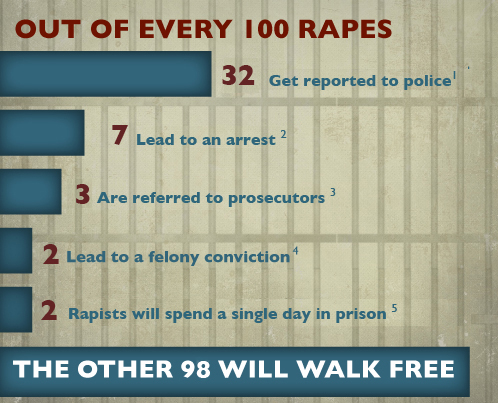
Academics across the United States have contributed to a new American analysis through a collection of papers from the Council on Contemporary Families, an organization sharing academic research on families with the public to complete a National Crime Victimization Survey which concludes that similar to the diminishing of the overall crime rate, instances of intimate partner violence have been in decline in the last two decades nationwide. Similarly, the finding is that rape and forcible sexual assaults have also been in decline since the 1970s.

Many, receiving this information scoff at its conclusions, at the very least view it with a healthy dose of skepticism, given the recent revelations emanating from Britain, from the United States and Canada of high-profile celebrities being involved in sexual predation and violence against women and children related to sexual proclivities Those who are knowledgeable about the universality and prevalence of intimate partner violence and the seemingly growing incidence of male predation even among the young of high school and post-secondary age point out that many such incidents are simply not reported.

Convictions
  1. Justice Department, National Crime Victimization Survey: 2008-2012
  2. FBI, Uniform Crime Reports, Arrest Data: 2006-2010
  3. FBI, Uniform Crime Reports, Offenses Cleared Data: 2006-2010
  4. Department of Justice, Felony Defendents in Large Urban Counties: 2009
  5. Department of Justice, Felony Defendents in Large Urban Counties: 2009

Police-reported sexual assault in Canada too has been seen to have declined by four percent in 2013. The decline was among those sexual assaults reported to police falling into the category of "Level 1" (Level 1 involves minor physical injuries or no injuries to the victim), while reports of aggravated sexual assault [level 3] rose by nine percent between 2012 and 2013. Of sexual assaults committed against Canadians over the age of 15, according to a document produced by Statistics Canada, 88 percent are not reported to police.

Six percent of Canadian women self-reported sexual assault in 2009 according to StatsCan's General Social Survey on Victimization, thought of as the best self-reported source government has available in tracking this type of abuse. In the United States, as in Canada, campus sexual assault remains a serious issue with between 14 percent and 25 percent of college women having been forcibly raped or assaulted. Another analysis revealed alarmingly that women not in higher education are more at risk; 21 percent of non-college-educated women suffer domestic violence in comparison to 13 percent in university.

Yet the conclusion reached by the survey results indicates that violence between married and common-law American couples has declined, even while the papers continue to consider sexual assault prevalence remains a serious problem. The government of Ontario's #WhoWillYouHelp bystander public-service campaign has helped to highlight a campaign of awareness of sexual exploitation, emphasizing that it's everyone's business to be involved in combating the societal menace that it represents.

The research also spotlights the obvious, that in lower-income, lower-education communities a higher "tolerance for violence" exists, with a concomitant slower shift toward progressive ideas of what constitutes masculinity. Economic stress is also pointed out, predictably, as a major concern, along with the fact that there are few societal institutional supports to combat intimate violence. It is  hoped, however, that the release of the data "will generate a more nuanced discussion of sexual violence", stated Stephanie Coontz, acknowledged as one of the top family historians in the U.S.
Home
Infographic

Labels: , , , , ,

Tuesday, March 10, 2015

University Rape 101

"It's the last thing that colleges and universities want to do is publish the fact that this happens. They don't want to be known as the 'rape school'."
"Every time we did an interview, we couldn't believe we were essentially hearing the same story over and over. Not only the assault and that people were targeted by predators, but also so often the way that the university or college responded."
"In the Q&As following the film [The Invisible War], students would start by talking about rape in the military but then would move very quickly to talking about rape on college campuses. We were kind of taken aback by this. We knew it was a problem, but we didn't know it was bubbling up like that. And then we started getting emails and letters from people saying, 'I was assaulted. Can you please make a film'."
"Sadly, it wasn't difficult to find survivors. The next step of deciding to come forward for many people was very difficult because the last time they came forward, they had been shut down."
"You have to look at the statistics. Only 2% to 8% of reported sexual assaults are false. So in most cases, when people come forward, they're telling the truth. The best way to respond to people when they're reporting a sexual assault is to believe them, because if you don't believe them, you're silencing them."
"I'm still shocked that this film had to be made in 2015. That it wasn't made one, two, three, four decades ago. When you talk to these survivors, sometimes they're 18, 19, they're just barely adults. And they have the courage to take on their institutions, to join with others and to create this national debate. But it shouldn't just be on students. To create a safe environment at colleges, that should be on everyone."
Kirby Dick, director, The Hunting Ground
The Myth of Preventing Rape
The public, reading about the mass rapes in Darfur, is horrified. But that's Sudan for you, where a murderously repressive Muslim government steeped in the culture of misogyny of the Koran sends out the Janjaweed to kill and rape. And what can you expect of an oppressive kingdom like that of Saudi Arabia where their brand of Islam mitigates against the very thought that women could ever venture out into public without being covered head-to-toe in stifling, black tents. Oh of course, count in Afghanistan and Pakistan while we're at it.

All right, Somalia too. And let's not forget India where women are stalked and preyed upon, not only women but girls particularly if they're low-caste; raped, tortured, murdered with impunity. Rape, actually, is used as a weapon of war as we've been advised time and again in explanations around mass rape taking place in the Democratic Republic of Congo; not only by the insurgents of course, but by the DRC military. But then, look at how German women suffered when the Russian army moved in to Berlin after WWII.

In the West, it's different, right? In Western democracies dedicated to life and liberty and the inalienable right to the pursuit of happiness, predation of women won't occur because of the universal respect in which women are held in those societies who celebrate motherhood and apple pie. In our feverish imaginations, at any rate. Duke University in the U.S. stands out as a case in point. Where, when female students approach administrative services their complaints are overlooked, discarded, and the women silenced.

What Is Rape Culture?

Effectively institutionalizing rape, since there is no penalty for it, only the blind eye of indifference. When Kirby Dick and producer Amy Ziering put together their documentary The Invisible War, about the prevalence of rape in the American military, they never dreamed that what happens in the military happens also to a very similar degree in the colleges and universities of their country. And what occurs in the United States happens as well in Canada.

And doubtless in equal measure in all Western societies; little spoken of, our own wretched secret, spoken of in hushed tones of outrage on the one hand, shoulder-shrugging on the other. Where are all the mothers teaching their sons the basics of a societal convention where respect for others is not only customary but mandatory in a civil society? Are they the ones raising sons who witness their fathers actively abusing their mothers?

In their latest documentary on university/college rape culture, Kirby Dick and Amy Ziering zero in on the anguish of young women and campus assaults. Of those young women approaching school authorities with trust, or campus police, and instead of being supported and the rapists apprehended and charged, the women are blamed, neglected and their stories shunted aside. Of course if there are no penalties the rapes simply continue; good fun!

The director/producer team posit there is a financial disincentive to the universities to pursuing the issue.

They interviewed 70 women on camera for their documentary, half the number they spoke with after the women had experienced sexual assault on various campuses. They spoke as well with university administrators, police officers, professional athletes and one man who had been a rapist, the only one of many they had approached for an interview. The result was a damning picture of entitlement, resignation and appalling disinterest.

What they discovered in their interviews and through the collection of an astonishing amount of evidence was the wholesale discrediting of the women coming forward to college administrators with their complaints. In the documentary, two principals, Andea Pino and Annie Clark are highlighted, two women who lodged a Title IX complaint against the University of North Carolina at Chapel Hill in 2013 for the manner in which they responded to sexual assault cases on campus.

"Our first shoot was with them. They had just filed their complaint, and were just starting to talk about it as a national problem. We thought, this is amazing, let's follow this. We thought they might file two or three more complaints; we didn't think they'd end up in the White House. I think it's one of the things that makes the film kind of exciting, to see these students banding together and taking on their institutions, it's quite something", explained Kirby Dick.

The two women have made a full-time campaign of their focus, time and energy to touring the country in support of campus-incidence sexual assault victims. They aim their attention at aiding students at other schools, using their own experience to help them file complaints against their colleges and universities. When the year 2014 concluded, they had been responsible for enabling and encouraging the lodging of no fewer than 96 Title IX complaints.

If nothing of substance happens to remediate the situation, says Mr. Dick, over ten thousand rapes will take place on American university campuses in 2015.

Labels: , , , ,

Tuesday, March 03, 2015

Entering Paradise? Be Forewarned...!

"I am proud of my girls. If there had been the slightest hint of an overdose that Thailand could have pointed to, they would have. But they were not able to prove it."
"We knew our daughters were not drug users."
Carl Belanger, Pohenegamook, Quebec
Two sisters from Quebec, Audrey 20, and Noemi 25, went on a month-long Southeast Asian vacation together in 2012. Their time away from home nearly complete, they visited Thailand's Phi Phi Islands. This was their first day in Thailand. And then, they were found dead in their room at the Phi Phi Palms Hotel by a chambermaid, two days after they were last seen alive and well.

Autopsies conducted by Thai medical authorities theorized that they had been out drinking and partying on the beach and had ingested a euphoria-inducing cocktail commonly served in Thai bars. A cocktail containing cough syrup, Coke, DEET (that's right, the chemical used as a mosquito repellent) and the mild narcotic kratom.

Now, three years after their mysterious and untimely deaths, a Quebec coroner has reached a different conclusion altogether. While the Thai theory was that DEET led to their deaths, Renee Roussel felt on the basis of her knowledge and the circumstances surrounding the girls' deaths along with her own pathological investigation that the sisters were poisoned by a deadly chemical, phosphine.

Hotels in Thailand are forbidden from using phosphine but it seems that hotels use it regardless in their battle against bed bugs. The Bangkok autopsies were set aside by Dr. Roussel; she found that the levels of DEET present in the bloodstream of the two sisters were not toxic, but no more elevated than what might be found with a light application of the insect repellent on the skin.

The exhaustive toxicological analysis performed in Montreal revealed no evidence that kratom had been consumed. Although the Montreal coroner was not able to conclusively establish what it was that killed the sisters, laboratory testing for over 800 drugs, metal and chemicals turned up nothing other than low levels of DEET along with an anti-malarial drug the sisters were taking.

The logical explanation for the absence of a detectable poison pointed in the direction of phosphine. "Few substances have the capacity to kill quickly while leaving practically no trace in the environment or in the organism allowing us to detect it. Phosphine is part of this limited group", explained Dr. Roussel.

Additional evidence were the lesions discovered on the brain by the autopsies, lesions caused by a severe lack of oxygen, consistent with phosphine poisoning. As well, pointed out Dr. Roussel, twenty Western tourists, women for the most part, have died in Southeast Asia in similar circumstances to the Belanger sisters since 2009 and the culprit appears to be phosphine.

Dr. Roussel's report recommends that Quebec's institute of public health advise travellers of the lethal danger posed by some pesticides, that advice be offered on how to detect poisoning symptoms, and the manner in which they should be treated before a fatality occurs.

In 2009, Norwegian Julie Bergheim and American Jill St.Onge, in adjacent rooms at the Laleena Guest House on Phi Phi had similar symptoms of vomiting, dizziness, blue finger- and toe- nails, and both died within 24 hours.

Ina Thoresen, Ms. Bergheim's mother, received a report from the Norwegian Institute of Public Health four years later, after leading experts from around the world advised the Norwegian authorities that the most likely cause of the young woman's death was phosphine gas poisoning, released by the pesticide.

Ryan Kells, Jill St. Onge's fiance fell ill at the same time but recovered. In his recovery state officials on Phi Phi insisted he take her body away from Phi Phi lying in the bottom of a speedboat.

John Kells, Ryan's father, wrote in 2010:   ''What killed Jill St Onge and Julie Bergheim? What lethal gas almost also killed their companions Karina Refseth and Ryan Kells? 'The two absolutely linked deaths, hours apart, separated by a common wall less than six inches thick, in two back facing air conditioned rooms of the Laleena Guest House, rooms No. 4 and No. 5, one Norwegian, one American, unknown to each other, were apparently caused by the lethal inhalation of a toxic gas that has not been identified. Young adventurous explorers like Jill, Julie, Ryan and Karina, from countries all over the world, travel to the island of Kho Phi Phi, described as one of the most beautiful spots on earth as featured in the film 'The Beach', staring Leonardo DiCaprio, believe that they are safe and expect to travel home with exotic memories and not the ashes of the love of their lives or the one that they intended to marry. One thing we do believe is that both Julie and Jill had elevated blood levels of cholinesterase inhibitor, a likely sign of pesticide gas poisoning, as suggested by a couple of research experts asked to comment on the blood results. We also know that the implied causes investigated by the Thailand authorities such as alcohol and drugs have been eliminated as potential causes of death. All of the investigative effort thus far has focused on life style causes and to our knowledge no effort has been expended to determine if a pesticide might have been the lethal agent.''

Labels: , , ,

 
()() Follow @rheytah Tweet