Ruminations

Blog dedicated primarily to randomly selected news items; comments reflecting personal perceptions

Monday, May 14, 2018

Living an Exemplary Life, Planning a Philanthropic Legacy

"She was a secretary in an era when they ran their boss's lives, including their personal investments. So when the boss would buy a stock, she would make the purchase for him, and then buy the same stock for herself, but in a smaller amount because she was on a secretary's salary."
"I realized she had millions [as executor of the estate] and she had never mentioned a word. I don't think she thought it was anybody's business but her own."
Jane Lockshin, niece of Sylvia Bloom, deceased resident of New York City

"We were all agape, just blown away."
"[Sylvia Bloom's gift is] the epitome of selflessness."
"She had that dual perspective [background of poverty, but investment savvy allowing her to gain from exposure to knowledgeable investment practices], and it's probably why it resonated so deeply in her heart and her gut."
David Garza, executive director, Henry Street Settlement, Lower East Side

"She never talked money and she didn't live the high life. She wasn't showy and didn't want to call attention to herself."
"She was a child of the Depression and she knew what it was like not to have money. She had great empathy for other people who were needy and wanted everybody to have a fair shake."
Paul Hyams, human resources executive, Cleary Gottlieb Steen & Hamiltion 
Sylvia Bloom quietly amassed a fortune of $9 million working as a legal secretary in New York City (Jane Lockshin)
Sylvia Bloom, the child of Eastern European immigrants to America was steeped in a background of necessity, hard work and empathy for the plight of others. Few would have suspected that this quiet, reliable secretary aspired to build a bank account whose total would have amazed anyone. She worked for the same firm of lawyers for 67 years, starting when the company was just established and she was their sole employee, to the point where they had a reputation to reckon with on Wall Street, with over 1,200 lawyers and hundreds of staff.

None was senior to her, and she retired only when she reached the age of 96. After retirement she appeared to have less to live for; her husband predeceased her by 14 years. The couple, he as a city firefighter then a schoolteacher and a practising pharmacist as well, lived on fairly modest salaries; his and hers as a secretary. It was obviously enough to keep them satisfied with their lives. Her relatives had no idea that she possessed a bank account whose total value was $9-million.

It was only when her niece Jane Lockshin, as executor of her aunt's estate, discovered the wealth that her aunt held did it become clear that the couple who lived modestly but well, had the wherewithal if they so wished to live in luxury. That wealth enabled Sylvia Bloom, however, to will $6.24-million to a social service group that her niece just incidentally acted as treasurer of the board for. While directing the bulk of her savings from shrewd investments to the charity, she also took care to leave funds for relatives and friends.
Sylvia Bloom worked at Cleary Gottlieb Steen & Hamilton in New York City for 67 years, and during that time she invested in the same stocks as the lawyers she worked for. (Submitted by Jane Lockshin)

Growing up during the Great Depression, Bloom attended public schools and then Hunter College where she earned a degree at night while working days. Hunter College, as it happens, turned out to be another beneficiary of Bloom's wealth, with $2-million split between it  and another scholarship fund. Her gift to the Henry Street Settlement has been earmarked for scholarships for needy students under the Settlement's Expanded Horizons College Success Program for disadvantaged students.

It must have given her great pleasure to know that she had amassed such a fortune. Not for herself, but with the knowledge that on her death, the funds representing her choice to make shrewd investments over the years, and putting away the profits would benefit many young people, giving them opportunities they would otherwise never have, through the funding that a hard-working visionary remembering her own difficult early years decided to invest in the lives of others.
$6.24 million of Sylvia Bloom's fortune is going to the Henry Street Settlement's Expanded Horizons College Success Program (Jane Lockshin)

Labels: , , ,

Wednesday, May 24, 2017

Consumer Caution Advised in Energy Drinks

"The energy drink industry claims that their products are safe because they have no more caffeine than a premium coffee-house coffee."
"However, energy drinks also contain a proprietary 'energy blend', which typically consists of stimulants and other additives. Some of these ingredients [including taurine and guarana] have not been FDA-approved as safe in the food supply, and few studies have tested the effects of caffeine consumption together with these 'novelty' ingredients."
"On top of that, energy drinks are highly marketed to adolescent boys in ways that encourage risky behaviour, including rapid and excessive consumption. As a result, emergency room visits by young people in connection with energy drinks are rising."
Dr. Jennifer L. Harris, Rudd Center for Food Policy and Obesity, University of Connecticut
The multiple ingredients in different brands of energy drinks need more scrutiny, researchers say.
The multiple ingredients in different brands of energy drinks need more scrutiny, researchers say. (Canadian Press)


Over 500 energy drink products are now on the market; their popularity is manifest by the extent of their sales, and in lock-step with their popularity is the allied phenomenon of increasing visits to hospital emergency centres, and even deaths attributed to their consumption. A 32-ounce container of an energy drink is now being linked with potentially harmful blood pressure and heart function changes beyond alarming and owing not only to the caffeine in those drinks but other key ingredients present in them.

Consumers like energy drinks. And people who convince themselves that anything that is freely available on the market and that suits their lifestyle cannot be a threat to their health, simply will not believe that these drinks indeed can very well pose a threat best avoided. The manufacturers of the energy drinks, after all, attest to their perfect safety, in itself persuading consumers there is no threat to their health in their consumption. But the growing body of evidence appears to firmly point in the opposite direction.

Caffeine up to 400 mg, reflected in the consumption of up to five cups of coffee is considered to be a safe daily dose by the U.S. Food and Drug Administration. Energy drinks mostly contain caffeine, and plenty of it, but it is the other ingredients in those drinks about which the level of safety is largely unknown, concluded a study team whose results were published in the Journal of the American Heart Association.

A research team led by Sachin A. Shah of David Grant Medical Center on Travis Air Force Base along with the University of the Pacific in Stockton, California, set out to compare physical alterations resulting in a group of 18 healthy men and women after they had consumed an energy drink and after another drink with a similar dose of caffeine, lacking any other ingredients had alternately been consumed.

The energy drink given the test subjects contained four ounces of sugar, several B vitamins, and a proprietary 'energy blend' of taurine and other ingredients most often linked to drinks like Monster Energy, Red Bull, and 5-hour Energy. And that energy drink also contained the obligatory 320 mg of caffeine, analogous to what would be contained in four cups of coffee. Alternately another drink was given the participants which held only the 320 mg of caffeine, nothing additional.

The research team then measured the study participants' blood pressure along with measuring heart electrical activity for 24 hours following the consumption of the drinks. Using an electrocardiogram (EKG) for the heart measurement activity, it was discovered that a change identified as QTc prolongation, a condition associated with life-threatening irregularities in the heartbeat, was present post-energy drink consumption, but not after consuming the caffeine beverage.

Blood pressure was seen to increase by about five points after the energy drink was consumed, and in comparison less than a one point increase was noted after the test subjects drank the beverage containing caffeine only. In addition, blood pressure remained in that elevated state for the following six hours. The study points out that healthy individuals are not threatened by these changes, but people with particular heart conditions would do well to exercise caution with these energy drinks.

hi-energy-drinks-teen-852-c
Just as adolescents are taught to drink alcohol responsibly, they could receive a similar message about energy drinks, pediatricians say. (Jack Dempsey/Associated Press)

"The energy drink amount tested by the U.S. researchers in this study was equal to twice the amount that is permitted to be labelled in Canada for maximum recommended servings per day."
"Health Canada's recommended maximum amounts are based on all of the ingredients of energy drinks, not just the caffeine."
Canadian Beverage Association

Labels: , , , ,

Wednesday, May 17, 2017

Coping With The Financial Fallout of Cancer

"It's a huge issue [loss of income and costs related to cancer care]. For middle-class Canadians and working-class Canadians a cancer diagnosis is like standing on thin ice, and you only hope you can get back to work and cover your bills before you go under."
"Those [government] benefits just expire too soon for a lot of people."
Gabriel Miller, Canadian Cancer Society

"It's something I'm not proud of [filing for personal bankruptcy], something I never thought I'd do. I've always been a proud, stand-up individual. But I had no alternative ..."
"You're not bringing in income, bills are mounting, [creditors] are not compassionate and understanding. They want their money."
Lawrence, (last name withheld),Toronto real estate agent, 56

"The thing that keeps me up at night is, if I do need a drug or some treatment of some sort, will we have the funds to cover it?"
"And if we have to sell our house, is that even a reasonable thing to do? Probably, I would just go quietly."
Deb Maskens, advanced kidney cancer patient, Guelph, Ontario

"People will deal with different stresses, they will have financial stress or problems with health."
"When you throw everything together all at once, there comes a point where you say 'I just can't do it any more'."
"You need to be able to breathe."
Monica Pope, 51, breast cancer patient
cancer cell
In Canada, a growing body of research, along with interviews with patients, point to the fact that despite universal health care coverage for everyone, a diagnosis of cancer has an enormous drag on anyone's future. Going beyond the dread diagnosis and the accompanying psychological stress and physical pain of surgery and treatment, there is the looming threat of financial insolvency caused by the inevitable prolonged income loss and costs related to cancer treatment.

Drugs required on an ongoing basis, not administered in a hospital, are paid for by the patient. If there are expenses related to travel on top of the drug costs the end result is a devastating financial burden at the very time when fear rules while the cancer is being treated and the final outcome remains unknown. An estimated one in six bankruptcies are caused by the fall-out of health problems, and many of them relate to cancer.

If there are economic options that come into play they are the draining of savings for retirement for example, the re-mortgaging of homes, and the base alternative of going on welfare. Undergoing cancer drug treatment at home, not in hospital, means it is patients who personally must pay the cost of expensive medications in some provinces. Once the fear of a dramatically shortened lifespan reflected reality, now however, patients live longer post-treatment and federal and provincial income support programs prove inadequate.

Some people have disability insurance that they rely upon to help them with their growing health-related expenses while there is a hiatus from their work, yet some insurance companies if they can prove a pre-existing condition is involved, refuse to honour the policy. Even though in Canada oncology treatment comes without a personal charge under the universal health care system, all other costs associated with treatment are at the patient's expense.

According to a 2002 survey by the Canadian Partnership Against Cancer, two of every five people diagnosed with cancer go off their work schedules for a minimum of six months while receiving treatment. The diagnosis of  cancer and its after-effects impact on caregivers, some 60 percent of whom must cut work hours or leave their employment, according to a Lung Cancer Canada Survey. Canadian patients' families experience incomes plummeting by 26 percent according to a 2010 McMaster University study.

While some employees in Canada have access to workplace disability benefits, an estimated seven million Canadians have none. Those who qualify can count on Employment Insurance kicking in, but sickness benefits last for fifteen weeks at most, providing 55% of normal salary. As for the Canada Pension Plan, cancer patients run into problems qualifying for disability benefits to people under 65 under CPP which kicks in at a rate of $1,300 monthly. And welfare provides less than that figure, as an alternative.

According to Ilene Shiller, a manager at Wellspring, a Toronto-based cancer charity, some people are so "shocked" at the prospect of their income falling so dramatically they delay treatment so they can remain at work longer. Quebec, Alberta and British Columbia pay for all cancer medications, Ontario and the Atlantic provinces provide less coverage for home medications typically costing thousands monthly. Ontario does have a catastrophic drug coverage program for patients under 65 with no workplace drug plan but patients are required to contribute four percent of their income yearly.

The nightmare for people facing a cancer diagnosis and attempting to balance all their needs as a patient with a drug protocol will continue to become an acute social problem as cancer drugs by 2020 taken at home are expected to impact 60 percent of patients. And while the Canada Health Act requires hospital-administered drugs to be covered by medicare, provinces are not expected to fund those medications self-administered in the home.

cancer bankruptcy

Labels: , , , , , ,

Thursday, December 08, 2016

The Cynical Millennials

"Happiness has gone up for this group, despite employment percentages having fallen, and the percentage living with parents going up. And that's different than for any other group." 
"People have switched so much time, more time than we would have predicted, to computers and video games, and our model attributes that to technological progress."
Erik Hurst, economist, University of Chicago

"Honestly, I realized it was a bad thing when my mom would say things like, 'When are you going to go apply for these jobs? When are you going to go back to school'?" 
"And then in the back of my mind I kept hearing fun facts about these games."
Jacob Barry, 21-year-old, Grosse Point, Michigan
Video games

Syda Productions / Shutterstock
Video games

Video games -- according to Erik Hurst, macroeconomist at University of Chicago's Booth School of Business and Alan Krueger, professor of economics and public affairs at Princeton, citing research reflecting a reality of today's world for young men -- have hooked those between the ages of 21 and 30. The pressure to find meaningful employment has so afflicted these tender psyches that they look for comfort in gaming. While they make themselves unable to support themselves financially by opting out of the search for employment, they feel comfortable, happier having shed the trauma of the job search.

Like children fixated on having fun immersing themselves in self-entertainment with the aid of new technology leaping ahead endlessly and advertising all of its irresistible advances in gaming play, they have bound themselves inextricably to 'having fun', in the process surrendering personal initiative and responsibility, rejecting the anguish that can accompany job interviews and follow-up queries only to be informed that they didn't make the grade, and the job they hankered after will not be theirs. Why submit oneself to that kind of stress? It isn't fun.

The research undertaken by Professor Krueger makes note of the fact that older unemployed men demonstrate "low levels of emotional well-being throughout their days and ... derive relatively little meaning from their daily activities". That is not the experience of younger men who decide not to undergo the same tortuous, demoralizing route of job-hunting, low expectations, and unending disappointments in a search that never seems to end, for many. Their ultimate game is avoidance.

Harvard and Gallup polls undertaken in 2015, along with research undertaken at University of Georgia and San Diego State University, discovered that Americans, between 1972 and 2012, veered toward becoming less trusting of society as they lost confidence in large institutions in the process; the news media, business, religious organizations, the medical establishment, Congress and the presidency all seem to have for one reason or another, disappointed the expectation of a youthful demographic of American men; millennials in particular.

Statistics indicate that up to 2015, 22 percent of men 21 to 30 years of age who achieved less than a bachelor's degree in their academic life, self-reported no work in the previous year, up from 9.5 percent in 2000. Of men between the ages of 25 and 54, only 88 percent were currently working or in the process of finding employment, numbers that represent the third-lowest among 34 developed countries, according to the White House Council of Economic Advisers. And this is occurring with the U.S. in general registering a fairly low unemployment rate in comparison to many other countries.
video%20games.jpg
As for young men lacking any college degrees, 75 percent of their time once used working, has now been displaced by computer time, and that is reduced to playing video games, the study points out, based on the time-use surveys of the U.S. Census Bureau. Young men without employment and lacking any college time were spending 3.4 hours weekly playing video games between 2004 to 2007. Between 2011 and 2014 that time doubled to 8.6 on average weekly, which doesn't in fact seem all that excessive for a leisure time activity. Though for 25 percent of unemployed young men three to six hours a day is spent gaming.


The concern is that video games do not in and of themselves promote any gain of a positive nature. They may, in fact, lead to other activities even more problematical than merely wasting time gaming. There is also the proliferation of pornography, prevalent and increasingly appearing in video games. Which has led the American College of Pediatricians to warn that online pornography has the potential of promoting callousness toward women, to incite men to consider rape and infidelity normal. And to guide men astray, shunning marriage and children.

What's more, people's inborn sense of conscience, the recognition between right and wrong, can become corrupted with the kind of unending exposure to violence and pornography through the medium of these games in which young men increasingly immerse themselves. Morality suffers, when through the auspices of video games people feel free to indulge in the  'harmless' exercise of power, committing vicious murders in a virtual landscape; actions for which there are no evident real-life consequences, but which can shape thought and impressionability.

Labels: , , ,

Friday, November 18, 2016

The Opioid Dilemma

Opioid Drugs Medicare
Opioids include prescription painkillers such as oxycodone, fentanyl and morphine, as well as illegal street drugs like heroin. Canada's health ministers are meeting Friday in Ottawa to discuss the crisis. (Toby Talbot/Associated Press)
"If governments are claiming that doctors prescribing opioids for pain are the cause of the current opioid crisis, then surely we should be at the table discussing solutions that will reduce the harms of opioids but will not punish our patients with pain."
"It's a stacked agenda. How can you have a reasonable solution without doctors who treat pain and pain patients? No one will talk about the possibility that opiates may possibly be helpful." 
"The idea is that opioids are evil substances that shouldn't be used by anybody. They're just a tool, but they're an important tool."
"I'm all for safety and reducing risk. But let's not make people suffering from chronic pain the collateral damage."
Dr. Roman Jovey, medical director, CPM Centres for Pain Management, Mississauga, Ontario

"We have limited seating at the Opioid Conference, and unfortunately cannot accommodate all organizations that are interested in attending."
"I would like to assure you that several representatives will be in attendance from pain and palliative care networks. In addition, the conference will be available through webcast."
Health Canada official email
"I think the entire emphasis has been on the addictions side. The concern is that the conference is one-sided and does not reflect the best interests of all patients. We think we have a lot to offer, and we want to be part of the process."
"A lot of patients are doing well on opioids. They have jobs; they have families. The vast majority of people on opioid medications don't sell them on the streets. If you look at addictions some come from [prescription] diversions. But much of the fentanyl comes illegally from China."

Dr. Chris Giorshev, head, Ontario Medical Association, section on chronic pain

"I wanted an opportunity to buttonhole someone and show them a person who has been in pain every day."
"The politicians want to do something about the horrible scourge of addictions. The easiest, fastest thing to do is remove access. But there are legitimate users who will have no access."
Marisa Robertson, 54, chronic pain injury as teen competitive gymnast, Ottawa


Federal Minister of Health Jane Philpott, left, and Ontario Health Minister Eric Hoskins discussed Canada's growing opioid epidemic Friday after a two-day summit in Ottawa, as calls grow for Health Canada to declare a public health emergency.
Federal Minister of Health Jane Philpott, left, and Ontario Health Minister Eric Hoskins discussed Canada's growing opioid epidemic Friday after a two-day summit in Ottawa, as calls grow for Health Canada to declare a public health emergency. (Christopher Katsarov/Canadian Press)

According to Dr. Giorshev, who in his practise considers doctors to be in a unique position to advise authorities concerned over the proliferation of illegal drugs on the blackmarket and consequential deaths arising from them, the lack of presence of prescribing physicians at this major conference bodes ill. It is prescribing physicians whose patients present with pain that must be managed to enable them to have some quality of life, who have the expertise backed by experience in the safe use and effective prescribing of opioids who should have a advisory presence, he feels strongly.

In his own Barrie, Ontario practise, he treats patients suffering from chronic pain and patients who are addicted to drugs. A substantial enough number of the Canadian population, he emphasizes, suffers from moderate or chronic pain - between fifteen to twenty percent. When Dr. Jovey, another physician wanting to help confront the social dilemma of overdose-and-death at the major Opioid Conference taking place in Ottawa asked colleagues whether they would be attending the conference he discovered none had been invited.

Even chronic pain sufferers themselves who had heard about this summit on pain management and the runaway phenomenon of overdose deaths who hoped to be able to attend the conference to possibly give a first-person anecdotal account of what they know and what they experience with respect to constant pain in their lives and the working solutions to gain better lives through managing that pain, were terribly let down to discover that attendance was strictly limited, and they were out of luck.

There was one notable physician who had been invited to the conference, but to listen, not to speak. Dr. Viona Campbell, president-elect of the Canadian Pain Society stated that one of the commitments the Canadian Pain Society plans on is to make certain that out of this summit will also come an assurance that any strategy they support will also contain measures ensuring that opioid analgesics "remain available to those patients who require them for appropriate medical use, and that these individuals are treated compassionately".

"The likelihood to get a deliverable that is deliverable [sic!] is inversely proportionate to the number of people there [at the conference]", explained Dr. Campbell, an anesthesiologist at Toronto's Hospital for Sick Children, speaking of the presence of the guest groupings at the conference, which to her knowledge includes two pain-suffering patients. While there is logic in the government's wish to tackle the social problem of wasted lives due to drug overdoses, it is understandable that pain patients visualize steps being taken to tighten the availability of legitimate drugs prescribed for their use.

The conference theme is to take direct aim at pathways to reducing public harm relative to the availability of opioids. The following "opioid summit" after the conference concludes is meant to produce an agreed-upon joint plan of action. In six weeks' time the government of Ontario will put a halt to paying for some higher-strength, long-acting opioidsl little wonder pain patients are concerned for their future pain management. In Ontario alone in 2014, 685 overdose deaths occurred.

Governments are desperately searching for some way to reduce those tragic deaths. And legitimate pain patients foresee themselves as becoming victimized by the fallout of governments' attempts to restrict availability of those deadly drugs to users addicted to painkillers. Any such attempts will be destined to have a limited viability, given the brisk trade of cheap lab-produced opioids coming in from China to satisfy the North American demand. The United States is facing a similar dilemma.

A national conference on the opioid overdose crisis, held in Ottawa on Nov. 18, had a visible reminder of the death tolld, photos of some of the many ordinary Canadians killed by the powerful anesthetic that drug dealers are using to cut street drugs such as cocaine. Peter O'Neil / PNG

Labels: , ,

Thursday, November 10, 2016

Hard Times for Pensioners in Russia

"I lived through the war, the evacuation, the hunger of 1946. So I look around myself and think, everything is normal."
"My pension is enough."
Lyubov Fabrichnaya, 84, Oryol, Russia

"Maybe I can allow myself chicken, but definitely not beef."
"The diseases are piling up."
"Don't get sick. If your treatment includes drugs, no pension is going to cover that."
"I ended up in a vacuum, alone. This place was my saviour. It's [aerobics for the brain] for old people who are getting close to Alzheimer's, and as not to end up further in there, we train our memories."
Tamara Kozyreva, 62, Magadan, Russian Far East

"[Pensions are enough] not to starve."
"As long as you just spend money on utilities and food, and forget about participating in public life or going to cafes."
Marina Krasilnikova, head researcher incomes and consumption, pollster Levada Center, Moscow

"Sure, by comparison to the war, today is heaven, but we see how pensioners are living in other countries."
"Pensioners in other countries go to restaurants! I can only dream of that."
Lyudmilla Zadernyuk, 61, Oryol, Russia

"It's not right, to my mind, when our government creates a national youth policy and no national elderly policy."
"Pretty much everyone in the summer is at the dacha planting. We've also trained some younger pensioners on computers, it helps them find work to supplement their income."
"But most of all, the people coming here are seeking companionship."
"Old age has a woman's face. No country has the same ratio of women to men in old age, and when the kids have moved away and their husband has passed on, they come here."
Tatyana Kononygina, 53, co-founder, University of the Golden Age 
Two of the women at the funeral home tea party
 The women told Russian media they had been expecting to go on a tour of the city
Pensioners who helped the Russian war effort against Nazi Germany have been treated to a party - at a funeral ome.

"Here" is a school room located on the fourth floor of a school which has been transformed for use as a gymnastics area where women in their 60s, 70s and 80s gather to perform their regular routines: salsa, box steps and breathing exercises. Women can retire at age 55 in Russia, and even younger pensioners are familiar with life upheavals, having experienced perestroika, the dissolution of the Soviet Union, the 1998 ruble devaluation wiping out savings.

The pensioners' club takes place in the old schoolroom, in Oryol, population 300,000 some 370 kilometres south of the Russian capital, Moscow. The plight of these elderly women living in tight economic situations is shared by an estimated 40 million other pensioners across that great country. Russia has fallen on hard economic times, with oil selling at a barely extraction-sustainable profit.

The sanctions that the UN, the EU, NATO countries and the US imposed as a result of Vladimir Putin's grab of the Ukraine's Crimean Peninsula further deepened the economic crisis leading the ruble to fall to less than half its value. The consumer price index steadily rises and state pension payouts have lagged. The average pension comes to roughly $270 monthly.

Now that inflation sits at 15 percent it has become a struggle to maintain themselves for these pensioners, dreaming about a better life, one that might enable them to pay for a few luxuries to get out of their homes, pay for entertainment of some sort, including eating out at a restaurant now and again. Several regions of the country saw pensions arriving late. The government has offered pensioners in lieu of indexing pensions a one-time payment of 5,000 rubles ($102).
Prime Minister Dmitriy Medvedev
CHRISTOF STACHE/Getty   
Dmitriy Medvedev's comments have once again caused much merriment on Russian social media.

Russia's Prime Minister Dmitri Medvedev cheerfully informed an elderly woman in annexed Crimea in the spring that the state had no disposable money to raise pensions. "Hang in there", he said after that explanation, and "have a nice day". President Vladimir Putin on the other hand, pledged to raise pensions to match the inflation rate, by February. Perhaps that will materialize by the time electioneering for the next presidential election in 2018 turns the corner.

A visit to the doctor can cost pensioners $100. If surgery is needed, the elderly turn for help to relatives, to hope to borrow the necessary funds to pay for surgery. Some turn to homeopathy, cheaper than antibiotics. It has been two years of tight economic difficulties. Their distress relieved by this initiative at social gathering, to support one another emotionally and be exposed to activities to help keep them fit.

Classes for the elderly take place at the DIY school for the elderly offer classes in gardening, computer literacy, chess and aerobics, as well as dance and other activities to appeal to people with financial insecurity in their older years. Galina Chuchukova recalls crawling through a minefield in 1944 in her search for berries. In the siege of Leningrad, seven of her relatives starved to death.

Compared to those memories, she feels she can continue to keep body and soul together in the current circumstances which bear no resemblance to the war years.
"We understand all too well how prices have risen in 2015, how prices are growing this year and how life became more expensive in general. It has affected everybody, especially those on low incomes and the older generation who live on their pensions, and it’s especially hard now."
Russian Prime Minister Dmitri Medvedev
Putin and Medvedev meme
And I just told them: "There is no money. But be strong. All the best. Have a good day, and good health." Twitter/Buddy_Jungle   

russia moscow parade APCsRussian servicemen aboard armoured personnel carriers salute during the Victory Day parade in Moscow's Red Square May 9, 2014. REUTERS/Grigory Dukor
The part of the federal budget that is so-called black -- authorized but not itemized -- has doubled since 2010 to 21 percent and now totals 3.2 trillion rubles ($60 billion), the Gaidar Institute, an independent think tank in Moscow, estimates.   Bloomberg News


Labels: ,

Saturday, November 05, 2016

The Youth Imperative of Weight Loss

"This [survey] helps us better understand why people choose to engage in risky health behaviours. It's not always just about the immediate pleasure of enjoyment; sometimes it's a means to another end."
"One hundred years ago, what we mostly died of were infectious diseases, like tuberculosis and influenza. Now we die from our own choices."
"At all levels of government, there's a realization that we need to find ways to stop teenagers from developing poor health habits."
"Initially, a teenager may not enjoy smoking at all. But they may still do it if it gets them something else that they value, such as losing weight. Even if it weren't true [that smoking helps lost weight], but people believed it was true, it could still cause a derived demand."
"This is the first  detailed data on people's motivations for smoking for a nationally representative sample of U.S. teenagers."
"There's a strong economic case for taxing cigarettes. It's just that the taxes may not decrease consumption among girls as much as you might hope or think. But if you can break the perceived connection between smoking and weight loss, you may increase their responsiveness to taxes."
Dr. John Cawley, professor of policy analysis and management, Cornell University
teens smoking

Many Teens Light Up to Lose Weight, Study Suggests Researchers offer new ways to discourage smoking among A new study recently published in the journal HEalth Economicsadolescents  Health Day News


A new study whose results were recently published in the journal Health Economics brought together researchers from the United States at Cornell University, along with researchers from the University of Bologna, Italy and the University of Bristol, United Kingdom, unified in their opinion that what primarily motives teens to smoke tobacco is not just the 'cool' factor but their belief in the fact that smoking cigarettes will help them lose weight. In this era when teens are hyper-critical of their body images and how they stack up personally to the perceived ideal as a motivator, smoking becomes a habit that portends ill for the health future of young people.

Smoking in the maturity-formative teen years is a focus that public health authorities are particularly aware of and certainly concerned about. They know that people who begin their smoking careers by the time they reach their 20s and earlier, are most likely to continue the habit, addictive as it is, into and throughout adulthood. The fact that tobacco has been identified by medical science is the number one preventable cause of death in North America simply highlights that concern.

To arrive at their conclusions, researchers took data from a survey, the Health Behaviour in School-aged Children, conducted in 2001 - 2002 and 2005 - 2006 that represented over ten thousand American schoolchildren whose ages at the time were 11, 13, or 15. Researchers made use of figures reported to them by the children themselves such as height and weight, which led to the calculation of their body mass indexes. Along with that basic data the children also stated their idea of what their weight represented to them.

The uncompleted question begging a response was put to the youth: "Do  you think your body is ... ," to which each of the study subjects responded with various degrees of self-criticism such as "much too thin", "a bit too thin", "about right", "a bit too fat", or "much too fat". The survey subjects were also asked if they had subjected themselves to anything that had the purpose of having them lose weight. They were asked what that might have been, and finally whether they smoked and the frequency of their smoking.


It was discovered, among other things, that young Caucasians were over twice as likely as African-American adolescents to consider smoking to represent an avenue toward weight loss. In point of actual fact, scientific evidence exists proving that smoking increases metabolism and decreases appetite. So what might otherwise be considered an urban legend is validated by science. Researchers still looked for a reasonable explanation to help explain the phenomenon of teen smoking in view of its health-destructive properties.

Applying an economic model, they looked to the concept of derived demand. That phrase represents individuals seeking out and practising a habit whose anticipated end purpose is demanded in the belief it will aid in achieving another objective, beyond, in the smoking of tobacco, personal pleasure. If the long-term goal is losing weight that propels teens toward smoking and not the short-term and immediate feeling of satisfaction; this is considered to be a 'derived demand'.

Girls who stated they were "much too fat" were about 225 percent likelier to smoke for the purpose of losing weight than would be girls who felt their weight was acceptable, according to a study. Boys, on the other hand, are less concerned over being overweight than girls so their opinion of themselves was less predictive for smoking. They are not exposed to the self-critiquing pressure that girls are by society. Despite which, boys who felt they were "much too fat" were also about 145 percent likelier to smoke to lose weight than boys feeling their weight was fine.

Dr. Cawley feels that anti-smoking policies might be developed to target an impressionable teen audience. That, as an example, the U.S. Food and Drug Administration might consider the utility of prohibiting cigarette manufacturers from using the idea of smoking's capacity to help lose weight as an attractive promotional tool targeting self-critical teens.

Labels: , , , , ,

Tuesday, July 19, 2016

Vice Renewals Rediscovered

"These are preventable deaths ... what ends up being more than a death a day following each cheque issue. It would be warranted to look at methods ... to try to reduce this avoidable mortality."
"You see this cheque-week after cheque-week, month after month, year after year. The pattern is so consistent."
Michael Otterstatter, B.C. Centre for Disease Control epidemiologist

"You've been in a state of stress and survival and hunger and cold for the whole month and  you get this [welfare payment]."
"I think anyone's reaction would be to spend a little on what gives you enjoyment."
Trish Garner, B.C. Poverty Reduction Coalition
Rob Kruyt / Postmedia
Rob Kruyt / Postmedia   “You’ve been in a state of stress and survival and hunger and cold for the whole month and you get this (welfare payment),” says Trish Garner of the B.C. Poverty Reduction Coalition. That impulse to indulge after a month of austerity. can be fatal.
 
"Most Canadians would argue that their investment in social assistance programs should be for the assistance of that individual's well being, rather than harming them."
"And alcohol ... and illicit drugs harm people."
Dr. Joel Ray, internal-medicine specialist, St.Michael's Hospital, Toronto
Study to evaluate effect of welfare cheque distribution on drug use
People line up in Vancouver to pick up their welfare checks on a Welfare Wednesday.
GLENN BAGLO / VANCOUVER SUN

A new study by British Columbia researchers published in the International Journal of Drug Policy that looked at illicit drug use and the connection between a sudden resurgence of drug overdoses and the regular receipt of welfare payments coinciding, has led to the conclusion that one triggers the other. At the very least, one enables the other. The regular monthly welfare payments meant to be used for the necessities of life are being used for what down-and-out drug addicts consider the necessities of their lives.

Their survival in addiction-mode is linked to where their next fix will come from, when it arrives, and what they can afford. Suddenly, with a cheque in their hands cashed and ready to go, they are able to acquire their fix and there are no immediate restrictions in what they can afford. This is being called the "cheque effect", the kind of flirting with dangerous outcomes that drug abusers expose themselves to when bingeing.

Why a research project had to be undertaken to understand that this is happening is strange, since it has long been known that this is what happens to alcoholics when they receive their monthly stipend through welfare, enabling them to march right over to acquire the brand of alcohol that most suits their purpose of becoming thoroughly alcohol-sodden, and the consequent risk to life. Perhaps not as immediately as with drug overdoses, but perfectly effective given enough time.

Links are also being theorized with respect to the issue of cheque-and-acquisition exacerbating the epidemic of Fentanyl abuse and death. Toronto scientists embarked on their own similar study earlier in the year and they concluded that the phenomenon induces people receiving monthly payment to binge on alcohol. It is as though we cannot get it through our heads as a society that human nature cants us toward instant gratification, where we grasp at what appears to be opportunity while not pausing to think rationally.

This is why people who win a lottery so often lose all their winnings in short order as a result of splurging on costly possessions and flinging their winnings about with reckless abandon on what they think they want and what will comfort them, until they discover there is nothing left to be careless with and they're back where they began, in too-short order, hardly chastened, but regretful nonetheless. It's something called human nature.

But the studies have provided for some stimulative thought on the part of provincial ministry officials who may now study the results of the research perhaps to make the determination that one monthly cheque might be divided into smaller cheques available more frequently throughout the space of a month. And if they think it through to its conclusion they might realize that if there were three cheques instead of one, then there might result three splurges instead of one.

In fact, researchers in Canada and the United States and elsewhere in the world have understood that evidence is ample of the cheque phenomenon, the results of which also include beyond overdoses and mortality, more numerous hospital emergency visits. The B.C. study went through data provided by coroners' reports and statistical analysis demonstrated a trend over the period studied.

Twice as many fatal overdoses occurred on the Thursday and Friday after the issuance of regular Wednesday cheque days. An average of 15 deaths a year in British Columbia were linked to cheque timing. In contrast, the Ontario study examined ambulance calls related to licensed establishments in the Toronto area over a nine-year period. Four times as many drunk-related calls to bars and three times as many assaults occurred on cheque day or the day following.

Labels: , , , ,

Monday, March 28, 2016

Seattle's Homeless Jungle

"We as a city have got to come together, so that we can build a movement with other cities and force this on the national agenda."
Seattle Mayor Edward B. Murray

"You step in there [homeless encampment], and it's like you're not even in the United States anymore."
"The human waste, the solid waste, the drugs, the tents -- even when you have areas of poverty around the world, you don't see it all in one place."
Chief Harold Scoggins, Seattle Fire Department

"Even though we're all beyond frustrated and disappointed with some of the results, including the increased count on the streets, which is devastating, we have accomplished a lot of good work that we have been recognized for."
"Thousands of people have gotten a roof over their head. The problem is there's been a significantly higher inbound flow of people coming into the homeless cycle than we anticipated."
"We have a very thriving, healthy, growing GDP [Gross Domestic Product] economy. We're creating poverty at unprecedented levels at the same time. That's a broken economy fundamentally. There's something inherently wrong with our economic structure."
Dan Brettler, CEO, Seattle-based Car Toys, co-chair Seattle Committee To End Homelessness 

Tents are pitched illegally on a sidewalk in Seattle in January. The number of people sleeping outside in the city shot up by 20 percent in just the past year.
Tents are pitched illegally on a sidewalk in Seattle in January. The number of people sleeping outside in the city shot up by 20 percent in just the past year.   David Ryder/Reuters/Landov

Seattle, Washington is doing very well, thank you, its tech-driven economy is on the booming track to continued growth and prosperity.  Its West Coast location has made it an extremely attractive venue, however, for homeless people, people who have suffered personal catastrophes that have resulted in lost jobs, lost marriages, lost homes, lost hope. And others who are afflicted with mental illness issues; others yet who are addicted to alcohol and drugs and cannot find their way home.

In November the mayor of the city, Edward Murray, declared a state of emergency over homelessness even though the city is seen as having the problem well in hand. The city is regarded as having solved to some degree the distress of homelessness, recognized elsewhere as a model in housing the homeless. Seattle has devised a city-wide-supported strategy to set aside areas where tent camps are authorized, where social services are available and rules of civil conduct govern.

Sharon Chang, ThinkProgress

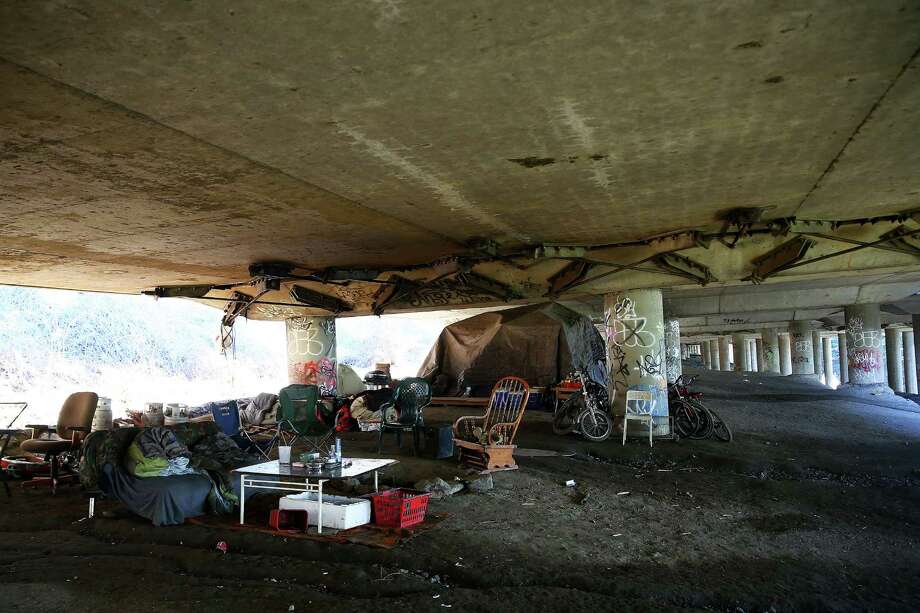
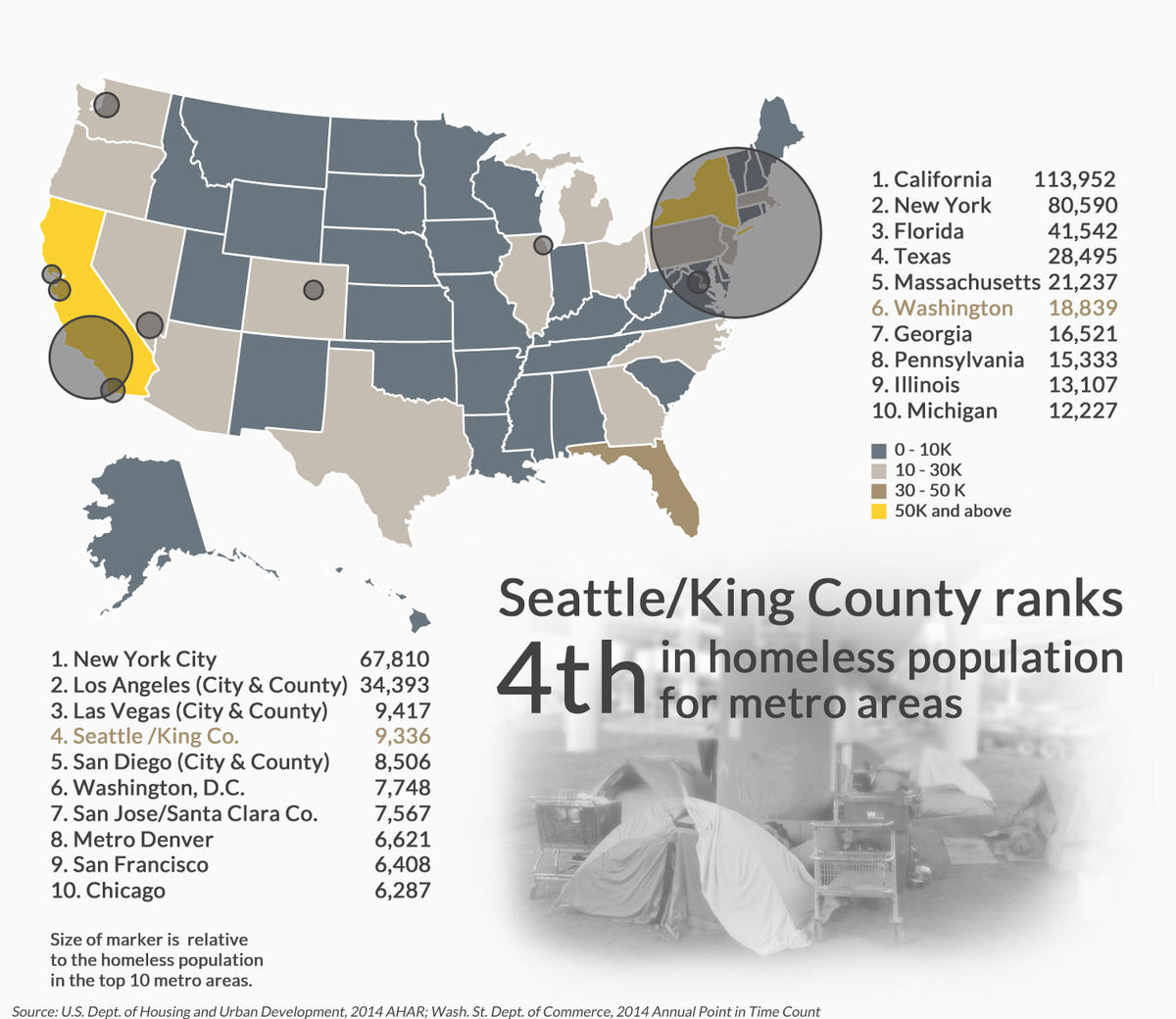
There is a problem, however, in the existence of an outlier encampment whose residents consider their tent city their permanent home. That home is located in downtown Seattle, but residents can be forgiven for not being aware of its hidden existence. It is the city's largest homeless camp, and it exists among the pylons under the city's major highway. All together there is  an estimated 10,000 people without permanent shelter in King County, with its population of over two million residents.

The population of the illegal encampment which is popularly referred to as the "Jungle", a five-kilometre stretch of unseemly  territory under Interstate highway 5, which 400 souls call home. For whom there is nowhere else to go that appeals to them. Seattle has the dubious distinction of being recognized as a prosperous city whose homeless population numbers have soared. They are higher than that of any metropolitan area aside from New York and Los Angeles.

The San Francisco template of a healthy economy where the high tech sector is leading a boom, also leads to unaffordable rentals and finds its echo in Seattle. Those who can afford the high rents don't end up homeless. Those that cannot, often do. In the jungle, it could be said that a mixed-economic-social condition exists. Yes, there are the hard-core heroin addicts, but there are also couples and people with jobs, unable to afford to live in high rental properties.

"The Jungle," a unauthorized homeless encampment under Interstate is shown on Feb. 2, 2016. Photo: GENNA MARTIN, SEATTLEPI.COM / SEATTLEPI.COM
"The Jungle," a unauthorized homeless encampment under Interstate is shown on Feb. 2, 2016. Photo: GENNA MARTIN, SEATTLEPI.COM

It was Mayor Murray's intention to clear out the Jungle, performing that public good in a measured way and offering improved alternatives to the residents. It takes money to do that properly. And there are complications, since the Jungle exists on state property, since the land under the highway is state land. Over the years funding allocated by the federal government for public housing has dwindled, just as mental health and addiction treatment have received less state funds.

Seattle Police and Fire Department crews know the Jungle fairly intimately. They have responded to over 820 emergency incidents over a five-year period. Of those incidents, 70 were violent, 500 were emergency medical calls, and 250 of them were fires.
 

Labels: , ,

Wednesday, March 16, 2016

Doing No Harm ....

"I honestly don't think it's a way of treating themselves [through legalized drug intervention with methadone treatment]. It's seen as a cheap, or free, high."
"What blows my mind is that I live in a fairly small community, and it seems so pervasive here."
Sandra Thorkelson, Corbeil, North Bay, Ontario

"It's kind of absurd to put a 21-year-old who has maybe played with OxyContin and hydromorphone for a year or two ... on lifelong methadone maintenance."
"All of a sudden the biggest opioid problem may actually be the maintenance treatment."
Benedikt Fischer, scientist, Ontario's Centre for Addiction and Mental Health

"Many, many of the individuals aren't getting the additional support they need or getting plugged into community health programs."
"We have an opportunity to really be bold here, and look at reforming in a substantive way our entire approach."
Dr. Eric Hoskins, Ontario minister of health

"The number of over-dose deaths [from opioid painkillers] are (sic) close to or higher than deaths from motor vehicle accidents."
"It seems an odd time to say there's too much treatment available ... We need as many effective treatments as possible."
Dr. David Marsh, medical director, Ontario Addiction Treatment Centres

In the past several years patients being treated with methadone to help wean them off addictive pain killers loved on the street for their opioid properties in withdrawing from reality and indulging in a chemical-high fantasy world, has risen astronomically. Those seeking out the legitimacy of a drug habit through methadone treatment, however they are motivated -- as a by-product of a doctor's prescription for pain management or associated with surgeries, or simply a habitual user -- the once-rare treatment has become stupefyingly commonplace.

In fact, an entire 'health-care' industry has grown around its now-pedestrian convenience in the fiction that moving drug addicts from conventional hard drug addiction to the use of methadone is useful. In one province, Ontario alone, patients on methadone clambered up a dizzying ladder from 3,000 in 1996 to over 50,000 at the present time. This represents just about four times the per-capita rate seen in the United States on similar drug management. And in the U.S. the drug of choice is not methadone, but a less hazardous drug called suboxone, safer and more easily administered.

In British Columbia the soaring population of methadone-treated patients has also doubled to 18,000 opioid-maintenance patients, a situation reflected throughout Canada. And with it has arisen an industry. One company alone has 57 methadone-maintenance clinics able to service over ten thousand patients on a daily basis. Not surprising that Dr. Marsh of the Ontario Addiction Treatment Centres insists that more such services are needed since the company he represents has 56 clinics in Ontario and one for starters in Manitoba.

Dr. Fischer and his colleagues published a substance-abuse commentary suggesting that before methadone treatment is automatically prescribed, other methods should first be explored for their potential benefits, such as detox and behavioural therapy. The drub suboxone as an opioid-maintenance drug as well is thought to be far less likely to be the cause of overdoses whereas methadone factored into an average 108 deaths annually in Ontario alone in a three-year period.

Vancouver Coastal Health alone has decided a change was required and they are shifting to suboxone, setting it at the forefront in Canada of opting for a more trustworthy alternative to methadone. There are some experts whose opinion is that caution is required before setting aside methadone treatment, however. Methadone, like heroin or oxycodone is an opioid; its use meant to aid injection-drug users avoid the hypodermic needles known for spreading disease.

A University of Montreal addictions expert, Julie Bruneau, speaks of long wait lists for treatment in Quebec, although she has reservations with methadone as the first choice in much of Canada for treatment as opposed to the safer suboxone which can be administered by family physicians. The Canadian Institutes of Health Research has funded a new trial to compare the benefits and risks of methadone and suboxone, and Drs. Bruneau and Fischer will be involved in that trial.

And in North Bay, Sandra Thorkelson speaks of her conversations with some patients known to her in her community who have informed her that all people have to do is show up at a clinic, test positive for a prescription opioid, claim to be addicted, and they're assured of a place set aside for them for time-indefinite methadone treatment.
Methadone maintenance treatment is a key component of a comprehensive treatment and prevention strategy to address opioid dependence and its consequences. A review of the literature (Health Canada, 2002) indicates that methadone maintenance treatment is considered an effective means of reducing the use of other opioids, the use of other substances, criminal activity, and the rate of mortality. Methadone maintenance treatment has also been found to reduce injection-related risk behaviours, other risk behaviours for transmission of human immunodeficiency virus (HIV) and sexually transmitted diseases, and the transmission of HIV (and potentially the transmission of hepatitis C virus (HCV) and other blood-borne pathogens). Methadone maintenance treatment improves physical and mental health, social functioning, quality of life, and pregnancy outcomes. Methadone maintenance treatment has also been found to increase retention in treatment. Health Canada, in collaboration with the provinces and territories, is involved in efforts to increase access to effective methadone maintenance programs.
Health Canada
Symbol of the Government of Canada

Labels: , , , ,

Sunday, February 14, 2016

Getting The Lead Out

"Every urban area has lead."
"If there's something we can do that will result in improved educational outcomes and reduced violence in the community, why don't we do it?"
Dr. Leana Wen, health commissioner, Baltimore
Genetha Campbell picks up water from a Flint church.

Well, it depends. When from time to time, there's a consumer backlash manipulated by a government agency that trade items from China, imported by American entrepreneurs to fill up the shelves in stores selling all manner of inexpensive and popular consumer items from cheap jewellery to painted toys, screaming !foul! because with a view to cheap manufacturing lead is used in the paint and the base metals involved, there is outrage.

When a source of lead is old municipal sewer systems that require infrastructure investment to change, those remedial actions usually take place where the more educated and wealthier taxpayer lives, to the neglect of the poor neighbourhoods where people don't as much tend to vote, and are a disproportionate drag on the wealth of the nation, using public welfare services and generally accepting what they're designated to live with.

The recent outcry in Flint, Michigan with the discovery that the municipal water system was compromised and heavily leaking lead when a temporary diversion took place, led to the revelation that 4.9 percent of children who were tested for lead had elevated levels in their bloodstream. Little wonder there's outrage. Children's growing brains become stunted, their potential distorted, and the outcome is a lower gradient of intelligence and higher likelihood that they will turn to violence in adulthood.
Anger over high levels of lead in the water in Flint has led the mayor to declare a state of emergency -- The Washington Post

How's that for a dismally poor start in life for vulnerable children? However, as Dr. Wen from Baltimore stated, "Every urban area has lead", and she should know, given her professional and employment status. "Lead in Flint is the tip of the iceberg. Flint is a teachable moment for America", further noted Dr. Richard J. Jackson, formerly director of the National Center for Environmental Health at the Centers for Disease Control and Prevention.

So what's holding up an advance in finding a solution to this dreadful problem of lead contamination impacting people's lives so deleteriously? This is a wealthy, technologically advanced, health-aware nation, after all! That same Centers for Disease Control and Prevention has some interesting figures on geographic areas and lead contamination affecting children elsewhere. In 2014, it appears that outside of New York City the figure was 6.7 percent of children with elevated levels of lead.

Higher than Flint, by a considerable margin, but that's not the worst of it, apparently. In Pennsylvania the figure turned out to be 8.5 percent; on the west side of Detroit, one-fifth of children tested in that same year tested positive for lead poisoning. In Iowa in the year 2012, 32 percent of children had elevated lead levels, according to their test results. It appears these areas have something in common, they often represent low-income children of colour.

Like the asbestos industry when asbestos was freely used for home insulation and many other applications, exposing people to the deadly asbestos fibres leading to asbestosis and early deaths from cancer, the industry fought ferociously to prove that asbestos was safe, a tried-and-true contributor to industrial and manufacturing usefulness in a variety of products. The Province of Quebec, where most other jurisdictions have banned its use, continues to side with the asbestos extraction industry.

And nor has the situation been different with lead, with the industry involving itself to fight regulation. However, like the fight against lung cancer and nicotine, manufacturers have been shown to blatantly hide what they know about the harmfulness of their product in the interests of their bottom line. An estimated 24 million homes in the United States have within them deteriorating lead paint their occupants are unaware of.

Anti-lead programs eventually led in the 1970s and 80s to remove lead from gasoline, and lead reduction in paint. One research finding was that removing lead from gasoline raised the I.Q. of the average American child by between two and five points. However, anti-lead programs were being dismantled once Congress slashed lead program funding in 2012 by 93 percent. And millions of children in the US suffer brain impairment reflecting public apathy and lead industry indifference.

"We are indeed all Flint. Lead poisoning continues to be a silent epidemic in the United States", ruefully stated Dr. Philip Landrigan, professor of preventive medicine at the Icahn School of Medicine, at Mount Sinai.


Labels: , ,

Saturday, February 13, 2016

Darwinian Selection

"We've got to do something."
"I'm not an academic, not an an advocate, but when I have the data in my hands, I feel a moral responsibility to make it known." 
Rob Schwartz, executive director, Ontario Tobacco Research Unit

"We need to bend that curve [of societal smoking cessation].  There's a sense in some communities that ... 'Well, we've been there done that, it's fixed'. But the data don't support that."
Dr. Elizabeth Eisenhauer, oncologist, Queen's University, Kingston

"They're just engaging in strange, authoritarian fantasies. The ideas are harmful, they are a distraction from thinking about things that will actually work."
Clive Bates, (former) head, Action on Smoking and Health, U.K.
A bill to be introduced by the Liberal government will not only ban smoking in outdoor places such as restaurant patios but also ban sale of tobacco on college and university campuses, among other things.
Dusan Vranic / The Associated Press file photo
A bill to be introduced by the Liberal government will not only ban smoking in outdoor places such as restaurant patios but also ban sale of tobacco on college and university campuses, among other things

Re-thinking strategy. The  struggle to inform and educate the public about the well-enough-known harms of tobacco to the human body has in fact resulted in a wide public acknowledgement that smoking is a leading cause of serious health conditions, from cancers to heart attacks. Smoking cessation programs have succeeded in helping smokers surrender their addiction to tobacco. The incidence of nicotine-caused morbidity has dramatically decreased over the years.

The general public is well versed in the harms done to it by active and passive smoke inhalation by  this notoriously dangerous carcinogen. Yet a hard-core segment of the population addicted to tobacco use in its various forms has been unable to reduce their dependency on smoking and remain at risk within society. And another vulnerable group is young people who view smoking as cool and a tool of defiance against society's accepted mores.

A study has found that smoking is dropping among Ontario youth. Last year, 6 per cent of students in grades and 11 and 12 — an estimated 24,500 pupils — had smoked cigarettes in the past 30 days, compared to 12 per cent in 2005.
Ed Kaiser / THE CANADIAN PRESS FILE PHOTO
A study has found that smoking is dropping among Ontario youth. In 2014, 6 per cent of students in grades and 11 and 12 — an estimated 24,500 pupils — had smoked cigarettes in the past 30 days, compared to 12 per cent in 2005

Through a number of working expedients such as raising taxes on cigarettes, to legislating graphic warning labels and public smoking bans, governments at all levels have succeeded in radically reducing smoking rates in Canada from its 1965  high of 50 percent to the current 15 percent dependence and usage; a signal success by any measure, most particularly the measure of cancer rate reduction. That success rate, however was reached by 2009 and has since not shifted downward.

The realization has set in that if the full round  of control measures recommended by the World Health Organization, such as even steeper tax hikes on tobacco products, and resorting to plain cigarette packaging for example, were to be implemented, the number of dedicated smokers would still fall at most to about 12 percent by 2035, according to Rob Schwartz.

In Canada, the aspiration is to arrive at "five by 35", interpreted as a five percent smoking rate hoped to be achievable by the year 2035. Academic  researchers and experts representing health charities along with anti-smoking activists and government representatives are set to meet at a fall 2016 conference to discuss the situation of further reaching out to convince millions of people who remain smokers, to discard their self-injurious habit.

It is habit that costs society dearly, from lost workplace hours, to heavy financial burdens on a universal healthcare system, let alone the tragedy of preventable early deaths. Endgame tactics are to be discussed such as mandating lower levels of addictive nicotine manufactured into cigarettes,  altering the pH balance for greater acridity, limiting sales through tobacco licensing, or prohibiting those born after 2000 from smoking altogether.

These are the proposed remedies born of desperation. And, as pointed out by Clive Bates, formerly chief of Britain's chief anti-smoking group, would lead to resistance, ushering smokers toward contraband products on a grand scale. Educating and encouraging people to take steps to protect themselves from the dread consequences of serious health impacts is one thing; imposing restrictions thus cutting off free choice to those who find a gamble with the quality and longevity of their lives a personal matter, entirely something else.

One life: yours to live it to best advantage; yours to defy the odds and live it as found personally pleasing and damn the consequences.


Labels: , , , , , ,

 
()() Follow @rheytah Tweet