Ruminations

Blog dedicated primarily to randomly selected news items; comments reflecting personal perceptions

Monday, August 30, 2021

The COVID State of the Union

"There are continued increases, but not to the level that we've seen in previous surges here in the North-east."
"I'm seeing some modelling to suggest that peak won't occur until late September, early October -- but of course we don't know for sure."
"Multiple factors challenge our ability to predict what's going to happen next."
"Certainly opening school without having vaccinations available for kids under 12 also potentially will influence the course."
Dr.Roy Gulick, chief of infectious diseases, Weill Cornell Medicine and New York-Presbyterian hospital
 
"I believe that mandating vaccines for children to appear in school is a good idea."
"We've done this for decades and decades, requiring polio, measles, mumps, rubella, hepatitis [vaccinations]."
"I think there's a reasonable chance that the Pfizer-BioNTech or Moderna vaccines could get FDA clearance for kids under 12 before the upcoming holiday season."
Dr.Anthony Fauci, U.S. infectious disease expert
An empty ICU bed SSM Health St. Joseph Hospital in Lake Saint Louis. (photo by Armond Feffer).

Amidst key areas of concern in the United States over the bedeviling Delta wave, parts of the American Northeast, according to experts, may be closing in on the peak of the latest COVID wave. It is anticipated that in weeks to come hospitalizations and deaths will continue to mount. In Connecticut and Massachusetts cases appear to have topped out, reflecting a consensus of forecsts published by the U.S. Centers for Disease Control and Prevention.

In New York and New Jersey however, infection rates are expected to increase. The Northeast has been ground down since mid-July by the effects of the COVID-19 wave that was first seen in Arkansas and Missouri and which went on to fuel record hospitalizations in Florida. In every state in the Northeast, daily hospital admissions are rising, according to the Department of Health and Human Services data. 

Leading indicators -- given that the rates of infection remain distinctly lower than those seen in early Delta-variant hot spots -- appear to suggest the region may crest before attaining Florida-like levels of viral prevalence. Nationwide however, cases remain projected to continue rising for several weeks. The original epicentre of the U.S. pandemic, New York city, has its effective reproduction number (Rt -- an estimate of how many new infections arise out of a single COVID carrier) indicating sustainable declines in case numbers may be approachable soon.

The Rt in Manhattan is estimated to have decreased to 1.0; and at such time that it falls below that level the expectation is that cases will decrease in the near future. The Bronx, Queens and Brooklyn have somewhat steeper Rt rates, revealed by covidestim, a project including representatives from Yale School of Public Health, Harvard's T.H.Chan School of Public Health and Stanford Medicine.

A record 5,048 new infections was reported two days earlier in Mississippi, signalling that the worst per capita outbreak in the country shows no signs of abating in a state with the nation's lowest vaccination rate. Mississip0i reported a record for deaths earlier in the week, with health officials reporting 20,000 students quarantined with the virus, or for exposure.
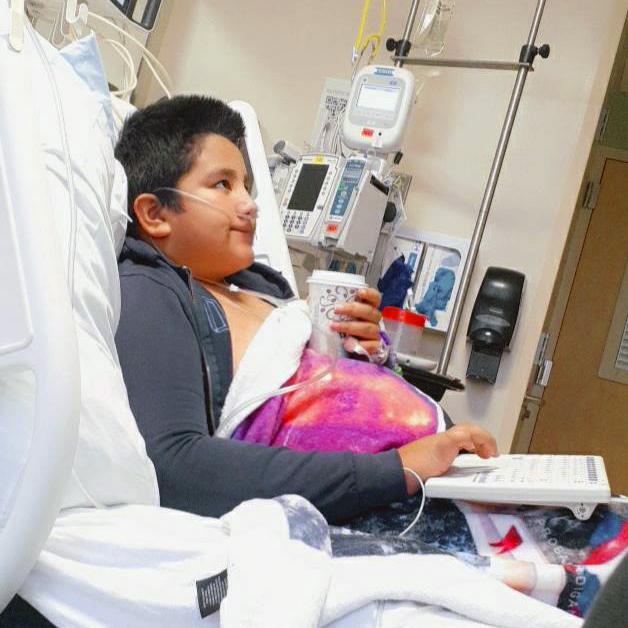
 
This 2021 photo provided by Yessica Gonzalez shows her son, Francisco Rosales, 9, in the intensive care unit at Children’s Medical Center in Dallas, Texas. The day before he was supposed to start fourth grade, Francisco was admitted to the hospital due to severe COVID-19, struggling to breathe, with dangerously low oxygen levels and an uncertain outcome. (Yessica Gonzalez via AP)
Francisco Rosales, 9, in the intensive care unit at Children’s Medical Center in Dallas, Texas. The day before he was supposed to start fourth grade, Francisco was admitted to the hospital due to severe COVID  AP
 
Florida is preparing to withhold funding from two school districts that have mandated mask-wearing for students, in defiance of an executive order signed by Florida Governor DeSantis barring facial coverings to be required.
"It is important to remember that this issue is about ensuring local school board members, elected politicians, follow the law."
"We cannot have government officials pick and choose what laws they want to follow."
Richard Corcoran, Commissioner of Education, Florida Department of Education


Labels: , , , , ,

Friday, January 15, 2021

Antipsychotic Medication As an Answer to Elderly Depression, Loneliness

"In the days before nursing homes became so highly regulated, many facilities used medications to chemically sedate their residents. Elders who were calm and slept a lot were easier to manage and required less attention from staff members. Therefore, many homes considered drugging patients to be both efficient and cost effective."
"Anti-psychotics and sedatives were frequently prescribed to calm patients, especially those who had Alzheimer’s disease or other forms of dementia. In some cases, a low dose may have been beneficial for residents and staff alike, but these medications are very powerful. They can affect seniors and dementia patients differently compared to the general population, and some even carry black box warnings, indicating that adverse reactions may cause injury or death."
Carol Bradley Bursack, Minding Our Elders, AgingCare 

"[An] additional 1,000 residents are being prescribed antipsychotics who were not on the medication before the pandemic."
"[Such] knee-jerk reactions to try and medicate the distress of residents in nursing homes [during the COVID-19 pandemic] are a serious concern."
"[Antipsychotics come with a] black-box warning [for the elderly. They increase the] risk of stroke, falls and all-cause mortality, and are not recommended for frail, older adults [such as those with dementia, who make up about 70 per cent of nursing-home residents in Ontario]."
Toronto geriatrician Dr. Nathan Stall
Long-term care homes
 

During the pandemic, nursing homes have seen fit for safety reasons during a time of high viral contagion, to restrict visits from outside sources to elderly residents of long-term care homes. In some instances, residents have been confined to their rooms in a contagion-preventive measures, and see no one but the personal care worker assigned to them, on an irregular basis. They fall into a state of confusion and depression, and are consequentially drugged to make them more complacent, less aware, the drugs leading them to long periods of sleep when overworked and/or insufficient staff haven't the time to look after their needs.

This, at a time when nursing and long-term care institutions lack modern upgrades in hygiene practices, where in many homes, they place their residents in double-, triple- and more -occupied rooms with shared bathrooms where it is difficult to maintain distancing, much less adequate hygiene. Nursing homes throughout Ontario, throughout Canada, account for fully 80 percent of the national deaths attributed to COVID-19, among their frail, elderly residents. They are badly understaffed, unequipped and trained to be able to handle their patients at this critical time of a global pandemic.

The practise of dispensing drugs in this manner has been criticized in the past for using drugs to pacify elderly patients so that they require less care and fewer concerns, and the practise, given bad publicity, was seen to abate. Since the SARS-CoV-2 epidemic has entered country after country, threatening the elderly and the health-compromised, psychotropic medications prescribed for older people has once again entered the scene. Care homes see older people's emotional turmoil, a lapse in cognitive abilities, and have once again turned to drugging patients.

Antipsychotics, antidepressants and benzodiazepines like Valium or Klonopin are in increasing use. Scientific research shows links between social isolation and loneliness, contributing to physical and mental health deterioration and often contributing to the development of dementia -- including Alzheimer's. Above all, when the elderly are confused and isolated and the opportunity to see and touch those who love them is removed, a critical element of human need is denied them.

Lenora Cline, 88, has lived in a nursing home for years. She has Alzheimer’s disease.
Lenora Cline, 88, Alzheimer’s  Ed Kashi/Human Rights Watch
Seeing the use of these drugs as a remedy for the acute state of disequilibrium in the elderly, may keep them quiet, but its deleterious effects on the elderly can be just as devastating as contracting COVID-19. A dramatic increase in the use of medications to older people was found through a study of care homes in Ontario. In the United States, clinical studies have pointed to serious side-effects of antipsychotics; nervous system problems, cognitive decline, strokes and an increased risk of death in those with dementia. Benzodiazepine is associated with increased falls, pneumonia and death in the elderly.

"The effects of prolonged social isolation during lockdowns", including restrictions on visits from loved ones and suspension of social activities and group dining is linked to the increase of harm to the elderly in long-term care homes, according to the Ontario study. Similar findings were reached in the United Kingdom when it was noted increased loneliness and human touch deprivation during the pandemic led to an increase in drug use "probably in response to worsened agitation and psychosis" associated with restrictions due to COVID-19.

Research from 2017-18 in the United States and 2018-19 in Australia discovered psychotropic medications to be overused in nursing homes, according to documentation by Human Rights Watch. Typically, the medication comes into use when residents become more of a burden of care, the drugs leading to more compliant behaviour, the patients more easily handled. "Chemical restraint" is what medication used for the purpose of behaviour control lacking a therapeutic purpose, is referred as.

Photo of people sitting outside a nursing home.

Labels: , , , , , , ,

Tuesday, December 22, 2020

Mutant Srain: "No Cause for Concern" : View With Caution

 
"Even during the [recent] lockdown in England, this virus had an R-number that was about 0.4 larger than non-variant strains."
"The non-variant strains had an R number of about 0.8, but this variant had an R of 1.2 or even higher."
"[Potentially bad news for efforts to curb the spread of COVID-19, already claiming over 67,000 lives in Britain; 1.7 million worldwide]."
"I think it is highly likely to become the dominant strain across the UK given the trends we have seen so far. There is a hint that it has a higher propensity to infect children."
"We have to be cautious in our conclusions, this is still early days and there's still a lot of uncertainty about many aspects of this new variant."
Neil Ferguson, director of the MRC Centre for Global Infectious Disease Analysis
 
"There is an really unusual cluster of mutations associated with this variant -- 23 coding changes across the whole virus genome."
"The previous virus had a harder time binding to ACE2 and getting into [human] cells. [That made adults -- with more abundant ACE2 receptors in their nose and throats -- an easier target compared to children]."
"If the new strain is having an easier time of entering and binding to cells, that would put children on a more level playing field."
"It is possible that we may need to update vaccines, perhaps not every year. But we will need to monitor these viruses moving forward."
Wendy Barclay, head, department of infections disease, Imperial College London
COVID-19 tests
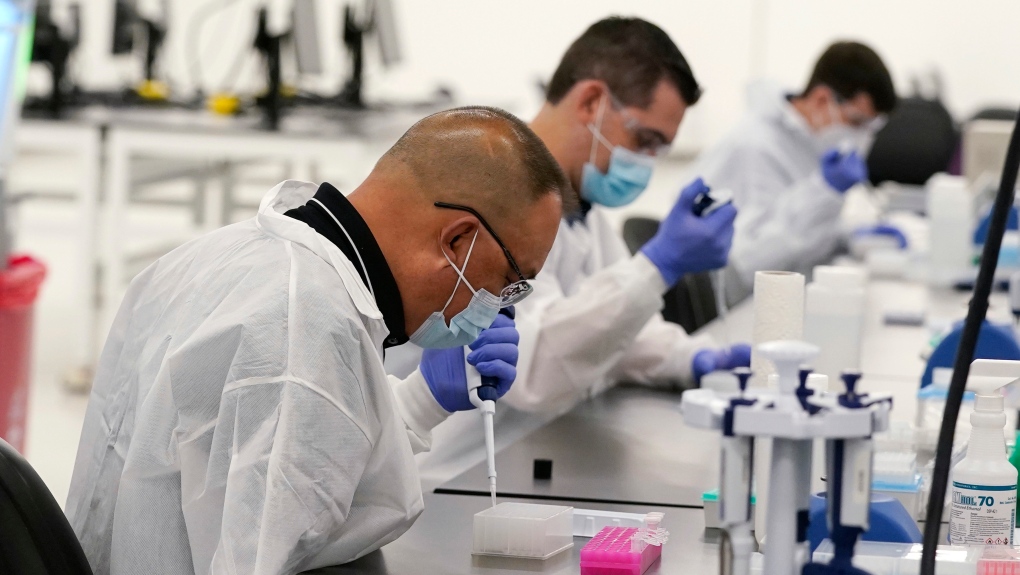
Technicians conduct COVID-19 tests at a new facility Friday, Oct. 30, 2020, in Valencia, Calif. (AP Photo/Marcio Jose Sanchez, Pool)
"[The new strain will not decelerate vaccine efforts]."
"Right now, we have no indications that it is going to hurt our ability to continue vaccinating people or that it is any more dangerous or deadly than the strains that are currently out there and that we know about."
U.S.Surgeon General Jerome Adams
Fears of a highly infectious new coronavirus strain has prompted more countries to close their borders to Britain. A sense of global panic has set in with the news of a new strain discovered in the United Kingdom with 23 mutations in its genetic code representing a rather high number of changes, some of which appear to have affected the coronavirus' capacity to spread far more effectively. The fear that set into the global community has caused travel chaos, raising the possibility of food shortages in the U.K. even as the Brexit cliff edges nearer.

Hong Kong, Russia, Switzerland, Sweden, India, Jordan, Poland, Spain and Pakistan have suspended travel to British citizens planning trips abroad in the wake of Prime Minister Boris Johnson's warning of a mutated variant of the COVID virus which appears to be up to 70 percent more transmissible, appearing in the country. Other nations too have taken steps to block travel from Britain, including France, Germany, Italy, Canada the Netherlands, Austria, Ireland and Belgium.

This, even as experts have declared that the mutated strain most likely is in circulation in countries that have no idea of its presence, given their less advanced detection technologies. The most concerning thing about the circulation of the variant is its more transmissible capability than the original strain. What has been established is that the new variant reflects a critical mutation whose lineage has been recognized in explosively-swift transmissions in South Africa, now accounting for 80 to 90 percent of new infections in that country.

September was when the realization struck of the appearance of a new variant in Britain. In London by early December, 62 percent of COVID-19 cases were linked to the new variant, in comparison to 28 percent of cases attributable to the variant three weeks earlier. The appearance of the new variant has also been reported in small numbers by Iceland and Denmark. 

A concern has been raised that current vaccines may be compromised by this significantly mutated virus leading doctors at the Walter Reed Army Institute of Research in the U.S to research the effectiveness of current vaccines on the new strain. Early conclusions are that the vaccines will continue to be effective. Ugur Sahin, co-founder of BioNTech assured it was "highly likely" its vaccine would be effective against the mutated strain. The company could adapt the vaccine if necessary, given six weeks
.
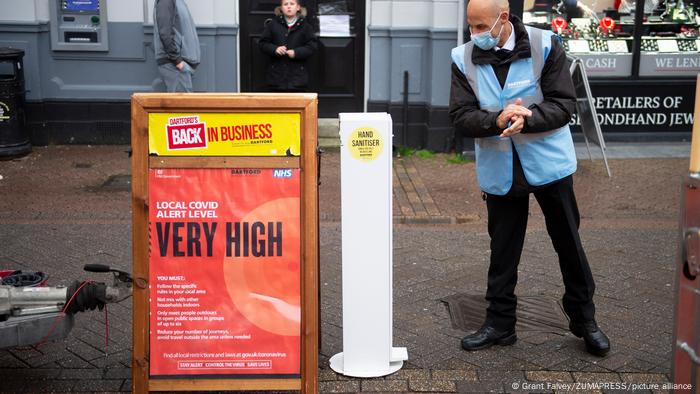
 A council worker putting out very high threat level COVID poster and hand sanitizer in the high street
The virus mutation was detected in September in Kent
"Viruses constantly change through mutation and the emergence of a new variant is an expected occurrence and not in itself a cause for concern."
"There is no indication at this point of increased infection severity associated with the new variant."
"[A conclusion] "challenged by the fact that the majority of cases were reported in people under 60 years old, who are less likely to develop severe symptoms."
The European Centre for Disease Prevention and Control (ECDC) threat assessment report
A man wearing a protective face mask walks past an illustration of a virus outside a regional science centre in Oldham, England, on Aug. 3. (Phil Noble/Reuters)

Labels: , , , ,

Wednesday, September 02, 2020

Time, of the Essence in SARS-CoV-2 Inoculation

Yoshua Bengio, a Montreal-based artificial intelligence pioneer and co-winner of the prestigious A.M. Turing prize in 2019, urges provinces to get data flowing so scientists can better combat the coronavirus.

"I am actually quite optimistic that we will have a vaccine and it will be distributed to the whole world as quickly as possible in 2021, perhaps bleeding into 2022."                           "I don't know which of the vaccine candidates undergoing clinical testing in humans will ultimately be shown to be safe and effective. But the encouraging news is that all of the vaccine candidates that have entered trials in humans so far are safe and have elicited high levels of antibodies against COVID-19."                                                                              "The COVID-19 story illustrates the tremendous capacity and speed of science in the 21st century and the power of international collaboration."                             "We have got what we wanted -- a diverse portfolio of vaccines based on different platforms. We have now signed those deals and there are more coming."              "This disease is not one that anybody wants to get. I think we have underestimated the severity of the disease and the lingering complications for many people. It is not like the flu. This is a serious disease."                                                                          Alan Bernstein, scientist, member, Canadian COVID-19 task force, President & CEO of CIFAR (Canadian Institute for Advanced Research) 

Literally, dozens of prospective vaccines to inoculate the world community against the dread novel coronavirus are on tap in the near future to complete essential clinical trials, clear authorization by government health agencies to proceed with manufacturing, and distribute their products world wide. Many countries, anxious to be able to resume normalcy, have signed contracts with the world's leading pharmaceutical companies for hundreds of millions of doses of the COVID-19 vaccines. Without an effective vaccine no country is immune from the virus's ongoing predation and death toll.

So great is the urgency to get on with producing, distributing and inoculating the greater world public that even before the authorization to proceed with production gained by approval, many pharmaceutical companies producing vaccines have begun anticipatory production. Moderna is on track for results from its Phase 3 trials by November, while Novavax has a vaccine candidate ready for production but is yet in Phase 1 trials though even there it succeeded in producing antibodies in patients four times as high as those who have recovered from COVID-19.

An engineer tests a vaccine at a lab in Beijing. Photo: Nicolas Asfouri/AFP

In the race for approval and production countries like the United States, Britain, France and Canada have committed to multiple agreements with various pharmaceutical companies close to completing their second and third phase trials. No fewer than 172 countries are engaged in their own research and preparing for production as soon as authorization can be achieved. For the most part, production will begin for many of them in 2021, but hopes are  high that a handful of the more advanced trials -- some of which have produced papers published in prestigious journals -- will see success before the year is out.

In two countries governments have authorized the inoculation of certain segments of the population who have offered themselves as volunteers even before final phases of the trials of the vaccine have not concluded. China boasts that it is the first country to begin inoculation its citizens, those earmarked as essential in reflection of the work they perform. International scientists view this as potentially hazardous. It is not only China, but Russia as well where volunteers have made themselves available as proverbial guinea pigs.

Because of the urgency to establish a protocol against the SARS-CoV-2 virus to return the world to the state it was in pre global pandemic, advance purchase agreements are allowing vaccine companies to begin early production to ensure that some vaccines will be available for distribution just as soon as they are approved. Advanced purchase agreements ensures that countries, hedging their bets by signing agreements with not only one, but several companies, can anticipate that one of the vaccines at the very least should be ready at an early date for inoculations.


Companies such as Moderna, Pfizer, Novavax and Johnson and Johnson make use of different, innovative methods in the creation of a vaccine to protect people from the virus. Dr.Bernstein notes that Canada has a relatively high rate of vaccine acceptance in the industrialized world alongside high trust by Canadians in their public health system which has as well a good track record of distribution and administering vaccines through the medium of the annual influenza vaccine campaign.

He has concerns, however, that go well beyond the timely infusion of a reliable and efficient vaccine for Canadians, in his consideration of the difficulties faced by areas in the developing world. International efforts have gone forward in financial contributions to ensure that poorer countries have swift and equal access to COVID-19 vaccines, once they're available. Dr.Bernstein would go further: 

U.K. scientists work on a potential COVID-19 vaccine. Carl Recine/Reuters

"If you think of the pandemic as a house fire, say a grease fire in your kitchen, it spreads really quickly. If you want to make sure you put the fire out, it has to be out in every room in  your house. If any embers are burning, it will flare up."  "Unless we get rid of it everywhere, not just in Canada, we have not got rid of it. Say we don't choose to buy vaccines for Africa or the Caribbean, is nobody going to travel? It is in our selfish interest to get rid of it and it's also the right thing to do."

Labels: , , ,

Wednesday, August 12, 2020

Anti-COVID-Contagion Mask Efficacy

"We confirmed that when people speak, small droplets get expelled, so disease can be spread by talking, without coughing or sneezing."                                      "We could also see that some face coverings performed much better than others in blocking expelled particles."                                                                                  "We certainly encourage everyone to wear a mask, but we want to make sure that when you wear a mask and you go to the trouble of making a mask, you make one, or wear one that actually helps not just you, but helps everyone."                             Martin Fischer, associate research professor, Duke University, North Carolina  

"If everyone wore a mask, we could stop up to 99 percent of these droplets before they reach someone else."                                                                                 "About half of infections are from people who don't show symptoms, and often don't know they're infected. they can unknowingly spread the virus when they cough, sneeze and just talk."                                                                              "They [some types of masks tested] were no good. The notion that 'anything is better than nothing' didn't hold true."                                                                             Eric Westman, associate professor of medicine, Duke University

Different types of face masks
Shutterstock/Golden Shrimp

It was when Dr.Westman began an association with a local non-profit to obtain masks from them to enable him to provide free masks to people who need them, that the idea for a study, published online this month in the journal Science Advances, came about. He was curious about which masks would be the most effective, wanting to be certain he wouldn't be providing people with masks that were inefficient, giving them a false sense of security.

To that end he decided he would test their efficacy, and asked colleagues to think up a basic, cost-effective method to test common masks. Dr.Fischer answered the call -- as director of the Advanced Light Imaging and Spectroscopy facility -- he put together a cardboard box, a laser, a lens and a cellphone camera to produce an inexpensive method of testing face masks. With the result that it was revealed that the masks Dr.Westman planned to acquire were relatively ineffective in reducing COVID-19's spread.

The study found that many masks made at home do work quite well to reduce the spread of COVID-19. The comparison led by researchers at Duke University of effectiveness of 14 different types and manufacture of masks and face coverings, useful in shielding from droplets people expel while merely talking, produced useful results. Each type of mask was tested ten times by one speaker, while three coverings were tested by four other speakers, with test subjects led to repeat the phrase "Stay healthy, people".

N95 masks were confirmed to represent the most effective coverings in shielding from the spread of COVID-19, where the masks without valves succeeded in allowing only 0.3 percent of droplets to escape, in comparison to the same speaker wearing no mask. Second in effectiveness was surgical masks, permitting one percent of spattered droplets to escape. These masks are not available to the general public however; they are part of the personal protective equipment meant for the use and protection of health care professionals.

Researchers then turned their attention to a variety of homemade masks, along with other commonly-used face coverings, finding that many homemade masks perform perfectly well. Just five percent of droplets were released by a polypropylene/cotton blend mask, while most pleated cotton masks tested released fewer than 20 percent of droplets. There were varying results, with the takeaway that a need exists for more testing of commonly-worn face masks, according to the researchers.

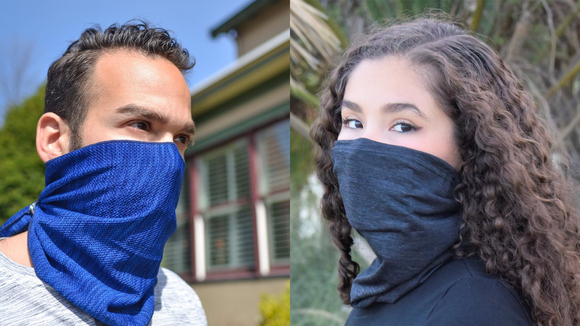
People are using gaiters as face masks—but are they as effective? (Photo: Mission/Etsy)
Aerial view of gray cotton neck fleece isolated on white background
iStock

Knitted masks were seen to provide substantially less protection than any of the cotton types, while a bandana cut the number of droplets only by half. And then, there is the fleece neck gaiter which, when tested, was seen to increase the number of expelled droplets to 110 percent. "We attribute this to the fleece, the textile, breaking up those big particles into many little particles. They tend to hang around longer in the air, they can get carried away easier in the air, so this might actually be counterproductive to wear such a mask", cautioned Dr.Fischer.

Labels: , , ,

Saturday, December 28, 2019

Sex and Unanticipated Consequences

"This is a cross-continent thing we've been observing over the past number of years."
Dr.Chris Sikora, medical officer of health, Alberta

"Each part of Canada is kind of experiencing its own version of the epidemic. Unfortunately, we have effective testing .. and yet we still have an epidemic."
"There's no reason why it shouldn't be able to go away."
"It's not very nimble [lack of data, reliance on test reports] in terms of understanding what's shifting on the ground."
"If people are only peeing in a cup then they're not getting tested for syphilis. We cannot let our foot off the gas in terms of managing this."
Nathan Lachowsky, public health professor, University of Victoria

"In the initial part of this outbreak, many of the cases ... were among gay and bisexual men. In the last two years or so there's been a definite shift to heterosexual persons."
"Meth is a very important component of what is happening."
"A recent rise in the use of smartphone-based dating applications, which make it easier to meet sex partners, has been linked to increased likelihood of risky sexual behaviours among people of all sexual orientations."
Dr. Ameet Singh, clinical professor, division of infectious diseases, University of Alberta
Patrick O'Byrne, a nurse practitioner at the Ottawa Public Health sexual health clinic, says syphilis is known as the great masquerader because it can look like other illnesses and can be so difficult to diagnose. Jean Levac / Postmedia News

Syphilis is making a comeback worldwide, and it is hitting some areas of Canada particularly hard. Syphilis has been known through historical accounts as a disease that struck some notable personages. It was also known by its ravages as a disease associated with facial deformities and dementia, left untreated. In 18th-century England one city had syphilis striking up to eight percent of its population. The first outbreak of syphilis was reported in 1495, when Naples was sacked by the French army.

Interestingly enough, 1492 was when Christopher Columbus sailed to the Americas. Theory has it that soldiers with the Columbus expedition picked up the infection on the voyage, bringing it back to Europe. This competes with another theory that it already existed in the Old World, but was mistaken from another dread disease that left people mutilated -- and where colonies were instituted to shut these outcasts away from society -- suffering from leprosy.

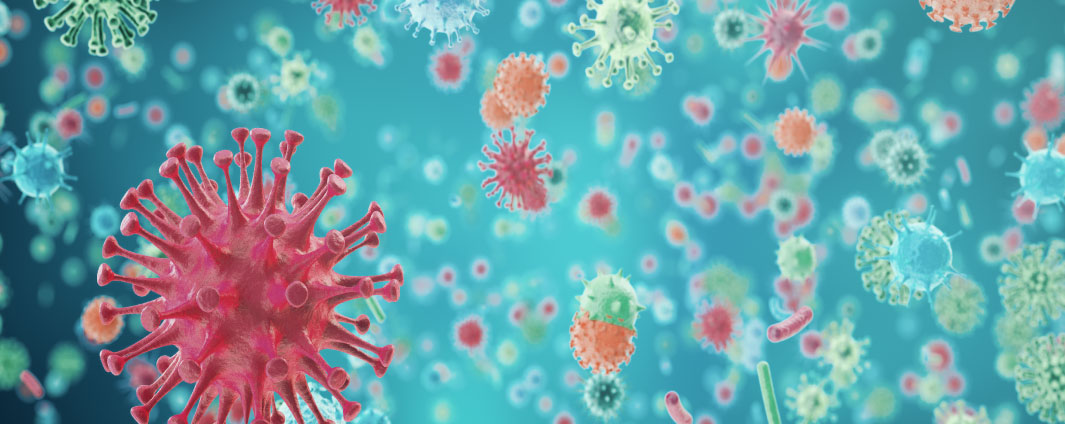
virus

At the turn of the Twentieth Century, people went so far as to deliberately expose themselves to malaria hoping to fight syphilis, thinking that high fevers typical of malaria would extinguish syphilis symptoms, and malaria itself would be cured with the drug quinine. A treatment prior to that saw mercury applied to the skin, or fumigating people with mercury. The world of medicine now responds to treating syphilis with antibiotics. Nothing quite beats prevention and regular testing, however.

This, for a dread disease held to have been eliminated as a health and longevity threat, eliminated as far as the medical community was concerned in the 1990s in Canada. Syphilis when it first presents looks like a sore on the mouth, genitals and anus, a painless nuisance until the symptoms progressively worsen. Without treatment, lying dormant for years, it can be the cause of brain, nerves, eyes, heart, blood vessels, liver, bones and joints damage.

In Canada, the most recent data indicate 6,311 cases of syphilis in 2018, an increase from the 2,399 registered in 2014, according to a report released in November by the Public Health Agency of Canada. The highest rates are seen in 30- to 39-year-olds, with per capita numbers illustrating an enormous swing from 234 cases per 100,000 people in Nunavut, to 2.5 cases in New Brunswick, per 100,000, and with the national average around 11 cases per 100,000.

syphilis
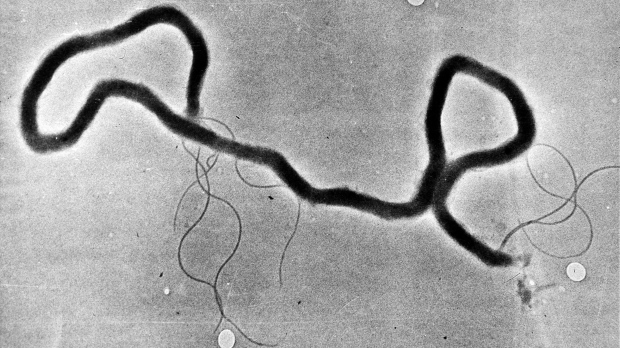
Treponema pallidum, which causes syphilis, through an electron microscope. AP

The Province of Alberta has seen a large increase in reported cases, with 1,536 in 2018, an increase of 187 percent from the previous year. In 2019, 1,753 new diagnoses were made compared with a mere 151 in 2014. Its rapid spread is of great concern among specialists in the medical community. Moreover, lack of associated data make it difficult to fully understand the contagion, with researchers relying on test reports which lag in time and offer no insights into the non-tested community.

A troubling offshoot of this trend is the emergence of a rise in congenital syphilis, of children born with the infection. Across the country, 17 confirmed cases of congenital syphilis -- the highest rate in 25 years -- were reported across the country, according to the Public Health Agency of Canada. Alberta alone has seen 38 cases of congenital syphilis in 2019.

Dr. Singh of University of Alberta attributes a few factors to this rise; one of which is the use of methamphetamines, the use of which stimulates sex drive and is associated with risky sexual behaviours. Casual sex and multiple sex partners attributable to shifting cultural values and the availability of dating apps are all viewed as possible contributing agents to the rise and spread of this highly communicable disease. Added to which increasing numbers could be linked as well to more frequent testing through blood tests.
Earliest known medical illustration of syphilis, Vienna, 1498


HIV pre-exposure prophylaxis which can prevent HIV infection, led to a reduction in condom use among men who share sex with other men, a practise which pushed sexually transmitted infection (STI) rates higher.

An initiative has been undertaken by the federal government through a five-year action plan to focus on STIs and blood-borne illnesses, including syphilis, HIV/AIDs and hepatitis C in hopes of reducing rates and improving access to treatment and testing.

The rising numbers can be curbed through prevention and regular testing. Annual tests are urged upon people whose sexual behaviour places them at increased risk for contracting syphilis.

Labels: , , , , ,

 
()() Follow @rheytah Tweet