Ruminations

Blog dedicated primarily to randomly selected news items; comments reflecting personal perceptions

Saturday, November 06, 2021

Bolstering COVID-10 Protection

"If authorized by the FDA [U.S. Food and Drug Administration] we may soon have pills that treat the virus in those who become infected."
"The therapy would be another tool in our took box to protect people from the worst outcomes of COVID."
U.S. President Joe Biden
 
"It makes the landscape a lot more promising because what these antivirals represent is more evidence of the ability to tame the virus."
"It gives us a big toolbox, makes it a more treatable infection. It brings it down from the level of being a five-alarm fire."
"I think that when you have oral antivirals that can decrease complications and decrease hospitalizations, that makes Covid-19 a much more manageable respiratory infection, and that's always been the goal."
Dr. Amesh Adalja, senior scholar, Johns Hopkins Center for Health Security
 
"Effective, early, oral medicines will be fundamental to ending Covid-19."
"[Health agency Unitaid] welcome[s] additional small molecule antivirals -- supported by evidence -- and with meaningful commitments to access in all countries, including low and middle income countries." 
Herve Verhoosel, spokesperson, World Health Organization affiliate Unitaid
Pfizer's experimental antiviral pill for COVID-19 has great potential to drive down mass hospitalizations and reduce death, says infectious diseases specialist Dr. Zain Chagla. 'There is a lot of optimism,' he said. (Bebeto Matthews/The Associated Press)
 
In the interim, on the strength of Pfizer's trial results suggesting that its oral drug with the brand name Paxlovid was proven in trials to slash the risk of severe COVID-19 by 89 percent, the American government has pre-ordered millions of doses of the Pfizer drug. Giving a strong indication that the FDA will be giving its approval for the drug's use in the United States. Once that happens, other countries will appraise the results of the study -- cut short because of the volume of its positive results -- guaranteeing it will be in wide use as a COVID prevention therapy.

It is no small thing to produce an anti-viral medication whose results have demonstrated the chances of hospitalization or death for adults at risk of developing severe disease, would be cut by 89 percent. Merck's pill molnupiravir, introduced a month earlier, was shown to cut risk of dying or hospitalization for COVID-19 patients at high risk of serious illness by 50 percent.

The pill is meant to be taken alongside an older anti-viral called ritonavir. Therapeutic treatment consists of three pills taken twice daily. The treatment price tag would approximate that of Merck's product whose U.S. contract price is approximately $700 each five-day course. Experts point out that despite the potential seen by these anti-viral pills, COVID-19 infection prevention will remain based on the broad use of vaccines.

Inoculation is recognized as a superior overall protection against the pandemic that has killed over five million people worldwide, as far as infection disease experts are concerned, to the present time. Over seven billion vaccine doses have thus far been administered globally, and even at that only about half the world's population has been covered. Over 400,000 new cases are reported daily across the globe.  And 50 countries are seeing rising infection rates.
 
58 percent of Americans are now fully vaccinated. It is Pfizer's intention to submit interim trial results for its anti-viral pill before the U.S. November 25 Thanksgiving holiday, to the Food and Drug Administration. 180,000 treatment courses are expected to be available by the end of 2021, with another 40,000 million courses by next year's end -- with 21 million in the first half of 2022 available. Pfizer has revealed it has been in discussions with 90 countries to date.

In Pfizer's study 1,219 patients wee analyzed  through examination of hospitalizations or deaths among people who had been diagnosed with mild to moderate COVID-19 with at least one risk factor for the development of severe disease (such as obesity or age). Within three days of symptom onset, the pill lowered chances of hospitalization or death for adults at risk of developing severe COVID-19 by 89 percent in comparison with patients receiving a placebo.

For patients treated within five days of symptoms, rates were similar; one percent of the treatment group was hospitalized, compared to 5.7 percent for the placebo group, including ten deaths. Those numbers work out to 85 percent effectiveness in the prevention of hospitalization or death. No side effects were detailed by Pfizer, adding that adverse events occurred in roughly20 percent of both treatment and placebo patients; likely in the form of nausea and diarrhea.
"I see them as a one-two punch. Vaccines are prevention. These antivirals are early treatment. Both have utility," 
"Neither one is a substitute for the other."
Dr. William Schaffner, professor of medicine, Division of Infectious Diseases, Vanderbilt University School of Medicine
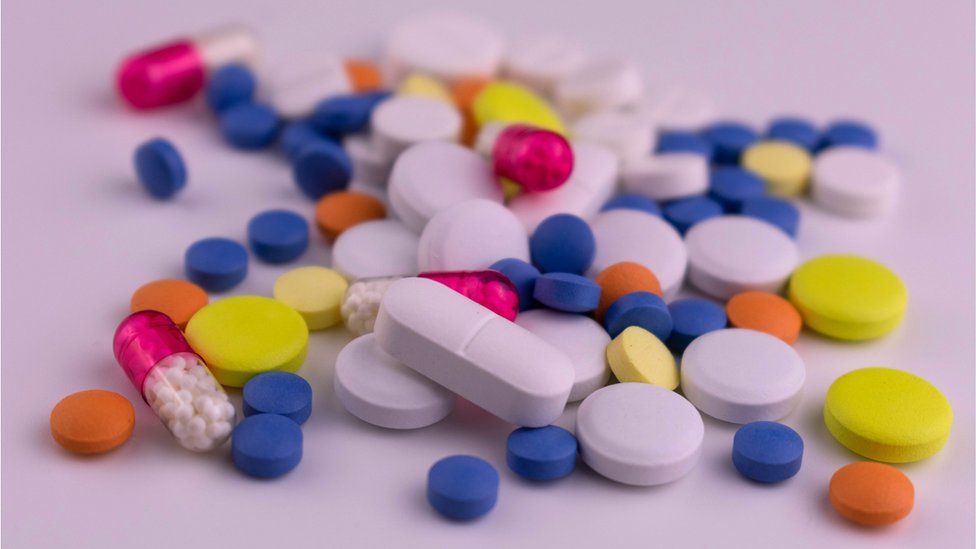
A selection of pills
Getty Images

Labels: , , , , ,

Sunday, January 03, 2021

Canadians Awaiting Rescue

Here's what we know about Pfizer's vaccine -- including who could get it first
"It's going to be extremely profound to see those groups immunized, plus those people who have taken care of them."
"That's a big amount that's actually taken off the table. That essentially makes this much more of a manageable disease."
"There is an end to these restrictions. There's an end to this lifestyle, so holding on for longer just gives us time to get that vaccination out there."
"There's going to be a point where you cross where that risk starts settling down to something that's very tolerable."
Dr.Zain Chagla, infectious disease physician, professor, McMaster University, Hamilton 
When can I get a coronavirus vaccine?
"By protecting those in long-term care, and reducing the rate of infection in long-term care, you also have significant positive ripple effects in the general community."
"If you just have fewer people in long-term care sick with this infection, that will result in fewer people being transferred to hospitals."
"It's not going to be like a light switch. I don't think it's going to be one day they're going to say, 'OK, it's back to normal'."
"It's not going to be like summer of 2019. But it'll certainly be closer to summer of 2019 than summer of 2020."
Dr.Isaac Bogoch, infectious disease physician, member Ontario Task Force for the Rollout
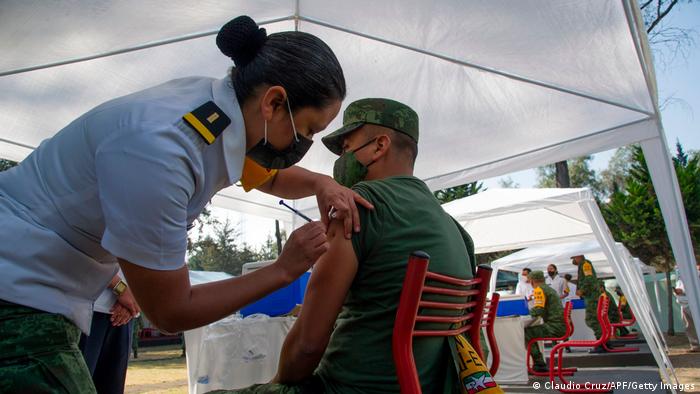
Medical personnel injects the vaccine to a military personnel in Mexico
 
The global community is in a hiatus period, waiting for rescue from the confines of a huge concentration camp that places firm strictures on the way we live, making near-recluses of us, hampering our freedoms so long taken for granted, giving us breathing room but just barely where some peoples' lives have been so afflicted with the worst excesses that the SARS-CoV-2 virus is capable of producing that their mental balance hovers on the edge of managing to cope, but barely.

But the first approved vaccines against COVID-19 are now in circulation, and governments are arranging for the most vulnerable among their populations to receive the initial doses, relieving them of the dangers that have ended the lives of so many others in those vulnerable groups. A just-in-time solution to a raging pandemic whose predations are nowhere near finished even as the frantic race to immunize as many people as possible trudges on. Rescue is there, somewhere on the tip of the horizon.

Research through the American Centers for Disease Control and Prevention certified that people over age 85 risk death from COVID-19 -- 630 times greater than anyone aged between 18 and 29. Roughly 70 percent of the virus death toll in Canada struck those over 80. The Canadian government has expectations of receiving four million doses of the Pfizer vaccine, available for injection into the arms of Canadians by the end of March. An additional two million doses of Moderna's vaccine is anticipated within the same time frame.
 
The provinces are behind targets of getting COVID-19 vaccine into Canadians' arms, and experts say logistical challenges are largely to blame but are hopeful the arrival of the Moderna vaccine will help speed things up.
 
But Canada's population is around 38 million people, and would need at the very least 74 million doses to ensure that the entire population could be vaccinated. Even if only 60 percent vaccination occurs, it should guarantee herd immunity, protecting that portion of the population for whom vaccinations are not recommended, or who refuse to be vaccinated, unwilling to place their trust in a new vaccine using a new bio-engineering technology that was produced in record-short time.

Both the Pfizer and Moderna vaccinations use similar cutting-edge biomedical techniques. And both require two doses be applied for full efficacy in which case with the incoming vaccines no more than three million people in Canada could be fully immunized by the end of March. April is forecasted as the soonest the vaccine will be available on a more widespread basis. As for the entire population to be immunized, the time frame stretches to the fall of 2021.

In the United States estimates projected by both the outgoing and the incoming administrations see the potential for a full third of the entire American population to be vaccinated by spring. Placing the U.S. well ahead of Canada. Most of the at-risk population is set to be vaccinated by March or April, in the United Kingdom. The estimate for Canada is for eight percent to be vaccinated in the first quarter of the year. Experts appear to agree, however, that the target population being vaccinated has a huge potential to alter the impact of the virus.

Generally speaking, immunizations are recommended for long-term care residents and workers, front-line hospital staff and Canadians over 80 to receive the first vaccine arrivals. To the present in Canada, about 100 deaths occur daily, a number anticipated to fall once the initial vaccinations have been completed. About 1.7 million Canadians are aged over 80, according to Statistics Canada. The 2015 census found 224,000 people live in long-term care or nursing homes, with an additional 127,000 housed in retirement residences of some kind.

It is estimated that the first three million doses should represent enough vaccine to inoculate most of the people in those three categories. Over a third of the COVID cases requiring hospitalization have been among people over age 80, and over half are over the age of 70, groups represented in the targeted rollout. Confirmed orders to date are expected to vaccinate 30 million Canadians with the Pfizer and Moderna vaccines.

AstraZeneca's vaccine was approved this week by Britain, along with Oxford University's homegrown U.K. vaccine requiring a booster after 12 weeks. A single-dose vaccine is expected from Johnson and Johnson, 38 million doses of which has also been ordered by Canada, with early trials showing an immune response in 98 percent of vaccine recipients. 
 
Dr.Bogoch pointed out that the summer of 2020 held a steady increase in infections concentrated among a younger cohort with few hospitalizations. And the summer of 2021 promises to be vastly different than its counterpart of a year earlier.

So yes, Virginia, Santa visited you last month and he probably confided in you that there is indeed 'light at the end of the tunnel'. Did you tell your mother to share the good news?

 A medical worker vaccinates a man against the coronavirus disease (COVID-19) as Israel kicks off a coronavirus vaccination drive, at Tel Aviv Sourasky Medical Center (Ichilov Hospital) in Tel Aviv, Israel
Countries around the world have started vaccination campaigns

Labels: , , , , ,

Friday, December 11, 2020

What's The Rush? Lives Depend On It

"For the initial stages of vaccination, I can confirm that we are asking for vaccines to be administered only at the first vaccination points."
Christina Antoniou, spokeswoman, Pfizer

"Whatever storage and transportation conditions are used for the vaccine, studies have to have been conducted in advance to demonstrate that the quality of the vaccine is maintained under those conditions."
"The challenge is that you have a limited amount of time to run those studies, which are relatively complicated."
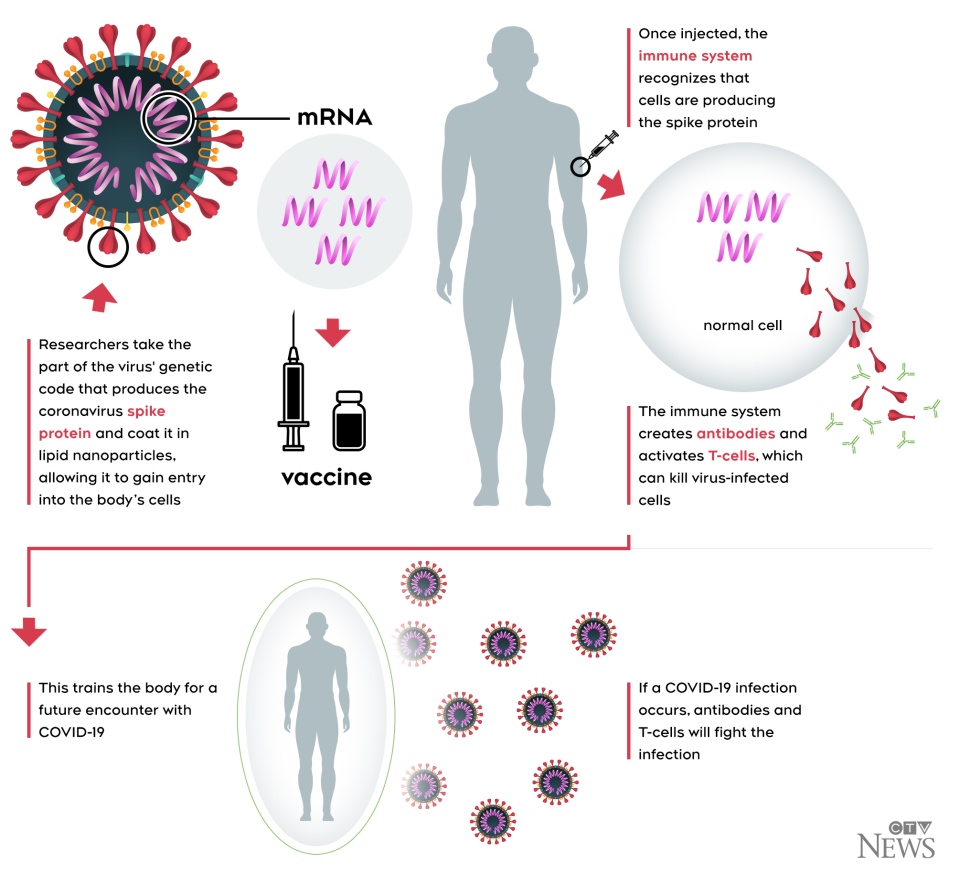
"The messenger RNA is very fragile after it’s been administered, it’s broken down very quickly in the body, and it also can’t get into our cells where it needs to be to work. So we provide a delivery technology [to Pfizer] that protects the messenger RNA after it’s administered and carries it into the cells and then releases it in the cells so that it can work."
"We don’t have the ability to do long stability studies to establish a shelf life for the vaccine at a more convenient temperature."
Thomas Madden, chief executive, BioNTech partner Acuitas Therapeutics, Vancouver

"So if you do have an urgent situation such as this, you can have this rapid approval process that’s not technically a full approval process."
"[It] really says, you know what, we’re still going to do the full look, we’re still going to do the full approach [the difference between the normal vaccine approval process and the fast-tracked process] to ensure that this is a safe and effective product."
Infectious diseases specialist Dr. Isaac Bogoch, University of Toronto
Approved by Health Canada, the initial batch of the Pfizer/BioNTech vaccine would be enough for nearly 125,000 Canadians. (Carlo Allegri/Reuters)

Two days ago, Health Canada, under obvious pressure took the step of clearing Pfizer and BioNTech's COVID-19 vaccine for public use; this extraordinary step even before the U.S.'s regulatory body made their decision for the U.S./German-produced vaccine. It is highly unusual for Health Canada to take such an accelerated approach to approving any new drug; it usually drags on through the approval process long after the U.S. Food and Drug Administration has arrived at its approval status.

Canada's experience with COVID-19 has been that the vast majority of seriously complicated COVID cases and 80% of COVID-related deaths have been within the elderly demographic, residents of retirement homes and long-term care facilities. An advisory panel to the government recommended that long-term care home residents and health-care workers be prioritized for early vaccinations. And that was to be the plan going forward.

With the imminent arrival of Canada's first modest-in-numbers batch of the Pfizer vaccine, the realization of the simple fact that to remain stable, the vaccine's fragility which requires extreme refrigeration from -70 to -80C, would make it not only a logistical nightmare to inoculate the elderly in these institutions, but aboriginals -- also declared priorities for vaccination -- living in remote, isolated communities would have to await a different type of vaccine; one produced for example by Moderna which can be stored at a moderate -20C.

 
Despite the urgency to vaccinate the elderly, the health-and-immunity-compromised, the health-frail indigenous populations, the vaccine originally designated in principle for them, will only be available for those able to take themselves to central designated vaccine-administrating stations to receive inoculations of the first deliveries expected to arrive in the next few days. Advice of a restrictive nature from the drugmaker has altered the best laid plans of health and government agencies.
 
Pfizer advising that early doses of the vaccine be administered solely at the sites where they have been delivered originally in large batches. This, given an absence of complete data on the vaccine's transportability safety. Nor, in  he absence of definitive data, will it be possible to break up batches to send smaller quantities of the vaccine to other locations. Depriving many long-term care residents of the first vaccination batches in Canada, in the very midst of an infection surge on the cusp of overwhelming hospitals.
 
This delay equates to the risk of increasing COVID deaths despite the vows taken by health and government authorities after the appalling death toll of susceptible seniors, that heaven and earth would be moved to protect them in future. There has been no secret of the need to store the vaccine at ultra-cold temperatures, despite which the newly-revealed restriction in transporting the vaccine further along the chain from its original destination has struck a blow to those plans. Even physical movement like shaking during vaccine handling has been cautioned against.
 
The Canadian government has identified 14 initial points of vaccination and only there is Pfizer prepared to deliver its batches destined for Canadians. No reason was given by the company for its imposed restriction. The challenge for administrators to ship vaccines from their original reception point to facilities elsewhere has been answered; it cannot, as yet be done. Dr.Madden, chief executive of Acuitas Therapeutics points to a lack of data due to the rapid rollout, not necessarily the actual durability of the vaccine. Simply put: not enough is known for complete confidence in the vaccine's stability.
 
Dr.Madden, an expert in lipid nanoparticles, a key ingredient in the vaccine, made note of the fact that  BioNTech offered less restrictive guidance in a presentation recently given during which it was stated that defrosted vials could be transported for up to six hours.
Explaining how a mRNA vaccine works

"But for now we’re going to do — I wouldn’t say a cursory look, but it’s not a complete look."

Labels: , , , , , ,

Monday, November 23, 2020

December COVID Vaccine U.S. Rollout

   Credit...Bebeto Matthews/Associated Press
"Filing in the U.S. represents a critical milestone in our journey to deliver a COVID-19 vaccine to the world and we now have a more complete picture of both the efficacy and safety profile of our vaccine."
"[Throughout the vaccine development process I wasn't certain Pfizer could produce a safe and effective vaccine ready for FDA review in less than a year.] Conviction is a part of it, so I was always telling [our teams] that we will make it, and we will make it by October, and if not us, then who?:
"But I knew that it was an extremely risky suggestion, I knew it was going to be difficult, and the stars needed to be aligned all the way to the end."
"[The partnership with BioNTech is built on a mutual focus on advancing science; the two companies began work, including sharing confidential information, before signing a formal contract, since those agreements can take months]. In fact, we are still finalizing the contractual obligations we have that we need to sign with them. It’s the perfect relationship for me."
"Ugur [Sahin, BioNTech’s co-founder and chief executive] is a wonderful human being, and a great scientist. He shares the same passion [as I do] about saving lives and I’m very optimistic that not only will we do very well together bringing a COVID-19 vaccine to the world, but later hopefully a flu vaccine."
Albert Bouria, chief executive officer, Pfizer Inc.
"[If the data is solid], we literally could be weeks away from the authorization of a 95 percent effective vaccine."
U.S.Health Secretary Alex Azar
 
"Within 24 hours from the approval, the vaccine will be moving and located in the areas where each state will have told us where they want the vaccine doses."
Dr. Moncef Slaoui, chief scientific adviser, US "Operation Warp Speed" vaccine program
Pfizer
Dado Ruvic/Reuters 
Some Americans could "hopefully" receive the vaccine for COVID-19 as soon as December 11 or 12

A date has been set for an FDA advisory committee to meet and discuss plans surrounding the COVID vaccine developed by Pfizer and BioNTech. That date is between the 8th and tenth of December. Leading to speculation that as early as December 11 the vaccines could be rolled out and distribution initiated. Pfizer has been busy long before the final Phase Three test results were arrived out, producing the vaccine. It is now prepared to apply to U.S. health regulators for emergency use authorization.
 
This will be the first of several and perhaps many such applications. Moderna will be certain to follow closely, since the announcement was made public that its COVID-19 vaccine had passed the Third Stage tests with similar results to Pfizer's. AstraZeneca is another contender whose vaccine appears ready for approval, production, distribution and inoculation. These vaccines tested in the amazing 95 percent effective rate with no major safety concerns emerging. 
 
The market responded as affirmatively as the public and government leaders around the globe at the news of the test results, seeing Pfizer's shares rise 1.6 percent and BioNTech's 6 percent. Hopes have been raised for the end of the pandemic responsible for claiming over a quarter of a million lives of people in the United States, and 1-1/3 million lives lost to COVID's complications around the world. Moreover, case numbers are now again steadily rising alarmingly. 
 
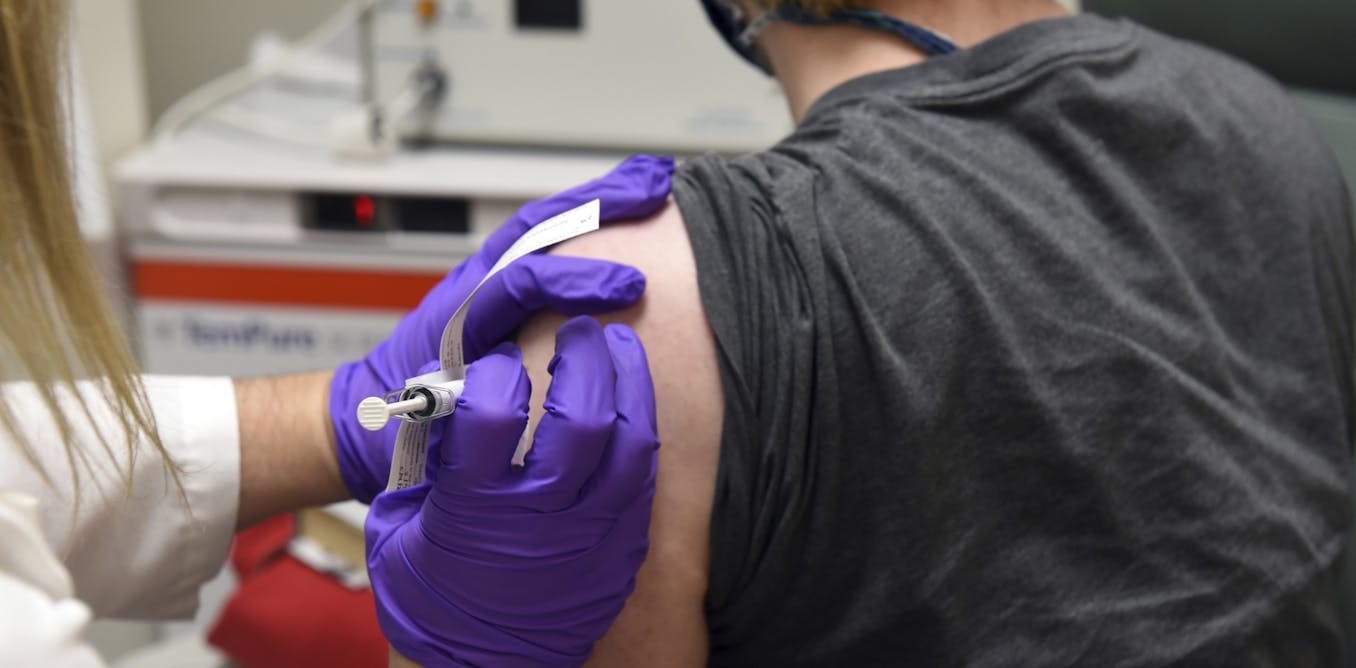
Pfizer's COVID-19 vaccine clinical trial  The Associated Press
Safety data on around 100 children ages between 12 and 15 were included with the application, the company attesting that 45 percent of U.S. trial participants fell between the ages of 56 and 85, both groups representing the demographics hit hardest by the virus. Agreement for the EUA by the FDA is anticipated by mid-December, Pfizer claiming it is prepared to begin shipping doses as soon as agreement is received, expecting to have 50 million doses ready for use this year, which would protect 25 million people in a two-dose protocol.
 
The Pfizer vaccine provided a level of protection evenly across different ages and ethnic backgrounds, vital news since the virus disproportionately harms the elderly and minority groups. In Pfizer's trial with over 43,000 people participating, there were 170 volunteers who contracted COVID-19, 162 of whom had received a placebo only; the vaccine was adjudged to be 95 percent effective based on those results, eclipsing expectations for a success rate.The FDA had considered a minimum bar for efficacy of 50 percent.
 
Close to 42 percent of global participants and 30 percent of U.S. participants in the Phase 3 study were of racial and ethnically diverse backgrounds, Pfizer had announced. Next in line at this juncture to seek a U.S. emergency use approval for a COVID-19 vaccine is contender Moderna, and from there the sky's the limit as one health expert after another speaks with a tremor of relief, of "a light at the end of the tunnel". 
 
Vaccine
FDA vaccine advisors reportedly will meet Dec. 10 to discuss approving vaccines. (AFP)
 

Labels: , , , ,

Tuesday, November 17, 2020

Time-Anxiety in COVID-Vaccine Release, Efficacy, Safety

"Certainly there can be a lot of damage done between now and when vaccine programs are rolled up."
"So, we really hope that the provinces and municipal, political and public health leaders take steps to protect people. And I hope people take steps to protect themselves and their communities."
Isaac Bogoch, infectious disease specialist, Temerty Faculty of Medicine, University of Toronto

"[The preliminary results for both  Pfizer and Moderna vaccines are] incredibly exciting. Both have reported over 90 per cent efficacy, which is really extraordinary and really meaningful. But we do have to remember that these are both based on short-term results after having been immunized.… Would that efficacy hold up over a period of weeks, months or even years?"                                                          "We think we see the light at the end of the tunnel here. We think that there's something that can be added to the toolbox that can really make a difference and change the shape of this curve and the experience that we've all been living through."                                                                                                                "Those are the things that will be huge game changers [whether these vaccines alter the transmission of the virus, including the length of infection, the level of virus in the body and how likely an infected individual is to transmit to someone else]. If the vaccine can alter any of those attributes of the virus."                                             Kate O'Brien, director of the immunization department, World Health Organization (WHO)

"... It’s not a ‘recipe’ that you can make the material out of. It took us years to learn how to make the vaccine and months to train the Lonza people [Moderna’s European manufacturing plant, which is owned by Switzerland-based Lonza] on how to produce it. We’re sending our best people to teach the process and like any young technology, it takes time; it’s a difficult project that involves a lot of transfer of patents. A lot depends on the raw materials and the production efficiency and this is the first time the vaccine is being produced."
"All of that [trust in the trial results and decision to release results] is managed by an independent committee that examines the data and decides when to approve publication. The figures were clear even when there were 53 Covid-19 cases in the experiment, but we waited until we had 95."
"The [test] subjects are living completely ordinary lives, some even work in the healthcare sector. They are all exposed to the virus. In any case, the results are clear and indicate the vaccine is 94.5% effective."
"At this stage, it is too early to tell [whether people who have been vaccinated can no longer transmit the virus], these are figures that we’ll have to examine when we test the blood of vaccinated people for antibodies."
I don’t think that’s reasonable [conjecture that the vaccine might last only 3 months], there are very high levels of antibodies in the blood that we saw in the clinical trials, and that provides a sense of security and optimism. Of course, we will have to monitor the test subjects, but the high effectiveness rates offer a light at the end of the tunnel."
Dr. Tal Zaks, chief medical officer, Moderna
Staff are seen Sept. 29 setting up a production line in Visp, Switzerland, where the Moderna mRNA coronavirus disease (COVID-19) vaccine will be produced. (Denis Balibouse/Reuters)

So the pot of gold at the end of the rainbow might be in sight, once the storm of COVID-19 assaults meets what will be its nemesis, arming vulnerable human beings against the onslaught of SARS-CoV-2 virus causing COVID. The actual proof of its long-lasting effectiveness safely encountered will have to stand the test of time. And in the meanwhile, a restive and fearful, angry and resentful, anguished and bewildered population must bide its time while continuing to follow medical instructions to maintain physical distance, wear face masks and observe carefully protective hygiene protocols.
 
The normal course of developing effective, safe vaccines has been reduced dramatically in the face of this fast-moving, volatile and changeable virus that hasn't obeyed the hitherto-observed behaviours of predecessor viruses, leaving the scientific-medical community bemused and challenged to develop protocols of protective behaviours, asking entire populations to undergo dramatic modifications of what has always been considered 'normal' life. Long engrained habits have had to be abandoned. Social contacts of immense value brought to an abrupt halt.

But the good news is that following Pfizer's announcement that its vaccine has proven hugely successful and the pharmaceutical company is prepared to ask for emergency title to begin production and distribution, Moderna too has released similar triumphant news. And this at a time when the world is overdue for good news, while the second wave of COVID infection has proven to be far excessive of the original in its viciously predatory infectiousness. 

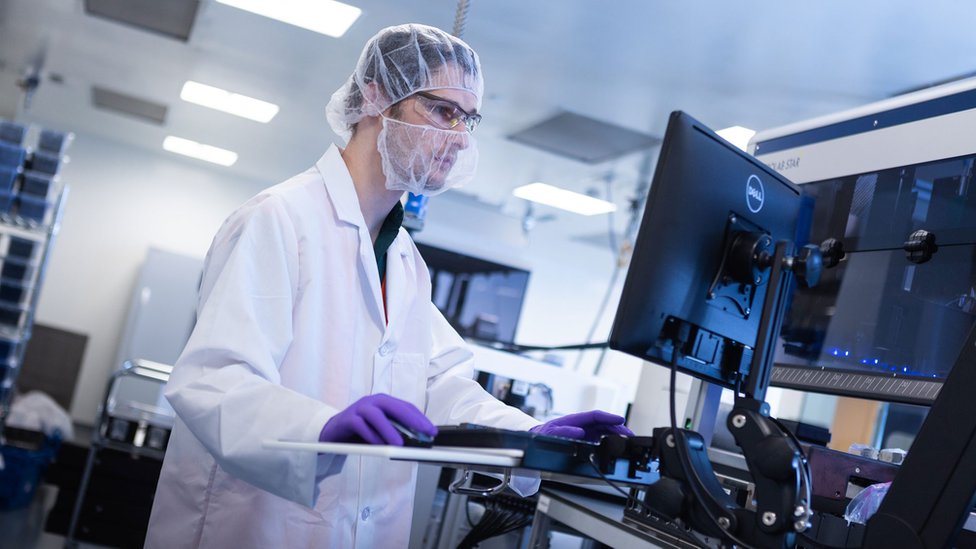
Moderna labs
Moderna scientists used an innovative technique for developing the vaccine so quickly    Moderna

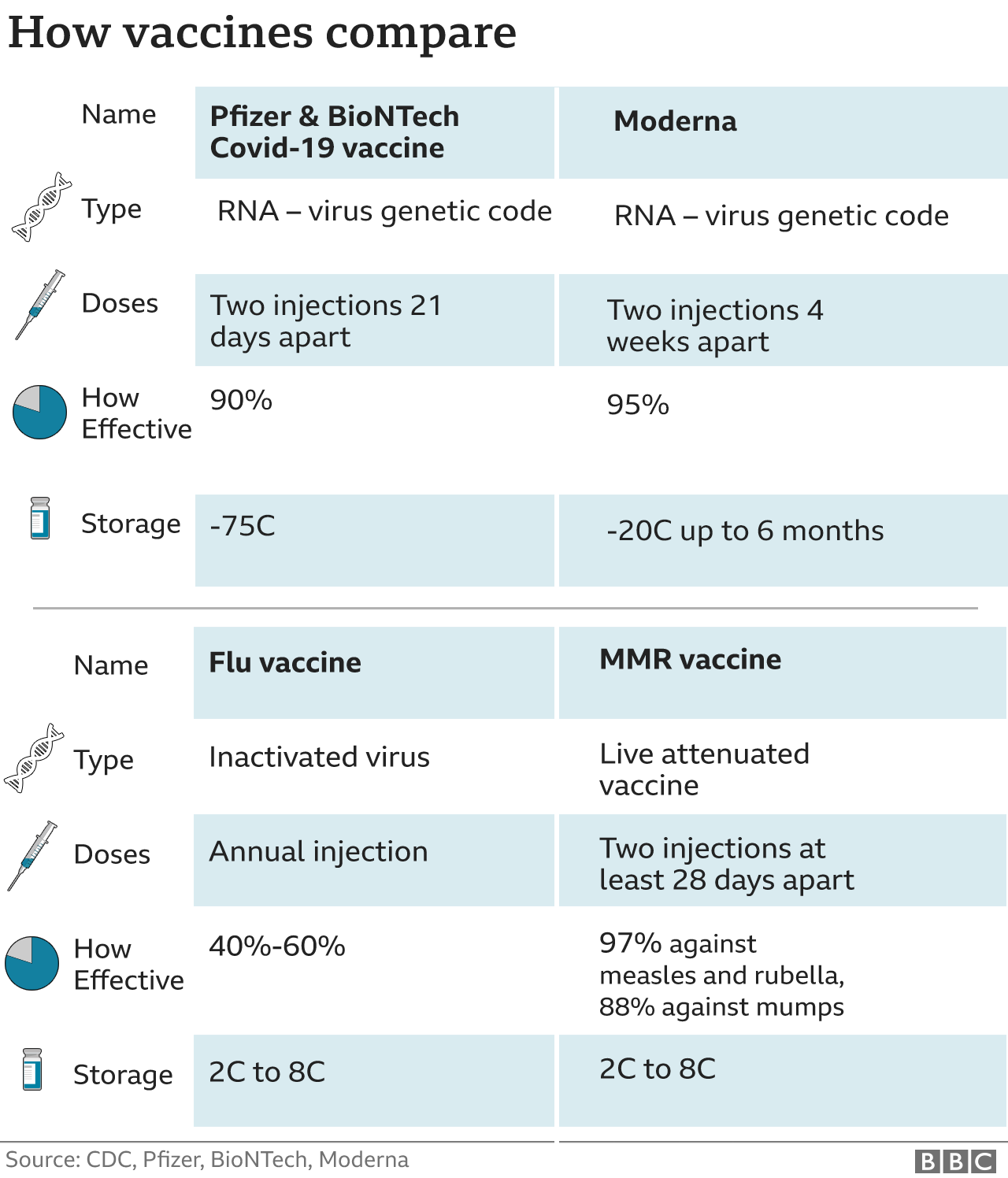
Preliminary data of Moderna's Third-Stage trials give its mRNA-1273 vaccine a 94.5 percent effective rating, outdistancing even the unheard-of 90 percent effectiveness of Pfizer's vaccine. With an added advantage that Moderna's vaccine requires only typical refrigeration, and not the complicated -70C refrigeration of Pfizer's vaccine, making it easier to safely distribute and store. Both pharmaceutical companies' vaccines are pending additional safety data and regulatory review leading to a sooner-than-later authorization in the United States for emergency use, perhaps by December.
 
Both companies, apart from awaiting the verdict of the U.S. Food and Drug Administration in advancing their vaccines' permission to proceed to production and distribution have also asked Health Canada to review their products with a mind to similarly manufacturing and distributing for Canadian use, at a critical junction where infection case rates have been soaring in Canada, yet nowhere near the astronomical heights of infection seen in the United States. 
 
"We are going to have a vaccine that can stop COVID-19", Moderna's president Stephen Hoge said with confidence. Only five infections were seen to occur in volunteers who received the two-shot (28 days apart) mRNA-1273 vaccine, out of a total of 95 receiving the vaccine or an alternative placebo. The company is confident that it will be in possession of sufficient safety data for U.S. authorities within the week or more to enable them to file for emergency use in coming weeks. 
 
No one should be surprised, interjects infectious disease specialist Isaac Bogoch, if things don't exactly run as smoothly as expectations lead people to anticipate, while questions are left dangling awaiting answers; how long the vaccine may last, and how effective the inoculation will be in a real-world setting.

Vaccine comparison

Labels: , , , ,

Tuesday, November 10, 2020

Calling the Miraculous Great Day for Science Into Question

Man wearing a face mask walks past Pfizer sign on building.
Pfizer/BioNTech vaccine has 90% efficacy. Justin Lane/EPA
"[Early data suggests the BNT152b2 vaccine is more than 90 percent effective, a] Great day for science and humanity."
"As the study continues, the final vaccine efficacy percentage may vary [from its initial 90%]."
"The case split between vaccinated individuals and those who received the placebo indicates a vaccine efficacy rate above 90 percent, at seven days after the second dose."
"Today is a great day for science and humanity."
Pfizer Inc. press  release
"It's well known in clinical trials that sometimes when you have really, really positive effects in the interim analysis, those positive effects get smaller as you complete the trial."
"You'd really need to see the full array of safety information to have a critical appraisal of the vaccine."
"If there is a reversal of fortunes for this vaccine, people in the public begin to have more doubts about what companies or various sponsors are reporting ... You really want to be confident that you have worked out all the kinks, that you have reliable findings before you go public."
"Presumably, Pfizer is making this information public because they think it ought to inform some people's decisions. Why not wait until you have carefully vetted the data, that you've completed the trial, before you issue these results?"
Jonathan Kimmelman, professor of biomedical ethics, McGill University 

"[A vaccine that provides over 90 percent protection against COVID-19] would be absolutely amazing and would definitely go a huge way to leading us out of the pandemic."
"I just want to see the evidence." 
"Does [the Pfizer/BioNTech vaccine] attenuate the disease? Does it reduce spread to other people?"
Dr.Andrew Morris, infectious diseases specialist, Toronto
https://images.theconversation.com/files/368661/original/file-20201110-19-70s6ki.jpg?ixlib=rb-1.1.0&rect=0%2C20%2C6720%2C3360&q=45&auto=format&w=1356&h=668&fit=crop
The Conversation
 
Successful vaccines are developed to produce a dual result; protect the individual who has been vaccinated from becoming infected with the disease while protecting the next person he comes in contact with from being infected. Many experts in the field of epidemiology were taken by surprise when they read the release from Pfizer, since the acceptable minimum target the U.S. Food and Drug Administration felt would be the minimum for it to grant emergency use authorization for such a vaccine stood at 50 percent effectiveness.

Pfizer's press statement sent global stock markets upward, and hope to spring into the minds of a public weary of lockdowns and concerns over contracting the illness that has been so destructive globally and in particular to the United States in caseloads, hospitalizations and deaths. The basis for the pharmaceutical company's confidence in releasing the results of its third-stage trial before peer review or publication was the conclusion the vaccine appears safe, no serious concerns surfacing, but information on safety yet to be assembled.

The statement of confidence and jubilation is based on an interim analysis. The stakes are "beyond imagination", Albert Bouria, chairman and CEO of Pfizer stated. Experts in the field are somewhat less convinced, urging caution rather than rushing to a somewhat rash conclusion, pointing out that there is as yet too much unknown; whether the vaccine prevented serious infections, or mainly mild cases. Throw in that it's too soon to know how long any immunity that does result from the vaccine will continue to protect from the disease.

https://images.theconversation.com/files/368508/original/file-20201110-14-1x56ov.jpg?ixlib=rb-1.1.0&rect=0%2C468%2C6016%2C3008&q=45&auto=format&w=1356&h=668&fit=crop
The Conversation
 
The statement by Pfizer and German partner BioNTech reflected an early analysis of the final stage Phase 3 trial to determine the new vaccine's effectiveness. Either the experimental vaccine, administered in two stages, or a placebo was used with volunteers, no one knowing which was apportioned to whom. The vaccine known as BNT152b2, has been designed to target the spike protein surrounding the surface of the virus causing COVID-19; a formula also used by other vaccine candidates.

The fact is, nonetheless, that a 90 percent efficacy rate has been reported; vastly superior to the 50 percent minimum target set by the US. Food and Drug Administration. The trial is set to continue until such time as there are 164 confirmed COVID cases among the total 44,000 volunteers receiving both doses of the experimental vaccine. Of that number 94 contracted cases of COVID-19, hence the 90 percent success designation.

fauci
Dr. Anthony Fauci ... Al Drago - Pool/Getty Images 
"It's a really good day for biomedical research and clinical application of biomedical research. This is very good news looking forward."
"[The result] validates the mRNA platform, [which could indicate that a separate mRNA vaccine developed by Moderna could also have positive results]." 
"[This] validates greatly [the virus' spike protein as the immune-response target, which is important because it's also the target for] virtually every one of the other vaccines."
"It's not only immediate good news, it really is optimistic about what's going to roll out in the next several months with the other vaccines."
Dr.Anthony Fauci, infectious disease expert, director, U.S. National Institute of Allergy and Infectious Diseases


Labels: , , , , ,

 
()() Follow @rheytah Tweet