Blog dedicated primarily to randomly selected news items; comments reflecting personal perceptions
Thursday, December 30, 2021
Your Usual Dinnertime Tipple of Wine?
"Our study is now one more mosaic stone in the evidence which is coming to show that what we believed for decades might not be true."
"We undertook this research to ask, what kind of people are these [past habitual drinkers]? What characteristics do they have?
"If people talk about alcohol, they always warn of becoming alcohol dependent ... but these people are less than two percent of the health disorders which may accrue from alcohol. Prevalent health disorders -- cardiovascular disorders and cancers -- should be much more stressed, and particularly breast cancer. It's very, very important because it's the number one cancer among females."
"Alcohol has a very, very long tradition in culture. So, it will be a huge endeavour to go ahead with this message that the best is to stay abstinent from alcohol."
"We have all these lessons learned from the tobacco industry and the alcohol industry which acts in a very, very similar way. So they support studies and investigations about these hypotheses, and particularly resveratrol."
"The main message is that people should remember to reduce their drinking [regardless] of whether they are high consumers or very low consumers."
"[The best way to prevent alcohol-related health disorders] -- namely cardiovascular disease and cancers, and mortality as well -- [is not to drink it at all, which is in line with the World Cancer Research Fund's recommendations]."
Ulrich John, University Medicine Greifswald, Germany

The study contradicts most national guidelines which say there may be health benefits to one or two glasses of wine.Photograph: Inti St Clair/Getty Images
But ... but we've been assured for years -- decades -- that moderate consumption of alcohol is highly beneficial to human health -- haven't we? Now along comes research published in the journal PLOS Medicine that tells us otherwise. The study by Ulrich John of University Medicine and his colleagues in Greifswald, Germany carries an unequivocal message: if you consume alcohol and cite its health benefits, you might see merit at this point in reconsidering your devotion to alcohol as health-beneficial.
This Germany-based research team studied 4,028 adults, finding that increased mortality among abstainers may be explained in part by other factors; alcohol for example, or drug dependence, smoking and a general history of poor health. A glass of wine or a pint of beer daily to benefit health is being prescribed in many countries by doctors; belief in the benefits of modest amounts of alcohol is that widespread and pervasive.
Older epidemiological studies inexorably led to this interpretation "with many shortcomings", suggesting that alcohol abstainers have a higher mortality rate than those who consume low to moderate amounts. No significant difference in mortality between abstainers in good health and those who drank moderately was found by the new study, countering recommendations to drink alcohol for good-health reasons.
Other health behaviours, suggested by accessible evidence, including sedentary lifestyle, tobacco and substance use, have a dose-dependent relationship with mortality and health disorders; in that the greater the exposure, the higher the risk that follows. In light of which Dr.John found it "very implausible" that alcohol should be singled out as an exception, with health benefits.
Dr. John's research group investigated 4,028 adults between 1996 and 1997 with the use of standardized diagnostic interviews, including "very exact" information on health, alcohol and drug use along with smoking habits. The researchers revisited their data two decades later, which included mortality information, and drew comparisons between alcohol abstainers and low to moderate drinkers to find that 91 percent of alcohol abstainers were former drinkers, and 72 percent identified with one at least risk factors, such as a former alcohol or drug use disorder; former risky alcohol consumption; efforts to cut down or stop drinking; daily tobacco smoking; or fair to poor health.
They found no statistically significant difference in mortality rate between the health abstainers without any "factors that predict early death" and those who consumed low to moderate amounts of alcohol. The Women's Health Initiative Observational Study showed drinking even small amounts of alcohol increases the risk of breast cancer, the most common type of cancer worldwide, the second-leading cause of death from cancer among women in many countries.
Alcohol consumption has the potential to raise blood pressure levels and it has been linked to increased risk of hypertension, itself a major cause of premature death. Unfortunately, there is no strong global movement to alert populations to the dangerous effects of alcohol, a hugely socially accepted relaxant. Risks associated with articles praising "immune-boasting cocktails" aside, as well as those promoting the antioxidant properties of red wine, alcohol benefits from its undeserved health-halo effect.
Resveratrol, an anti-oxident, is found in over 70 plant species, in particular grapes and it is often cited as vital to the purported health benefits of wine. "It is not known whether there is a safe and effective dosage for chronic disease prevention", the conclusion reached by the Linus Pauling Institute. However, most supplements contain 250 to 500 milligrams of resveratrol, while a 150-millilitre (five-ounce) glass of red wine contains less than a milligram (0.2 - 0.5 milligrams). "You have to take huge amounts to have an effect", cautioned Dr.John. "And based on the evidence we have right now these hypotheses do not make sense."
So the conclusion that Dr.John's study reaches, along with an increasing body of evidence, is that no matter how much you drink, drink less. Those who take note, might alter drinking habits, limiting it to a glass of wine on holidays and abstaining for all other ordinary, daily events. "Many people do not know that they are, in essence, alcohol dependent. And this is the best way to learn (by abstaining for defined periods of time)."
"Kids model parental behaviour." "Parents who drink in front of youngsters make drinking a norm." Richard Mattick, National Drug & Alcohol Research Centre, University of New South Wales, Sydney, Australia
"Limited cross-sectional studies have indicated that young children have
some knowledge of the type of situations in which adults usually consume
alcohol. However, it is unclear when and how this knowledge develops
over time. This study tests the hypothesis that between the ages of 4
and 8, children become more knowledgeable about common drinking
situations (e.g. ‘partying’) and uncommon situations (e.g. ‘driving’)". "Children aged 4–8 become increasingly knowledgeable about drinking norms
in specific situations which implies that they know in what kind of
situation alcohol consumption is a common human behavior. This knowledge
may put them at risk for early alcohol initiation and frequent drinking
later in life." Study authors: Carmen Voogt, Koen Smit, Marloes Kleinjan, Roy Otten, Tessa Scheffers, Emmanuel Kuntsche, Netherlands Institute of Mental Health and Addiction, Utrecht
A family meal, and a toast with adults drinking spirits and children fruit juice. Getty Images
A Dutch study published in December of 2019 in the journal Alcohol and Alcoholism, reached the conclusion that any individual of average intelligence who has children of their own, might have arrived at, given the nature of children's curiosity about anything and everything and their propensity to model themselves after the adults of most importance in their lives, their parents. The study doesn't exactly break new ground in that children who come from families where drinking alcohol is part of daily routines, tend themselves to gravitate to that very same habitual use of spirits.
However, since the conclusion derives from an academic study whose main author has conducted many previous studies revolving around similar situations and circumstances, the findings have the added weight not only of common sense, direct observation and logical conclusion, but that of scientific affirmation. Researchers involved in the study enquired of 75 fathers and 83 mothers their opinion of routine situations where adults take alcohol in a series of situations such as during a party, at work, while watching television or while driving.
Following which 359 unrelated children between the ages of four to eight were asked to identify which situations they might feel it to be commonplace or appropriate for adults to indulge in consuming alcohol. The researchers reported that as children aged they became ever more aware of the social normative around alcohol consumption. They have learned from observation when drinking is appropriate and the number of drinks that seem permissible, resulting from noting how the adults in their lives behave.
A take-away for the researchers, as a result of this study, is that familiarity with alcohol may lead children to be likelier to begin drinking earlier in life, or lead additionally to a casual attitude of more frequent alcohol consumption, included as part of everyday living. The study identified that fathers tend to drink greater amounts of alcohol than mothers, with men consuming roughly 8.6 standardized alcohol units weekly, as compared to 4.4 for women.
One unit, comprised of 10 grams of ethanol or pure alcohol could be seen as the equivalent of one to three drinks relative to the alcohol content in each beverage. Most frequently, drinking by parents was perceived to be common at social events such as parties, at holiday dinners, during dinners taken at restaurants, or home barbecues. Fewer parents described drinking as being common to everyday dinners, while at a picnic, or while watching television, and while driving drinking was seen to be an uncommon event.
According to the parents responding to the study, fewer regarded drinking to be common while reading, working or eating lunch. It was the observation of children, on the other hand who found drinking more common while watching television or while attending parties. And, similar to the adults in the study, children found drinking to be uncommon while reading, eating lunch or working at an office. Adults, according to children, consumed more alcohol in common situations, leading the study authors to the conclusion that children are learning drinking behaviour from their close observations of adults.
The study authors acknowledged that their study was comprised of a small sample of participants, since very few parents and children agreed to participate in the study when invited to do so. And due to its limited participants the study may not accurately reflect attitudes prevalent in a representative total of Dutch families. Their findings, however, suggest children are aware of social norms respecting alcohol consumption from an early age.
And what is troubling about that is the reality that most Dutch youth begin a lifetime of drinking while in their adolescent years; familiarity through familial exposure having assured the youth that alcohol consumption is a normal component of everyday life. And while in the Netherlands many prevention efforts place their focus on this age demographic, the timing may be too late to be effective in turning young people away from alcohol consumption.
"We recommend that healthy men and women reduce the risk of harm by drinking no more than ten standard drinks per week and no more than four standard drinks on any one day." "[Additionally there is now] greater certainty about links between alcohol and a number of different cancers." "Drinking above this level increases this risk [of dying from alcohol-related disease or injury], while drinking less
frequently and drinking less on each occasion reduces this lifetime risk
of alcohol-related harm." National Health and Medical Research Council, Australia
"We are not saying this is a level that completely eliminates risk." "The less you choose to drink, the lower your risk of alcohol related harm." "[The guidelines are] not telling Australians how much to drink. We’re providing advice about the health risks from drinking alcohol so
that we can all make informed decisions in our daily lives – for
ourselves and for our children." "It’s ten years since our last review of the guidelines and we now know
more about the effects of alcohol. We know that alcohol continues to
have significant direct health consequences for many Australians." Anne Kelso, report author, Medical Research Council chief executive
A new study suggests you may want to stop after this drink
Yutacar / Unsplash
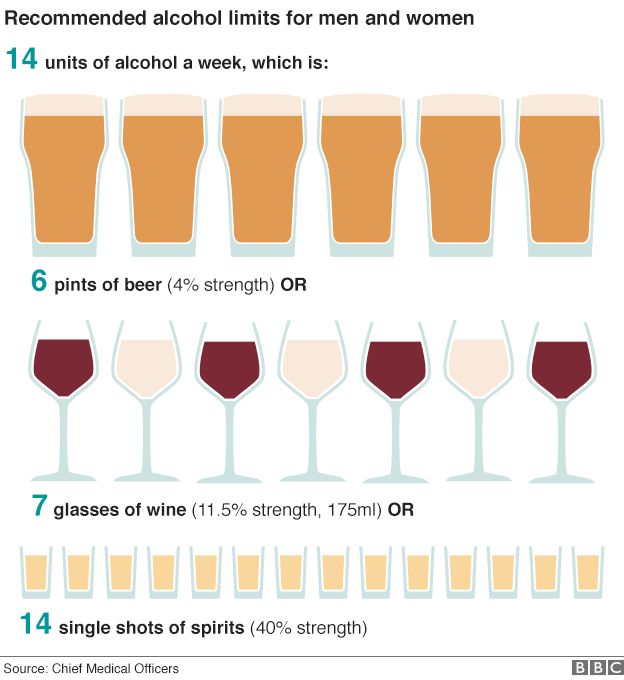
For the first time in ten years Australia has altered its guidelines for alcohol consumption, releasing a study containing consumer guidelines, updating them from previous such advice of two drinks each day being safe, for a total of 14 weekly. That total is now reduced to no more than ten drinks weekly. A standard drink is epitomized by approximately ten grams of alcohol, the equivalent of one glass of wine. Typically a pint of beer has an alcohol volume of around 5.5 percent, or 15 grams of alcohol.
Under these new guideli8nes, 1-1/2 pint-sized beers is seen as the outer limit for an adult. The type of beer is also to be taken into account such that drinking a stronger beer or increasing the amount poured into a mug should also be taken into account accordingly, since without taking these points into consideration, a drinker could wind up consuming more than a standard serving, requiring some self discipline in limiting themselves.
Further evidence has accumulated in
the past decade since the last guidelines. (Syda
Productions/Shtterstock)
Australia's move is not that far off guidelines issued by the Center for Disease Control in the United States which defines moderate drinking as one drink daily for women and "up to two" drinks for men. Statistics from the CDC note furthermore that "excessive" alcohol consumption was known to have led to 88,000 alcohol-associated deaths yearly, taking an average 30 years off life expectancy for those affected, according to its latest findings dating back to 2010.
"Young people in the emergency department with alcohol poisoning,
having drunk so much they can’t keep themselves safe. Some
at risk of their breathing stopping. I also see the smashed up faces,
young and old." "On the other hand, I also see people who used to drink too much but
who have now cut back or stopped. Their sleep has improved, their mood
has improved, their blood pressure has returned to normal. So working
out what amount of drinking is OK for health is so important." Kate Conigrave, chair, NHMRC alcohol working committee --
professor of addiction medicine, Royal Prince Alfred Hospital, Sydney
The National Health and Medical Research Council’s new guidelines on
drinking alcohol say adults should have no more than 10 standard drinks a
week – or roughly 1.4 a day – to reduce health risks.
Photograph: Caiaimage/Paul Bradbury/Getty Images
The Medical Research Council spent three years in studied research in updating the risks or benefits in relation to consuming alcohol. Pointing out in their report that the risk of alcohol-related diseases like heart and liver disease, high blood pressure and digestive problems drops significantly when alcohol consumption is reduced. The report stops just short of claiming two drinks daily represents a safe level =- rather, that it represents an acceptable risk.
In addition to which the report took pains to recommend that adolescents under 18 years of age should ideally consume no alcohol whatever, since it is well known to harm brain development and increase the risk of injury.
"Considering the public health importance of obtaining quality sleep and the widespread use of alcohol, nicotine, and caffeine, relatively few studies have thoroughly investigated the association between evening substance use and sleep parameters." "This study represents one of the largest longitudinal examinations of the associations of evening use of alcohol, caffeine and nicotine with objectively measured sleep outcomes." "A night with use of nicotine and/or alcohol within four hours of bedtime demonstrated worse sleep continuity than a night without." "We did not observe an association between ingestion of caffeine within four hours of bed with any of the sleep parameters. These findings support the importance of sleep health recommendations which promote the restriction of evening nicotine and alcohol." Dr.Christine Spadola, assistant professor, Phyllis and Harvey Sandler School of Social Work, Florida Atlantic University
Study suggests coffee before bed does not disrupt sleep Photo: Irish Times
"In fact, heavy use of alcohol can permanently damage the genes involved in healthy sleep and wake cycles." "A brain in withdrawal from nicotine may wake you up to satisfy its
craving. Because of its effect on the lungs and blood
vessels, nicotine can increase breathing disorders that impact sleep,
such as asthma and sleep apnea." "Vaping may not involve the inhalation of
smoke, but may deliver more powerful stimulant effects than smoked
nicotine, disrupting sleep even further." Rose MacDowell, chief research officer, Sleepopolis
A recently-completed research study published in the journal Sleep came to some unexpected conclusions with respect to the effect of caffeine consumption and sleep patterns. Researchers from Florida Atlantic University, Harvard Medical School and several other colleagues undertook with the help of 785 volunteers to record how much caffeine, alcohol and nicotine the study subjects consumed, comparing their recorded sleep diaries and wrist sensors to evaluate the results.
Some 40 percent of the study group consumed caffeine on one night of the study at least, but the caffeine appeared to have no effect on their sleep patterns. On the other hand, nicotine and alcohol were seen to disrupt sleep; a nighttime cigarette had the effect of awakening the study subjects 42 minutes earlier than should have occurred for insomniacs. The researchers hardly anticipated that caffeine would be seen to have no effect, since caffeine blocks sleep-promoting brain chemicals.
It was previously found that 70 percent of adults in Britain sleep less than seven hours nightly, according to a report by the Sleep Council. Over a quarter of the population sleep poorly on a regular basis, leading the National Health Service to recommend consuming less tea, coffee, energy drinks or cola during the evening hours, since caffeine has always been thought to interfere with the sleep process, playing a significant role in preventing deep sleep.
Previous research demonstrated that the use of caffeine close to bedtime seemed to increase the time taken to fall asleep, and it was always assumed that caffeine consumption in the late hours stirred people to awaken from sleep earlier than would be the case had they abstained from caffeine-hosting products. Most other studies, point out the researchers, involved fewer participants who were given caffeine tablets to mimic the effects of coffee or tea drinking before bed.
In the new study, volunteers incorporated study parameters into their normal lifestyles with t he results indicating evening nicotine use as opposed to a night without led people to awaken six minutes earlier than would otherwise occur.
An evening cigarette is worse for sleep than a late coffee, this study finds. Photo: Sebastianosecondi iStock
"As confirmed in this research, caffeine actually has less of an effect
on our sleep than many people worry about." "As
long as you don’t drink pitchers and pitchers of coffee just before bed,
caffeine is unlikely to have a major negative impact on sleep." "If we wake during the night and consume nicotine — perhaps in an
attempt to help us relax — we can actually make it more difficult to
fall back to sleep. I suggest trying to avoid smoking at
least two hours before you plan on going to bed and to avoid smoking if
you wake during the night." "Limiting alcohol consumption to one or two glasses of wine or beer with
dinner, three to four hours before bedtime will help minimize any sleep
disruption." Martin Reed, certified clinical sleep health educator, founder, Insomnia Coach
Evening coffee drinkers may not be wrecking their sleep after all. iStock
"African Americans have been underrepresented in studies examining the
associations of nicotine, alcohol, and caffeine use on sleep. This is especially significant because
African Americans are more likely to experience short sleep duration and
fragmented sleep compared to non-Hispanic whites as well as more
deleterious health consequences associated with inadequate sleep than
other racial or ethnic groups." "There is no reason to think that these findings are not generalizable
to other racial or ethnic groups. This is one of the largest
investigations of the impact of alcohol, caffeine and nicotine to date
with more than 5,000 nights of data." Dr.Christine E. Spadola, study lead author
"When a mother-to-be consumes alcohol, it goes directly to the fetus through her bloodstream. Alcohol is poisonous to the developing fetus and can disrupt its normal development. FASD [Fetal Alcohol Spectrum Disorder] is a serious and lifelong condition." "Alcohol is especially dangerous for the developing brain cells; that's why people with FASD have difficulties with learning, attention, memory, reasoning, problem-solving, language and communication." "The first step in understanding the severity and impact of FASD in any country is to determine how many people have this condition. Once this information is available, policies and programs can be planned that will benefit those living with FASD and prevent additional children from being born with these conditions." "Public policy and clinical care for people with FASD needs to change to respond to such predictable outcomes." Svetlana Popova, senior scientist, Institute for Mental Health Policy Research, Centre for Addiction and Mental Health, Toronto
A new study on Fetal Alcohol Spectrum Disorder whose lead author is Dr. Popova has been published in the medical journal Addiction. According to the study, close to one in ten women in any general population worldwide consume some level of alcohol during their pregnancy. The result of which is that Fetal Alcohol Spectrum Disorder is quite a bit more prevalent than has been assumed. In particular among people belonging to five vulnerable groups.
What is incontestable is the conclusion on the evidence that women who believe they can have a glass of wine during dinner throughout pregnancy are wrong. It is a myth that simply does not want to succumb to scientific evidence proving otherwise. The global study with its fluctuating prevalence rates of FASD, declares that belief to be nothing more or less than a wishful myth.
When a pregnant woman drinks any amount of alcohol during pregnancy she is flirting with genetic abnormality for her offspring. FASD is identified as a disabling condition caused by a mother's alcohol consumption during pregnancy, a kind of Russian roulette that will affect some children born to drinking mothers, and not others; afflicting some children relatively lightly and others intensely.
FASD is an affliction that is not particularly choosy; it will affect people from all racial, ethnic and sociological backgrounds indiscriminately. Data derived from 69 previously-published studies of people from 17 countries including Canada, the United States, South America, Europe, Asia and Australia, indicate prevalence rates are most particularly devastating for sub-population groups.
The five high-prevalence groups identified in the study are:
Children in care;
People in correctional service custody;
People in special education services;
People using specialized services for developmental disabilities or psychiatric care;
Indigenous populations.
The purpose of the study's design was to assist in improved prevalence estimates and predictions hoping to to produce more useful and practical public policy and to permit for planning and budgeting of health care, community and social services response of a higher order.
Over 400 disease conditions might be associated with fetal alcohol exposure, according to Dr. Popova and her research team. Those conditions include impaired vision and hearing, heart problems, urinary and respiratory defects and problems with joints. The annual cost estimate of FASD in Canada alone has been identified at $1.8-billion.
"There is no safe amount of alcohol or safe type of alcohol or safe time to drink during pregnancy.”Getty Images
As a result of misfortune and circumstances which would be inclusive of parental alcohol or drug problems, abuse, neglect or youthful age at marriage, all circumstances associated with an increased likelihood of an unborn child exposed to alcohol, children are often placed in care, their parents unable to cope with their needs.
Lacking appropriate diagnoses and early life intervention, many children with FASD become high risk for involvement in the legal system, according to research findings. People with FASD are likelier to suffer from developmental delay, learning problems and mental-health problems. As a result they have a higher representation among special education populations.
Among Aboriginal populations the problem of high FASD prevalence has long been realized in tandem with the reality that alcohol use during pregnancy among Aboriginals in Canada is found to be roughly four times greater, in comparison to the general population.
People in prison are one of the groups identified as being more vulnerable to Fetal Alcohol Spectrum Disorder.Getty Images
"I was twenty when I got pregnant and it was unplanned. I was going out at least once a week to the bar and drinking -- not binge drinking but what I would consider social drinking." "When I found out I was pregnant, I stopped drinking completely." "I don't even think people realize they doing it, but when you tell people that your child has FASD [Fetal Alcohol Spectrum Disorder] they have an automatic reaction, and it's not one of sympathy or empathy -- it's judgement." Wanda White, Waterloo, Ontario "While the original recommendation [Centers for Disease Control and Prevention: Sexually active women should refrain from drinking if not using birth control] may have been intended to ensure safe pregnancies and healthy children, its underlying message was unmistakable: Women should consider themselves first a vessel for human life and make decisions about their health and behaviour based on that possibility." "[It was] incredibly condescending, tone-deaf and paternalistic." Rebecca Rutz, Mashable.com
"The focus shifted from the woman who was essentially killing herself through alcohol abuse to the idea of having to protect the foetus." "In a sense what we've done is create three categories of people: men, women and pregnant women." Janet Golden, professor of history, Rutgers University
"To put it mildly, I'm not crazy about the implication that pregnant women are incapable of deciding for themselves -- that you have to manipulate our beliefs so we do the right thing." Emily Oster, economist, author Expecting Better
Well, that's all fairly interesting, the discussion the epidemic of FASD in society and linking it deleteriously in the sense that women should be alert to the dangers they place their future children in by asserting their independence and social culture through refusal to allow the medical community to steer them toward safety in giving birth to children who have the right to a normal life. Women may have the right to determine whether they will carry a foetus to full term and birth, but morally do they have the personal authority to refuse to ensure that child will develop normally?
When the Centers for Disease Control and Prevention issued its unequivocal recommendation in 2016, alerting women of childbearing years who also imbibe alcohol of the dangers involved, they were performing their moral duty to society and to women as well as their children. That women chose to slam that advice as condescending is both defensive and offensive; in short they have the right to ruin both their lives and that of their offspring in the interests of complete autonomy. And, of course, society should uncomplainingly pick up the pieces, as it were.
The CDC did rear back, though having given notice that three million American women were at risk of exposing their babies in utero to alcohol, and in the words of Anne Schuchat, principal deputy director of the CDC, "Why take the chance?", had every reason to think their sensible advice would be taken as it was meant to: a caution. It meant, it later responded, to "empower" women to enable them to make a choice that would be healthy both for themselves and for their children.
Women were offended, feeling placed in that old category of straitened society where when women were seen to imbibe it must be proof positive of their degraded values as "skid-row prostitutes", as Professor Golden of Rutgers put it. Women, having reached the point of societal equality with men, feel no restrictions should be placed on their alcohol consumption just as none are placed on their male counterparts. Who don't, after all, get pregnant and give birth to vulnerable little human beings.
Alcohol, to a good many women, means liberation from mean societal attitudes.
As such they feel convinced there is no need to change their routine of social drinking during pregnancy. Emily Oster in her 2013 book argues while heavy drinking poses an obvious risk, no evidence exists that an occasional glass of wine will do harm to a foetus, that abstinence is advised by doctors simply because they don't feel women are possessed with the free will and strength of character to stop at the first drink in favour of caution.
It is certainly interesting that research on FASD seems to reflect an idea that women of financial means will never have their lives disrupted by the danger of FASD, that it is the poor, intellectually impoverished marginalized women who are susceptible to having children whose intellectual and physical milestones will be degraded as a result of mothers who drank while pregnant. Smart, rich women don't get addicted, right?
According to sociologist Caroline Tait, the early studies in Canada on FASD focused on reserves primarily; "Indigenizing the diagnoses", whereas in the United States, children of minority groups became the focus of FASD. New studies appear to agree that over 70 percent of women in Canada consume alcohol but since 18 percent are at risk for chronic substance use, this is really an issue of social importance. Women metabolize alcohol differently than men, are more vulnerable to addiction at lower levels.
Beyond this, alcohol has a greater impact generally on women's health than it does for men's. Studies indicate that drinking may herald increased rates of breast cancer and heart disease. Alcohol-related harm which includes FASD makes no discrimination between social class, education or profession. Women of all socio-economic groups are vulnerable. Educating and treating women who remain defiantly resistant to reality becomes a priority -- to be convinced that sometimes decision-making is driven by proven repercussions.
In Canada a new project has been launched by The Canada FASD Research Network with the aim of filling in some gaps in the science of FASD; why are some children exposed to alcohol in utero less seemingly affected than others? Data has been collected from over 1,700 patients at diagnostic clinics cross country; 65 percent having received a diagnosis of FASD; 35 percent did not. "We want to know what's different about the brains of people who didn't get a diagnosis but still had prenatal alcohol exposure", Jocelynn Cook, chief scientific officer for the Society of Obstetricians and Gynecologists of Canada explained.
"Our parents with FASD kids are under more stress. If the caregiver is a biological parent, then they're also in the burden of guilt and shame and grief. And the kids who are adopted often those parents didn't sign up for FASD, so they deal with a whole other level of emotion and stress", is how Edmonton pediatrician Dr. Gail Andrew put it. Research has shown early intervention -- occupational and speech therapies, medication to address anxiety or attention-deficit behaviours, training caregivers on coping strategies -- can improve outcomes for children with FASD.
"Because of its social acceptance, we have lost sight of the fact that continued high rates of problematic alcohol consumption are [sic] leading to a wide-range of harms." Dr. Theresa Tam, Chief Public Health Officer, Canada
"Too many physicians in this country still advise women that it's okay to drink a little bit during pregnancy." "But what does it mean to drink a little bit? Or is that just an enabling statement that says, 'Oh I really don't have to change my lifestyle because I'm pregnant'." Dr. Kwadwo Oheme Asante
Originally from Ghana, Dr. Asante came to Canada on a student visa to study science at the University of British Columbia. Following medical school in the 1970s he set up practise as a pediatrician in a large area of northwestern British Columbia and the Yukon, the only pediatric specialist in the region. His intention was to remain in the vast area long enough to pay off his medical training debt.
Soon he began seeing patients that he hardly expected to be confronted with; babies with small heads, thin upper lips, flat cheekbones. These were children missing critical developmental milestones and who would never 'catch up' to what other, normal children were achieving in their development, physical and mental. His initial thoughts were that these were children symptomatic of a chromosomal or metabolic disorder. Nothing existed in the medical literature to describe his cases.
A colleague in 1973 alerted him to a new paper published in the influential journal the Lancet produced by two pediatricians at the University of Washington, describing children exposed to alcohol in utero -- exhibiting symptoms that Dr. Asante recognized immediately. This was an era when doctors might prescribe alcohol for morning sickness, when hospitals made use of ethanol drips in the prevention of early labour. When beer was considered a nutritional drink for expectant mothers.
The medical community viewed this new information with shock since the uterus had been regarded as a protective barrier, impenetrable by harmful agents, a trust that was only shaken in the early 1960s with the advent of the anti-nausea drug prescribed for pregnant women called thalidomide which went on to produce grossly malformed limbs in babies whose mothers trustingly used the drug.
Dr. Asante set out with a team of doctors across the country for the purpose of ensuring that doctors and their patients, policymakers and the press became alerted to the risks of Fetal Alcohol Spectrum Disorder (FASD). Later studies definitively proved alcohol to pass from mother to foetus through the bloodstream, with the potential to deleteriously impact development of the central nervous system as well as sensory and immune systems, among others.
The first large-scale study on FASD surveyed over 2,500 seven- to nine-year-olds in the Greater Toronto Area was released last year, its conclusion suggesting that up to three percent of the general population could be victims of the disorder. FASD could turn out to affect greater numbers in the Canadian population than does autism and cerebral palsy together. This, at a time when social culture has changed, when more women drink, more frequently than ever.
The most recent national survey out of the Society of Obstetricians and Gynecologists of Canada estimates that 61 percent of women between ages fifteen and fifty have reported an unplanned pregnancy at a time when social drinking has been recognized as a symbol of female empowerment. A symbol that does not hesitate to lapse during pregnancy, as far as some women are concerned, resentful of being reminded that their social habit may harm their foetus.
A fifth of respondents to a survey of Canadian physicians on an online medical community, Figure 1, suggests that physicians may themselves be aiding in the normalizing of this reaction by women to alcohol consumption during pregnancy, by informing their patients that the occasional drink during pregnancy is safe. This, in startling contrast to the official position of Health Canada.
It has been well understood for close to a half century that drinking during pregnancy is harmful. Given the current social climate, it is little wonder that eradication of FASD has failed. Some children diagnosed with FASD resulting from their pregnant mothers imbibing alcohol are born with visible physical features typifying their condition, while others suffer with impaired motor and sensory control.
Embryonic stem cells exposed to low levels of alcohol "led to the abnormal development of parts of the brain responsible for executive function -- critical for self-control, organizational skills and goal attainment" according to a 2010 study out of the Emory School of Medicine in Atlanta. Drinking appears to be most detrimental during the first three to eight weeks of gestation when cells are dividing to form the baby's organs.
And during the third trimester, alcohol consumption is similarly detrimental, at a time that the brain undergoes rapid development, and when specific organ functions are being determined. Research such as this with their definitive conclusions along with the dedicated work of campaigners like Dr. Asante have led most bars and liquor stores in Canada to post prominent signs outlining the risks of drinking during pregnancy.
In the United States, warning labels are mandatory by law to be placed on alcoholic beverages, informing and reminding women of the harms that drinking results in during pregnancy. Not all children of the estimated 10 percent of Canadian mothers who flaunt this cautionary advice are born with FASD. Many risk factors for the disorder -- genetics, maternal nutrition, exposure to other toxins, poverty and trauma -- also exist, but their influence is not settled.
Just exactly how much alcohol may cause FASD, or the type of alcohol -- 13 percent alcohol red wine as opposed to 70-proof tequila may make a difference in the threat, is also unclear. Leading, according to James Reynolds, professor of biomedical and molecular science at Queen's University to an impression that only "problem" drinking places a foetus at risk.
One Figure 1 user posted the statement that "I've known fellow medical professionals who are open about their own consumption during pregnancy".
A new report found up to three per cent of Canadians could have fetal alcohol spectrum disorder. Ian Kucerak/Edmonton Sun
"On the opioid crisis, heightened attention to overprescribing of pain
medications, including new prescribing guidelines, has begun to reverse
the two-decade-long increase in deaths from opioid prescription drugs.
We need to drastically improve management of both pain and addiction.
This will require improvements in how medical care, including physical
therapy and addiction treatment, is provided and paid for. And law
enforcement needs to stanch the inflow of illicit heroin and fentanyl,
because lower prices and greater accessibility lead, inevitably, to
increased use." "For those addicted to opioids, easy access to medically-assisted
treatment, particularly with buprenorphine and methadone, is important.
For everyone else, we need to hit the reset button on opioid
prescriptions, which, except for terminal palliative care and no more
than three days for acute pain, should rarely be used. These are
dangerous medications — a few doses and a patient can be addicted for
life, and a few too many pills and a person can die; no other class of
medication kills such a high proportion of people who take them. Doctors
and their state medical boards should be informed each time a person
dies from a prescription they wrote." Thomas R. Frieden, director of the Centers for Disease Control and Prevention from 2009 to 2017
"Living in the US increasingly looks like a health risk. Average life
expectancy here dropped for the second year in a row, according to recent data
from the Centers for Disease Control and Prevention. The grim trend
stems from a toxic mixture of more drug- and alcohol-related deaths and
more heart disease and obesity in many parts of the country. And it puts
Americans at a higher risk of early death compared to their counterparts in other wealthy countries." Julia Belluz, Vox
"In Canada, the average life expectancy was 80 years for males and 84 years for females in 2018. For the United States those numbers were 71 years for males and 81 years for females. Of those considered in this statistic, the life expectancy
of female Canadian infants born in 2015 was the longest, at 84 years.
Female infants born in America that year had a similarly high life expectancy of 81 years." Statista.com
”[Society in the
U.S. is] very unequal to an extent the whole national performance is
affected – it is the only country without universal health insurance." "The U.S. has the highest
child and maternal mortality, homicide rate, and body-mass index of any
high-income country." "The USA is also the only country in the
OECD (Organization for Economic Co-operation and Development) without
universal health coverage, and has the largest share of unmet
health-care needs due to financial costs. Not only does the USA have
high and rising health inequalities, but also life expectancy has
stagnated or even declined in some population subgroups." Majid
Ezzati, professor, global environmental health, Imperial College
London
"There are some signs which are pointing in the same direction [that life expectancy in Canada may come under threat by factors similar to those causing falling life expectancy in the United States]." "We find the same [trends], to a much lesser degree, in Canada. Ninety percent of what's happening with deaths of despair in the United States is happening in rural America. You cannot let large parts of a country have a net loss in salary over ten to fifteen years and expect those people to be as happy and as clear as before." "Our life expectancy [in Canada] is increasing, but it's plateauing." Juergen Rehm, Centre for Addiction and Mental Health, Toronto
Life expectancy in the United States has begun to decline -- rare in a wealthy country -- with most of the emerging decline seen to be the result of an increase of "deaths of despair" related to drug overdoses, suicide or alcohol abuse. In addition, the increase of those deaths are seen to be heavily weighted in areas with poorer and people living rurally. Mr. Rehm recently wrote a paper, published in the Canadian Medical Association Journal suggesting that the problems plaguing the United States are sliding over into Canada.
Overdose deaths, lethal enough to take the lives of well over 100 American citizens daily have been on a steady increase, amounting in 2017 to a total of 4,000 in Canada, according to the commentary by Mr. Rehm published in the Canadian Medical Association Journal. As deaths from drug overdoses rise, so too are those from alcohol-related diseases such as cirrhosis of the liver. Canadian income inequality may not quite reflect those of the United States, but World Bank figures indicate that income inequality is on the rise in Canada, as well.
A separate paper published in the same journal provides additional support for Mr. Rehm's contention. The average Canadian lifespan remains at 82 years -- representing the 10th-longest in the world, up slightly from 81 years in 2006. A decade ago, Canada's ranking among other nations was several notches higher than it now is. The death rate from mental and substance use disorders increased by 11 percent in Canada from 2006 to 2016, according to the same study.
Canadians' health overall is generally good, reports the Public Health Agency of Canada, while also noting health issues in an aging population are steadily shifting toward disease and disability as people age. With his experience at the teaching and research hospital at Toronto's Centre for Addiction and Mental Health, Mr. Rehm stresses that further decline in life expectancy driven by deaths of despair can be avoided by the simple expedient of making it more difficult to acquire inexpensive alcohol.
The obvious factor of doctors prescribing opioid painkillers too liberally and with too little oversight to patients is yet another partial solution to an intractable and growing problem within society. "While Canada has seen half the prescription opioids in the U.S., we’re still the second-highest-use country in the world", he emphasized. "We should allow those policies that are at least not worsening our gap between the rich and the poor. I’m a statistician, I’m not a member of a political party, I’m not a member of anything. I look at the data. Will I convince everybody? No, but I’ll do my best."
The Public Health Agency of Canada says the average Canadian lifespan is
82 years — still the tenth-longest in the world. But it’s up only
slightly from 81 years in 2006. And Canada’s current ranking is two
notches lower than it was a decade ago. The same study finds the death
rate from mental and substance use disorders increased by 11 per cent
from 2006 to 2016. (Brian B. Bettencourt / Toronto Star)
"The most surprising finding was that even small amounts of alcohol use
contribute to health loss globally," said. We're used to hearing that a drink or
two a day is fine. But the evidence is the evidence." "Most deaths from
alcohol come from cardiovascular disease and cancers when you look at
average consumption by age and sex within countries." "We too found some protective effects for Type 2 diabetes and ischemic
heart disease at low levels of alcohol consumption." "But
those benefits are outweighed by the overall adverse health impact of
alcohol, even at moderate levels." Emmanuela
Gakidou, senior study author, professor, University of Washington's Institute for
Health Metrics and Evaluation
"This study is a stark reminder of the
real, and potentially lethal, dangers that too much alcohol can have on
our health and that even the lowest levels of alcohol intake increase
our risks."
Helen Stokes-Lampard, chair, Royal College of General
Practitioners, UK
Getty Images
"There is no safe level of driving, but governments do not recommend that people avoid driving." "Come to think of it, there is no safe level of living, but nobody would recommend abstention." "Given the pleasure presumably
associated with moderate drinking, claiming there is no 'safe' level
does not seem an argument for abstention." David Spiegelhalter, British statistician, Winton Professor for the Public Understanding of Risk, University of Cambridge
"I am sure that I could create a chart showing increasing risk for many diseases from zero to fifteen desserts." "This could lead to assertions that 'there's no safe amount of dessert'. But it doesn't mean you should never, ever eat dessert." Aaron Carroll, health researcher
"Based on these findings, at no point ... is there a level of consumption that appears to lower
the overall risk of developing any of the wide array of diseases
investigated in comparison to non-drinking."
"The
take-home message being that people shouldn't drink under the belief
that it will lower their risk of disease, and those of us who
opt to drink should minimize our intake if we wish to prolong our life
and well-being."
University of Cambridge epidemiologist Steven Bell
Pick your poison. And many people do. Moderately, to ensure they aren't, after all, poisoned, simply moderately lifting their spirits, so to speak. As a relaxation technique among congenial friends and acquaintances. In public. Rarely privately. But even in the privacy of one's own home, selectively and with a certain amount of caution. After all, a goblet of wine at dinnertime is simply a way to complement the pleasure of the meal. As any discerning oenophile can tell you. Medical science just recently was extolling the virtues of wine in moderation, as a way to avoid heart problems. The resveratrolin red wine and antioxidants held to protect against coronary heart disease.
And then along came a Lancet-published study claiming "the safest level of drinking is none". Glum, gloomy news for those who appreciate alcohol in any form. A study that chided government health boards advocating moderate drinking and its purported benefits, for not advising people to completely abstain from drinking at all. Well, they do in fact insist that women planning a pregnancy or women in pregnancy and nursing mothers avoid alcohol in any amounts, like the plague. No one really wants to confer fetal alcohol syndrome on their innocent child. But this, this is radical ... no.one.should.indulge.in.any.amount.period...
Evidently, the study posits that if 100,000 teetotalers were to be studied, in a single year 914 of that total would develop breast cancer, liver cancer or one of any number of the remaining 23 health conditions known to complicate people's lives. The same number of people who consume a drink once daily would see 918 of the total affected with those same health conditions. Consuming one drink daily causes four of every 100,000 people to contract a serious disease. As odds go, that kind of seems slight on the scale of possibility. But it does however slightly increase the potential of disease onset, however limited the number of those affected.
A glass of red wine a day is not healthy, say researchers Getty Images
"Previous studies have found a protective effect of alcohol on some
conditions, but we found that the combined health risks associated with
alcohol increases with any amount of alcohol." "The strong
association between alcohol consumption and the risk of cancer,
injuries, and infectious diseases offset the protective effects for
heart disease in our study." "Although the health risks associated
with alcohol start off being small with one drink a day, they then rise
rapidly as people drink more." Dr Max Griswold, at the Institute for Health Metrics and Evaluation (IHME), University of Washington
The study represents a meta-analysis of close to 700 previously published international studies, an accurate measurement that those who imbibe on average, tend to be less healthy and suffer an earlier mortality rate than non-drinkers. One of the study's critics, health researcher Aaron Carroll, pointed out that the study fails to control for "unmeasured" factors such as the fact that some lifestyles and circumstances may underlie the alcohol determination, in that drinkers might be on the low-income spectrum, are unhealthy to begin with, perhaps due to chronic depression making them disproportionately more likely to become even more ill.
It takes no genius to understand that heavy drinking does not qualify as a sound choice for a healthy and long life. The longer people indulge in heavy drinking the shorter their lifespan becomes and in between there is the issue of declining health leading to death. Health researchers in the United States, noting that life expectancy has dropped in recent years, point to alcohol, suicide and drugs. World-wide in 2012, 3.3 million people died as a result of "harmful" consumption of alcohol, according the World Health Organization. Alcohol-related causes killed so many men in Russia from the 1980s on, what has resulted is a demographic of women for whom there are no men.
"We are more confident now [that] Fetal Alcohol Syndrome [FASD] can happen to anyone, regardless of race, ethnicity, socioeconomic status." "Based on the large number of children who received a
comprehensive assessment for FASD, we clearly show the scope of the
problem, and the need for greater awareness to prevent alcohol use
during pregnancy." "The negative effects of alcohol consumption on the fetus likely occurred before the mothers knew they were pregnant." Dr. Svetlana Popova, Centre for Addiction and Mental Health
One of the risk groups is actually professional women who binge drink." "It's easy to keep at a distance and say, 'That's not me -- it relates only to those in poverty and despair', but that's just not the case with FASD. It's an equal opportunity brain injury." "Look at the prevalence of alcohol -- it's not just in the low income areas, alcohol is consumed by all strata of society." "So in tackling FASD it actually means tackling the bigger problem of 'let's get together and have a drink', which is part of our culture." Deborah Goodman, director, Child Welfare Institute, Children's Aid Society of Toronto
"I'm glad to see we're getting past the 'why should we do this research' to the 'we need to do this research' stage." Dr. Kaitlyn McLachlan, professor, University of Guelph
A new report found up to three per cent of Canadians could have fetal alcohol spectrum disorder. Ian Kucerak/Edmonton Sun
Dr. Popova of the Centre for Addiction and Mental Health in Toronto, estimates that public resources dedicated to Canadians with FASD, inclusive of educational, medical and legal costs represented an $1.8-billion investment of need for the 2013 year, a figure that could conceivably be reduced with the formulation of effective treatments that do not now exist in the public sphere, according to Dr. McLachlan, who studies prison populations for FASD.
A newly released report from the Centre for Addiction and Mental Health of which Dr. Popova was the lead author has steeply increased the estimate of FASD prevalence in Canada. A survey in the Greater Toronto region of 2,555 seven-to-nine-year-old children, representing one of the largest sample sizes in a Canadian study, and the first that encompasses Canada's diverse population makeup, produced the data that resulted in the survey results.
Formerly such studies on FASD focused on narrow population groups, such as children in care. Many children with FASD, points out Dr. Popova, are misdiagnosed or have never been diagnosed. Her team of researchers was comprised of leading geneticists, psychologists and pediatricians, each of whom assessed each student independently to arrive at their conclusions.Their mothers filled out questionnaires respecting alcohol consumption.
Given that it is a well-known fact that in pregnancy no amount of alcohol is considered to be safe for the developing fetus, Dr. Popova and others of her team feel the stigma of drinking through pregnancy may have resulted in some of the women failing to accurately report alcohol intake, let alone taking part in the survey to begin with. Of the 173 mothers interviewed, most said they stopped
consuming alcohol once they realized they were pregnant.
Despite which, around ten percent of the mothers with a child diagnosed with FASD responded that they had simply continued to drink through their pregnancy. Previous FASD estimates in the general population hovered around one percent.The results of this survey by Dr. Popova and her colleagues point to FASD likely being more common than the autism spectrum disorders affecting 1.5 to two percent of young Canadians.
And nor -- did the research conclude -- does the FASD risk remain confined to marginalized groups within society. According to Deborah Goodman of the Child Welfare Institute, children as young as twelve should be educated in the potential consequences of alcohol consumption. In addition, more strenuous efforts to convince adults of the harm done to children through pregnancy and exposure to alcohol should be mounted.
Dr. Popova points out that depending on factors such as the amount of alcohol a fetus is exposed to, genetic inheritance from both parents along with environmental influences, the severity of prenatal alcohol exposure can be determined. The most severe form of the disorder is fetal alcohol syndrome which can include growth deficits, coordination difficulties, visual motor complications, serious developmental delays, attention deficit and hyperactivity, while the mildest disorder on the spectrum may also cause behavioural and cognitive difficulties.
To avoid any alcohol-related neurodevelopmental disorder it is imperative that women understand that no amount of alcohol whatever should be used, even just prior to conception, let alone during the pregnancy period. Of children suspected of having FASD studied by Dr. Popova's team, 14 percent qualified. The majority of the children, representing 75 percent, reflected the milder alcohol-related neurodevelopmental disorder profile.
Coca-Cola says it markets dozens of new products on the Japanese market every year Getty Images
"[The move is a] modest experiment for a specific slice of our [Japanese] market." "We
haven't experimented in the low alcohol category before, but it's an
example of how we continue to explore opportunities outside our core
areas." Jorge Garduno, Coca-Cola's Japan president
"Young people don't feel like they are drinking alcohol because there is so much sugar and there is a lot of alcohol as well." "Health Canada needs to take a look at that." Lucie Charlebois, Quebec public health minister
"It was a mistake to enter this category to compete with Four Loko." "In fact, the Four Loko category should not even exist." "Last Friday I also ordered the removal of all advertisements that concern it — it’s the right thing to do." Aldo Geloso, co-owner, Geloso Group
It's clear that the FCKD UP cans were designed to appeal to a younger demographic, Christopher Curtis, Montreal Gazette
Montreal-area beverage producer, Geloso Group, produces a sweet-tasting drink whose consumption is aimed at young people, and is loaded up with alcohol, enough alcohol to rival any spirits in the selection of wines. It planned to compete with another beverage company located in Chicago whose drink, Four Loko, is hugely popular among teens. That beverage contains 11.9 percent alcohol content and was, in fact, recently removed from store shelves in Quebec because it contains ethyl alcohol, in violation of Quebec's alcohol laws.
Phusion Projects manufacturers Four Loko, and it is safe to assume they produce a beverage that attracts young consumers who may not realize how loaded the drink is with alcohol. On the other hand, the tins clearly state the alcohol content. But it obviously provides the drink manufacturer with ample incentive to continue producing it because the profits are appreciable. And it was that profit quotient that attracted the attention of the Geloso Group which, in 2017 introduced their own product, FCKD UP.
It is perfectly clear moreover, that Geloso Group targeted young people as consumers of its product; its advertising and the coloured cans that hold the drinks are not meant to attract any but the young. Most unfortunately, a dreadful occurrence was reported last week, where a 14-year-old girl, Athena Gervais, was found dead near a stream close to her Laval high school. She and friends had lifted cans from a convenience store nearby their high school and she is said to have consumed several of those cans before dying. Athena Gervais.Laval PoliceAthena Gervais, 14, disappeared Feb. 26. Her body was found behind her school three days later.
Now, the co-president of the company whose drink it was, has announced it is immediately discontinuing manufacture of the drink, and the Quebec-based convenience store chain Couche-Tard will no longer sell the offending beverage. This is not an illegal drink. Young people can purchase it and drink it, as they would any other drink. But what they are buying and consuming is a high-alcohol beverage at their local convenience store at lunchtime, in the process becoming intoxicated and ill. They're looking for the buzz, some deliberately wanting to become drunk.
"Health Canada is already working with the government of Quebec to address this issue", responded spokesman Eric Morrissette who also mentioned that alcoholic or energizing beverages are sold legally in Canada; Health Canada is not responsible for giving approval to their sale. On the Four Loko website there is a hypocritically sanctimonious statement that reads: "Unfortunately, any alcohol beverage can be abused if not consumed
responsibly. The issues of irresponsible alcohol
consumption will only be solved by increased education, stronger
enforcement of existing laws and personal responsibility."
In the industry that kind of beverage is referred to as "alcopop", with the full knowledge of what it contains and how it can affect the age demographic that advertising the product is meant to attract. It isn't particularly new on the market, it's been around since the 1990s in the United Kingdom where brands like Hooch, Reef, Smirnoff Ice and Bacardi Breezer became immensely popular, the names attracting teens who want to be adults and do the things that adults are known to do. The names of these drinks tell them they can.
They're easy to access and easy to drink. There's no off-putting odour emanating from them as there is with beer, it's the sweet taste that covers up the alcohol and caffeine-containing product, and taste is given a fruity flavour, like lemon, orange, mimicking the familiar but with the added fillip of producing a high. Their marketability is undeniable, as is the huge profit associated with their sales, making them controversial in that they encourage young people to indulge in drinking large quantities of alcohol.
Wherever there is profit to be made and the allure of diversifying popular products, there will be a huge corporation like Coca-Cola whose executives endlessly sniff out enhancing their bottom line. That huge international beverage manufacturer is looking at their Japanese market, planning to introduce just such an alcoholic pop to young Japanese who have been introduced to the concept with their own national brands. Where a local spirit called shochu is added to Chu-Hi, a canned sparkling flavoured drink, between 3 and 8 percent alcohol by volume.
Famously, Japan has street vending machines everywhere, selling food and hot and cold drinks in a culture that likes convenience and availability. And despite the questionable ethics involved in selling quasi but powerful alcoholic beverages to children, where there is profit to be made through the commercialization of children yearning to be adult and emulating what the mature population does, it's just a matter of popularizing a unique brand to grow the market and enhance the bottom line.
Students enter Poly-Jeunesse high school March 2, 2018. The body of Athena Gervais was found in a creek behind the school. Allen McInnis / Montreal Gazette