Ruminations

Blog dedicated primarily to randomly selected news items; comments reflecting personal perceptions

Tuesday, January 04, 2022

Omicron Variant in Canada

"We hover between three and four patients in the ICU with Omicron. Those who are recovered but still in the ICU are from the Delta wave."
David Jacobs, chair, Ontario Specialists Association, radiologist, Humber River Hospital, Toronto

"Due to the transmissibility of Omicron, the absolute number of hospitalizations and impact on the health-care system is likely to be significant, despite possible reduced severity."
Public Health Ontario

"There is a rise in hospitalization [including ICU] due to the Omicron surge, but this is nowhere near what we would have seen with similar numbers of Delta."
Isaac Bogoch, infectious disease specialist, University of Toronto

People queue up for their COVID-19 PCR test at Women's College Hospital, as the latest Omicron variant emerges as a threat, in Toronto, Ontario, Canada December 22, 2021. REUTERS/Cole Burston
 
A growing slate of epidemiological data indicating Omicron as a variant which is more infectious than its predecessors, but yet far less likely to severely injure much less kill the people it infects, is being reflected in the Canadian experience. Scottish data published prior to Christmas found numbers similar to those in Ontario, relating to shrinking hospitalization rates: "Omicron is associated with a two-third reduction in the risk of COVID-19 hospitalization when compared to Delta", read their report.

This week a study out of South Africa -- known as the initial country to identify Omicron and alert the world community -- discovered only 4.9 percent of COVID-19 cases were ending up in hospital in comparison to a 13.7 percent hospitalization rate experienced during the previous Delta wave. 

Initial reports of the Omicron variant painted a picture of uncertainty, of dark fear that the mutated virus's insatiable appetite for infecting greater numbers of people, would result in unprecedented death and destruction. That early results with numbers indicating a milder virus in circulation has seen a great sigh of relief exhaled, tempered with a wait-and-see attitude.

Over the holidays, British Columbia had 100 people admitted to hospital during a period of up to 50,000 new cases being verified. Similar results are being seen in Ontario where a new Public Health Ontario study found Omicron to be 54 percent less likely to result in death or hospitalization than previous COVID variants. "Omicron appears to be the first dominant variant to demonstrate a decline in disease severity", the report read.

Earlier waves saw hospitals so badly hit they were left with little option but to send away up to 100 patients weekly for treatment at outside facilities. Dr.Jacobs, a radiologist at Toronto's Humber River Hospital, reported the Omicron wave was largely defined by COVID-19 patients appearing at the emergency room with coughs and sore throats, minus severe pulmonary complications seen in previous waves.

As an example, he described performing X-rays of just four suspected COVID-related pneumonias, compared to up to 60 during the most recent wave of Delta patients. Severe cases, found Dr. Jacobs, seemed reserved fairly exclusively within the unvaccinated population; an impression supported by province-level data. The rate of unvaccinated Ontarians admitted to intensive care reflecting COVID onset was over 20 times higher than for people with at least two doses of vaccine.

While those impressions are hugely reassuring the ghost at the back of the health community's mind is Omicron's capacity to overwhelm the health-care system where even an exceptionally mild virus, should too many people become infected at once, can send ICUs into crisis. However, thus far the Canadian experience appears to exhibit what epidemiologists refer to as a 'de-coupling'; where in previous waves a rise in confirmed cases seemed a harbinger of deaths and hospitalizations to come, this time cases have been 'decoupling' from those serious indicators, whereby the infections spike hugely without yielding surges of severe illness.

Of 76,992 active cases, 726 were in hospital in Ontario mid-week, last. The last record high for active cases in the province was 42,917 in April, with 2,335 in hospital; half the cases, three times the hospitalization. Quebec, which is experiencing its third-highest number of COVID-19 hospitalizations since the beginning of the pandemic appears as the Canadian epicentre of the Omicron wave; in a rate of new cases at least four times higher than has yet been seen.

It took 2,000 new cases per day in Quebec a year earlier to plunge the province into full-fledged hospitalization crisis with 1,500 beds occupied by COVID-19 patients at its  height. Quebec at the present time has just 939 hospital beds occupied by COVID patients despite a daily rate of new cases far higher than 2,000 for the past two weeks where cases stood at a soaring 14,000 per day.
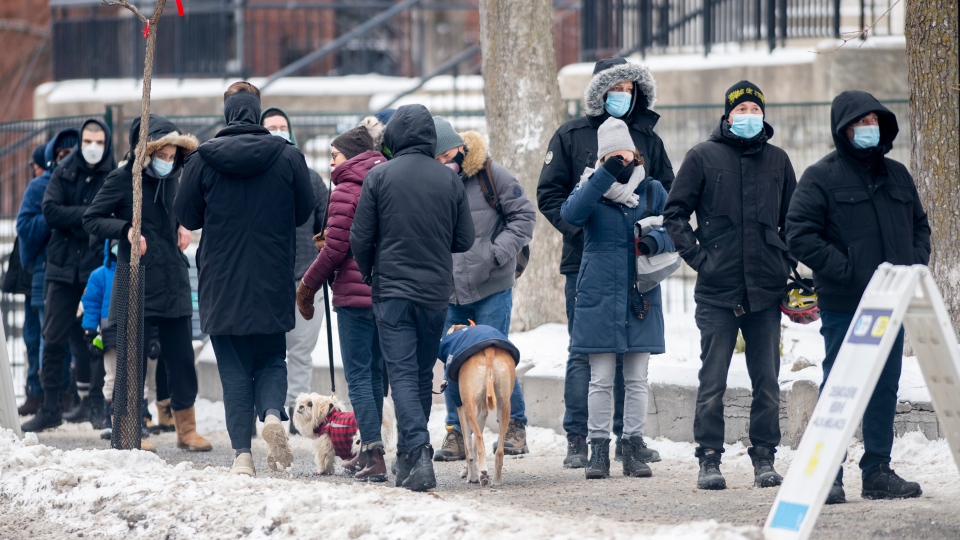
 
People wait in line wearing masks
People wait in line at a COVID-19 testing and vaccination site in Montreal, Wednesday, December 29, 2021, as the COVID-19 pandemic continues in Canada. THE CANADIAN PRESS/Graham Hughes
"[The rodent studies show that Omicron] could be non-severe in the right context. [However the results should be taken with a grain a salt, given that these studies don’t focus on humans.]"
"[There's] some encouraging data at both the epidemiological and now in the rodent models that suggest Omicron could have the potential to cause disease less severe than Delta, for example. But it's not the same thing as saying that it's benign."
Dr. Donald Vinh, infectious disease specialist, McGill University, Montreal

Labels: , , , , , , , , ,

Saturday, January 23, 2021

Patience, People, Patience

"This review is being done through a rolling submission, where data is submitted by the manufacturer and reviewed by Health Canada as it becomes available." 
"Additional data to support the quality, safety and efficacy of the vaccine are needed before a decision can be made."
Eric Morrisette, spokesperson, Health Canada

"There is a large AstraZeneca study that's ongoing in the United States, and we still are expecting to get some information from that study that's almost 40,000 participants."
"We're working very closely with our international partners, but there's still some questions to be sorted through before we make a final decision."
Dr.Supriya Sherma, chief medical adviser, Health Canada

"Health Canada is doing the right thing by clearly taking their time to evaluate the vaccine. They've got it right. There should be no external pressure and no political interference."
"That study [by AstraZeneca] was actually conducted in a very sloppy manner, and reported in a very sloppy manner."
"These vaccines will only work if people take it and if people don't have trust in the product, they're not going to take the vaccine."
"Even if we don't get access to AstraZeneca, and even if we hypothetically don't get access to Johnson & Johnson, we'll have enough vaccine between Moderna and Pfizer to vaccinate all of Canada."
Dr.Isaac Bogoch, infectious disease physician, member Ontario Vaccine Task Force
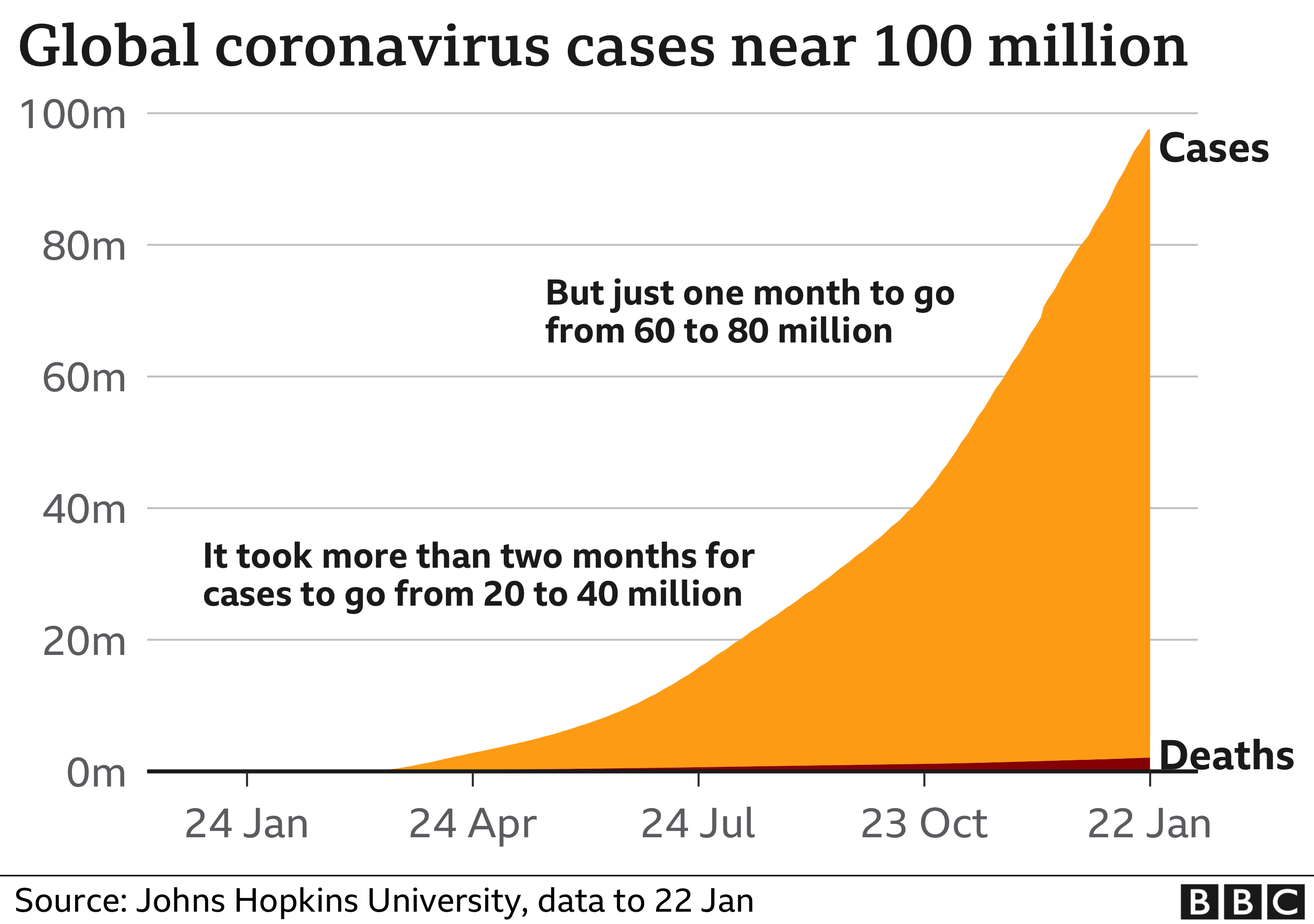
Area chart showing global cases. Updated 22 Jan 
 
Have patience, all will be well. Eventually, orders that the Canadian federal government placed with various promising sources to enable the provinces to vaccinate all Canadians willing to receive the inoculations, will come to pass. Of course, there's that little irritating matter of people dying in the meanwhile,awaiting that relief, but that's evidently another story altogether. On the positive side, the vaccines developed, tested and approved contested the theory that under normal circumstances such a process takes years to come to fruition.

On the negative side, the very speed with which brilliant scientists were able to knit together new biotechnologies to produce effective and safe vaccines is troubling to many who find it difficult to credit that pharmaceutical companies were able to pull off a feat of this magnitude safely and effectively. So apart from the anxiety perturbing the public, and the mental strain involved in what seems to be an interminable wait for rescue from the nightmare of the novel coronavirus, we come back to its victims, countless lives lost, countless others whose lives will be forever changed.

Oh, wait, not 'countless' at all. For in very fact, up to the moment the world is poorer by 2,130,293 million deaths, with 99,321,020 million global infections. As for Canada, it is not among the countries whose infection and death toll have been stupendously incalculable. It's just that -- let's see -- every case is another burden on the health care system, and each death is a tragedy. Canada's statistics stand at 742,531 infections and 18,994 deaths to the present time. Relatively minor in comparison to the numbers reflecting cases and deaths in the United States just across the border with its 25,566,789 million infections and 427,636 deaths.

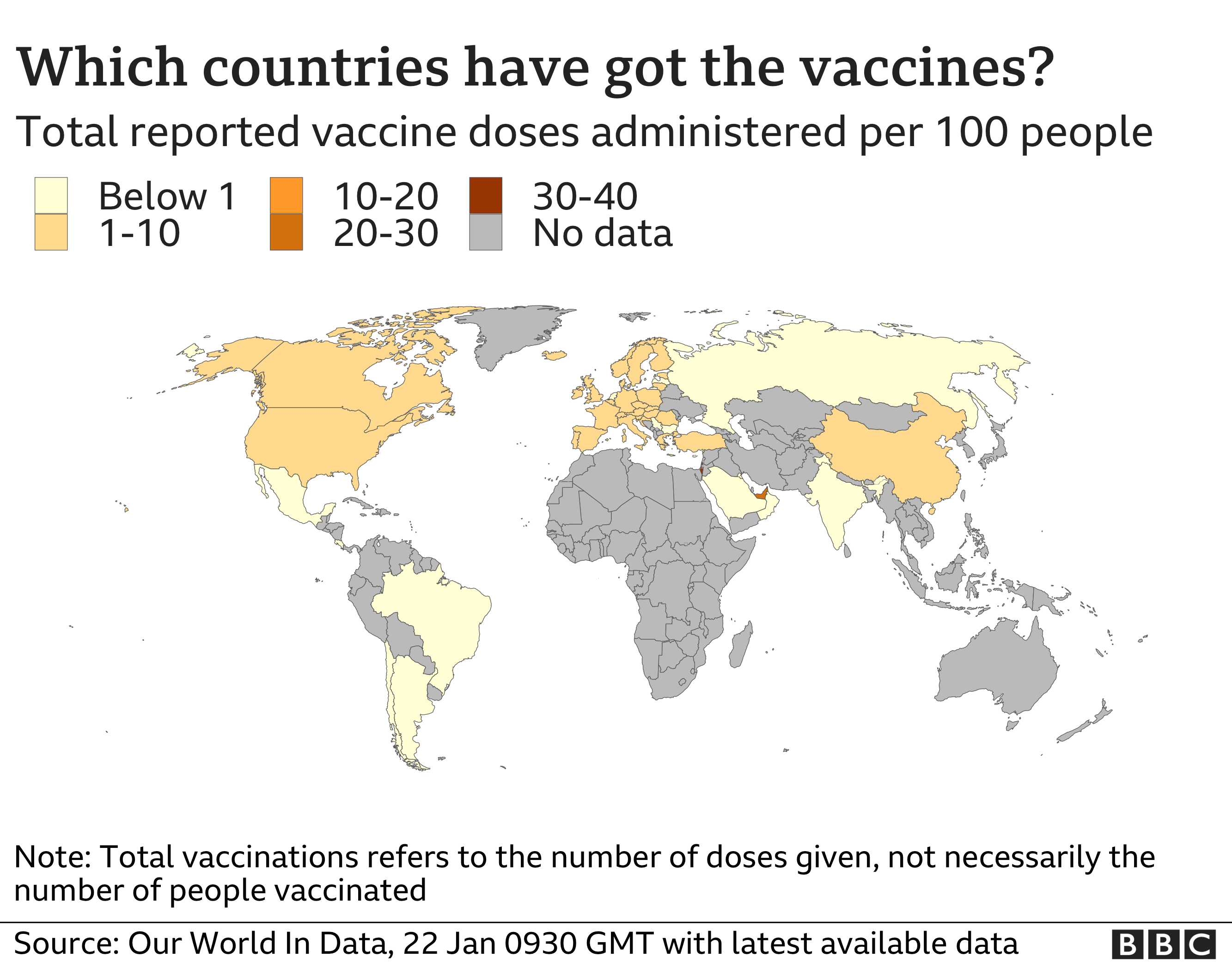
Canada is largely dependent for the time being on two U.S.-based pharmaceutical companies, Pfizer, linked with its German partner and Moderna, both of which represent the only two vaccine producers whose product has been approved by Health Canada. Yet at this stage in the inoculation process both products are in short supply, with Pfizer advising a complication in one of its facilities impairing production and now AstraZeneca too, recently approved for use in Britain and India has stated that its production has run into difficulties.

Health Canada has no firm timeline for a decision to be made for either AstraZeneca or Johnson & Johnson, both of whose vaccine products are being evaluated. The latter has provided Health Canada with safety data up to the present but has nothing yet to report on efficacy despite a large clinical trial underway and results expected to be released within weeks. Its one-dose vaccine, if proven to be both safe and effective will simplify the storage, distribution and vaccination process considerably.

As for AstraZeneca, its product developed with Oxford University has more relaxed storage requirements than Pfizer-BioNTech's vaccine and its production can be accommodated in more facilities around the world; India in fact produces a huge output of the AstraZeneca vaccine under a different name, and is using it internally, as well as making it available elsewhere to benefit its neighbours. AstraZeneca estimates it has the potential to produce three billion dozes of its vaccine.

The fly in its ointment as a vaccine success is the questionable results that came out of a clinical trial late in 2020, with a dosing error where a number of participants received two full doses while others were given a half-dose combined with a full dose. The vaccine was shown to be 70 percent effective in preventing people from developing COVID, but a second trial was started due to the error, to gather additional data.
 
According to Steven Kerfoot, associate professor of immunology at Western University, the problem with AstraZeneca's trial was its incomplete state: "And so the expectation from Canada's understanding is that they want to see a complete trial with efficacy and safety data built in. These [manufacturing issues and trial errors] are all things that happen with all drugs. And none of it, you can think of as unexpected".
 
"We like to think of all medicine as being medicine for us individually, but vaccines are really best thought of as medicines for the population as a whole", he explained. While Pfizer and Moderna's candidates were over 90 percent effective in preventing people from becoming ill from the virus, should the new vaccines prove even 70 percent effective, they will provide a high level of protection within any population, he stressed.
Map shows doses administered per 100 people. Updated 22 Jan. 


Labels: , , ,

Saturday, September 19, 2020

The Case for COVID Mask-Wearing

"SARS-CoV-2 has the protean ability to cause myriad clinical manifestations, ranging from a complete lack of symptoms to pneumonia, acute respiratory distress syndrome, and death. Recent virologic, epidemiologic, and ecologic data have led to the hypothesis that facial masking may also reduce the severity of disease among people who do become infected. This possibility is consistent with a long-standing theory of viral pathogenesis, which holds that the severity of disease is proportionate to the viral inoculum received. Since 1938, researchers have explored, primarily in animal models, the concept of the lethal dose of a virus — or the dose at which 50% of exposed hosts die (LD50). With viral infections in which host immune responses play a predominant role in viral pathogenesis, such as SARS-CoV-2, high doses of viral inoculum can overwhelm and dysregulate innate immune defenses, increasing the severity of disease. Indeed, down-regulating immunopathology is one mechanism by which dexamethasone improves outcomes in severe Covid-19 infection. As proof of concept of viral inocula influencing disease manifestations, higher doses of administered virus led to more severe manifestations of Covid-19 in a Syrian hamster model of SARS-CoV-2 infection."
Monica Gandhi, M.D., M.P.H., George W. Rutherford, M.D. The New England Journal of Medicine
Law enforcement trainees wearing protective face masks as they take notes while being trained on how to handle civil disputes during class at San Bernardino County Sheriff’s Frank Bland Regional Training Center in San Bernardino on Wednesday, July 29, 2020. (Photo by Watchara Phomicinda, The Press-Enterprise/SCNG)

"If facial coverings decrease the amount of virus a person is infected with, they can provide a way of tilting towards infections that result in minimal or no symptoms, yet induce some degree of immunity."
Dr. Amesh Adalja, infectious disease expert, senior scholar, Johns Hopkins Center for Health Security, Baltimore
 
"If this theory bears out, population-wide masking, with any type of mask that increases acceptability and adherence, might contribute to increasing the proportion of SARS-CoV-2 infections that are asymptomatic."
Dr. Monica Gandhi, Dr. George Rutherford, University of California, San Francisco
 
"Covering mouths and noses with filtering materials serves 2 purposes: personal protection against inhalation of harmful pathogens and particulates, and source control to prevent exposing others to infectious microbes that may be expelled during respiration. When asked to wear face coverings, many people think in terms of personal protection. But face coverings are also widely and routinely used as source control. For instance, if given the choice between having surgery performed by a team not wearing some covering over their mouths and noses vs a team that does, almost all patients would reject the former. This option seems absurd because it is known that use of face coverings under these circumstances reduces the risk of surgical site infection caused by microbes generated during the surgical team’s conversations or breathing. Face coverings do the same in blocking transmission of SARS-CoV-2."
John T.Brooks, M.D., Jay C.Butler, M.D., Robert R.Redfield, M.D. Jama 
Masks -- the public is informed by authorities urging the use of facial coverings in this time of SARS-
CoV-2 disease roiling the world order -- are essential to protect others in the event you harbour the virus and have not displayed symptoms of COVID-19. There is also, health experts inform us, a good measure of protection for the mask-wearer from contracting the virus. On the other hand, a recent paper reflecting research published in The New England Journal of Medicine posits that mask wearing may have another residual and very important outcome.

Within communities where infection is widespread and many have yet to be diagnosed while shedding infectious droplets, mask-wearing which cannot entirely prevent some degree of infection penetration, by allowing a small amount of the virus to infect in essence acts as a vaccine. Allowing one's immune system to respond to trace amounts of infection without becoming overwhelmed by a large dose of infection. This is called variolation and its effect on a broad scale is to produce a kind of community 'herd effect'.

Masks, by limiting the amount of viral particles reaching tissues of those newly infected are then serving to inoculate more than massively infecting. In virology, the authors of this new paper explain, there is a tradition called the "LD-50" of a virus; the amount of an infection scaled to body mass that will produce great harm to those exposed to a full load. Viral disease toxicity may be dependent on "dose"; the lesser the dose the lesser the damage, enhancing opportunity for the body's immune system to adapt and fight the intruder.

Verification through research and observation appears as indirect evidence that SARS-CoV-2 doses if moderated through the preventive use of masks could produce a far less harmful outcome. A Japanese-led study that found "higher doses of administered virus led to more severe manifestations of COVID-19 in a Syrian hamster model of SARS-CoV-2 infection", appears to bear out the two authors' contentions.

On a busy street in a city in South Korea, people stand in line, several feet apart, with masks on, going about their daily lives.
Mask-wearing is now the norm in South Korea.Photo: Wonseok Jang 

Countries practising high-masking compliance are seen to have considerably lower rates of severe COVID-19 and consequent death numbers while resulting in fewer hospital admissions. The authors suggest that since being taken up as a first line of defence, (social isolation and mask-wearing), the result has been a mass protocol of "mask variolation". The original method of vaccination where fluids from smallpox patients were collected, to expose the non-infected to harmless amounts of diseased matter to induce mild infection providing immunity; hence variolation.

Health authorities early in the first wave of COVID believed that non-symptomatic people would not significantly shed as an infection source, until experience proved otherwise and then there arose an urgency to cope with the reality that asymptomatic carriers of the virus were indeed shedding infectious particles to the same degree as those infected with the virus who exhibited a wide range of symptoms. 

The message that the latest published research is delivering is that the eventual agreement that mask-wearing represented an integral approach to prevention ended up making far more of an impression in avoidance than might have been anticipated. The wearing of masks has proven successful in shielding the wearer from heavy infection doses, while the small amount of viral infection that did penetrate the shields has proven to have far-reaching consequences in making the wider public less susceptible to serious infections requiring hospitalization, while serving to reduce the death rate.
 
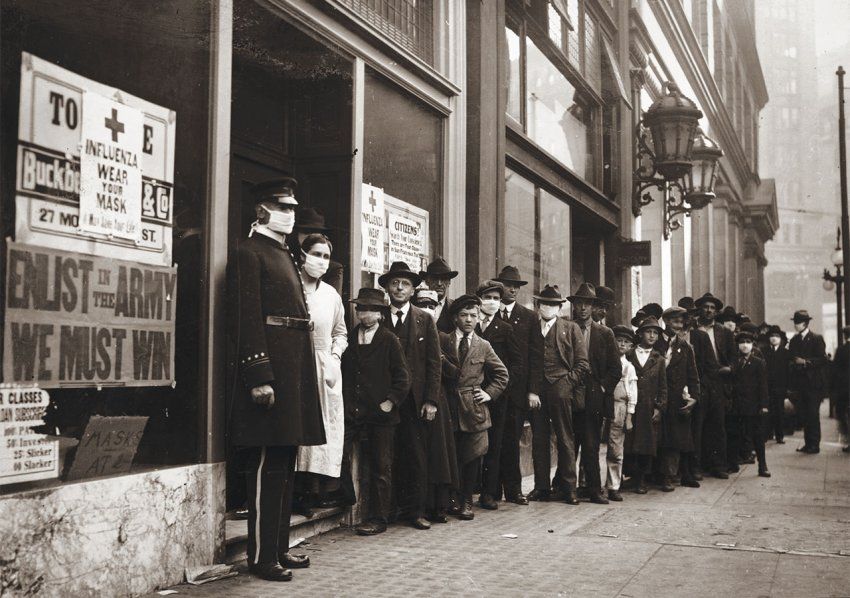
Line of people waiting for flu masks at 30 Montgomery Street, San Francisco, 1918. The man in uniform and the nurse in the doorway are wearing masks, as are a few of those in line. A sign on the window bearing the Red Cross logo reads: “Influenza. Wear Your Mask.” A sign underneath reads: “Enlist in the Army. We Must Win.”
A line of people on Montgomery Street in San Francisco waits to get masks during the 1918 flu pandemic. Failure to wear a mask was punishable by imprisonment or a fine. Photo courtesy of the California History Room, California State Library, Sacramento.


Labels: , , , , ,

Wednesday, April 15, 2020

The COVID Danger of the Cough Stream

"The key findings are that, on average -- and this is over many, many different coughs, because there are weak coughs and strong coughs -- the air is still moving at about one metre a second, a metre away from the person, which is not insignificant."
"And certainly it's difficult to get away from someone who coughs at you if it's moving at a metre per second, and you're a metre away from them."
"We also coupled this with some computer modelling to then extrapolate further distances with some confidence. That's how we're able to say that two metres away you've still got significant velocity. Two-and-a-half metres away it still could be moving at 200 millimetres a second."
"The advice that everyone has been given, which is you should stay two metres away is very sound, in that it's a practical distance. Clearly the further away you are -- three metres, four metres --the better."
"But two metres is certainly better than one metre, which is certainly better than being close to somebody."
Eric Savory, department of mechanical and material engineering, Western University
A new study out of Western University suggests germs from coughing are propelled much farther than the two-metre physical distancing rule recommended by doctors suggests. (Shutterstock)

Scientists at Western University in London, Ontario undertook an experiment with seasonal influenza to determine a measure of safe distance from someone with the virus who coughs, potentially transmitting viral drops to anyone in the near vicinity. Although the experiment focused on the flu and its likelihood of distance-infection, its findings also have applications for the novel coronavirus and the generalized warning to remain a distance of two metres (six feet) away from others in case they may be infectious, without the classical symptoms.

In league with virologist Samira Mubareka of Sunnybrook Hospital in Toronto, the Western University researchers set out to recruit people from the Western campus who had been referred and who had typical flu-like symptoms. These were ill people in their 20s, but who agreed to come to the laboratory -- also on campus -- to take part in the proposed study. The purpose of which was to measure how far and swiftly particles of influenza propel through the air in a cough jet. What the scientists determined was that within three seconds viral droplets can reach another person and will "continue to projectile forward well beyond the recommended six feet (distance)".

The 'cough chamber' at Western University measures how far germs are propelled from someone's airways when they cough and how long the droplets carrying germs stay in the air. (Western University)

The coughs of the ill volunteers were measured and sampled initially. They then returned after a month had elapsed to undergo identical measurements once again. Following which a group of healthy people also recruited across campus in the age range of 18 to 30 had their coughs measured as well, to determine differences that might exist between coughs and the distance they travel. They did this with the use of a 'cough box', an enclosure two-metres tall and wide where volunteers rest their chin on a device, and then cough.

The scientists tracked the movement of each cough airflow, introducing fine micron-sized solid particles into the flow, then examined the particle displacement, and taking the measure of velocity vectors, magnitude of the velocity at about a metre away. They found that very fine droplets remain airborne for longer than the recommended six feet (two metres) distance. Eventually they become dispersed.

One perplexing question remains; virologists are unable to judge with any degree of exactitude what dosage is required to be inhaled before infection occurs. Although many fine droplets can be inhaled containing virus droplets, the dosage sufficient for infection to take place remains unknown.

When the pandemic began, protective shields like this one started popping up to protect cashiers from the transmission of germs. (Pierre-Olivier Bernatchez /CBC)

Labels: , , , ,

Tuesday, April 14, 2020

COVID-19 Cutting Its Deadly Path in Canada Through Long-Term Care Facilities Housing the Elderly and Health-Impaired

"All the provinces and territories are trying to do the best they can to strengthen the response in that area [long-term care facilities country-wide]."
"Because that is driving the severe outcomes in Canada. That is absolutely a key feature of this epidemic."
Dr.Theresa Tam, Chief Public Health Officer, Canada

"Providing consistent guidance for long-term care homes across the country will save lives. But it will take much more than these guidelines to keep our seniors and vulnerable Canadians safe."
"It would be impossible to keep them safe without individual Canadians practising social distancing."
Seniors Minister Deb Schulte, Ottawa

"We have to look after the most vulnerable. We have a duty to look after those who cannot look after themselves."
"I know it's difficult, but this virus is ruthless and it's deadly."
Ontario Premier Doug Ford
Funeral home workers remove a body from the Centre d'hébergement Sainte-Dorothée, on April 13, 2020, in Laval, Que. There have been 26 deaths related to the novel coronavirus at the Sainte-Dorothée centre.  Ryan Remiorz/The Canadian Press

The grim situation of rising case statistics in Canada and consequent deaths among those hardest hit by COVID-19, has been enormously exacerbated by the revelation of the carnage done to elderly, incapacitated individuals being cared for in long-term care facilities, most of which are not equipped to deal with a raging epidemic, are understaffed and under-managed. The recently revealed outbreaks in a number of long-term care homes have underlined their role in pushing up overall numbers of deaths in Canada.

A projection by the government of Canada released on April 9th conjectured between 400 to 700 deaths by April 16, caused by COVID-19, but by April 12 it was clear that the death total stood at 717, handily passing the presented worst-case scenario. It took another day for the total death number to rise to 734, and it is the impact of the outbreaks in those long-term care facilities countrywide that has expanded those death numbers.

In a facility in Bobcaygeon, Ontario alone 29 elderly residents died of the effects of COVID-19. There were 21 reported deaths earlier in the month in such facilities in Vancouver. And while the impact of the dread novel coronavirus on such elder-care, health-impaired facilities may vary from province to province, the end result is that this most vulnerable demographic has become a target of the deadly pathogen.

Not only are these frail elderly people dying, the end effect is that the virus has spread from the facilities to the greater public.

So that even while officially the country's confirmed COVID-19 cases are tracking in a positive direction, it is the fatality rate among the elderly frail that is increasing with continuing outbreaks in the facilities housing them and caring for them. In Dorval, Quebec last month 31 residents of a private seniors' residence died. Many in the residence were neglected, people found dead in their beds, others unfed and unwashed, some lying on floors where they fell.

Residence Herron, Dorval, Quebec, April 13, 2020. REUTERS/Christinne Muschi

Untrained staff had been unable to cope, were frightened for their personal well-being, and had simply abandoned their charges, leaving only four attendants to try to cope with 60 patients in yet another long-term for-profit care home in Quebec. In the Dorval facility there were 150 residents 'abandoned' by the staff, leaving the elderly lying in soiled beds, requiring immediate assistance to be fed, leading to the tragic outcome.

Infection prevention and control were entirely missing in the facilities. Some were crowded with multiple residents in one room, sharing common spaces, making it impossible to impose social distancing. Attendants in many of the residences did not wear masks for the duration of their shifts. Added to the dangers inherent in crowded facilities with overworked attendants improperly trained to rise to the occasion of an epidemic, that many health-care providers and other staff work at multiple facilities.

Vital recommendations have been reached that include visitor restriction to admit only those essential for medical or compassionate care. All staff to be screened along with visitors to ensure that anyone entering the premises, including staff with questionable symptoms be forbidden from entrance, sent home to self-isolate to recovery. Training on infection-control measures, routine cleaning of trafficked areas and limiting employees to work in a single facility are critical guidelines to be implemented.

Former federal cabinet minister Jane Philpott, a medical doctor herself and formerly Canadian Minister of Health, has volunteered to work at a facility in Markham, Ontario housing residents with developmental and physical disabilities. The facility, Participation House, is caught in a staff crisis, struggling to cope with the pandemic, reflecting what is happening all over the country.

Exterior of Anson Place
Anson Place in Hagersville, Ontario, wHere 55 residents and 30 staff members have tested positive for COVID-19, seen here on April 2, 2020. (Dan Lauckner / CTV Kitchener)

Labels: , , , ,

 
()() Follow @rheytah Tweet