Ruminations

Blog dedicated primarily to randomly selected news items; comments reflecting personal perceptions

Friday, July 09, 2021

Evolutionary Influences

"Our study indicates that climate -- particularly temperature -- has been the main driver of changes in body size for the past million years."
"We can see from people living today that those in warmer climates tend to be smaller and those living in colder climates tend to be bigger."
"Over a long tine, yes, we would expect a decrease in body size [due to climate change]."
"But the effects that we describe occurred over thousands of years, so a few years of warming will do little to body size. But if we were to keep changing temperature and keep them there for a long time, then yes, one would expect such changes."
"Brain size was not affected by temperature, but it was affected by long-term climatic stability."
"The likely rationale for that is that brains are expensive, and you need reliable resources to maintain them."
Professor Andrea Manica, researcher, Department of Zoology, Cambridge University
Human fossils illustrating the variation in brain (skulls) and body size (thigh bones) during the Pleistocene period.

 Over 300 fossil samples were studied by scientists to track the fluctuation in human body size over thousands of years of evolution linked to climatic conditions. The research team discovered a clear link between people who live in colder environments and the size they attained; larger bodies being the result in contrast to people living in warmer regions being smaller in size, a trend that continues to this day. 
 
Where people who live in cold environments tending to have larger body sizes than those in warmer areas of the globe.

The average person of Dutch descent as an example stands 6 feet in height whereas the average person living in India tends to be on average 5 foot, 5 inches in height. For the study, the researchers from the Universities of Cambridge in the U.K. and Tubingen in Germany, note that for every degree of warming, a corresponding 0,87 percent decrease in body mass occurs.

In other words, a 2C warming would result in a body size decrease of one kilogram (2.2 lbs.) for someone whose weight comes in at 60 kg (132 lbs.) A similar trend sees the reverse emerge; for every degree of cooling, body size increases by 0.87 percent. 
 
A larger body size results in a person's mass to surface area ratio being greater, therefore more heat efficient, so less warmth is dissipated than with smaller sized people.

This trend, according to Professor Manica, would tend to continue as climate change sees the soaring of global temperatures. Published in Nature Communications, the study concluded that brain size also changed over time; not, however, evolving in tandem with body size.
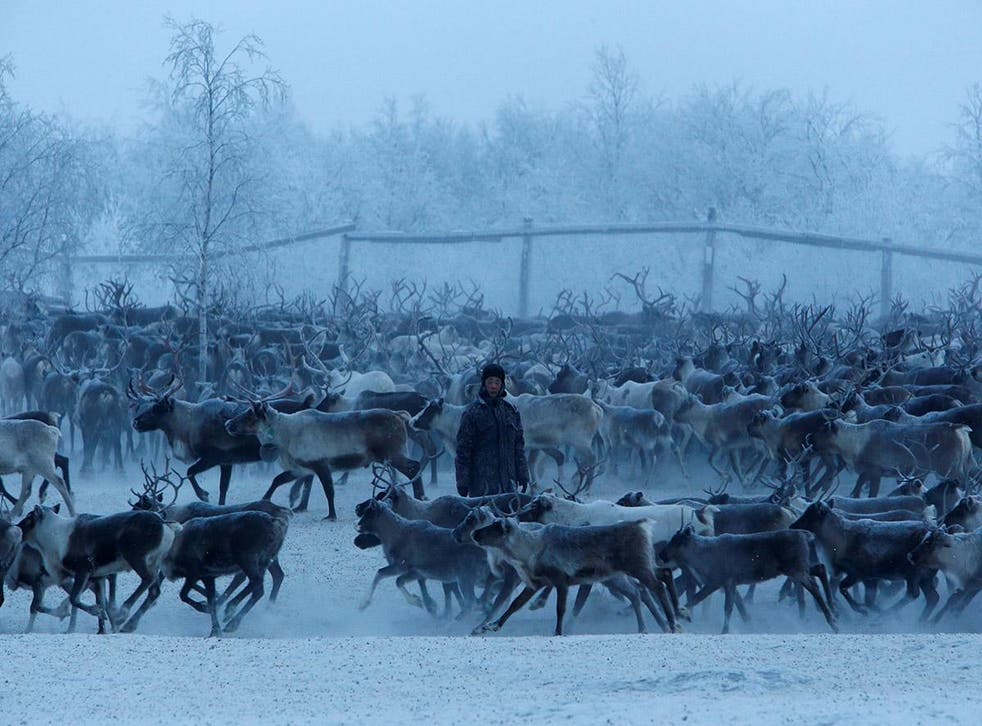
 
<p>People living  in warmer climates tend to be smaller, and those living in colder climates tend to be bigger, a study says.</p>

People living in warmer climates tend to be smaller, and those living in colder climates tend to be bigger, a study says. (Reuters)


Labels: , , ,

Saturday, November 07, 2020

Oceanic Migration 66 Million Years Ago

 "[It was] about the last thing in the world you would expect [to find]. It was completely out of place, like finding a kangaroo in Scotland."
"Africa was completely isolated by water -- so how did they get there?"
"Sherlock Holmes said 'Once you eliminate the impossible, whatever remains, no matter how improbable, must be the truth'. It was impossible to walk to Africa. These dinosaurs evolved long after continental drift split the continents, and we have no evidence of land bridges. The geology tells us Africa was isolated by oceans. If so, the only way to get there is by water."
"Over millions of years, once-in-a-century events are likely to happen many times."
"Ocean crossings are needed to explain how lemurs and hippos got to Madagascar, or how monkeys and rodents crossed from Africa to South America."
Dr.Nicholas Longrich, Milner Centre for Evolution, University of Bath
New Duckbill Dinosaur Evidence Shows That Dinosaurs Crossed Oceans

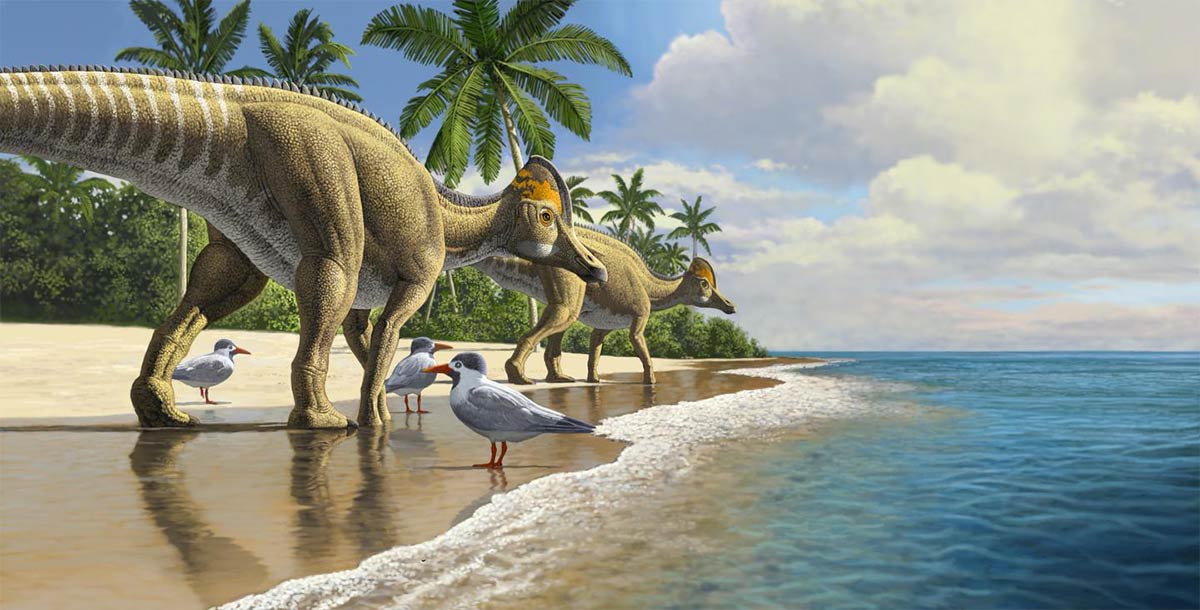
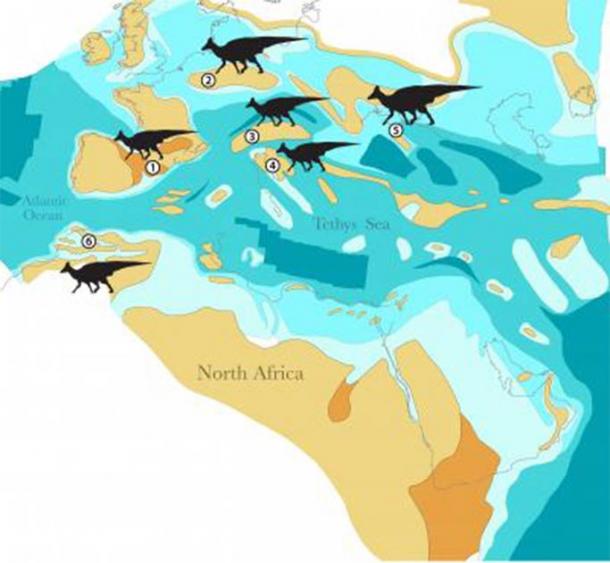
A team of British researchers has reached the unlikely-seeming conclusion that duck-billed dinosaurs migrated out of North America, spread to South America, Asia and Europe, and finally to Africa. Species migration for hundreds of years has been both voluntary and involuntary, and usually by ship. Some animals like rats freeload on ships for far destinations by default. Some explorers deliberately brought species unknown in their native lands back with them, by ship. But this was an oceanic voyage undertaken by ancient dinosaurs on their own initiative, 66 million years ago.

The newly-discovered  species has been named, Ajnabia odysseus. Remains of the animal were discovered in a mine near Casablanca in Morocco. The remains date to the end of the Cretaceous period, and that is a difficult-to-imagine 66 million years ago. Contrast that to human evolution when proto-humans began to emerge 7 million years ago. The predecessor of Homo sapiens, Homo habilis, surfaced 2.5 million years ago, known as the first to develop stone tools. And it wasn't until  70-50,000 years ago that humans began migrating out of Africa, the origin of humanity.
 
So a migration in the opposite direction to that which the first anatomically human creatures took, immensely predated humanity's move to begin populating the globe. Evolutionists believe that duck-billed dinosaurs used the open water of oceans to move hundreds of kilometres to reach Africa, after the discovery of the remains of the dinosaur, the first ever to be found on the continent. It is also considerably smaller than its otherwise-known counterparts.
 
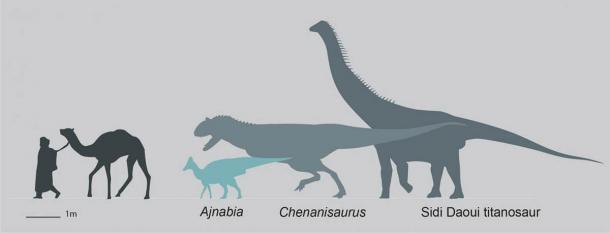
Silhouette showing the size of Ajnabia odysseus compared with humans and the contemporary Maastrichtian dinosaur fauna of Morocco. (Dr Nick Longrich / Science Direct)

Silhouette showing the size of Ajnabia odysseus compared with humans and the contemporary Maastrichtian dinosaur fauna of Morocco. (Dr Nick Longrich / Science Direct )

The familiarly-known size of duckbills was up to 15 metres in length, huge compared to the newly-identified species which measures three metres. Africa, in the late Cretaceous period, was isolated by deep seaways, a fact that seems impossible for duckbills to migrate to, so far a distance without an available land route. Of course what may have motivated these land creatures to depart terra firma for destinations unknown by swimming or floating or hitching rides on drifting organic detritus will never be known.

They are, however, thought to have been strong swimmers, gifted with large tails (rudders?) and powerful legs. The enormous distances they would have had to travel through deep oceans in their journey presents an improbable, but likely adventure in migration. "Ocean barriers are not always an insurmountable obstacle" to migration, noted Dr.Nour-Eddine Jilil of Sorbonne University's Natural History Museum. 
 
Its name is derived from Arabic for 'foreigner' (Ajnabi) and Odysseus (Ulysses) from the Greek fable of a wandering seafarer. The study, led by Dr.Longrich and his British team of scientists, was produced along with international colleagues from Spain, France, Morocco and the United States, and published in the science journal Cretaceous Research.

Map showing the location of duckbill dinosaurs during the Late Cretaceous period. (Dr Nick Longrich / Science Direct)

Map showing the location of duckbill dinosaurs during the Late Cretaceous period. (Dr Nick Longrich / Science Direct )

Labels: , , , ,

Tuesday, July 10, 2018

Elephant Poachers and Trunkless Cows

"Addo elephants might be the biggest success story anywhere."
"Trunklessness has helped protect them."
John Adendorff, conservation manager, Addo Elephant National Park

"Maybe tusklessness is the future."
"Our [elephant-] cows have gone a hundred years without tusks and they've done O.K."
Michael Paxton, ranger, Addo Elephant National Park, South Africa
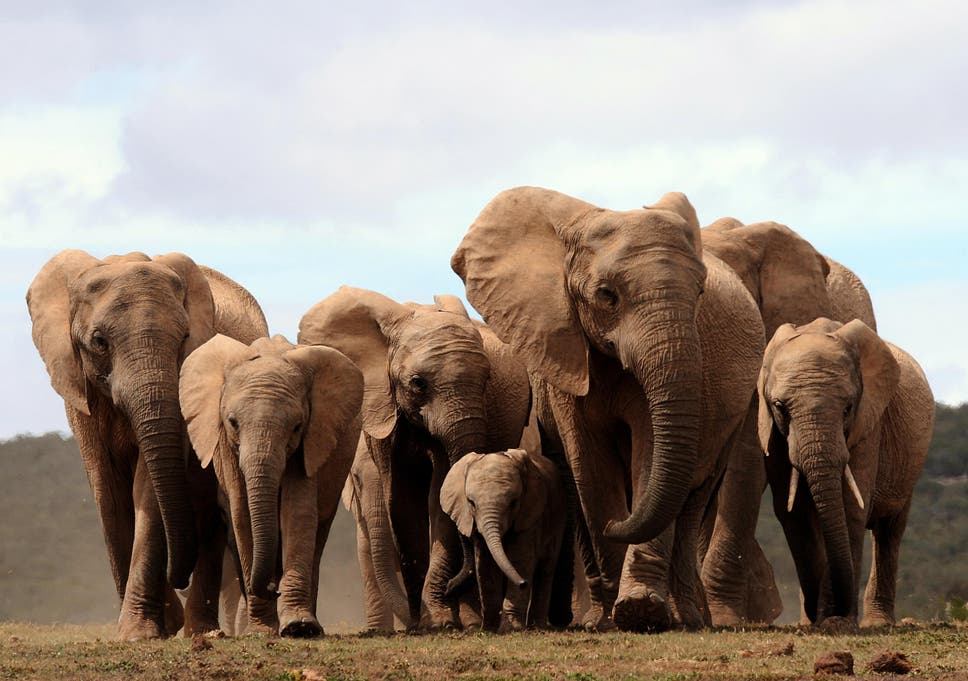
Africa's elephant population has decreased by an estimated 110,000, down to 415,000, since 2006
Africa's elephant population has decreased by an estimated 110,000, down to 415,000, since 2006 ( Getty )

"[Tusklessness is a natural trait in elephant populations. Because poaching takes out elephants with tusks, more tuskless females survive. So a population] ends up with a higher proportion of tuskless animals who then reproduce and tend to produce tuskless offspring."
"In this day and age, with all the poaching going on, tuskless elephants are at an advantage because they are not being targeted for their tusks."
"[But, given that there is also] genetic variability with regard to tusk length and thickness, with some older males having smaller tusks, [heavy poaching of large-tusked elephants can influence the biology of future generations of elephants]. Assuming that poachers select according to tusk size, they will tend to kill older males with very large tusks, thereby taking out of the population of breeding-aged males who also happen to have very big tusks. Those males then no longer pass on their genes for large tusks."
"When these young males grow older they are killed for their tusks before they reach breeding age. In this manner, heavy poaching will select out genes for large tusks."
Joyce Poole, co-founder, non-profit Elephant Voices

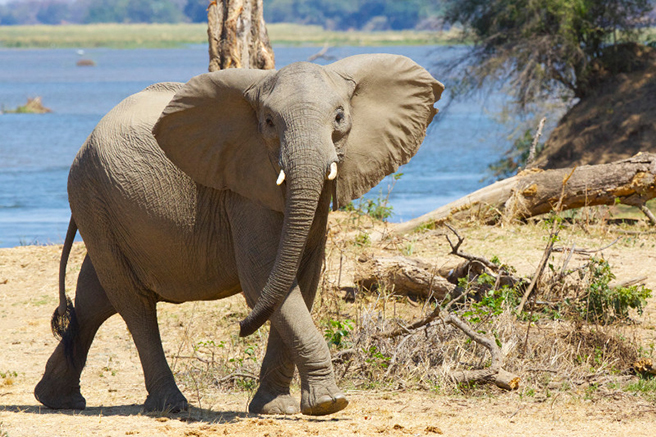
As few as two percent of elephant cows in most populations of elephants in African countries, are without tusks. This places these elephants at a disadvantage in searching for food, according to some experts, since tusks are used to dig for and to manipulate vegetation for an elephant's diet. Without what can be referred to as a vital tool, tuskless elephants risk malnutrition and illness. On the other hand, they are seen as being of no value whatsoever to poachers hunting ivory for the illicit black market trade in Asia.

In the Addo Elephant National Park, the females are 90 percent to 95 percent without tusks. And when they breed, their offspring reflect similar genetic markings and are also tuskless. This is what poaching has achieved; it has stripped natural preserves of African elephants of these great majestic beasts of high intelligence of the tusked among the species, leaving behind those elephants that never grow tusks. A kind of lightning-swift-in-evolutionary-time trait that would take countless generations to achieve through natural selection.

While the prevalence of tuskless elephants is notable in Addo, the phenomenon of poaching resulting in a vastly reduced tusked population of elephants has been seen elsewhere as well in Africa. In Zambia, Tanzania, Uganda and Mozambique tuskless elephants have become the majority in some areas. In Gorongosa National Park in Mozambique the 1970s-90s civil war incited the killing of large herds of tusked elephants. Which sees as a result 53 percent of newborn females with no tusks, explains elephant biologist Joyce Poole.

Tusklessness, however, appears to be gender-linked, rarely occurring among male elephants. Almost all bull elephants have tusks in Addo; granted smaller in size than elsewhere but tusks nonetheless. On the world ivory market, a pair of tusks weighing 49 kilograms each from a 50-year-old bull can bring a profit of $100,000. The trade, not only in elephant tusks but rhinoceros horn for Eastern medicinal purposes, is viciously pernicious, killing countless animals, bringing species to the brink of endangerment of extinction.

The Addo elephant population was almost wiped out in the early 1900s, sealing the reputation of Major P.J. Pretorius as the "great white hunter" of the Eastern Cape. A mere 11 elephants were left, within the group a remaining eight cows. The present hundreds of elephants thriving in the Addo are all descendants of those eight cows, among whom four to five had been without tusks. Dr. Poole's theory has its challengers -- Anna M. Whitehouse, elephant expert among them.
Elephant with small tusks

Decades of poaching and overhunting of large tusked elephants may be leading to generations of elephants with smaller tusks—or no tusks at all    African Wildlife Federation


Ms. Whitehouse speaks of the increase of tuskless elephants after 1931 when the park was founded, and that by the early 2000s, 98 percent represented tuskless cows descended from the original 11. The tusklessness  has resulted, according to Ms. Whitehouse. from inbreeding, known as "genetic drift". Addo park has never, as it happens, since its opening, had to cope with poaching, not one instance of poaching has been attempted. Poachers simply are disinterested in elephants lacking tusks.

Aside from which the park employs 80 rangers, armed, with military training in weaponry use, a small air wing, and high-tech infrared and motion-detecting sensors installed throughout the park. Watering holes and game trails, the likeliest place for would-be poachers to come across animals are regularly staked out by the rangers, camping in the thickets overnight to interrupt any possible incidents of poaching-in-progress should they ever occur.

Graham Kerley, from the Nelson Mandela University in South Africa and an expert on the Addo elephants, speaks of yet another factor in safeguarding the elephants at Addo. The landscape's vegetation makes ingress into the area close to impossible with the presence of impenetrable vegetation; what is known as valley thicket, spiky and thorned. The female elephants double every 13 years, standing now at over 600 individuals.
"As the greatest living targets for poachers, great tuskers are extremely rare in Africa today. Big elephants carry genes for survival and are preferred by females, living proof that they have been successful to survive so long."
"[If left alone, these big elephants, which typically bear the larger tusks, normally father the majority of calves but constant poaching and overhunting have depleted large elephants at the apex of their reproductive power, leaving an observable impact on size and weight of elephant tusks]."
"Unless the relentless pressure against bearing ivory is curbed, the African elephant may easily be reduced both in the weight of ivory and in its overall fitness to survive. There is evidence that this has happened already, with mean tusk weights lower today than in Victorian times."
Dr. Iain Douglas-Hamilton, founder and CEO, Save The Elephants
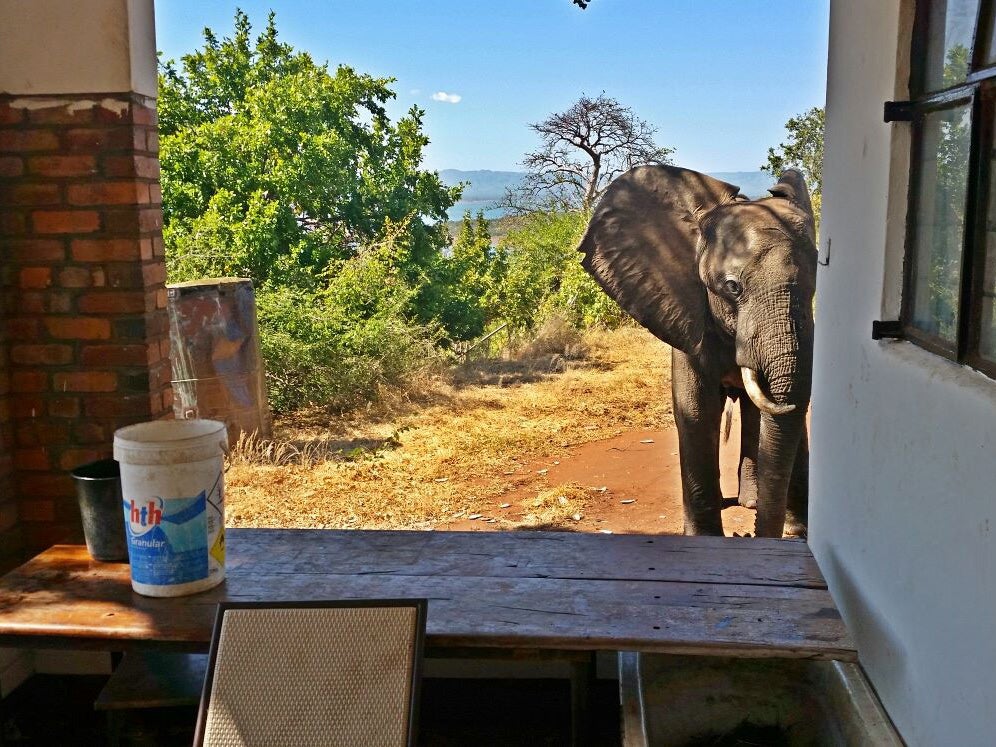
Ben the elephant arrives looking for help
Staff and guests at the Bumi Hills Foundation in Zimbabwe were surprised to see a wounded bull elephant seeming seeking help outside their window.  Bumi Hills Foundation

Labels: , , , ,

Friday, May 04, 2018

Evolutionary Survival Advantages: Man as Marine Animal

"The Bajau have this subsistence that depends on marine foods, and they've been known to have this lifestyle for more than a thousand years. They're pretty incredible: They can dive for very long periods of time for more than 70 metres, with nothing but a set of rustic wooden goggles and a set of weights, nothing like the equipment we would use today."
"The Saluan diverged from them about 15,000 years ago, and they are not known to have this marine lifestyle. So the idea was to contrast these two populations with similar ancestries, but different lifestyles. We wanted to see if there was some difference in their genomes that could explain this."
"This gene existed before the Bajau, because the Saluan have it too. But once they diverged from each other, at some point in history, it became advantageous for Bajau individuals to have this after the Bajau adapted to this particular lifestyle."
"Individuals who had it tended to survive more than others, or maybe they had more children. The fact that both Bajau divers and non-divers have the large spleen points to the fact that this is something they have from birth rather than something they acquired through experience over time."
"We're [humankind] still evolving. Evolution hasn't stopped at any point in time."
Fernando Racimo, assistant professor, University of Copenhagen, Denmark
Why Bajau divers can hold their breath for minutes
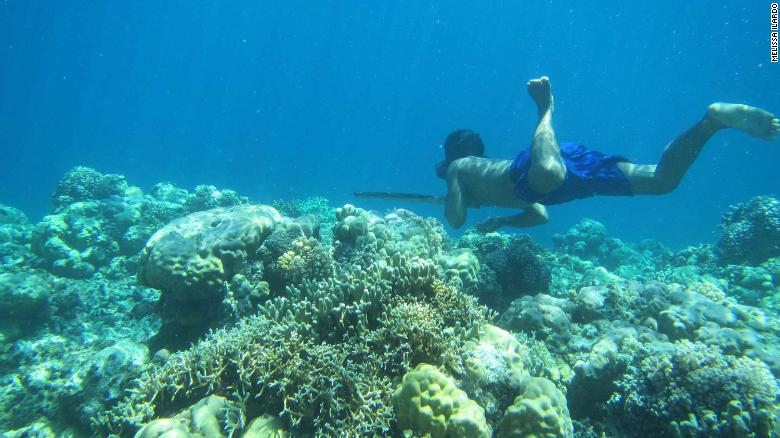
A Bajau diver uses a spear to hunt fish.  CNN
"The lung chest wall could become more compliant [the environmental adaptation displayed by the Bajau. There] could be some looseness that develops over your training [throughout a lifetime]. The diaphragm could become stretched." 
"The abs could become more compliant. We don't really know if those things occur."
"The spleen is able to contract to some extent but we don't know of any direct connection between thyroid and spleen. It may well be."
Richard Moon, Duke University School of Medicine
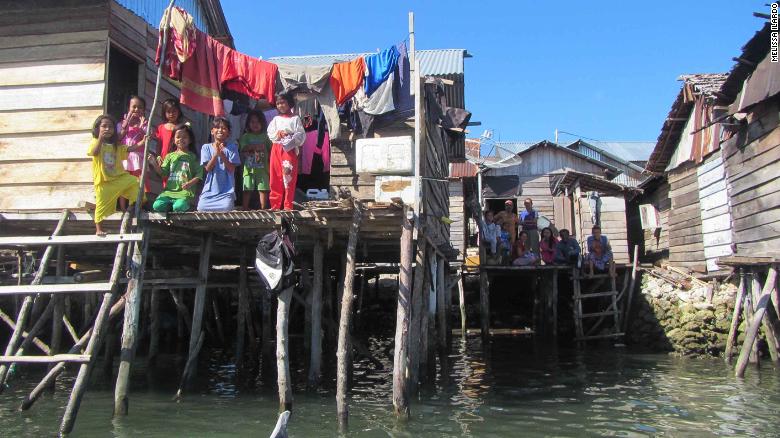
The seaside village of Jaya Bakti in Sulawesi, Indonesia, is inhabited largely by Bajau people.
The seaside village of Jaya Bakti in Sulawesi, Indonesia, is inhabited largely by Bajau people   CNN

One scientist's exciting finding, can be another's perceived misinterpretation of observable facts. Skepticism on the part of one researcher in response to the ebullient !Eureka! of another, is the stuff of which science and research is made; there is always that 'prove it!' element. And Dr. Racimo of the University of Copenhagan believes his hypothesis is well and truly proven by what he and his fellow researchers at University of California, Berkeley -- teamed up to study in the mystery of how it is that some humans are capable of holding their breath beyond a five-minute period -- have concluded.

The Indigenous Bajau people, resident for millennia off the coast of Southeast Asia, more commonly called Sea Nomads -- inhabiting an ancestral area close to Malaysia and the Indonesian archipelago, are capable of diving up to 70 metres undersea. They wear primitive wooden goggles, and hold a set of weights; with one deep breath they dive and the astonishing length of time they can sustain that dive, with a breath they can hold for up to five minutes sets them apart from others, quite distinctly and dramatically.

As Sea Nomads, they live in traditional houseboats and each day hours are spent hunting fish and assorted creatures of the sea. Where most fisherfolk spend their time above water casting rods or nets for fish, the Bajau people do their fishing deep under water. The amazing free diving capacity is not seen anywhere else in the world, skills they possess that have been a mystery for centuries. Which led a group of geneticists and biologists from the University of Copenhagen and University of California, Berkley to the informed belief that the answer to the mystery lies in their spleens.
Jatmin carries a freshly-speared octopus back to his boat.  Photo: James Morgan

According to conclusions published recently in the journal Cell, the Bajau people may be possessed of a genetic advantage acquired through environmental adaptation over thousands of years; when natural selection gradually gave preference to those among them capable of performing such underwater feats not given to most humans and in the process a people emerged with enlarged spleens enabling them to remain underwater for vastly prolonged periods of time on a single, expansive breath.

The spleen has a key role in the process that evolves as humans dive into water where an autonomous "diving response" ensues, as breath is held while underwater. The spleen stores red blood cells, and during the dive response it contracts, injecting oxygenated blood cells into the circulatory system, becoming the fuel partially responsible for the process that allows us to hold our breaths. The amount of time we can spend underwater is directly related to the size of the spleen, according to the researchers' hypothesis.

This neat conjecture fits very well into the fact that Sea Nomads are found to have spleens about fifty percent larger than those measured by researchers in other Indigenous people living nearby, the Saluan. Ancestrally related to the Bajau, the Saluan don't share the gift of an enlarged spleen enabling them to dive for a prolonged period as the Bajau do. Melissa Ilardo from the University of Copenhagen's Center for Geogenetics was the lead author of the paper. She had travelled to Indonesia, hauling along a portable ultrasound to measure the spleens in the two communities.
Ibu Diana Botutihe has lived her entire life at sea, visiting land only intermittently to trade fish for rice, water and other staples. Here she is pictured on her boat in Sulawesi, Indonesia.    Photo: James Morgan

The researchers discovered the Bajau also was possessed of a  higher frequency of a variant of a specific gene, called the PDE10A, once they sequenced the genomes of a few dozen Bajau and Saluan test subjects. The conclusion was drawn that increased thyroid hormone levels in the Bajau are also thought to play a significant role in the process. Their decision, however, is not necessarily shared by other scientists who believe it possible that other adaptations could be involved in the diving capability of the Bajau; further study is required for a fuller understanding of the process, they stress.

Yet the anomalous environmental process that stimulated such an evolutionary advantage for survival is seen in other study groups where genetic mutations come into play among other discreet populations living in extreme geological and atmospheric conditions globally. Studies, for example, documenting that people living in Tibet appear to have benefited through natural selection to adapt to hypoxia, an oxygen deficiency resulting from living in high altitudes that can be fatal to others, but which the Tibetans have adapted to.

The Bajau are adept free divers. Some of them spend up to five hours a day under water, searching for food and other creatures for trade.   Photo: James Morgan

Labels: , , , , ,

Thursday, November 02, 2017

Wither Neanderthal?

"It's like everyone is searching for 'just so' stories about why one species led the other to extinction."
"It's the simplest model that we can build without assuming any hard-to-prove claims, like selection or environmental change."
"What do I expect would have happened by default?"
"...Even if there were no selection and no climate change, the end result would have been the same."
Oren Kolodny, evolutionary biologist, Stanford University
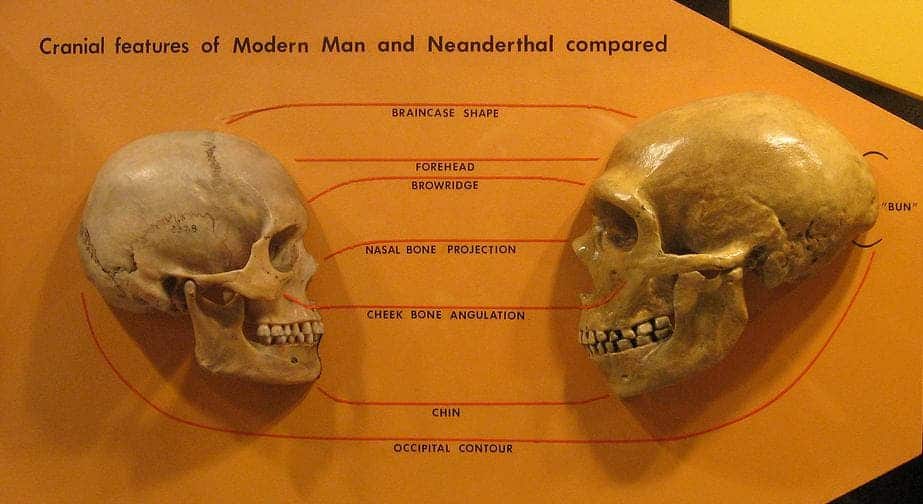
Not that different, right? Comparison of Neanderthal and Modern human skulls from the Cleveland Museum of Natural History -- ZMEScience

No, they don't look all that different, really. The skull of Neanderthal is bulkier than that of Homo Sapiens. Evolutionary biologists a long time ago postulated that Neanderthal women could carry a Homo Sapiens to birth, but a Homo Sapiens woman could not carry a Neanderthal fetus to live birth; her birth canal simply would be unable to accommodate the larger skull. But that the current human community has traces of Neanderthal DNA appears to have been well established, so Neanderthal as a species has left its mark for posterity on humanity.
"People of Caucasian descent have, within their genomes, small amounts of Neanderthal DNA. Previous studies have shown this ancient DNA may influence a person’s health, but a new study in the American Journal of Human Genetics today (October 5) reveals that the effects of one’s inner Neanderthal are even more wide-reaching."
"'[This study] is looking at a huge cohort and at a different set of traits than have been directly analyzed before, many of which are nonmedical,' says evolutionary and computational geneticist Tony Capra of Vanderbilt University who was not involved in the current study but performed a similar analysis of Neanderthal-influenced medical traits last year 'And what’s really exciting is that even though there was this broader scope of traits that was considered, they point to effects of Neanderthal DNA on similar systems to what’s been seen previously'."
"After the 2013 discovery that Neanderthals interbred with the ancestors of modern Europeans, says Janet Kelso of the Max Planck Institute for Evolutionary Anthropology, “one of the questions that came up was what effect does that have on the genomes of people today, what effect does it have on their phenotypes'?"
Ruth Williams,  October 5, 2017, The Scientist
Visitors take pictures of models ...
In this file photo, visitors take pictures of models representing Flores, human and Neanderthal women in the “Musee des Confluences”, a new science and anthropology museum in Lyon, central France. Neanderthals had a long run in Europe and Asia, but they disappeared about 40,000 years ago after modern humans showed up from Africa.

Neanderthals have been proven by paleolithic research to have been far more industrious and intelligent than they were believed to have been with the revelations that Homo neanderthalensis who migrated across Europe and Asia for over 300,000 years were capable of producing tools and even art and jewellery. They predated modern humans and as precursors of what we like to think of as 'man the wise' (Homo Sapiens Sapiens), accomplished, it would seem, just as much as their successors did in manipulating their environment.

That mystery appeared to be solved; the understanding that Neanderthals were not the dumb brutes they were commonly held to be, but the mystery surrounding their eventual disappearance has not. Scientists still grapple with what it might have been that led to their extinction. Were they perhaps genetically predisposed to being more lethally vulnerable to disease? During one of nature's episodes of extreme climate change were they incapable of adapting? Was there a challenge with the appearance of modern humans that Neanderthals were unable to match, leading to their downfall?

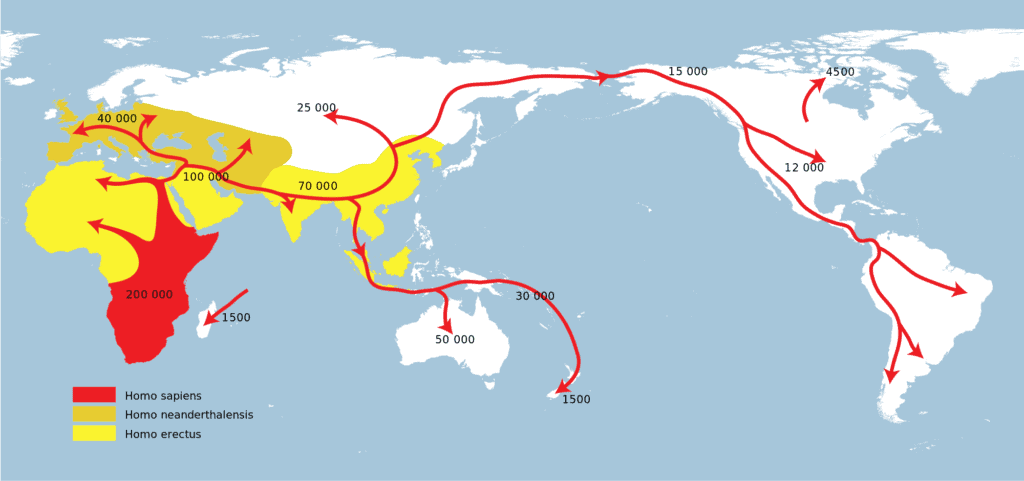
A new paper out of Stanford University published in the journal Nature Communications, authored by Oren Kolodny and his colleague Marc Feldman posit a fairly basic hypothesis, that the Neanderthal extinction was caused through an happenstance intersection between bad timing and population dynamics. They expired, modern humans thrived. They emerged in Europe some 400,000 years ago and were eventually joined by anatomically modern humans. H. neanderthalensis and H. sapiens appeared to share the landscape of Europe for a period estimated between 51,000 and 39,000 years ago.

There was interbreeding between the species and likely survivalist challenges for territory. Over the millennia and having shared geography, the end result was the continuation of the Homo Sapiens line and the extinction of the Neanderthals. A design of nature, not inconsequential, but the result of various circumstances that have seen countless extinctions of various creatures on Earth throughout the ages. The researchers designed their model using known issues of ancient hominin population groups, migration patterns and ecological patterns.

Drs. Kolodny and Feldman constructed a computer model to simulate interactions in Paleolithic Europe. Europe, in the hypothetical simulation inhabited by bands of Neanderthals randomly shifting about and eventually dying. Occasionally a band of modern humans join the picture, themselves moving about with bands from each species sharing equal opportunities of displacing the other. The simulations were run a myriad of times with changing values to reflect variables matching uncertainties with this period in human history.

Despite a wide range of parameters the simulation models consistently demonstrated the die-out of Neanderthals within a 12,000-year period. The assumption being that Neanderthals were unable to match the slow and steady entry of human bands continually flowing north from Africa into Europe. The researchers hasten to caution that the result of their study does not really disprove humans had a selective advantage or that an episode of aggravating climate change influenced the situation. But they are confident that irrespective of both issues being present or absent, Neanderthal extinction would have occurred.

Migration of species, via Wikipedia.


Labels: , , , ,

Tuesday, October 08, 2013

'Ancient humans' used toothpicks

Heavy tooth wear on hominid fossil
"Ancient humans" used toothpicks nearly 1.8 million years ago, a study of their teeth has revealed.
A team studied hominid jaws from the Dmanisi Republic of Georgia - the earliest evidence of primitive humans outside Africa.

They also found evidence of gum disease caused by repeated use of what must have been a basic toothpick.

Writing in PNAS, the team says its findings help to explain the diversity found in hominid teeth.
The researchers used a new forensic approach to look at variations on the teeth of hominids thought by some to be early European ancestors.

Teeth can shed light on what the individuals ate and how old they may have been, but until now it was not clear why there was so much diversity in the Georgian hominid mandibles, or jaws.

Ani Margvelashvili, lead author of the study at the University of Zurich, Switzerland, said that scientists dealing with fossil hominid mandibles should pay close attention to tooth wear and the fossil individual's age.

The Dmanisi hominids

Dmanisi early humans artist's impression
  • The Georgian hominids lived about 1.77 million years ago and represent an early expansion of human ancestors outside Africa
  • They are believed to be the most complete collection of a Homo species from any site older than 300,000 years old
  • They had human-like spines and lower limbs that would have been well suited for long distance travel
  • The male of the species was much larger than the female
  • They also had relatively small brains and primitive upper limbs, traits which they shared with the earlier Homo habilis, and even with the more primitive Australopithecus
"Progressive tooth wear triggers bone remodelling processes that substantially modify the shape of the jaw during an individual's lifetime. These effects are typically underestimated when attributing fossil hominid jaws to different species," she told BBC News. 

"The individual who was using a toothpick was young, as his or her teeth were not worn down. We also discovered a damaged area between the tooth area and the gum. There was a small cylinder-shaped lesion - in this area, if you place a toothpick it goes through."

The researchers analysed four mandibles from one of the biggest collections of well-preserved early human remnants known anywhere in the world.

The Dmanisi site has been valued as an important place to look at how hominids migrated from Africa.

"It's not very often you have one site with four mandibles. It has allowed us to see special features that have not been seen before," explained David Lordkipanidze of the Georgian National Museum.
This included horizontal scratches on a lesion, visible on the root surface of one of the teeth.

"Scientists often describe groups with new characters as different species. Here we show in one group you can see many characteristics. It shows once more how complicated the story of human evolution is," Prof Lordkipanidze, co-author of the work, told BBC News.

Toothpick lesion on hominid teeth A toothpick perfectly fit through a cylinder shaped lesion
 
It is still unclear what species the Dmanisi hominids were. Experts once believed it was Homo erectus who first ventured out of Africa.

But the Dmanisi hominids were not typical of the tall-standing and big-brained H. erectus. Instead, the Dmanisi individuals were short, long-armed, small-brained and thin browed. The fossils are therefore now sometimes referred to as Homo georgicus.

Louise Humphrey from the Natural History Museum, London, said there had been a longstanding interest in the causes and implications of the high degree of variation in their mandibles and crania.
"This paper demonstrates that remodelling of the mandible associated with heavy tooth wear and continuous tooth eruption could contribute to that variation."

Peter Ungar from the University of Arkansas, US, said the study could provide a new way of looking at fossils.

"Tooth pick markings are not uncommon in fossil hominids from this time period, but this clinical, forensic approach is new and potentially useful.

"Analyses of tooth movements due to wear have been more-or-less limited to anatomically modern humans, and this paper introduces the approach to paleoanthropology," Prof Ungar added.

Hominid mandibles The mandibles that showed the least wear were from younger individuals

Labels: , , ,

Sunday, August 11, 2013

"Secret of Life"

Well, we all know what the ultimate secret to success in life is; love. Some know how to practise it, and value it and how meaningfully love complements life and some do not. Some people recognize what love requires to keep it healthy and strong and others simply shrug, disinterested. The greater number of people want love but cannot find it and sometimes that can be because they really don't know what it represents, how to practise and nourish it.

What comes naturally enough for some people, enabling them to enjoy a long-lasting and rewarding intimate relationship with at least one other person in their lives, is difficult to attain for many others who may pantomime the practise of living with love but their emotions are as empty as the words used in a silent pantomime. Often, parents raise children with great heapings of love and emotional support.

One might logically expect that the children would reciprocate, not only in their formative years but well beyond, when they mature and become adults. Yet this is not necessarily the case. As the excellent Bavarian film "Cherry Blossoms", set in Munich and Tokyo pointed out so movingly. One might think that children of an individual whose brilliant mind was partially responsible for revealing one of the genetic-biological secrets of life would value his father's memory almost beyond all else.

And one might be incorrect in that assumption. Take, for example, the British-born scientist Francis Crick who together with his American colleague, James Watson, discovered the famed double helix structure of DNA:
"Jim Watson and I have probably made a most important discovery. We have built a model for the structure of de-oxy-ribose-nucleic-acid (read it carefully) called D.N.A. for short. You may remember that the genes of the chromosomes -- which carry the hereditary factors -- are made up of protein and D.N.A. ...Now we believe that the D.N.A. is  a code..."
"You can understand that we are very excited. Read this carefully so that you understand it. When you come home we will show you the model. Lots of love, Daddy."

The above is excerpted from a seven-page letter that Francis Crick had written to his then-12-year-old son away at school, 60 years ago. "...the basic copying mechanism by which life comes from life", explained the letter to the boy. The young Michael Crick was recovering from flu, he was in his boarding school's infirmary, when his father's letter reached him on March 19, 1953. And now, all these years later, Michael Crick wrote in a catalog essay for Christie's auction house in New York City:

"It became immediately obvious how the base pairs could act as a code -- and also how that code might be copied. It was just 'so beautiful' it had to be right. My father's enthusiasm could not be contained. The story is told of him sweeping excitedly into a local pub called the Eagle and announcing to all who would listen that he had found 'the secret of life'. ...The first public description of these ideas that have become the keystone of molecular biology and which have spawned a whole new industry and generation of follow-on discoveries."

For it seems that Nobel Laureate Francis Crick's son decided to sell that letter from his father to himself as a young boy through Christie's Auction House. "My wife, Barbara, and I therefore decided that we would donate a significant portion of the proceeds from the sale of the letters to benefit the Salk to help fund continuing research in ways that my father would have wanted." This, in reference to the Crick-Jacobs Centre for Theoretical and Computational Biology, devoted to brain research, co-founded by his father.


Christie's /Francis Crick sketched this diagram of the DNA double-helix molecule in a 1953 letter to his son, Michael. "The model looks much nicer than this," the elder Crick wrote. 
One might think that the scion of such a world-shattering scientific discovery, might wish to continue treasuring his father's letter to his son, as an intimate piece of treasired memorabilia. Failing that, to make a generous gift of the historical document to an academic institution, say for example Cambridge where his father also did some of his research and where he met James Watson. Failing that, sell the document, if he felt so disposed, and render all of its avails to biological research.

The letter realized -- including a buyer's premium -- $6,059,750. It went to an anonymous buyer. There were other handwritten documents, pencil diagrams and equations that were sold as well. And yet other additional items were sent to auction through Heritage Auctions based in Dallas, for New York sale; items belonging to the Francis Crick Family Trust. Notably, Francis Crick's Nobel Prize medal, and the diploma, and a few other documents, all of which went as a lot at $2,270,500. The bidder was prepared, he said, to pay double that amount.


Bebeto Matthews / AP /Michael Crick holds the 1962 Nobel Prize medal that was awarded to his father, with his daughter, Kendra Crick, standing by his side. The medal is to be sold during a New York auction on Thursday.

Labels: , , , ,

Tuesday, July 16, 2013

Critical Best Practice

"If you are bleeding from a hole in your liver, and on top of that your body cannot form good clots, it's a bad combination.
Until 2007, "a patient would come in bleeding, you would try to stop the bleeding and at the same time start intravenous saline -- nothing more than water and salt. If the blood work showed your patient needs blood, you would give blood."
Dr. Sandro Rizoli, director, trauma program, St. Michael's Hospital, Toronto

A new study published in the Canadian Medical Association Journal co-authored by Dr. Rizoli brings into question what has become standard routine in transfusing trauma patients. Prior to 2007 it was standard procedure in trauma centres around the world in treating car crash victims, for example, to give intravenous saline comprised of water and salt. Blood was transfused only if tests indicated anemia from  loss of blood, or improper clotting was resulting from medical trauma.

But then, in 2007 American military doctors operating within war theatres in Iraq and Afghanistan noted their observations that wounded soldiers seemed likelier to survive their trauma injuries if attending doctors immediately began transfusing large amounts of blood, rather than waiting for blood-testing results before proceeding. The U.S. military study altered the manner in which trauma centres worldwide resuscitated their patients.

"The standard became to treat patients with a big bleed by assuming they're not clotting and immediately transfusing with blood", explained Dr. Rizoli. A combination of equal parts red blood cells, plasma -- the liquid part of blood containing clotting factors -- and platelets, responsible for giving blood its sticky values making it more likely to form clots, comprised the transfusion.

Recently, however, the new Sunnybrook Health Sciences Centre study compared blood-based resuscitation as opposed to what was once conventional resuscitation to discover that blood waste and medical complications in patients automatically transfused with blood resulted. Additionally, there was no difference detected in rates of death from use of either method.

Among trauma patients, hemorrhage is recognized as the leading cause of preventable, in-hospital deaths. Dr. Rizoli's team conducted randomized trials of the formula in trauma patients. Their study indicated blood wastage and greater respiratory complications requiring that patients be connected to mechanical ventilators with the blood-transfusion formula. And a negligible difference in rates of death resulting.

Minutes after a major trauma as for example, car accident, a serious fall sustaining gross injuries from a height, gunshot or stab wounds, one-quarter of patients fail to clot adequately. While in a trauma medical state, their bodies release huge amounts of natural substances that have the effect of preventing clots from forming. And this is a condition that increases the risk of bleeding to death.

Seems as though there's never a final word in medical-scientific treatment. New procedures in response to life-threatening events often become widely accepted when they are held to be superior in outcome to earlier methods. But sometimes what is popularly believed to be so, just isn't. Just take the example of teaching people the long-accepted technique associated with cardiopulmonary resuscitation, as one example.

Labels: , , , , ,

Wednesday, January 16, 2013

Meet Creationists’ Nightmare — The Teen Who Is Combating Christians & Defending Evolution in Public Schools

Zack Kopplin may only be 19-year-old, but the that hasn’t stopped the college student from combating creationists and taking on controversial legislation in Oklahoma that he believes is counterproductive to the state’s education goals. His activism started in 2008 when the “Louisiana Science Education Act” passed a law that has continuously come under scrutiny from church-state separatists.

The regulatory structure, which critics have so-far unsuccessfully attempted to repeal, gives public school science teachers the ability to use supplemental materials in their classrooms in addition to approved textbooks. Critics claim that this creates a pathway for educators to challenge evolution while infusing creationism into lessons. Those who support the law, though, claim that the provision spawns critical thinking — an essential element for young people in educational environments.

As for Kopplin, he became disenchanted in high school after the law passed; he claims that science books were removed from some of his school’s classrooms. The teen told the website io9 that the changes were so pervasive that he felt the need to stand up against what has been perceived by some as an assault on science. Initially, he wrote a paper about the subject for his English class when he was just 14-year-old — but that was just the beginning.

Zack Kopplin Is Challenging Creationism, Vouchers & the Louisiana Science Education Act
Zack Kopplin, 19, appears in a 2011 interview with MSNBC, during which he discusses his battle over creationism (Photo Credit: YouTube/MSNBC)

“This was a pivotal moment for me,” he told the outlet. “I had always been a shy kid and had never spoken out before — I found myself speaking at a meeting of an advisory committee to the State Board of Education and urging them to adopt good science textbooks — and we won.”

While the law is still on the books, science books are allowed to stay in classrooms. io9 has more about Kopplin’s intense involvement in an issue that he is intensely-passionate about:
Indeed, it was the ensuing coverage of the science textbook adoption issue that launched Kopplin as an activist. It also gave him the confidence to start the campaign to repeal the LSEA.
Encouraged by Barbara Forrest, a philosophy professor at Southeastern Louisiana University — and a staunch critic of intelligent design and the Discovery Institute — Kopplin decided to write a letter that could be signed by Nobel laureate scientists in support of the repeal. To that end, he contacted Sir Harry Kroto, a British chemist who shared the 1996 Nobel Prize in Chemistry with Robert Curl and Richard Smalley. Kroto helped him to draft the letter — one that has now been signed by 78 Nobel laureates.
In addition, Kopplin has introduced two bills to repeal the LSEA, both of which have been sponsored by State Senator Karen Carter Peterson. He plans on producing a third bill later this spring. And along with the Nobel laureates, he has the support of the American Association for the Advancement of Science (AAAS), New Orleans City Council, and many others.
Kopplin argues that “creationism is not science” and that teaching the theology side-by-side with evolution “violates the separation of church and state.” He also expressed fears that laws that allow for more creationism in the classroom put students at a disadvantage when it comes to properly understanding the sciences. In the end, this, he believes, can impact the job market and the nation as a whole, especially if young people avoid — or are ill-prepared — for careers in this arena.

“Teaching Biblical creationism is promoting one very specific fundamentalist version of Christianity, and violating the rights of every other American citizen who doesn’t subscribe to those beliefs,” the teenager alleges. “So it would be stomping on the rights of Catholics, Mainline Protestants, Buddhists, Humanists, Muslims, Hindus, and every other religious group in the country.”

Here’s a 2011 interview with MSNBC during which he discusses these issues:

So far, the young man has faced an uphill battle, as he lost his first two attempts to see the ”Louisiana Science Education Act” overturned — but roadblocks haven’t halted his efforts. Aside from his push for repeal, Kopplin is also taking aim at school vouchers, as he sees them as unconstitutional endorsements of creationism and religion. Considering that some of the schools that receive public funds through vouchers are religious in nature, the teenager is unhappy with the contents being taught to children.

“These schools have every right to teach whatever they want — no matter how much I disagree with it — as long as they are fully private,” he told io9. “But when they take public money through vouchers, these schools need to be accountable to the public in the same way that public schools are and they must abide by the same rules.”

Below, see a contentious discussion at a state hearing between a Louisiana senator and Kopplin that was held back in 2011:
Kopplin began tackling vouchers after he learned of a textbook that purportedly alleges that the Loch Ness Monster is alive and well today (the text apparently uses the alleged existence to debunk evolutionary theory).
Critics have called the teen names and dismissed him on account of his age, but the disparaging remarks have done little to dissuade his efforts.

“I don’t enjoy upsetting people, but you have to brush the attacks off,” he said. “I know that I’m fighting for a good cause — and I would be neglecting my duty if I stopped my campaign just because I felt uncomfortable about opposition.”

Labels: , , , , ,

 
()() Follow @rheytah Tweet