Dracunculiasis -- Guinea-worm disease
"We think about President Carter's legacy [and his push to get to zero cases].""These might not be seen as the No. 1 problems in the world, but they are the No. 1 problems for people that suffer from these diseases.""So we continue to charge ourselves with his mission of alleviating as much pain and suffering as we can."Adam Weiss, director, Carter Center Guinea worm eradication program"Dracunculus medinensis (D. medinensis), a type of parasitic worm, causes guinea worm disease. The larvae live in stagnant (nonmoving) water, like ponds or shallow wells. They infect copepods, bug-like crustaceans that are almost too tiny to see. Copepods are sometimes called water fleas.""If you drink water that copepods live in, D. medinensis larvae can get into your stomach and intestines. They move through the walls of your insides to other parts of your body. Eventually (usually about a year later), an adult worm starts pushing its way through your skin. They need to get to the outside of your body to release eggs into water. Adults can grow up to 3 feet (1 meter), so it can take a long time for them to work their way out of your body."Cleveland Clinic
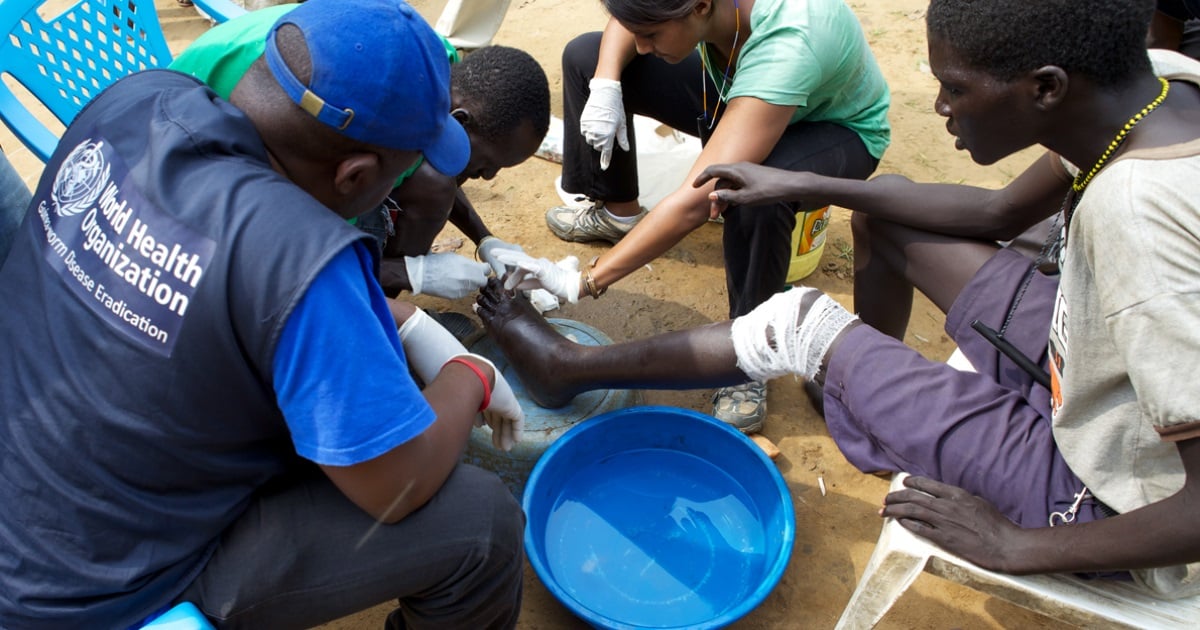
In 2025, came the good news of a historic low in Guinea worm infections now seen only in three countries. Former U.S. President Jimmy Carter who established The Carter Center with its mandate to eradicate the dread disease with its launching in the 1980s, was said to have wanted to outlive its eradication, to enjoy the completion of a goal he had set. Back then in the mid 1980s, the parasite was known to afflict millions of people in developing countries.
In the year just passed, four human cases were reported in Chad, four in Ethiopia and two in South Sudan. Animals too can become infected and among animals infections continue to number much higher but have slightly declined in some countries. There were 15 cases of Guinea worm reported in 2024 in Angola, Cameroon, and Central African Republic while Mali reported zero cases two years running.
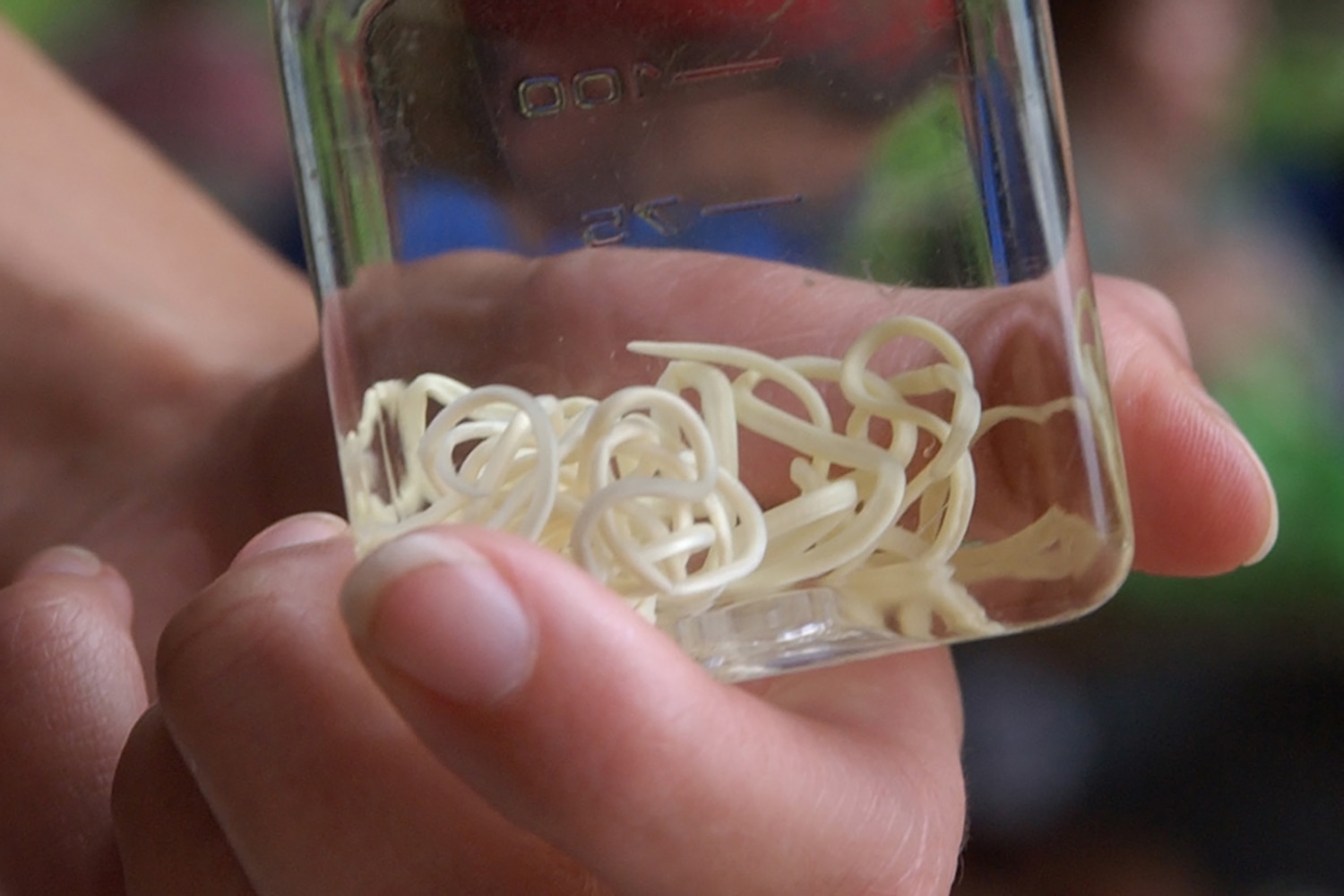
If and when Guinea worm is finally eradicated, it will join smallpox as the only two human diseases that medical science succeeded in freeing the world from. The worm's larvae are laid in water, so the contaminated water becomes the vector in infecting people and animals who consume that water. Once the larvae enters the body it grows for a year and can grow up to a metre in length, with the diameter of spaghetti.
Once the worm has reached maturity it seeks to exit the host body and it does this through the medium of a blister. Depending on the length of the worm, its exit can take a long time, during which time excruciating pain wracks the infected person. When infected people -- or animals -- who suffer from the condition immerse themselves in water in an effort to ease their pain, the worm takes the opportunity to deposit its larvae, in an ongoing cycle.
Infections can also occur when people consume fish or amphibious creatures that have themselves consumed the larvae. The Carter Center specializes in educating the public, training volunteers, and distributing water filters in affected areas. No treatment exists for Guinea worm, although medication can be used to alleviate pain and suffering.
The development of diagnostic tests is next on the agenda for the Carter Center's eradication program. The benefits of testing before an infected person or animal becomes symptomatic are linked to minimizing or eliminating opportunities for the worms to continue infecting water sources with their larvae.
 |
"Imagine drinking a simple sip of water and unknowingly setting a timer for one of the most bizarre and painful biological ordeals on the planet. Guinea worm disease, caused by the parasite Dracunculus medinensis, has haunted humanity for millennia. Its modus operandi is as unsettling as it is intricate. The story of its near-eradication, led by the heroic efforts of former U.S. President Jimmy Carter and a coalition of determined organizations, is a testament to what global cooperation can achieve—even without the aid of modern medical marvels like vaccines or miracle drugs.""Guinea worm disease begins when someone in a rural, water-scarce region drinks from a stagnant pond teeming with tiny water fleas infected by Guinea worm larvae. Once ingested, these larvae migrate through the digestive tract, eventually pairing up for a little love in your body. While the male dies after its job is done (a grim version of “mate and die”), the fertilized female has big plans: she grows to about a meter long—yes, meter—and prepares to leave her host, which, unfortunately for us, involves excruciating pain.""A year after infection, the female worm heads to the surface of the skin, creating a blister that feels like it’s on fire. Naturally, the victim seeks relief by submerging the affected body part in water. That’s the worm’s cue to release a soup of larvae, ensuring its species’ survival. The cycle begins anew, unless interventions like water filtration or behavior change interrupt it."History of Vaccines tribute to former President Jimmy Carter
 |
Labels: Africa, Eradication, Guinea-worm Disease, Medical Science, The Carter Center
posted by Pieface @ 7:51 PM
0 comments






/cdn.vox-cdn.com/uploads/chorus_image/image/62810711/Psychedelic_legalization_lead_4.0.jpg)